Path Tiles
Benachbarte Sets (157)Alle Zusammenhänge anzeigen
Diese Sets wurden den gleichen Sets hinzugefügt wie das ausgewählte Set.
157 Inhalte
- Seite 1 von 14
Prolog 1 (Pavillon)
Name that can easily go onto 2 lines
Author that can easily go onto 2 lines as well
- Titel
- Prolog 1 (Pavillon)
- Titel (en)
- Prolog 1 (Pavilion)
- Autor/in
- Beschreibung (de)
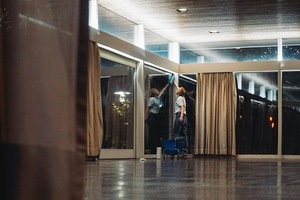
- Die Arbeit Prolog 1 (Pavillon) begann mit einem künstlerischen Interesse an den raumvermessenden, kartographierenden Aspekten des Putzens – als Prinzip der Aneignung – sowie seiner skulpturalen Qualität.
Die Arbeit, die am 23. Oktober 2018 von 17-20 Uhr in einem rundumverglasten Pavillon der 1960er Jahre Moderne, an der Brauer-, Ecke Gartenstraße in Karlsruhe stattfand, bestand auf Handlungsebene aus dem Putzen des Inneren des Pavillons. Über vier an den Ecken des Pavillons angebrachte Lautsprecher hörten die sich im umliegenden Park befindenden Besucher*innen Textfragmente über den Pavillon: seine räumliche Verortung, seine (Un)-Zugänglichkeit auf institutioneller und baulicher Ebene sowie seine Architektur – Akten, Erzählungen, Spekulationen. Über drei Stunden Laufzeit verdichteten sich diese immer auch durch die Folie des Putzaktes ausgesuchten, verfassten und montierten Textfragmente zu einer offenen Erzählung.
Aus einer ursprünglich intuitiven Affinität zu diesem Ort sollte die Arbeit über das Putzen in genau diesem Pavillon stattfinden – Architektur der Nachkriegsmoderne, ein Kantinengebäude, angeblich von Egon Eiermann erbaut. Ein Gebäude, das der vielbefahrenen Straßenkreuzung den Rücken zudreht, eigentlich prominent platziert ist, aber von den meisten Passierenden unentdeckt bleibt – ein Ort, der auf vielen Ebenen changiert zwischen Sichtbarkeit, Unzugänglichkeit, Intransparenz und Mysterium.
Erst durch den langen Prozess, überhaupt Zugang zu dem ungenutzten Hochparterre des Gebäudes zu erhalten, und die damit einhergehenden intensiven Nachforschungen, verschob sich der Fokus der Arbeit hin zum Gebäude selbst und seiner schwer zu durchdringenden, sich nie ganz ergründenden Geschichte. Der Versuch, das Gebäude als Ausstellungsort zu nutzen, wurde in diesem Prozess Teil der Arbeit selbst.
So fanden diese unterschiedlichen Formen der Aneignung, das Putzen und die Recherche, letztlich wieder zusammen, am 23. Oktober 2018: einen Tag im Leben des Pavillons markierend, an dem alle Anwesenden zu Zeitzeug*innen seiner Existenz wurden. Die Besucher*innen befanden sich – die Textfragmente hörend – draußen im Park, während Judith Milz sich zeitgleich – als einzige Person – im Inneren des Pavillons befand, ihn drei Stunden lang putzte, während es draußen erst dämmerte und dann dunkel wurde, bis schließlich, Lichter aus, Tür zu, der Pavillon geputzt, der Abend vorbei war.
- Die Arbeit Prolog 1 (Pavillon) begann mit einem künstlerischen Interesse an den raumvermessenden, kartographierenden Aspekten des Putzens – als Prinzip der Aneignung – sowie seiner skulpturalen Qualität.
- Beschreibung (en)
- Prolog 1 (Pavilion) began with an artistic interest in the spatial and cartographic aspects of cleaning—as a principle of appropriation—as well as its sculptural quality.
The work, which took place on October 23, 2018, from 5 to 8 p.m., in a glass-walled pavilion from the modernist 1960s located at the corner of Brauerstraße and Gartenstraße in Karlsruhe, consisted, on the level of action, of cleaning the interior of the pavilion. Through four speakers mounted at the corners of the structure, visitors in the surrounding park could hear fragments of text about the pavilion: its spatial positioning, its (in)accessibility on both institutional and architectural levels, and its architecture—documents, narratives, speculations. Over the course of three hours, these curated, composed, and edited text fragments—always filtered through the act of cleaning—accumulated into an open-ended narrative.
The initial impulse to realize this work in exactly this pavilion arose from an intuitive affinity with the site—post-war modernist architecture, a former cafeteria building, allegedly designed by Egon Eiermann. A structure that turns its back on a busy intersection, prominently situated yet largely unnoticed by passersby—a place that wavers on many levels between visibility, inaccessibility, opacity, and mystery.
Only through the prolonged process of gaining access to the building’s unused raised ground floor—and the intensive research that this required—did the focus of the work begin to shift toward the building itself and its elusive, never fully graspable history. The attempt to use the building as an exhibition site ultimately became part of the work itself.
Thus, these different forms of appropriation—cleaning and research—converged once more on October 23, 2018: marking a day in the life of the pavilion on which all those present became witnesses to its existence. While the audience stood outside in the park listening to the audio fragments, Judith Milz—alone inside the pavilion—cleaned the space for three hours, as dusk settled and darkness fell, until finally, with the lights turned off and the door closed, the pavilion was cleaned, and the evening was over.
- Prolog 1 (Pavilion) began with an artistic interest in the spatial and cartographic aspects of cleaning—as a principle of appropriation—as well as its sculptural quality.
- Kategorie
- Typ des Projekts/Werks
- Schlagworte
- Datierung
- 23.10.2018
- Mitwirkende
- Sprache
- Material
- Dauer
- 3 Stunden
- Ort
- Pavillion, Brauer- Ecke Gartenstraße Karlsruhe
- Stadt
- Land
- Beteiligte Institution(en)
- Internetlinks
- Bemerkungen
- In den Archivierungsdokumenten finden Sie einen Text über die Entstehung der Arbeit. In der Online Fassung des PDFs sind zwei Informationen geschwärzt, die aber in der Hochschule für Gestaltung Karlsruhe vor Ort – bei Interesse – eingesehen werden können. Wenden Sie sich hierzu bitte an das Archiv der HfG Karlsruhe. Außerdem können Sie versuchen mich unter folgender Emailadresse zu erreichen: judith.friederike.milz@gmail.com
- Titel
- Prolog 1 (Pavillon)
- Projektleiter/in
- Semester
- Studiengang
- Typ der Abschlussarbeit
- Importiert am
- 30.07.2024
- Übergeordnete Sets
- 2
- Set enthält
- 0 14
Plastic Fugue
Name that can easily go onto 2 lines
Author that can easily go onto 2 lines as well
- Titel
- Plastic Fugue
- Titel (en)
- Plastic Fugue
- Autor/in
- Beschreibung (de)
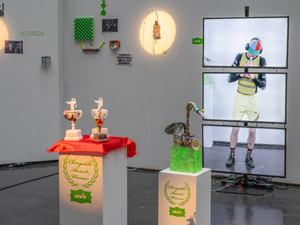
- Plastic Fugue ist eine interaktive Klanginstallation, die mit einer Kindheitserinnerung an die Konzertflöte beginnt, ein Instrument, das ich aufgrund finanzieller Schwierigkeiten nie erlernen konnte und das für mich zum Symbol des Klassismus wurde. Finanzielle Einschränkung ist nicht nur unangenehm, sondern lässt Kinder sich als ungeeignet empfinden, überhaupt etwas zu versuchen, und normalisiert dadurch Klassismus, selbst in der Kunst.
Es passierte mir erneut, als ich Malerei studierte. Die Materialien, Leinwand, Holz, Stoff, Papier, Farbe, Öl, ja sogar ein Bleistift, werden mit einer gewissen Aura vermarktet. Unsere Kunst ist längst zu sehr mit der neoliberalen Wirtschaft verstrickt, ironischerweise im Widerspruch zu ihrem eigentlichen Ziel, Freiheit. Die Qualität von Kunst über den Preis der Materialien zu definieren, ist eine Wiederholung alter Muster, so wie Blau und Grün einst als Zeichen des Reichtums galten und dem Adel vorbehalten waren.
Diese Struktur führte dazu, dass ich klassische Musik als die einzig wahre Musik betrachtete und die Leinwandmalerei, die im späten 15. Jahrhundert in Italien entstand, als den allein gültigen Standard in der bildenden Kunst. Jahrzehnte später erkannte ich, dass es jenseits dessen, was ich damals als Kunst verstand, auch Formen gab, die aus verschiedenen kulturellen Kontexten stammen und nicht als Teil dieses Standards wahrgenommen wurden. Dann versuchte ich, all diese ironischen Elemente in die verschiedenen Medien einzubringen, mit denen ich bisher gearbeitet hatte.
- Plastic Fugue ist eine interaktive Klanginstallation, die mit einer Kindheitserinnerung an die Konzertflöte beginnt, ein Instrument, das ich aufgrund finanzieller Schwierigkeiten nie erlernen konnte und das für mich zum Symbol des Klassismus wurde. Finanzielle Einschränkung ist nicht nur unangenehm, sondern lässt Kinder sich als ungeeignet empfinden, überhaupt etwas zu versuchen, und normalisiert dadurch Klassismus, selbst in der Kunst.
- Beschreibung (en)
- Plastic Fugue is an interactive sound installation project that begins with a childhood memory of the concert flute, which I couldn't learn due to financial hardship, and which came to symbolize classism to me. Being financially debilitated is not only a discomfort, but also makes children feel unqualified to even try, thereby normalizing this classism even in art.
It happened to me again when I studied painting. The materials are marketed with an aura, including canvas, wood, fabric, paper, paint, oil, and even a pencil. Our art already conspires too much with the neoliberal economy, ironically, against its supposed goal: liberty. Classifying the quality of art based on the price of materials is repetitive, much like how blue and green, once symbols of wealth, were valued and reserved for royalty in history.
This structure led me to view classical music as the only true form of music, and canvas painting, which originated in Italy in the late 15th century, as the sole standard in visual art. Decades later, I realized there was more art behind the things I once believed to be art alone. Then I attempted to gather all these ironical elements into diverse mediums I had experienced so far.
- Plastic Fugue is an interactive sound installation project that begins with a childhood memory of the concert flute, which I couldn't learn due to financial hardship, and which came to symbolize classism to me. Being financially debilitated is not only a discomfort, but also makes children feel unqualified to even try, thereby normalizing this classism even in art.
- Kategorie
- Typ des Projekts/Werks
- Schlagworte
- Datierung
- 09.07.2025 - 13.07.2025
- Mitwirkende
- Dank an
- Material
- Abmessungen
- Variable Maße
- Dauer
- Introducing air&dust: 9' 11" / Sax Recital: 16' 37"
- Ort: Institution
- Ort
- Lichthof
- Stadt
- Land
- Internetlinks
- Titel
- Plastic Fugue
- Projektleiter/in
- Semester
- Studiengang
- Typ der Abschlussarbeit
- Importiert am
- 29.06.2025
- Übergeordnete Sets
- 3
- Set enthält
- 4 1
PINK ELEPHANT
Name that can easily go onto 2 lines
Author that can easily go onto 2 lines as well
- Titel
- PINK ELEPHANT
- Titel (en)
- PINK ELEPHANT
- Autor/in
- Beschreibung (de)
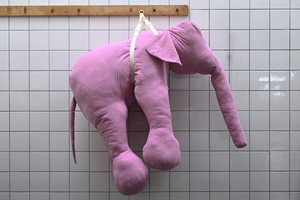
- Pink Elephant ist eine textile Skulptur, die im Rahmen der Sprint Residency im Studio Hö der Hoepfner Stiftung entstanden ist. Das Werk übersetzt das Sprichwort „Seeing Pink Elephants“ in den Raum – eine Redewendung für Halluzinationen, die normalerweise durch schweren Alkoholentzug oder alkoholische Halluzinose verursacht werden und einen Zustand des Deliriums darstellen, in dem der Geist bizarre Bilder wie leuchtend rosa Elefanten erzeugt. Damit spielt die Arbeit auf den Kontext an, in dem sie präsentiert wird, nämlich die Kunststiftung einer Brauerei.
- Pink Elephant ist eine textile Skulptur, die im Rahmen der Sprint Residency im Studio Hö der Hoepfner Stiftung entstanden ist. Das Werk übersetzt das Sprichwort „Seeing Pink Elephants“ in den Raum – eine Redewendung für Halluzinationen, die normalerweise durch schweren Alkoholentzug oder alkoholische Halluzinose verursacht werden und einen Zustand des Deliriums darstellen, in dem der Geist bizarre Bilder wie leuchtend rosa Elefanten erzeugt. Damit spielt die Arbeit auf den Kontext an, in dem sie präsentiert wird, nämlich die Kunststiftung einer Brauerei.
- Beschreibung (en)
- Pink Elephant is a textile sculpture created as part of the Sprint Residency at Studio Hö of the Hoepfner Foundation. The work translates the saying “seeing pink elephants” into space, an idiom for hallucinations, usually caused by severe alcohol withdrawal or alcoholic hallucinosis, representing a state of delirium where the mind fabricates bizarre sights like bright pink elephants. The work thus alludes to the context for which it was originally made and presented, the art foundation of a brewery.
- Kategorie
- Datierung
- 2025
- Technik/Verfahren/Formate
- Textilobjekt
- Abmessungen
- Höhe: 120cm Breite: 150cm Tiefe: 50cm
- Stadt
- Land
- Auftrag durch
- Hoepfner Stiftung
- Internetlinks
- Titel
- PINK ELEPHANT
- Semester
- Studiengang
- Importiert am
- 26.01.2026
- Übergeordnete Sets
- 1
- Set enthält
- 0 6
PERMANENT BROKENNESS
Name that can easily go onto 2 lines
Author that can easily go onto 2 lines as well
- Titel
- PERMANENT BROKENNESS
- Autor/in
- Beschreibung (de)
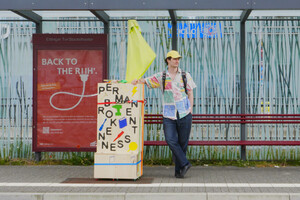
- PERMANENT BROKENNESS ist eine mobile (Infra-)Struktur, die das transformative Potential von öffentlichen Orten aufzeigt, indem sie die Reparatur von Haushalts- und Konsumgeräten verfügbar und sichtbar macht. Angelehnt an das Format des Reparatur-Cafés, werden Benutzer*innen dazu eingeladen eigenständig und gemeinsam Dinge zu reparieren. Hierbei steht nicht nur die Müllvermeidung und Ressourcenschonung im Vordergrund, sondern vor allem der selbstwirksame Zugang zur dinglichen Umwelt. Das Projekt basiert auf einer umfangreichen Recherche zur kulturellen Praxis des Reparierens und formuliert ein Gegennarrativ zu Hegemonien der Produktion, der Innovation und des unreflektierten Massenkonsums.
- Beschreibung (en)
- PERMANENT BROKENNESS is a mobile (infra-)structure that demonstrates the transformative potential of public spaces by making the repair of household and consumer appliances available and visible. Inspired by the repair café format, users are invited to repair things independently and together. The focus here is not only on avoiding waste and conserving resources, but above all on self-effective access to the material environment. The project is based on extensive research into the cultural practice of repairing and formulates a counter-narrative to hegemonies of production, innovation and unreflected mass consumption.
- Kategorie
- Schlagworte
- Datierung
- 26.06.2024
- Mitwirkende
- Dank an
- Titel
- PERMANENT BROKENNESS
- Projektleiter/in
- Semester
- Studiengang
- Typ der Abschlussarbeit
- Importiert am
- 01.11.2024
- Übergeordnete Sets
- 1
- Set enthält
- 0 6
Performende Körper und ihre militanten Accessoires
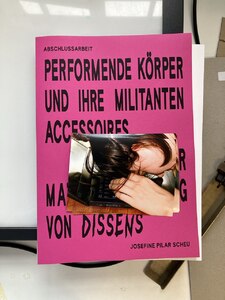
Name that can easily go onto 2 lines
Author that can easily go onto 2 lines as well
- Titel
- Performende Körper und ihre militanten Accessoires
- Untertitel
- Zur Materialisierung von Dissens
- Autor/in
- Beschreibung (de)
- Ausgehend von der Annahme, dass Protest nicht nur durch Sprache oder Körper, sondern vor allem durch Gegenstände artikuliert wird, richtet die Magistraarbeit den Fokus auf die materiell-symbolischen Politiken feministischer Protestperformances. Dafür schlage ich das Konzept des "militanten Accessoires" als Analysekategorie für feministische Performancepraktiken vor. Das Accessoire, das oft mit weiblich* gelesenen Körpern assoziiert ist, wird als scheinbar harmloses, alltägliches und schmückendes Modeelement in einen handlungsorientierten, widerständigen Gegenstand umgedeutet und neu kontextualisiert. Anhand von zwei aktivistisch-performativen Aktionen der Women’s Social and Political Union (Window Smashing Campaign, 1912 ) und Pussy Riot (Punk Prayer, 2012) werden zwei Gegenstände, ein 19cm großer Toffeehammer sowie eine neonbunte Sturmhaube, als "militante Accessoires" identifiziert. In ihrem wechselwirkenden Verhältnis mit Körpern ermöglicht das "militante Accessoire" diesen, politische und emanzipatorische Potenziale zu entfalten und Orte in Räume des Protests zu transformieren.
Dieser Analyse folgend übertrage ich die Bedingungen des "militanten Accessoires" im letzten Kapitel auf künstlerische Protestperformances. Dabei betrachte ich unter anderem künstlerische Produktionen von Selma Selman (You Have No Idea), Pipilotti Rist (Ever Is Over All) und Milica Tomić (One Day, Instead of One Night, a Burst of Machine-Gun Fire Will Flash, if Light Cannot Come Otherwise) und frage, inwiefern "militante Accessoires" nicht nur in kollektiven Protestperformances, sondern auch für einzelne Körper in feministischen, künstlerischen Performances eine Möglichkeit des Ausdrucks von Protest bieten.
Die Magistraarbeit rückt die kompliz*innenhafte Beziehung zwischen Kunst und Protest in den Fokus und zeigt, dass "militante Accessoires" nicht nur symbolische Bedeutungsträger*innen sind, sondern in ihrer relationalen und körperlich-performativen Dimension als Mittel des Widerstands agieren. Im Zusammenspiel mit den handelnden Körpern treten sie als Katalysator*innen und Vermittler*innen auf und entfalten eine doppelte Rolle als materiell-semiotische Akteur*innen.
- Ausgehend von der Annahme, dass Protest nicht nur durch Sprache oder Körper, sondern vor allem durch Gegenstände artikuliert wird, richtet die Magistraarbeit den Fokus auf die materiell-symbolischen Politiken feministischer Protestperformances. Dafür schlage ich das Konzept des "militanten Accessoires" als Analysekategorie für feministische Performancepraktiken vor. Das Accessoire, das oft mit weiblich* gelesenen Körpern assoziiert ist, wird als scheinbar harmloses, alltägliches und schmückendes Modeelement in einen handlungsorientierten, widerständigen Gegenstand umgedeutet und neu kontextualisiert. Anhand von zwei aktivistisch-performativen Aktionen der Women’s Social and Political Union (Window Smashing Campaign, 1912 ) und Pussy Riot (Punk Prayer, 2012) werden zwei Gegenstände, ein 19cm großer Toffeehammer sowie eine neonbunte Sturmhaube, als "militante Accessoires" identifiziert. In ihrem wechselwirkenden Verhältnis mit Körpern ermöglicht das "militante Accessoire" diesen, politische und emanzipatorische Potenziale zu entfalten und Orte in Räume des Protests zu transformieren.
- Beschreibung (en)
- Based on the premise that protest is articulated not only through language or the body, but above all through objects, the magistra's thesis focuses on the material-symbolic politics of feminist protest performances.
In this regard, I propose the concept of the "militant accessory" as an analytical category for feminist performance practices. The accessory as an everyday, decorative fashion element, which is often associated with bodies read as female*, is reinterpreted and transformed into an action-oriented, resistant object.
In consideration of two activist-performative actions by the Women's Social and Political Union (Window Smashing Campaign, 1912) and Pussy Riot (Punk Prayer, 2012), two objects, a 19cm toffee hammer and a neon-coloured balaclava, are identified as "militant accessories". In their reciprocal relationship with bodies, "militant accessories" enable them to develop political and emancipatory potential and transform places into spaces of protest. Building on this analysis, I apply the conditions of the "militant accessory" to artistic protest performances. To this end, I focus on artistic productions by artists such as Selma Selman (You Have No Idea), Pipilotti Rist (Ever Is Over All), and Milica Tomić (One Day, Instead of One Night, a Burst of Machine-Gun Fire Will Flash, if Light Cannot Come Otherwise), asking to what extent "militant accessories" act as tools for expressing dissent in collective protest performances and individual bodies within feminist artistic practices.
- Based on the premise that protest is articulated not only through language or the body, but above all through objects, the magistra's thesis focuses on the material-symbolic politics of feminist protest performances.
- Kategorie
- Schlagworte
- Datierung
- 01.07.2024
- Dank an
- Sprache
- Titel
- Performende Körper und ihre militanten Accessoires
- Untertitel
- Zur Materialisierung von Dissens
- Projektleiter/in
- Semester
- Studiengang
- Typ der Abschlussarbeit
- Importiert am
- 21.06.2025
- Übergeordnete Sets
- 2
- Set enthält
- 1 3
PCO 1810
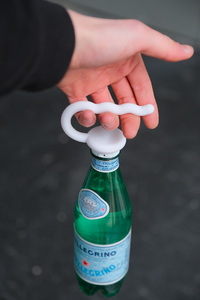
Name that can easily go onto 2 lines
Author that can easily go onto 2 lines as well
- Titel
- PCO 1810
- Titel (en)
- PCO 1810
- Autor/in
- Beschreibung (de)
- Der neu geformte Flaschendeckel fordert auf, eine Plastikflasche zu adoptieren und sie zur persönlichen Begleiterin im Alltag zu machen.
Seine Form ermöglicht es, die Flasche auf viele Weisen körpernah zu tragen und in die Umgebung einzubinden.
So wird die Flasche zur persönlichen, was dazu einlädt sie nach dem Leeren nicht wegzuwerfen, sondern immer wieder aufzufüllen.
Die ständige Verfügbarkeit von Wasser fördert ganz nebenbei einen erhöhten Wasserkonsum.
Dank des standardisierten PCO-Gewindes ist bei Bedarf ein flexibler Wechsel zu einer neuen Flasche jederzeit möglich.
- Der neu geformte Flaschendeckel fordert auf, eine Plastikflasche zu adoptieren und sie zur persönlichen Begleiterin im Alltag zu machen.
- Beschreibung (en)
- The newly shaped bottle lid invites you to adopt a plastic bottle and make it your personal companion in everyday life.
It's shape makes it possible to carry the bottle close to the body and integrate it into your environment creatively.
In this way, the bottle becomes personal, inviting you not to throw it away after emptying it, but to refill it again and again.
The constant availability of water also encourages increased water consumption.
Thanks to the standardized PCO thread, a flexible change to a new bottle is possible at any time if required.
- The newly shaped bottle lid invites you to adopt a plastic bottle and make it your personal companion in everyday life.
- Typ des Projekts/Werks
- Schlagworte
- Datierung
- 18.02.2025
- Titel
- PCO 1810
- Projektleiter/in
- Studiengang
- Importiert am
- 17.07.2025
- Übergeordnete Sets
- 1
- Set enthält
- 0 11
PARAVENT
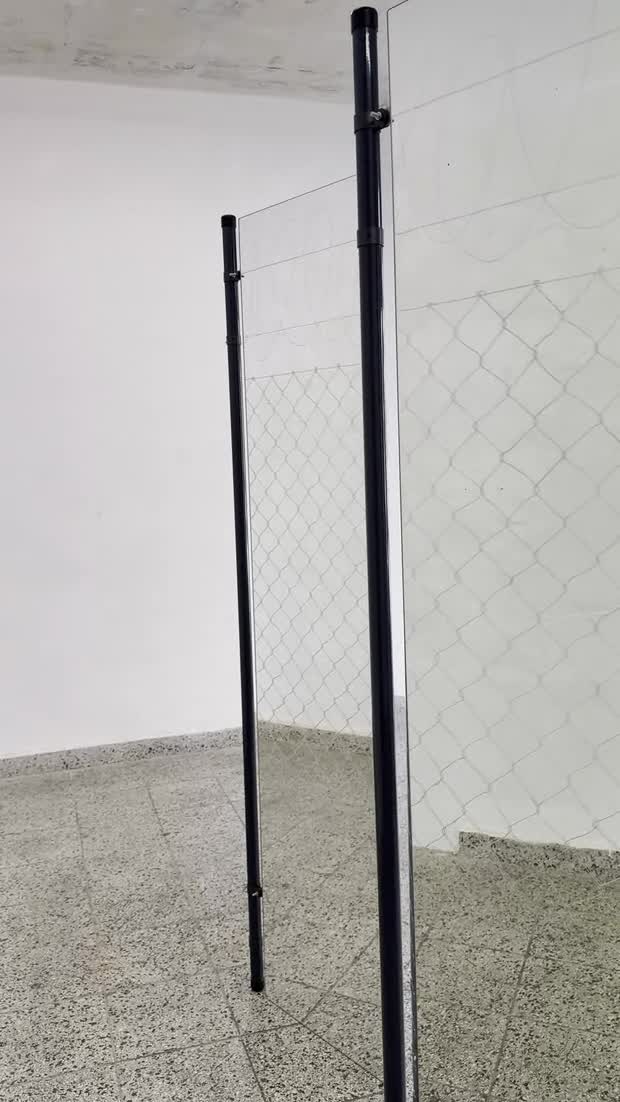
Name that can easily go onto 2 lines
Author that can easily go onto 2 lines as well
- Titel
- PARAVENT
- Autor/in
- Beschreibung (de)
- Eine multidisziplinäre audiovisuelle Diplominstallation in Form eines Paravents aus handgravierten Spiegeln. Die Arbeit vereint Medienkunst und Produktdesign und präsentiert sich als Hybrid zwischen skulpturalem Kunstobjekt und funktionalem Möbelstück.
- Beschreibung (en)
- A multidisciplinary audiovisual diploma installation in the form of a folding screen made of hand-engraved mirrors. The work merges media art and product design, presenting itself as a hybrid between sculptural art object and functional piece of furniture.
- Kategorie
- Typ des Projekts/Werks
- Schlagworte
- Datierung
- 09.07.2025
- Mitwirkende
- Dank an
- Material
- Technik/Verfahren/Formate
- Gravur, Montage, Duft, Ultraschall- und Tieffrequenztöne
- Abmessungen
- H 2m x L 3m x B 1m
- Dauer
- infinite loop
- Ort: Institution
- Stadt
- Land
- Titel
- PARAVENT
- Projektleiter/in
- Semester
- Studiengang
- Typ der Abschlussarbeit
- Importiert am
- 21.07.2025
- Übergeordnete Sets
- 2
- Set enthält
- 0 4
Onkel Rudi als...
Name that can easily go onto 2 lines
Author that can easily go onto 2 lines as well
- Titel
- Onkel Rudi als...
- Untertitel
- Zur Werk- und Wirkungsgeschichte eines Gemäldes von Gerhard Richter im Spiegel seiner Selbstäußerungen
- Autor/in
- Beschreibung (de)
- „Das Jahr 2012 stand ganz im Zeichen Gerhard Richters. So konnte man ihm im Kino bei der Arbeit bei der Arbeit über die Schulter schauen – so der bereits erstmals im September 2011 präsentierte Kinofilm Painting von Corinna Belz .., was einherging mit dem beachtlichen Erfolg auf dem secondary market, dem Auktionsmarkt, wo seine vornehmlich abstrakten Gemälde dank Höchstpreisen zu Kunstmarktlieblingen avancierten.”
„Gerade ein Gemälde scheint anders als viele andere in den letzten Jahren immer mehr mit symbolischer Bedeutung aufgeladen worden zu sein: Onkel Rudi (Abb.1), entstanden 1965. Die fotografische Vorlage entnahm Richter dem eigenen Familienalbum. Als ‚Privates öffentlich’ machen, wurde diese Vorgehensweise in der Motivauswahl der so genannten Foto-Bilder vielfach begründet. Dies zeigt sich nicht zuletzt in den Fotografien, die Richter auf Einladung der Tageszeitung „Die Welt” für eine Sonderausgabe ausdrucken ließ – und damit ist “der große Zweifler der Gegenwartskunst” erst der dritte Künstler, nach Georg Baselitz und Ellsworth Kelly, die die „Welt-Herrschaft” für einen Tag übernommen hat.”
- „Das Jahr 2012 stand ganz im Zeichen Gerhard Richters. So konnte man ihm im Kino bei der Arbeit bei der Arbeit über die Schulter schauen – so der bereits erstmals im September 2011 präsentierte Kinofilm Painting von Corinna Belz .., was einherging mit dem beachtlichen Erfolg auf dem secondary market, dem Auktionsmarkt, wo seine vornehmlich abstrakten Gemälde dank Höchstpreisen zu Kunstmarktlieblingen avancierten.”
- Beschreibung (en)
- "The year 2012 was all about Gerhard Richter. It was possible to watch him at work in the cinema - for example, the cinema film Painting by Corinna Belz, first presented in September 2011 ... which was accompanied by considerable success on the secondary market, the auction market, where his predominantly abstract paintings became art market favourites thanks to top prices.‘
’One painting in particular, unlike many others, seems to have been increasingly charged with symbolic meaning in recent years: Onkel Rudi, created in 1965. Richter took the photographic model from his own family album. This approach was often justified as “publicising the private” in the choice of motifs for the so-called photo images. This can be seen not least in the photographs that Richter had printed for a special edition at the invitation of the daily newspaper ‘Die Welt’ - making ‘the great doubter of contemporary art’ only the third artist, after Georg Baselitz and Ellsworth Kelly, to take over ‘Welt/world domination’ for a day."
- "The year 2012 was all about Gerhard Richter. It was possible to watch him at work in the cinema - for example, the cinema film Painting by Corinna Belz, first presented in September 2011 ... which was accompanied by considerable success on the secondary market, the auction market, where his predominantly abstract paintings became art market favourites thanks to top prices.‘
- Kategorie
- Typ des Projekts/Werks
- Schlagworte
- Datierung
- 15.02.2013
- Sprache
- Ort: Institution
- Titel
- Onkel Rudi als...
- Untertitel
- Zur Werk- und Wirkungsgeschichte eines Gemäldes von Gerhard Richter im Spiegel seiner Selbstäußerungen
- Projektleiter/in
- Semester
- Studiengang
- Typ der Abschlussarbeit
- Archiv-Signatur
- HfG HS 2013 01
- Externes Archiv
- Importiert am
- 20.02.2025
- Übergeordnete Sets
- 2
- Set enthält
- 0 4
Oh Tannenbaum!
Name that can easily go onto 2 lines
Author that can easily go onto 2 lines as well
- Titel
- Oh Tannenbaum!
- Titel (en)
- Oh Tannenbaum!
- Untertitel
- Designers Christmas Trees
- Beschreibung (de)
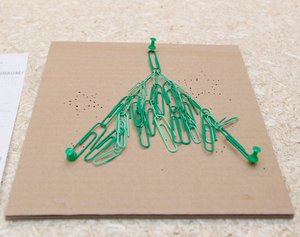
- Die Ausstellung »Oh Tannenbaum« spielt mit dem Symbol, dem allgemeinen Bild des Weihnachtsbaumes: Sie zeigt Exponate, die sich teils weit entfernt von der gängigen Vorstellung des Tannenbaums befinden und doch immer auf unterschiedlichste Art auf sie verweisen.
Der Titel der Ausstellung drückt in seiner Schreibweise sowohl die be- bis entgeisterte Betrachtung der Exponate als auch die be- bis entgeisterte gestalterische Annäherung an das Thema aus. Ob begeisternd, bestürzend oder belächelt – jedes einzelne Exponat zeugt von einem ganz eigenen Bild des jeweiligen Gestalters vom Weihnachtsbaum, das mal mehr, mal weniger mit dem allgemeinen Bild des Weihnachtsbaums korrespondiert.
Kaum ein anderes Objekt bietet hier so viel Spielraum, zeigt so viel Potential: Das Nebeneinander des einerseits so Speziellen, des eindeutigen und verbreiteten Bilds – ein in grüne Nadeln, (rote) Kugeln und (weiße) Kerzen gewandeter Kegel – und des andererseits so viel Allgemeines implizierenden Symbols macht den Weihnachtsbaum zu einem solch besonderen Objekt.
Er ist heidnisch und christlich, er steht im Super- und auf dem Weihnachtsmarkt, steht für Fruchtbarkeit und Kommerz, im Wohnzimmer und auf dem Marktplatz – in Stockholm und Kapstadt, Miami und Peking – und bietet aus verschiedensten Positionen und Blickwinkeln entsprechend unterschiedliche Gesichter.
Dass dieser Baum in all den religiösen, profankulturellen, kommerziellen, formalen, historischen, familiären, sozialen und sonstigen Böden Wurzeln schlagen konnte und aus all diesen doch zu einer so eindeutigen und unverwechselbar immergrünen Ikone wuchs, scheint den Gestaltern so viele Ansatzpunkte zu Idealisierung, Ironisierung, Kritik, Collage, Persiflage, Hinterfragung, Überzeichnung, Verballhornung oder sonstiger Gestaltung zu bieten.
Vielleicht entlocken Ihnen die Motive ja auch ein entzücktes "Oh Ja!", das ein oder andere "Oh je" und vielleicht auch so manches "Oh nein!"...
Fröhliches Betrachten!
Johannes Marmon & Johannes Müller
- Die Ausstellung »Oh Tannenbaum« spielt mit dem Symbol, dem allgemeinen Bild des Weihnachtsbaumes: Sie zeigt Exponate, die sich teils weit entfernt von der gängigen Vorstellung des Tannenbaums befinden und doch immer auf unterschiedlichste Art auf sie verweisen.
- Beschreibung (en)
- The exhibition »Oh Tannenbaum« plays with the iconic symbol of the Christmas tree. Although some of the contributions are far removed from the popular notion of what this tree looks like, each refers to the traditional image in its own way.
The unusual spelling in the title of the exhibition – “Oh” rather than the conventional “O” Tannenbaum – is intended to convey both the range of possible reactions to the works on show – from enthusiastic approval to bemused consternation – and the equally diverse creative approaches to the chosen theme. Whether it elicits a smile of amusement, an appreciative nod or a shocked gasp, each exhibit reflects its creator’s personal vision of the Christmas tree, which may or may not correspond to the standard image of this object.
Few other objects offer as much scope for interpretation or have such evocative potential as the Christmas tree. The combination of the specific and the universal is what makes it so unique – on the one hand there is the classic image of a cone-shaped object clad in green needles, (red) baubles and (white) candles, and on the other is the widespread recognition and value of this symbol.
The Christmas tree is both pagan and Christian; it can be found in supermarkets and at winter fairs; it represents fertility and commerce; it is put on display in living rooms and on public squares from Stockholm to Cape Town, Miami to Beijing – and takes on a new appearance from every different angle.
The fact that this tree has put down roots in all these different religious, secular, commercial, formal, historical, familial, social and other traditions, yet has still managed to grow into such an unmistakable evergreen icon, provides many valuable starting points for idealizing, ironic, critical, collaged, satirical, challenging, exaggerating, parodying and other individual forms of interpretation.
Now all that remains to be seen is which interpretations among those presented here will make you respond with a delighted “Oh yes!”, the occasional “Oh dear” and even the odd “Oh no!”...
Happy viewing!
Johannes Marmon & Johannes Müller
- The exhibition »Oh Tannenbaum« plays with the iconic symbol of the Christmas tree. Although some of the contributions are far removed from the popular notion of what this tree looks like, each refers to the traditional image in its own way.
- Typ des Projekts/Werks
- Datierung
- 2004 / 2013
- Ort
- Hochschule für Gestaltung
- Stadt
- Land
- Internetlinks
- Titel
- Oh Tannenbaum!
- Untertitel
- Designers Christmas Trees
- Importiert am
- 03.07.2018
- Übergeordnete Sets
- 1
- Set enthält
- 0 45
OffCuts
Name that can easily go onto 2 lines
Author that can easily go onto 2 lines as well
- Titel
- OffCuts
- Autor/in
- Beschreibung (de)
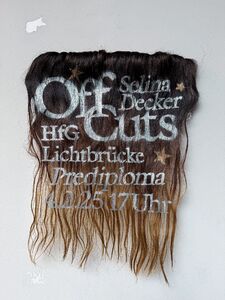
- Ich habe menschliches Haar als Material und Textil erforscht. Haare sind etwas zutiefst Persönliches, aber auch eine weithin verfügbare und oft weggeworfene Ressource. Im Rahmen meiner Recherchen habe ich das Material aus verschiedenen Blickwinkeln - wissenschaftlich, kulturell und künstlerisch - untersucht und gleichzeitig mit ihm gearbeitet, um Textilien und Teppiche mit verschiedenen Techniken herzustellen.
- Beschreibung (en)
- I explored human hair as a material and textile. Hair is something deeply personal, yet it is also a widely available and often discarded resource. Through my research, I examined the material from different perspectives - scientific, cultural, and artistic, while also working hands-on with it to create textiles and carpets using various techniques.
- Kategorie
- Typ des Projekts/Werks
- Schlagworte
- Datierung
- 04.02.2025
- Mitwirkende
- Material
- Ort: Institution
- Titel
- OffCuts
- Projektleiter/in
- Semester
- Studiengang
- Typ der Abschlussarbeit
- Importiert am
- 21.07.2025
- Übergeordnete Sets
- 1
- Set enthält
- 0 7
Oberfläche schwarz/blau/grün
Name that can easily go onto 2 lines
Author that can easily go onto 2 lines as well
- Titel
- Oberfläche schwarz/blau/grün
- Titel (en)
- Surface Black/Blue/Green
- Autor/in
- Beschreibung (de)
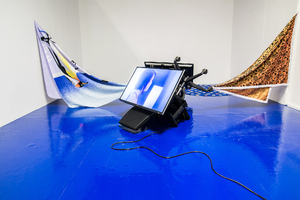
- Bei der 2-Kanal-Videoinstallation „Oberfläche schwarz/blau/grün“ zum Thema Migration werden zwei Situationen betrachtet und einander gegenübergestellt: Migration von einem Land in ein anderes und Migration auf einen anderen Planeten.
- Beschreibung (en)
- The two-channel video installation is about migration, in which two situations are considered and contrasted: migration from one country to another and migration to another planet.
- Kategorie
- Schlagworte
- Titel
- Oberfläche schwarz/blau/grün
- Projektleiter/in
- Semester
- Studiengang
- Typ der Abschlussarbeit
- Importiert am
- 01.08.2024
- Übergeordnete Sets
- 2
- Set enthält
- 1 10
NVSHU - Nüshu
Name that can easily go onto 2 lines
Author that can easily go onto 2 lines as well
- Titel
- NVSHU - Nüshu
- Autor/in
- Beschreibung (de)
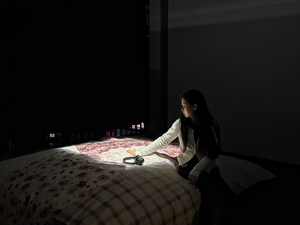
- Eine Feldstudie zur einzigen existierenden Geschlechtersprache (NVSHU - Nüshu). Mithilfe von Multimedia-Materialien konzentrierte ich mich auf die Geschichte, die sich im vergangenen Sommer zwischen mir und dem letzten Naturforscher ereignete, und dokumentierte sie. Die Papierarbeiten und Installationen drücken gleichzeitig meine eigenen Reflexionen über dieses kulturelle Phänomen aus.
- Beschreibung (en)
- A field exploration of the only existing gender language (NVSHU - Nüshu). Using multimedia materials, I focused on and documented the story that happened between me and the last naturalist last summer. The paper art and installation works simultaneously express my own reflections on this cultural phenomenon.
- Kategorie
- Typ des Projekts/Werks
- Schlagworte
- Datierung
- 26.02.2026
- Ort
- Vielfältige Kunstwerke an den Wänden der Lichtbrücke
- Stadt
- Land
- Titel
- NVSHU - Nüshu
- Projektleiter/in
- Semester
- Studiengang
- Typ der Abschlussarbeit
- Importiert am
- 27.02.2026
- Übergeordnete Sets
- 2
- Set enthält
- 0 10