Sets
417 Inhalte
- Seite 1 von 35
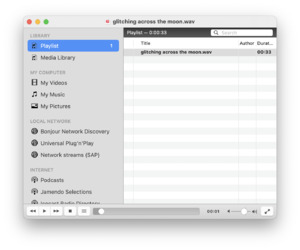
sampling for relations in the light of a satellite
Name that can easily go onto 2 lines
Author that can easily go onto 2 lines as well
- Titel
- sampling for relations in the light of a satellite
- Titel (en)
- sampling for relations in the light of a satellite
- Autor/in
- Beschreibung (de)
- In dem Format einer sampling session wird eine akustische Struktur erprobt, die das Reisen zum Mond beschwört und sich mit Raumwahrnehmungen, Imagination und kollektiven Vorstellungen auseinandersetzt. Anders als in dieser Performance ist für das menschliche Ohr eine wesentliche Präsenz im Weltraum das Geräuschlose.
- Beschreibung (en)
- In the format of a sampling session, an acoustic structure is tested that conjures a journey to the Moon, engaging with perceptions of space, imagination and collective ideas.
- Kategorie
- Typ des Projekts/Werks
- Schlagworte
- Datierung
- 04.02.2025
- Mitwirkende
- Dank an
- Anja Casser
- Filipa Cesar
- Jaya Demmer
- Hubert Distel
- Till Engelhardt
- Yvonne Fomferra
- Hanna Franke
- Heidi Herzig
- Tobias Keilbach
- Eisenhart Keimeyer
- Susanne Kriemann
- Rebekka Ladewig
- Isabel Motz
- Leonie Mühlen
- Elisabeth Potemkin
- Josefine Scheu
- Lorenz Schwarz
- Leia Morgana Walz
- Niklas Weisenbach
- Maximilian Zschiesche
- Badischer Kunstverein
- Sprache
- Material
- Ort: Institution
- Stadt
- Land
- Beteiligte Institution(en)
- Titel
- sampling for relations in the light of a satellite
- Projektleiter/in
- Semester
- Studiengang
- Typ der Abschlussarbeit
- Importiert am
- 01.10.2025
- Übergeordnete Sets
- 0
- Set enthält
- 0 5
Schaufenster Live
Name that can easily go onto 2 lines
Author that can easily go onto 2 lines as well
- Titel
- Schaufenster Live
- Titel (en)
- Schaufenster Live
- Beschreibung (de)
- Dieses Set enthält alle Projekte, die auf der Schaufenster-Website präsentiert werden.
- Titel
- Schaufenster Live
- Importiert am
- 30.09.2025
- Übergeordnete Sets
- 0
- Set enthält
- 125 0
SUB_TRAKT
Name that can easily go onto 2 lines
Author that can easily go onto 2 lines as well
- Titel
- SUB_TRAKT
- Titel (en)
- SUB_TRAKT
- Untertitel
- Eine interaktive Raum- und Klanginstallation von Anne Niemetz und Holger Förterer
- Autor/in
- Beschreibung (de)
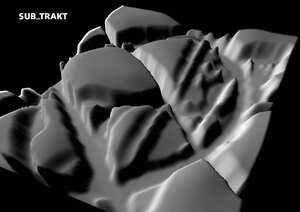
- Die Lichthöfe liegen im Zentrum der Staatlichen Hochschule für Gestaltung Karlsruhe, umgeben von Gängen und Räumen wie z.B. Studios, Büros und Cafeteria. Innerhalb des Gebäudekomplexes liegt die Hochschule zwischen dem Museum für Neue Kunst an nördlicher Seite und dem Zentrum für Kunst und Medientechnologie (ZKM) an südlicher Seite. Nicht nur die an der Hochschule tätigen Menschen durchqueren täglich die Lichthöfe, auch die Besucher der Museen werden zu Passanten des Lichthofs auf ihrem Weg von einem Ort zum anderen. Besonders hoch frequentiert wird der Lichthof 3, da er sich zwischen zwei Außentüren an westlicher und östlicher Seite befindet, und an die im Erdgeschoß befindliche Cafeteria grenzt. Manche Menschen verweilen lange im Lichthof, andere nehmen den kürzesten und somit schnellsten Weg hindurch. Die Bewegung in diesem Lichthof ist Grundlage für SUB_TRAKT.
Im Lichthof 3 wird mit einer Kamera das Geschehen im Raum von oben erfaßt. Personen innerhalb des so beobachteten Bereichs erfahren eine direkte akustische Rückkopplung ihrer Bewegungen über ein an Traversen aufgehängtes 4-Kanal-Lautsprechersystem. Jedes sich bewegende Objekt im Kamerabild generiert eine Klangstruktur im Raum, die sich – abhängig von Größe, Geschwindigkeit und Distanz der Objekte untereinander– verändert. Der Klang verstummt, wenn im Lichthof 3 keine Bewegungen mehr registriert werden.
- Die Lichthöfe liegen im Zentrum der Staatlichen Hochschule für Gestaltung Karlsruhe, umgeben von Gängen und Räumen wie z.B. Studios, Büros und Cafeteria. Innerhalb des Gebäudekomplexes liegt die Hochschule zwischen dem Museum für Neue Kunst an nördlicher Seite und dem Zentrum für Kunst und Medientechnologie (ZKM) an südlicher Seite. Nicht nur die an der Hochschule tätigen Menschen durchqueren täglich die Lichthöfe, auch die Besucher der Museen werden zu Passanten des Lichthofs auf ihrem Weg von einem Ort zum anderen. Besonders hoch frequentiert wird der Lichthof 3, da er sich zwischen zwei Außentüren an westlicher und östlicher Seite befindet, und an die im Erdgeschoß befindliche Cafeteria grenzt. Manche Menschen verweilen lange im Lichthof, andere nehmen den kürzesten und somit schnellsten Weg hindurch. Die Bewegung in diesem Lichthof ist Grundlage für SUB_TRAKT.
- Kategorie
- Typ des Projekts/Werks
- Schlagworte
- Datierung
- 28.01.2002 - 01.02.2002
- Mitwirkende
- Dank an
- Sprache
- Dauer
- täglich von 11:30 Uhr bis 16:30 Uhr
- Ort: Institution
- Ort
- Lichthof und Medientheater
- Stadt
- Land
- Internetlinks
- Titel
- SUB_TRAKT
- Untertitel
- Eine interaktive Raum- und Klanginstallation von Anne Niemetz und Holger Förterer
- Projektleiter/in
- Semester
- Studiengang
- Typ der Abschlussarbeit
- Importiert am
- 07.05.2024
- Übergeordnete Sets
- 2
- Set enthält
- 0 1
Stella Kramrisch. Kunsthistorikerin zwischen Europa und Indien.

Name that can easily go onto 2 lines
Author that can easily go onto 2 lines as well
- Titel
- Stella Kramrisch. Kunsthistorikerin zwischen Europa und Indien.
- Untertitel
- Ein Beitrag zur Depatriarchalisierung der Kunstgeschichte
- Autor/in
- Beschreibung (de)
- Warum gab es keine bedeutenden Kunsthistorikerinnen? Das Buch „Stella Kramrisch“ sucht in der Kunstgeschichtsschreibung der letzten Jahrzehnte nach einer Antwort auf diese polemische Frage. Die Erklärung für das Fehlen von Kunsthistorikerinnen findet sich in den misogynen und patriarchalen Strukturen der Geschichtsschreibung. Um die Reproduktion ebendieser Strukturen zu unterbrechen, ist das Buch dem Werk und Wirken der Kunsthistorikerin Stella Kramrisch (1896 –1993) gewidmet.
Stella Kramrisch war in den 1920er bis 1940er Jahren eine gefragte Expertin für indische Kunst. Aufgewachsen und promoviert in Wien, lehrte sie ab den frühen 1920er Jahren an Universitäten in Bengalen. Sie argumentierte für die Eigenständigkeit des künstlerischen Wertes indischer Architektur, Skulptur und Malerei. Während ihrer Zeit in Bengalen verbreitete sie ihre Thesen durch wirkungsmächtige Ausstellungen und Publikationen in Europa. Möglich war das durch die Zusammenarbeit mit Institutionen wie dem Wiener Institut für Kunstgeschichte, Springers Handbuch Kunstgeschichte, der Reformbewegung und dem Warburg Institut. Warum wissen wir nichts von dieser Tänzerin zwischen Kulturen, der scharfen Beobachterin und poetisch präzisen Autorin? Das Buch zielt auf die Erschließung des Werkes, der Methoden und des Kunstbegriffs von Kramrisch ab.
- Warum gab es keine bedeutenden Kunsthistorikerinnen? Das Buch „Stella Kramrisch“ sucht in der Kunstgeschichtsschreibung der letzten Jahrzehnte nach einer Antwort auf diese polemische Frage. Die Erklärung für das Fehlen von Kunsthistorikerinnen findet sich in den misogynen und patriarchalen Strukturen der Geschichtsschreibung. Um die Reproduktion ebendieser Strukturen zu unterbrechen, ist das Buch dem Werk und Wirken der Kunsthistorikerin Stella Kramrisch (1896 –1993) gewidmet.
- Beschreibung (en)
- Why were there no great women art historians? The book “Stella Kramrisch” seeks an answer to this polemical question in the art historiography of the last few decades. The explanation for the absence of women art historians is found in the misogynistic and patriarchal structures of much history writing. To interrupt the reproduction of these very structures, the book focuses on the work and activities of the art historian Stella Kramrisch (1896-1993).
In Europe, Stella Kramrisch was a sought-after expert on Indian art from the 1920s to the 1940s. Raised and graduated in Vienna, she taught at universities in Bengal from the early 1920s. Central to her research was the argument for the autonomy of the artistic value of Indian architecture, sculpture, and painting. During her time in Bengal, she spread her theses through influential exhibitions and publications in Europe. This became possible through collaborations with institutions such as the Vienna Institute for Art History, Springer’s Handbook of Art History, the Reform Movement, and the Warburg Institute. Why do we know nothing of this dancer between cultures, a keen observer and poetically precise writer? The book aims to make Kramrisch’s works, methods, and concept of art accessible.
- Why were there no great women art historians? The book “Stella Kramrisch” seeks an answer to this polemical question in the art historiography of the last few decades. The explanation for the absence of women art historians is found in the misogynistic and patriarchal structures of much history writing. To interrupt the reproduction of these very structures, the book focuses on the work and activities of the art historian Stella Kramrisch (1896-1993).
- Kategorie
- Typ des Projekts/Werks
- Schlagworte
- Ort: Institution
- Titel
- Stella Kramrisch. Kunsthistorikerin zwischen Europa und Indien.
- Untertitel
- Ein Beitrag zur Depatriarchalisierung der Kunstgeschichte
- Projektleiter/in
- Semester
- Studiengang
- Typ der Abschlussarbeit
- Importiert am
- 28.07.2025
- Übergeordnete Sets
- 2
- Set enthält
- 0 2
Manchmal ist Schmerz ganz leise
Name that can easily go onto 2 lines
Author that can easily go onto 2 lines as well
- Titel
- Manchmal ist Schmerz ganz leise
- Titel (en)
- Sometimes pain is very quiet
- Untertitel
- Dokumentation der Installation
- Untertitel des Projekts/Werks (en)
- Documentation of the installation
- Autor/in
- Kategorie
- Typ des Projekts/Werks
- Schlagworte
- Datierung
- 30.10.2024
- Titel
- Manchmal ist Schmerz ganz leise
- Untertitel
- Dokumentation der Installation
- Projektleiter/in
- Semester
- Studiengang
- Typ der Abschlussarbeit
- Importiert am
- 17.04.2025
- Übergeordnete Sets
- 1
- Set enthält
- 0 13
Shifting Paradigms Symposium
- Titel
- Shifting Paradigms Symposium
- Autor/in
- Schlagworte
- Datierung
- 05.12.2024
- Titel
- Shifting Paradigms Symposium
- Importiert am
- 25.08.2025
- Übergeordnete Sets
- 0
- Set enthält
- 0 0
Preisverleihung Rundgang 2025
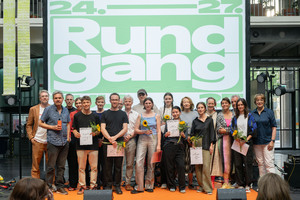
Name that can easily go onto 2 lines
Author that can easily go onto 2 lines as well
- Titel
- Preisverleihung Rundgang 2025
- Autor/in
- Datierung
- 24.07.2025
- Titel
- Preisverleihung Rundgang 2025
- Importiert am
- 28.07.2025
- Übergeordnete Sets
- 0
- Set enthält
- 0 18
Fernand Léger und Ballet Mécanique
Name that can easily go onto 2 lines
Author that can easily go onto 2 lines as well
- Titel
- Fernand Léger und Ballet Mécanique
- Untertitel
- Film als Kunst, Filmkunst, Film und Kunst
- Autor/in
- Beschreibung (de)
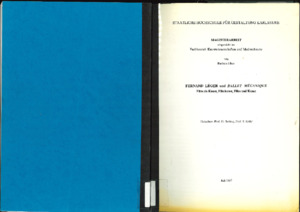
- „‚Ballet Mécanique‘ ist zu einer Zeit entstanden, die als Höhepunkt, und immer wieder auch als Wendepunkt in Légers Malerei verstanden wird. Der Film fügt sich nicht nur in seine künstlerische Konzeption ein, sondern hat diese auch zum Thema. ‚Ballet Mécanique‘ ist ein Manifest, nicht nur für seine Kunst, sondern auch für das Kino. Wie bei seinen Literatenfreunden ist Légers intensive Auseinandersetzung mit dem Kino von einer doppelten Intention geprägt, von deren Hinwendung zu dem jungen Medium als potentiellen Mittel, die eigene Kunst zu reformieren, und vom Entwurf eines neuen Konzepts von Film, der seinerseits durch die gestalterische Intervention von Dichtern und Malern zu seinen eigenen Ausdrucksmitteln findet."
- Beschreibung (en)
- “'Ballet Mécanique' was created at a time that is seen as a high point, and also repeatedly as a turning point, in Léger's painting. The film not only fits into his artistic conception, but also has it as its theme. 'Ballet Mécanique' is a manifesto, not only for his art, but also for cinema. As with his literary friends, Léger's intensive engagement with cinema is characterized by a double intention, by their turn to the young medium as a potential means of reforming their own art, and by the design of a new concept of film, which in turn finds its own means of expression through the creative intervention of poets and painters.”
- Kategorie
- Schlagworte
- Datierung
- Juli 1997
- Sprache
- Ort: Institution
- Stadt
- Land
- Titel
- Fernand Léger und Ballet Mécanique
- Untertitel
- Film als Kunst, Filmkunst, Film und Kunst
- Projektleiter/in
- Semester
- Studiengang
- Typ der Abschlussarbeit
- Archiv-Signatur
- HfG HS 1997 02
- Externes Archiv
- Importiert am
- 11.01.2024
- Übergeordnete Sets
- 2
- Set enthält
- 0 2
Path Tiles
Name that can easily go onto 2 lines
Author that can easily go onto 2 lines as well
- Titel
- Path Tiles
- Titel (en)
- Path Tiles
- Untertitel
- Knitting Coordinates into Patterns
- Untertitel des Projekts/Werks (en)
- Knitting Coordinates into Patterns
- Autor/in
- Beschreibung (de)
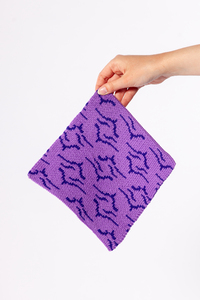
- Unsere Bewegungen können wie eine Performance begriffen werden, wie etwas Flüchtiges, das nur im Moment existiert und nach der Vollendung weder sichtbar noch fassbar ist. Nur die Erinnerungen an das Erlebte bleiben als Spuren der Bewegung in unserem Geist erhalten. Path Tiles nutzt GPS-Daten, um diese besonderen Momente individueller Erfahrung einzufangen und in Form von Mustern in die physische Welt des sicht- und tastbaren Textils zu übertragen. Es entsteht eine tiefe Bindung zwischen Mensch und Objekt.
Jedes Muster steht für eine Reise, für eine Erfahrung. Dabei ist es egal, ob es sich um einen Spaziergang in der Natur, eine Reise in ein fernes Land oder einen wiederkehrenden Weg des Alltags handelt. Die daraus entstehenden Muster erzählen von den Gefühlen und Begegnungen, von dem Gesehenen und dem Erlebten und erinnern uns an das, was uns ausmacht.
Mit der Path Tiles Website habe ich ein Werkzeug entwickelt, um diese Reisen in Form von GPS-Daten in strickbare Muster zu verwandeln. Ich habe die Website so gestaltet, dass die Ästhetik des Musters durch zusätzliche Verschiebung, Verzerrung und Spiegelung individualisiert werden kann. Dies stellt außerdem sicher, dass Menschen mit der gleichen Strecke trotzdem persönliche Muster erstellen können. Das entstandene Muster wird dann in Form eines gestricktes Objekts zum Leben erweckt und wird zur materialisierten persönlichen Erfahrung. Durch die Einbeziehung des Nutzers in den Gestaltungsprozess entsteht eine weitere Ebene der Bindung zwischen Mensch und Objekt.
Für das Diplom habe ich exemplarisch fünf Objekte gestaltet, die mit diesen Mustern personalisiert werden können. Das Design der Objekte konzentriert sich darauf, das Reisen oder das „unterwegs sein“ in verschiedenen Situationen zu erleichtern. In diesem Prozess ist ein Schal mit Taschen, ein Umhang, der gleichzeitig als Decke genutzt werden kann, eine Tasche, die zugleich ein Kissen ist, eine Balaklava mit Ohrenschützern und ein Nackenkissen mit Rückenstütze und Taschen in den verlängerten Seitenteilen entstanden.
Für die finale Herstellung der Objekte haben fünf Personen die GPS-Daten verschiedener Routen verwendet um ihre persönlichen Muster auf der Path Tiles Website zu erstellen. Jedes der Objekte wurde zu einer Person, einer Reise, einem Muster zugeordnet und entsprechend produziert. Die fertigen Objekte sind die materialisierten Erfahrungen und Erinnerungen dieser Menschen.
Begleitend zu dieser Arbeit habe ich mit der Sammlung von Reisen in Form von Geschichten und Mustern begonnen. Hierbei ist ein kleines Booklet entstanden, das die Beiträge von 19 Menschen beinhaltet. Sie alle haben eine Erinnerung von einer Reise in Form von Text und Muster mit mir geteilt.
- Unsere Bewegungen können wie eine Performance begriffen werden, wie etwas Flüchtiges, das nur im Moment existiert und nach der Vollendung weder sichtbar noch fassbar ist. Nur die Erinnerungen an das Erlebte bleiben als Spuren der Bewegung in unserem Geist erhalten. Path Tiles nutzt GPS-Daten, um diese besonderen Momente individueller Erfahrung einzufangen und in Form von Mustern in die physische Welt des sicht- und tastbaren Textils zu übertragen. Es entsteht eine tiefe Bindung zwischen Mensch und Objekt.
- Beschreibung (en)
- Movement is like a performance, something momentous becoming invisible and untouchable as soon as it is complete. Only the memories of the experience remain as traces of the movement in our minds. Path Tiles captures these valuable moments of individual experiences and transfers them into the physical world of visible and tactile textiles, creating a deep relationship between person and object.
Each pattern represents a journey, an experience. It doesn't matter whether it's a walk in nature, a trip to a distant country, or a repeating path in everyday life. The resulting patterns tell of the emotions evoked by landscapes, the lessons learned along the way and the power of the journey to shape our lives.
With the Path Tiles website, I have developed a tool to transform these journeys into knitable patterns using GPS data. I designed the website so that the aesthetics of the pattern can be individualized through shifting, distorting, and mirroring. This ensures that even people with the same route can create personal patterns. The resulting pattern is then brought to life in the form of a knitted object, becoming a materialized personal experience. By involving the user in the design process, an additional layer of connection between person and object is created.
For my diploma, I have designed five objects that can be personalized with these patterns. The design of these objects focuses on making travelling or being "on the go" more comfortable. This process has resulted in the creation of a scarf with pockets, a cape that can also be used as a blanket, a bag that doubles as a pillow, a balaclava with ear cushions, and a neck pillow with back support and pockets in the extended side parts.
For the final production of the objects, five people used the GPS data of different routes to create their personal patterns on the Path Tiles website. Each of the objects was assigned to a person, a journey, a pattern, and then produced accordingly. The finished objects are the materialized experiences and memories of these people.
Accompanying this work, I have started collecting journeys in the form of stories and patterns. This resulted in a small booklet that includes contributions from 19 people. They all shared a memory of a journey in the form of text and pattern with me.
- Movement is like a performance, something momentous becoming invisible and untouchable as soon as it is complete. Only the memories of the experience remain as traces of the movement in our minds. Path Tiles captures these valuable moments of individual experiences and transfers them into the physical world of visible and tactile textiles, creating a deep relationship between person and object.
- Kategorie
- Typ des Projekts/Werks
- Schlagworte
- Datierung
- April 2024
- Mitwirkende
- Dank an
- Material
- Ort: Institution
- Internetlinks
- Bemerkungen
- Die Diplomarbeit wurde von Prof. Wieki Somers und Prof. Céline Condorelli betreut.
- Titel
- Path Tiles
- Untertitel
- Knitting Coordinates into Patterns
- Projektleiter/in
- Semester
- Studiengang
- Typ der Abschlussarbeit
- Importiert am
- 28.05.2024
- Übergeordnete Sets
- 4
- Set enthält
- 0 42
Versuche zu überschreiben
Name that can easily go onto 2 lines
Author that can easily go onto 2 lines as well
- Titel
- Versuche zu überschreiben
- Titel (en)
- Attempts to rewrite
- Untertitel
- Ausstellung mit drei Videoarbeiten: Auf dem Weg zum Bahnhof, Prolog: Im Zoo, Germania Girl - Konzert im Schloss!
- Untertitel des Projekts/Werks (en)
- Exhibition with three video works: On the way to the station, Prologue: In the zoo, Germania Girl - Concert in the castle!
- Autor/in
- Beschreibung (de)
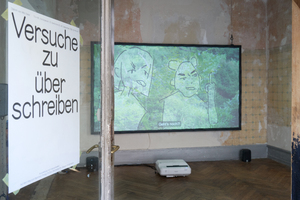
- Obszön, nerdy und aus Japan: Anime im Fernsehen zu schauen galt in vielen Haushalten in Deutschland als verrufen. Diese Rezeption von Anime entspricht zugleich den exotisierenden Stereotypen, die der (vorgeblich gesittete) Westen auf Japan projiziert. In ihrer Diplomarbeit nutzt Miki Feller Anime als Medium, um über anti-asiatischen Rassismus zu sprechen. Entstanden sind drei Videoarbeiten, die sie in ihrer Ausstellung „Versuche zu überschreiben“ gezeigt hat. Jedes Video erzählt eine eigene Geschichte, die in Karlsruhe spielt, unter anderem am Bahnhof, am Zoo und am Schloss. Es sind Versuche, eine vorherrschend weiße Umgebung zu beschreiben, sich dazu zu positionieren und davon zu distanzieren.
Die Videos wurden in Zusammenarbeit mit folgenden Personen realisiert und ausgestellt: „Versuche zu überschreiben“ mit Max Mandery (Dramaturgische Beratung), Bruno Jacoby (Grafik), Leia Walz (Ausstellungsgestaltung), Jaya Demmer (Textil), Johannes Thimm und Lina Determann (Rampe) / „Auf dem Weg zum Bahnhof“ mit Bruno Jacoby (Grafik) / „Prolog: Im Zoo“ mit Sophia Stadler (Storyboard, Schnitt & Fotos) / „Germania Girl – Konzert im Schloss!“ mit Max Mandery (Dramaturgische Beratung), Bruno Jacoby (Grafik), Yun-Wen Liu (Fotos & Farbkorrektur), Vanessa Bosch (Musik), Ricarda Fischer (Musik & Sounddesign), Meret Bhend und Paulina Mimberg (Farbkorrektur), Luise Peschko (Dialog Editing) sowie Nele Faust, Alejandra Janus, Melanie Berner, Rita Andrulyte, Nini Lü, Jörg Stegmann, Laura Haak und Josefine Scheu (Stimmen).
- Obszön, nerdy und aus Japan: Anime im Fernsehen zu schauen galt in vielen Haushalten in Deutschland als verrufen. Diese Rezeption von Anime entspricht zugleich den exotisierenden Stereotypen, die der (vorgeblich gesittete) Westen auf Japan projiziert. In ihrer Diplomarbeit nutzt Miki Feller Anime als Medium, um über anti-asiatischen Rassismus zu sprechen. Entstanden sind drei Videoarbeiten, die sie in ihrer Ausstellung „Versuche zu überschreiben“ gezeigt hat. Jedes Video erzählt eine eigene Geschichte, die in Karlsruhe spielt, unter anderem am Bahnhof, am Zoo und am Schloss. Es sind Versuche, eine vorherrschend weiße Umgebung zu beschreiben, sich dazu zu positionieren und davon zu distanzieren.
- Beschreibung (en)
- Obscene, nerdy, and from Japan: In many German households, it was forbidden to watch anime on television. This perception of anime mirrors the exoticizing stereotypes projected onto Japan by the (allegedly civilized) West. In her diploma project, Miki Feller addresses anti-Asian racism in Germany by using anime as the medium. She created three video works and showcased them in the exhibition “Versuche zu überschreiben.” Each video tells a story set in Karlsruhe, for example, at the train station, the zoo, and the castle. These videos serve as attempts to describe a predominantly white environment, to position oneself in relation to it, and to distance oneself from it.
The videos were created and presented in collaboration with the following people: "Versuche zu überschreiben" with Max Mandery (dramaturgical consultation), Bruno Jacoby (graphics), Leia Walz (exhibition design), Jaya Demmer (textile), Johannes Thimm and Lina Determann (ramp) / "Auf dem Weg zum Bahnhof" with Bruno Jacoby (graphics) / "Prolog: Im Zoo" with Sophia Stadler (storyboard, editing & photos) / "Germania Girl - Konzert im Schloss!" with Max Mandery (dramaturgical consultation), Bruno Jacoby (graphics), Yun-Wen Liu (photos & color grading), Vanessa Bosch (music), Ricarda Fischer (music & sound design), Meret Bhend and Paulina Mimberg (color grading), Luise Peschko (dialog editing) as well as Nele Faust, Alejandra Janus, Melanie Berner, Rita Andrulyte, Nini Lü, Jörg Stegmann, Laura Haak, and Josefine Scheu (voice acting).
- Obscene, nerdy, and from Japan: In many German households, it was forbidden to watch anime on television. This perception of anime mirrors the exoticizing stereotypes projected onto Japan by the (allegedly civilized) West. In her diploma project, Miki Feller addresses anti-Asian racism in Germany by using anime as the medium. She created three video works and showcased them in the exhibition “Versuche zu überschreiben.” Each video tells a story set in Karlsruhe, for example, at the train station, the zoo, and the castle. These videos serve as attempts to describe a predominantly white environment, to position oneself in relation to it, and to distance oneself from it.
- Typ des Projekts/Werks
- Schlagworte
- Datierung
- 22.09.2023 - 24.09.2023
- Mitwirkende
- Dank an
- Sprache
- Ort: Institution
- Stadt
- Land
- Titel
- Versuche zu überschreiben
- Untertitel
- Ausstellung mit drei Videoarbeiten: Auf dem Weg zum Bahnhof, Prolog: Im Zoo, Germania Girl - Konzert im Schloss!
- Projektleiter/in
- Semester
- Studiengang
- Typ der Abschlussarbeit
- Importiert am
- 04.03.2024
- Übergeordnete Sets
- 3
- Set enthält
- 0 9
An atmosphere of usership
- Titel
- An atmosphere of usership
- Untertitel
- Vom Nutzen der Kunst
- Autor/in
- Beschreibung (de)
- Experts loathe them, spectators oppose them, owners belittle them, yet users abide… though not by the rules. Users and the use that they make — which together we refer to as usership — form a kind of atmosphere, in both the most literal and most figurative sense. Unlike ownership, usership is not a fiction bolstered and legitimated by institutions, but a collective subjectivity comprised of all the agents — human and other-than-human — who make use of a given territory or environment, ensuring the oxygen exchange of the atmosphere. Indeed, as users they are the artisans of that environment, the landscapers and artists of the atmosphere that sustains it. What would it mean, though, for public institutions to foster an atmosphere of usership?
- Beschreibung (en)
- Experts loathe them, spectators oppose them, owners belittle them, yet users abide… though not by the rules. Users and the use that they make — which together we refer to as usership — form a kind of atmosphere, in both the most literal and most figurative sense. Unlike ownership, usership is not a fiction bolstered and legitimated by institutions, but a collective subjectivity comprised of all the agents — human and other-than-human — who make use of a given territory or environment, ensuring the oxygen exchange of the atmosphere. Indeed, as users they are the artisans of that environment, the landscapers and artists of the atmosphere that sustains it. What would it mean, though, for public institutions to foster an atmosphere of usership?
- Typ des Projekts/Werks
- Schlagworte
- Datierung
- 08.02.2024
- Ort: Institution
- Ort
- Medialonge
- Stadt
- Land
- Internetlinks
- Titel
- An atmosphere of usership
- Untertitel
- Vom Nutzen der Kunst
- Importiert am
- 20.02.2024
- Übergeordnete Sets
- 1
- Set enthält
- 0 0
MYCOSKENE
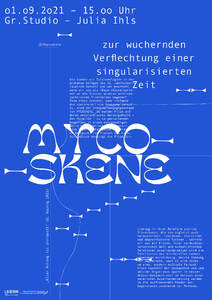
Name that can easily go onto 2 lines
Author that can easily go onto 2 lines as well
- Titel
- MYCOSKENE
- Titel (en)
- Mycoskene
- Untertitel
- Zur wuchernden Verflechtung einer singularisierten Zeit
- Untertitel des Projekts/Werks (en)
- Or on the rampant interweaving of a singularized time
- Autor/in
- Beschreibung (de)
- MYCOSKENE ist eine material-theoretische Verflechtung rund um das Thema Mycelium, dem unterirdischen Hyphengeflecht der Pilze. Ob als sozio-philosophische Metapher, Bau- und Gestaltungsmaterial oder in Form einer multi-medialen Rauminstallation – in ihrer Arbeit folgte die Szenografin und Konzepterin Julia Ihls über 8 Monate den fein verwobenen Strukturen jener Organismen, die durch ihre eigene Zeitlichkeit und Qualitäten zu maßgeblichen Co-Gestaltenden wurden.
- Beschreibung (en)
- MYCOSKENE is a material-theoretical interweaving around the theme of mycelium, the subterranean network of hyphae of fungi. Whether as a socio-philosophical metaphor, building and design material or in the form of a multi-media spatial installation - in her work, scenographer and conceptual designer Julia Ihls followed the finely interwoven structures of these organisms for over 8 months, which became decisive co-creators through their own temporality and qualities.
- Kategorie
- Typ des Projekts/Werks
- Schlagworte
- Datierung
- 01.09.2021 - 03.09.2021
- Mitwirkende
- Sprache
- Ort: Institution
- Ort
- Großes Studio
- Stadt
- Land
- Internetlinks
- Walkthrough Video: https://vimeo.com/653230334
Doku Film:
Instagram: @mycoskene https://www.instagram.com/mycoskene/?hl=de
Website: https://mycoskene-.hotglue.me/
- Walkthrough Video: https://vimeo.com/653230334
- Titel
- MYCOSKENE
- Untertitel
- Zur wuchernden Verflechtung einer singularisierten Zeit
- Projektleiter/in
- Semester
- Studiengang
- Typ der Abschlussarbeit
- Importiert am
- 14.12.2023
- Übergeordnete Sets
- 2
- Set enthält
- 0 11