26 GRAD: Ausgestellte Projekte
26 GRAD: Ausgestellte Projekte
| Titel |
|
20 Inhalte
- Seite 1 von 2
The Violent Container
Name that can easily go onto 2 lines
Author that can easily go onto 2 lines as well
- Titel
- The Violent Container
- Titel (en)
- The Violent Container
- Untertitel
- Exhibition and handbook
- Untertitel des Projekts/Werks (en)
- Exhibition and handbook
- Autor/in
- Beschreibung (de)
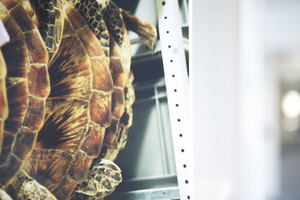
- „The Violent Container“ konzentriert sich auf das kulturelle Phänomen des Käfigs und das Einsperren als Praxis, um Objekte oder Körper einzuschließen, zu kategorisieren, einzuschränken und sich anzueignen – sowie als Mittel, um sie zu sammeln, zu schätzen, zu bewahren und zu schützen.
Das Projekt umfasst eine Ausstellung und eine Publikation, die die verschiedenen Eigenschaften und Funktionen der sich wandelnden Formen des Käfigs untersuchen und dabei erforschen, wie Käfige nicht nur die Verwaltung lebender oder toter Körper und Objekte ermöglichen, sondern auch die Art und Weise bestimmen, wie wir sie wahrnehmen.
- „The Violent Container“ konzentriert sich auf das kulturelle Phänomen des Käfigs und das Einsperren als Praxis, um Objekte oder Körper einzuschließen, zu kategorisieren, einzuschränken und sich anzueignen – sowie als Mittel, um sie zu sammeln, zu schätzen, zu bewahren und zu schützen.
- Beschreibung (en)
- "The Violent Container" focuses on the cultural phenomenon of the cage, and caging as a practice to contain, categorise, restrict, and appropriate objects or bodies – as well as a tool to collect, treasure, preserve, and protect them.
The project comprises an exhibition and a publication that examine the various properties and functions of the cage’s shifting forms, exploring how cages not only enable the administration of living or dead bodies and objects, but also govern the ways in which we perceive them.
- "The Violent Container" focuses on the cultural phenomenon of the cage, and caging as a practice to contain, categorise, restrict, and appropriate objects or bodies – as well as a tool to collect, treasure, preserve, and protect them.
- Kategorie
- Typ des Projekts/Werks
- Schlagworte
- Mitwirkende
- Ort
- Rheinstetten, Karlsruhe
- Titel
- The Violent Container
- Untertitel
- Exhibition and handbook
- Projektleiter/in
- Semester
- Studiengang
- Typ der Abschlussarbeit
- Importiert am
- 21.09.2025
- Übergeordnete Sets
- 4
- Set enthält
- 0 14
Multiplizierte Objekte als Form von Selbstorganisation
Name that can easily go onto 2 lines
Author that can easily go onto 2 lines as well
- Titel
- Multiplizierte Objekte als Form von Selbstorganisation
- Titel (en)
- Multiplied objects as a form of self-organization
- Untertitel
- Zur Parallelität von Kunstpublikation und Multiple in den 1960er Jahren
- Untertitel des Projekts/Werks (en)
- On the Parallelism Between Art Publications and Multiples in the 1960s
- Autor/in
- Beschreibung (de)
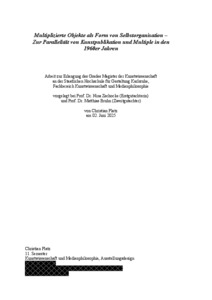
- Kunstpublikationen und Multiples (Auflagenobjekte) der 1960er Jahren weisen strukturelle und konzeptuelle Parallelen auf, die in dieser Arbeit als Ausdruck selbstorganisierter künstlerischer Praxis zu verstehen sind. Ausgehend von einer kritischen Auseinandersetzung mit dem etablierten Kunstsystem entstanden in dieser Zeit alternative Formate der Produktion und Distribution, die auf Vervielfältigung, Partizipation und Autonomie basierten. Anhand exemplarischer Fallbeispiele, darunter die intermedialen Publikationsobjekte "dokumentation b", die "Edition Et", die Zeitschriften "spirale" und "rot" sowie die Multiples der Edition "MAT" und die Serienobjekte der "Gruppe X", wird gezeigt, wie sich die entsprechenden Werkformen als kuratorische, serielle und partizipative Medien positionieren lassen. Die Arbeit kontextualisiert diese Formate sowohl medienästhetisch als auch kulturpolitisch und versteht sie als materielle Strategien der Selbstorganisation. Sie argumentiert, dass Kunstpublikationen und Multiples nicht nur als Ausdruck einer alternativen Öffentlichkeit fungierten, sondern mit ihnen auch frühe Modelle einer dezentralen künstlerischen Infrastruktur entwickelt wurden. Diese Betrachtung ermöglicht eine genealogische Neubewertung des Multiples, indem sie sich vom etablierten, auf Marcel Duchamp fixierten Diskursrahmen löst und eine weiter gefasste Perspektive eröffnet.
- Kunstpublikationen und Multiples (Auflagenobjekte) der 1960er Jahren weisen strukturelle und konzeptuelle Parallelen auf, die in dieser Arbeit als Ausdruck selbstorganisierter künstlerischer Praxis zu verstehen sind. Ausgehend von einer kritischen Auseinandersetzung mit dem etablierten Kunstsystem entstanden in dieser Zeit alternative Formate der Produktion und Distribution, die auf Vervielfältigung, Partizipation und Autonomie basierten. Anhand exemplarischer Fallbeispiele, darunter die intermedialen Publikationsobjekte "dokumentation b", die "Edition Et", die Zeitschriften "spirale" und "rot" sowie die Multiples der Edition "MAT" und die Serienobjekte der "Gruppe X", wird gezeigt, wie sich die entsprechenden Werkformen als kuratorische, serielle und partizipative Medien positionieren lassen. Die Arbeit kontextualisiert diese Formate sowohl medienästhetisch als auch kulturpolitisch und versteht sie als materielle Strategien der Selbstorganisation. Sie argumentiert, dass Kunstpublikationen und Multiples nicht nur als Ausdruck einer alternativen Öffentlichkeit fungierten, sondern mit ihnen auch frühe Modelle einer dezentralen künstlerischen Infrastruktur entwickelt wurden. Diese Betrachtung ermöglicht eine genealogische Neubewertung des Multiples, indem sie sich vom etablierten, auf Marcel Duchamp fixierten Diskursrahmen löst und eine weiter gefasste Perspektive eröffnet.
- Beschreibung (en)
- Art publications and multiples from the 1960s share structural and conceptual parallels that can be understood in this work as expressions of self-organized artistic practice. Based on a critical examination of the established art system, alternative formats of production and distribution emerged during this period that were based on reproduction, participation, and autonomy. Using exemplary case studies, including the intermedia publication objects "dokumentation b", "Edition Et", the magazines "spirale" and "rot", the multiples of Edition "MAT", and the serial objects of "Gruppe X", this work shows how the corresponding forms of work can be positioned as curatorial, serial, and participatory media. The work contextualizes these formats both in terms of media aesthetics and cultural politics and understands them as material strategies of self-organization. It argues that art publications and multiples not only functioned as expressions of an alternative public sphere, but also served to develop early models of a decentralized artistic infrastructure. This perspective enables a genealogical reassessment of the multiple by breaking away from the established discourse framework centered on Marcel Duchamp and opening up a broader perspective.
- Kategorie
- Typ des Projekts/Werks
- Schlagworte
- Datierung
- 02.06.2025
- Dank an
- Sprache
- Abmessungen
- 116 Seiten (77 Textseiten)
- Titel
- Multiplizierte Objekte als Form von Selbstorganisation
- Untertitel
- Zur Parallelität von Kunstpublikation und Multiple in den 1960er Jahren
- Projektleiter/in
- Semester
- Studiengang
- Typ der Abschlussarbeit
- Importiert am
- 16.03.2026
- Übergeordnete Sets
- 4
- Set enthält
- 0 3
Writing the History Of the Future
Name that can easily go onto 2 lines
Author that can easily go onto 2 lines as well
- Titel
- Writing the History Of the Future
- Titel (en)
- Writing the History Of the Future
- Untertitel
- Das ZKM und die kulturelle Arbeit der Medienkunstkonservierung
- Untertitel des Projekts/Werks (en)
- ZKM and the Cultural Work of Media Art Conservation
- Autor/in
- Beschreibung (de)
- Obwohl die Medienkunst in der zeitgenössischen Kultur zunehmend an Bedeutung gewinnt, ist sie in institutionellen Sammlungen immer noch unterrepräsentiert. Die schnelle technologische Entwicklung von Hard- und Software sowie geplante Obsoleszenz stellen die Konservierung vor große Herausforderungen. Seit den 1960er Jahren hat sich die westliche Kunst von objektbasierten hin zu performativen und prozessorientierten Formen gewandelt. Dies wurde von einem Paradigmenwechsel in der Konservierungstheorie begleitet, in der Konzepte und Subjekt stärker gewichtet werden als Materialität und Objekt. Museen und der Kunstmarkt haben jedoch Schwierigkeiten, ihre Sammelpraktiken entsprechend anzupassen. In dieser Arbeit werden die Herausforderungen der Integration von Medienkunst in institutionelle Kontexte untersucht und der Bedarf an theoretischen und praktischen Anpassungen betont. Ziel ist es, Strategien zur nachhaltigen Einbindung technologisch vermittelter Kunstwerke in Sammlungen und das kulturelle Gedächtnis zu entwickeln. Im Fokus steht dabei das ZKM in Karlsruhe als führende Institution der Medienkunstkonservierung. Auf Basis interdisziplinärer Forschung und Interviews werden zentrale Themen wie Interaktivität, Variabilität, Authentizität, Zeitlichkeit und der Wandel des Kunstobjekts analysiert.
- Beschreibung (en)
- Media art, despite its growing prominence in contemporary culture, remains underrepresented in institutional collections. Rapid technological obsolescence—affecting both hardware and software—poses major challenges for preservation. Since the 1960s, Western art has shifted from object-based works toward performative and process-oriented practices, paralleled by changes in conservation theory that prioritize concepts and subject over object and materiality. However, museums and the art market have struggled to adapt their collecting practices to these developments. This thesis examines the challenges of integrating media art into institutional contexts, emphasizing the need for conceptual and theoretical shifts in both museum practices and art theory. It aims to describe the strategies for incorporating technologically mediated artworks into collections and cultural memory. The study focuses on the ZKM (Center for Art and Media) in Karlsruhe, a leading institution in media art preservation. Through analysis of its frameworks and interdisciplinary research including interviews, the thesis explores key themes like interactivity, variability, authenticity, temporality, and the evolving nature of the art object.
- Kategorie
- Schlagworte
- Dank an
- Sprache
- Abmessungen
- 272 Seiten (169 Textseiten)
- Titel
- Writing the History Of the Future
- Untertitel
- Das ZKM und die kulturelle Arbeit der Medienkunstkonservierung
- Projektleiter/in
- Semester
- Studiengang
- Typ der Abschlussarbeit
- Importiert am
- 25.03.2026
- Übergeordnete Sets
- 4
- Set enthält
- 0 5
Das Wasser ist silberhell und durchsichtig und möchte unberührt sein
Name that can easily go onto 2 lines
Author that can easily go onto 2 lines as well
- Titel
- Das Wasser ist silberhell und durchsichtig und möchte unberührt sein
- Titel (en)
- The Water is Silver-Bright and Transparent and Wishes to Remain Untouched
- Autor/in
- Beschreibung (de)
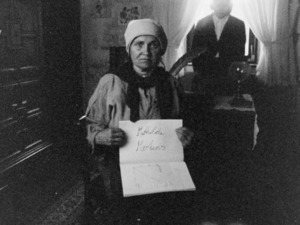
- Eine ländliche Region, ca. 1900. Die Landärztin Nerea Flores reist aus der Stadt in ein Dorf, um mit einer frühen Form einer Filmkamera Patientenfälle für ein medizinstudentisches Publikum zu dokumentieren. Der komplette Film erzählt sich ausschließlich aus dem Rohmaterial, das dabei entsteht – mitsamt Kameraein- und -ausschalten, Positionieren der Akteur*innen, Signalgebung etc.
Sie richtet eine improvisierte Praxis in einem leerstehenden Bauernhaus ein und probiert verschiedene, von schwer überwindbarer Distanz geprägte Therapiemethoden an den Personen aus – stets unter Anwesenheit der Kamera. Die Aufnahmepraxis irritiert die Patient*innen. Ein zur Kontrolle herbeigerufener Arztkollege bemängelt die Aufnahmen und befeuert eine radikalere Praxis beim Filmen, bei der ethische Fragen noch weiter in den Hintergrund treten sollen. Nerea fühlt sich in die Ecke gedrängt und innerlich zerrissen.
Schritt für Schritt löst sich unter Druck die Distanz zwischen Filmender und Gefilmtem auf. Flores bringt die Kamera schließlich auch mit in die Häuser der zu Behandelnden. Mit der Zeit empfinden die Patientinnen ihr Eingreifen als unangenehm und zu eindringlich und fliehen – um den Aufnahmeprozessen zu entgehen – ins Metaphysische. Nerea begegnet den zu Behandelnden nun in der Gestalt eines Waldstücks oder auch eines Baches. Da somit keine klassischen Therapieaufnahmen mehr möglich sind, wird das Projekt vorzeitig beendet.
- Eine ländliche Region, ca. 1900. Die Landärztin Nerea Flores reist aus der Stadt in ein Dorf, um mit einer frühen Form einer Filmkamera Patientenfälle für ein medizinstudentisches Publikum zu dokumentieren. Der komplette Film erzählt sich ausschließlich aus dem Rohmaterial, das dabei entsteht – mitsamt Kameraein- und -ausschalten, Positionieren der Akteur*innen, Signalgebung etc.
- Beschreibung (en)
- A rural region, around 1900. Country doctor Nerea Flores travels from the city to a village to document patient cases for a medical student audience using an early form of a film camera. The entire film is told exclusively through the raw material produced in the process – including switching the camera on and off, positioning the actors, giving cues, etc.
She sets up an improvised practice in an abandoned farmhouse and tries out various therapy methods shaped by a difficult-to-overcome emotional distance – always in the presence of the camera. The filming practice unsettles the patients. A doctor colleague, sent in for supervision, criticizes the recordings and pushes for a more radical filming approach in which ethical concerns are further sidelined. Nerea feels cornered and conflicted.
Step by step, under pressure, the distance between the filmer and the filmed dissolves. Flores eventually brings the camera into the homes of her patients. Over time, the patients perceive her interventions as too intrusive and uncomfortable and flee – in order to escape the filming process – into the metaphysical. Nerea now encounters those to be treated in the form of a patch of forest or even a stream. As a result, no further traditional therapy recordings can be made, and the project is prematurely ended.
- A rural region, around 1900. Country doctor Nerea Flores travels from the city to a village to document patient cases for a medical student audience using an early form of a film camera. The entire film is told exclusively through the raw material produced in the process – including switching the camera on and off, positioning the actors, giving cues, etc.
- Kategorie
- Typ des Projekts/Werks
- Schlagworte
- Datierung
- 2026
- Mitwirkende
- Dank an
- Sprache
- Untertitel (Film)
- Material
- Technik/Verfahren/Formate
- 4:3
- Dauer
- 72:29 min
- Land
- Titel
- Das Wasser ist silberhell und durchsichtig und möchte unberührt sein
- Projektleiter/in
- Semester
- Studiengang
- Typ der Abschlussarbeit
- Importiert am
- 30.05.2025
- Übergeordnete Sets
- 2
- Set enthält
- 0 10
Elusive Unrealities
Name that can easily go onto 2 lines
Author that can easily go onto 2 lines as well
- Titel
- Elusive Unrealities
- Titel (en)
- Elusive Unrealities
- Untertitel
- On Calling, Grasping & Awakening Dreams
- Untertitel des Projekts/Werks (en)
- On Calling, Grasping & Awakening Dreams
- Autor/in
- Beschreibung (de)
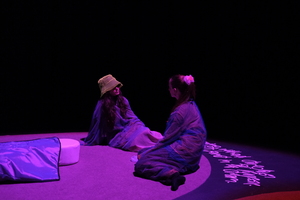
- Jeder Mensch träumt, manche Träume sind lebendig und bildhaft, andere abstrakt und symbolisch. In meiner Abschlussarbeitrbeit habe ich Traumerfahrungen in interaktive Objekte übersetzt und im Rahmen einer interaktive Ausstellung präsentiert. Darin werden sieben Traumthemen reflektiert: zwei der häufigsten Traumarten, Alptraum und Lusttraum; zwei wissenschaftliche Erkenntnisse, die Schwierigkeit des Gehirns, im Schlaf Gesichter und Figuren zu erkennen sowie die Unfähigkeit, Muster in geschriebener Schrift zu lesen; drei persönliche Faszinationen, das Ritual des Einschlafens, des Aufwachens sowie das Träumen als Reise in fantastische Welten.
- Beschreibung (en)
- Everyone dreams, some dreams are vivid and lifelike, others abstract and symbolic. In my diploma project I translated dream experiences into interactive objects and presented them in an interactive exhibition, reflecting seven dream themes: two addressing the most common dream types, nightmare and pleasure dreaming; two drawing on scientific research, the brain's difficulty recognising faces and figures during sleep, and its inability to read patterns in written text; three rooted in personal fascination, the rituals of falling asleep and waking, and dreaming as a passage to fantastical worlds.
- Kategorie
- Typ des Projekts/Werks
- Schlagworte
- Datierung
- 22.4.2025
- Dank an
- Sprache
- Material
- Abmessungen
- 90sqm
- Ort: Institution
- Stadt
- Land
- Internetlinks
- Titel
- Elusive Unrealities
- Untertitel
- On Calling, Grasping & Awakening Dreams
- Projektleiter/in
- Semester
- Studiengang
- Typ der Abschlussarbeit
- Importiert am
- 08.10.2025
- Übergeordnete Sets
- 3
- Set enthält
- 0 13
The Breath of Metal
Name that can easily go onto 2 lines
Author that can easily go onto 2 lines as well
- Titel
- The Breath of Metal
- Titel (en)
- The Breath of Metal
- Untertitel
- Baiyin - what the mine left behind
- Untertitel des Projekts/Werks (en)
- Baiyin - what the mine left behind
- Autor/in
- Beschreibung (de)
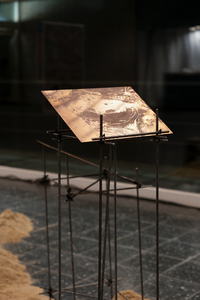
- Meine künstlerische Arbeit beschäftigt sich mit den Beziehungen zwischen Metall, Bergbau sowie familiären und urbanen Archiven. Metall fungiert dabei sowohl als Material als auch als Sprache: Es trägt Gewicht, Klang und Zeit in sich und bewahrt Spuren politischer, industrieller und arbeitsgeschichtlicher Prozesse.
Ich bin in Baiyin in der chinesischen Provinz Gansu aufgewachsen, einer durch den Bergbau entstandenen Industriestadt, auch bekannt als „Kupferstadt“. Mehrere Generationen meiner Familie waren im Bergbau, in der Verhüttung und in der Erzverarbeitung tätig. Diese biografischen Hintergründe erscheinen in meiner Arbeit nicht als Nostalgie, sondern als struktureller Rahmen, der mein Verständnis von Materialität, Körper und Stadt prägt. Die Mine ist für mich kein fixer Ort, sondern ein sich wandelndes System vom Erz zum Metall, von der Infrastruktur zur Stadt und schließlich zur Ruine.
Methodisch arbeite ich mit Fotografie, Archivmaterial, industriellen Überresten sowie mit Video, Klang und Installation. Fotografie verstehe ich dabei als Prozess der Extraktion und Transformation, der Materialien aus ihrem ursprünglichen Funktionszusammenhang löst und in einen Zustand suspendierter Evidenz überführt.
- Meine künstlerische Arbeit beschäftigt sich mit den Beziehungen zwischen Metall, Bergbau sowie familiären und urbanen Archiven. Metall fungiert dabei sowohl als Material als auch als Sprache: Es trägt Gewicht, Klang und Zeit in sich und bewahrt Spuren politischer, industrieller und arbeitsgeschichtlicher Prozesse.
- Beschreibung (en)
- My artistic work explores the relationships between metal, mining, and familial and urban archives. Metal functions both as a material and as a language: it carries weight, sound, and time, and preserves traces of political, industrial, and labor-related processes.
I grew up in Baiyin in Gansu Province, China, an industrial city shaped by mining, also known as the “Copper City.” Several generations of my family were involved in mining, smelting, and ore processing. These biographical backgrounds do not appear in my work as nostalgia, but rather as a structural framework that shapes my understanding of materiality, the body, and the city. For me, the mine is not a fixed place, but a constantly evolving system — from ore to metal, from infrastructure to the city, and ultimately to ruin.
Methodologically, I work with photography, archival materials, industrial remnants, as well as video, sound, and installation. I understand photography as a process of extraction and transformation, one that removes materials from their original functional context and transfers them into a state of suspended evidence.
- My artistic work explores the relationships between metal, mining, and familial and urban archives. Metal functions both as a material and as a language: it carries weight, sound, and time, and preserves traces of political, industrial, and labor-related processes.
- Kategorie
- Mitwirkende
- Material
- Technik/Verfahren/Formate
- Fotografie, Installation, Video
- Abmessungen
- 6 große Bilder je 900 x 1400 mm, 8 kleine Bilder je 210 x 297 mm, 4 Kupferpalette, 3 davon je 210 x 297 mm, 1 420 x 594 mm, 4 Ständer je 70 bis 100 cm hoch.
- Dauer
- Ein Video dauert 10 Minuten und 19 Sekunden.
- Titel
- The Breath of Metal
- Untertitel
- Baiyin - what the mine left behind
- Projektleiter/in
- Semester
- Studiengang
- Typ der Abschlussarbeit
- Importiert am
- 11.03.2026
- Übergeordnete Sets
- 3
- Set enthält
- 0 24
.HYP
Name that can easily go onto 2 lines
Author that can easily go onto 2 lines as well
- Titel
- .HYP
- Untertitel
- A digital wildgrowth
- Autor/in
- Beschreibung (de)
- .HYP ist eine multisensorische Installation und Projektionsarbeit einer sich verändernden digitalen Lebensform. Die Diplomarbeit .HYP lotet die Grenzen zwischen digitalem Leben und der analogen Welt mithilfe eines eigens entwickelten Programms mit spezialisierten Unterprogrammen aus, welches das biologische Verhalten von Pilzmyzel nachahmt. Der Titel der Arbeit leitet sich von Pilzzellen (Hyphen) ab.
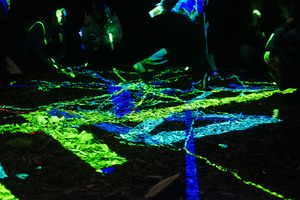
Besucher*innen der Installation können mit dem Programm interagieren, indem sie ihre eigenen Dateien über einen QR-Code hochladen. .HYP „verdaut“ diese Daten und verwandelt sie in sich ständig weiterentwickelnde, farbenfrohe Muster, die in einem abgedunkelten Raum auf einen organischen Boden aus Rindenmulch projiziert werden. Die Installation wird zu einem immersiven Erlebnis.
- .HYP ist eine multisensorische Installation und Projektionsarbeit einer sich verändernden digitalen Lebensform. Die Diplomarbeit .HYP lotet die Grenzen zwischen digitalem Leben und der analogen Welt mithilfe eines eigens entwickelten Programms mit spezialisierten Unterprogrammen aus, welches das biologische Verhalten von Pilzmyzel nachahmt. Der Titel der Arbeit leitet sich von Pilzzellen (Hyphen) ab.
- Beschreibung (en)
- .HYP is a multisensory installation and projection piece depicting an evolving digital life form. The graduation project .HYP explores the boundaries between digital life and the analog world using a custom-developed program with specialized subroutines that mimic the biological behavior of fungal mycelium. The title of the work is derived from fungal cells (hyphae).
Visitors to the installation can interact with the program by uploading their own files via a QR code. .HYP “digests” this data and transforms it into constantly evolving, colorful patterns that are projected onto an organic floor of bark mulch in a darkened room. The installation becomes an immersive experience.
- .HYP is a multisensory installation and projection piece depicting an evolving digital life form. The graduation project .HYP explores the boundaries between digital life and the analog world using a custom-developed program with specialized subroutines that mimic the biological behavior of fungal mycelium. The title of the work is derived from fungal cells (hyphae).
- Kategorie
- Typ des Projekts/Werks
- Schlagworte
- Sprache
- Material
- Technik/Verfahren/Formate
- coding
- Abmessungen
- 8m x 4,5m
- Dauer
- open end
- Ort: Institution
- Ort
- Großes Studio in der Hochschule für Gestaltung in Karlsruhe
- Stadt
- Land
- Internetlinks
- Titel
- .HYP
- Untertitel
- A digital wildgrowth
- Projektleiter/in
- Semester
- Studiengang
- Typ der Abschlussarbeit
- Importiert am
- 05.03.2024
- Übergeordnete Sets
- 3
- Set enthält
- 0 8
Manchmal ist Schmerz ganz leise
Name that can easily go onto 2 lines
Author that can easily go onto 2 lines as well
- Titel
- Manchmal ist Schmerz ganz leise
- Titel (en)
- Sometimes pain is very quiet
- Autor/in
- Beschreibung (de)
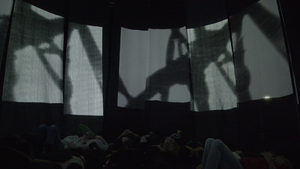
- „Manchmal ist Schmerz ganz leise“ ist eine immersive, autobiographische Hörstück-Installation, die den stillen und oft unsichtbaren Kampf mit einer schweren, namenlosen Krankheit in den Mittelpunkt stellt. Das Werk hinterfragt, was es bedeutet, in einer leistungsorientierten Gesellschaft plötzlich nicht mehr zu "funktionieren". Es geht den Ängsten, der Scham und dem tief empfundenen Gefühl des Versagens nach, das oft mit chronischer Krankheit einhergeht – Gefühle, die Betroffene selten teilen. Das Hörspiel verleiht einer Stimme Ausdruck, die für viele spricht und Einblicke in eine Realität gibt, die oft im Verborgenen bleibt.
- Beschreibung (en)
- ‘Sometimes pain is very quiet’ is an immersive, autobiographical audio play installation that focuses on the silent and often invisible battle with a serious, nameless illness. The work questions what it means to suddenly no longer ‘function’ in a performance-orientated society. It explores the fears, the shame and the deeply felt sense of failure that often accompanies chronic illness – feelings that are rarely shared by those affected. The radio play gives expression to a voice that speaks for many and provides insights into a reality that often remains hidden.
- Kategorie
- Typ des Projekts/Werks
- Schlagworte
- Datierung
- 30.10.2024
- Mitwirkende
- Dank an
- Finn Baygan
- Daniel Berwanger
- Pauline Cemeris
- Filipa Cesar
- Mark Patrick Damian
- Charlotte Eifler
- Flora Güldenpfennig
- Tobias Keilbach
- Eisenhart Keimeyer
- Alexander Knoppik
- Yael Kolb
- Isabelle Konrad
- Julian Kuf
- Barbara Kuon
- Josephine Leicht
- Laura Morcillo
- Ilja Morgenstern
- Sebastian Schäfer
- Sebastian Schönfeld
- Lorenz Schwarz
- Quirin Thalhammer
- Alexander Thelen
- Riemschneider Stiftung
- Zeitbild Lab
- Sprache
- Material
- Technik/Verfahren/Formate
- 4-Kanal-Audio/360° Projection Mapping
- Abmessungen
- Länge: 8m, Breite: 8m, Höhe: 6,50m
- Dauer
- 30min
- Ort: Institution
- Ort
- Großes Studio
- Stadt
- Land
- Titel
- Manchmal ist Schmerz ganz leise
- Projektleiter/in
- Semester
- Studiengang
- Typ der Abschlussarbeit
- Importiert am
- 17.04.2025
- Übergeordnete Sets
- 1
- Set enthält
- 1 5
Imaginary Gardens with Real Toads in Them
Name that can easily go onto 2 lines
Author that can easily go onto 2 lines as well
- Titel
- Imaginary Gardens with Real Toads in Them
- Titel (en)
- Imaginary Gardens with Real Toads in Them
- Autor/in
- Beschreibung (de)
- „Imaginary Gardens with Real Toads in Them“ ist eine bekannte Zeile aus dem Gedicht „Poetry“ der amerikanischen Dichterin Marianne Moore. Es beschreibt ihre Einstellung zu Poesie und Kunst. „Imaginary gardens“ symbolisieren den idealisierten, fantastischen Teil von Kunst und Literatur – eine Vorstellung oder Wunschvorstellung, die die Fantasie anregt. Auf der anderen Seite stehen „real toads“ für die realen, greifbaren, oft unromantischen oder nicht idealisierten Aspekte der Welt – Dinge, die konkret und wahr sind, aber vielleicht nicht so schön wie die imaginären Visionen.
In meiner Ausstellung nahm ich mit drei Objekten Bezug auf diese Vorstellung:
– Eine Bank, die den Besucher zum Sitzen und Verweilen, zum Innehalten und Beobachten einlädt. Sie steht für Besinnung und die Erkenntnis der eigenen Position im Garten.
– Eine Kräuterkiste, die für das alte Wissen der Natur steht. Sie symbolisieren die verborgenen Schätze und Geheimnisse, die entdeckt und genutzt werden können. Hier ist der Besucher eingeladen, sich selbst einen Tee zusammenzustellen und aufzubrühen.
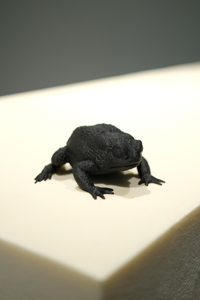
– Der Wächter des Gartens – die Kröte – und ihr Rückzugsort, der Brunnen, dienen als Quelle für alle Lebewesen. Der Brunnen steht für Tiefe und Erkenntnis, ein Ort, der durch Achtsamkeit zugänglich ist.
Begleitend zur Ausstellung lag am Eingang der Ausstellung ein kleines Leaflet für jeden Besucher mit einer von mir illustrierten Pflanze. Dazu habe ich eine kleine Geschichte zu meinem „Imaginary Garden“ abgedruckt, daneben ein Plan der Ausstellung mit Hinweisen zu den verschiedenen Objekten. Auf der Rückseite findet sich ein Impressum meiner ganzen Recherche.
- „Imaginary Gardens with Real Toads in Them“ ist eine bekannte Zeile aus dem Gedicht „Poetry“ der amerikanischen Dichterin Marianne Moore. Es beschreibt ihre Einstellung zu Poesie und Kunst. „Imaginary gardens“ symbolisieren den idealisierten, fantastischen Teil von Kunst und Literatur – eine Vorstellung oder Wunschvorstellung, die die Fantasie anregt. Auf der anderen Seite stehen „real toads“ für die realen, greifbaren, oft unromantischen oder nicht idealisierten Aspekte der Welt – Dinge, die konkret und wahr sind, aber vielleicht nicht so schön wie die imaginären Visionen.
- Beschreibung (en)
- „Imaginary Gardens with Real Toads in Them“ is a well-known line from the poem „Poetry“ by American poet Marianne Moore. It describes her attitude towards poetry and art.
„Imaginary gardens“ symbolises the idealised, fantastical part of art and literature – an idea or wishful thinking that stimulates the imagination. On the other hand, „real toads“ represents the real, tangible, often unromantic or non-idealised aspects of the world – things that are concrete and true, but perhaps not as beautiful as imaginary visions.
In my exhibition, I referenced this idea with three objects:
– A bench that invites visitors to sit and linger, to pause and observe. It stands for reflection and awareness of one's own position in the garden.
– A herb box, which represents the ancient knowledge of nature. They symbolise the hidden treasures and secrets that can be discovered and used. Here, visitors are invited to mix and brew their own tea.
– The guardian of the garden – the toad – and its retreat, the well, serve as a source for all living creatures. The well represents depth and insight, a place that can be accessed through mindfulness.
Accompanying the exhibition, a small leaflet was available for each visitor at the entrance, featuring a plant illustrated by me. I also printed a short story about my „Imaginary Garden“. Next to it was a map of the exhibition with information about the various objects. On the back is an imprint of my entire research.
- „Imaginary Gardens with Real Toads in Them“ is a well-known line from the poem „Poetry“ by American poet Marianne Moore. It describes her attitude towards poetry and art.
- Kategorie
- Typ des Projekts/Werks
- Schlagworte
- Datierung
- 22.01.2025 - 27.01.2025
- Dank an
- Sprache
- Material
- Abmessungen
- 5,8m x 8m
- Ort: Institution
- Ort
- Lichthof
- Stadt
- Land
- Titel
- Imaginary Gardens with Real Toads in Them
- Projektleiter/in
- Semester
- Studiengang
- Typ der Abschlussarbeit
- Importiert am
- 01.10.2025
- Übergeordnete Sets
- 3
- Set enthält
- 0 11
Erikas Töchter

Name that can easily go onto 2 lines
Author that can easily go onto 2 lines as well
- Titel
- Erikas Töchter
- Autor/in
- Beschreibung (de)
- "Erikas Töchter" untersucht anhand der fiktiven Figur Erika Mustermann Perspektiven auf die weibliche* Identitätsbildung in Deutschland. Seit 1987 existiert Erika als Musteridentität in amtlichen Dokumenten - weiß, blond, blau- oder grünäugig. Als ein lächelnder Anachronismus geistert sie, erschreckend unkommentiert, durch die Bürokratielandschaft Deutschlands. Ihre durchdringende Augen blicken uns alle aufmerksam an, die Mundwinkel deuten ein neutrales Lächeln an. Doch je länger man sie betrachtet, desto schwerer wiegt ihr Blick: normierend, klassifizierend und ausschließend.
Die Arbeit übersetzt diese fiktive Identität in ein irritierendes Szenario, das zwischen Gartenfest, Ausstellung, Performance und Büroalltag changiert. Im Zentrum stehen zwei Ebenen: Zum einen die Präsentation der IDOLLs, einer Serie neuer weiblicher Musteridentitäten, die im Format einer Teleshopping-Show als innovative Lösung zeitgenössischer Identitätsprobleme vermarktet werden. Zum anderen der Blick in Erikas Büroalltag. Umgeben von Plastik-Buchsbaumbüschen, Teppichboden und generischen Büromöbeln ist sie gefangen im Moment des Fotos und der Reproduktion ihres Gesichtes.
- "Erikas Töchter" untersucht anhand der fiktiven Figur Erika Mustermann Perspektiven auf die weibliche* Identitätsbildung in Deutschland. Seit 1987 existiert Erika als Musteridentität in amtlichen Dokumenten - weiß, blond, blau- oder grünäugig. Als ein lächelnder Anachronismus geistert sie, erschreckend unkommentiert, durch die Bürokratielandschaft Deutschlands. Ihre durchdringende Augen blicken uns alle aufmerksam an, die Mundwinkel deuten ein neutrales Lächeln an. Doch je länger man sie betrachtet, desto schwerer wiegt ihr Blick: normierend, klassifizierend und ausschließend.
- Beschreibung (en)
- “Erikas Töchter” explores perspectives on female* identity formation in Germany through the fictional figure of Erika Mustermann. Since 1987, Erika has served as the standard identity in official documents – white, blonde, blue- or green-eyed. As a smiling anachronism, she continues to haunt Germany’s bureaucratic landscape. Erika’s eyes look directly at the viewer, the corners of her mouth suggesting a neutral smile. Yet the longer she gazes at you, the more insistent her expression becomes: classifying and excluding
The work translates this fictional identity into a scenario that shifts between garden party, exhibition, performance, and office routine. At its center are two layers: on the one hand, the presentation of the IDOLLs – a series of new female standard identities, presented in the style of a teleshopping show, offering an innovative approach to contemporary issues of identity; on the other hand, a glimpse into Erika’s everyday office life. Surrounded by plastic boxwood shrubs, carpeting, and generic office furniture, she remains trapped in the moment of the photograph and the endless reproduction of her own face.
- “Erikas Töchter” explores perspectives on female* identity formation in Germany through the fictional figure of Erika Mustermann. Since 1987, Erika has served as the standard identity in official documents – white, blonde, blue- or green-eyed. As a smiling anachronism, she continues to haunt Germany’s bureaucratic landscape. Erika’s eyes look directly at the viewer, the corners of her mouth suggesting a neutral smile. Yet the longer she gazes at you, the more insistent her expression becomes: classifying and excluding
- Kategorie
- Typ des Projekts/Werks
- Schlagworte
- Datierung
- 22.07.2025
- Mitwirkende
- Sprache
- Material
- Abmessungen
- Ein kleines Haus mit Garten
- Dauer
- 4 Stunden
- Ort: Institution
- Stadt
- Land
- Titel
- Erikas Töchter
- Projektleiter/in
- Semester
- Studiengang
- Typ der Abschlussarbeit
- Importiert am
- 29.09.2025
- Übergeordnete Sets
- 3
- Set enthält
- 2 23
entre-temps
Name that can easily go onto 2 lines
Author that can easily go onto 2 lines as well
- Titel
- entre-temps
- Autor/in
- Beschreibung (de)
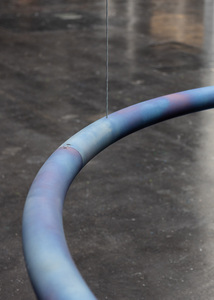
- Unter dem Einfluss von Hitze offenbart Stahl eine unbekannte Seite. Wolkenartige Farbmuster entstehen auf seiner Oberfläche und widersetzen sich materialgebundenen Definitionen. Die Arbeit untersucht die Beziehung zwischen Schwerem und Leichtem sowie Fragen der Komplexität.
- Beschreibung (en)
- Under the influence of heat, steel reveals an unknown side. Cloudlike patterns of color emerge on its surface, resisting materialbound definitions. The work explores the relationship between the heavy and the light, as well as questions of complexity.
- Kategorie
- Typ des Projekts/Werks
- Schlagworte
- Datierung
- 2025
- Dank an
- Kevin Beckmann
- Adrien Benoit
- Matthias Bruhn
- Lukas Clark
- Finn De Bruyn
- Kira Fuchs
- Josephine Gerhardt
- Josef Grair
- Dorothea Griep
- Cansu Gündoğdu
- Jule Heinzelmann
- Hannah Hugger
- Tina Jander
- Chris Kabel
- Valentina Karga
- Florian Knöbl
- Alexander Knoppik
- Philipp Kriebel
- Julian Kuf
- Barbara Kuon
- Florian Lips
- Nini Lue
- Tim Miler
- Sebastian Schäfer
- Sebastian Schilbach
- Susanne Schmitt
- Jules Scoubart
- Manèkè Som
- Pei Zhou
- Material
- Technik/Verfahren/Formate
- Heat Coloring
- Abmessungen
- Ring: 4x4m, Spiegel: 80x4cm
- Ort: Institution
- Stadt
- Land
- Beteiligte Institution(en)
- Internetlinks
- Titel
- entre-temps
- Projektleiter/in
- Semester
- Studiengang
- Typ der Abschlussarbeit
- Importiert am
- 24.02.2026
- Übergeordnete Sets
- 3
- Set enthält
- 0 21
By Users for Users

Name that can easily go onto 2 lines
Author that can easily go onto 2 lines as well
- Titel
- By Users for Users
- Untertitel
- Memes als digitale Folklore
- Untertitel des Projekts/Werks (en)
- Memes as Digital Folklore
- Autor/in
- Beschreibung (de)
- Die vorliegende Abschlussarbeit „By Users for Users. Memes als digitale Folklore“ untersucht die kulturellen, technologischen und politischen Dimensionen von Internet-Memes als eine der zentralen Bildpraktiken der Gegenwart. Memes werden dabei nicht nur als humoristische Phänomene, sondern als Ausdruck einer globalen, partizipativen Bildkultur verstanden, die häufig auch als eine Form digitaler Folklore-Kultur beschrieben wird. Die Arbeit untersucht die Bedeutungsebenen dieser Begrifflichkeit und analysiert neben den technischen und ästhetischen Rahmenbedingungen von Memes ihre identitätsstiftende Funktion innerhalb digital vernetzter Gemeinschaften sowie ihre Verstrickungen mit plattformkapitalistischen Infrastrukturen. Ein besonderer Fokus liegt darauf, wie einzelne Memes, Communitys und Plattformen durch reaktionäre Akteur:innen angeeignet und instrumentalisiert werden.
Als Fallbeispiel dient der Arbeit das sog. Wojak-Meme, eine dilettantisch erstellte Computergrafik eines melancholischen Gesichts. Wojak illustriert nicht nur die für Memes charakteristische Amateurästhetik, sondern auch, wie Memes als ‚visuelle Dialekte‘ bestimmter Communitys funktionieren und hierbei sowohl Gemeinschaft stiften als auch ausschließen können. Speziell das Wojak-Meme und seine Variationen werden durch die neurechte Alt-Right sowie durch die misogyne Incel-Community verwendet, um unter dem Deckmantel von Ironie und Humor Ideologien und Feindbilder zu erzeugen und zu verbreiten.
Genau wie der Philosoph Antonio Gramsci die Relevanz von Folklore für den frühen italienischen Faschismus beschrieb, trägt auch digitale Folklore maßgeblich zur Konstitution von Weltbildern bei und ist dabei oft wirkmächtiger als offizielle Normen und Gesetze. Was einst als eine ‚Demokratisierung der Bildproduktion‘ beschrieben wurde, ist längst zu einer Gefahr für die Demokratie geworden. Abschließend plädiert die Arbeit deshalb für eine kritische Folkloristik des Digitalen, die die Bildwelten der Partizipationskultur interdisziplinär zwischen Kunst- und Medienwissenschaften analysiert, um so deren Bildcharakter sowie die Dynamiken digitaler Infrastrukturen zu reflektieren.
- Die vorliegende Abschlussarbeit „By Users for Users. Memes als digitale Folklore“ untersucht die kulturellen, technologischen und politischen Dimensionen von Internet-Memes als eine der zentralen Bildpraktiken der Gegenwart. Memes werden dabei nicht nur als humoristische Phänomene, sondern als Ausdruck einer globalen, partizipativen Bildkultur verstanden, die häufig auch als eine Form digitaler Folklore-Kultur beschrieben wird. Die Arbeit untersucht die Bedeutungsebenen dieser Begrifflichkeit und analysiert neben den technischen und ästhetischen Rahmenbedingungen von Memes ihre identitätsstiftende Funktion innerhalb digital vernetzter Gemeinschaften sowie ihre Verstrickungen mit plattformkapitalistischen Infrastrukturen. Ein besonderer Fokus liegt darauf, wie einzelne Memes, Communitys und Plattformen durch reaktionäre Akteur:innen angeeignet und instrumentalisiert werden.
- Beschreibung (en)
- The M.A. thesis "By Users for Users. Memes as Digital Folklore" examines the cultural, technological and political dimensions of Internet memes as one of the central image practices of the present day. Memes are understood not only as a humorous phenomenon, but also as an expression of a global, participatory image culture, which is often described as a form of digital folklore culture. The text examines the layers of meaning of this terminology and, in addition to the technological and aesthetic conditions of memes, analyzes their identity-forming function within digitally networked communities as well as their entanglements with platform capitalist infrastructures. A particular focus is on how individual memes, communities and platforms are appropriated and instrumentalized by reactionary actors.
The so-called Wojak meme, an amateurishly created computer graphic of a melancholy face, serves as a case study. Wojak illustrates not only the amateur aesthetics characteristic of memes, but also the function of memes as ‘visual dialects’ of certain communities which simultaneously include and exclude individuals. In particular, the Wojak meme and its variations are used by the reactionary alt-right and the misogynistic incel community to create and disseminate ideologies and enemy images under the guise of irony and humor.
Just as philosopher Antonio Gramsci described the relevance of folklore for early Italian fascism, digital folklore also contributes significantly to the constitution of world views and, often proving more powerful than official laws and values. What was once described as a ‘democratization of image production’ has long since become a threat to democracy. In its conclusion, the thesis therefore advocates for a critical folkloristics of the digital that analyzes the visual worlds of participatory culture in an interdisciplinary way between art history and media studies in order to reflect on their visual character and the dynamics of digital infrastructures.
- The M.A. thesis "By Users for Users. Memes as Digital Folklore" examines the cultural, technological and political dimensions of Internet memes as one of the central image practices of the present day. Memes are understood not only as a humorous phenomenon, but also as an expression of a global, participatory image culture, which is often described as a form of digital folklore culture. The text examines the layers of meaning of this terminology and, in addition to the technological and aesthetic conditions of memes, analyzes their identity-forming function within digitally networked communities as well as their entanglements with platform capitalist infrastructures. A particular focus is on how individual memes, communities and platforms are appropriated and instrumentalized by reactionary actors.
- Kategorie
- Typ des Projekts/Werks
- Schlagworte
- Datierung
- 05.02.2025
- Dank an
- Sprache
- Abmessungen
- 144 Seiten (109 Textseiten)
- Titel
- By Users for Users
- Untertitel
- Memes als digitale Folklore
- Projektleiter/in
- Semester
- Studiengang
- Typ der Abschlussarbeit
- Importiert am
- 25.06.2025
- Übergeordnete Sets
- 3
- Set enthält
- 0 8