"Wet again"
Benachbarte Sets (30)Alle Zusammenhänge anzeigen
Diese Sets wurden den gleichen Sets hinzugefügt wie das ausgewählte Set.
30 Inhalte
- Seite 1 von 3
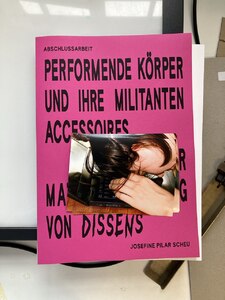
Performende Körper und ihre militanten Accessoires
Name that can easily go onto 2 lines
Author that can easily go onto 2 lines as well
- Titel
- Performende Körper und ihre militanten Accessoires
- Untertitel
- Zur Materialisierung von Dissens
- Autor/in
- Beschreibung (de)
- Ausgehend von der Annahme, dass Protest nicht nur durch Sprache oder Körper, sondern vor allem durch Gegenstände artikuliert wird, richtet die Magistraarbeit den Fokus auf die materiell-symbolischen Politiken feministischer Protestperformances. Dafür schlage ich das Konzept des "militanten Accessoires" als Analysekategorie für feministische Performancepraktiken vor. Das Accessoire, das oft mit weiblich* gelesenen Körpern assoziiert ist, wird als scheinbar harmloses, alltägliches und schmückendes Modeelement in einen handlungsorientierten, widerständigen Gegenstand umgedeutet und neu kontextualisiert. Anhand von zwei aktivistisch-performativen Aktionen der Women’s Social and Political Union (Window Smashing Campaign, 1912 ) und Pussy Riot (Punk Prayer, 2012) werden zwei Gegenstände, ein 19cm großer Toffeehammer sowie eine neonbunte Sturmhaube, als "militante Accessoires" identifiziert. In ihrem wechselwirkenden Verhältnis mit Körpern ermöglicht das "militante Accessoire" diesen, politische und emanzipatorische Potenziale zu entfalten und Orte in Räume des Protests zu transformieren.
Dieser Analyse folgend übertrage ich die Bedingungen des "militanten Accessoires" im letzten Kapitel auf künstlerische Protestperformances. Dabei betrachte ich unter anderem künstlerische Produktionen von Selma Selman (You Have No Idea), Pipilotti Rist (Ever Is Over All) und Milica Tomić (One Day, Instead of One Night, a Burst of Machine-Gun Fire Will Flash, if Light Cannot Come Otherwise) und frage, inwiefern "militante Accessoires" nicht nur in kollektiven Protestperformances, sondern auch für einzelne Körper in feministischen, künstlerischen Performances eine Möglichkeit des Ausdrucks von Protest bieten.
Die Magistraarbeit rückt die kompliz*innenhafte Beziehung zwischen Kunst und Protest in den Fokus und zeigt, dass "militante Accessoires" nicht nur symbolische Bedeutungsträger*innen sind, sondern in ihrer relationalen und körperlich-performativen Dimension als Mittel des Widerstands agieren. Im Zusammenspiel mit den handelnden Körpern treten sie als Katalysator*innen und Vermittler*innen auf und entfalten eine doppelte Rolle als materiell-semiotische Akteur*innen.
- Ausgehend von der Annahme, dass Protest nicht nur durch Sprache oder Körper, sondern vor allem durch Gegenstände artikuliert wird, richtet die Magistraarbeit den Fokus auf die materiell-symbolischen Politiken feministischer Protestperformances. Dafür schlage ich das Konzept des "militanten Accessoires" als Analysekategorie für feministische Performancepraktiken vor. Das Accessoire, das oft mit weiblich* gelesenen Körpern assoziiert ist, wird als scheinbar harmloses, alltägliches und schmückendes Modeelement in einen handlungsorientierten, widerständigen Gegenstand umgedeutet und neu kontextualisiert. Anhand von zwei aktivistisch-performativen Aktionen der Women’s Social and Political Union (Window Smashing Campaign, 1912 ) und Pussy Riot (Punk Prayer, 2012) werden zwei Gegenstände, ein 19cm großer Toffeehammer sowie eine neonbunte Sturmhaube, als "militante Accessoires" identifiziert. In ihrem wechselwirkenden Verhältnis mit Körpern ermöglicht das "militante Accessoire" diesen, politische und emanzipatorische Potenziale zu entfalten und Orte in Räume des Protests zu transformieren.
- Beschreibung (en)
- Based on the premise that protest is articulated not only through language or the body, but above all through objects, the magistra's thesis focuses on the material-symbolic politics of feminist protest performances.
In this regard, I propose the concept of the "militant accessory" as an analytical category for feminist performance practices. The accessory as an everyday, decorative fashion element, which is often associated with bodies read as female*, is reinterpreted and transformed into an action-oriented, resistant object.
In consideration of two activist-performative actions by the Women's Social and Political Union (Window Smashing Campaign, 1912) and Pussy Riot (Punk Prayer, 2012), two objects, a 19cm toffee hammer and a neon-coloured balaclava, are identified as "militant accessories". In their reciprocal relationship with bodies, "militant accessories" enable them to develop political and emancipatory potential and transform places into spaces of protest. Building on this analysis, I apply the conditions of the "militant accessory" to artistic protest performances. To this end, I focus on artistic productions by artists such as Selma Selman (You Have No Idea), Pipilotti Rist (Ever Is Over All), and Milica Tomić (One Day, Instead of One Night, a Burst of Machine-Gun Fire Will Flash, if Light Cannot Come Otherwise), asking to what extent "militant accessories" act as tools for expressing dissent in collective protest performances and individual bodies within feminist artistic practices.
- Based on the premise that protest is articulated not only through language or the body, but above all through objects, the magistra's thesis focuses on the material-symbolic politics of feminist protest performances.
- Kategorie
- Schlagworte
- Datierung
- 01.07.2024
- Dank an
- Sprache
- Titel
- Performende Körper und ihre militanten Accessoires
- Projektleiter/in
- Semester
- Studiengang
- Typ der Abschlussarbeit
- Importiert am
- 21.06.2025
- Übergeordnete Sets
- 2
- Set enthält
- 1 3
Ministry for the Future
Name that can easily go onto 2 lines
Author that can easily go onto 2 lines as well
- Titel
- Ministry for the Future
- Titel (en)
- Ministry for the Future
- Autor/in
- Beschreibung (de)
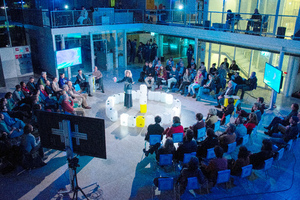
- Ministry for the Future ist eine transdisziplinäre Produktion über mögliche Zukünfte im Angesicht der Klimakrise – und darüber, wie wir sie verhandeln, bevor sie eintreten. Inspiriert vom gleichnamigen Roman von Kim Stanley Robinson entwickelte sich ein groß angelegtes Kooperationsprojekt zwischen dem Theater Neumarkt, dem Collegium Helveticum Zürich und der Hochschule für Gestaltung Karlsruhe.
Ausgangspunkt ist ein spekulatives Szenario im Jahr 2034: Die Erde hat Kipppunkte erreicht, Regierungen reagieren, eine neue Institution wird gegründet – das Ministerium für die Zukunft. Innerhalb dieser Fiktion operiert die Produktion als diskursives Format, das sich fortlaufend mit der zentralen Frage auseinandersetzt: Welche Handlungsspielräume bleiben uns?
Das Projekt kombiniert künstlerische, wissenschaftliche und gestalterische Perspektiven zu einem Format zwischen Preenactment und realer Wissenschaftskommunikation. Herzstück ist ein mobiles Bühnenbild, das drängende forschungsbasierte Diskurse in eine begehbare, funktionale Infrastruktur übersetzt. Die Szenografie wurde konsequent durch Re- und Upcycling-Prozesse entwickelt. Sie folgt einer Haltung, die den Anforderungen ökologischer Krisen standhalten will – indem sie aus dem Material jener Krisen selbst hervorgeht. In vier thematisch fokussierten Episoden an vier verschiedenen Orten in Zürich wird der Raum selbst zum Instrument: eine spekulative Versammlung, eine temporäre Institution, ein Möglichkeitslabor.
Die Inszenierung bringt reale Wissenschaftler:innen, Performer:innen und Bürger:innen im Modus eines fiktionalen Ministeriums in Austausch – und mit ihnen die Fragen: Wie lässt sich Zukunft verhandeln, wenn sie längst begonnen hat? Was bedeutet Teilhabe, wenn die Katastrophe strukturell geworden ist? Und wie kann Raum für solche Aushandlungen heute aussehen?
- Ministry for the Future ist eine transdisziplinäre Produktion über mögliche Zukünfte im Angesicht der Klimakrise – und darüber, wie wir sie verhandeln, bevor sie eintreten. Inspiriert vom gleichnamigen Roman von Kim Stanley Robinson entwickelte sich ein groß angelegtes Kooperationsprojekt zwischen dem Theater Neumarkt, dem Collegium Helveticum Zürich und der Hochschule für Gestaltung Karlsruhe.
- Beschreibung (en)
- Ministry for the Future is a transdisciplinary production about possible futures in the face of the climate crisis—and about how we negotiate them before they arrive. Inspired by the novel of the same name by Kim Stanley Robinson, the project evolved into a large-scale collaboration between Theater Neumarkt, the Collegium Helveticum Zurich, and the Karlsruhe University of Arts and Design (HfG).
Its starting point is a speculative scenario set in the year 2034: the Earth has reached tipping points, governments are reacting, and a new institution is established—the Ministry for the Future. Within this fiction, the production functions as a discursive format that continuously engages with the central question: What room for action remains?
The project combines artistic, scientific, and design perspectives into a hybrid format somewhere between preenactment and real science communication. At its core is a mobile stage design that translates urgent, research-based discourses into an immersive, functional infrastructure. The scenography was developed entirely through re- and upcycling processes, guided by an attitude that seeks to meet the demands of ecological crises—by emerging from their very material. Across four thematically focused episodes in four different locations in Zurich, the space itself becomes an instrument: a speculative assembly, a temporary institution, a lab of possibilities.
The performance brings together real scientists, performers, and citizens within the framework of a fictional ministry—and with them, the questions: How can we negotiate the future when it has already begun? What does participation mean when catastrophe has become structural? And what kind of space is needed for such negotiations today?
- Ministry for the Future is a transdisciplinary production about possible futures in the face of the climate crisis—and about how we negotiate them before they arrive. Inspired by the novel of the same name by Kim Stanley Robinson, the project evolved into a large-scale collaboration between Theater Neumarkt, the Collegium Helveticum Zurich, and the Karlsruhe University of Arts and Design (HfG).
- Kategorie
- Typ des Projekts/Werks
- Schlagworte
- Sprache
- Dauer
- 4 Episoden, jeweils 2 Stunden
- Ort: Institution
- Ort
- Episode 1: ETH Zürich
Episode 2: Naturhistorisches Museum Zürich
Episode 3: Wasserkirche Zürich
Episode 4: Semper Sternwarte / Collegium Helveticum Zürich
- Episode 1: ETH Zürich
- Land
- Beteiligte Institution(en)
- Titel
- Ministry for the Future
- Projektleiter/in
- Semester
- Studiengang
- Importiert am
- 29.06.2025
- Übergeordnete Sets
- 0
- Set enthält
- 0 39
Manchmal ist Schmerz ganz leise
Name that can easily go onto 2 lines
Author that can easily go onto 2 lines as well
- Titel
- Manchmal ist Schmerz ganz leise
- Titel (en)
- Sometimes pain is very quiet
- Autor/in
- Beschreibung (de)
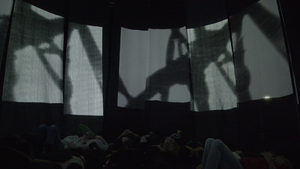
- „Manchmal ist Schmerz ganz leise“ ist eine immersive, autobiographische Hörstück-Installation, die den stillen und oft unsichtbaren Kampf mit einer schweren, namenlosen Krankheit in den Mittelpunkt stellt. Das Werk hinterfragt, was es bedeutet, in einer leistungsorientierten Gesellschaft plötzlich nicht mehr zu "funktionieren". Es geht den Ängsten, der Scham und dem tief empfundenen Gefühl des Versagens nach, das oft mit chronischer Krankheit einhergeht – Gefühle, die Betroffene selten teilen. Das Hörspiel verleiht einer Stimme Ausdruck, die für viele spricht und Einblicke in eine Realität gibt, die oft im Verborgenen bleibt.
- Beschreibung (en)
- ‘Sometimes pain is very quiet’ is an immersive, autobiographical audio play installation that focuses on the silent and often invisible battle with a serious, nameless illness. The work questions what it means to suddenly no longer ‘function’ in a performance-orientated society. It explores the fears, the shame and the deeply felt sense of failure that often accompanies chronic illness – feelings that are rarely shared by those affected. The radio play gives expression to a voice that speaks for many and provides insights into a reality that often remains hidden.
- Kategorie
- Typ des Projekts/Werks
- Schlagworte
- Datierung
- 30.10.2024
- Mitwirkende
- Dank an
- Finn Baygan
- Daniel Berwanger
- Pauline Cemeris
- Filipa Cesar
- Mark Patrick Damian
- Charlotte Eifler
- Flora Güldenpfennig
- Tobias Keilbach
- Eisenhart Keimeyer
- Alexander Knoppik
- Yael Kolb
- Isabelle Konrad
- Julian Kuf
- Barbara Kuon
- Josephine Leicht
- Laura Morcillo
- Ilja Morgenstern
- Sebastian Schäfer
- Sebastian Schönfeld
- Lorenz Schwarz
- Quirin Thalhammer
- Alexander Thelen
- Riemschneider Stiftung
- Zeitbild Lab
- Sprache
- Material
- Technik/Verfahren/Formate
- 4-Kanal-Audio/360° Projection Mapping
- Abmessungen
- Länge: 8m, Breite: 8m, Höhe: 6,50m
- Dauer
- 30min
- Ort: Institution
- Ort
- Großes Studio
- Stadt
- Land
- Titel
- Manchmal ist Schmerz ganz leise
- Projektleiter/in
- Semester
- Studiengang
- Typ der Abschlussarbeit
- Importiert am
- 17.04.2025
- Übergeordnete Sets
- 0
- Set enthält
- 1 5
Known Unknown
Name that can easily go onto 2 lines
Author that can easily go onto 2 lines as well
- Titel
- Known Unknown
- Autor/in
- Beschreibung (de)
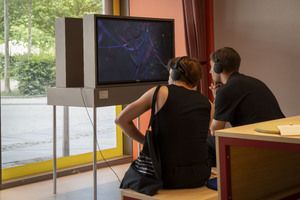
- KNOWN UNKNOWN ist eine politisch-künstlerische Installation über die Kontinuitäten rechter Gewalt in Deutschland und das Versagen staatlicher Institutionen im NSU-Komplex. Das 15-minütige audiovisuelle Werk basiert auf über anderthalb Jahren Recherchearbeit und verbindet dokumentarisches Archivmaterial, narrative Textarbeit und digitale Visualisierung.
Das Hörstück rückt die Perspektiven der Betroffenen in den Mittelpunkt – ebenso wie die Lücken in der Aufarbeitung und die Namen jener, die direkt oder indirekt zur Existenz des NSU beigetragen haben: durch aktives Handeln, Mitwissen oder institutionelles Wegsehen. In seinem dokumentarischen Charakter benennt es Täter, Behördenverantwortliche und politische Akteure, zeigt Archivmaterial und gibt Raum für die Stimmen der Überlebenden und Angehörigen. Die Sprecherin führt durch das dichte Material stets mit dem Anspruch, Zuhörenden Zugang zu einer eigenen Haltung zu lassen.
Parallel dazu entstand eine digitale 3D-Installation – ein abstraktes, mehrdimensionales Netz, das die Komplexität des NSU-Unterstützernetzwerks visualisiert: jenes Geflecht, das im offiziellen Narrativ oft ausgespart bleibt. Die Installation übersetzt die Recherche räumlich und visuell, macht Strukturen erfahrbar, Knotenpunkte sichtbar und zeigt: Der NSU bestand nicht nur aus drei Personen, sondern war eingebettet in ein weit verzweigtes System aus Neonazi-Strukturen, V-Leuten, Behörden und gesellschaftlicher Ignoranz.
Erst im Zusammenwirken von Hörstück und Installation entfaltet sich das Narrativ vollständig: Das Netz beginnt zu sprechen, sobald es eine Stimme erhält – kollektives Zuhören statt Schweigen. KNOWN UNKNOWN richtet sich gegen die Vorstellung eines „Schlussstrichs“ und lädt zur aktiven Auseinandersetzung ein. Im Dialog zwischen Stimme, Stille, Raum und Visualisierung entsteht ein dichtes, forderndes und reflexives Werk.
- KNOWN UNKNOWN ist eine politisch-künstlerische Installation über die Kontinuitäten rechter Gewalt in Deutschland und das Versagen staatlicher Institutionen im NSU-Komplex. Das 15-minütige audiovisuelle Werk basiert auf über anderthalb Jahren Recherchearbeit und verbindet dokumentarisches Archivmaterial, narrative Textarbeit und digitale Visualisierung.
- Kategorie
- Typ des Projekts/Werks
- Mitwirkende
- Sprache
- Material
- Dauer
- 15min
- Ort: Institution
- Stadt
- Land
- Beteiligte Institution(en)
- Titel
- Known Unknown
- Projektleiter/in
- Semester
- Studiengang
- Lehrveranstaltung
- Importiert am
- 18.06.2025
- Übergeordnete Sets
- 1
- Set enthält
- 0 9
“I see” “with my voice”
Name that can easily go onto 2 lines
Author that can easily go onto 2 lines as well
- Titel
- “I see” “with my voice”
- Autor/in
- Beschreibung (de)
- „I see“ „with my voice“ beschäftigt sich mit Themen wie Transformation, Gestaltwandel und Materialität durch ein Zusammenspiel von literarischen Fragmenten und entliehenen Stimmen. Das Ergebnis ist eine nicht-lineare, fluide Erzählung, die die flüchtige Natur von Visionen, Träumen und Metamorphosen einfängt.
- Beschreibung (en)
- “I see” “with my voice” engages with themes of transformation,
shapeshifting, and materiality through an interplay of literary
fragments and borrowed voices, resulting in a non-linear, fluid
narrative that encapsulates the ephemeral nature of visions,
dreams, and metamorphoses.
This project draws substantial inspiration from Alice Notley's
The Descent of Alette, a transformative odyssey that employs
rhythmic spoken language to explore continuous change.
Alongside Notley’s influence, the works of Hildegard von Bingen,
a 12th-century mystic, and the visionary narratives from the
biblical book of Ezekiel, serve as foundational texts that inform
the thematic and structural framework of this piece.
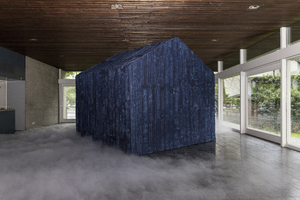
The text is presented as an audio recording, whispered as a 20 minute loop.
Visitors can listen to the piece when pressing their ear against the tents walls.
My objects are performers, maybe even imposters: frozen in a state of change or mimicry. My objects are performers, maybe even imposters: frozen in a state of change or mimicry.
They are skillfull imitators, but you can tell something is off.
Moving along this crack between the believable and the not quite right, I like to engage
with different realities and states of being. The artificial, almost real-life fakeness of their with different realities and states of being. The artificial, almost real-life fakeness of their
surfaces set the stage for my narrative of transformation, imitation and shapeshifting.
1. A wooden house crafted from smooth denim. Made by sanding the grain of wood
onto the denim fabric
2. Heavy fog covering the floor that could be perceived as dew, mixed with a light subtle
smoke of Incense burning.
The fragrance envokes sacred, holy feelings with its warm, resinous smell with peppery The fragrance envokes sacred, holy feelings with its warm, resinous smell with peppery
undertones.
3. 100 cherries made from a thick mixture of honey and almonds. The heavy sweetness
of the stoneless candy-imposter meant to linger in the visitors mouth as it is tasted. of the stoneless candy-imposter meant to linger in the visitors mouth as it is tasted.
A thin gelatine film – imitating the coolnes of cherry skin as it touches the lips A thin gelatine film – imitating the coolnes of cherry skin as it touches the lips
The installation is accompanied by a small reader containing the three part text to be taken The installation is accompanied by a small reader containing the three part text to be taken
home and serve as a keep sake or document of the fleeting spoken text.
The reader is bound with one simple staple. It does not have a beginning or end, but The reader is bound with one simple staple. It does not have a beginning or end, but
rather works like a gif. No cover or back. Just like wheels turning endlessly in a nonlinear rather works like a gif. No cover or back. Just like wheels turning endlessly in a nonlinear
storytelling.
- “I see” “with my voice” engages with themes of transformation,
- Kategorie
- Typ des Projekts/Werks
- Schlagworte
- Datierung
- 18.04.2024
- Sprache
- Ort: Institution
- Ort
- “I see” “with my voice” at ZKM Pavillon, Karlsruhe
- Stadt
- Land
- Titel
- “I see” “with my voice”
- Projektleiter/in
- Semester
- Studiengang
- Typ der Abschlussarbeit
- Importiert am
- 19.09.2024
- Übergeordnete Sets
- 0
- Set enthält
- 0 2
In Defense of Mis Caprichos
Name that can easily go onto 2 lines
Author that can easily go onto 2 lines as well
- Titel
- In Defense of Mis Caprichos
- Untertitel
- – When someone says you canʼt do something. Do it twice, and take pictures.
- Autor/in
- Beschreibung (de)
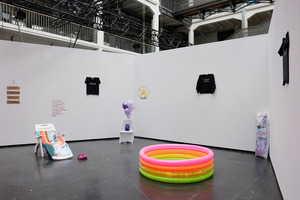
- „In Defense of Mis Caprichos“ ist eine multimediale Ausstellung, die auf einem selbst kuratierten Archiv von 140 gefundenen und eigenen Bildern basiert. Sie setzt sich mit der vernakulären Bildsprache Lateinamerikas auseinander – von Memes und persönlichen Fotos bis zu Screenshots. Viele Bilder sind durch digitale Verbreitung nur in niedriger Auflösung erhalten und spiegeln so die visuelle Textur des Internets wider. Sie vermitteln eine Sensibilität, die sich nicht erklären lässt, sondern sich durch Stimmung, Ton und Wiederholung entfaltet. Viele der Bilder stammen aus oder zeigen Kontexte des Globalen Südens und verstehen sich als Hommage an dortige alltägliche, informelle Gesten. Zusammen bilden sie eine visuelle Sprache, die intim, vielschichtig, instabil und oft humorvoll ist.
Das Projekt bezieht sich auf Hal Fosters Aufsatz „An Archival Impulse“, der das Archivieren als künstlerische Praxis versteht und Fragmentierung der Kohärenz vorzieht – zentrale Konzepte für dieses sich stetig wandelnde Archiv. Daraus wurden zehn künstlerische Objekte entwickelt, die die Skurrilitäten der Sammlung erfassen: Repliken, Performances oder hybride Assemblagen. Ihre Logik beruht auf Aneignung, Kopie und Transformation – im Sinne Byung-Chul Hans, der Replikation als kreative Strategie für neue Bedeutungen begreift.
Einige Werke greifen konkrete Bilder auf: Eine Performance, bei der ein Plastikpool auf einem Motorrad transportiert wird, bezieht sich auf ein Archivbild. Ein anderes verwandelt einen falsch übersetzten Tweet in ein dekoratives Holzschild. Ein drittes ist ein Traumfänger aus gelber Unterwäsche – inspiriert von einem kolumbianischen Neujahrsbrauch, wonach gelbe Unterwäsche Glück bringen soll.
Ein zentrales Element ist eine Videoarbeit, die das gesamte Archiv in Endlosschleife zeigt, begleitet von Texten aus unterschiedlichen Quellen: akademisch, persönlich oder aus sozialen Medien. Die Anordnung ist nicht erklärend, sondern atmosphärisch. Die Ausstellung schafft einen hierarchiefreien Raum, der Intuition, spielerische Ernsthaftigkeit und visuelle Alltagskulturen in den Mittelpunkt stellt.
- „In Defense of Mis Caprichos“ ist eine multimediale Ausstellung, die auf einem selbst kuratierten Archiv von 140 gefundenen und eigenen Bildern basiert. Sie setzt sich mit der vernakulären Bildsprache Lateinamerikas auseinander – von Memes und persönlichen Fotos bis zu Screenshots. Viele Bilder sind durch digitale Verbreitung nur in niedriger Auflösung erhalten und spiegeln so die visuelle Textur des Internets wider. Sie vermitteln eine Sensibilität, die sich nicht erklären lässt, sondern sich durch Stimmung, Ton und Wiederholung entfaltet. Viele der Bilder stammen aus oder zeigen Kontexte des Globalen Südens und verstehen sich als Hommage an dortige alltägliche, informelle Gesten. Zusammen bilden sie eine visuelle Sprache, die intim, vielschichtig, instabil und oft humorvoll ist.
- Kategorie
- Typ des Projekts/Werks
- Schlagworte
- Dank an
- Sprache
- Material
- Technik/Verfahren/Formate
- Diashow / Sculpture / Performance
- Ort: Institution
- Ort
- Lichthof 4
- Stadt
- Land
- Titel
- In Defense of Mis Caprichos
- Projektleiter/in
- Semester
- Studiengang
- Typ der Abschlussarbeit
- Importiert am
- 27.06.2025
- Übergeordnete Sets
- 0
- Set enthält
- 5 1
I Cried A Smile
Name that can easily go onto 2 lines
Author that can easily go onto 2 lines as well
- Titel
- I Cried A Smile
- Autor/in
- Beschreibung (de)
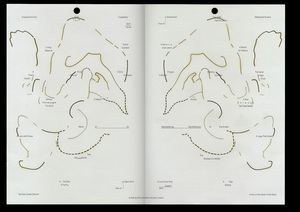
- Mit den Mitteln einer wissenschaftlichen Lecture erzählt „I Cried A Smile“ eine Geschichte über eine Person mit 2 Köpfen, Holz das zu Menschen wird, und die Erinnerung daran als Kind mit Neuropsychologie in Kontakt zu treten. Zwei übereinander hängende Projektionsflächen zeigen Zeichnungen, Animationen und gefundenes Bildmaterial während meine Stimme vom Band läuft und ich an einem Schreibtisch sitzend, mit dem Verfahren „Lip-Sync“ lautlos mitspreche. Das Publikum sitzt wie in einem anatomischen Theater in zwei Halbkreisen um mich herum.
- Beschreibung (en)
- Using the means of a scientific lecture, “I Cried A Smile” tells a story about a person with two heads, wood that becomes human, and the memory of coming into contact with neuropsychology as a child. Two projection screens hanging above me showcasing drawings, animations and found footage while my voice runs from the tape and I, sitting at a desk, speak along inaudibly using the “Lip-Sync” method. The audience sits around me like in an anatomical theater.
- Using the means of a scientific lecture, “I Cried A Smile” tells a story about a person with two heads, wood that becomes human, and the memory of coming into contact with neuropsychology as a child. Two projection screens hanging above me showcasing drawings, animations and found footage while my voice runs from the tape and I, sitting at a desk, speak along inaudibly using the “Lip-Sync” method. The audience sits around me like in an anatomical theater.
- Kategorie
- Typ des Projekts/Werks
- Schlagworte
- Mitwirkende
- Technik/Verfahren/Formate
- 2 Channel Video
- Dauer
- 8 Minuten
- Ort: Institution
- Stadt
- Land
- Titel
- I Cried A Smile
- Importiert am
- 30.09.2024
- Übergeordnete Sets
- 1
- Set enthält
- 0 5
G.O.T.T.A.L.I.S.T.E.N.
Name that can easily go onto 2 lines
Author that can easily go onto 2 lines as well
- Titel
- G.O.T.T.A.L.I.S.T.E.N.
- Autor/in
- Beschreibung (de)
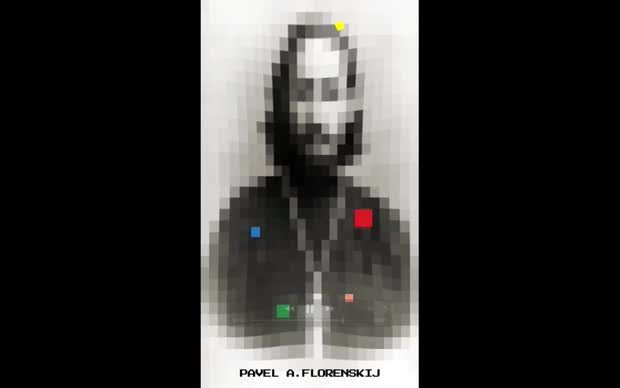
- "GOTTALISTEN", kurz für „Grab One Terrene Thought And Let It Slide To Eternal Nothingness”, beschäftigt sich mit der Zeit der Oktoberrevolution in Russland im Jahr 1917. Die Klebeband-Leinwände nehmen Bezug auf den Künstler Kasimir Malewitsch, der während dieser Epoche in Russland lebte. Zudem setzt Claus sich mit dem russischen Religionsphilosoph, Priester, Mathematiker und Kunstwissenschaftler Pavel Florenskij auseinander.
- Beschreibung (en)
- "GOTTALISTEN", short for "Grab One Terrene Thought And Let It Slide To Eternal Nothingness", deals with the time of the October Revolution in Russia in 1917. The tape canvases refer to the artist Kasimir Malewitsch, who lived in Russia during this era. Claus also deals with the Russian religious philosopher, priest, mathematician and art historian Pavel Florenskij.
- Kategorie
- Schlagworte
- Titel
- G.O.T.T.A.L.I.S.T.E.N.
- Projektleiter/in
- Semester
- Studiengang
- Typ der Abschlussarbeit
- Importiert am
- 08.08.2024
- Übergeordnete Sets
- 0
- Set enthält
- 1 27
Ghost Story
Name that can easily go onto 2 lines
Author that can easily go onto 2 lines as well
- Titel
- Ghost Story
- Autor/in
- Beschreibung (en)
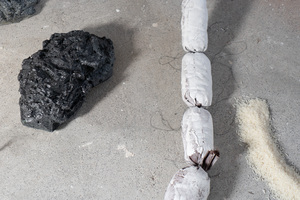
- The project was born in response to the passing of an unaccompanied homeless individual in 2018, a person without known family or friends. Her death was cataloged—reduced to data archived in newsrooms and on digital servers. Yet, if this data remains untouched, and her memory fades into obscurity, does her existence persist? She lingers and remains unseen—a paradoxical state of both presence and absence. Within the digital void, she exists as a spectral trace, haunting the silence, waiting to be rediscovered, forever closed in on herself.
Such is the nature of ghosts—the living create them. We resurrect the departed in our own ways, through rituals, texts, and the intangible recipes of memory. We read, we create, we consume, and through this, we invite the dead to inhabit us once more. This project is an assemblage of fragments—an exploration of the processes through which we become haunted by the past.
- The project was born in response to the passing of an unaccompanied homeless individual in 2018, a person without known family or friends. Her death was cataloged—reduced to data archived in newsrooms and on digital servers. Yet, if this data remains untouched, and her memory fades into obscurity, does her existence persist? She lingers and remains unseen—a paradoxical state of both presence and absence. Within the digital void, she exists as a spectral trace, haunting the silence, waiting to be rediscovered, forever closed in on herself.
- Kategorie
- Typ des Projekts/Werks
- Schlagworte
- Datierung
- 18.04.2024
- Dank an
- Sprache
- Material
- Ort
- Pförtnerhäuser, Alter Schlachthof
- Stadt
- Land
- Titel
- Ghost Story
- Projektleiter/in
- Semester
- Studiengang
- Typ der Abschlussarbeit
- Importiert am
- 25.09.2024
- Übergeordnete Sets
- 0
- Set enthält
- 0 9
Erikas Töchter
- Titel
- Erikas Töchter
- Autor/in
- Beschreibung (de)
- "Erikas Töchter" untersucht anhand der fiktiven Figur Erika Mustermann Perspektiven auf die deutsche, weibliche* Identitätsbildung in Deutschland. Seit 1987 existiert Erika als Musteridentität in amtlichen Dokumenten – weiß, blond, blau- oder grünäugig. Als ein lächelnder Anachronismus geistert sie, erschreckend unkommentiert, durch die Bürokratielandschaft Deutschlands.
Die Arbeit übersetzt diese fiktive Identität in ein irritierendes Szenario, das zwischen Gartenfest, Ausstellung, Performance und Büroalltag changiert. Im Zentrum stehen zwei Ebenen: Zum einen die Präsentation der IDOLLs, einer Serie neuer weiblicher Musteridentitäten, die im Format einer Teleshopping-Show als innovative Lösung zeitgenössischer Identitätsprobleme vermarktet werden. Zum anderen der Blick in Erikas Büroalltag. Umgeben von Plastik-Buchsbaumbüschen, Teppichboden und generischen Büromöbeln ist sie gefangen im Moment des Fotos und der Reproduktion ihres Gesichtes.
Erikas durchdringende Augen blicken uns alle aufmerksam an, die Mundwinkel deuten ein neutrales Lächeln an. Doch je länger man sie betrachtet, desto schwerer wiegt ihr Blick: normierend, klassifizierend und ausschließend. Ihre Stimme, körperlos und fragmentarisch, erzählt aus dem Inneren dieses leeren Gesichtes und stellt die Frage, welche Gesichter und Narrative durch sie aus dem kollektiven Bild verschwinden.
- "Erikas Töchter" untersucht anhand der fiktiven Figur Erika Mustermann Perspektiven auf die deutsche, weibliche* Identitätsbildung in Deutschland. Seit 1987 existiert Erika als Musteridentität in amtlichen Dokumenten – weiß, blond, blau- oder grünäugig. Als ein lächelnder Anachronismus geistert sie, erschreckend unkommentiert, durch die Bürokratielandschaft Deutschlands.
- Beschreibung (en)
- “Erikas Töchter” explores perspectives on german, female* identity formation in Germany through the fictional figure of Erika Mustermann. Since 1987, Erika has served as the standard identity in official documents – white, blonde, blue- or green-eyed. As a smiling anachronism, she continues to haunt Germany’s bureaucratic landscape.
The work translates this fictional identity into a scenario that shifts between garden party, exhibition, performance, and office routine. At its center are two layers: on the one hand, the presentation of the IDOLLs – a series of new female standard identities, presented in the style of a teleshoppingshow, offering an innovative approach to contemporary issues of identity; on the other hand, a glimpse into Erika’s everyday office life. Surrounded by plastic boxwood shrubs, carpeting, and generic office furniture, she remains trapped in the moment of the photograph and the endless reproduction of her own face.
Erika’s eyes look directly at the viewer, the corners of her mouth suggesting a neutral smile. Yet the longer she gazes at you, the more insistent her expression becomes: classifying and excluding. A bodiless, fragmentary voice accompanies the scene, offering insights from within this empty face and raising the question of which faces and narratives disappear from the collective image through her.
- “Erikas Töchter” explores perspectives on german, female* identity formation in Germany through the fictional figure of Erika Mustermann. Since 1987, Erika has served as the standard identity in official documents – white, blonde, blue- or green-eyed. As a smiling anachronism, she continues to haunt Germany’s bureaucratic landscape.
- Kategorie
- Typ des Projekts/Werks
- Schlagworte
- Datierung
- 22.07.2025
- Mitwirkende
- Sprache
- Material
- Abmessungen
- Ein kleines Haus mit Garten
- Dauer
- 4 Stunden
- Ort: Institution
- Stadt
- Land
- Titel
- Erikas Töchter
- Projektleiter/in
- Semester
- Studiengang
- Typ der Abschlussarbeit
- Importiert am
- 29.09.2025
- Übergeordnete Sets
- 0
- Set enthält
- 2 0
Emil
Name that can easily go onto 2 lines
Author that can easily go onto 2 lines as well
- Titel
- Emil
- Titel (en)
- Emil
- Untertitel
- Typografie als Medium historischer Sichtbarkeit
- Untertitel des Projekts/Werks (en)
- A typographic revival reflecting historical erasure
- Autor/in
- Beschreibung (de)
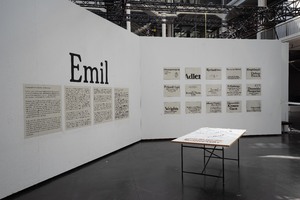
- „Emil” ist ein Diplomprojekt, das die Rolle der Typografie im Umgang mit Erinnerung, Verdrängung und historischen Brüchen untersucht. Im Mittelpunkt stehen die Lebens- und Werkgeschichten jüdischer Gestalter:innen während des Nationalsozialismus, darunter Elizabeth Friedländer und Lucian Bernhard (geb. Emil Kahn).
Ein zentrales Element des Projekts ist das Revival der Bernhard Antiqua von Lucian Bernhard. Die Schrift wurde für die zeitgenössische Nutzung digital neu interpretiert und prägt die gesamte visuelle Ebene des Projekts – von der Plakatserie über die Ausstellungsgestaltung bis hin zur Vortragspräsentation. So wird Typografie zum Untersuchungsgegenstand und zum gestalterischen Werkzeug der Erinnerung.
Für Julian Jaffé, Nachfahre einer jüdischen Familie, die im Nationalsozialismus ins Exil gezwungen wurde, ist "Emil" nicht nur ein typografisches Projekt, sondern auch ein persönlicher Akt des Erinnerns.
- „Emil” ist ein Diplomprojekt, das die Rolle der Typografie im Umgang mit Erinnerung, Verdrängung und historischen Brüchen untersucht. Im Mittelpunkt stehen die Lebens- und Werkgeschichten jüdischer Gestalter:innen während des Nationalsozialismus, darunter Elizabeth Friedländer und Lucian Bernhard (geb. Emil Kahn).
- Beschreibung (en)
- Emil is a diploma project that examines the role of typography in dealing with memory, repression and historical ruptures. It focuses on the lives and works of Jewish designers during National Socialism, including Elizabeth Friedländer and Lucian Bernhard (born Emil Kahn).
A central element of the project is the revival of Bernhard Antiqua by Lucian Bernhard. The font has been digitally reinterpreted for contemporary use and shapes the entire visual level of the project – from the poster series to the exhibition design and lecture presentation. In this way, typography becomes both the subject of investigation and a creative tool of remembrance.
For Julian Jaffé, a descendant of a Jewish family forced into exile during the Nazi era, ‘Emil’ is not only a typographic project, but also a personal act of remembrance.
- Emil is a diploma project that examines the role of typography in dealing with memory, repression and historical ruptures. It focuses on the lives and works of Jewish designers during National Socialism, including Elizabeth Friedländer and Lucian Bernhard (born Emil Kahn).
- Kategorie
- Schlagworte
- Dank an
- Technik/Verfahren/Formate
- Typografie
- Titel
- Emil
- Projektleiter/in
- Semester
- Studiengang
- Typ der Abschlussarbeit
- Importiert am
- 26.06.2025
- Übergeordnete Sets
- 2
- Set enthält
- 0 13
Die Methode Duchamp – Magritte
Name that can easily go onto 2 lines
Author that can easily go onto 2 lines as well
- Titel
- Die Methode Duchamp – Magritte
- Untertitel
- Das „Musée d’Art Moderne. Département des Aigles” von Marcel Broodthaers unter dem Aspekt der strategischen Aneignung
- Autor/in
- Beschreibung (de)
- „Der Fall Marcel Broodthaers lädt den Rezipienten dazu ein, sich mit dessen Vorläufern auseinanderzusetzen. Nicht etwa, weil dort Geheimnisse aufzudecken wären – im Gegenteil, die broodthaers’schen Galionsfiguren sind in seinem Werk alle namentlich präsentiert –, sondern eher auf Grund der Tatsache, da er es wie kaum ein anderer verstanden hat, sich bestimmter Vorbilder zu bedienen, sprich, sich Teilaspekte aus deren Werken anzueignen und die darin enthaltenen Kerngedanken eigens fortzuschreiben. Dies geschieht auf eine Art und Weise, die es vermag, Hommage und Kritik zu vereinen.”
„Über zwei Doppelseiten hinweg breitet sich im Ausstellungskatalog zur Section des Figures [...] das graphisch aus, was Broodthaers als seine METHODE tituliert. Diese Blätter folgen in direktem Anschluß an das Vorwort, sie markieren den Anfang zu jenem Katalogteil, der sowohl inhaltlich, als auch formal maßgeblich vom Künstler gestaltet worden ist. Bereits die Typographie des Titelworts strahlt – in Majuskel gesetzt – eine hohe Wichtigkeit aus. Wer allerdings ausführliche Erläuterung erwartet hat, wird enttäuscht, es handelt sich vielmehr um eine anspielungsreiche Illustration als um eine schriftliche Erklärung, doch gleichwohl trägt diese Ausführung den Charakter des Manifests.”
- „Der Fall Marcel Broodthaers lädt den Rezipienten dazu ein, sich mit dessen Vorläufern auseinanderzusetzen. Nicht etwa, weil dort Geheimnisse aufzudecken wären – im Gegenteil, die broodthaers’schen Galionsfiguren sind in seinem Werk alle namentlich präsentiert –, sondern eher auf Grund der Tatsache, da er es wie kaum ein anderer verstanden hat, sich bestimmter Vorbilder zu bedienen, sprich, sich Teilaspekte aus deren Werken anzueignen und die darin enthaltenen Kerngedanken eigens fortzuschreiben. Dies geschieht auf eine Art und Weise, die es vermag, Hommage und Kritik zu vereinen.”
- Beschreibung (en)
- "The case of Marcel Broodthaers invites the recipient to engage with his precursors. Not because there are secrets to be uncovered there - on the contrary, Broodthaers' figureheads are all presented by name in his work - but rather due to the fact that he understood better than almost anyone else how to make use of certain role models, i.e. to appropriate partial aspects from their works and to continue the core ideas contained therein in his own way. This is done in a way that manages to combine homage and criticism."
"Over two double-page spreads in the exhibition catalogue for Section des Figures [...] Broodthaers' METHOD is presented graphically. These pages follow directly after the preface and mark the beginning of the section of the catalogue that was designed by the artist both in terms of content and form. Even the typography of the title word - set in majuscule - radiates great importance. However, anyone expecting a detailed explanation will be disappointed; it is more of an allusive illustration than a written explanation, but this version nevertheless has the character of a manifesto."
- "The case of Marcel Broodthaers invites the recipient to engage with his precursors. Not because there are secrets to be uncovered there - on the contrary, Broodthaers' figureheads are all presented by name in his work - but rather due to the fact that he understood better than almost anyone else how to make use of certain role models, i.e. to appropriate partial aspects from their works and to continue the core ideas contained therein in his own way. This is done in a way that manages to combine homage and criticism."
- Kategorie
- Schlagworte
- Datierung
- November 2010
- Sprache
- Ort: Institution
- Titel
- Die Methode Duchamp – Magritte
- Semester
- Archiv-Signatur
- HfG HS 2010 09
- Externes Archiv
- Importiert am
- 10.01.2025
- Übergeordnete Sets
- 2
- Set enthält
- 0 2