The Breath of Metal
Benachbarte Sets (32)Alle Zusammenhänge anzeigen
Diese Sets wurden den gleichen Sets hinzugefügt wie das ausgewählte Set.
32 Inhalte
- Seite 1 von 3
(Un)Stopped Motion
Name that can easily go onto 2 lines
Author that can easily go onto 2 lines as well
- Titel
- (Un)Stopped Motion
- Titel (en)
- (Un)Stopped Motion
- Autor/in
- Beschreibung (de)
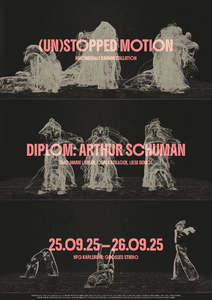
- In dieser interdisziplinären Arbeit wird der schleichende Prozess der Selbstkontrolle als Reaktion auf äußere Störungen untersucht. Ausgangspunkt ist die Angst, einen Fehler zu begehen, die nicht mit einem sichtbaren Eingriff beginnt, sondern sich langsam in das Bewegungsrepertoire des Körpers einschreibt, bis sie schließlich zum Stillstand führt.
Die Performance wird aus mehreren Perspektiven gefilmt. Diese Aufnahmen aus verschiedenen Blickachsen eines überwachenden Apparats, werden in der Installation projiziert.
- In dieser interdisziplinären Arbeit wird der schleichende Prozess der Selbstkontrolle als Reaktion auf äußere Störungen untersucht. Ausgangspunkt ist die Angst, einen Fehler zu begehen, die nicht mit einem sichtbaren Eingriff beginnt, sondern sich langsam in das Bewegungsrepertoire des Körpers einschreibt, bis sie schließlich zum Stillstand führt.
- Beschreibung (en)
- This interdisciplinary work examines the creeping process of self-control as a response to external disturbances. The starting point is the fear of making a mistake, which does not begin with a visible intervention, but slowly inscribes itself into the body's repertoire of movements until it finally leads to a standstill.
The performance is filmed from several perspectives. These recordings from different viewing angles of a surveillance device are projected in the installation.
- This interdisciplinary work examines the creeping process of self-control as a response to external disturbances. The starting point is the fear of making a mistake, which does not begin with a visible intervention, but slowly inscribes itself into the body's repertoire of movements until it finally leads to a standstill.
- Kategorie
- Typ des Projekts/Werks
- Schlagworte
- Datierung
- 24.09.2025 - 29.09.2025
- Mitwirkende
- Dank an
- Material
- Abmessungen
- 4x Screens 1,8x2,8 m
- Dauer
- 08:30
- Ort: Institution
- Ort
- Großes Studio, HfG Karlsruhe
Screen, HfG Karlsruhe
- Großes Studio, HfG Karlsruhe
- Stadt
- Land
- Titel
- (Un)Stopped Motion
- Projektleiter/in
- Semester
- Studiengang
- Typ der Abschlussarbeit
- Importiert am
- 21.10.2025
- Übergeordnete Sets
- 2
- Set enthält
- 2 4
The Violent Container
Name that can easily go onto 2 lines
Author that can easily go onto 2 lines as well
- Titel
- The Violent Container
- Titel (en)
- The Violent Container
- Untertitel
- Exhibition and handbook
- Untertitel des Projekts/Werks (en)
- Exhibition and handbook
- Autor/in
- Beschreibung (de)
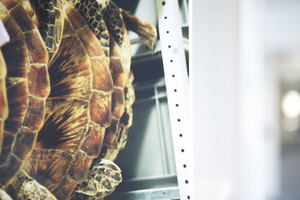
- „The Violent Container“ konzentriert sich auf das kulturelle Phänomen des Käfigs und das Einsperren als Praxis, um Objekte oder Körper einzuschließen, zu kategorisieren, einzuschränken und sich anzueignen – sowie als Mittel, um sie zu sammeln, zu schätzen, zu bewahren und zu schützen.
Das Projekt umfasst eine Ausstellung und eine Publikation, die die verschiedenen Eigenschaften und Funktionen der sich wandelnden Formen des Käfigs untersuchen und dabei erforschen, wie Käfige nicht nur die Verwaltung lebender oder toter Körper und Objekte ermöglichen, sondern auch die Art und Weise bestimmen, wie wir sie wahrnehmen.
- „The Violent Container“ konzentriert sich auf das kulturelle Phänomen des Käfigs und das Einsperren als Praxis, um Objekte oder Körper einzuschließen, zu kategorisieren, einzuschränken und sich anzueignen – sowie als Mittel, um sie zu sammeln, zu schätzen, zu bewahren und zu schützen.
- Beschreibung (en)
- "The Violent Container" focuses on the cultural phenomenon of the cage, and caging as a practice to contain, categorise, restrict, and appropriate objects or bodies – as well as a tool to collect, treasure, preserve, and protect them.
The project comprises an exhibition and a publication that examine the various properties and functions of the cage’s shifting forms, exploring how cages not only enable the administration of living or dead bodies and objects, but also govern the ways in which we perceive them.
- "The Violent Container" focuses on the cultural phenomenon of the cage, and caging as a practice to contain, categorise, restrict, and appropriate objects or bodies – as well as a tool to collect, treasure, preserve, and protect them.
- Kategorie
- Typ des Projekts/Werks
- Schlagworte
- Mitwirkende
- Ort
- Rheinstetten, Karlsruhe
- Titel
- The Violent Container
- Untertitel
- Exhibition and handbook
- Projektleiter/in
- Semester
- Studiengang
- Typ der Abschlussarbeit
- Importiert am
- 21.09.2025
- Übergeordnete Sets
- 2
- Set enthält
- 0 14
Ambassadors
Name that can easily go onto 2 lines
Author that can easily go onto 2 lines as well
- Titel
- Ambassadors
- Titel (en)
- Ambassadors
- Untertitel
- 12 stories of artificial survival
- Untertitel des Projekts/Werks (en)
- 12 stories of artificial survival
- Autor/in
- Beschreibung (de)
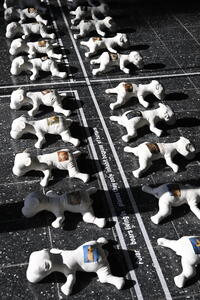
- AMBASSADORS ist eine installative Sammlung, bestehend aus 120 Stofftieren, die das Verhältnis der Konzepte vom Natürlichen und Künstlichen anhand des Eisbären in menschlicher Gefangenschaft beleuchtet. Im Kampf um die Klimakrise ist der Eisbär zum Symbolbild der zu schützenden Natur geworden und hat sich als solches zum Repräsentanten in das kollektive Gedächtnis eingebrannt. KI-generierte Bilder, von denen jeweils 10 eine der 12 Geschichten in der Installation visualisieren, wurden einzeln auf die Rücken der 120 Stofftiere übertragen und gemeinsam in ein immersives Wimmelbild verwoben. So werden die Stofftiere in der Installation zu Botschaftern einer künstlichen Population und verlängern damit, ohne Lebewesen Leid zuzufügen, die Ketten an Abbildungen von Abbildungen von etwas, das mal natürlich war.
- Beschreibung (en)
- Ambassadors is an installation consisting of 120 stuffed animals that explores the relation between the natural and the artificial through the lens of the polar bear in human captivity. In the fight against the climate crisis, polar bears haves become a symbolic image of nature in need of protection—an image that has etched itself into the collective memory. Each set of ten AI-generated images represents one of the twelve stories depicted in the installation. These images were transferred individually onto the backs of the 120 stuffed animals and collectively woven into an immersive Wimmelbild. In this way, the stuffed animals once again become ambassadors of an artificial population—extending the chain of representations of representations of something that once was natural, without causing harm to living beings.
- Kategorie
- Schlagworte
- Mitwirkende
- Material
- Titel
- Ambassadors
- Untertitel
- 12 stories of artificial survival
- Projektleiter/in
- Semester
- Studiengang
- Typ der Abschlussarbeit
- Importiert am
- 29.09.2025
- Übergeordnete Sets
- 2
- Set enthält
- 0 8
It's okay now
Name that can easily go onto 2 lines
Author that can easily go onto 2 lines as well
- Titel
- It's okay now
- Titel (en)
- It's okay now
- Autor/in
- Beschreibung (de)
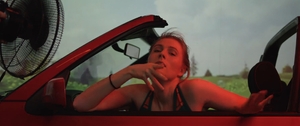
- "It’s okay now" ist ein autobiografisches Werk, das durch die Praxis des Erinnerns die Herkunft und Identität der beiden Protagonistinnen hinterfragt, analysiert und miteinander vergleicht. Das Erinnern dient dabei nicht nur als Mittel der Reflexion, sondern auch als eine Form des Träumens und Verarbeitens von Vergangenem. Fiktionale Szenen und Archivmaterial verweben sich zu einer Erzählung, die persönliche und kollektive Erinnerungen miteinander verschmelzen lässt.
- Beschreibung (en)
- "It’s okay now" is an autobiographical work that, through the practice of remembering, questions, analyzes, and compares the origins and identities of the two protagonists. In this process, remembering serves not only as a tool for reflection but also as a form of dreaming and processing the past. Fictional scenes and archival material intertwine to create a narrative that fuses personal and collective memories.
- Kategorie
- Typ des Projekts/Werks
- Schlagworte
- Datierung
- 01.10.2024 - 04.10.2024
- Mitwirkende
- Dank an
- Sprache
- Untertitel (Film)
- Material
- Technik/Verfahren/Formate
- 3-Kanal-Video-Audio Rauminstallation
- Abmessungen
- Breite: 10m; Tiefe: 10m; Höhe 4,5m
- Dauer
- 45 min
- Ort: Institution
- Ort
- Großes Studio
- Stadt
- Land
- Beteiligte Institution(en)
- Titel
- It's okay now
- Projektleiter/in
- Semester
- Studiengang
- Typ der Abschlussarbeit
- Archiv-Signatur
- its okay now
- Importiert am
- 10.10.2024
- Übergeordnete Sets
- 2
- Set enthält
- 0 11
sampling for relations in the light of a satellite
Name that can easily go onto 2 lines
Author that can easily go onto 2 lines as well
- Titel
- sampling for relations in the light of a satellite
- Titel (en)
- sampling for relations in the light of a satellite
- Autor/in
- Beschreibung (de)
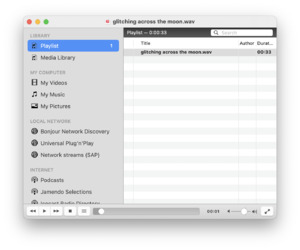
- In dem Format einer sampling session wird eine akustische Struktur erprobt, die das Reisen zum Mond beschwört und sich mit Raumwahrnehmungen, Imagination und kollektiven Vorstellungen auseinandersetzt. Anders als in dieser Performance ist für das menschliche Ohr eine wesentliche Präsenz im Weltraum das Geräuschlose.
- Beschreibung (en)
- In the format of a sampling session, an acoustic structure is tested that conjures a journey to the Moon, engaging with perceptions of space, imagination and collective ideas.
- Kategorie
- Typ des Projekts/Werks
- Schlagworte
- Datierung
- 04.02.2025
- Mitwirkende
- Dank an
- Anja Casser
- Filipa Cesar
- Jaya Demmer
- Hubert Distel
- Till Engelhardt
- Yvonne Fomferra
- Hanna Franke
- Heidi Herzig
- Tobias Keilbach
- Eisenhart Keimeyer
- Susanne Kriemann
- Rebekka Ladewig
- Isabel Motz
- Leonie Mühlen
- Elisabeth Potemkin
- Josefine Scheu
- Lorenz Schwarz
- Leia Morgana Walz
- Niklas Weisenbach
- Maximilian Zschiesche
- Badischer Kunstverein
- Sprache
- Material
- Ort: Institution
- Stadt
- Land
- Beteiligte Institution(en)
- Titel
- sampling for relations in the light of a satellite
- Projektleiter/in
- Semester
- Studiengang
- Typ der Abschlussarbeit
- Importiert am
- 01.10.2025
- Übergeordnete Sets
- 0
- Set enthält
- 0 5
Sekret
Name that can easily go onto 2 lines
Author that can easily go onto 2 lines as well
- Titel
- Sekret
- Untertitel
- Eine Tränen-Bar Performance
- Autor/in
- Beschreibung (de)
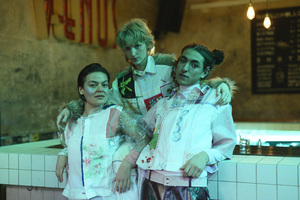
- In einer Bar, in der Innenstadt von Karlsruhe, trifft das Publikum auf ein tourendes Trio mit einer sonderbaren Geschichte: Es war einmal ein Nachtfalter, der lebte im Dschungel des brasilianischen Amazonas. Dieser Falter trug den Namen Gorgone macarea und hatte eine Angewohnheit, die für ein Lebewesen auf der Erde recht eigensinnig erschien. Gorgone macarea trank die Tränen schlafender Vögel. Für ihn: eine sichere Nahrungsquelle in unsicheren Zeiten. Da also Gorgone macareas Lebensraum sich immer mehr veränderte und auch die Vögel nach und nach wegzogen, machte der Falter sich auf, um andere Tränen zu suchen. Dabei kam ihm zu Ohren, dass der Mensch ganz besondere Tränen vergießt, wie kein anderes Lebewesen auf der Erde: Emotionale Tränen.
Und so entschloss sich der Nachtfalter, die Menschen einzuladen, um ihre Tränen mit ihm zu teilen.
Seither touren der Nachtfalter und seine zwei Kompliz*innen Sadgirl und Fluss von Bar zu Bar und lassen für einen Abend das Publikum Teil ihres Universums werden. Ein Universum – in dem Tränen die Hauptzutat des Abends sind und in jedem Cocktail serviert werden.
- In einer Bar, in der Innenstadt von Karlsruhe, trifft das Publikum auf ein tourendes Trio mit einer sonderbaren Geschichte: Es war einmal ein Nachtfalter, der lebte im Dschungel des brasilianischen Amazonas. Dieser Falter trug den Namen Gorgone macarea und hatte eine Angewohnheit, die für ein Lebewesen auf der Erde recht eigensinnig erschien. Gorgone macarea trank die Tränen schlafender Vögel. Für ihn: eine sichere Nahrungsquelle in unsicheren Zeiten. Da also Gorgone macareas Lebensraum sich immer mehr veränderte und auch die Vögel nach und nach wegzogen, machte der Falter sich auf, um andere Tränen zu suchen. Dabei kam ihm zu Ohren, dass der Mensch ganz besondere Tränen vergießt, wie kein anderes Lebewesen auf der Erde: Emotionale Tränen.
- Beschreibung (en)
- In a bar in downtown Karlsruhe, the audience encounters a touring trio with a peculiar story: Once upon a time, there was a moth living in the jungles of the Brazilian Amazon. This moth was called Gorgone macarea and had a habit that seemed rather unusual for a creature on Earth. Gorgone macarea drank the tears of sleeping birds. For the moth, it was a reliable source of nourishment in uncertain times. After all, even back then, the Amazon rainforest was considered a so-called tipping element, capable of disrupting the global climate balance. As Gorgone macarea’s habitat changed more and more, and the birds gradually disappeared, the moth set out in search of other tears. Along the way, it heard that humans shed a kind of tear unlike any other creature on Earth: emotional tears.
And so, the moth decided to invite humans to share their tears with it.
Since then, the moth and its two companions, Sadgirl and Fluss, have been touring from bar to bar, drawing the audience into their universe for one night. A universe where tears are the main ingredient of the evening—served in every cocktail.
- In a bar in downtown Karlsruhe, the audience encounters a touring trio with a peculiar story: Once upon a time, there was a moth living in the jungles of the Brazilian Amazon. This moth was called Gorgone macarea and had a habit that seemed rather unusual for a creature on Earth. Gorgone macarea drank the tears of sleeping birds. For the moth, it was a reliable source of nourishment in uncertain times. After all, even back then, the Amazon rainforest was considered a so-called tipping element, capable of disrupting the global climate balance. As Gorgone macarea’s habitat changed more and more, and the birds gradually disappeared, the moth set out in search of other tears. Along the way, it heard that humans shed a kind of tear unlike any other creature on Earth: emotional tears.
- Kategorie
- Typ des Projekts/Werks
- Schlagworte
- Datierung
- 20.12.2024
- Mitwirkende
- Dank an
- Dauer
- 40 Minuten
- Ort
- Venus Bar, Kaiserpassage
- Stadt
- Land
- Titel
- Sekret
- Untertitel
- Eine Tränen-Bar Performance
- Projektleiter/in
- Semester
- Studiengang
- Typ der Abschlussarbeit
- Importiert am
- 26.02.2025
- Übergeordnete Sets
- 2
- Set enthält
- 0 15
Die Methode Duchamp – Magritte
Name that can easily go onto 2 lines
Author that can easily go onto 2 lines as well
- Titel
- Die Methode Duchamp – Magritte
- Untertitel
- Das „Musée d’Art Moderne. Département des Aigles” von Marcel Broodthaers unter dem Aspekt der strategischen Aneignung
- Autor/in
- Beschreibung (de)
- „Der Fall Marcel Broodthaers lädt den Rezipienten dazu ein, sich mit dessen Vorläufern auseinanderzusetzen. Nicht etwa, weil dort Geheimnisse aufzudecken wären – im Gegenteil, die broodthaers’schen Galionsfiguren sind in seinem Werk alle namentlich präsentiert –, sondern eher auf Grund der Tatsache, da er es wie kaum ein anderer verstanden hat, sich bestimmter Vorbilder zu bedienen, sprich, sich Teilaspekte aus deren Werken anzueignen und die darin enthaltenen Kerngedanken eigens fortzuschreiben. Dies geschieht auf eine Art und Weise, die es vermag, Hommage und Kritik zu vereinen.”
„Über zwei Doppelseiten hinweg breitet sich im Ausstellungskatalog zur Section des Figures [...] das graphisch aus, was Broodthaers als seine METHODE tituliert. Diese Blätter folgen in direktem Anschluß an das Vorwort, sie markieren den Anfang zu jenem Katalogteil, der sowohl inhaltlich, als auch formal maßgeblich vom Künstler gestaltet worden ist. Bereits die Typographie des Titelworts strahlt – in Majuskel gesetzt – eine hohe Wichtigkeit aus. Wer allerdings ausführliche Erläuterung erwartet hat, wird enttäuscht, es handelt sich vielmehr um eine anspielungsreiche Illustration als um eine schriftliche Erklärung, doch gleichwohl trägt diese Ausführung den Charakter des Manifests.”
- „Der Fall Marcel Broodthaers lädt den Rezipienten dazu ein, sich mit dessen Vorläufern auseinanderzusetzen. Nicht etwa, weil dort Geheimnisse aufzudecken wären – im Gegenteil, die broodthaers’schen Galionsfiguren sind in seinem Werk alle namentlich präsentiert –, sondern eher auf Grund der Tatsache, da er es wie kaum ein anderer verstanden hat, sich bestimmter Vorbilder zu bedienen, sprich, sich Teilaspekte aus deren Werken anzueignen und die darin enthaltenen Kerngedanken eigens fortzuschreiben. Dies geschieht auf eine Art und Weise, die es vermag, Hommage und Kritik zu vereinen.”
- Beschreibung (en)
- "The case of Marcel Broodthaers invites the recipient to engage with his precursors. Not because there are secrets to be uncovered there - on the contrary, Broodthaers' figureheads are all presented by name in his work - but rather due to the fact that he understood better than almost anyone else how to make use of certain role models, i.e. to appropriate partial aspects from their works and to continue the core ideas contained therein in his own way. This is done in a way that manages to combine homage and criticism."
"Over two double-page spreads in the exhibition catalogue for Section des Figures [...] Broodthaers' METHOD is presented graphically. These pages follow directly after the preface and mark the beginning of the section of the catalogue that was designed by the artist both in terms of content and form. Even the typography of the title word - set in majuscule - radiates great importance. However, anyone expecting a detailed explanation will be disappointed; it is more of an allusive illustration than a written explanation, but this version nevertheless has the character of a manifesto."
- "The case of Marcel Broodthaers invites the recipient to engage with his precursors. Not because there are secrets to be uncovered there - on the contrary, Broodthaers' figureheads are all presented by name in his work - but rather due to the fact that he understood better than almost anyone else how to make use of certain role models, i.e. to appropriate partial aspects from their works and to continue the core ideas contained therein in his own way. This is done in a way that manages to combine homage and criticism."
- Kategorie
- Schlagworte
- Datierung
- November 2010
- Sprache
- Ort: Institution
- Titel
- Die Methode Duchamp – Magritte
- Untertitel
- Das „Musée d’Art Moderne. Département des Aigles” von Marcel Broodthaers unter dem Aspekt der strategischen Aneignung
- Semester
- Archiv-Signatur
- HfG HS 2010 09
- Externes Archiv
- Importiert am
- 10.01.2025
- Übergeordnete Sets
- 2
- Set enthält
- 0 2
LET ME SEE (c) THE SUN
Name that can easily go onto 2 lines
Author that can easily go onto 2 lines as well
- Titel
- LET ME SEE (c) THE SUN
- Autor/in
- Beschreibung (de)
- Die Diplomarbeit „LET ME SEE (c) THE SUN“ setzt sich mit Sprache und Kommunikation auseinander, wobei das Medium Kleidung als Sprachrohr von Geschichten und als Bote von Identitäten analysiert werden soll.
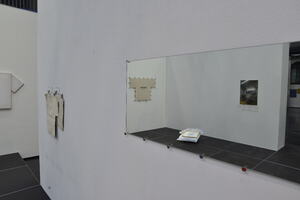
Die ausgestellten Arbeiten greifen visuelle Elemente von Theaterkostümen, Bühnenrequisiten und Umkleidekabinen auf, um Besucher*innen einzuladen, sich selbst als Performer*innen von Sprache und Identität wahrzunehmen. Ein besonderer Schwerpunkt liegt dabei auf grafischen T-Shirts, da diese oft kulturelle Assoziationen oder oberflächliche Identitäten signalisieren (z. B. Bandshirts, Arbeitskleidung). Diese bekannte Struktur wird dekonstruiert und umgebaut, um Betrachter*innen die Bewohnbarkeit von Sprache zu verdeutlichen.
Die begleitende Performance beschäftigt sich mit der Mehrdeutigkeit von Sprache, die stets von persönlicher Interpretation abhängt. Wörter und Texte sind untrennbar mit ihrem Kontext sowie der Art und Weise verbunden, wie und wo sie erscheinen. In den Text-/Textil-Konstruktionen werden Wörter zu Requisiten, die Bedeutungen – sowohl offensichtlich als auch schwer fassbar – tragen und durch das Medium der Requisite von anderen „bewohnt“ werden können.
- Die Diplomarbeit „LET ME SEE (c) THE SUN“ setzt sich mit Sprache und Kommunikation auseinander, wobei das Medium Kleidung als Sprachrohr von Geschichten und als Bote von Identitäten analysiert werden soll.
- Beschreibung (en)
- The diploma project “LET ME SEE (c) THE SUN” deals with language and communication, analyzing the medium of clothing as a mouthpiece for stories and as a messenger of identities.
The exhibited works take up visual elements of theater costumes, stage props and dressing rooms to invite visitors to perceive themselves as performers of language and identity. A particular focus is placed on graphic T-shirts, as these often signal cultural associations or superficial identities (e.g. band shirts, work clothes). This familiar structure is deconstructed and rebuilt to show viewers the habitability of language.
The accompanying performance deals with the ambiguity of language, which always depends on personal interpretation. Words and texts are inextricably linked to their context and how and where they appear. In the text/textile constructions, words become props that carry meanings - both obvious and elusive - and can be “inhabited” by others through the medium of the prop.
- The diploma project “LET ME SEE (c) THE SUN” deals with language and communication, analyzing the medium of clothing as a mouthpiece for stories and as a messenger of identities.
- Kategorie
- Typ des Projekts/Werks
- Schlagworte
- Datierung
- 15.01.2025
- Mitwirkende
- Dank an
- Paul Bailey
- Jonathan Blaschke
- Céline Condorelli
- Amelie Enders
- Till Engelhardt
- Kira Fuchs
- Line-Gry Hørup
- Rafael Jörger
- Chiara Kern
- Simon Knebl
- Florian Knöbl
- Alexander Knoppik
- Barbara Kuon
- James Langdon
- Nina Overkott
- Leo Schick
- Henriette Schwabe (Jette Schwabe)
- Neele Seidel
- Isabel Seiffert
- Moritz Kamil Simon
- Charlotte Singer
- Niklas Weisenbach
- Maximilian Zschiesche
- Sprache
- Material
- Ort: Institution
- Ort
- Lichthof 3
- Stadt
- Land
- Titel
- LET ME SEE (c) THE SUN
- Projektleiter/in
- Semester
- Studiengang
- Typ der Abschlussarbeit
- Importiert am
- 11.02.2025
- Übergeordnete Sets
- 2
- Set enthält
- 0 11
Testzentrum für chronischen Automobilismus
- Titel
- Testzentrum für chronischen Automobilismus
- Autor/in
- Beschreibung (de)
- Radweg Ende, kein Zebrastreifen, Parkplatz voll, Bahn verpasst and stop and go, jemand hupt alle schauen, rote Ampel niemand da, falsch abgebogen, Licht vergessen, vollgas Lichthupe, Überholmaneuver trotz Geschwindigkeitsbegrenzung, ups! Personenschaden, Spiegel abgebrochen, Fenster runter „Arschloch!“, selber! Brumm. Kennen Sie das?
Verkehr ist eine höchst emotionale Angelegenheit. Die vielen kleinen Entscheidungen, die wir im automobilen Individualverkehr treffen müssen, sind immer auch mit einem Risiko behaftet. Sehen wir den "Personenschaden" als Katastrophe an, so müssen wir doch zugeben, dass auch die kleinen Fehlentscheidungen für Stress, Frust und Wut sorgen können. Ebendiese Reaktionen möchten wir im Kontext der sogenannten Mobilitätswende anerkennen, attestieren und aus ihnen Forderungen ableiten, die wir gerne für unsere Besucher*innen an die lokalen Behörden weiterleiten.
Auto, Fahrrad, Zufuß? Egal! Unsere 20-minütige Erstuntersuchung richtet sich an alle Verkehrsteilnehmer*innen. Erfahren Sie fachkundige Beratung und die Anwendung neuester Technologie. Tipp: Buchen Sie schon jetzt einen Termin und vermeiden Sie Wartezeiten. Wir freuen uns auf ihren Besuch!
- Radweg Ende, kein Zebrastreifen, Parkplatz voll, Bahn verpasst and stop and go, jemand hupt alle schauen, rote Ampel niemand da, falsch abgebogen, Licht vergessen, vollgas Lichthupe, Überholmaneuver trotz Geschwindigkeitsbegrenzung, ups! Personenschaden, Spiegel abgebrochen, Fenster runter „Arschloch!“, selber! Brumm. Kennen Sie das?
- Kategorie
- Typ des Projekts/Werks
- Schlagworte
- Datierung
- 25.03.2024 - 28.03.2024
- Mitwirkende
- Sprache
- Material
- Technik/Verfahren/Formate
- GameMaker Studio 2 (Game)
- Abmessungen
- 5 x 7,5 m
- Dauer
- 25 Minuten (Erstuntersuchung)
- Ort: Institution
- Stadt
- Land
- Internetlinks
- Bemerkungen
- Dank an: Alexander Knoppik, Alexander Thelen, Anna Haas (Badisches Staatstheater), Astrid Lindner-Maier, Barbara Kuon, Charlotte Singer, Christian Platz, Cornelia Herzog, Daniel Heiss (ZKM), Dario Schmid, Emelie Schreiner, Felix Fisgus, Franzi Wentz, Isabelle Schneider, Julian Kuf, Laura Richter, Leonie Mühlen, Martin Mangold (ZKM), Marvin Uhde (cant-deci.de), Max Bernhard, Miri, Omni-Mobil GmbH, Paula Schacke (die Anstoss e.V.), Pavel Polenz, Ralph Saam (Scheck-In Center Durlach), Richard Brunner, Sebastian Schäfer, Sebastian Schillbach, Sebastian Schönfeld, Silke Roth (die Anstoss e.V.), Susanne Henneberger (WERKRAUM: Karlsruhe e.V.), Susanne Schmitt, Sven Krahl, Timothée Charon, Tobias Keilbach, Tjark Schönfeld, Ute Wienberg (Badisches Staatstheater), Vlado Petrovic, Waldemar Schwab, Yun-Wen Liu
- Dank an: Alexander Knoppik, Alexander Thelen, Anna Haas (Badisches Staatstheater), Astrid Lindner-Maier, Barbara Kuon, Charlotte Singer, Christian Platz, Cornelia Herzog, Daniel Heiss (ZKM), Dario Schmid, Emelie Schreiner, Felix Fisgus, Franzi Wentz, Isabelle Schneider, Julian Kuf, Laura Richter, Leonie Mühlen, Martin Mangold (ZKM), Marvin Uhde (cant-deci.de), Max Bernhard, Miri, Omni-Mobil GmbH, Paula Schacke (die Anstoss e.V.), Pavel Polenz, Ralph Saam (Scheck-In Center Durlach), Richard Brunner, Sebastian Schäfer, Sebastian Schillbach, Sebastian Schönfeld, Silke Roth (die Anstoss e.V.), Susanne Henneberger (WERKRAUM: Karlsruhe e.V.), Susanne Schmitt, Sven Krahl, Timothée Charon, Tobias Keilbach, Tjark Schönfeld, Ute Wienberg (Badisches Staatstheater), Vlado Petrovic, Waldemar Schwab, Yun-Wen Liu
- Titel
- Testzentrum für chronischen Automobilismus
- Projektleiter/in
- Semester
- Studiengang
- Typ der Abschlussarbeit
- Importiert am
- 31.05.2024
- Übergeordnete Sets
- 2
- Set enthält
- 0 0
“I see” “with my voice”
Name that can easily go onto 2 lines
Author that can easily go onto 2 lines as well
- Titel
- “I see” “with my voice”
- Autor/in
- Beschreibung (de)
- „I see“ „with my voice“ beschäftigt sich mit Themen wie Transformation, Gestaltwandel und Materialität durch ein Zusammenspiel von literarischen Fragmenten und entliehenen Stimmen. Das Ergebnis ist eine nicht-lineare, fluide Erzählung, die die flüchtige Natur von Visionen, Träumen und Metamorphosen einfängt.
- Beschreibung (en)
- “I see” “with my voice” engages with themes of transformation,
shapeshifting, and materiality through an interplay of literary
fragments and borrowed voices, resulting in a non-linear, fluid
narrative that encapsulates the ephemeral nature of visions,
dreams, and metamorphoses.
This project draws substantial inspiration from Alice Notley's
The Descent of Alette, a transformative odyssey that employs
rhythmic spoken language to explore continuous change.
Alongside Notley’s influence, the works of Hildegard von Bingen,
a 12th-century mystic, and the visionary narratives from the
biblical book of Ezekiel, serve as foundational texts that inform
the thematic and structural framework of this piece.
The text is presented as an audio recording, whispered as a 20 minute loop.
Visitors can listen to the piece when pressing their ear against the tents walls.
My objects are performers, maybe even imposters: frozen in a state of change or mimicry. My objects are performers, maybe even imposters: frozen in a state of change or mimicry.
They are skillfull imitators, but you can tell something is off.
Moving along this crack between the believable and the not quite right, I like to engage
with different realities and states of being. The artificial, almost real-life fakeness of their with different realities and states of being. The artificial, almost real-life fakeness of their
surfaces set the stage for my narrative of transformation, imitation and shapeshifting.
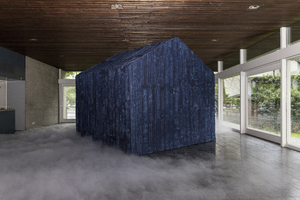
1. A wooden house crafted from smooth denim. Made by sanding the grain of wood
onto the denim fabric
2. Heavy fog covering the floor that could be perceived as dew, mixed with a light subtle
smoke of Incense burning.
The fragrance envokes sacred, holy feelings with its warm, resinous smell with peppery The fragrance envokes sacred, holy feelings with its warm, resinous smell with peppery
undertones.
3. 100 cherries made from a thick mixture of honey and almonds. The heavy sweetness
of the stoneless candy-imposter meant to linger in the visitors mouth as it is tasted. of the stoneless candy-imposter meant to linger in the visitors mouth as it is tasted.
A thin gelatine film – imitating the coolnes of cherry skin as it touches the lips A thin gelatine film – imitating the coolnes of cherry skin as it touches the lips
The installation is accompanied by a small reader containing the three part text to be taken The installation is accompanied by a small reader containing the three part text to be taken
home and serve as a keep sake or document of the fleeting spoken text.
The reader is bound with one simple staple. It does not have a beginning or end, but The reader is bound with one simple staple. It does not have a beginning or end, but
rather works like a gif. No cover or back. Just like wheels turning endlessly in a nonlinear rather works like a gif. No cover or back. Just like wheels turning endlessly in a nonlinear
storytelling.
- “I see” “with my voice” engages with themes of transformation,
- Kategorie
- Typ des Projekts/Werks
- Schlagworte
- Datierung
- 18.04.2024
- Sprache
- Ort: Institution
- Ort
- “I see” “with my voice” at ZKM Pavillon, Karlsruhe
- Stadt
- Land
- Titel
- “I see” “with my voice”
- Projektleiter/in
- Semester
- Studiengang
- Typ der Abschlussarbeit
- Importiert am
- 19.09.2024
- Übergeordnete Sets
- 0
- Set enthält
- 0 2
Cooking Care
- Titel
- Cooking Care
- Autor/in
- Beschreibung (de)
- Welche Art von unbezahlter Sorgearbeit leistest du?
Fühlst du dich dafür wertgeschätzt?
Würdest du dir mehr Hilfe von Familienmitgliedern oder Freund*innen wünschen?
Die szenische Installation „Cooking Care“ zeigt eine pflanzen gefärbte Patchwork-Tischdecke, die die Geschichten von Valeria, Susanne, Anna, Heike und Anne und deren unbezahlten Sorgearbeit über eine Woche hinweg in sich aufgesogen hat. Sie möchte die unsichtbare Arbeit sichtbar machen, investierte Zeit würdigen und sie feiern. Sie bietet eine Bühne, um ihre Stimmen zu hören, Verbindungen zu knüpfen und sich gegenseitig zu unterstützen.
Ausgangspunkt dieses Projekts war ein Abendessen mit fünf Frauen, die in verschiedenen Bereichen der unbezahlten Sorgearbeit tätig sind. An diesem Abend war das Kochen eine gemeinsame Aufgabe, die es allen ermöglichte, nicht nur den Prozess und das gemeinsame Essen zu genießen, sondern auch sich umeinder zu sorgen. Es wurde eine Reihe von vorbereiteten Fragen gestellt, um einen Raum für den Austausch von Geschichten, Zweifeln und Erfahrungen zu schaffen.
Darüber hinaus wurden die Teilnehmer ermutigt, die Stunden unbezahlter Sorgearbeit, die sie in den nächsten sieben Tagen leisteten, zu dokumentieren; sie sollten konkrete Zahlen auf Papier bringen, um die Stunden sowohl für sich selbst als auch für andere sichtbar zu machen. Sie wurden auch gebeten, die psychische Belastung zu dokumentieren, die sie in dieser Zeit erfahren haben. Anschließend wurden die dokumentierten Stunden unterschiedlicher Sorgearbeit und die entsprechende psychische Belastung in eine abstrakte Infografik – in Form einer Tischdecke – übersetzt.
Die Tischdecke besteht aus mehreren gleich großen Quadraten, die jeweils eine Stunde unbezahlter Pflegearbeit repräsentieren, die von diesen fünf Frauen im Laufe der sieben Tagen dokumentiert wurde. Die einzelnen Stoffstücke wurden mit essbaren, saisonalen und lokal beschafften Pflanzen gefärbt, von denen viele selbst gesammelt wurden. Sie wurden vorbehandelt und 24 bis 48 Stunden lang im Färbebad gekocht. Da es sich bei den Stoffen um gebrauchte Haushaltstextilien handelt, hat jedes Stück seine eigene Geschichte und variiert in seiner Fähigkeit, Farbe zu absorbieren. Daher war der Färbeprozess experimentell und variierte, was jedes Mal zu einem einzigartigen Ergebnis führte. Außerdem trug der unterschiedliche Wuchs der zum Färben verwendeten Pflanzen zur Vielfalt der Ergebnisse bei.
Jede gefärbte Farbnuance steht für eine andere Art von Pflegearbeit. Bei hoher psychischer Belastung wurden die Quadrate mit zusätzlichem Stoff durch die Quilting Technik verdickt. Die so entstandene Tischdecke dient somit als künstlerische Abstraktion der unbezahlten Sorgearbeit, die ihre Sichtbarkeit erhöhen soll.
- Welche Art von unbezahlter Sorgearbeit leistest du?
- Beschreibung (en)
- What kind of unpaid care work are you doing?
Do you feel appreciated for it?
Would you like to have more help from family members or friends?
The spatial installation 'Cooking Care' shows a plant-dyed patchwork tablecloth soaked in the stories of Valeria, Susanne, Anna, Heike und Anne and their unpaid care-workload of one week. It aims to reach visibility, to celebrate, and appreciate the time and effort put into that work, and to give their voices a stage to be heard, connected and empowered.
The starting point of this project was a dinner with five women who engage in different fields of unpaid care work. That evening, cooking was a shared task, allowing everyone to not only enjoy the process and feasting together but also to care for each other. A set of premeditated question was asked to create a space to share stories, doubts, and experiences.
Furthermore, the participants were encouraged to document the hours of unpaid care work they performed over the next seven days; to provide actual numbers on paper, making it visible both to themselves and to others. They were also asked to document the mental load they experienced during this time. Then, the documented hours of different care work and the according mental load were translated into an abstract infographic in the form of a tablecloth.
The tablecloth consists of multiple squares of identical size each representing one hour of unpaid care work as documented by these five women over the course of seven days. The individual fabric pieces have been dyed using edible, seasonal, and locally-sourced plants, many of which were self-collected. They were pre-treated and cooked in the dye bath for 24 to 48 hours. Since the fabric consists of second hand household textiles, each piece carries its own history and varies in its ability to absorb dye. Thus, the dyeing process was experimental and varied with each batch, resulting in a unique outcome every time. The different growth of the plants used for dyeing added to the variety.
Each dyed color shade stands for a different type of care work. When there was a high mental load reported, squares were also thickened with additional fabric by the quilting technique. The resulting tablecloth thus serves as an artistic abstraction of the unpaid care work that aims to increase its visibility.
- What kind of unpaid care work are you doing?
- Kategorie
- Typ des Projekts/Werks
- Schlagworte
- Datierung
- 14.01.2025 - 21.01.2025
- Mitwirkende
- Dank an
- Eike Buff
- Jaya Demmer
- Lina Determann
- Nele Faust
- Miki Feller
- Ricarda Fischer
- Severin Geißler
- Laura Haak
- Laurine Haller
- Noa Haller
- Line-Gry Hørup
- Anne Duk Hee Jordan
- Leonie Junker
- Florian Knöbl
- Hanne König
- Susanne Kriemann
- Jannik Lang
- James Langdon
- Helene Lauppe
- Yun-Wen Liu
- Nini Lue
- Mona Mayer
- Leonie Mühlen
- Kamilla Murtazina
- Kathrin Rüll
- Tereza Ruller
- Henriette Schwabe (Jette Schwabe)
- Isabel Seiffert
- Merve Şimşek
- Leia Morgana Walz
- Judith Wolff
- Feminist Hiking Collective
- Sprache
- Abmessungen
- 180cm x 66cm x 400cm
- Dauer
- 23:18
- Ort: Institution
- Ort
- Im Innenhof und Garten der Schützenstraße 37, zwischen tv-Hifi, Ateliergemeinschaft und Wohnungen
- Stadt
- Land
- Titel
- Cooking Care
- Importiert am
- 14.11.2024
- Übergeordnete Sets
- 1
- Set enthält
- 0 0
The Plenum – A Scripted Play
Name that can easily go onto 2 lines
Author that can easily go onto 2 lines as well
- Titel
- The Plenum – A Scripted Play
- Autor/in
- Beschreibung (de)
- "The Plenum – A Scripted Play" behandelt das performative, das rituelle und das gemeinschaftsbildende Moment des Plenums als Planungstreffen selbstverwalteter Gruppen im politischen und kulturellen Kontext.
Über den Zeitraum eines Jahres wurden "Plena" in unterschiedlichen Konstellationen durchgeführt, die die gruppeneigene Dynamik untersuchten und auf Basis eines sich verändernden Scripts, einem Theaterdrehbuch oder Code gleichend, in einer kollektiven Performance Ausdruck fanden.
Die dabei von der Gruppe gemachten Erfahrungen dienten nicht nur zur Dokumentation für Gewesenes, sondern wurden als neuer „Input“ sofort in das bestehende Script eingearbeitet. Das sich permanent verändernde Projekt konnte so nach Vorbild eines Computerprogramms transparent gestaltet werden und ermöglichte eine basisdemokratische Beteiligung aller Akteur:innen – unabhängig von präexistentem Wissen oder Erfahrungswerten.
Nach Vorbild von Jo Freemans Essay „The Tyranny Of Structurelessness“ stand das Schaffen offener und klarer Kommunikation bezüglich der eigenen Gruppenstruktur und deren „Balance of Power“ im Mittelpunkt der Treffen.
„The Plenum – A Scripted Play“ ist jedoch nicht nur ein reales Treffen einer politischen Gruppe, sondern schafft seine identitäre Notwendigkeit durch seine Schnittstelle mit der Simulation: Das Finden von Mehrheiten (oder Einstimmigkeiten), die Verteilung von Macht und Autorität innerhalb der eigenen Gruppe sowie der Entscheidungsfindungsprozess wurden in verschiedenen Modellen spielerisch erprobt und in ihren politischen und historischen Kontext eingeordnet. Der fiktive Aspekt der Treffen öffnete Spielräume zur Reflexion über das eigene Verhalten innerhalb von Gruppengefügen. Vielen dieser Simulationen dienten Computercodes, Brettspiele und politische Verfassungen zur Vorlage.
Einem jeden Treffen selbstverwalteter Gruppen wohnt immer – oft unbewusst – etwas Rituelles inne, das zum Schaffen der kollektiven Identität von hoher Bedeutung ist. Das Wiederholen planerischer Abläufe und die kodifizierten, gruppenspezifischen Kommunikationsregeln entscheiden über Zugehörigkeit zur Gruppe und sind identitäts- und sinnstiftend.
Was vom Plenum bleibt, sind Simulationsskizzen, ein (beinahe) gegründeter Verein, eine intensive Auseinandersetzung um Vergütungsmodelle in einer nonmonetären Mikrowirtschaft und das Erarbeiten nachhaltiger Strukturen für die eigene kulturelle und politische Praxis, die sich bis heute fortsetzen. Sichtbar von alledem ist nichts, außer die Spuren, die wir stigmergisch hinterlassen.
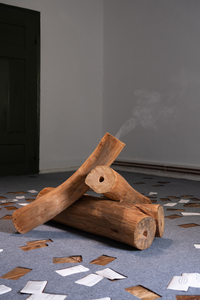
Diese Spuren: Der Raum, in dem wir uns treffen; das Feuer, um das wir uns versammeln; die Karten, aus denen wir ablesen können, was einmal besprochen wurde – und werden wird; und das Script, ein sich permanent veränderndes Programm, das es uns vielleicht einmal ermöglichen wird, eine sozial und ökologisch nachhaltige Existenz in der Kunst- und Kulturszene zu führen.
- "The Plenum – A Scripted Play" behandelt das performative, das rituelle und das gemeinschaftsbildende Moment des Plenums als Planungstreffen selbstverwalteter Gruppen im politischen und kulturellen Kontext.
- Beschreibung (en)
- "The Plenum - A Scripted Play" deals with the performative, ritual and community-building moment of the plenum as a planning meeting of self-organised groups in a political and cultural context.
Over the course of a year, "Plena" were held in different constellations, which examined the group's own dynamics and found expression in a collective performance based on a changing script, similar to a theatre script or code.
The experiences made by the group not only served to document what had already happened, but were also immediately incorporated into the existing script as new "input". The constantly changing project could thus be designed transparently, modelled like a computer program, and enabled the grassroots democratic participation of all actors - regardless of pre-existing knowledge or experience.
Inspired by Jo Freeman's essay "The Tyranny Of Structurelessness", the creation of open and clear communication regarding the group's own structure and its "balance of power" was at the centre of the meetings.
However, "The Plenum – A Scripted Play" is not just a real meeting of a political group, but creates its identitary necessity through its intersection with the simulation: finding majorities (or unanimity), the distribution of power and authority within one's own group and the decision-making process were playfully tested in various models and placed in their political and historical context. The fictitious aspect of the meetings opened up scope for reflection on one's own behaviour within group structures. Many of these simulations were based on computer codes, board games and political constitutions.
There is always – often unconsciously – something of ritual inherent to every meeting of self-governed groups, which is of great importance for creating a collective sense of identity. The repetition of planning processes and the codified, group-specific communication rules determine membership of the group and create identity and purpose.
What remains of the plenum are simulation sketches, an (almost) founded association, an intensive debate about remuneration models in a non-monetary micro-economy and the development of sustainable structures for one's own cultural and political practice, which continue to this day. None of this is visible, except for the traces that we stigmergically leave behind.
These traces: the space in which we meet; the fire around which we gather; the cards from which we can read what has been – and will be – discussed; and the script, a constantly changing programme that will perhaps one day enable us to lead a socially and ecologically sustainable existence in the world of art and culture.
- "The Plenum - A Scripted Play" deals with the performative, ritual and community-building moment of the plenum as a planning meeting of self-organised groups in a political and cultural context.
- Kategorie
- Typ des Projekts/Werks
- Datierung
- 07.03.2023 - 18.04.2024
- Sprache
- Ort
- Plenarwohnung, Atelier von K.-J. Overkott, Günther-Klotz-Anlage, Schlosspark, Stephanienstraße (bei Sven), Sophienstraße (bei Tim), auf dem Dach, ßpace.
- Stadt
- Land
- Titel
- The Plenum – A Scripted Play
- Projektleiter/in
- Studiengang
- Typ der Abschlussarbeit
- Importiert am
- 16.06.2024
- Übergeordnete Sets
- 1
- Set enthält
- 0 6