"Alle Rechte vorbehalten"
| Begriff | Alle Rechte vorbehalten |
| Metakey | Rechtsschutz/Lizenz (rights:licence) |
| Typ | Keyword |
| Vokabular | Rechte |
2373 Inhalte
- Seite 1 von 198
Installationsansicht / Videoraum
Name that can easily go onto 2 lines
Author that can easily go onto 2 lines as well
- Titel
- Installationsansicht / Videoraum
- Untertitel
- Elastic Kin
- Autor/in
- Beschreibung (de)
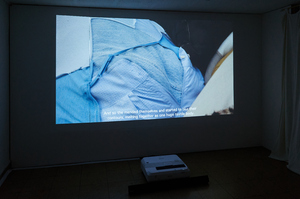
- Die Rauminstallation “Elastic Kin” zeigt eine Gruppe von Textilobjekten - Gefüge -, die aus weggeworfenen Kleidungsstücken bestehen. Sie existieren sowohl als Individuen als auch als Gruppe. Die Kleidungsstücke, die in den Straße von K. gefunden wurden und von Anderen in anderen Kontext hergestellt worden sind, kehren ihren ursprünglichen Zweck um, indem sie zu eigenen Körpern werden, die unabhängig von menschlichen Körpern sind. Jede Oberfläche ist wie eine geheime Landkarte, die Spuren anonymer Hände enthält, die an den Textilien gearbeitet haben.
Der Sound der Installation ist ein Echo - fast verschwundener, kollektiver Erinnerungen an vergangene Momente und Orte.
“Elastic Kin” versucht, eine weit verbreitete Verwandtschaft darzustellen, die durch unsichtbare, lose und elastische Fäden imaginiert wird, die ein internationales System von Lieferketten, Arbeiter*Innen und Konsument*Innen, Trendprognosen und unvorhersehbarem Zeitgeist, Massenproduktion und meditativer Handarbeit abbilden. Welche Spuren dieser Kontexte enthalten die Kleidungsstücke?
Das Video zeigt eine performative Intervention im öffentlichen Raum. Es zeigt die Gefüge, die eine neue Existenz außerhalb ihrer Produktions- und Vermarktungskontexte führen: Sie kehren in ein Einkaufszentrum zurück, animiert von den Menschen, die sie einst bekleideten.
- Die Rauminstallation “Elastic Kin” zeigt eine Gruppe von Textilobjekten - Gefüge -, die aus weggeworfenen Kleidungsstücken bestehen. Sie existieren sowohl als Individuen als auch als Gruppe. Die Kleidungsstücke, die in den Straße von K. gefunden wurden und von Anderen in anderen Kontext hergestellt worden sind, kehren ihren ursprünglichen Zweck um, indem sie zu eigenen Körpern werden, die unabhängig von menschlichen Körpern sind. Jede Oberfläche ist wie eine geheime Landkarte, die Spuren anonymer Hände enthält, die an den Textilien gearbeitet haben.
- Beschreibung (en)
- The spatial installation “Elastic Kin” shows a group of textile objects – Gefüge – that were assembled from discarded and abandoned garments. They exist as individuals as well as a kin. Assembled from used garments, found in the streets of K., produced by others in other contexts, they invert their original purpose by becoming bodies of their own, no longer dependent on being activated by a human body. The surface of every Gefüge is like a secret map, containing traces of anonymous hands working on them.
The sound in the installation is an echo of almost vanished collective memories of past moments and places. “Elastic Kin” attempts to depict a widespread kinship, that is imagined through invisible, loose and elastic threads mapping an international system of supply chains, workers and consumers, trend forecast and unpredictable zeitgeist, mass production and meditative handcraft. Which traces of these contexts do the garments contain?
The video shows a performative intervention in pub- lic space. It shows the Gefüge leading a new existence outside their production and marketing contexts: They return to the shopping mall, animated by the people, they once used to dress.
- The spatial installation “Elastic Kin” shows a group of textile objects – Gefüge – that were assembled from discarded and abandoned garments. They exist as individuals as well as a kin. Assembled from used garments, found in the streets of K., produced by others in other contexts, they invert their original purpose by becoming bodies of their own, no longer dependent on being activated by a human body. The surface of every Gefüge is like a secret map, containing traces of anonymous hands working on them.
- Typ des Projekts/Werks
- Schlagworte
- Datierung
- 18.10.2023
- Mitwirkende
- Dank an
- Vanessa Bosch
- Matthias Bruhn
- Jules Buchholtz
- Céline Condorelli
- Jaya Demmer
- Mascha Dilger
- Charlotte Eifler
- Constanze Fischbeck
- Ebba Fransén Waldhör
- Heidi Herzig
- Anne Duk Hee Jordan
- Hanne König
- Lara Landbrecht
- Mona Mayer
- Leonie Mühlen
- Luise Peschko
- Johanna Schäfer
- Henriette Schwabe (Jette Schwabe)
- Manuel Sékou
- Janis Zeckai
- Sprache
- Untertitel (Film)
- Material
- Ort: Institution
- Stadt
- Land
- Titel
- Installationsansicht / Videoraum
- Untertitel
- Elastic Kin
- Urheberrechtshinweis
- Corinne Riepert
- Rechtsschutz/Lizenz
- Freigabe Nutzung HfG
- Medienersteller/in
- Beziehung/Funktion
- Projektleiter/in
- Semester
- Studiengang
- Typ der Abschlussarbeit
- Importiert am
- 02.11.2023
- Übergeordnete Sets
- 1
Installationsansicht / Videoraum
Name that can easily go onto 2 lines
Author that can easily go onto 2 lines as well
- Titel
- Installationsansicht / Videoraum
- Untertitel
- Elastic Kin
- Autor/in
- Beschreibung (de)
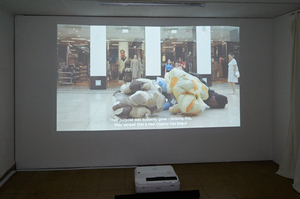
- Die Rauminstallation “Elastic Kin” zeigt eine Gruppe von Textilobjekten - Gefüge -, die aus weggeworfenen Kleidungsstücken bestehen. Sie existieren sowohl als Individuen als auch als Gruppe. Die Kleidungsstücke, die in den Straße von K. gefunden wurden und von Anderen in anderen Kontext hergestellt worden sind, kehren ihren ursprünglichen Zweck um, indem sie zu eigenen Körpern werden, die unabhängig von menschlichen Körpern sind. Jede Oberfläche ist wie eine geheime Landkarte, die Spuren anonymer Hände enthält, die an den Textilien gearbeitet haben.
Der Sound der Installation ist ein Echo - fast verschwundener, kollektiver Erinnerungen an vergangene Momente und Orte.
“Elastic Kin” versucht, eine weit verbreitete Verwandtschaft darzustellen, die durch unsichtbare, lose und elastische Fäden imaginiert wird, die ein internationales System von Lieferketten, Arbeiter*Innen und Konsument*Innen, Trendprognosen und unvorhersehbarem Zeitgeist, Massenproduktion und meditativer Handarbeit abbilden. Welche Spuren dieser Kontexte enthalten die Kleidungsstücke?
Das Video zeigt eine performative Intervention im öffentlichen Raum. Es zeigt die Gefüge, die eine neue Existenz außerhalb ihrer Produktions- und Vermarktungskontexte führen: Sie kehren in ein Einkaufszentrum zurück, animiert von den Menschen, die sie einst bekleideten.
- Die Rauminstallation “Elastic Kin” zeigt eine Gruppe von Textilobjekten - Gefüge -, die aus weggeworfenen Kleidungsstücken bestehen. Sie existieren sowohl als Individuen als auch als Gruppe. Die Kleidungsstücke, die in den Straße von K. gefunden wurden und von Anderen in anderen Kontext hergestellt worden sind, kehren ihren ursprünglichen Zweck um, indem sie zu eigenen Körpern werden, die unabhängig von menschlichen Körpern sind. Jede Oberfläche ist wie eine geheime Landkarte, die Spuren anonymer Hände enthält, die an den Textilien gearbeitet haben.
- Beschreibung (en)
- The spatial installation “Elastic Kin” shows a group of textile objects – Gefüge – that were assembled from discarded and abandoned garments. They exist as individuals as well as a kin. Assembled from used garments, found in the streets of K., produced by others in other contexts, they invert their original purpose by becoming bodies of their own, no longer dependent on being activated by a human body. The surface of every Gefüge is like a secret map, containing traces of anonymous hands working on them.
The sound in the installation is an echo of almost vanished collective memories of past moments and places. “Elastic Kin” attempts to depict a widespread kinship, that is imagined through invisible, loose and elastic threads mapping an international system of supply chains, workers and consumers, trend forecast and unpredictable zeitgeist, mass production and meditative handcraft. Which traces of these contexts do the garments contain?
The video shows a performative intervention in pub- lic space. It shows the Gefüge leading a new existence outside their production and marketing contexts: They return to the shopping mall, animated by the people, they once used to dress.
- The spatial installation “Elastic Kin” shows a group of textile objects – Gefüge – that were assembled from discarded and abandoned garments. They exist as individuals as well as a kin. Assembled from used garments, found in the streets of K., produced by others in other contexts, they invert their original purpose by becoming bodies of their own, no longer dependent on being activated by a human body. The surface of every Gefüge is like a secret map, containing traces of anonymous hands working on them.
- Typ des Projekts/Werks
- Schlagworte
- Datierung
- 18.10.2023
- Mitwirkende
- Dank an
- Vanessa Bosch
- Matthias Bruhn
- Jules Buchholtz
- Céline Condorelli
- Jaya Demmer
- Mascha Dilger
- Charlotte Eifler
- Constanze Fischbeck
- Ebba Fransén Waldhör
- Heidi Herzig
- Anne Duk Hee Jordan
- Hanne König
- Lara Landbrecht
- Mona Mayer
- Leonie Mühlen
- Luise Peschko
- Johanna Schäfer
- Henriette Schwabe (Jette Schwabe)
- Manuel Sékou
- Janis Zeckai
- Sprache
- Untertitel (Film)
- Material
- Ort: Institution
- Stadt
- Land
- Titel
- Installationsansicht / Videoraum
- Untertitel
- Elastic Kin
- Urheberrechtshinweis
- Corinne Riepert
- Rechtsschutz/Lizenz
- Freigabe Nutzung HfG
- Medienersteller/in
- Beziehung/Funktion
- Projektleiter/in
- Semester
- Studiengang
- Typ der Abschlussarbeit
- Importiert am
- 02.11.2023
- Übergeordnete Sets
- 1
Installations-Audio "A man in the shape of..."
- Titel
- Installations-Audio "A man in the shape of..."
- Beschreibung (de)
- Installations-Audio "A man in the shape of...", 21min.
- Kategorie
- Titel
- Installations-Audio "A man in the shape of..."
- Urheberrechtshinweis
- © Calvin Kudufia
- Rechtsschutz/Lizenz
- Freigabe Nutzung HfG
- Projektleiter/in
- Semester
- Studiengang
- Typ der Abschlussarbeit
- Importiert am
- 01.06.2024
- Übergeordnete Sets
- 1
Interview mit Matthias Mansen
Name that can easily go onto 2 lines
Author that can easily go onto 2 lines as well
- Titel
- Interview mit Matthias Mansen
- Autor/in
- Schlagworte
- Datierung
- 10.04.2026
- Titel
- Interview mit Matthias Mansen
- Titel (en)
- Interview with Matthias Mansen
- Urheberrechtshinweis
- © Bettina Bessenyei
- Rechtsschutz/Lizenz
- Medienersteller/in
- Beziehung/Funktion
- Medien-Beschreibung
- Im Gespräch mit Künstler, Matthias Mansen ging es unter anderem um seine Erinnerungen und persönlichen Verbindungen zur Potsdamer Straße in Berlin sowie um die Motivation, die ihn dazu bewegt hat, eine Serie von Holzschnitten über diese Straße zu entwickeln.
Darüber hinaus sprach er über seine persönlichen und künstlerischen Beziehungen zu anderen Städten, in denen er gelebt und gearbeitet hat. Seine Geschichten und persönlichen Perspektiven verbinden die Inhalte der Ausstellung auf besondere Weise und schaffen einen klaren roten Faden für die Interpretation und das Verständnis der von mir gesammelten und präsentierten Materialien.
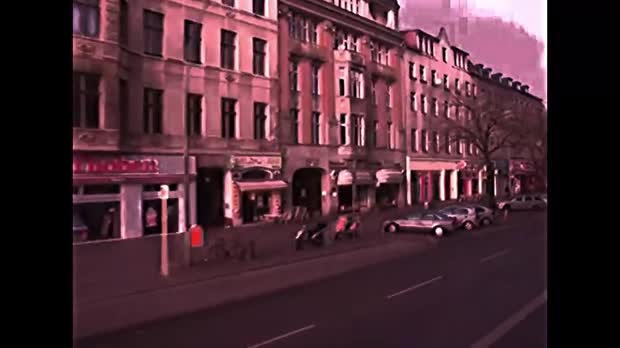
Das Interviewvideo habe ich mit einem von mir erstellten Video zusammengeschnitten, in dem ich aus einem Bus heraus dokumentiere, wie diese Berliner Straße heute aussieht.
- Im Gespräch mit Künstler, Matthias Mansen ging es unter anderem um seine Erinnerungen und persönlichen Verbindungen zur Potsdamer Straße in Berlin sowie um die Motivation, die ihn dazu bewegt hat, eine Serie von Holzschnitten über diese Straße zu entwickeln.
- Medien-Beschreibung (en)
- In the interview with an artist, Matthias Mansen, I asked him about his memories and personal connections to Potsdamer Straße in Berlin, as well as about the motivation that led him to create a series of woodcuts depicting the street. We also discussed his personal and artistic connections to other cities where he has lived and worked.
His stories and personal perspectives connect the themes of the exhibition in a meaningful way, providing a clear thread for interpreting and understanding the materials I have collected and presented in the exhibition.
I edited the interview video together with a video I created, in which I document from a bus how this Berlin street looks today.
- In the interview with an artist, Matthias Mansen, I asked him about his memories and personal connections to Potsdamer Straße in Berlin, as well as about the motivation that led him to create a series of woodcuts depicting the street. We also discussed his personal and artistic connections to other cities where he has lived and worked.
- Abgebildete Personen
- Projektleiter/in
- Semester
- Studiengang
- Typ der Abschlussarbeit
- Importiert am
- 28.07.2026
- Übergeordnete Sets
- 1
introducing air&dust (full)

Name that can easily go onto 2 lines
Author that can easily go onto 2 lines as well
- Titel
- introducing air&dust (full)
- Titel
- introducing air&dust (full)
- Titel (en)
- introducing air&dust (full)
- Urheberrechtshinweis
- © Hoin Ji
- Rechtsschutz/Lizenz
- Freigabe Nutzung HfG
- Medienersteller/in
- Beziehung/Funktion
- Medien-Beschreibung
- Ein Einführungsvideo, das eine Produktpräsentation imitiert. CEO Framey von „Moberm“, einer fiktiven Firma, spricht darüber, wie Moberm aufgrund der Kindheitserinnerungen des CEOs beschloss, sein Geschäft auf Musikinstrumente auszuweiten. Das Video behauptet selbstbewusst die Multifunktionalität der air&dust-Instrumente, bleibt dabei jedoch letztlich inhaltsleer. Framey, die sprechende Figur, artikuliert indirekt die Erzählung der Person hinter dem Werk und stellt gleichzeitig eine von Stereotypen und Neoliberalismus durchzogene Kunststruktur nach.
- Ein Einführungsvideo, das eine Produktpräsentation imitiert. CEO Framey von „Moberm“, einer fiktiven Firma, spricht darüber, wie Moberm aufgrund der Kindheitserinnerungen des CEOs beschloss, sein Geschäft auf Musikinstrumente auszuweiten. Das Video behauptet selbstbewusst die Multifunktionalität der air&dust-Instrumente, bleibt dabei jedoch letztlich inhaltsleer. Framey, die sprechende Figur, artikuliert indirekt die Erzählung der Person hinter dem Werk und stellt gleichzeitig eine von Stereotypen und Neoliberalismus durchzogene Kunststruktur nach.
- Medien-Beschreibung (en)
- An introductory video that imitates a product presentation. CEO Framey of “Moberm,” a fictional company, talks about how Moberm decided to expand into musical instruments based on the CEO’s childhood memories. The video confidently claims the multifunctionality of the air&dust instruments, but ultimately remains contentless. Framey, the speaking figure, indirectly articulates the narrative of the person behind the work while simultaneously reenacting an art structure shaped by stereotypes and neoliberalism.
- An introductory video that imitates a product presentation. CEO Framey of “Moberm,” a fictional company, talks about how Moberm decided to expand into musical instruments based on the CEO’s childhood memories. The video confidently claims the multifunctionality of the air&dust instruments, but ultimately remains contentless. Framey, the speaking figure, indirectly articulates the narrative of the person behind the work while simultaneously reenacting an art structure shaped by stereotypes and neoliberalism.
- Projektleiter/in
- Semester
- Studiengang
- Typ der Abschlussarbeit
- Importiert am
- 12.07.2025
- Übergeordnete Sets
- 1
Is it ok to be quiet, if you don’t know? (2025)
Name that can easily go onto 2 lines
Author that can easily go onto 2 lines as well
- Titel
- Is it ok to be quiet, if you don’t know? (2025)
- Autor/in
- Kategorie
- Typ des Projekts/Werks
- Datierung
- 15/01/2025
- Titel
- Is it ok to be quiet, if you don’t know? (2025)
- Urheberrechtshinweis
- © Tim Bartel, Florian Knöbl
- Rechtsschutz/Lizenz
- Freigabe Nutzung HfG
- Medienersteller/in
- Beziehung/Funktion
- Projektleiter/in
- Semester
- Studiengang
- Typ der Abschlussarbeit
- Importiert am
- 11.02.2025
- Übergeordnete Sets
- 1
Jahresbericht 2006/2007
Name that can easily go onto 2 lines
Author that can easily go onto 2 lines as well
- Titel
- Jahresbericht 2006/2007
- Autor/in
- Kategorie
- Typ des Projekts/Werks
- Mitwirkende
- Titel
- Jahresbericht 2006/2007
- Titel (en)
- Annual Report 2006/2007
- Urheberrechtshinweis
- © Staatliche Hochschule für Gestaltung Karlsruhe
- Rechtsschutz/Lizenz
- Freigabe Nutzung HfG
- Beziehung/Funktion
- Semester
- Importiert am
- 10.07.2024
- Übergeordnete Sets
- 1
Jahresbericht 2007/2008
Name that can easily go onto 2 lines
Author that can easily go onto 2 lines as well
- Titel
- Jahresbericht 2007/2008
- Autor/in
- Kategorie
- Typ des Projekts/Werks
- Mitwirkende
- Titel
- Jahresbericht 2007/2008
- Titel (en)
- Annual Report 2007/2008
- Urheberrechtshinweis
- © Staatliche Hochschule für Gestaltung Karlsruhe
- Rechtsschutz/Lizenz
- Freigabe Nutzung HfG
- Beziehung/Funktion
- Semester
- Importiert am
- 10.07.2024
- Übergeordnete Sets
- 1
Jahresbericht 2008/2009
Name that can easily go onto 2 lines
Author that can easily go onto 2 lines as well
- Titel
- Jahresbericht 2008/2009
- Autor/in
- Kategorie
- Typ des Projekts/Werks
- Mitwirkende
- Titel
- Jahresbericht 2008/2009
- Titel (en)
- Annual Report 2008/2009
- Urheberrechtshinweis
- © Staatliche Hochschule für Gestaltung Karlsruhe
- Rechtsschutz/Lizenz
- Freigabe Nutzung HfG
- Beziehung/Funktion
- Semester
- Importiert am
- 10.07.2024
- Übergeordnete Sets
- 1
Jahresbericht 2009/2010
Name that can easily go onto 2 lines
Author that can easily go onto 2 lines as well
- Titel
- Jahresbericht 2009/2010
- Kategorie
- Typ des Projekts/Werks
- Titel
- Jahresbericht 2009/2010
- Titel (en)
- Annual Report 2009/2010
- Urheberrechtshinweis
- © Staatliche Hochschule für Gestaltung Karlsruhe
- Rechtsschutz/Lizenz
- Freigabe Nutzung HfG
- Beziehung/Funktion
- Importiert am
- 10.07.2024
- Übergeordnete Sets
- 1
Jahresbericht 2010/2011

Name that can easily go onto 2 lines
Author that can easily go onto 2 lines as well
- Titel
- Jahresbericht 2010/2011
- Autor/in
- Kategorie
- Typ des Projekts/Werks
- Mitwirkende
- Bemerkungen
- ISBN: 978-3-930194-11-7
- Titel
- Jahresbericht 2010/2011
- Titel (en)
- Annual Report 2010/2011
- Urheberrechtshinweis
- © Staatliche Hochschule für Gestaltung Karlsruhe
- Rechtsschutz/Lizenz
- Freigabe Nutzung HfG
- Beziehung/Funktion
- Semester
- Importiert am
- 10.07.2024
- Übergeordnete Sets
- 1
Jahresbericht 2011/2012

Name that can easily go onto 2 lines
Author that can easily go onto 2 lines as well
- Titel
- Jahresbericht 2011/2012
- Autor/in
- Kategorie
- Typ des Projekts/Werks
- Mitwirkende
- Bemerkungen
- ISBN: 978-3-930194-15-5
- Titel
- Jahresbericht 2011/2012
- Titel (en)
- Annual Report 2011/2012
- Urheberrechtshinweis
- © Staatliche Hochschule für Gestaltung Karlsruhe
- Rechtsschutz/Lizenz
- Freigabe Nutzung HfG
- Beziehung/Funktion
- Semester
- Importiert am
- 10.07.2024
- Übergeordnete Sets
- 1