Manchmal ist Schmerz ganz leise
Benachbarte Sets (47)Alle Zusammenhänge anzeigen
Diese Sets wurden den gleichen Sets hinzugefügt wie das ausgewählte Set.
47 Inhalte
- Seite 1 von 4
Das Wasser ist silberhell und durchsichtig und möchte unberührt sein
Name that can easily go onto 2 lines
Author that can easily go onto 2 lines as well
- Titel
- Das Wasser ist silberhell und durchsichtig und möchte unberührt sein
- Titel (en)
- The Water is Silver-Bright and Transparent and Wishes to Remain Untouched
- Autor/in
- Beschreibung (de)
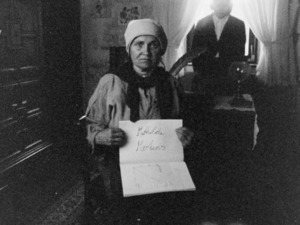
- Eine ländliche Region, ca. 1900. Die Landärztin Nerea Flores reist aus der Stadt in ein Dorf, um mit einer frühen Form einer Filmkamera Patientenfälle für ein medizinstudentisches Publikum zu dokumentieren. Der komplette Film erzählt sich ausschließlich aus dem Rohmaterial, das dabei entsteht – mitsamt Kameraein- und -ausschalten, Positionieren der Akteur*innen, Signalgebung etc.
Sie richtet eine improvisierte Praxis in einem leerstehenden Bauernhaus ein und probiert verschiedene, von schwer überwindbarer Distanz geprägte Therapiemethoden an den Personen aus – stets unter Anwesenheit der Kamera. Die Aufnahmepraxis irritiert die Patient*innen. Ein zur Kontrolle herbeigerufener Arztkollege bemängelt die Aufnahmen und befeuert eine radikalere Praxis beim Filmen, bei der ethische Fragen noch weiter in den Hintergrund treten sollen. Nerea fühlt sich in die Ecke gedrängt und innerlich zerrissen.
Schritt für Schritt löst sich unter Druck die Distanz zwischen Filmender und Gefilmtem auf. Flores bringt die Kamera schließlich auch mit in die Häuser der zu Behandelnden. Mit der Zeit empfinden die Patientinnen ihr Eingreifen als unangenehm und zu eindringlich und fliehen – um den Aufnahmeprozessen zu entgehen – ins Metaphysische. Nerea begegnet den zu Behandelnden nun in der Gestalt eines Waldstücks oder auch eines Baches. Da somit keine klassischen Therapieaufnahmen mehr möglich sind, wird das Projekt vorzeitig beendet.
- Eine ländliche Region, ca. 1900. Die Landärztin Nerea Flores reist aus der Stadt in ein Dorf, um mit einer frühen Form einer Filmkamera Patientenfälle für ein medizinstudentisches Publikum zu dokumentieren. Der komplette Film erzählt sich ausschließlich aus dem Rohmaterial, das dabei entsteht – mitsamt Kameraein- und -ausschalten, Positionieren der Akteur*innen, Signalgebung etc.
- Beschreibung (en)
- A rural region, around 1900. Country doctor Nerea Flores travels from the city to a village to document patient cases for a medical student audience using an early form of a film camera. The entire film is told exclusively through the raw material produced in the process – including switching the camera on and off, positioning the actors, giving cues, etc.
She sets up an improvised practice in an abandoned farmhouse and tries out various therapy methods shaped by a difficult-to-overcome emotional distance – always in the presence of the camera. The filming practice unsettles the patients. A doctor colleague, sent in for supervision, criticizes the recordings and pushes for a more radical filming approach in which ethical concerns are further sidelined. Nerea feels cornered and conflicted.
Step by step, under pressure, the distance between the filmer and the filmed dissolves. Flores eventually brings the camera into the homes of her patients. Over time, the patients perceive her interventions as too intrusive and uncomfortable and flee – in order to escape the filming process – into the metaphysical. Nerea now encounters those to be treated in the form of a patch of forest or even a stream. As a result, no further traditional therapy recordings can be made, and the project is prematurely ended.
- A rural region, around 1900. Country doctor Nerea Flores travels from the city to a village to document patient cases for a medical student audience using an early form of a film camera. The entire film is told exclusively through the raw material produced in the process – including switching the camera on and off, positioning the actors, giving cues, etc.
- Kategorie
- Typ des Projekts/Werks
- Schlagworte
- Datierung
- 2026
- Mitwirkende
- Dank an
- Sprache
- Untertitel (Film)
- Material
- Technik/Verfahren/Formate
- 4:3
- Dauer
- 72:29 min
- Land
- Titel
- Das Wasser ist silberhell und durchsichtig und möchte unberührt sein
- Projektleiter/in
- Semester
- Studiengang
- Typ der Abschlussarbeit
- Importiert am
- 30.05.2025
- Übergeordnete Sets
- 2
- Set enthält
- 0 10
Elusive Unrealities
Name that can easily go onto 2 lines
Author that can easily go onto 2 lines as well
- Titel
- Elusive Unrealities
- Titel (en)
- Elusive Unrealities
- Untertitel
- On Calling, Grasping & Awakening Dreams
- Untertitel des Projekts/Werks (en)
- On Calling, Grasping & Awakening Dreams
- Autor/in
- Beschreibung (de)
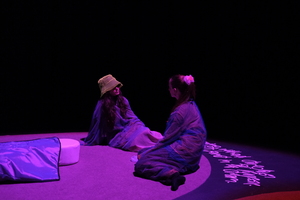
- Jeder Mensch träumt, manche Träume sind lebendig und bildhaft, andere abstrakt und symbolisch. In meiner Abschlussarbeitrbeit habe ich Traumerfahrungen in interaktive Objekte übersetzt und im Rahmen einer interaktive Ausstellung präsentiert. Darin werden sieben Traumthemen reflektiert: zwei der häufigsten Traumarten, Alptraum und Lusttraum; zwei wissenschaftliche Erkenntnisse, die Schwierigkeit des Gehirns, im Schlaf Gesichter und Figuren zu erkennen sowie die Unfähigkeit, Muster in geschriebener Schrift zu lesen; drei persönliche Faszinationen, das Ritual des Einschlafens, des Aufwachens sowie das Träumen als Reise in fantastische Welten.
- Beschreibung (en)
- Everyone dreams, some dreams are vivid and lifelike, others abstract and symbolic. In my diploma project I translated dream experiences into interactive objects and presented them in an interactive exhibition, reflecting seven dream themes: two addressing the most common dream types, nightmare and pleasure dreaming; two drawing on scientific research, the brain's difficulty recognising faces and figures during sleep, and its inability to read patterns in written text; three rooted in personal fascination, the rituals of falling asleep and waking, and dreaming as a passage to fantastical worlds.
- Kategorie
- Typ des Projekts/Werks
- Schlagworte
- Datierung
- 22.4.2025
- Dank an
- Sprache
- Material
- Abmessungen
- 90sqm
- Ort: Institution
- Stadt
- Land
- Internetlinks
- Titel
- Elusive Unrealities
- Untertitel
- On Calling, Grasping & Awakening Dreams
- Projektleiter/in
- Semester
- Studiengang
- Typ der Abschlussarbeit
- Importiert am
- 08.10.2025
- Übergeordnete Sets
- 3
- Set enthält
- 0 13
The Breath of Metal
Name that can easily go onto 2 lines
Author that can easily go onto 2 lines as well
- Titel
- The Breath of Metal
- Titel (en)
- The Breath of Metal
- Untertitel
- Baiyin - what the mine left behind
- Untertitel des Projekts/Werks (en)
- Baiyin - what the mine left behind
- Autor/in
- Beschreibung (de)
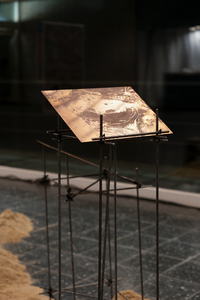
- Meine künstlerische Arbeit beschäftigt sich mit den Beziehungen zwischen Metall, Bergbau sowie familiären und urbanen Archiven. Metall fungiert dabei sowohl als Material als auch als Sprache: Es trägt Gewicht, Klang und Zeit in sich und bewahrt Spuren politischer, industrieller und arbeitsgeschichtlicher Prozesse.
Ich bin in Baiyin in der chinesischen Provinz Gansu aufgewachsen, einer durch den Bergbau entstandenen Industriestadt, auch bekannt als „Kupferstadt“. Mehrere Generationen meiner Familie waren im Bergbau, in der Verhüttung und in der Erzverarbeitung tätig. Diese biografischen Hintergründe erscheinen in meiner Arbeit nicht als Nostalgie, sondern als struktureller Rahmen, der mein Verständnis von Materialität, Körper und Stadt prägt. Die Mine ist für mich kein fixer Ort, sondern ein sich wandelndes System vom Erz zum Metall, von der Infrastruktur zur Stadt und schließlich zur Ruine.
Methodisch arbeite ich mit Fotografie, Archivmaterial, industriellen Überresten sowie mit Video, Klang und Installation. Fotografie verstehe ich dabei als Prozess der Extraktion und Transformation, der Materialien aus ihrem ursprünglichen Funktionszusammenhang löst und in einen Zustand suspendierter Evidenz überführt.
- Meine künstlerische Arbeit beschäftigt sich mit den Beziehungen zwischen Metall, Bergbau sowie familiären und urbanen Archiven. Metall fungiert dabei sowohl als Material als auch als Sprache: Es trägt Gewicht, Klang und Zeit in sich und bewahrt Spuren politischer, industrieller und arbeitsgeschichtlicher Prozesse.
- Beschreibung (en)
- My artistic work explores the relationships between metal, mining, and familial and urban archives. Metal functions both as a material and as a language: it carries weight, sound, and time, and preserves traces of political, industrial, and labor-related processes.
I grew up in Baiyin in Gansu Province, China, an industrial city shaped by mining, also known as the “Copper City.” Several generations of my family were involved in mining, smelting, and ore processing. These biographical backgrounds do not appear in my work as nostalgia, but rather as a structural framework that shapes my understanding of materiality, the body, and the city. For me, the mine is not a fixed place, but a constantly evolving system — from ore to metal, from infrastructure to the city, and ultimately to ruin.
Methodologically, I work with photography, archival materials, industrial remnants, as well as video, sound, and installation. I understand photography as a process of extraction and transformation, one that removes materials from their original functional context and transfers them into a state of suspended evidence.
- My artistic work explores the relationships between metal, mining, and familial and urban archives. Metal functions both as a material and as a language: it carries weight, sound, and time, and preserves traces of political, industrial, and labor-related processes.
- Kategorie
- Mitwirkende
- Material
- Technik/Verfahren/Formate
- Fotografie, Installation, Video
- Abmessungen
- 6 große Bilder je 900 x 1400 mm, 8 kleine Bilder je 210 x 297 mm, 4 Kupferpalette, 3 davon je 210 x 297 mm, 1 420 x 594 mm, 4 Ständer je 70 bis 100 cm hoch.
- Dauer
- Ein Video dauert 10 Minuten und 19 Sekunden.
- Titel
- The Breath of Metal
- Untertitel
- Baiyin - what the mine left behind
- Projektleiter/in
- Semester
- Studiengang
- Typ der Abschlussarbeit
- Importiert am
- 11.03.2026
- Übergeordnete Sets
- 3
- Set enthält
- 0 24
.HYP
Name that can easily go onto 2 lines
Author that can easily go onto 2 lines as well
- Titel
- .HYP
- Untertitel
- A digital wildgrowth
- Autor/in
- Beschreibung (de)
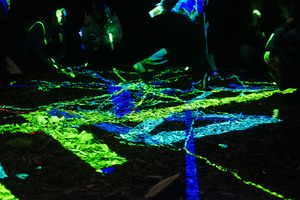
- .HYP ist eine multisensorische Installation und Projektionsarbeit einer sich verändernden digitalen Lebensform. Die Diplomarbeit .HYP lotet die Grenzen zwischen digitalem Leben und der analogen Welt mithilfe eines eigens entwickelten Programms mit spezialisierten Unterprogrammen aus, welches das biologische Verhalten von Pilzmyzel nachahmt. Der Titel der Arbeit leitet sich von Pilzzellen (Hyphen) ab.
Besucher*innen der Installation können mit dem Programm interagieren, indem sie ihre eigenen Dateien über einen QR-Code hochladen. .HYP „verdaut“ diese Daten und verwandelt sie in sich ständig weiterentwickelnde, farbenfrohe Muster, die in einem abgedunkelten Raum auf einen organischen Boden aus Rindenmulch projiziert werden. Die Installation wird zu einem immersiven Erlebnis.
- .HYP ist eine multisensorische Installation und Projektionsarbeit einer sich verändernden digitalen Lebensform. Die Diplomarbeit .HYP lotet die Grenzen zwischen digitalem Leben und der analogen Welt mithilfe eines eigens entwickelten Programms mit spezialisierten Unterprogrammen aus, welches das biologische Verhalten von Pilzmyzel nachahmt. Der Titel der Arbeit leitet sich von Pilzzellen (Hyphen) ab.
- Beschreibung (en)
- .HYP is a multisensory installation and projection piece depicting an evolving digital life form. The graduation project .HYP explores the boundaries between digital life and the analog world using a custom-developed program with specialized subroutines that mimic the biological behavior of fungal mycelium. The title of the work is derived from fungal cells (hyphae).
Visitors to the installation can interact with the program by uploading their own files via a QR code. .HYP “digests” this data and transforms it into constantly evolving, colorful patterns that are projected onto an organic floor of bark mulch in a darkened room. The installation becomes an immersive experience.
- .HYP is a multisensory installation and projection piece depicting an evolving digital life form. The graduation project .HYP explores the boundaries between digital life and the analog world using a custom-developed program with specialized subroutines that mimic the biological behavior of fungal mycelium. The title of the work is derived from fungal cells (hyphae).
- Kategorie
- Typ des Projekts/Werks
- Schlagworte
- Sprache
- Material
- Technik/Verfahren/Formate
- coding
- Abmessungen
- 8m x 4,5m
- Dauer
- open end
- Ort: Institution
- Ort
- Großes Studio in der Hochschule für Gestaltung in Karlsruhe
- Stadt
- Land
- Internetlinks
- Titel
- .HYP
- Untertitel
- A digital wildgrowth
- Projektleiter/in
- Semester
- Studiengang
- Typ der Abschlussarbeit
- Importiert am
- 05.03.2024
- Übergeordnete Sets
- 3
- Set enthält
- 0 8
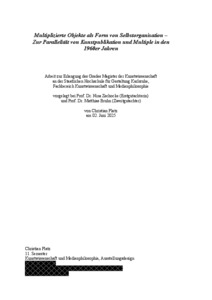
Multiplizierte Objekte als Form von Selbstorganisation
Name that can easily go onto 2 lines
Author that can easily go onto 2 lines as well
- Titel
- Multiplizierte Objekte als Form von Selbstorganisation
- Titel (en)
- Multiplied objects as a form of self-organization
- Untertitel
- Zur Parallelität von Kunstpublikation und Multiple in den 1960er Jahren
- Untertitel des Projekts/Werks (en)
- On the Parallelism Between Art Publications and Multiples in the 1960s
- Autor/in
- Beschreibung (de)
-
Kunstpublikationen und Multiples (Auflagenobjekte) der 1960er Jahren weisen strukturelle und konzeptuelle Parallelen auf, die in dieser Arbeit als Ausdruck selbstorganisierter künstlerischer Praxis zu verstehen sind. Ausgehend von einer kritischen Auseinandersetzung mit dem etablierten Kunstsystem entstanden in dieser Zeit alternative Formate der Produktion und Distribution, die auf Vervielfältigung, Partizipation und Autonomie basierten. Anhand exemplarischer Fallbeispiele, darunter die intermedialen Publikationsobjekte dokumentation b, die Edition Et, die Zeitschriften spirale und rot sowie die Multiples der Edition MAT und die serienobjekte der Gruppe X, wird gezeigt, wie sich die entsprechenden Werkformen als kuratorische, serielle und partizipative Medien positionieren lassen. Die Arbeit kontextualisiert diese Formate sowohl medienästhetisch als auch kulturpolitisch und versteht sie als materielle Strategien der Selbstorganisation. Sie argumentiert, dass Kunstpublikationen und Multiples nicht nur als Ausdruck einer alternativen Öffentlichkeit fungierten, sondern mit ihnen auch frühe Modelle einer dezentralen künstlerischen Infrastruktur entwickelt wurden. Diese Betrachtung ermöglicht eine genealogische Neubewertung des Multiples, indem sie sich vom etablierten, auf Marcel Duchamp fixierten Diskursrahmen löst und eine weiter gefasste Perspektive eröffnet.
-
- Beschreibung (en)
- Art publications and multiples from the 1960s share structural and conceptual parallels that can be understood in this work as expressions of self-organized artistic practice. Based on a critical examination of the established art system, alternative formats of production and distribution emerged during this period that were based on reproduction, participation, and autonomy. Using exemplary case studies, including the intermedia publication objects dokumentation b, Edition Et, the magazines spirale and rot, the multiples of Edition MAT, and the serial objects of Gruppe X, this work shows how the corresponding forms of work can be positioned as curatorial, serial, and participatory media. The work contextualizes these formats both in terms of media aesthetics and cultural politics and understands them as material strategies of self-organization. It argues that art publications and multiples not only functioned as expressions of an alternative public sphere, but also served to develop early models of a decentralized artistic infrastructure. This perspective enables a genealogical reassessment of the multiple by breaking away from the established discourse framework centered on Marcel Duchamp and opening up a broader perspective.
- Kategorie
- Typ des Projekts/Werks
- Schlagworte
- Datierung
- 02.06.2025
- Dank an
- Sprache
- Abmessungen
- 116 Seiten (77 Textseiten)
- Titel
- Multiplizierte Objekte als Form von Selbstorganisation
- Untertitel
- Zur Parallelität von Kunstpublikation und Multiple in den 1960er Jahren
- Projektleiter/in
- Semester
- Studiengang
- Typ der Abschlussarbeit
- Importiert am
- 16.03.2026
- Übergeordnete Sets
- 2
- Set enthält
- 0 3
Imaginary Gardens with Real Toads in Them
Name that can easily go onto 2 lines
Author that can easily go onto 2 lines as well
- Titel
- Imaginary Gardens with Real Toads in Them
- Titel (en)
- Imaginary Gardens with Real Toads in Them
- Autor/in
- Beschreibung (de)
- „Imaginary Gardens with Real Toads in Them“ ist eine bekannte Zeile aus dem Gedicht „Poetry“ der amerikanischen Dichterin Marianne Moore. Es beschreibt ihre Einstellung zu Poesie und Kunst. „Imaginary gardens“ symbolisieren den idealisierten, fantastischen Teil von Kunst und Literatur – eine Vorstellung oder Wunschvorstellung, die die Fantasie anregt. Auf der anderen Seite stehen „real toads“ für die realen, greifbaren, oft unromantischen oder nicht idealisierten Aspekte der Welt – Dinge, die konkret und wahr sind, aber vielleicht nicht so schön wie die imaginären Visionen.
In meiner Ausstellung nahm ich mit drei Objekten Bezug auf diese Vorstellung:
– Eine Bank, die den Besucher zum Sitzen und Verweilen, zum Innehalten und Beobachten einlädt. Sie steht für Besinnung und die Erkenntnis der eigenen Position im Garten.
– Eine Kräuterkiste, die für das alte Wissen der Natur steht. Sie symbolisieren die verborgenen Schätze und Geheimnisse, die entdeckt und genutzt werden können. Hier ist der Besucher eingeladen, sich selbst einen Tee zusammenzustellen und aufzubrühen.
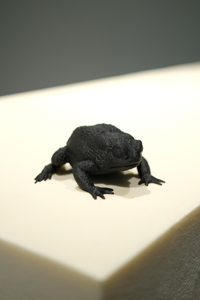
– Der Wächter des Gartens – die Kröte – und ihr Rückzugsort, der Brunnen, dienen als Quelle für alle Lebewesen. Der Brunnen steht für Tiefe und Erkenntnis, ein Ort, der durch Achtsamkeit zugänglich ist.
Begleitend zur Ausstellung lag am Eingang der Ausstellung ein kleines Leaflet für jeden Besucher mit einer von mir illustrierten Pflanze. Dazu habe ich eine kleine Geschichte zu meinem „Imaginary Garden“ abgedruckt, daneben ein Plan der Ausstellung mit Hinweisen zu den verschiedenen Objekten. Auf der Rückseite findet sich ein Impressum meiner ganzen Recherche.
- „Imaginary Gardens with Real Toads in Them“ ist eine bekannte Zeile aus dem Gedicht „Poetry“ der amerikanischen Dichterin Marianne Moore. Es beschreibt ihre Einstellung zu Poesie und Kunst. „Imaginary gardens“ symbolisieren den idealisierten, fantastischen Teil von Kunst und Literatur – eine Vorstellung oder Wunschvorstellung, die die Fantasie anregt. Auf der anderen Seite stehen „real toads“ für die realen, greifbaren, oft unromantischen oder nicht idealisierten Aspekte der Welt – Dinge, die konkret und wahr sind, aber vielleicht nicht so schön wie die imaginären Visionen.
- Beschreibung (en)
- „Imaginary Gardens with Real Toads in Them“ is a well-known line from the poem „Poetry“ by American poet Marianne Moore. It describes her attitude towards poetry and art.
„Imaginary gardens“ symbolises the idealised, fantastical part of art and literature – an idea or wishful thinking that stimulates the imagination. On the other hand, „real toads“ represents the real, tangible, often unromantic or non-idealised aspects of the world – things that are concrete and true, but perhaps not as beautiful as imaginary visions.
In my exhibition, I referenced this idea with three objects:
– A bench that invites visitors to sit and linger, to pause and observe. It stands for reflection and awareness of one's own position in the garden.
– A herb box, which represents the ancient knowledge of nature. They symbolise the hidden treasures and secrets that can be discovered and used. Here, visitors are invited to mix and brew their own tea.
– The guardian of the garden – the toad – and its retreat, the well, serve as a source for all living creatures. The well represents depth and insight, a place that can be accessed through mindfulness.
Accompanying the exhibition, a small leaflet was available for each visitor at the entrance, featuring a plant illustrated by me. I also printed a short story about my „Imaginary Garden“. Next to it was a map of the exhibition with information about the various objects. On the back is an imprint of my entire research.
- „Imaginary Gardens with Real Toads in Them“ is a well-known line from the poem „Poetry“ by American poet Marianne Moore. It describes her attitude towards poetry and art.
- Kategorie
- Typ des Projekts/Werks
- Schlagworte
- Datierung
- 22.01.2025 - 27.01.2025
- Dank an
- Sprache
- Material
- Abmessungen
- 5,8m x 8m
- Ort: Institution
- Ort
- Lichthof
- Stadt
- Land
- Titel
- Imaginary Gardens with Real Toads in Them
- Projektleiter/in
- Semester
- Studiengang
- Typ der Abschlussarbeit
- Importiert am
- 01.10.2025
- Übergeordnete Sets
- 3
- Set enthält
- 0 11
Writing the History Of the Future
Name that can easily go onto 2 lines
Author that can easily go onto 2 lines as well
- Titel
- Writing the History Of the Future
- Titel (en)
- Writing the History Of the Future
- Untertitel
- Das ZKM und die kulturelle Arbeit der Medienkunstkonservierung
- Untertitel des Projekts/Werks (en)
- ZKM and the Cultural Work of Media Art Conservation
- Autor/in
- Beschreibung (de)
- Obwohl die Medienkunst in der zeitgenössischen Kultur zunehmend an Bedeutung gewinnt, ist sie in institutionellen Sammlungen immer noch unterrepräsentiert. Die schnelle technologische Entwicklung von Hard- und Software sowie geplante Obsoleszenz stellen die Konservierung vor große Herausforderungen. Seit den 1960er Jahren hat sich die westliche Kunst von objektbasierten hin zu performativen und prozessorientierten Formen gewandelt. Dies wurde von einem Paradigmenwechsel in der Konservierungstheorie begleitet, in der Konzepte und Subjekt stärker gewichtet werden als Materialität und Objekt. Museen und der Kunstmarkt haben jedoch Schwierigkeiten, ihre Sammelpraktiken entsprechend anzupassen. In dieser Arbeit werden die Herausforderungen der Integration von Medienkunst in institutionelle Kontexte untersucht und der Bedarf an theoretischen und praktischen Anpassungen betont. Ziel ist es, Strategien zur nachhaltigen Einbindung technologisch vermittelter Kunstwerke in Sammlungen und das kulturelle Gedächtnis zu entwickeln. Im Fokus steht dabei das ZKM in Karlsruhe als führende Institution der Medienkunstkonservierung. Auf Basis interdisziplinärer Forschung und Interviews werden zentrale Themen wie Interaktivität, Variabilität, Authentizität, Zeitlichkeit und der Wandel des Kunstobjekts analysiert.
- Beschreibung (en)
- Media art, despite its growing prominence in contemporary culture, remains underrepresented in institutional collections. Rapid technological obsolescence—affecting both hardware and software—poses major challenges for preservation. Since the 1960s, Western art has shifted from object-based works toward performative and process-oriented practices, paralleled by changes in conservation theory that prioritize concepts and subject over object and materiality. However, museums and the art market have struggled to adapt their collecting practices to these developments. This thesis examines the challenges of integrating media art into institutional contexts, emphasizing the need for conceptual and theoretical shifts in both museum practices and art theory. It aims to describe the strategies for incorporating technologically mediated artworks into collections and cultural memory. The study focuses on the ZKM (Center for Art and Media) in Karlsruhe, a leading institution in media art preservation. Through analysis of its frameworks and interdisciplinary research including interviews, the thesis explores key themes like interactivity, variability, authenticity, temporality, and the evolving nature of the art object.
- Kategorie
- Schlagworte
- Dank an
- Sprache
- Abmessungen
- 272 Seiten (169 Textseiten)
- Titel
- Writing the History Of the Future
- Untertitel
- Das ZKM und die kulturelle Arbeit der Medienkunstkonservierung
- Projektleiter/in
- Semester
- Studiengang
- Typ der Abschlussarbeit
- Importiert am
- 25.03.2026
- Übergeordnete Sets
- 3
- Set enthält
- 0 5
In Defense of Mis Caprichos
Name that can easily go onto 2 lines
Author that can easily go onto 2 lines as well
- Titel
- In Defense of Mis Caprichos
- Untertitel
- When someone says you canʼt do something. Do it twice, and take pictures.
- Autor/in
- Beschreibung (de)
- "In Defense of Mis Caprichos" ist eine multimediale Ausstellung, die auf einem selbst kuratierten Archiv von 140 gefundenen und eigenen Bildern basiert. Sie setzt sich mit der vernakulären Bildsprache Lateinamerikas auseinander – von Memes und persönlichen Fotos bis zu Screenshots. Viele Bilder sind durch digitale Verbreitung nur in niedriger Auflösung erhalten und spiegeln so die visuelle Textur des Internets wider. Sie vermitteln eine Sensibilität, die sich nicht erklären lässt, sondern sich durch Stimmung, Ton und Wiederholung entfaltet. Viele der Bilder stammen aus oder zeigen Kontexte des Globalen Südens und verstehen sich als Hommage an dortige alltägliche, informelle Gesten. Zusammen bilden sie eine visuelle Sprache, die intim, vielschichtig, instabil und oft humorvoll ist.
Das Projekt bezieht sich auf Hal Fosters Aufsatz "An Archival Impulse", der das Archivieren als künstlerische Praxis versteht und Fragmentierung der Kohärenz vorzieht – zentrale Konzepte für dieses sich stetig wandelnde Archiv. Daraus wurden zehn künstlerische Objekte entwickelt, die die Skurrilitäten der Sammlung erfassen: Repliken, Performances oder hybride Assemblagen. Ihre Logik beruht auf Aneignung, Kopie und Transformation – im Sinne Byung-Chul Hans, der Replikation als kreative Strategie für neue Bedeutungen begreift.
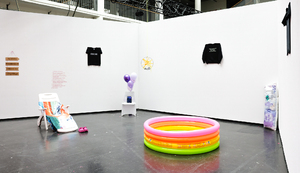
Einige Werke greifen konkrete Bilder auf: Eine Performance, bei der ein Plastikpool auf einem Motorrad transportiert wird, bezieht sich auf ein Archivbild. Ein anderes verwandelt einen falsch übersetzten Tweet in ein dekoratives Holzschild. Ein drittes ist ein Traumfänger aus gelber Unterwäsche – inspiriert von einem kolumbianischen Neujahrsbrauch, wonach gelbe Unterwäsche Glück bringen soll.
Ein zentrales Element ist eine Videoarbeit, die das gesamte Archiv in Endlosschleife zeigt, begleitet von Texten aus unterschiedlichen Quellen: akademisch, persönlich oder aus sozialen Medien. Die Anordnung ist nicht erklärend, sondern atmosphärisch. Die Ausstellung schafft einen hierarchiefreien Raum, der Intuition, spielerische Ernsthaftigkeit und visuelle Alltagskulturen in den Mittelpunkt stellt.
- "In Defense of Mis Caprichos" ist eine multimediale Ausstellung, die auf einem selbst kuratierten Archiv von 140 gefundenen und eigenen Bildern basiert. Sie setzt sich mit der vernakulären Bildsprache Lateinamerikas auseinander – von Memes und persönlichen Fotos bis zu Screenshots. Viele Bilder sind durch digitale Verbreitung nur in niedriger Auflösung erhalten und spiegeln so die visuelle Textur des Internets wider. Sie vermitteln eine Sensibilität, die sich nicht erklären lässt, sondern sich durch Stimmung, Ton und Wiederholung entfaltet. Viele der Bilder stammen aus oder zeigen Kontexte des Globalen Südens und verstehen sich als Hommage an dortige alltägliche, informelle Gesten. Zusammen bilden sie eine visuelle Sprache, die intim, vielschichtig, instabil und oft humorvoll ist.
- Beschreibung (en)
- In Defense of Mis Caprichos is a multimedia exhibition based in a self-curated archive of 140 found and self-produced images that reflect the vernacular visual language of Latin America. These images—ranging from memes and personal photographs to screenshots— carry a distinct sensibility: one that resists explanation and instead unfolds through mood, tone, and repetition. Often low in resolution due to constant digital circulation, the images reflect the visual texture of the internet. Many celebrate vernacular and informal gestures, circulating quickly across digital platforms to form a visual language that is intimate, layered, unstable, and often humorous.
The work draws on Hal Foster’s An Archival Impulse, where archiving is seen as an artistic practice and a preference for fragmentation over coherence reflects a deliberate artistic strategy.
From this archive, ten objects were developed, each guided by a specific premise. Some take the form of replicas, others of performances or hybrid assemblages. These objects operate as attempts to “grasp” the underlying sensibility of the archive. Their logic often draws on the aesthetics of appropriation, copying, and transformation—resonating with Byung-Chul Han’s Shanzhai: Deconstruction in Chinese, where copying and sampling are understood as creative strategies capable of generating new meaning.
A second core component of the exhibition is a video slideshow that presents the full image archive in a loop. The video has no beginning and no end, as it is conceived as a work in progress—the archive is constantly evolving. Each image is accompanied by 1–2 lines of text drawn from diverse sources: academic texts, social media posts, and personal writings. The arrangement is not explanatory but atmospheric, evoking how Susan Sontag, in Notes on Camp, approaches a sensibility not through linear explanation but through curation and juxtaposition.
In Defense of Mis Caprichos does not seek resolution or synthesis. Instead, it inhabits a space of connection without hierarchy. It is an argument for intuition, for playful seriousness, and for honoring the seemingly trivial gestures we encounter every day.
- In Defense of Mis Caprichos is a multimedia exhibition based in a self-curated archive of 140 found and self-produced images that reflect the vernacular visual language of Latin America. These images—ranging from memes and personal photographs to screenshots— carry a distinct sensibility: one that resists explanation and instead unfolds through mood, tone, and repetition. Often low in resolution due to constant digital circulation, the images reflect the visual texture of the internet. Many celebrate vernacular and informal gestures, circulating quickly across digital platforms to form a visual language that is intimate, layered, unstable, and often humorous.
- Kategorie
- Typ des Projekts/Werks
- Schlagworte
- Dank an
- Sprache
- Material
- Technik/Verfahren/Formate
- Diashow / Skulptur / Performance
- Ort: Institution
- Ort
- Lichthof 4
- Stadt
- Land
- Titel
- In Defense of Mis Caprichos
- Untertitel
- When someone says you canʼt do something. Do it twice, and take pictures.
- Projektleiter/in
- Semester
- Studiengang
- Typ der Abschlussarbeit
- Importiert am
- 27.06.2025
- Übergeordnete Sets
- 2
- Set enthält
- 4 2
Erikas Töchter

Name that can easily go onto 2 lines
Author that can easily go onto 2 lines as well
- Titel
- Erikas Töchter
- Autor/in
- Beschreibung (de)
- "Erikas Töchter" untersucht anhand der fiktiven Figur Erika Mustermann Perspektiven auf die weibliche* Identitätsbildung in Deutschland. Seit 1987 existiert Erika als Musteridentität in amtlichen Dokumenten - weiß, blond, blau- oder grünäugig. Als ein lächelnder Anachronismus geistert sie, erschreckend unkommentiert, durch die Bürokratielandschaft Deutschlands. Ihre durchdringende Augen blicken uns alle aufmerksam an, die Mundwinkel deuten ein neutrales Lächeln an. Doch je länger man sie betrachtet, desto schwerer wiegt ihr Blick: normierend, klassifizierend und ausschließend.
Die Arbeit übersetzt diese fiktive Identität in ein irritierendes Szenario, das zwischen Gartenfest, Ausstellung, Performance und Büroalltag changiert. Im Zentrum stehen zwei Ebenen: Zum einen die Präsentation der IDOLLs, einer Serie neuer weiblicher Musteridentitäten, die im Format einer Teleshopping-Show als innovative Lösung zeitgenössischer Identitätsprobleme vermarktet werden. Zum anderen der Blick in Erikas Büroalltag. Umgeben von Plastik-Buchsbaumbüschen, Teppichboden und generischen Büromöbeln ist sie gefangen im Moment des Fotos und der Reproduktion ihres Gesichtes.
- "Erikas Töchter" untersucht anhand der fiktiven Figur Erika Mustermann Perspektiven auf die weibliche* Identitätsbildung in Deutschland. Seit 1987 existiert Erika als Musteridentität in amtlichen Dokumenten - weiß, blond, blau- oder grünäugig. Als ein lächelnder Anachronismus geistert sie, erschreckend unkommentiert, durch die Bürokratielandschaft Deutschlands. Ihre durchdringende Augen blicken uns alle aufmerksam an, die Mundwinkel deuten ein neutrales Lächeln an. Doch je länger man sie betrachtet, desto schwerer wiegt ihr Blick: normierend, klassifizierend und ausschließend.
- Beschreibung (en)
- “Erikas Töchter” explores perspectives on female* identity formation in Germany through the fictional figure of Erika Mustermann. Since 1987, Erika has served as the standard identity in official documents – white, blonde, blue- or green-eyed. As a smiling anachronism, she continues to haunt Germany’s bureaucratic landscape. Erika’s eyes look directly at the viewer, the corners of her mouth suggesting a neutral smile. Yet the longer she gazes at you, the more insistent her expression becomes: classifying and excluding
The work translates this fictional identity into a scenario that shifts between garden party, exhibition, performance, and office routine. At its center are two layers: on the one hand, the presentation of the IDOLLs – a series of new female standard identities, presented in the style of a teleshopping show, offering an innovative approach to contemporary issues of identity; on the other hand, a glimpse into Erika’s everyday office life. Surrounded by plastic boxwood shrubs, carpeting, and generic office furniture, she remains trapped in the moment of the photograph and the endless reproduction of her own face.
- “Erikas Töchter” explores perspectives on female* identity formation in Germany through the fictional figure of Erika Mustermann. Since 1987, Erika has served as the standard identity in official documents – white, blonde, blue- or green-eyed. As a smiling anachronism, she continues to haunt Germany’s bureaucratic landscape. Erika’s eyes look directly at the viewer, the corners of her mouth suggesting a neutral smile. Yet the longer she gazes at you, the more insistent her expression becomes: classifying and excluding
- Kategorie
- Typ des Projekts/Werks
- Schlagworte
- Datierung
- 22.07.2025
- Mitwirkende
- Sprache
- Material
- Abmessungen
- Ein kleines Haus mit Garten
- Dauer
- 4 Stunden
- Ort: Institution
- Stadt
- Land
- Titel
- Erikas Töchter
- Projektleiter/in
- Semester
- Studiengang
- Typ der Abschlussarbeit
- Importiert am
- 29.09.2025
- Übergeordnete Sets
- 3
- Set enthält
- 2 23
entre-temps
Name that can easily go onto 2 lines
Author that can easily go onto 2 lines as well
- Titel
- entre-temps
- Autor/in
- Beschreibung (de)
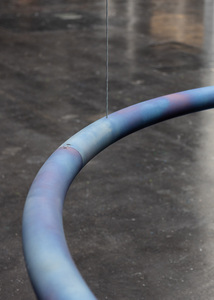
- Unter dem Einfluss von Hitze offenbart Stahl eine unbekannte Seite. Wolkenartige Farbmuster entstehen auf seiner Oberfläche und widersetzen sich materialgebundenen Definitionen. Die Arbeit untersucht die Beziehung zwischen Schwerem und Leichtem sowie Fragen der Komplexität.
- Beschreibung (en)
- Under the influence of heat, steel reveals an unknown side. Cloudlike patterns of color emerge on its surface, resisting materialbound definitions. The work explores the relationship between the heavy and the light, as well as questions of complexity.
- Kategorie
- Typ des Projekts/Werks
- Schlagworte
- Datierung
- 2025
- Dank an
- Kevin Beckmann
- Adrien Benoit
- Matthias Bruhn
- Lukas Clark
- Finn De Bruyn
- Kira Fuchs
- Josephine Gerhardt
- Josef Grair
- Dorothea Griep
- Cansu Gündoğdu
- Jule Heinzelmann
- Hannah Hugger
- Tina Jander
- Chris Kabel
- Valentina Karga
- Florian Knöbl
- Alexander Knoppik
- Philipp Kriebel
- Julian Kuf
- Barbara Kuon
- Florian Lips
- Nini Lue
- Tim Miler
- Sebastian Schäfer
- Sebastian Schilbach
- Susanne Schmitt
- Jules Scoubart
- Manèkè Som
- Pei Zhou
- Material
- Technik/Verfahren/Formate
- Heat Coloring
- Abmessungen
- Ring: 4x4m, Spiegel: 80x4cm
- Ort: Institution
- Stadt
- Land
- Beteiligte Institution(en)
- Internetlinks
- Titel
- entre-temps
- Projektleiter/in
- Semester
- Studiengang
- Typ der Abschlussarbeit
- Importiert am
- 24.02.2026
- Übergeordnete Sets
- 3
- Set enthält
- 0 21
Leaving on a High Note
Name that can easily go onto 2 lines
Author that can easily go onto 2 lines as well
- Titel
- Leaving on a High Note
- Autor/in
- Beschreibung (de)
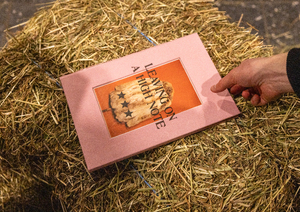
- "Leaving on a High Note" ist eine Reflexion über Schönheit und das Medium Buch. Die Arbeit bringt vielfältiges visuelles Material, von gescannten Fotografien und Kunstwerken über handgezeichnete Textilmuster bis hin zu in Auftrag gegebenen künstlerischen Beiträgen, zusammen. Als eine Art poetisches Moodboard geht das Projekt der Frage nach, wie sich Atmosphäre, Schönheit und visuelle Intuition durch Kuration im Zusammenspiel mit materiellen Entscheidungen formen lassen. Das Papier wurde akribisch gewählt, um die Betrachtung um eine haptische Ebene zu erweitern. Die Bindung durch den Rücken des Hardcovers verweist auf den konzeptuellen, redaktionellen und praktischen Prozess, der zum finalen Objekt geführt hat. Das Buch enthält künstlerische Beiträge von Alva Bücking sowie Zeichnungen von Charlotte Singer.
"Leaving on a High Note" wurde im Rahmen einer Ausstellung gezeigt, die die Stimmung des Buches in den Raum übertrug. Die Soirée fand am 17. Dezember 2025 im ZKM Pavillon in Karlsruhe statt und umfasste eine Installation und eine Chorperformance. Der Chor wurde von Leonie Inga Klopstock geleitet und mit von Anton Schüler designten Krägen ausgestattet.
- "Leaving on a High Note" ist eine Reflexion über Schönheit und das Medium Buch. Die Arbeit bringt vielfältiges visuelles Material, von gescannten Fotografien und Kunstwerken über handgezeichnete Textilmuster bis hin zu in Auftrag gegebenen künstlerischen Beiträgen, zusammen. Als eine Art poetisches Moodboard geht das Projekt der Frage nach, wie sich Atmosphäre, Schönheit und visuelle Intuition durch Kuration im Zusammenspiel mit materiellen Entscheidungen formen lassen. Das Papier wurde akribisch gewählt, um die Betrachtung um eine haptische Ebene zu erweitern. Die Bindung durch den Rücken des Hardcovers verweist auf den konzeptuellen, redaktionellen und praktischen Prozess, der zum finalen Objekt geführt hat. Das Buch enthält künstlerische Beiträge von Alva Bücking sowie Zeichnungen von Charlotte Singer.
- Beschreibung (en)
- "Leaving on a High Note" is a reflection on beauty as well as on bookmaking. It is a collection of diverse visual material ranging from scanned photography and artworks to hand-drawn textile patterns and commissioned artistic contributions. It functions as a poetic moodboard, exploring how atmosphere, beauty and visual intuition can be shaped through curation and material decisions. The paper was chosen meticulously in order to introduce a refined tactile experience to the act of viewing. The work is bound with thread punched through the hardcover spine, referencing the conceptual, editorial and practical process that led to the final object. The book includes commissioned work by Alva Bücking as well as drawings by Charlotte Singer.
"Leaving on a High Note" was shown in an exhibition that translated the book’s mood into the space. The soirée took place at the ZKM Pavillon in Karlsruhe on December 17, 2025 and featured an installation alongside a choir performance. The choir was conducted by Leonie Inga Klopstock and outfitted with collars by Anton Schüler.
- "Leaving on a High Note" is a reflection on beauty as well as on bookmaking. It is a collection of diverse visual material ranging from scanned photography and artworks to hand-drawn textile patterns and commissioned artistic contributions. It functions as a poetic moodboard, exploring how atmosphere, beauty and visual intuition can be shaped through curation and material decisions. The paper was chosen meticulously in order to introduce a refined tactile experience to the act of viewing. The work is bound with thread punched through the hardcover spine, referencing the conceptual, editorial and practical process that led to the final object. The book includes commissioned work by Alva Bücking as well as drawings by Charlotte Singer.
- Kategorie
- Typ des Projekts/Werks
- Schlagworte
- Datierung
- 17.12.2025
- Mitwirkende
- Dank an
- Paul Bailey
- Vincent Carl Becher
- Alva Bücking
- Rahel Diederich
- Till Engelhardt
- Marie Faaß
- Line-Gry Hørup
- Dans Jirgensons
- Tobias Keilbach
- Leonie Inga Klopstock
- Susanne Kriemann
- Ida Kuczewski
- Barbara Kuon
- Isabel Motz
- Tereza Ruller
- Luis Rüttiger
- Jana Schmeckenbecher
- Anton Schüler
- Isabel Seiffert
- Moritz Kamil Simon
- Charlotte Singer
- Lilith Stumpf
- Pierre Zimmer
- Petra Zimmermann
- HfG Chor
- Sprache
- Ort: Institution
- Stadt
- Land
- Titel
- Leaving on a High Note
- Projektleiter/in
- Semester
- Studiengang
- Typ der Abschlussarbeit
- Importiert am
- 05.01.2026
- Übergeordnete Sets
- 0
- Set enthält
- 0 10
Wet again
Name that can easily go onto 2 lines
Author that can easily go onto 2 lines as well
- Titel
- Wet again
- Titel (en)
- Wet again
- Untertitel
- Wahrnehmung und Abstraktion von Erhaltungsarbeit im ländlichen Raum
- Untertitel des Projekts/Werks (en)
- Perception and abstraction of maintenance work in rural areas
- Autor/in
- Beschreibung (de)
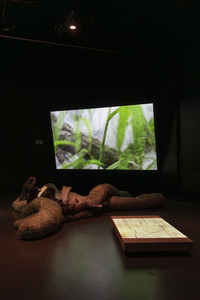
- „Wet again“ ist das Ergebnis eines zweijährigen Prozesses von Laura Haak, eine Moorregion als Akteur wahrzunehmen und zu begleiten. Es liegt in einem abgelegenen Terrain im Nordosten Deutschlands nahe dem Kummerower See im Malchiner Umland.
In einer Feldforschung wurde viel Zeit verbracht, Scores der Zusammenarbeit entwickelt, Wander- und Kanurouten 1:1 erschlossen. Dabei entstand ein Austausch mit den Menschen vor Ort, die eine längere Beziehung zum Torfboden pflegen und sich für die Wiedervernässung von Moorböden lokal und europaweit einsetzen.
Es entstand ein Gewebe aus verschiedenen Wahrnehmungsperspektiven und die Frage nach ihren machtpolitischen Auswirkungen auf ländliche Gestaltungsprozesse. Was sind die neuen Choreografien der Erhaltungsarbeit, auf welche Perspektiven wird Bezug genommen?
- „Wet again“ ist das Ergebnis eines zweijährigen Prozesses von Laura Haak, eine Moorregion als Akteur wahrzunehmen und zu begleiten. Es liegt in einem abgelegenen Terrain im Nordosten Deutschlands nahe dem Kummerower See im Malchiner Umland.
- Beschreibung (en)
- ‘Wet again’ is the result of a two-year process by Laura Haak to perceive and accompany a moorland region as an acting entity.
It is located in a remote area in north-eastern Germany near Lake Kummerow in the Surrounding Malchin.
A lot of time was spent conducting field research, developing scores of collaboration, and tracing hiking and canoe routes 1:1.
This led to an exchange with local people who have a long-standing relationship with the peat soil and are committed to the rewetting of moorland soils both locally and across Europe.
A fabric of different perspectives emerged, along with questions about their power-political implications for rural design processes. What are the new choreographies of maintenance work, and what perspectives are being referred to?
- ‘Wet again’ is the result of a two-year process by Laura Haak to perceive and accompany a moorland region as an acting entity.
- Kategorie
- Typ des Projekts/Werks
- Schlagworte
- Datierung
- Zwei Sommer und ein Frühjahr 2023-2025
- Sprache
- Bemerkungen
- Acknowledgements:
Dr Uta Berghöfer, Dr Joachim Borner Martina Zienert from Projekthof Karnitz , Nora Köhn from University Greifswald, Dr Ulf Schiefelbein from Ministry for Climate Protection, Agriculture, Rural Areas and the Environment Mecklenburg-Western Pomerania , Tobias Dahms from thermal drones GmbH, Richard Hurding from Zelfo Technology GmbH, the paludi farmers Ludwig Bork and Henning Voigt, Frank Zimmermann from "Uns lütt Museum“ Dargun and sculptor Kathrin Wetzel for their time and willingness to show themselves, interesting and realizing conversations, the opportunity for a bird‘s eye view and 150 kilograms of sedge cane grass, Tim Ingold for loaning captions and providing impulses for thoughts and perception
Celine Condorelli, Jaya Demmer, Lina Determann, Mascha Dilger, Benjamin Eisele, Constanze Fischbeck, Hanna Franke, Vera Gärtner, Marlene-, Michael-, Birgit- and Michaela Haak, Mira Hirtz, Franka Kampmeier, Alexander Knoppig, Hanne König, Christian‘Lübben, Leonie Mühlen, Wiebke Muller, Leonie Müller, Laura Morcillo and ZeitBildLab, Luise Peschko, Nis Petersen, Sebastian Schafer, Susanne Schmitt, Josefine Scheu, Phillip Schell, Arthur Schuman, Henriette Schwabe, Claud Teichmann, Alexander Thelen, Johannes Thimm, Leia Walz, Isabel Winter for countless support, the best of times, carrying hands, attentive eyes and continuous inquiries and Paulina Mimberg for the most splendid graphic.
- Acknowledgements:
- Titel
- Wet again
- Untertitel
- Wahrnehmung und Abstraktion von Erhaltungsarbeit im ländlichen Raum
- Projektleiter/in
- Semester
- Studiengang
- Typ der Abschlussarbeit
- Importiert am
- 30.06.2025
- Übergeordnete Sets
- 2
- Set enthält
- 2 3