Die Methode Duchamp – Magritte
Benachbarte Sets (154)Alle Zusammenhänge anzeigen
Diese Sets wurden den gleichen Sets hinzugefügt wie das ausgewählte Set.
154 Inhalte
- Seite 1 von 13
Writing the History Of the Future
Name that can easily go onto 2 lines
Author that can easily go onto 2 lines as well
- Titel
- Writing the History Of the Future
- Titel (en)
- Writing the History Of the Future
- Untertitel
- Das ZKM und die kulturelle Arbeit der Medienkunstkonservierung
- Untertitel des Projekts/Werks (en)
- ZKM and the Cultural Work of Media Art Conservation
- Autor/in
- Beschreibung (de)
- Obwohl die Medienkunst in der zeitgenössischen Kultur zunehmend an Bedeutung gewinnt, ist sie in institutionellen Sammlungen immer noch unterrepräsentiert. Die schnelle technologische Entwicklung von Hard- und Software sowie geplante Obsoleszenz stellen die Konservierung vor große Herausforderungen. Seit den 1960er Jahren hat sich die westliche Kunst von objektbasierten hin zu performativen und prozessorientierten Formen gewandelt. Dies wurde von einem Paradigmenwechsel in der Konservierungstheorie begleitet, in der Konzepte und Subjekt stärker gewichtet werden als Materialität und Objekt. Museen und der Kunstmarkt haben jedoch Schwierigkeiten, ihre Sammelpraktiken entsprechend anzupassen. In dieser Arbeit werden die Herausforderungen der Integration von Medienkunst in institutionelle Kontexte untersucht und der Bedarf an theoretischen und praktischen Anpassungen betont. Ziel ist es, Strategien zur nachhaltigen Einbindung technologisch vermittelter Kunstwerke in Sammlungen und das kulturelle Gedächtnis zu entwickeln. Im Fokus steht dabei das ZKM in Karlsruhe als führende Institution der Medienkunstkonservierung. Auf Basis interdisziplinärer Forschung und Interviews werden zentrale Themen wie Interaktivität, Variabilität, Authentizität, Zeitlichkeit und der Wandel des Kunstobjekts analysiert.
- Beschreibung (en)
- Media art, despite its growing prominence in contemporary culture, remains underrepresented in institutional collections. Rapid technological obsolescence—affecting both hardware and software—poses major challenges for preservation. Since the 1960s, Western art has shifted from object-based works toward performative and process-oriented practices, paralleled by changes in conservation theory that prioritize concepts and subject over object and materiality. However, museums and the art market have struggled to adapt their collecting practices to these developments. This thesis examines the challenges of integrating media art into institutional contexts, emphasizing the need for conceptual and theoretical shifts in both museum practices and art theory. It aims to describe the strategies for incorporating technologically mediated artworks into collections and cultural memory. The study focuses on the ZKM (Center for Art and Media) in Karlsruhe, a leading institution in media art preservation. Through analysis of its frameworks and interdisciplinary research including interviews, the thesis explores key themes like interactivity, variability, authenticity, temporality, and the evolving nature of the art object.
- Kategorie
- Schlagworte
- Dank an
- Sprache
- Abmessungen
- 272 Seiten (169 Textseiten)
- Titel
- Writing the History Of the Future
- Untertitel
- Das ZKM und die kulturelle Arbeit der Medienkunstkonservierung
- Projektleiter/in
- Semester
- Studiengang
- Typ der Abschlussarbeit
- Importiert am
- 25.03.2026
- Übergeordnete Sets
- 4
- Set enthält
- 0 5
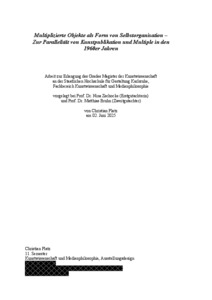
Multiplizierte Objekte als Form von Selbstorganisation
Name that can easily go onto 2 lines
Author that can easily go onto 2 lines as well
- Titel
- Multiplizierte Objekte als Form von Selbstorganisation
- Titel (en)
- Multiplied objects as a form of self-organization
- Untertitel
- Zur Parallelität von Kunstpublikation und Multiple in den 1960er Jahren
- Untertitel des Projekts/Werks (en)
- On the Parallelism Between Art Publications and Multiples in the 1960s
- Autor/in
- Beschreibung (de)
- Kunstpublikationen und Multiples (Auflagenobjekte) der 1960er Jahren weisen strukturelle und konzeptuelle Parallelen auf, die in dieser Arbeit als Ausdruck selbstorganisierter künstlerischer Praxis zu verstehen sind. Ausgehend von einer kritischen Auseinandersetzung mit dem etablierten Kunstsystem entstanden in dieser Zeit alternative Formate der Produktion und Distribution, die auf Vervielfältigung, Partizipation und Autonomie basierten. Anhand exemplarischer Fallbeispiele, darunter die intermedialen Publikationsobjekte "dokumentation b", die "Edition Et", die Zeitschriften "spirale" und "rot" sowie die Multiples der Edition "MAT" und die Serienobjekte der "Gruppe X", wird gezeigt, wie sich die entsprechenden Werkformen als kuratorische, serielle und partizipative Medien positionieren lassen. Die Arbeit kontextualisiert diese Formate sowohl medienästhetisch als auch kulturpolitisch und versteht sie als materielle Strategien der Selbstorganisation. Sie argumentiert, dass Kunstpublikationen und Multiples nicht nur als Ausdruck einer alternativen Öffentlichkeit fungierten, sondern mit ihnen auch frühe Modelle einer dezentralen künstlerischen Infrastruktur entwickelt wurden. Diese Betrachtung ermöglicht eine genealogische Neubewertung des Multiples, indem sie sich vom etablierten, auf Marcel Duchamp fixierten Diskursrahmen löst und eine weiter gefasste Perspektive eröffnet.
- Kunstpublikationen und Multiples (Auflagenobjekte) der 1960er Jahren weisen strukturelle und konzeptuelle Parallelen auf, die in dieser Arbeit als Ausdruck selbstorganisierter künstlerischer Praxis zu verstehen sind. Ausgehend von einer kritischen Auseinandersetzung mit dem etablierten Kunstsystem entstanden in dieser Zeit alternative Formate der Produktion und Distribution, die auf Vervielfältigung, Partizipation und Autonomie basierten. Anhand exemplarischer Fallbeispiele, darunter die intermedialen Publikationsobjekte "dokumentation b", die "Edition Et", die Zeitschriften "spirale" und "rot" sowie die Multiples der Edition "MAT" und die Serienobjekte der "Gruppe X", wird gezeigt, wie sich die entsprechenden Werkformen als kuratorische, serielle und partizipative Medien positionieren lassen. Die Arbeit kontextualisiert diese Formate sowohl medienästhetisch als auch kulturpolitisch und versteht sie als materielle Strategien der Selbstorganisation. Sie argumentiert, dass Kunstpublikationen und Multiples nicht nur als Ausdruck einer alternativen Öffentlichkeit fungierten, sondern mit ihnen auch frühe Modelle einer dezentralen künstlerischen Infrastruktur entwickelt wurden. Diese Betrachtung ermöglicht eine genealogische Neubewertung des Multiples, indem sie sich vom etablierten, auf Marcel Duchamp fixierten Diskursrahmen löst und eine weiter gefasste Perspektive eröffnet.
- Beschreibung (en)
- Art publications and multiples from the 1960s share structural and conceptual parallels that can be understood in this work as expressions of self-organized artistic practice. Based on a critical examination of the established art system, alternative formats of production and distribution emerged during this period that were based on reproduction, participation, and autonomy. Using exemplary case studies, including the intermedia publication objects "dokumentation b", "Edition Et", the magazines "spirale" and "rot", the multiples of Edition "MAT", and the serial objects of "Gruppe X", this work shows how the corresponding forms of work can be positioned as curatorial, serial, and participatory media. The work contextualizes these formats both in terms of media aesthetics and cultural politics and understands them as material strategies of self-organization. It argues that art publications and multiples not only functioned as expressions of an alternative public sphere, but also served to develop early models of a decentralized artistic infrastructure. This perspective enables a genealogical reassessment of the multiple by breaking away from the established discourse framework centered on Marcel Duchamp and opening up a broader perspective.
- Kategorie
- Typ des Projekts/Werks
- Schlagworte
- Datierung
- 02.06.2025
- Dank an
- Sprache
- Abmessungen
- 116 Seiten (77 Textseiten)
- Titel
- Multiplizierte Objekte als Form von Selbstorganisation
- Untertitel
- Zur Parallelität von Kunstpublikation und Multiple in den 1960er Jahren
- Projektleiter/in
- Semester
- Studiengang
- Typ der Abschlussarbeit
- Importiert am
- 16.03.2026
- Übergeordnete Sets
- 4
- Set enthält
- 0 3
The Breath of Metal
Name that can easily go onto 2 lines
Author that can easily go onto 2 lines as well
- Titel
- The Breath of Metal
- Titel (en)
- The Breath of Metal
- Untertitel
- Baiyin - what the mine left behind
- Untertitel des Projekts/Werks (en)
- Baiyin - what the mine left behind
- Autor/in
- Beschreibung (de)
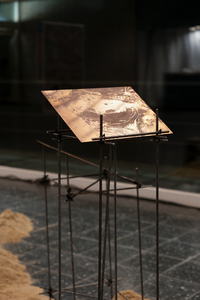
- Meine künstlerische Arbeit beschäftigt sich mit den Beziehungen zwischen Metall, Bergbau sowie familiären und urbanen Archiven. Metall fungiert dabei sowohl als Material als auch als Sprache: Es trägt Gewicht, Klang und Zeit in sich und bewahrt Spuren politischer, industrieller und arbeitsgeschichtlicher Prozesse.
Ich bin in Baiyin in der chinesischen Provinz Gansu aufgewachsen, einer durch den Bergbau entstandenen Industriestadt, auch bekannt als „Kupferstadt“. Mehrere Generationen meiner Familie waren im Bergbau, in der Verhüttung und in der Erzverarbeitung tätig. Diese biografischen Hintergründe erscheinen in meiner Arbeit nicht als Nostalgie, sondern als struktureller Rahmen, der mein Verständnis von Materialität, Körper und Stadt prägt. Die Mine ist für mich kein fixer Ort, sondern ein sich wandelndes System vom Erz zum Metall, von der Infrastruktur zur Stadt und schließlich zur Ruine.
Methodisch arbeite ich mit Fotografie, Archivmaterial, industriellen Überresten sowie mit Video, Klang und Installation. Fotografie verstehe ich dabei als Prozess der Extraktion und Transformation, der Materialien aus ihrem ursprünglichen Funktionszusammenhang löst und in einen Zustand suspendierter Evidenz überführt.
- Meine künstlerische Arbeit beschäftigt sich mit den Beziehungen zwischen Metall, Bergbau sowie familiären und urbanen Archiven. Metall fungiert dabei sowohl als Material als auch als Sprache: Es trägt Gewicht, Klang und Zeit in sich und bewahrt Spuren politischer, industrieller und arbeitsgeschichtlicher Prozesse.
- Beschreibung (en)
- My artistic work explores the relationships between metal, mining, and familial and urban archives. Metal functions both as a material and as a language: it carries weight, sound, and time, and preserves traces of political, industrial, and labor-related processes.
I grew up in Baiyin in Gansu Province, China, an industrial city shaped by mining, also known as the “Copper City.” Several generations of my family were involved in mining, smelting, and ore processing. These biographical backgrounds do not appear in my work as nostalgia, but rather as a structural framework that shapes my understanding of materiality, the body, and the city. For me, the mine is not a fixed place, but a constantly evolving system — from ore to metal, from infrastructure to the city, and ultimately to ruin.
Methodologically, I work with photography, archival materials, industrial remnants, as well as video, sound, and installation. I understand photography as a process of extraction and transformation, one that removes materials from their original functional context and transfers them into a state of suspended evidence.
- My artistic work explores the relationships between metal, mining, and familial and urban archives. Metal functions both as a material and as a language: it carries weight, sound, and time, and preserves traces of political, industrial, and labor-related processes.
- Kategorie
- Mitwirkende
- Material
- Technik/Verfahren/Formate
- Fotografie, Installation, Video
- Abmessungen
- 6 große Bilder je 900 x 1400 mm, 8 kleine Bilder je 210 x 297 mm, 4 Kupferpalette, 3 davon je 210 x 297 mm, 1 420 x 594 mm, 4 Ständer je 70 bis 100 cm hoch.
- Dauer
- Ein Video dauert 10 Minuten und 19 Sekunden.
- Titel
- The Breath of Metal
- Untertitel
- Baiyin - what the mine left behind
- Projektleiter/in
- Semester
- Studiengang
- Typ der Abschlussarbeit
- Importiert am
- 11.03.2026
- Übergeordnete Sets
- 3
- Set enthält
- 0 24
Now or Nowhere
- Titel
- Now or Nowhere
- Autor/in
- Beschreibung (de)
- Now or Nowhere ist ein Projekt, das die Frage stellt, ob Technologie aus einer Notwendigkeit heraus entsteht – oder ob ihre Notwendigkeit erst erkannt wird, nachdem sie bereits erschienen ist. Neue Geräte versprechen stets Effizienz, Verbesserung und nahtlose Konnektivität und behaupten, unser Leben leichter zu machen. Automatisierung lindert Müdigkeit, Konnektivität beseitigt Trennung, und Updates gleichen Unvollkommenheit aus. Doch was genau machen wir in diesem Prozess eigentlich bequemer – und was geben wir dabei stillschweigend aus der Hand?
Das Projekt schlägt drei virtuelle Geräte vor, die repetitive und scheinbar unbedeutende körperliche Handlungen stellvertretend für den Nutzer ausführen. AutoPresence ist ein Gerät, das aufgezeichnete Mausbewegungen wiedergibt und selbst in Abwesenheit des Nutzers kontinuierlich Spuren von Arbeit produziert. Ruhe wird nicht erkannt, und der Cursor hält niemals an. The Sixth Finger ist ein am Finger getragenes Wearable, das das Wischen auf dem Smartphone automatisiert und die vertraute Bewegung des Daumens durch einen zweiten Daumen ersetzt. Die Hand hält das Gerät weiterhin fest, doch die Handlung wird an die Maschine delegiert. Artificial Sweat Gland for Mobile Devices überträgt die Funktion der menschlichen Schweißdrüsen auf ein Kühlsystem für das Gerät und synchronisiert so die Temperatur von Körper und Gerät. Das Telefon verlässt die Hand nie.
Diese Geräte werden so präsentiert, als stünden sie kurz vor der Markteinführung. In Anlehnung an Produktpräsentationen und Werbeformate rahmt das Projekt alltägliche Gesten als Funktionen, die optimiert werden können. Werden die Besucherinnen im Ausstellungsraum zu potenziellen Konsumentinnen dieser Geräte – oder erkennen sie, dass sie bereits Konsument*innen sind?
- Now or Nowhere ist ein Projekt, das die Frage stellt, ob Technologie aus einer Notwendigkeit heraus entsteht – oder ob ihre Notwendigkeit erst erkannt wird, nachdem sie bereits erschienen ist. Neue Geräte versprechen stets Effizienz, Verbesserung und nahtlose Konnektivität und behaupten, unser Leben leichter zu machen. Automatisierung lindert Müdigkeit, Konnektivität beseitigt Trennung, und Updates gleichen Unvollkommenheit aus. Doch was genau machen wir in diesem Prozess eigentlich bequemer – und was geben wir dabei stillschweigend aus der Hand?
- Beschreibung (en)
- Now or Nowhere is a project that asks whether technology emerges from necessity or whether its necessity is only recognized after it has appeared. New devices always promise efficiency, improvement, and seamless connectivity, claiming to make our lives lighter. Automation relieves fatigue, connectivity eliminates disconnection, and updates compensate for imperfection. So, in this process, what are we making more convenient, and what are we quietly handing over?
The project proposes three virtual devices that perform repetitive and minor physical actions on behalf of the user. AutoPresence is a device that replays recorded mouse movements, continuously producing traces of labor even in the user's absence. Rest is not detected, and the cursor never stops. The Sixth Finger is a finger-worn wearable that automates smartphone swiping, replacing the most familiar thumb movements with a second thumb. The hand still grips, but the action is delegated to the machine. Artificial Sweat Gland for Mobile Devices converts the hand's sweat gland function into a device cooling system, synchronizing the body's and device's temperatures. The phone never leaves the hand.
These devices are arranged as if they are ready for launch. Borrowing the format of product displays and promotional presentation, the project reframes everyday gestures as features to be optimized. In the exhibition space, do audiences become potential consumers in front of these devices, or do they become aware that they are already consumers?
- Now or Nowhere is a project that asks whether technology emerges from necessity or whether its necessity is only recognized after it has appeared. New devices always promise efficiency, improvement, and seamless connectivity, claiming to make our lives lighter. Automation relieves fatigue, connectivity eliminates disconnection, and updates compensate for imperfection. So, in this process, what are we making more convenient, and what are we quietly handing over?
- Kategorie
- Typ des Projekts/Werks
- Schlagworte
- Datierung
- November 2025 - 2026
- Mitwirkende
- Dank an
- Ort: Institution
- Stadt
- Land
- Titel
- Now or Nowhere
- Importiert am
- 09.03.2026
- Übergeordnete Sets
- 0
- Set enthält
- 0 0
Abschlussarbeit
Name that can easily go onto 2 lines
Author that can easily go onto 2 lines as well
- Titel
- Abschlussarbeit
- Titel (en)
- Luv What You Luv
- Untertitel
- Otaku and Community
- Autor/in
- Beschreibung (de)
- Der Begriff Otaku bezeichnet eine Person, die eine tiefe, spezialisierte und anhaltende Begeisterung für ein bestimmtes Thema besitzt, die sich häufig durch umfangreiches Wissen, emotionale Bindung und aktive Beschäftigung damit auszeichnet.
In der heutigen Gesellschaft wird es zunehmend schwieriger, unsere reine Begeisterung mit anderen zu teilen. Menschen neigen dazu, soziale Gruppen auf der Grundlage kultureller Geschmäcker zu bilden, und dieses Phänomen hat sich im Zeitalter von Web 2.0 durch Mechanismen wie Filterblasen weiter verstärkt.
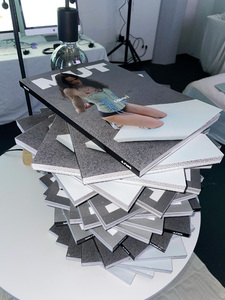
Durch das Projekt „Luv What You Luv“ möchte ich zeigen, was ich liebe, und gleichzeitig hören, was andere lieben. Das Projekt besteht hauptsächlich aus einem Magazin, das zwei Ausgaben in einem Band vereint. Die erste Ausgabe, [Girls], zeigt, was ich persönlich liebe. Die zweite Ausgabe, [Otaku], untersucht die Otaku-Fankultur genauer und enthält drei Interviews sowie sechs Gastbeiträge, die hervorheben, wofür andere Menschen eine besondere Leidenschaft haben.
Darüber hinaus umfasst das Projekt einen Fragebogen, der untersucht, was Leser:innen und Besucher:innen der Ausstellung lieben, sowie ein Otaku Presentation Video, in dem Teilnehmende ihre eigenen Leidenschaften und Interessen vorstellen.
Durch dieses Magazin und die dazugehörigen Inhalte hoffe ich, dass Menschen die Freude daran erleben können, das zu teilen, was sie lieben, und durch diese gemeinsamen Ausdrucksformen von Begeisterung lose soziale Verbindungen entstehen.
- Der Begriff Otaku bezeichnet eine Person, die eine tiefe, spezialisierte und anhaltende Begeisterung für ein bestimmtes Thema besitzt, die sich häufig durch umfangreiches Wissen, emotionale Bindung und aktive Beschäftigung damit auszeichnet.
- Beschreibung (en)
- The term otaku refers to a person who has deep, specialized, and sustained enthusiasm for a particular subject, often characterized by extensive knowledge, emotional attachment, and active engagement.
In contemporary society, it is becoming increasingly difficult to share our pure enthusiasm with others. People tend to form social groups based on cultural taste, and this phenomenon has intensified in the Web 2.0 era through mechanisms such as filter bubbles.
Through the “Luv What You Luv” project, I aim to present what I love while also listening to what others love. The project mainly consists of a magazine composed of two issues in a single book. The first issue, [Girls], presents what I personally love. The second issue, [Otaku], explores otaku fandom culture in depth, featuring three interviews and six contributed essays that highlight what others are passionately devoted to.
In addition, the project includes a questionnaire that explores what readers and exhibition visitors love, as well as an Otaku Presentation Video, in which participants present their own passions and interests.
Through this magazine and its accompanying contents, I hope that people can experience the joy of sharing what they love and form weak social bonds through these shared expressions of enthusiasm.
- The term otaku refers to a person who has deep, specialized, and sustained enthusiasm for a particular subject, often characterized by extensive knowledge, emotional attachment, and active engagement.
- Kategorie
- Typ des Projekts/Werks
- Schlagworte
- Datierung
- 11.02.2026
- Mitwirkende
- Dank an
- Sprache
- Untertitel (Film)
- Material
- Abmessungen
- 210*297 mm
- Dauer
- 40:49
- Ort: Institution
- Ort
- Seminar room 202
- Stadt
- Land
- Bemerkungen
- KD(Kommunikationsdesign) Diplomarbeit, 9th Semester, with guide of Tereza Ruller and Paul Bailey
- Titel
- Abschlussarbeit
- Untertitel
- Otaku and Community
- Projektleiter/in
- Semester
- Studiengang
- Typ der Abschlussarbeit
- Importiert am
- 05.03.2026
- Übergeordnete Sets
- 0
- Set enthält
- 0 18
NVSHU - Nüshu
Name that can easily go onto 2 lines
Author that can easily go onto 2 lines as well
- Titel
- NVSHU - Nüshu
- Autor/in
- Beschreibung (de)
- Eine Feldstudie zur einzigen existierenden Geschlechtersprache (NVSHU - Nüshu). Mithilfe von Multimedia-Materialien konzentrierte ich mich auf die Geschichte, die sich im vergangenen Sommer zwischen mir und dem letzten Naturforscher ereignete, und dokumentierte sie. Die Papierarbeiten und Installationen drücken gleichzeitig meine eigenen Reflexionen über dieses kulturelle Phänomen aus.
- Beschreibung (en)
- A field exploration of the only existing gender language (NVSHU - Nüshu). Using multimedia materials, I focused on and documented the story that happened between me and the last naturalist last summer. The paper art and installation works simultaneously express my own reflections on this cultural phenomenon.
- Kategorie
- Typ des Projekts/Werks
- Schlagworte
- Datierung
- 26.02.2026
- Ort
- Vielfältige Kunstwerke an den Wänden der Lichtbrücke
- Stadt
- Land
- Titel
- NVSHU - Nüshu
- Projektleiter/in
- Semester
- Studiengang
- Typ der Abschlussarbeit
- Importiert am
- 27.02.2026
- Übergeordnete Sets
- 2
- Set enthält
- 0 10
entre-temps
Name that can easily go onto 2 lines
Author that can easily go onto 2 lines as well
- Titel
- entre-temps
- Autor/in
- Beschreibung (de)
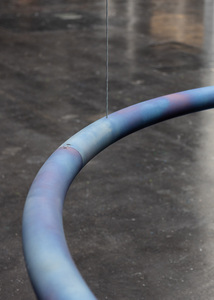
- Unter dem Einfluss von Hitze offenbart Stahl eine unbekannte Seite. Wolkenartige Farbmuster entstehen auf seiner Oberfläche und widersetzen sich materialgebundenen Definitionen. Die Arbeit untersucht die Beziehung zwischen Schwerem und Leichtem sowie Fragen der Komplexität.
- Beschreibung (en)
- Under the influence of heat, steel reveals an unknown side. Cloudlike patterns of color emerge on its surface, resisting materialbound definitions. The work explores the relationship between the heavy and the light, as well as questions of complexity.
- Kategorie
- Typ des Projekts/Werks
- Schlagworte
- Datierung
- 2025
- Dank an
- Kevin Beckmann
- Adrien Benoit
- Matthias Bruhn
- Lukas Clark
- Finn De Bruyn
- Kira Fuchs
- Josephine Gerhardt
- Josef Grair
- Dorothea Griep
- Cansu Gündoğdu
- Jule Heinzelmann
- Hannah Hugger
- Tina Jander
- Chris Kabel
- Valentina Karga
- Florian Knöbl
- Alexander Knoppik
- Philipp Kriebel
- Julian Kuf
- Barbara Kuon
- Florian Lips
- Nini Lue
- Tim Miler
- Sebastian Schäfer
- Sebastian Schilbach
- Susanne Schmitt
- Jules Scoubart
- Manèkè Som
- Pei Zhou
- Material
- Technik/Verfahren/Formate
- Heat Coloring
- Abmessungen
- Ring: 4x4m, Spiegel: 80x4cm
- Ort: Institution
- Stadt
- Land
- Beteiligte Institution(en)
- Internetlinks
- Titel
- entre-temps
- Projektleiter/in
- Semester
- Studiengang
- Typ der Abschlussarbeit
- Importiert am
- 24.02.2026
- Übergeordnete Sets
- 3
- Set enthält
- 0 21
KFZ-MechatronikerInnen
Name that can easily go onto 2 lines
Author that can easily go onto 2 lines as well
- Titel
- KFZ-MechatronikerInnen
- Titel (en)
- KFZ-MechatronikerInnen
- Autor/in
- Beschreibung (de)
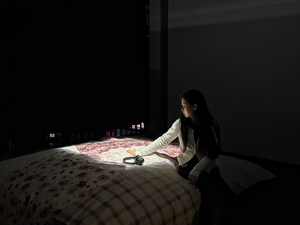
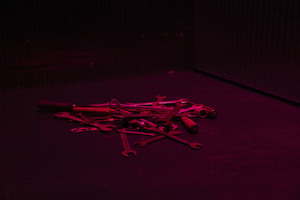
- Die multimediale Installation mit dem Titel "KFZ-MechatronikerInnen" besteht aus einem barrierefrei gestaltetem Raum, welcher durch Hohl- und Theaterwände zum Leben erweckt wird. In ihr sind fünf Objektinstallationen und eine Videoinstallation zu erkunden. Das Projekt beschäftigt sich thematisch mit Frauen in der KFZ-Mechatronik, ihrer Leidenschaft für Technik und ihrem Lebensstil. Dabei werden neben ihrer Begeisterung für Kraftfahrzeuge auch Themen von Diskriminierung und Sexismus am Arbeitsplatz und in der Szene thematisiert.
- Die multimediale Installation mit dem Titel "KFZ-MechatronikerInnen" besteht aus einem barrierefrei gestaltetem Raum, welcher durch Hohl- und Theaterwände zum Leben erweckt wird. In ihr sind fünf Objektinstallationen und eine Videoinstallation zu erkunden. Das Projekt beschäftigt sich thematisch mit Frauen in der KFZ-Mechatronik, ihrer Leidenschaft für Technik und ihrem Lebensstil. Dabei werden neben ihrer Begeisterung für Kraftfahrzeuge auch Themen von Diskriminierung und Sexismus am Arbeitsplatz und in der Szene thematisiert.
- Beschreibung (en)
- The multimedia installation entitled “KFZ-MechatronikerInnen” (Automotive Mechatronics Technicians) consists of a barrier-free room that is brought to life by hollow and theater walls. Inside, there are five object installations and a video installation to explore. The project deals with the theme of women in automotive mechatronics, their passion for technology, and their lifestyle. In addition to their enthusiasm for motor vehicles, topics such as discrimination and sexism in the workplace and in the scene are also addressed.
- The multimedia installation entitled “KFZ-MechatronikerInnen” (Automotive Mechatronics Technicians) consists of a barrier-free room that is brought to life by hollow and theater walls. Inside, there are five object installations and a video installation to explore. The project deals with the theme of women in automotive mechatronics, their passion for technology, and their lifestyle. In addition to their enthusiasm for motor vehicles, topics such as discrimination and sexism in the workplace and in the scene are also addressed.
- Kategorie
- Typ des Projekts/Werks
- Schlagworte
- Datierung
- 17.12.2025
- Mitwirkende
- Dank an
- Paul Bailey
- Patricia Capalija
- Athina Chrisofakis
- Finn De Bruyn
- Selina Decker
- Maïmouna Diop (Mai)
- Line-Gry Hørup
- Chiara Kern
- Alexander Knoppik
- Felix Köder
- Anouk Merceron
- Jana Renger
- Michael Rothfuß
- Antonia Sanden
- Sebastian Schäfer
- Leo Schick
- Sebastian Schilbach
- Sebastian Schönfeld
- Marlon Schüch
- Leon Stark
- Eric Stelse
- Quirin Thalhammer
- Yannik Thamm
- Leonard Wille
- Sprache
- Untertitel (Film)
- Material
- Technik/Verfahren/Formate
- dokumentarischer Kurzfilm (16:9), Objekt 1: Flyerwand, Objekt 2: Werkzeug, Objekt 3: Bücher, Objekt 4: Werkzeugkasten, Objekt 5: Bett
- Abmessungen
- Höhe: 2,40m, Breite: 6m, Länge: 6m
- Dauer
- 15 Minuten
- Ort: Institution
- Ort
- Die Installation war im Großen Studio begehbar.
- Stadt
- Land
- Beteiligte Institution(en)
- Auftrag durch
- Lea Möscheid
- Internetlinks
- Film anschauen unter: https://youtu.be/ynFWiT6uYa8
- Bemerkungen
- Lea Möscheid
Diplomarbeit, WiSe 25/26, im Studiengang Kommunikationsdesign und Nebenfach Szenografie
Betreuende ProfessorInnen: Paul Bailey & Line-Gry Hørup
- Lea Möscheid
- Titel
- KFZ-MechatronikerInnen
- Projektleiter/in
- Semester
- Studiengang
- Typ der Abschlussarbeit
- Importiert am
- 19.02.2026
- Übergeordnete Sets
- 2
- Set enthält
- 0 5
PINK ELEPHANT
Name that can easily go onto 2 lines
Author that can easily go onto 2 lines as well
- Titel
- PINK ELEPHANT
- Titel (en)
- PINK ELEPHANT
- Autor/in
- Beschreibung (de)
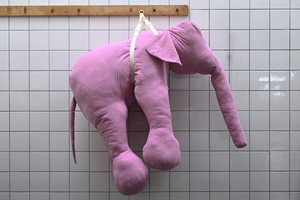
- Pink Elephant ist eine textile Skulptur, die im Rahmen der Sprint Residency im Studio Hö der Hoepfner Stiftung entstanden ist. Das Werk übersetzt das Sprichwort „Seeing Pink Elephants“ in den Raum – eine Redewendung für Halluzinationen, die normalerweise durch schweren Alkoholentzug oder alkoholische Halluzinose verursacht werden und einen Zustand des Deliriums darstellen, in dem der Geist bizarre Bilder wie leuchtend rosa Elefanten erzeugt. Damit spielt die Arbeit auf den Kontext an, in dem sie präsentiert wird, nämlich die Kunststiftung einer Brauerei.
- Pink Elephant ist eine textile Skulptur, die im Rahmen der Sprint Residency im Studio Hö der Hoepfner Stiftung entstanden ist. Das Werk übersetzt das Sprichwort „Seeing Pink Elephants“ in den Raum – eine Redewendung für Halluzinationen, die normalerweise durch schweren Alkoholentzug oder alkoholische Halluzinose verursacht werden und einen Zustand des Deliriums darstellen, in dem der Geist bizarre Bilder wie leuchtend rosa Elefanten erzeugt. Damit spielt die Arbeit auf den Kontext an, in dem sie präsentiert wird, nämlich die Kunststiftung einer Brauerei.
- Beschreibung (en)
- Pink Elephant is a textile sculpture created as part of the Sprint Residency at Studio Hö of the Hoepfner Foundation. The work translates the saying “seeing pink elephants” into space, an idiom for hallucinations, usually caused by severe alcohol withdrawal or alcoholic hallucinosis, representing a state of delirium where the mind fabricates bizarre sights like bright pink elephants. The work thus alludes to the context for which it was originally made and presented, the art foundation of a brewery.
- Kategorie
- Datierung
- 2025
- Technik/Verfahren/Formate
- Textilobjekt
- Abmessungen
- Höhe: 120cm Breite: 150cm Tiefe: 50cm
- Stadt
- Land
- Auftrag durch
- Hoepfner Stiftung
- Internetlinks
- Titel
- PINK ELEPHANT
- Semester
- Studiengang
- Importiert am
- 26.01.2026
- Übergeordnete Sets
- 1
- Set enthält
- 0 6
No Feeding
Name that can easily go onto 2 lines
Author that can easily go onto 2 lines as well
- Titel
- No Feeding
- Titel (en)
- No Feeding
- Autor/in
- Beschreibung (de)
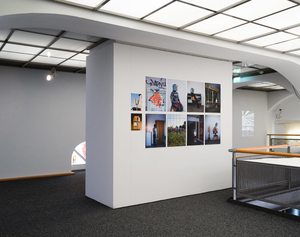
- Tauben gehören zu den alltäglichsten Tieren unseres urbanen Lebens. In allen Städten Deutschlands sieht man sie täglich in Gassen, auf Plätzen, Dächern und Geländern. Während meiner Recherche stieß ich sogar im Stadtarchiv Karlsruhe auf zahlreiche taubenbezogene Bilder, Texte und Dokumente.
Obwohl sie wie wir in der Stadt leben, werden Tauben oft übersehen, verachtet oder gar misshandelt. Man nennt sie manchmal „fliegende Staubsauger“, weil sie Essensreste vom Boden aufpicken, oder „fliegende Ratten“, da sie als Krankheitsüberträger gelten.
Doch als ich begann, mich intensiver mit der Geschichte der Tauben zu beschäftigen, entdeckte ich eine ganz andere Seite: Früher waren sie verlässliche Boten in der Kommunikation. Auf Reisen und in kolonialen Unternehmungen nahm man Tauben mit, als Begleiter und Nachrichtenübermittler. Mit der Ausbreitung globaler Mobilität verbreiteten sich auch Tauben weltweit. Heute benötigen wir sie durch den Fortschritt der Technik nicht mehr und begegnen ihnen mit Ablehnung, wie die allgegenwärtigen Taubenabwehrspitzen an Gebäuden zeigen.
In meinen Fotografien verwende ich die Taube auf humorvolle und absurde Weise als Symbol, um ihre komplexe Beziehung zum Menschen zu thematisieren und zugleich meine eigene Identitätsfrage zu reflektieren. Mal trägt sie Anzug, mal wirkt sie einsam und verloren. Ist es ein Mensch mit Taubenmaske oder eine Taube, die versucht, ein Mensch zu sein?
- Tauben gehören zu den alltäglichsten Tieren unseres urbanen Lebens. In allen Städten Deutschlands sieht man sie täglich in Gassen, auf Plätzen, Dächern und Geländern. Während meiner Recherche stieß ich sogar im Stadtarchiv Karlsruhe auf zahlreiche taubenbezogene Bilder, Texte und Dokumente.
- Beschreibung (en)
- Pigeons are perhaps the most familiar animals in our everyday urban life. In every city across Germany, you can spot them in alleys, on rooftops, in squares, always present, always overlooked. During my research, I even found numerous images, texts, and records related to pigeons in the city archive of Karlsruhe.
Despite being fellow residents of our cities, pigeons are often ignored, despised, or mistreated. They’re sometimes called “flying vacuum cleaners” for picking up crumbs from the ground, or “flying rats” due to their association with disease.
But when I started to explore their history more deeply, I discovered another side of them: pigeons were once trusted messengers. People used them for communication, especially during travel or colonial expansion, and they became companions on long journeys. As globalization advanced, pigeons spread across the world. Today, we no longer rely on them, yet we go to great lengths to drive them away, visible in the anti-pigeon spikes found on buildings everywhere.
In my photographs, I use the pigeon’s form as a symbol in a playful and absurd way, capturing its complex identity through staged, theatrical compositions. At times it wears a suit; at others, it seems lonely or melancholic. Is it a person in a pigeon mask or a pigeon pretending to be human?
- Pigeons are perhaps the most familiar animals in our everyday urban life. In every city across Germany, you can spot them in alleys, on rooftops, in squares, always present, always overlooked. During my research, I even found numerous images, texts, and records related to pigeons in the city archive of Karlsruhe.
- Kategorie
- Typ des Projekts/Werks
- Schlagworte
- Mitwirkende
- Dank an
- Material
- Abmessungen
- 420 x 594 mm x 8, 210 x 297 mm x 2
- Ort
- Art Karlsruhe, Halle 3 / H3/S08
- Stadt
- Land
- Beteiligte Institution(en)
- Titel
- No Feeding
- Projektleiter/in
- Semester
- Studiengang
- Importiert am
- 24.01.2026
- Übergeordnete Sets
- 1
- Set enthält
- 0 13
Leaving on a High Note
Name that can easily go onto 2 lines
Author that can easily go onto 2 lines as well
- Titel
- Leaving on a High Note
- Autor/in
- Beschreibung (de)
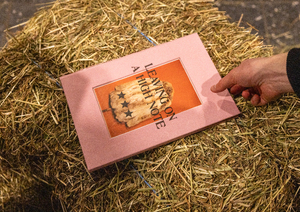
- "Leaving on a High Note" ist eine Reflexion über Schönheit und das Medium Buch. Die Arbeit bringt vielfältiges visuelles Material, von gescannten Fotografien und Kunstwerken über handgezeichnete Textilmuster bis hin zu in Auftrag gegebenen künstlerischen Beiträgen, zusammen. Als eine Art poetisches Moodboard geht das Projekt der Frage nach, wie sich Atmosphäre, Schönheit und visuelle Intuition durch Kuration im Zusammenspiel mit materiellen Entscheidungen formen lassen. Das Papier wurde akribisch gewählt, um die Betrachtung um eine haptische Ebene zu erweitern. Die Bindung durch den Rücken des Hardcovers verweist auf den konzeptuellen, redaktionellen und praktischen Prozess, der zum finalen Objekt geführt hat. Das Buch enthält künstlerische Beiträge von Alva Bücking sowie Zeichnungen von Charlotte Singer.
"Leaving on a High Note" wurde im Rahmen einer Ausstellung gezeigt, die die Stimmung des Buches in den Raum übertrug. Die Soirée fand am 17. Dezember 2025 im ZKM Pavillon in Karlsruhe statt und umfasste eine Installation und eine Chorperformance. Der Chor wurde von Leonie Inga Klopstock geleitet und mit von Anton Schüler designten Krägen ausgestattet.
- "Leaving on a High Note" ist eine Reflexion über Schönheit und das Medium Buch. Die Arbeit bringt vielfältiges visuelles Material, von gescannten Fotografien und Kunstwerken über handgezeichnete Textilmuster bis hin zu in Auftrag gegebenen künstlerischen Beiträgen, zusammen. Als eine Art poetisches Moodboard geht das Projekt der Frage nach, wie sich Atmosphäre, Schönheit und visuelle Intuition durch Kuration im Zusammenspiel mit materiellen Entscheidungen formen lassen. Das Papier wurde akribisch gewählt, um die Betrachtung um eine haptische Ebene zu erweitern. Die Bindung durch den Rücken des Hardcovers verweist auf den konzeptuellen, redaktionellen und praktischen Prozess, der zum finalen Objekt geführt hat. Das Buch enthält künstlerische Beiträge von Alva Bücking sowie Zeichnungen von Charlotte Singer.
- Beschreibung (en)
- "Leaving on a High Note" is a reflection on beauty as well as on bookmaking. It is a collection of diverse visual material ranging from scanned photography and artworks to hand-drawn textile patterns and commissioned artistic contributions. It functions as a poetic moodboard, exploring how atmosphere, beauty and visual intuition can be shaped through curation and material decisions. The paper was chosen meticulously in order to introduce a refined tactile experience to the act of viewing. The work is bound with thread punched through the hardcover spine, referencing the conceptual, editorial and practical process that led to the final object. The book includes commissioned work by Alva Bücking as well as drawings by Charlotte Singer.
"Leaving on a High Note" was shown in an exhibition that translated the book’s mood into the space. The soirée took place at the ZKM Pavillon in Karlsruhe on December 17, 2025 and featured an installation alongside a choir performance. The choir was conducted by Leonie Inga Klopstock and outfitted with collars by Anton Schüler.
- "Leaving on a High Note" is a reflection on beauty as well as on bookmaking. It is a collection of diverse visual material ranging from scanned photography and artworks to hand-drawn textile patterns and commissioned artistic contributions. It functions as a poetic moodboard, exploring how atmosphere, beauty and visual intuition can be shaped through curation and material decisions. The paper was chosen meticulously in order to introduce a refined tactile experience to the act of viewing. The work is bound with thread punched through the hardcover spine, referencing the conceptual, editorial and practical process that led to the final object. The book includes commissioned work by Alva Bücking as well as drawings by Charlotte Singer.
- Kategorie
- Typ des Projekts/Werks
- Schlagworte
- Datierung
- 17.12.2025
- Mitwirkende
- Dank an
- Paul Bailey
- Vincent Carl Becher
- Alva Bücking
- Rahel Diederich
- Till Engelhardt
- Marie Faaß
- Line-Gry Hørup
- Dans Jirgensons
- Tobias Keilbach
- Leonie Inga Klopstock
- Susanne Kriemann
- Ida Kuczewski
- Barbara Kuon
- Isabel Motz
- Tereza Ruller
- Luis Rüttiger
- Jana Schmeckenbecher
- Anton Schüler
- Isabel Seiffert
- Moritz Kamil Simon
- Charlotte Singer
- Lilith Stumpf
- Pierre Zimmer
- Petra Zimmermann
- HfG Chor
- Sprache
- Ort: Institution
- Stadt
- Land
- Titel
- Leaving on a High Note
- Projektleiter/in
- Semester
- Studiengang
- Typ der Abschlussarbeit
- Importiert am
- 05.01.2026
- Übergeordnete Sets
- 2
- Set enthält
- 0 10
Fake it till you make it
Name that can easily go onto 2 lines
Author that can easily go onto 2 lines as well
- Titel
- Fake it till you make it
- Titel (en)
- Fake it till you make it
- Autor/in
- Beschreibung (de)
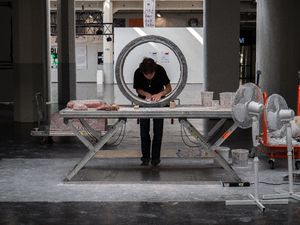
- Stuckmarmor ist eine historische Stucktechnik des 16. und 17. Jahrhunderts aus Italien, die für ihre Marmorimitation bekannt ist. Dabei wurden Gips, Wasser, Pigmente und tierischer Leim gemischt, um marmorähnliche Oberflächen zu schaffen.
"Fake it till you make it" ist eine Erkundung dieses traditionellen Handwerks. Ziel ist es, die alte Kunst der Marmorimitation wiederzubeleben und ihre ästhetischen Werte in der heutigen Welt zu präsentieren. Darüber hinaus befasst sich das Projekt mit der Frage, was "echt" und was "unecht" ist, und untersucht die Rolle der Inszenierung. Inspiriert von den drei Teilen einer Säule (Basis, Schaft, Kapitell) habe ich drei Objekte entwickelt, die als Einzelstücke im Raum zu finden sind. Alle drei Objekte sind aus Holz gefertigt, zwei davon durch ein Stahlgerüst stabilisiert. Die Unterkonstruktion wurde dann mit Streckmetall verkleidet, verputzt und diente schließlich als Untergrund für den Stuckmarmor. Ein Making-of-Video zeigt die Herstellung des Stuckmarmors. Jedes der Objekte ist auf eine andere Art und Weise verkleidet, um die Konstruktion nicht immer zu verbergen, sondern sie vielmehr zu enthüllen, ganz nach dem Motto "fake it till you make it".
- Stuckmarmor ist eine historische Stucktechnik des 16. und 17. Jahrhunderts aus Italien, die für ihre Marmorimitation bekannt ist. Dabei wurden Gips, Wasser, Pigmente und tierischer Leim gemischt, um marmorähnliche Oberflächen zu schaffen.
- Beschreibung (en)
- Stucco marble is a historic plasterwork technique originating from 16th and 17th-century Italy, celebrated for its imitation of marble. This involved blending gypsum plaster, water, pigments, and animal glue to create marble-like surfaces.
„fake it till you make it“ is an exploration of this traditional craft of stucco marble. The aim is to revive the ancient art of imitating marble and to present its aesthetic values in today‘s world. In addition, the project will address the question of what is „real“ and what is „fake“ and examine the role of staging. Inspired by the three parts of a column (base, shaft, capital) I have developed three objects that can be found as individual pieces in the room. All three objects are made of wood, two of them stabilized by a steel framework. Ribbed expanded metal lath was then stapled onto the wood and plastered, serving as the base for the stucco marble. A making of video shows the production of the stucco marble. Each of the objects is covered in a different way, intended not to always conceal the construction but rather to reveal it, embodying the spirit of „fake it till you make it.“
- Stucco marble is a historic plasterwork technique originating from 16th and 17th-century Italy, celebrated for its imitation of marble. This involved blending gypsum plaster, water, pigments, and animal glue to create marble-like surfaces.
- Kategorie
- Typ des Projekts/Werks
- Schlagworte
- Datierung
- 25.06.2024
- Dank an
- Material
- Ort: Institution
- Ort
- Unter der Lichtbrücke
- Stadt
- Land
- Titel
- Fake it till you make it
- Projektleiter/in
- Semester
- Studiengang
- Typ der Abschlussarbeit
- Importiert am
- 20.12.2025
- Übergeordnete Sets
- 1
- Set enthält
- 0 16