Writing the History Of the Future: Das ZKM und die kulturelle Arbeit der Medienkunstkonservierung
Benachbarte Sets (32)Alle Zusammenhänge anzeigen
Diese Sets wurden den gleichen Sets hinzugefügt wie das ausgewählte Set.
32 Inhalte
- Seite 1 von 3
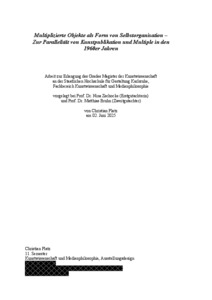
Multiplizierte Objekte als Form von Selbstorganisation
Name that can easily go onto 2 lines
Author that can easily go onto 2 lines as well
- Titel
- Multiplizierte Objekte als Form von Selbstorganisation
- Titel (en)
- Multiplied objects as a form of self-organization
- Untertitel
- Zur Parallelität von Kunstpublikation und Multiple in den 1960er Jahren
- Untertitel des Projekts/Werks (en)
- On the Parallelism Between Art Publications and Multiples in the 1960s
- Autor/in
- Beschreibung (de)
-
Kunstpublikationen und Multiples (Auflagenobjekte) der 1960er Jahren weisen strukturelle und konzeptuelle Parallelen auf, die in dieser Arbeit als Ausdruck selbstorganisierter künstlerischer Praxis zu verstehen sind. Ausgehend von einer kritischen Auseinandersetzung mit dem etablierten Kunstsystem entstanden in dieser Zeit alternative Formate der Produktion und Distribution, die auf Vervielfältigung, Partizipation und Autonomie basierten. Anhand exemplarischer Fallbeispiele, darunter die intermedialen Publikationsobjekte dokumentation b, die Edition Et, die Zeitschriften spirale und rot sowie die Multiples der Edition MAT und die serienobjekte der Gruppe X, wird gezeigt, wie sich die entsprechenden Werkformen als kuratorische, serielle und partizipative Medien positionieren lassen. Die Arbeit kontextualisiert diese Formate sowohl medienästhetisch als auch kulturpolitisch und versteht sie als materielle Strategien der Selbstorganisation. Sie argumentiert, dass Kunstpublikationen und Multiples nicht nur als Ausdruck einer alternativen Öffentlichkeit fungierten, sondern mit ihnen auch frühe Modelle einer dezentralen künstlerischen Infrastruktur entwickelt wurden. Diese Betrachtung ermöglicht eine genealogische Neubewertung des Multiples, indem sie sich vom etablierten, auf Marcel Duchamp fixierten Diskursrahmen löst und eine weiter gefasste Perspektive eröffnet.
-
- Beschreibung (en)
- Art publications and multiples from the 1960s share structural and conceptual parallels that can be understood in this work as expressions of self-organized artistic practice. Based on a critical examination of the established art system, alternative formats of production and distribution emerged during this period that were based on reproduction, participation, and autonomy. Using exemplary case studies, including the intermedia publication objects dokumentation b, Edition Et, the magazines spirale and rot, the multiples of Edition MAT, and the serial objects of Gruppe X, this work shows how the corresponding forms of work can be positioned as curatorial, serial, and participatory media. The work contextualizes these formats both in terms of media aesthetics and cultural politics and understands them as material strategies of self-organization. It argues that art publications and multiples not only functioned as expressions of an alternative public sphere, but also served to develop early models of a decentralized artistic infrastructure. This perspective enables a genealogical reassessment of the multiple by breaking away from the established discourse framework centered on Marcel Duchamp and opening up a broader perspective.
- Kategorie
- Typ des Projekts/Werks
- Schlagworte
- Datierung
- 02.06.2025
- Dank an
- Sprache
- Abmessungen
- 116 Seiten (77 Textseiten)
- Titel
- Multiplizierte Objekte als Form von Selbstorganisation
- Untertitel
- Zur Parallelität von Kunstpublikation und Multiple in den 1960er Jahren
- Projektleiter/in
- Semester
- Studiengang
- Typ der Abschlussarbeit
- Importiert am
- 16.03.2026
- Übergeordnete Sets
- 0
- Set enthält
- 0 3
The Breath of Metal
Name that can easily go onto 2 lines
Author that can easily go onto 2 lines as well
- Titel
- The Breath of Metal
- Titel (en)
- The Breath of Metal
- Untertitel
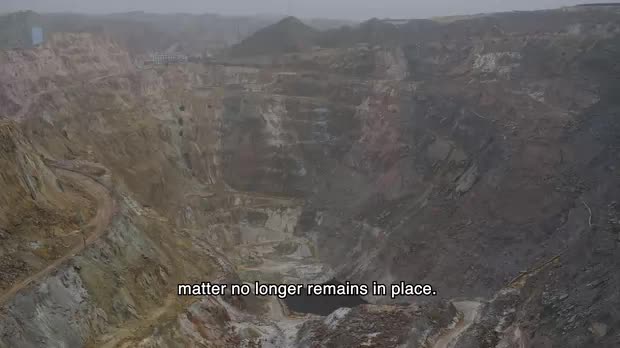
- Baiyin - what the mine left behind
- Untertitel des Projekts/Werks (en)
- Baiyin - what the mine left behind
- Autor/in
- Beschreibung (de)
- Meine künstlerische Arbeit untersucht Metall als Material und Sprache im Kontext von Bergbau, Familie und Stadtgeschichte. Ausgehend von Fotografie, Archiven und industriellen Überresten erforsche ich, wie Rohstoffe Städte, Körper und Zeit prägen und sich zwischen Infrastruktur, Erinnerung und Ruine transformieren.
- Kategorie
- Mitwirkende
- Material
- Technik/Verfahren/Formate
- Fotografie, Installation, Video
- Abmessungen
- 6 große Bilder je 900 x 1400 mm, 8 kleine Bilder je 210 x 297 mm, 4 Kupferpalette, 3 davon je 210 x 297 mm, 1 420 x 594 mm, 4 Ständer je 70 bis 100 cm hoch.
- Dauer
- Ein Video dauert 10 Minuten und 19 Sekunden.
- Titel
- The Breath of Metal
- Untertitel
- Baiyin - what the mine left behind
- Projektleiter/in
- Semester
- Studiengang
- Typ der Abschlussarbeit
- Importiert am
- 11.03.2026
- Übergeordnete Sets
- 0
- Set enthält
- 0 24
Now or Nowhere
- Titel
- Now or Nowhere
- Autor/in
- Beschreibung (de)
- Now or Nowhere ist ein Projekt, das die Frage stellt, ob Technologie aus einer Notwendigkeit heraus entsteht – oder ob ihre Notwendigkeit erst erkannt wird, nachdem sie bereits erschienen ist. Neue Geräte versprechen stets Effizienz, Verbesserung und nahtlose Konnektivität und behaupten, unser Leben leichter zu machen. Automatisierung lindert Müdigkeit, Konnektivität beseitigt Trennung, und Updates gleichen Unvollkommenheit aus. Doch was genau machen wir in diesem Prozess eigentlich bequemer – und was geben wir dabei stillschweigend aus der Hand?
Das Projekt schlägt drei virtuelle Geräte vor, die repetitive und scheinbar unbedeutende körperliche Handlungen stellvertretend für den Nutzer ausführen. AutoPresence ist ein Gerät, das aufgezeichnete Mausbewegungen wiedergibt und selbst in Abwesenheit des Nutzers kontinuierlich Spuren von Arbeit produziert. Ruhe wird nicht erkannt, und der Cursor hält niemals an. The Sixth Finger ist ein am Finger getragenes Wearable, das das Wischen auf dem Smartphone automatisiert und die vertraute Bewegung des Daumens durch einen zweiten Daumen ersetzt. Die Hand hält das Gerät weiterhin fest, doch die Handlung wird an die Maschine delegiert. Artificial Sweat Gland for Mobile Devices überträgt die Funktion der menschlichen Schweißdrüsen auf ein Kühlsystem für das Gerät und synchronisiert so die Temperatur von Körper und Gerät. Das Telefon verlässt die Hand nie.
Diese Geräte werden so präsentiert, als stünden sie kurz vor der Markteinführung. In Anlehnung an Produktpräsentationen und Werbeformate rahmt das Projekt alltägliche Gesten als Funktionen, die optimiert werden können. Werden die Besucherinnen im Ausstellungsraum zu potenziellen Konsumentinnen dieser Geräte – oder erkennen sie, dass sie bereits Konsument*innen sind?
- Now or Nowhere ist ein Projekt, das die Frage stellt, ob Technologie aus einer Notwendigkeit heraus entsteht – oder ob ihre Notwendigkeit erst erkannt wird, nachdem sie bereits erschienen ist. Neue Geräte versprechen stets Effizienz, Verbesserung und nahtlose Konnektivität und behaupten, unser Leben leichter zu machen. Automatisierung lindert Müdigkeit, Konnektivität beseitigt Trennung, und Updates gleichen Unvollkommenheit aus. Doch was genau machen wir in diesem Prozess eigentlich bequemer – und was geben wir dabei stillschweigend aus der Hand?
- Beschreibung (en)
- Now or Nowhere is a project that asks whether technology emerges from necessity or whether its necessity is only recognized after it has appeared. New devices always promise efficiency, improvement, and seamless connectivity, claiming to make our lives lighter. Automation relieves fatigue, connectivity eliminates disconnection, and updates compensate for imperfection. So, in this process, what are we making more convenient, and what are we quietly handing over?
The project proposes three virtual devices that perform repetitive and minor physical actions on behalf of the user. AutoPresence is a device that replays recorded mouse movements, continuously producing traces of labor even in the user's absence. Rest is not detected, and the cursor never stops. The Sixth Finger is a finger-worn wearable that automates smartphone swiping, replacing the most familiar thumb movements with a second thumb. The hand still grips, but the action is delegated to the machine. Artificial Sweat Gland for Mobile Devices converts the hand's sweat gland function into a device cooling system, synchronizing the body's and device's temperatures. The phone never leaves the hand.
These devices are arranged as if they are ready for launch. Borrowing the format of product displays and promotional presentation, the project reframes everyday gestures as features to be optimized. In the exhibition space, do audiences become potential consumers in front of these devices, or do they become aware that they are already consumers?
- Now or Nowhere is a project that asks whether technology emerges from necessity or whether its necessity is only recognized after it has appeared. New devices always promise efficiency, improvement, and seamless connectivity, claiming to make our lives lighter. Automation relieves fatigue, connectivity eliminates disconnection, and updates compensate for imperfection. So, in this process, what are we making more convenient, and what are we quietly handing over?
- Kategorie
- Typ des Projekts/Werks
- Schlagworte
- Datierung
- November 2025 - 2026
- Mitwirkende
- Dank an
- Ort: Institution
- Stadt
- Land
- Titel
- Now or Nowhere
- Importiert am
- 09.03.2026
- Übergeordnete Sets
- 0
- Set enthält
- 0 0
Abschlussarbeit
Name that can easily go onto 2 lines
Author that can easily go onto 2 lines as well
- Titel
- Abschlussarbeit
- Titel (en)
- Luv What You Luv
- Untertitel
- Otaku and Community
- Autor/in
- Beschreibung (de)
- Der Begriff Otaku bezeichnet eine Person, die eine tiefe, spezialisierte und anhaltende Begeisterung für ein bestimmtes Thema besitzt, die sich häufig durch umfangreiches Wissen, emotionale Bindung und aktive Beschäftigung damit auszeichnet.
In der heutigen Gesellschaft wird es zunehmend schwieriger, unsere reine Begeisterung mit anderen zu teilen. Menschen neigen dazu, soziale Gruppen auf der Grundlage kultureller Geschmäcker zu bilden, und dieses Phänomen hat sich im Zeitalter von Web 2.0 durch Mechanismen wie Filterblasen weiter verstärkt.
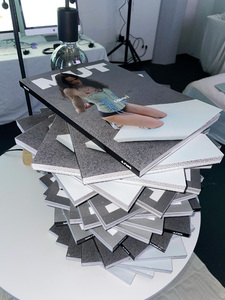
Durch das Projekt „Luv What You Luv“ möchte ich zeigen, was ich liebe, und gleichzeitig hören, was andere lieben. Das Projekt besteht hauptsächlich aus einem Magazin, das zwei Ausgaben in einem Band vereint. Die erste Ausgabe, [Girls], zeigt, was ich persönlich liebe. Die zweite Ausgabe, [Otaku], untersucht die Otaku-Fankultur genauer und enthält drei Interviews sowie sechs Gastbeiträge, die hervorheben, wofür andere Menschen eine besondere Leidenschaft haben.
Darüber hinaus umfasst das Projekt einen Fragebogen, der untersucht, was Leser:innen und Besucher:innen der Ausstellung lieben, sowie ein Otaku Presentation Video, in dem Teilnehmende ihre eigenen Leidenschaften und Interessen vorstellen.
Durch dieses Magazin und die dazugehörigen Inhalte hoffe ich, dass Menschen die Freude daran erleben können, das zu teilen, was sie lieben, und durch diese gemeinsamen Ausdrucksformen von Begeisterung lose soziale Verbindungen entstehen.
- Der Begriff Otaku bezeichnet eine Person, die eine tiefe, spezialisierte und anhaltende Begeisterung für ein bestimmtes Thema besitzt, die sich häufig durch umfangreiches Wissen, emotionale Bindung und aktive Beschäftigung damit auszeichnet.
- Beschreibung (en)
- The term otaku refers to a person who has deep, specialized, and sustained enthusiasm for a particular subject, often characterized by extensive knowledge, emotional attachment, and active engagement.
In contemporary society, it is becoming increasingly difficult to share our pure enthusiasm with others. People tend to form social groups based on cultural taste, and this phenomenon has intensified in the Web 2.0 era through mechanisms such as filter bubbles.
Through the “Luv What You Luv” project, I aim to present what I love while also listening to what others love. The project mainly consists of a magazine composed of two issues in a single book. The first issue, [Girls], presents what I personally love. The second issue, [Otaku], explores otaku fandom culture in depth, featuring three interviews and six contributed essays that highlight what others are passionately devoted to.
In addition, the project includes a questionnaire that explores what readers and exhibition visitors love, as well as an Otaku Presentation Video, in which participants present their own passions and interests.
Through this magazine and its accompanying contents, I hope that people can experience the joy of sharing what they love and form weak social bonds through these shared expressions of enthusiasm.
- The term otaku refers to a person who has deep, specialized, and sustained enthusiasm for a particular subject, often characterized by extensive knowledge, emotional attachment, and active engagement.
- Kategorie
- Typ des Projekts/Werks
- Schlagworte
- Datierung
- 11.02.2026
- Mitwirkende
- Dank an
- Sprache
- Untertitel (Film)
- Material
- Abmessungen
- 210*297 mm
- Dauer
- 40:49
- Ort: Institution
- Ort
- Seminar room 202
- Stadt
- Land
- Bemerkungen
- KD(Kommunikationsdesign) Diplomarbeit, 9th Semester, with guide of Tereza Ruller and Paul Bailey
- Titel
- Abschlussarbeit
- Untertitel
- Otaku and Community
- Projektleiter/in
- Semester
- Studiengang
- Typ der Abschlussarbeit
- Importiert am
- 05.03.2026
- Übergeordnete Sets
- 0
- Set enthält
- 0 18
entre-temps
Name that can easily go onto 2 lines
Author that can easily go onto 2 lines as well
- Titel
- entre-temps
- Autor/in
- Beschreibung (de)
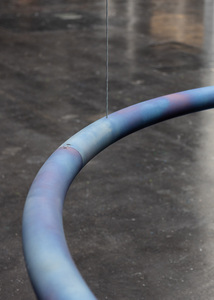
- Unter dem Einfluss von Hitze offenbart Stahl eine unbekannte Seite. Wolkenartige Farbmuster entstehen auf seiner Oberfläche und widersetzen sich materialgebundenen Definitionen. Die Arbeit untersucht die Beziehung zwischen Schwerem und Leichtem sowie Fragen der Komplexität.
- Beschreibung (en)
- Under the influence of heat, steel reveals an unknown side. Cloudlike patterns of color emerge on its surface, resisting materialbound definitions. The work explores the relationship between the heavy and the light, as well as questions of complexity.
- Kategorie
- Typ des Projekts/Werks
- Schlagworte
- Datierung
- 2025
- Dank an
- Kevin Beckmann
- Adrien Benoit
- Matthias Bruhn
- Lukas Clark
- Finn De Bruyn
- Kira Fuchs
- Josephine Gerhardt
- Josef Grair
- Dorothea Griep
- Cansu Gündoğdu
- Jule Heinzelmann
- Hannah Hugger
- Tina Jander
- Chris Kabel
- Valentina Karga
- Florian Knöbl
- Alexander Knoppik
- Philipp Kriebel
- Julian Kuf
- Barbara Kuon
- Florian Lips
- Nini Lue
- Tim Miler
- Sebastian Schäfer
- Sebastian Schilbach
- Susanne Schmitt
- Jules Scoubart
- Manèkè Som
- Pei Zhou
- Material
- Technik/Verfahren/Formate
- Heat Coloring
- Abmessungen
- Ring: 4x4m, Spiegel: 80x4cm
- Ort: Institution
- Stadt
- Land
- Beteiligte Institution(en)
- Internetlinks
- Titel
- entre-temps
- Projektleiter/in
- Semester
- Studiengang
- Typ der Abschlussarbeit
- Importiert am
- 24.02.2026
- Übergeordnete Sets
- 2
- Set enthält
- 0 21
Leaving on a High Note
Name that can easily go onto 2 lines
Author that can easily go onto 2 lines as well
- Titel
- Leaving on a High Note
- Autor/in
- Beschreibung (de)
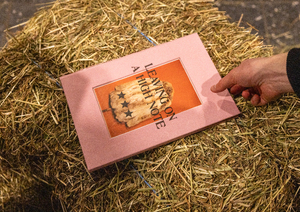
- "Leaving on a High Note" ist eine Reflexion über Schönheit und das Medium Buch. Die Arbeit bringt vielfältiges visuelles Material, von gescannten Fotografien und Kunstwerken über handgezeichnete Textilmuster bis hin zu in Auftrag gegebenen künstlerischen Beiträgen, zusammen. Als eine Art poetisches Moodboard geht das Projekt der Frage nach, wie sich Atmosphäre, Schönheit und visuelle Intuition durch Kuration im Zusammenspiel mit materiellen Entscheidungen formen lassen. Das Papier wurde akribisch gewählt, um die Betrachtung um eine haptische Ebene zu erweitern. Die Bindung durch den Rücken des Hardcovers verweist auf den konzeptuellen, redaktionellen und praktischen Prozess, der zum finalen Objekt geführt hat. Das Buch enthält künstlerische Beiträge von Alva Bücking sowie Zeichnungen von Charlotte Singer.
"Leaving on a High Note" wurde im Rahmen einer Ausstellung gezeigt, die die Stimmung des Buches in den Raum übertrug. Die Soirée fand am 17. Dezember 2025 im ZKM Pavillon in Karlsruhe statt und umfasste eine Installation und eine Chorperformance. Der Chor wurde von Leonie Inga Klopstock geleitet und mit von Anton Schüler designten Krägen ausgestattet.
- "Leaving on a High Note" ist eine Reflexion über Schönheit und das Medium Buch. Die Arbeit bringt vielfältiges visuelles Material, von gescannten Fotografien und Kunstwerken über handgezeichnete Textilmuster bis hin zu in Auftrag gegebenen künstlerischen Beiträgen, zusammen. Als eine Art poetisches Moodboard geht das Projekt der Frage nach, wie sich Atmosphäre, Schönheit und visuelle Intuition durch Kuration im Zusammenspiel mit materiellen Entscheidungen formen lassen. Das Papier wurde akribisch gewählt, um die Betrachtung um eine haptische Ebene zu erweitern. Die Bindung durch den Rücken des Hardcovers verweist auf den konzeptuellen, redaktionellen und praktischen Prozess, der zum finalen Objekt geführt hat. Das Buch enthält künstlerische Beiträge von Alva Bücking sowie Zeichnungen von Charlotte Singer.
- Beschreibung (en)
- "Leaving on a High Note" is a reflection on beauty as well as on bookmaking. It is a collection of diverse visual material ranging from scanned photography and artworks to hand-drawn textile patterns and commissioned artistic contributions. It functions as a poetic moodboard, exploring how atmosphere, beauty and visual intuition can be shaped through curation and material decisions. The paper was chosen meticulously in order to introduce a refined tactile experience to the act of viewing. The work is bound with thread punched through the hardcover spine, referencing the conceptual, editorial and practical process that led to the final object. The book includes commissioned work by Alva Bücking as well as drawings by Charlotte Singer.
"Leaving on a High Note" was shown in an exhibition that translated the book’s mood into the space. The soirée took place at the ZKM Pavillon in Karlsruhe on December 17, 2025 and featured an installation alongside a choir performance. The choir was conducted by Leonie Inga Klopstock and outfitted with collars by Anton Schüler.
- "Leaving on a High Note" is a reflection on beauty as well as on bookmaking. It is a collection of diverse visual material ranging from scanned photography and artworks to hand-drawn textile patterns and commissioned artistic contributions. It functions as a poetic moodboard, exploring how atmosphere, beauty and visual intuition can be shaped through curation and material decisions. The paper was chosen meticulously in order to introduce a refined tactile experience to the act of viewing. The work is bound with thread punched through the hardcover spine, referencing the conceptual, editorial and practical process that led to the final object. The book includes commissioned work by Alva Bücking as well as drawings by Charlotte Singer.
- Kategorie
- Typ des Projekts/Werks
- Schlagworte
- Datierung
- 17.12.2025
- Mitwirkende
- Dank an
- Paul Bailey
- Vincent Carl Becher
- Alva Bücking
- Rahel Diederich
- Till Engelhardt
- Marie Faaß
- Line-Gry Hørup
- Dans Jirgensons
- Tobias Keilbach
- Leonie Inga Klopstock
- Susanne Kriemann
- Ida Kuczewski
- Barbara Kuon
- Isabel Motz
- Tereza Ruller
- Luis Rüttiger
- Jana Schmeckenbecher
- Anton Schüler
- Isabel Seiffert
- Moritz Kamil Simon
- Charlotte Singer
- Lilith Stumpf
- Pierre Zimmer
- Petra Zimmermann
- HfG Chor
- Sprache
- Ort: Institution
- Stadt
- Land
- Titel
- Leaving on a High Note
- Projektleiter/in
- Semester
- Studiengang
- Typ der Abschlussarbeit
- Importiert am
- 05.01.2026
- Übergeordnete Sets
- 0
- Set enthält
- 0 10
Midnight Zone
Name that can easily go onto 2 lines
Author that can easily go onto 2 lines as well
- Titel
- Midnight Zone
- Titel (en)
- Midnight Zone
- Autor/in
- Beschreibung (de)
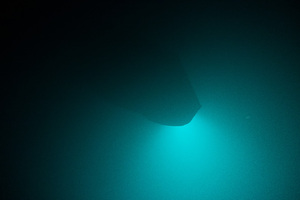
- Midnight Zone ist eine Performance über die Tiefsee, jenen Raum, in den kein Sonnenlicht mehr dringt. In dieser absolut dunklen und hohem Druck ausgesetzten Umgebung verschieben sich unsere Wahrnehmungen von Zeit, Körper und Orientierung.
In einem Raum, der das eigene Körpergefühl verschwimmen lässt, durchziehen Fischlaute, Maschinengeräusche und ferne Erdbeben die verschiedenen atmosphärischen Bedingungen des größten Lebensraums der Erde. Performerinnen bewegen sich wie fremde Wesen, zugleich Teil der Natur und Spiegel menschlicher Eingriffe. Mit jeder Bewegung beeinflussen die Besucher*innen das Netz aus Klang, Schatten und Choreografie und werden selbst Teil des Ökosystems, das sie beobachten.
Midnight Zone macht das fragile System der Tiefsee sinnlich erfahrbar: Dort, wo das Leben möglicherweise begann, wo Zeit anders fließt und Prozesse Jahrhunderte dauern können, ist der menschliche Einfluss zunehmend spürbar. Die Arbeit lässt Traum und Realität, Mensch und Natur, Oberfläche und Tiefe ineinander übergehen. Sie lädt dazu ein, lineare Zeitvorstellungen hinter sich zu lassen und alternative Rhythmen zu erspüren. Rhythmen, die im Einklang mit planetarischen Zyklen stehen und dem beschleunigten Takt des Anthropozäns etwas entgegensetzen.
- Midnight Zone ist eine Performance über die Tiefsee, jenen Raum, in den kein Sonnenlicht mehr dringt. In dieser absolut dunklen und hohem Druck ausgesetzten Umgebung verschieben sich unsere Wahrnehmungen von Zeit, Körper und Orientierung.
- Beschreibung (en)
- Midnight Zone is a performance about the deep sea, that realm into which no sunlight can penetrate. In this environment of absolute darkness and immense pressure, our perceptions of time, body, and orientation begin to shift.
In a space where one’s sense of the body starts to blur, fish sounds, mechanical noises, and distant earthquakes move through the atmospheric layers of the largest habitat on Earth. The performers move like unfamiliar beings, at once part of nature and a reflection of human impact. With every movement, the visitors influence the network of sound, shadow, and choreography, becoming part of the very ecosystem they are observing.
Midnight Zone makes the fragile system of the deep sea sensually perceptible: a place where life may have begun, where time flows differently and processes can take centuries, and where human presence is increasingly noticeable. The work allows dream and reality, human and nature, surface and depth to merge. It invites the audience to let go of linear notions of time and attune themselves to alternative rhythms, rhythms aligned with planetary cycles, offering a counterpoint to the accelerated tempo of the Anthropocene.
- Midnight Zone is a performance about the deep sea, that realm into which no sunlight can penetrate. In this environment of absolute darkness and immense pressure, our perceptions of time, body, and orientation begin to shift.
- Kategorie
- Typ des Projekts/Werks
- Schlagworte
- Datierung
- 30.10.25 und 31.10.25
- Mitwirkende
- Dank an
- Dauer
- 1 Stunde
- Ort: Institution
- Ort
- Großes Studio
- Stadt
- Land
- Beteiligte Institution(en)
- Titel
- Midnight Zone
- Projektleiter/in
- Semester
- Studiengang
- Typ der Abschlussarbeit
- Importiert am
- 03.12.2025
- Übergeordnete Sets
- 2
- Set enthält
- 0 13
(Un)Stopped Motion
Name that can easily go onto 2 lines
Author that can easily go onto 2 lines as well
- Titel
- (Un)Stopped Motion
- Titel (en)
- (Un)Stopped Motion
- Autor/in
- Beschreibung (de)
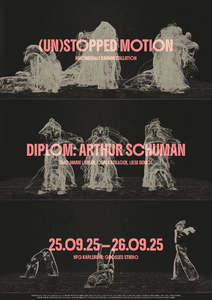
- In dieser interdisziplinären Arbeit wird der schleichende Prozess der Selbstkontrolle als Reaktion auf äußere Störungen untersucht. Ausgangspunkt ist die Angst, einen Fehler zu begehen, die nicht mit einem sichtbaren Eingriff beginnt, sondern sich langsam in das Bewegungsrepertoire des Körpers einschreibt, bis sie schließlich zum Stillstand führt.
Die Performance wird aus mehreren Perspektiven gefilmt. Diese Aufnahmen aus verschiedenen Blickachsen eines überwachenden Apparats, werden in der Installation projiziert.
- In dieser interdisziplinären Arbeit wird der schleichende Prozess der Selbstkontrolle als Reaktion auf äußere Störungen untersucht. Ausgangspunkt ist die Angst, einen Fehler zu begehen, die nicht mit einem sichtbaren Eingriff beginnt, sondern sich langsam in das Bewegungsrepertoire des Körpers einschreibt, bis sie schließlich zum Stillstand führt.
- Beschreibung (en)
- This interdisciplinary work examines the creeping process of self-control as a response to external disturbances. The starting point is the fear of making a mistake, which does not begin with a visible intervention, but slowly inscribes itself into the body's repertoire of movements until it finally leads to a standstill.
The performance is filmed from several perspectives. These recordings from different viewing angles of a surveillance device are projected in the installation.
- This interdisciplinary work examines the creeping process of self-control as a response to external disturbances. The starting point is the fear of making a mistake, which does not begin with a visible intervention, but slowly inscribes itself into the body's repertoire of movements until it finally leads to a standstill.
- Kategorie
- Typ des Projekts/Werks
- Schlagworte
- Datierung
- 24.09.2025 - 29.09.2025
- Mitwirkende
- Dank an
- Material
- Abmessungen
- 4x Screens 1,8x2,8 m
- Dauer
- 08:30
- Ort: Institution
- Ort
- Großes Studio, HfG Karlsruhe
Screen, HfG Karlsruhe
- Großes Studio, HfG Karlsruhe
- Stadt
- Land
- Titel
- (Un)Stopped Motion
- Projektleiter/in
- Semester
- Studiengang
- Typ der Abschlussarbeit
- Importiert am
- 21.10.2025
- Übergeordnete Sets
- 2
- Set enthält
- 2 4
sampling for relations in the light of a satellite
Name that can easily go onto 2 lines
Author that can easily go onto 2 lines as well
- Titel
- sampling for relations in the light of a satellite
- Titel (en)
- sampling for relations in the light of a satellite
- Autor/in
- Beschreibung (de)
- In dem Format einer sampling session wird eine akustische Struktur erprobt, die das Reisen zum Mond beschwört und sich mit Raumwahrnehmungen, Imagination und kollektiven Vorstellungen auseinandersetzt. Anders als in dieser Performance ist für das menschliche Ohr eine wesentliche Präsenz im Weltraum das Geräuschlose.
- Beschreibung (en)
- In the format of a sampling session, an acoustic structure is tested that conjures a journey to the Moon, engaging with perceptions of space, imagination and collective ideas.
- Kategorie
- Typ des Projekts/Werks
- Schlagworte
- Datierung
- 04.02.2025
- Mitwirkende
- Dank an
- Anja Casser
- Filipa Cesar
- Jaya Demmer
- Hubert Distel
- Till Engelhardt
- Yvonne Fomferra
- Hanna Franke
- Heidi Herzig
- Tobias Keilbach
- Eisenhart Keimeyer
- Susanne Kriemann
- Rebekka Ladewig
- Isabel Motz
- Leonie Mühlen
- Elisabeth Potemkin
- Josefine Scheu
- Lorenz Schwarz
- Leia Morgana Walz
- Niklas Weisenbach
- Maximilian Zschiesche
- Badischer Kunstverein
- Sprache
- Material
- Ort: Institution
- Stadt
- Land
- Beteiligte Institution(en)
- Titel
- sampling for relations in the light of a satellite
- Projektleiter/in
- Semester
- Studiengang
- Typ der Abschlussarbeit
- Importiert am
- 01.10.2025
- Übergeordnete Sets
- 0
- Set enthält
- 0 5
Ambassadors
Name that can easily go onto 2 lines
Author that can easily go onto 2 lines as well
- Titel
- Ambassadors
- Titel (en)
- Ambassadors
- Untertitel
- 12 stories of artificial survival
- Untertitel des Projekts/Werks (en)
- 12 stories of artificial survival
- Autor/in
- Beschreibung (de)
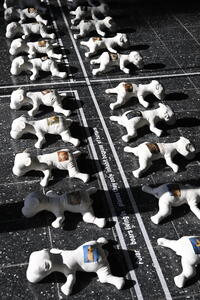
- AMBASSADORS ist eine installative Sammlung, bestehend aus 120 Stofftieren, die das Verhältnis der Konzepte vom Natürlichen und Künstlichen anhand des Eisbären in menschlicher Gefangenschaft beleuchtet. Im Kampf um die Klimakrise ist der Eisbär zum Symbolbild der zu schützenden Natur geworden und hat sich als solches zum Repräsentanten in das kollektive Gedächtnis eingebrannt. KI-generierte Bilder, von denen jeweils 10 eine der 12 Geschichten in der Installation visualisieren, wurden einzeln auf die Rücken der 120 Stofftiere übertragen und gemeinsam in ein immersives Wimmelbild verwoben. So werden die Stofftiere in der Installation zu Botschaftern einer künstlichen Population und verlängern damit, ohne Lebewesen Leid zuzufügen, die Ketten an Abbildungen von Abbildungen von etwas, das mal natürlich war.
- Beschreibung (en)
- Ambassadors is an installation consisting of 120 stuffed animals that explores the relation between the natural and the artificial through the lens of the polar bear in human captivity. In the fight against the climate crisis, polar bears haves become a symbolic image of nature in need of protection—an image that has etched itself into the collective memory. Each set of ten AI-generated images represents one of the twelve stories depicted in the installation. These images were transferred individually onto the backs of the 120 stuffed animals and collectively woven into an immersive Wimmelbild. In this way, the stuffed animals once again become ambassadors of an artificial population—extending the chain of representations of representations of something that once was natural, without causing harm to living beings.
- Kategorie
- Schlagworte
- Mitwirkende
- Material
- Titel
- Ambassadors
- Untertitel
- 12 stories of artificial survival
- Projektleiter/in
- Semester
- Studiengang
- Typ der Abschlussarbeit
- Importiert am
- 29.09.2025
- Übergeordnete Sets
- 2
- Set enthält
- 0 8
Erikas Töchter

Name that can easily go onto 2 lines
Author that can easily go onto 2 lines as well
- Titel
- Erikas Töchter
- Autor/in
- Beschreibung (de)
- "Erikas Töchter" untersucht anhand der fiktiven Figur Erika Mustermann Perspektiven auf die weibliche* Identitätsbildung in Deutschland. Seit 1987 existiert Erika als Musteridentität in amtlichen Dokumenten - weiß, blond, blau- oder grünäugig. Als ein lächelnder Anachronismus geistert sie, erschreckend unkommentiert, durch die Bürokratielandschaft Deutschlands. Ihre durchdringende Augen blicken uns alle aufmerksam an, die Mundwinkel deuten ein neutrales Lächeln an. Doch je länger man sie betrachtet, desto schwerer wiegt ihr Blick: normierend, klassifizierend und ausschließend.
Die Arbeit übersetzt diese fiktive Identität in ein irritierendes Szenario, das zwischen Gartenfest, Ausstellung, Performance und Büroalltag changiert. Im Zentrum stehen zwei Ebenen: Zum einen die Präsentation der IDOLLs, einer Serie neuer weiblicher Musteridentitäten, die im Format einer Teleshopping-Show als innovative Lösung zeitgenössischer Identitätsprobleme vermarktet werden. Zum anderen der Blick in Erikas Büroalltag. Umgeben von Plastik-Buchsbaumbüschen, Teppichboden und generischen Büromöbeln ist sie gefangen im Moment des Fotos und der Reproduktion ihres Gesichtes.
- "Erikas Töchter" untersucht anhand der fiktiven Figur Erika Mustermann Perspektiven auf die weibliche* Identitätsbildung in Deutschland. Seit 1987 existiert Erika als Musteridentität in amtlichen Dokumenten - weiß, blond, blau- oder grünäugig. Als ein lächelnder Anachronismus geistert sie, erschreckend unkommentiert, durch die Bürokratielandschaft Deutschlands. Ihre durchdringende Augen blicken uns alle aufmerksam an, die Mundwinkel deuten ein neutrales Lächeln an. Doch je länger man sie betrachtet, desto schwerer wiegt ihr Blick: normierend, klassifizierend und ausschließend.
- Beschreibung (en)
- “Erikas Töchter” explores perspectives on female* identity formation in Germany through the fictional figure of Erika Mustermann. Since 1987, Erika has served as the standard identity in official documents – white, blonde, blue- or green-eyed. As a smiling anachronism, she continues to haunt Germany’s bureaucratic landscape. Erika’s eyes look directly at the viewer, the corners of her mouth suggesting a neutral smile. Yet the longer she gazes at you, the more insistent her expression becomes: classifying and excluding
The work translates this fictional identity into a scenario that shifts between garden party, exhibition, performance, and office routine. At its center are two layers: on the one hand, the presentation of the IDOLLs – a series of new female standard identities, presented in the style of a teleshopping show, offering an innovative approach to contemporary issues of identity; on the other hand, a glimpse into Erika’s everyday office life. Surrounded by plastic boxwood shrubs, carpeting, and generic office furniture, she remains trapped in the moment of the photograph and the endless reproduction of her own face.
- “Erikas Töchter” explores perspectives on female* identity formation in Germany through the fictional figure of Erika Mustermann. Since 1987, Erika has served as the standard identity in official documents – white, blonde, blue- or green-eyed. As a smiling anachronism, she continues to haunt Germany’s bureaucratic landscape. Erika’s eyes look directly at the viewer, the corners of her mouth suggesting a neutral smile. Yet the longer she gazes at you, the more insistent her expression becomes: classifying and excluding
- Kategorie
- Typ des Projekts/Werks
- Schlagworte
- Datierung
- 22.07.2025
- Mitwirkende
- Sprache
- Material
- Abmessungen
- Ein kleines Haus mit Garten
- Dauer
- 4 Stunden
- Ort: Institution
- Stadt
- Land
- Titel
- Erikas Töchter
- Projektleiter/in
- Semester
- Studiengang
- Typ der Abschlussarbeit
- Importiert am
- 29.09.2025
- Übergeordnete Sets
- 2
- Set enthält
- 2 23
The Violent Container
Name that can easily go onto 2 lines
Author that can easily go onto 2 lines as well
- Titel
- The Violent Container
- Titel (en)
- The Violent Container
- Untertitel
- Exhibition and handbook
- Untertitel des Projekts/Werks (en)
- Exhibition and handbook
- Autor/in
- Beschreibung (de)
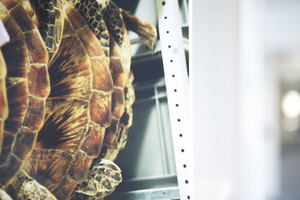
- „The Violent Container“ konzentriert sich auf das kulturelle Phänomen des Käfigs und das Einsperren als Praxis, um Objekte oder Körper einzuschließen, zu kategorisieren, einzuschränken und sich anzueignen – sowie als Mittel, um sie zu sammeln, zu schätzen, zu bewahren und zu schützen.
Das Projekt umfasst eine Ausstellung und eine Publikation, die die verschiedenen Eigenschaften und Funktionen der sich wandelnden Formen des Käfigs untersuchen und dabei erforschen, wie Käfige nicht nur die Verwaltung lebender oder toter Körper und Objekte ermöglichen, sondern auch die Art und Weise bestimmen, wie wir sie wahrnehmen.
- „The Violent Container“ konzentriert sich auf das kulturelle Phänomen des Käfigs und das Einsperren als Praxis, um Objekte oder Körper einzuschließen, zu kategorisieren, einzuschränken und sich anzueignen – sowie als Mittel, um sie zu sammeln, zu schätzen, zu bewahren und zu schützen.
- Beschreibung (en)
- "The Violent Container" focuses on the cultural phenomenon of the cage, and caging as a practice to contain, categorise, restrict, and appropriate objects or bodies – as well as a tool to collect, treasure, preserve, and protect them.
The project comprises an exhibition and a publication that examine the various properties and functions of the cage’s shifting forms, exploring how cages not only enable the administration of living or dead bodies and objects, but also govern the ways in which we perceive them.
- "The Violent Container" focuses on the cultural phenomenon of the cage, and caging as a practice to contain, categorise, restrict, and appropriate objects or bodies – as well as a tool to collect, treasure, preserve, and protect them.
- Kategorie
- Typ des Projekts/Werks
- Schlagworte
- Mitwirkende
- Ort
- Rheinstetten, Karlsruhe
- Titel
- The Violent Container
- Untertitel
- Exhibition and handbook
- Projektleiter/in
- Semester
- Studiengang
- Typ der Abschlussarbeit
- Importiert am
- 21.09.2025
- Übergeordnete Sets
- 2
- Set enthält
- 0 14