Testzentrum für chronischen Automobilismus
Benachbarte Sets (125)Alle Zusammenhänge anzeigen
Diese Sets wurden den gleichen Sets hinzugefügt wie das ausgewählte Set.
125 Inhalte
- Seite 1 von 11
Herkules & Karl
Name that can easily go onto 2 lines
Author that can easily go onto 2 lines as well
- Titel
- Herkules & Karl
- Titel (en)
- Herkules & Karl
- Autor/in
- Beschreibung (de)
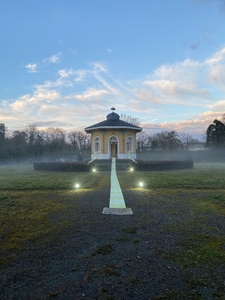
- Die Statue „Herkules Farnese“ war sowohl in der Antike als auch während der Renaissance und des Barock eine der bekanntesten Ikonen. Der eigentlich unbesiegbare Held stützt sich erschöpft auf seine Keule und versteckt hinter seinem Rücken fast kindlich drei goldene Früchte. Laut der mythologischen Erzählung steht Herkules zu diesem Zeitpunkt kurz vor dem Ende der ihm auferlegten Aufgabenreihe, die ihm seinen rechtmäßigen Platz im Olymp verspricht. Die goldenen Früchte aus der Erzählung symbolisieren Fruchtbarkeit, Unsterblichkeit und Macht. Ursprünglich wurden sie als Äpfel interpretiert, sobald Zitrusfrüchte auf den europäischen Markt kamen, wurden aus ihnen Zitronen, Pomeranzen oder Orangen.
Mit dem stilisierten Aufleben der griechischen Antike zur Zeit der Renaissance gewann auch der „Herkules Farnese“ stärker an Bedeutung und wurde von vielen Adligen in ihren neu errichteten Gartenanlagen erst im Stil italienischer und später im Barock im Stil französischer Gärten verarbeitet sowie reproduziert. Orangerien, die zu den meisten barocken Gärten gehörten, wurden als Sammlungs- und Ausstellungsort der erworbenen Gewächse erbaut. August der Starke lies sich beispielsweise auf dem Dach seiner Orangerie als Herkules, der das Himmelsgewölbe trägt, darstellen.
Die barocken Gärten zeichnen sich besonders dadurch aus, dass die Architektur des Schloss oder Palast immer gemeinsam mit der künstlichen Landschaft entworfen wird. In Karlsruhe wurde allerdings nicht nur die Parkanlage im Gedanken des Absolutismus passend als Fortführung des Schloss gebaut, sondern auch durch die Stadtgründung 1715 die gesamte Stadtplanung dieser Ideologie folgend angelegt. Das Schloss und auch die langen Alleen, die Blickachsen auf das historische Machtzentrum erzeugen, existieren heute noch. Der Garten ist, wie fast alle anderen Anlagen im französischen Stil, relativ zügig nach der Erbauung in einen englischen Landschaftsgarten umgeplant worden.
Die Spuren der ursprüngliche Anlage sind in der Linolschnittserie mit einem Motiv basierend auf einem Bepflanzungsplan des Karlsruher Barockgartens sichtbar und ziehen die Besucher:innen der Installation von einer Metallplatte, die über die historischen Zusammenhänge der Arbeit aufklärt, in das Teehaus, den letzten Überrest des Barockgartens. Im Inneren des Pavillons steht eine Gedenkstätte für Karl, Barockgärten und die vergangenen Zeit, für die diese Männer zu Symbolfiguren wurden.
- Die Statue „Herkules Farnese“ war sowohl in der Antike als auch während der Renaissance und des Barock eine der bekanntesten Ikonen. Der eigentlich unbesiegbare Held stützt sich erschöpft auf seine Keule und versteckt hinter seinem Rücken fast kindlich drei goldene Früchte. Laut der mythologischen Erzählung steht Herkules zu diesem Zeitpunkt kurz vor dem Ende der ihm auferlegten Aufgabenreihe, die ihm seinen rechtmäßigen Platz im Olymp verspricht. Die goldenen Früchte aus der Erzählung symbolisieren Fruchtbarkeit, Unsterblichkeit und Macht. Ursprünglich wurden sie als Äpfel interpretiert, sobald Zitrusfrüchte auf den europäischen Markt kamen, wurden aus ihnen Zitronen, Pomeranzen oder Orangen.
- Beschreibung (en)
-
The ‘Hercules Farnese’ statue was one of the most famous icons in antiquity as well as during the Renaissance and Baroque periods. The actually invincible hero leans exhaustedly on his club and hides three golden fruits behind his back in an almost childlike manner. According to the mythological tale, at this point Hercules is about to complete the series of tasks imposed on him, which promises him his rightful place in Olympus. The golden fruits in the story symbolise fertility, immortality and power. Originally they were interpreted as apples, but as soon as citrus fruits came onto the European market, they became lemons, bitter orange or oranges.
With the stylised revival of Greek antiquity during the Renaissance, the ‘Hercules Farnese’ also became more important and was used and reproduced by many aristocrats in their newly built gardens, first in the style of Italian gardens and later in the Baroque period in the style of French gardens. Orangeries, which were part of most Baroque gardens, were built as a place to collect and display the plants acquired. Augustus the Strong, for example, had himself depicted on the roof of his orangery as Hercules carrying the vault of heaven.
Baroque gardens are particularly characterised by the fact that the architecture of the castle or palace is always designed together with the artificial landscape. In Karlsruhe, however, not only was the park built in the spirit of absolutism as a continuation of the palace, but the entire urban planning was also designed in line with this ideology when the city was founded in 1715. The palace and the long avenues, which create lines of sight to the historic centre of power, still exist today. Like almost all other French-style gardens, the garden was converted into an English landscape garden relatively quickly after its construction.
The traces of the original layout are visible in the linocut series with a motif based on a planting plan of the Karlsruhe Baroque garden and draw visitors to the installation from a metal plate, which explains the historical context of the work, into the tea house, the last remnant of the Baroque garden. Inside the pavilion is a memorial to Karl, baroque gardens and the bygone era for which these men became symbolic figures.
-
- Kategorie
- Typ des Projekts/Werks
- Schlagworte
- Datierung
- 25.02.2025 - 27.02.2025
- Mitwirkende
- Dank an
- Sprache
- Material
- Technik/Verfahren/Formate
- Linolschnitt, Lasergravur, audio-visuelle Installation, Animation, fiktionalisierte Geschichte
- Dauer
- ca 5min (Video)
- Ort
- Teehaus im Schlosspark
- Stadt
- Land
- Titel
- Herkules & Karl
- Studiengang
- Importiert am
- 17.07.2025
- Übergeordnete Sets
- 1
- Set enthält
- 0 12
HOCHHAUS Audiowalk
Name that can easily go onto 2 lines
Author that can easily go onto 2 lines as well
- Titel
- HOCHHAUS Audiowalk
- Autor/in
- Beschreibung (de)
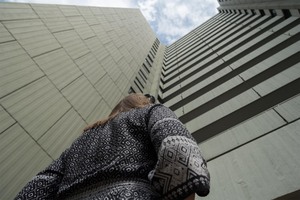
- Der HOCHHAUS Audiowalk führt die Teilnehmer*innen an spezifische Orte des Hochhauses der Kaiserallee 15 in Karlsruhe und lässt das Gebäude zum Hauptakteur werden. In neun Audiotracks werden collageartig Texte aus verschiedenen Perspektiven verarbeitet.
- Beschreibung (en)
- The HOCHHAUS audio walk takes participants to specific locations in the high-rise building at Kaiserallee 15 in Karlsruhe, making the building the main protagonist. In nine audio tracks, texts from different perspectives are collaged together.
- Kategorie
- Typ des Projekts/Werks
- Schlagworte
- Datierung
- 20.07.2019
- Mitwirkende
- Dauer
- 55 min
- Ort
- Hochhaus Kaiserallee 15
- Stadt
- Land
- Bemerkungen
- Referenzen:
J.G. Ballard: Hochhaus
EWG Wohnzentrum Kaiserallee Informationsprospekt von 1968
Interviews mit Bewohner*innen der Kaiserallee 15
Interview mit Hausmeister der Kaiserallee 15
George Perec: Träume von Räumen
Unter der Verwendung von:
Magix Music Maker
Mit Sounds und Musik von:
white bicycle
Title: April Sun Playalong
Link: https://www.audiyou.de/beitrag/april-sun-playalong…
(Veränderungen wurden vorgenommen)
Starscade
Title: sfx-radio-static.flac
Link: https://freesound.org/people/Starscade/sounds/3973…
(Veränderungen wurden vorgenommen)
Satuniman
Title: Gramophone
Link: https://freesound.org/people/Setuniman/sounds/1785…
(Veränderungen wurden vorgenommen)
- Referenzen:
- Titel
- HOCHHAUS Audiowalk
- Projektleiter/in
- Semester
- Studiengang
- Typ der Abschlussarbeit
- Importiert am
- 14.06.2024
- Übergeordnete Sets
- 2
- Set enthält
- 0 15
Honey
Name that can easily go onto 2 lines
Author that can easily go onto 2 lines as well
- Titel
- Honey
- Titel (en)
- Honey
- Untertitel
- hotbag
- Untertitel des Projekts/Werks (en)
- hotbag
- Autor/in
- Beschreibung (de)
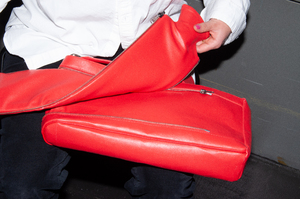
- Wie können wir Wärme mobilisieren? Diese Handtasche mit integrierter Wärmflasche ist eine Antwort auf diese Frage. Sie wurde speziell entwickelt, um Menstruationsbeschwerden zu lindern, ohne diese natürlichen Bedürfnisse zu verbergen oder zu tabuisieren. Stattdessen setzt sie ein sichtbares und selbstbewusstes Statement, das zeigt: Wohlbefinden verdient Aufmerksamkeit und Designlösungen, bei denen weibliche Designerinnen eine zentrale Rolle im heutigen gesellschaftlichen Diskurs spielen. Die Tasche ist so konzipiert, dass sie Komfort auf Reisen bietet, beispielsweise bei der Arbeit oder in öffentlichen Räumen.
Die extra lange Wärmflasche für Bauch und Rücken speichert die Wärme stundenlang und lässt sich leicht wieder auffüllen. Ein modulares Reißverschlusssystem sorgt für Vielseitigkeit in der Anwendung, und eine thermische Einlage schützt vor Überhitzung im Inneren der Tasche.
- Wie können wir Wärme mobilisieren? Diese Handtasche mit integrierter Wärmflasche ist eine Antwort auf diese Frage. Sie wurde speziell entwickelt, um Menstruationsbeschwerden zu lindern, ohne diese natürlichen Bedürfnisse zu verbergen oder zu tabuisieren. Stattdessen setzt sie ein sichtbares und selbstbewusstes Statement, das zeigt: Wohlbefinden verdient Aufmerksamkeit und Designlösungen, bei denen weibliche Designerinnen eine zentrale Rolle im heutigen gesellschaftlichen Diskurs spielen. Die Tasche ist so konzipiert, dass sie Komfort auf Reisen bietet, beispielsweise bei der Arbeit oder in öffentlichen Räumen.
- Beschreibung (en)
- How can we mobilise heat? This handbag with an integrated hot water bottle is an answer to this question. It is specially designed to relieve menstrual pain without hiding or tabooing these natural needs. Instead, it makes a visible and confident statement that shows: Well-being deserves attention and design solutions, where female designers play a central role in today's social discourse. The bag is designed to provide comfort when travelling, for example at work or in public spaces.
The extra-long hot water bottle for for stomach and back retains heat for hours and can be filled up again easily. A modular zip system ensures versatility of use, and a thermal inlay protects against overheating inside the bag.
- How can we mobilise heat? This handbag with an integrated hot water bottle is an answer to this question. It is specially designed to relieve menstrual pain without hiding or tabooing these natural needs. Instead, it makes a visible and confident statement that shows: Well-being deserves attention and design solutions, where female designers play a central role in today's social discourse. The bag is designed to provide comfort when travelling, for example at work or in public spaces.
- Kategorie
- Typ des Projekts/Werks
- Schlagworte
- Datierung
- Februar 2025
- Material
- Technik/Verfahren/Formate
- textile Handarbeit
- Ort: Institution
- Ort
- Lichtbrücke
- Stadt
- Land
- Titel
- Honey
- Untertitel
- hotbag
- Importiert am
- 17.07.2025
- Übergeordnete Sets
- 1
- Set enthält
- 0 9
Ich hatte vom feeling her ein gutes Gefühl
Name that can easily go onto 2 lines
Author that can easily go onto 2 lines as well
- Titel
- Ich hatte vom feeling her ein gutes Gefühl
- Autor/in
- Beschreibung (de)
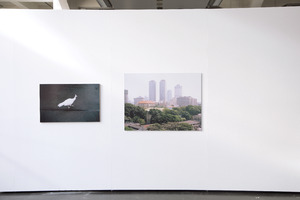
- „Der Weg ist das Ziel“ ist meine Devise. Der Arbeitsprozess ist daher ein wichtiger Teil meines Diploms. Ich zeige Fotos aus unterschiedlichen Teilen der Welt mit sehr unterschiedlichen Bildsprachen. Sie sind Momentaufnahmen aus meinem Blick durch die Kamera. Diese Bilder setze ich in Bezug zueinander, wobei manche Bilder miteinander harmonieren, funktionieren, kommunizieren – andere wiederum nicht. Durch die projizierten Bilder ändern sich die Bezüge und zeigen, dass die Bilder anders kommunizieren, je nachdem, welche Bilder an ihrer Seite sind. Dabei ist die Abfolge der Bilder eine Endlosschleife, und eine Bildkombination einer Wand kehrt immer wieder. Die Betrachtenden sind frei, selbst zu assoziieren, und jeder Blick sieht einen neuen, ganz eigenen Zusammenhang in der Konstellation der Fotografien.
Fotografieausstellung mit 18 Bildern auf Holz und Aludibond und 30 Bildern projiziert auf zwei Beamern.
- „Der Weg ist das Ziel“ ist meine Devise. Der Arbeitsprozess ist daher ein wichtiger Teil meines Diploms. Ich zeige Fotos aus unterschiedlichen Teilen der Welt mit sehr unterschiedlichen Bildsprachen. Sie sind Momentaufnahmen aus meinem Blick durch die Kamera. Diese Bilder setze ich in Bezug zueinander, wobei manche Bilder miteinander harmonieren, funktionieren, kommunizieren – andere wiederum nicht. Durch die projizierten Bilder ändern sich die Bezüge und zeigen, dass die Bilder anders kommunizieren, je nachdem, welche Bilder an ihrer Seite sind. Dabei ist die Abfolge der Bilder eine Endlosschleife, und eine Bildkombination einer Wand kehrt immer wieder. Die Betrachtenden sind frei, selbst zu assoziieren, und jeder Blick sieht einen neuen, ganz eigenen Zusammenhang in der Konstellation der Fotografien.
- Beschreibung (en)
- “The journey is the reward” is my motto. The work process is therefore an important part of my diploma. I show photos from different parts of the world with very different visual languages. They are snapshots from my view through the camera. I place these images in relation to each other, whereby some images harmonize, function and communicate with each other - others do not. The projected images change the references and show that the images communicate differently depending on which images are at their side. The sequence of images is an endless loop and a combination of images on a wall is repeated again and again. Viewers are free to make their own associations and each view sees a new, unique context in the constellation of photographs.
Photography exhibition with 18 pictures on wood and Aludibond and 30 pictures projected on two beamers.
- “The journey is the reward” is my motto. The work process is therefore an important part of my diploma. I show photos from different parts of the world with very different visual languages. They are snapshots from my view through the camera. I place these images in relation to each other, whereby some images harmonize, function and communicate with each other - others do not. The projected images change the references and show that the images communicate differently depending on which images are at their side. The sequence of images is an endless loop and a combination of images on a wall is repeated again and again. Viewers are free to make their own associations and each view sees a new, unique context in the constellation of photographs.
- Kategorie
- Material
- Titel
- Ich hatte vom feeling her ein gutes Gefühl
- Projektleiter/in
- Semester
- Studiengang
- Typ der Abschlussarbeit
- Importiert am
- 30.07.2024
- Übergeordnete Sets
- 2
- Set enthält
- 0 12
I Cried A Smile
Name that can easily go onto 2 lines
Author that can easily go onto 2 lines as well
- Titel
- I Cried A Smile
- Autor/in
- Beschreibung (de)
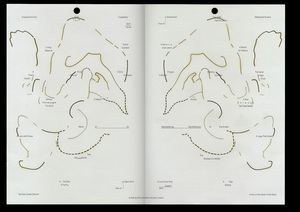
- Mit den Mitteln einer wissenschaftlichen Lecture erzählt „I Cried A Smile“ eine Geschichte über eine Person mit 2 Köpfen, Holz das zu Menschen wird, und die Erinnerung daran als Kind mit Neuropsychologie in Kontakt zu treten. Zwei übereinander hängende Projektionsflächen zeigen Zeichnungen, Animationen und gefundenes Bildmaterial während meine Stimme vom Band läuft und ich an einem Schreibtisch sitzend, mit dem Verfahren „Lip-Sync“ lautlos mitspreche. Das Publikum sitzt wie in einem anatomischen Theater in zwei Halbkreisen um mich herum.
- Beschreibung (en)
- Using the means of a scientific lecture, “I Cried A Smile” tells a story about a person with two heads, wood that becomes human, and the memory of coming into contact with neuropsychology as a child. Two projection screens hanging above me showcasing drawings, animations and found footage while my voice runs from the tape and I, sitting at a desk, speak along inaudibly using the “Lip-Sync” method. The audience sits around me like in an anatomical theater.
- Using the means of a scientific lecture, “I Cried A Smile” tells a story about a person with two heads, wood that becomes human, and the memory of coming into contact with neuropsychology as a child. Two projection screens hanging above me showcasing drawings, animations and found footage while my voice runs from the tape and I, sitting at a desk, speak along inaudibly using the “Lip-Sync” method. The audience sits around me like in an anatomical theater.
- Kategorie
- Typ des Projekts/Werks
- Schlagworte
- Mitwirkende
- Technik/Verfahren/Formate
- 2 Channel Video
- Dauer
- 8 Minuten
- Ort: Institution
- Stadt
- Land
- Titel
- I Cried A Smile
- Importiert am
- 30.09.2024
- Übergeordnete Sets
- 1
- Set enthält
- 0 5
In Defense of Mis Caprichos
Name that can easily go onto 2 lines
Author that can easily go onto 2 lines as well
- Titel
- In Defense of Mis Caprichos
- Untertitel
- When someone says you canʼt do something. Do it twice, and take pictures.
- Autor/in
- Beschreibung (de)
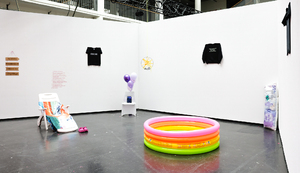
- "In Defense of Mis Caprichos" ist eine multimediale Ausstellung, die auf einem selbst kuratierten Archiv von 140 gefundenen und eigenen Bildern basiert. Sie setzt sich mit der vernakulären Bildsprache Lateinamerikas auseinander – von Memes und persönlichen Fotos bis zu Screenshots. Viele Bilder sind durch digitale Verbreitung nur in niedriger Auflösung erhalten und spiegeln so die visuelle Textur des Internets wider. Sie vermitteln eine Sensibilität, die sich nicht erklären lässt, sondern sich durch Stimmung, Ton und Wiederholung entfaltet. Viele der Bilder stammen aus oder zeigen Kontexte des Globalen Südens und verstehen sich als Hommage an dortige alltägliche, informelle Gesten. Zusammen bilden sie eine visuelle Sprache, die intim, vielschichtig, instabil und oft humorvoll ist.
Das Projekt bezieht sich auf Hal Fosters Aufsatz "An Archival Impulse", der das Archivieren als künstlerische Praxis versteht und Fragmentierung der Kohärenz vorzieht – zentrale Konzepte für dieses sich stetig wandelnde Archiv. Daraus wurden zehn künstlerische Objekte entwickelt, die die Skurrilitäten der Sammlung erfassen: Repliken, Performances oder hybride Assemblagen. Ihre Logik beruht auf Aneignung, Kopie und Transformation – im Sinne Byung-Chul Hans, der Replikation als kreative Strategie für neue Bedeutungen begreift.
Einige Werke greifen konkrete Bilder auf: Eine Performance, bei der ein Plastikpool auf einem Motorrad transportiert wird, bezieht sich auf ein Archivbild. Ein anderes verwandelt einen falsch übersetzten Tweet in ein dekoratives Holzschild. Ein drittes ist ein Traumfänger aus gelber Unterwäsche – inspiriert von einem kolumbianischen Neujahrsbrauch, wonach gelbe Unterwäsche Glück bringen soll.
Ein zentrales Element ist eine Videoarbeit, die das gesamte Archiv in Endlosschleife zeigt, begleitet von Texten aus unterschiedlichen Quellen: akademisch, persönlich oder aus sozialen Medien. Die Anordnung ist nicht erklärend, sondern atmosphärisch. Die Ausstellung schafft einen hierarchiefreien Raum, der Intuition, spielerische Ernsthaftigkeit und visuelle Alltagskulturen in den Mittelpunkt stellt.
- "In Defense of Mis Caprichos" ist eine multimediale Ausstellung, die auf einem selbst kuratierten Archiv von 140 gefundenen und eigenen Bildern basiert. Sie setzt sich mit der vernakulären Bildsprache Lateinamerikas auseinander – von Memes und persönlichen Fotos bis zu Screenshots. Viele Bilder sind durch digitale Verbreitung nur in niedriger Auflösung erhalten und spiegeln so die visuelle Textur des Internets wider. Sie vermitteln eine Sensibilität, die sich nicht erklären lässt, sondern sich durch Stimmung, Ton und Wiederholung entfaltet. Viele der Bilder stammen aus oder zeigen Kontexte des Globalen Südens und verstehen sich als Hommage an dortige alltägliche, informelle Gesten. Zusammen bilden sie eine visuelle Sprache, die intim, vielschichtig, instabil und oft humorvoll ist.
- Beschreibung (en)
- In Defense of Mis Caprichos is a multimedia exhibition based in a self-curated archive of 140 found and self-produced images that reflect the vernacular visual language of Latin America. These images—ranging from memes and personal photographs to screenshots— carry a distinct sensibility: one that resists explanation and instead unfolds through mood, tone, and repetition. Often low in resolution due to constant digital circulation, the images reflect the visual texture of the internet. Many celebrate vernacular and informal gestures, circulating quickly across digital platforms to form a visual language that is intimate, layered, unstable, and often humorous.
The work draws on Hal Foster’s An Archival Impulse, where archiving is seen as an artistic practice and a preference for fragmentation over coherence reflects a deliberate artistic strategy.
From this archive, ten objects were developed, each guided by a specific premise. Some take the form of replicas, others of performances or hybrid assemblages. These objects operate as attempts to “grasp” the underlying sensibility of the archive. Their logic often draws on the aesthetics of appropriation, copying, and transformation—resonating with Byung-Chul Han’s Shanzhai: Deconstruction in Chinese, where copying and sampling are understood as creative strategies capable of generating new meaning.
A second core component of the exhibition is a video slideshow that presents the full image archive in a loop. The video has no beginning and no end, as it is conceived as a work in progress—the archive is constantly evolving. Each image is accompanied by 1–2 lines of text drawn from diverse sources: academic texts, social media posts, and personal writings. The arrangement is not explanatory but atmospheric, evoking how Susan Sontag, in Notes on Camp, approaches a sensibility not through linear explanation but through curation and juxtaposition.
In Defense of Mis Caprichos does not seek resolution or synthesis. Instead, it inhabits a space of connection without hierarchy. It is an argument for intuition, for playful seriousness, and for honoring the seemingly trivial gestures we encounter every day.
- In Defense of Mis Caprichos is a multimedia exhibition based in a self-curated archive of 140 found and self-produced images that reflect the vernacular visual language of Latin America. These images—ranging from memes and personal photographs to screenshots— carry a distinct sensibility: one that resists explanation and instead unfolds through mood, tone, and repetition. Often low in resolution due to constant digital circulation, the images reflect the visual texture of the internet. Many celebrate vernacular and informal gestures, circulating quickly across digital platforms to form a visual language that is intimate, layered, unstable, and often humorous.
- Kategorie
- Typ des Projekts/Werks
- Schlagworte
- Dank an
- Sprache
- Material
- Technik/Verfahren/Formate
- Diashow / Skulptur / Performance
- Ort: Institution
- Ort
- Lichthof 4
- Stadt
- Land
- Titel
- In Defense of Mis Caprichos
- Untertitel
- When someone says you canʼt do something. Do it twice, and take pictures.
- Projektleiter/in
- Semester
- Studiengang
- Typ der Abschlussarbeit
- Importiert am
- 27.06.2025
- Übergeordnete Sets
- 2
- Set enthält
- 4 2
In den Wald gehen
Name that can easily go onto 2 lines
Author that can easily go onto 2 lines as well
- Titel
- In den Wald gehen
- Autor/in
- Beschreibung (de)
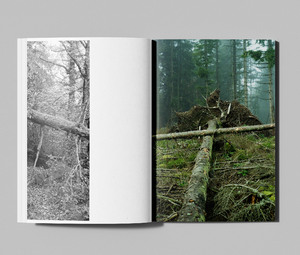
- „In den Wald gehen“ ist eine fotografische Reise durch den Lebensraum Wald, der seine Entwicklung über die letzten Jahrzehnte sowie die Beziehung der Menschen zu diesem besonderen Ort untersucht und in einem Buch zusammenfasst. Über Interviews kommen Personen aus verschiedenen Altersgruppen zu Wort und teilen ihre Ansichten zu Themen wie Kindheit, Erinnerungen, Heimat und Veränderung in Bezug auf den Wald. Diese Interviews werden durch Bildstrecken begleitet, welche als eine Momentaufnahme den aktuellen Zustand unserer Wälder dokumentieren. Eine Broschüre fungiert als Beilage zum Buch und erarbeitet, über einen Essay, den historischen Kontext der deutschen Wälder in Bezug auf Literatur und Kunst, um kollektive Wahrnehmungsmuster aufzuzeigen und zu erläutern.
- Beschreibung (en)
- “Going into the forest” is a photographic journey through the forest, examining its development over the last few decades and people's relationship to this special place, summarizing it in a book. Through interviews, people from different age groups share their views on topics such as childhood, memories, home and change in relation to the forest. These interviews are accompanied by a series of pictures that document the current state of our forests as a snapshot. A brochure acts as a supplement to the book and uses an essay to develop the historical context of German forests in relation to literature and art in order to show and explain collective patterns of perception.
- Kategorie
- Typ des Projekts/Werks
- Schlagworte
- Datierung
- Januar 2025
- Sprache
- Abmessungen
- 180mm x 250mm
- Ort: Institution
- Ort
- Lichtbrücke
- Stadt
- Land
- Titel
- In den Wald gehen
- Projektleiter/in
- Semester
- Studiengang
- Typ der Abschlussarbeit
- Importiert am
- 11.02.2025
- Übergeordnete Sets
- 2
- Set enthält
- 0 12
„Infanterie, Cavallerie, Artillerie“ statt „Liberté, égalite, fraternité“: Das Komische als Kampfmittel in Karl Marx' "Der achtzehnte Brumaire des Louis Bonaparte"
Name that can easily go onto 2 lines
Author that can easily go onto 2 lines as well
- Titel
- „Infanterie, Cavallerie, Artillerie“ statt „Liberté, égalite, fraternité“: Das Komische als Kampfmittel in Karl Marx' "Der achtzehnte Brumaire des Louis Bonaparte"
- Autor/in
- Beschreibung (de)
- Im Aufsatz „Der achtzehnte Brumaire des Louis Bonaparte“, welcher von Karl Marx im Kontext der politischen Unruhen des neunzehnten Jahrhunderts geschrieben wurde, ergründet dieser nicht nur den Aufstieg Louis Bonapartes zur Macht, sondern verwebt auch auf subtile Weise seinen charakteristisch analytischen Ansatz mit einem bemerkenswerten Sinn für Komik und raffinierte stilistische Nuancen.
So ist diese Magisterarbeit einer eingehenden Untersuchung der Rolle des Komischen und des Stils in Marx' „Achtzehnten Brumaire“ gewidmet, mit besonderem Augenmerk auf die Art und Weise, in der diese Elemente nicht nur zur kritischen Analyse beitragen, sondern das Werk auch in eine sinnvolle literarische Form bringen.
Es soll untersucht werden, auf welche Weise das Komische bei Marx eine Strategie sein könnte, um nicht nur seine Argumente zu untermauern, sondern auch, um als eine Art ‚Kampfmittel‘ in der politischen Landschaft zu fungieren. Mithilfe der Untersuchung des Zusammenspiels von politischer Analyse, komödiantischen Elementen und individuellem Stil im „Achtzehnten Brumaire“ ist es das Ziel dieser Arbeit, die tiefere Beziehung zwischen politischer Literatur und literarischer Form zu erfassen. Indem die Facetten des Komischen und des Marx'schen Stils beleuchtet werden, wird diese Magisterarbeit dazu beitragen, ein umfassenderes Verständnis für die Komplexität und Relevanz des „Achtzehnten Brumaire“ zu entwickeln.
- Im Aufsatz „Der achtzehnte Brumaire des Louis Bonaparte“, welcher von Karl Marx im Kontext der politischen Unruhen des neunzehnten Jahrhunderts geschrieben wurde, ergründet dieser nicht nur den Aufstieg Louis Bonapartes zur Macht, sondern verwebt auch auf subtile Weise seinen charakteristisch analytischen Ansatz mit einem bemerkenswerten Sinn für Komik und raffinierte stilistische Nuancen.
- Beschreibung (en)
- In the essay “The Eighteenth Brumaire of Louis Bonaparte”, written by Karl Marx in the context of the political turmoil of the nineteenth century, he not only explores Louis Bonaparte's rise to power but also subtly interweaves his characteristically analytical approach with a remarkable sense of comedy and refined stylistic nuance.
Thus, this master thesis is dedicated to an in-depth examination of the role of comedy and style in Marx's “Eighteenth Brumaire”, with particular attention to how these elements not only contribute to critical analysis but also give the work a meaningful literary form.
It will examine how the comic might be a strategy for Marx not only to support his arguments but also to function as a kind of 'means of struggle' in the political landscape. By examining the interplay of political analysis, comedic elements, and individual style in the “Eighteenth Brumaire”, this thesis aims to grasp the deeper relationship between political literature and literary form. By highlighting the facets of comedy and Marx's style, this thesis will help to develop a more comprehensive understanding of the complexity and relevance of the “Eighteenth Brumaire”.
- In the essay “The Eighteenth Brumaire of Louis Bonaparte”, written by Karl Marx in the context of the political turmoil of the nineteenth century, he not only explores Louis Bonaparte's rise to power but also subtly interweaves his characteristically analytical approach with a remarkable sense of comedy and refined stylistic nuance.
- Kategorie
- Typ des Projekts/Werks
- Datierung
- 31.08.2023
- Sprache
- Titel
- „Infanterie, Cavallerie, Artillerie“ statt „Liberté, égalite, fraternité“: Das Komische als Kampfmittel in Karl Marx' "Der achtzehnte Brumaire des Louis Bonaparte"
- Projektleiter/in
- Semester
- Studiengang
- Typ der Abschlussarbeit
- Importiert am
- 31.05.2024
- Übergeordnete Sets
- 3
- Set enthält
- 0 2
“I see” “with my voice”
Name that can easily go onto 2 lines
Author that can easily go onto 2 lines as well
- Titel
- “I see” “with my voice”
- Autor/in
- Beschreibung (de)
- „I see“ „with my voice“ beschäftigt sich mit Themen wie Transformation, Gestaltwandel und Materialität durch ein Zusammenspiel von literarischen Fragmenten und entliehenen Stimmen. Das Ergebnis ist eine nicht-lineare, fluide Erzählung, die die flüchtige Natur von Visionen, Träumen und Metamorphosen einfängt.
- Beschreibung (en)
- “I see” “with my voice” engages with themes of transformation,
shapeshifting, and materiality through an interplay of literary
fragments and borrowed voices, resulting in a non-linear, fluid
narrative that encapsulates the ephemeral nature of visions,
dreams, and metamorphoses.
This project draws substantial inspiration from Alice Notley's
The Descent of Alette, a transformative odyssey that employs
rhythmic spoken language to explore continuous change.
Alongside Notley’s influence, the works of Hildegard von Bingen,
a 12th-century mystic, and the visionary narratives from the
biblical book of Ezekiel, serve as foundational texts that inform
the thematic and structural framework of this piece.
The text is presented as an audio recording, whispered as a 20 minute loop.
Visitors can listen to the piece when pressing their ear against the tents walls.
My objects are performers, maybe even imposters: frozen in a state of change or mimicry. My objects are performers, maybe even imposters: frozen in a state of change or mimicry.
They are skillfull imitators, but you can tell something is off.
Moving along this crack between the believable and the not quite right, I like to engage
with different realities and states of being. The artificial, almost real-life fakeness of their with different realities and states of being. The artificial, almost real-life fakeness of their
surfaces set the stage for my narrative of transformation, imitation and shapeshifting.
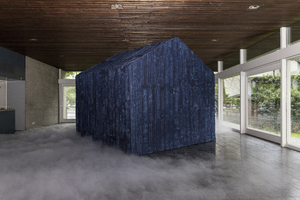
1. A wooden house crafted from smooth denim. Made by sanding the grain of wood
onto the denim fabric
2. Heavy fog covering the floor that could be perceived as dew, mixed with a light subtle
smoke of Incense burning.
The fragrance envokes sacred, holy feelings with its warm, resinous smell with peppery The fragrance envokes sacred, holy feelings with its warm, resinous smell with peppery
undertones.
3. 100 cherries made from a thick mixture of honey and almonds. The heavy sweetness
of the stoneless candy-imposter meant to linger in the visitors mouth as it is tasted. of the stoneless candy-imposter meant to linger in the visitors mouth as it is tasted.
A thin gelatine film – imitating the coolnes of cherry skin as it touches the lips A thin gelatine film – imitating the coolnes of cherry skin as it touches the lips
The installation is accompanied by a small reader containing the three part text to be taken The installation is accompanied by a small reader containing the three part text to be taken
home and serve as a keep sake or document of the fleeting spoken text.
The reader is bound with one simple staple. It does not have a beginning or end, but The reader is bound with one simple staple. It does not have a beginning or end, but
rather works like a gif. No cover or back. Just like wheels turning endlessly in a nonlinear rather works like a gif. No cover or back. Just like wheels turning endlessly in a nonlinear
storytelling.
- “I see” “with my voice” engages with themes of transformation,
- Kategorie
- Typ des Projekts/Werks
- Schlagworte
- Datierung
- 18.04.2024
- Sprache
- Ort: Institution
- Ort
- “I see” “with my voice” at ZKM Pavillon, Karlsruhe
- Stadt
- Land
- Titel
- “I see” “with my voice”
- Projektleiter/in
- Semester
- Studiengang
- Typ der Abschlussarbeit
- Importiert am
- 19.09.2024
- Übergeordnete Sets
- 0
- Set enthält
- 0 2
I used to think that I was made of Stone
Name that can easily go onto 2 lines
Author that can easily go onto 2 lines as well
- Titel
- I used to think that I was made of Stone
- Titel (en)
- I used to think that I was made of Stone
- Autor/in
- Beschreibung (de)
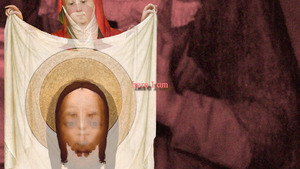
- In der multimedialen Installation „I used to think that I was made of Stone“ werden die Besuchenden Zeug*innen eines nächtlichen Treffens von vier Personen, die nur durch ihre Stimmen präsent sind. Sie unterhalten sich über merkwürdige Objekte in ihrer greifbaren Nähe, führen nebensächliche Gespräche und verbringen einen Abend damit, Musik zu hören und zu tanzen. Ihre Körper bleiben in der Installation unsichtbar, die Objekte im Raum werden zu Spuren.
Durch das Sammeln, neu Arrangieren und Kombinieren von religiösen, (pop-)kulturellen und selbst produzierten Fragmenten im Raum verhandelt „I used to think that I was made of Stone”, wie Lücken und Ausschmückungen unsere Realitäten in der Gegenwart formen und welche Geschichten und Nacherzählungen sie produzieren. Dabei fragt es nach Autor*innenschaft und den Übersetzer*innen, die das Produzierte wortwörtlich über-setzen, weiter-tragen und fort-spinnen und somit stetig weiter produzieren. Sie bestimmen die Stofflichkeit der Geschichte, knoten die Fäden der Ausschmückungen, brennen Löcher und Lücken in das Gewebe und geben es weiter.
- In der multimedialen Installation „I used to think that I was made of Stone“ werden die Besuchenden Zeug*innen eines nächtlichen Treffens von vier Personen, die nur durch ihre Stimmen präsent sind. Sie unterhalten sich über merkwürdige Objekte in ihrer greifbaren Nähe, führen nebensächliche Gespräche und verbringen einen Abend damit, Musik zu hören und zu tanzen. Ihre Körper bleiben in der Installation unsichtbar, die Objekte im Raum werden zu Spuren.
- Beschreibung (en)
- In the multimedia installation “I used to think that I was made of Stone”, visitors witness a nighttime meeting of four people who are only present through their voices. They talk about strange objects within reach, have trivial conversations, and spend an evening listening to music and dancing. Their bodies remain invisible in the installation, while the objects in the room become traces of their presence.
By collecting, rearranging and combining religious, (pop) cultural and self-produced fragments in the space, “I used to think that I was made of Stone” explores how gaps and embellishments shape our realities in the present, and what stories they generate or retell. In doing so, it questions authorship and the role of translators, who literally translate, carry forward, and elaborate on what has already been produced, thus continuing the production process. They determine the material nature of the story, tie the threads of embellishment, burn holes and gaps into the fabric and pass it on.
- In the multimedia installation “I used to think that I was made of Stone”, visitors witness a nighttime meeting of four people who are only present through their voices. They talk about strange objects within reach, have trivial conversations, and spend an evening listening to music and dancing. Their bodies remain invisible in the installation, while the objects in the room become traces of their presence.
- Kategorie
- Typ des Projekts/Werks
- Schlagworte
- Datierung
- Februar 2023
- Mitwirkende
- Sprache
- Abmessungen
- „face imprint” (Textil, Wachs, 63 x 54 cm); „about veronica” (Textil, Stickerei, 84 x 67 cm); „about the cloth” (Projektion, 12 Seiten); „I used to think” (HD-video, Audio, 13:46 min); „toad” (Ton, Wachs, 11 x 13 cm); „wax and stones” (Wachs, Schwelle TV HIFI, 20 x 6 cm); „wax and stone” (Wachs, Stein, 40 x 40 x 10 cm); „everyone” (Reader, 9,5 x 15,2 cm, 36 Seiten); „glasses” (4 Kristallgläser, 5 x 7 cm, Wachs); „jumping rope” (Seil, 2 m); „gestalt mit großem hut” (Keramik, 6 x 7 cm); „fabric n°1” (Textil, Wachs, 57 x 41cm); „fabric n°2” (Textil, Wachs, 60 x 45 cm); „y” (Textil, Wachs, 25 x 15 cm); „woven temple, hidden cocoon #3” (Playlist, 43 Tracks); „wine fountain” (Glas, Pumpe, Wein, 20 x 20 x 110 cm); „cushion” (Textil, Watte, Stickerei, 15 x 15 cm)
- Ort: Institution
- Stadt
- Land
- Titel
- I used to think that I was made of Stone
- Projektleiter/in
- Semester
- Studiengang
- Typ der Abschlussarbeit
- Importiert am
- 25.06.2024
- Übergeordnete Sets
- 2
- Set enthält
- 0 14
Klotz am Apparat
Name that can easily go onto 2 lines
Author that can easily go onto 2 lines as well
- Titel
- Klotz am Apparat
- Titel (en)
- The Klotz calling
- Autor/in
- Beschreibung (de)
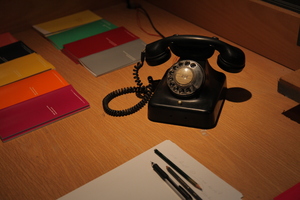
- Die Forschungsgruppe Klotz-Archiv sammelt Audio-, Video- und Textdokumente aus den Jahren der Gründung der HfG mit dem Ziel der Einrichtung einer Archivplattform sowie der Produktion von Archivinstallationen, Archivperformances sowie Filmessays über die Reformhochschule HfG, ihre Gründungsidee und ihren Gründer Heinrich Klotz (1935-1999).
- Schlagworte
- Datierung
- 13.07.2016 - 17.07.2016
- Stadt
- Land
- Titel
- Klotz am Apparat
- Projektleiter/in
- Importiert am
- 22.02.2018
- Übergeordnete Sets
- 0
- Set enthält
- 0 44
KLOTZSTUHL

Name that can easily go onto 2 lines
Author that can easily go onto 2 lines as well
- Titel
- KLOTZSTUHL
- Autor/in
- Beschreibung (de)
- Eine Studie des Stadtforschers William H. Whyte zeigt, dass es für Menschen ein positives Erlebnis ist, wenn sie Sitzmöbel selbst (um)positionieren dürfen. Der KLOTZSTUHL greift diesen Gedanken auf. Die Sitzfläche lässt sich verstellen, sodass sich der Stuhl an unterschiedliche Hangneigungen anpassen kann. Dadurch kann man ihn fast überall auf dem Hügel aufstellen. Er ist nicht fest installiert, aber durch seine "klotzige" Bauweise und das relative hohe Gewicht ist er auch nicht zum Mitnehmen gedacht.
Der KLOTZSTUHL wurde entworfen für Hänge in Parkanlagen wie beispielsweise dem MOUNT KLOTZ in der Günther-Klotz-Anlage in Karlsruhe. Er macht es möglich, auch an steilen Hängen bequem zu sitzen und die Aussicht auf den Sonnenuntergang mit einem kühlen Getränk zu genießen.
- Eine Studie des Stadtforschers William H. Whyte zeigt, dass es für Menschen ein positives Erlebnis ist, wenn sie Sitzmöbel selbst (um)positionieren dürfen. Der KLOTZSTUHL greift diesen Gedanken auf. Die Sitzfläche lässt sich verstellen, sodass sich der Stuhl an unterschiedliche Hangneigungen anpassen kann. Dadurch kann man ihn fast überall auf dem Hügel aufstellen. Er ist nicht fest installiert, aber durch seine "klotzige" Bauweise und das relative hohe Gewicht ist er auch nicht zum Mitnehmen gedacht.
- Beschreibung (en)
- A study by urban researcher William H. Whyte shows that people have a more positive experience in public spaces when they are allowed to (re)position seating furniture themselves. The KLOTZSTUHL embraces this idea. Its adjustable seat allows it to adapt to various slope angles, making it usable almost anywhere on a steep slope. It is not fixed in place, but due to its bulky design and quite heavy weight, it is also not meant to be carried away.
The KLOTZSTUHL was designed specifically for sloped areas in public parks, such as the MOUNT KLOTZ in the Günther-Klotz-Anlage in Karlsruhe. It makes it possible to sit comfortably even on steep hills, and to enjoy the view of the sunset with a cold drink.
- A study by urban researcher William H. Whyte shows that people have a more positive experience in public spaces when they are allowed to (re)position seating furniture themselves. The KLOTZSTUHL embraces this idea. Its adjustable seat allows it to adapt to various slope angles, making it usable almost anywhere on a steep slope. It is not fixed in place, but due to its bulky design and quite heavy weight, it is also not meant to be carried away.
- Titel
- KLOTZSTUHL
- Projektleiter/in
- Studiengang
- Importiert am
- 18.07.2025
- Übergeordnete Sets
- 1
- Set enthält
- 0 3