Sets
444 Inhalte
- Seite 1 von 37
Häuser zum Anfassen
Name that can easily go onto 2 lines
Author that can easily go onto 2 lines as well
- Titel
- Häuser zum Anfassen
- Beschreibung (de)
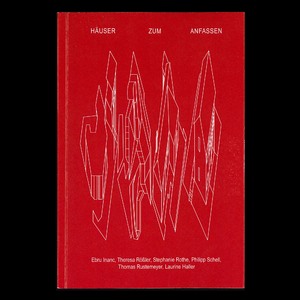
- Die Ausstellung “Häuser zum Anfassen“ befasst sich mit dem Ausstellen von Architektur. In künstlerischen Recherchearbeiten verhandelt sie Fragen zur Repräsentation, Medialisierung, Simulation und Aneignung von Architektur anhand der Musterhaus-Ausstellung in Fellbach. Diese wurde 1971 vom Verleger Ottmar Strebel gegründet und ist nach eigener Darstellung die erste ihrer Art in Deutschland. Besucherinnen und Besucher können hier 66 verschiedene, nahezu komplett eingerichtete Musterhäuser besichtigen, begehen und kaufen. So entsteht ein Hybrid aus Ausstellung, Kulissensiedlung und Simulationsarchitektur.
- Beschreibung (en)
- The exhibition "Häuser zum Anfassen" ("Houses to touch") deals with the exhibition of architecture. In artistic works of research, it deals with questions of representation, medialization, simulation and appropriation of architecture based on the model house exhibition in Fellbach. This exhibition was established in 1971 by the publisher Ottmar Strebel and is, by his own account, the first of its kind in Germany. Visitors can view, walk through and purchase 66 different, almost fully furnished show homes. The result is a hybrid of exhibition, scenic estate and simulated architecture.
- Typ des Projekts/Werks
- Schlagworte
- Datierung
- 05.02.2019 - 13.02.2019
- Mitwirkende
- Sprache
- Ort: Institution
- Ort
- Waldstraße 8 76133 Karlsruhe
- Stadt
- Land
- Beteiligte Institution(en)
- Titel
- Häuser zum Anfassen
- Projektleiter/in
- Semester
- Lehrveranstaltung
- Importiert am
- 29.06.2023
- Übergeordnete Sets
- 0
- Set enthält
- 0 9
HARNESSING THE CURRENT - on Catching Liminality
Name that can easily go onto 2 lines
Author that can easily go onto 2 lines as well
- Titel
- HARNESSING THE CURRENT - on Catching Liminality
- Titel (en)
- HARNESSING THE CURRENT - on Catching Liminality
- Autor/in
- Beschreibung (en)
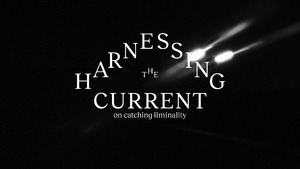
- "HARNESSING THE CURRENT – on Catching Liminality" is a short film about the absurd and motivational potential of being in and embracing the between. The short film features and is accompanied by a clay instrument. In the film, it serves as a metaphor for grasping and embracing a new perspective on life. The instrument also serves as a tool for meditation: The design only allows one note to be played, which makes the user focus more on consistent breath, rhythm and body feeling.
- Kategorie
- Typ des Projekts/Werks
- Schlagworte
- Sprache
- Material
- Dauer
- 10:22
- Titel
- HARNESSING THE CURRENT - on Catching Liminality
- Projektleiter/in
- Semester
- Studiengang
- Typ der Abschlussarbeit
- Importiert am
- 28.08.2024
- Übergeordnete Sets
- 0
- Set enthält
- 0 22
Handeln mit Zwecken. Künste im 21. Jahrhundert
Name that can easily go onto 2 lines
Author that can easily go onto 2 lines as well
- Titel
- Handeln mit Zwecken. Künste im 21. Jahrhundert
- Titel (en)
- On the benefits of art - with philosopher and artist Judith Siegmund ZKM & HfG Talk Series
- Untertitel
- mit Philosophin und Künstlerin Judith Siegmund ZKM & HfG Gesprächsreihe
- Autor/in
- Beschreibung (de)
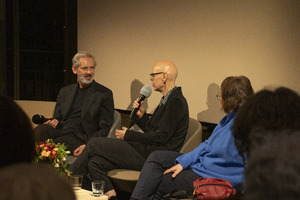
- In der gemeinsamen Gesprächsreihe "Vom Nutzen der Kunst" von ZKM und HfG, laden wir internationale Gäste aus Philosophie, Literatur und Kunst zum offenen Austausch mit den Hochschulangehörigen, den Mitarbeitenden des ZKM und der Karlsruher Bevölkerung ein. Zum Auftakt sprechen Alistair Hudson und Constanze Fischbeck mit der Philosophin und Künstlerin Judith Siegmund.
Der Titel des Vortrags an diesem Abend wird sein: "Handeln mit Zwecken. Künste im 21. Jahrhundert“
- In der gemeinsamen Gesprächsreihe "Vom Nutzen der Kunst" von ZKM und HfG, laden wir internationale Gäste aus Philosophie, Literatur und Kunst zum offenen Austausch mit den Hochschulangehörigen, den Mitarbeitenden des ZKM und der Karlsruher Bevölkerung ein. Zum Auftakt sprechen Alistair Hudson und Constanze Fischbeck mit der Philosophin und Künstlerin Judith Siegmund.
- Beschreibung (en)
- In the joint series of talks between ZKM and HfG, we invite international guests from the fields of philosophy, literature and art to an open exchange with members of the university, ZKM staff and the people of Karlsruhe. To kick things off, Alistair Hudson and Constanze Fischbeck will be talking with the philosopher and artist Judith Siegmund.
Judith Siegmund is a professor of philosophical aesthetics at the Zurich University of the Arts. In her book »Zweck und Zweckfreiheit« (2019), she questions the demand for purposelessness in artistic creation that emerged in 20th-century aesthetic theory with reference to Kant. Instead, she starts from the assumption that aesthetic theory must prove adequate to its object.
- In the joint series of talks between ZKM and HfG, we invite international guests from the fields of philosophy, literature and art to an open exchange with members of the university, ZKM staff and the people of Karlsruhe. To kick things off, Alistair Hudson and Constanze Fischbeck will be talking with the philosopher and artist Judith Siegmund.
- Typ des Projekts/Werks
- Schlagworte
- Datierung
- 16.11.2023
- Mitwirkende
- Ort: Institution
- Ort
- ZKM Medialounge
- Stadt
- Land
- Beteiligte Institution(en)
- Internetlinks
- Titel
- Handeln mit Zwecken. Künste im 21. Jahrhundert
- Untertitel
- mit Philosophin und Künstlerin Judith Siegmund ZKM & HfG Gesprächsreihe
- Importiert am
- 23.11.2023
- Übergeordnete Sets
- 1
- Set enthält
- 0 18
Guter Dinge
Name that can easily go onto 2 lines
Author that can easily go onto 2 lines as well
- Titel
- Guter Dinge
- Autor/in
- Beschreibung (de)
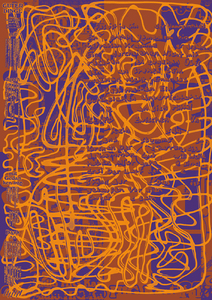
- "Guter Dinge" ist ein choreografischer Dialog zwischen drei Maschinendingen und einem Performer und verbindet Elemente aus Theaterstück, Installation und Tanz.
- Beschreibung (en)
- "Guter Dinge" is a choreographic dialogue between three machine-things and one performer, combining elements from theater play, installation and dance.
- Kategorie
- Typ des Projekts/Werks
- Schlagworte
- Mitwirkende
- Dank an
- Dauer
- ca. 40 Min.
- Ort: Institution
- Ort
- Großes Studio
- Stadt
- Land
- Internetlinks
- Trailer: https://vimeo.com/455579122
- Bemerkungen
- Aufbau und Organisatorisches:
Das Publikum kann sich frei im Raum bewegen (und dabei den Mindestabstand einhalten).
Für ATELIER No. 64 kann die ursprünglich etwa 40minütige Fassung auf etwa 15 Min gekürzt werden.
Gekürzte Fassung für PACT Zollverein: ca 15min (original ca. 40min)
- Aufbau und Organisatorisches:
- Titel
- Guter Dinge
- Projektleiter/in
- Semester
- Studiengang
- Typ der Abschlussarbeit
- Importiert am
- 24.06.2024
- Übergeordnete Sets
- 2
- Set enthält
- 0 7
Gulaschprogrammiernacht 2024
Name that can easily go onto 2 lines
Author that can easily go onto 2 lines as well
- Titel
- Gulaschprogrammiernacht 2024
- Beschreibung (de)
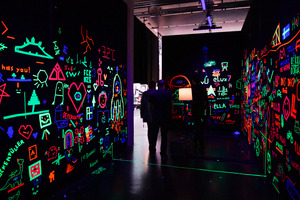
- 22. Gulaschprogrammiernacht des Entropia e.V. in HfG und ZKM
Die Gulaschprogrammiernacht (GPN) des Entropia e.V. ist wieder bei uns zu Gast! In diesem Jahr steht sie unter dem Motto Common Code <> Different Roots. Die GPN ist eine offene, spendenfinanzierte Communityveranstaltung mit Vorträgen, Workshops, einer Demoshow, Musik und dem traditionellen Gulasch als Verpflegung.
30. Mai - 02. Juni 2024 in den Lichthöfen der HfG
"Gulaschprogrammiernacht" klingt fast wie ein Kochmarathon für schlaflose Informatikstudierende. Was 2002 in einem Karlsruher Kellerraum mit ein paar Technikbegeisterten angefangen hat, ist inzwischen zu einer der größten Veranstaltungen des Chaos Computer Clubs gewachsen. Die Themen sind breit gefächert: Den Kern bilden Hard- und Softwareentwicklung, sowie Datensicherheit. Daneben kommen aber auch Datenschutz, Netzpolitik und viele andere faszinierende Themen zum Zug: Wie kocht man das perfekte Gulasch? Kann man aus Hardwareschrott noch schönen Schmuck basteln? Wie funktioniert eigentlich eine Nähmaschine? Wie fliegt man Raumschiffe?
Die Gulaschprogrammiernacht wird vom Entropia e. V. des lokalen Chaos Computer Club in Karlsruhe veranstaltet. In den Lichthöfen der Hochschule für Gestaltung (HfG) und den Vortragssälen des Zentrum für Kunst und Medien (ZKM) werden mehr als 1.500 Besucherinnen und Besucher erwartet. Trotz der inhaltlichen Tiefe, in die manche Vortragende eintauchen, richtet sich die Gulaschprogrammiernacht nicht nur an die »Digital Natives« oder Nerds. Alle sind willkommen und können etwas lernen.
Das Programmieren steht im Zentrum der GPN. In den Lichthöfen der HfG stehen dazu im »Hackcenter« Tische mit Strom- und Netzwerkanschluss bereit, an denen die Gäste ihre Zelte aufschlagen können. Ein großer Teil reist mit einem Projekt an, um auf der Gulaschprogrammiernacht ein paar fokussierte Tage und gegebenenfalls auch Nächte damit zu verbringen. Das heißt nicht, dass kein Austausch stattfindet. Im Gegenteil: Die meisten Hackenden, wenn sie nicht gerade in tiefster Programmiermeditation versunken sind, geben gerne Auskunft über ihr Steckenpferd. Auch gerade Fertiggewordenes wird gerne vorgeführt, und so wimmelt es auf der Gulaschprogrammiernacht von selbstgebauten Lichtinstallationen und Gerätschaften.
Der zweite Hauptbestandteil einer Gulaschprogrammiernacht - neben den Aktivitäten im Hackcenter - ist das Workshop- und Vortragsprogramm. Von tief in die Materie gehenden Vorträgen aus Hard- und Softwareentwicklung über lehrreiche (und humorvolle) Anekdoten aus dem alltäglichen Programmierwahnsinn bis zu netzpolitischen Debatten ist alles vertreten. Bei Löt- und Bastelworkshops können Elektronik-Skills verbessert werden, Lightning Talks bieten eine offene Bühne für spontane Kurzvorträge, und auch die Demoszene erfreut sich stets großer Beliebtheit.
Das diesjährige Motto ist "Common Code <> Different Roots". Es gibt viel "Common Code", den wir jeden Tag in unserem digitalen und analogen Leben nutzen. Wo liegen die Wurzeln dieser Codes? Wie arbeiten sie zusammen? Wie wächst daraus ein Baum? Was ist mit der Community hinter dem Code? Wie sieht die Zukunft unseres Baumes aus?
Die Gulaschprogrammiernacht ist eine offene Veranstaltung für alle. Eine vorherige Anmeldung ist erwünscht, eine Spende wird erbeten.
- 22. Gulaschprogrammiernacht des Entropia e.V. in HfG und ZKM
- Beschreibung (en)
- 22. Gulaschprogrammiernacht of Entropia e.V. in HfG and ZKM
The Goulash Programming Night (GPN) of Entropia e.V. is back with us! This year's motto is Common Code <> Different Roots. The GPN is an open, donation-financed community event with talks, workshops, a demo show, music and the traditional goulash for refreshments.
May 30 - June 02, 2024 in the atriums of the HfG
“Goulash programming night” almost sounds like a cooking marathon for sleepless computer science students. What started in 2002 in a basement room in Karlsruhe with a few technology enthusiasts has now grown into one of the Chaos Computer Club's biggest events. The topics are wide-ranging: The core is hardware and software development, as well as data security. However, data protection, network policy and many other fascinating topics are also covered: How do you cook the perfect goulash? Can you make beautiful jewelry out of hardware scrap? How does a sewing machine actually work? How do you fly spaceships?
The Goulash Programming Night is organized by Entropia e. V. of the local Chaos Computer Club in Karlsruhe. More than 1,500 visitors are expected in the atriums of the University of Arts and Design (HfG) and the lecture halls of the Center for Art and Media (ZKM). Despite the depth of content that some of the speakers will delve into, the Goulash Programming Night is not just aimed at “digital natives” or nerds. Everyone is welcome and can learn something.
Programming is at the heart of the GPN. Tables with power and network connections are set up in the “Hackcenter” in the atriums of the HfG, where guests can pitch their tents. A large number of people travel to the Goulash Programming Night with a project to spend a few focused days and even nights working on it. This does not mean that there is no exchange. On the contrary: most hackers, when they are not immersed in deepest programming meditation, are happy to provide information about their hobbyhorse. They also like to show off what they have just finished, and so the Goulash Programming Night is teeming with self-built light installations and devices.
The second main component of a Goulash Programming Night - in addition to the activities in the Hackcenter - is the workshop and lecture program. From in-depth lectures on hardware and software development to instructive (and humorous) anecdotes from everyday programming madness and debates on net politics, everything is represented. Electronics skills can be improved at soldering and tinkering workshops, lightning talks offer an open stage for spontaneous short presentations, and the demo scene is always very popular.
This year's motto is “Common Code <> Different Roots”. There is a lot of “common code” that we use every day in our digital and analog lives. Where are the roots of these codes? How do they work together? How does a tree grow from it? What about the community behind the code? What does the future of our tree look like?
The Goulash Programming Night is an open event for everyone. Prior registration is required, a donation is requested.
- 22. Gulaschprogrammiernacht of Entropia e.V. in HfG and ZKM
- Datierung
- 30.05.2024 - 02.06.2024
- Ort: Institution
- Internetlinks
- Titel
- Gulaschprogrammiernacht 2024
- Importiert am
- 30.08.2024
- Übergeordnete Sets
- 1
- Set enthält
- 0 12
Gulaschprogrammiernacht
Name that can easily go onto 2 lines
Author that can easily go onto 2 lines as well
- Titel
- Gulaschprogrammiernacht
- Titel
- Gulaschprogrammiernacht
- Importiert am
- 15.01.2025
- Übergeordnete Sets
- 1
- Set enthält
- 1 0
Grün
Name that can easily go onto 2 lines
Author that can easily go onto 2 lines as well
- Titel
- Grün
- Titel
- Grün
- Importiert am
- 13.11.2025
- Übergeordnete Sets
- 1
- Set enthält
- 0 9
Graduiertenausstellung 2023
Name that can easily go onto 2 lines
Author that can easily go onto 2 lines as well
- Titel
- Graduiertenausstellung 2023
- Titel (en)
- Graduate Show 2023
- Autor/in
- Beschreibung (de)
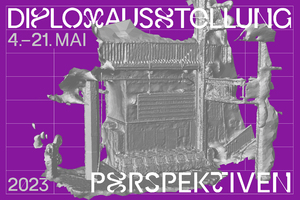
- Vom 04. bis 21. Mai 2023 werden in den Lichthöfen der HfG Karlsruhe unter dem Titel Diplomausstellung 2023 – Perspektiven, die zwischen 2022 und 2023 an der Staatlichen Hochschule für Gestaltung entstandenen Abschlussarbeiten – darunter Filme, Fotografien, Publikationen, Performances, Video- und Soundinstallationen sowie neu entwickelte Werkzeuge, Produkte und Materialien – präsentiert.
- Beschreibung (en)
- From May 04 to 21, 2023, the graduation works created at the Staatliche Hochschule für Gestaltung between 2022 and 2023 - including films, photographs, publications, performances, video and sound installations as well as newly developed tools, products and materials - will be presented in the Lichthof of the HfG Karlsruhe under the title Diploma Exhibition 2023 - Perspectives.
- From May 04 to 21, 2023, the graduation works created at the Staatliche Hochschule für Gestaltung between 2022 and 2023 - including films, photographs, publications, performances, video and sound installations as well as newly developed tools, products and materials - will be presented in the Lichthof of the HfG Karlsruhe under the title Diploma Exhibition 2023 - Perspectives.
- Datierung
- 04.05.2023 - 21.05.2023
- Bemerkungen
- Curation: Kathi Rüll, Marie Luise Stein, Mona Altmann, Rebecca Zink, Tatjana Pfeiffer
Exhibition design: Marie Luise Stein
Text & Editing: Mona Altmann
Art Direction & Graphics: Kathi Rüll, Rebecca Zink, Tatjana Pfeiffer
Planning & coordination of the supporting program: Kathi Rüll
Exhibiting artists and designers: Adrian Dickhoff, Angelica Gut, Arno Schlipf, Benjamin Breitkopf, Bruno Jacoby, Christina Vinke, Felix Grünschloß, Heidi Herzig, Iden Sunyoung Kim, Johanna Schäfer, Kathi Rüll, Katja Anina, Brosius, Lizzy Ellbrück, Manuel Sékou, Marie-Luise Stein, Max Zickenheiner, Moritz Appich, Nele Faust, Nina Overkott, Nino Alonso, Rebecca Zink, Tatjana Pfeiffer, Zaza Barisch
- Curation: Kathi Rüll, Marie Luise Stein, Mona Altmann, Rebecca Zink, Tatjana Pfeiffer
- Titel
- Graduiertenausstellung 2023
- Importiert am
- 25.03.2026
- Übergeordnete Sets
- 1
- Set enthält
- 0 1
Graduiertenausstellung 2022: All we as
Name that can easily go onto 2 lines
Author that can easily go onto 2 lines as well
- Titel
- Graduiertenausstellung 2022: All we as
- Beschreibung (de)
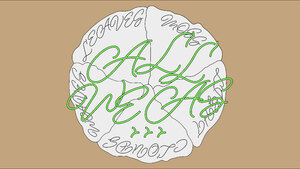
- "HfG GRADUATES 21/22 - All we as"
02.-19.06.22
- "HfG GRADUATES 21/22 - All we as"
- Beschreibung (en)
- "HfG GRADUATES 21/22 - All we as"
02.-19.06.22
- "HfG GRADUATES 21/22 - All we as"
- Internetlinks
- Titel
- Graduiertenausstellung 2022: All we as
- Importiert am
- 25.03.2026
- Übergeordnete Sets
- 1
- Set enthält
- 0 1
Graduiertenausstellung
Name that can easily go onto 2 lines
Author that can easily go onto 2 lines as well
- Titel
- Graduiertenausstellung
- Titel
- Graduiertenausstellung
- Importiert am
- 15.01.2025
- Übergeordnete Sets
- 1
- Set enthält
- 4 0
Go Turmberg

Name that can easily go onto 2 lines
Author that can easily go onto 2 lines as well
- Titel
- Go Turmberg
- Autor/in
- Beschreibung (de)
- In dieser Arbeit wurde sich mit der Geschichte von Aussichtstürmen (wie dem Turmberg) beschäftigt. Sie dienten als Ausguck, als Beobachtungsplattform um sich nähernde, gegnerische Armeen rechtzeitig
entdecken und mit Hilfe einer Alarmkanone die Menschen vor der drohenden Gefahr warnen zu können. Solche Türme sind Zeugen von Menschen, von Kämpfen, von Einnahmen, von Zerstörung, von Wiederaufbau, von Leben und Tod.
In dieser Arbeit wurde der Fokus auf das Zyklische eines solchen Konstruktes gelegt. Der Aufbau, das Gedeihen, der Kampf, die Zerstörung, der Wiederaufbau, das Gedeihen, der Kampf, die Zerstörung, der Wiederaufbau...
Der Animationsfilm wurde mit einem Beamer und Lautsprechern audiovisuell auf das Gesetein des Turmbergs oberhalb eines Brunnens projeziert.
- In dieser Arbeit wurde sich mit der Geschichte von Aussichtstürmen (wie dem Turmberg) beschäftigt. Sie dienten als Ausguck, als Beobachtungsplattform um sich nähernde, gegnerische Armeen rechtzeitig
- Typ des Projekts/Werks
- Material
- Technik/Verfahren/Formate
- Projektion
- Ort
- Turmberg
- Stadt
- Land
- Titel
- Go Turmberg
- Importiert am
- 19.12.2018
- Übergeordnete Sets
- 1
- Set enthält
- 0 2
G.O.T.T.A.L.I.S.T.E.N.
Name that can easily go onto 2 lines
Author that can easily go onto 2 lines as well
- Titel
- G.O.T.T.A.L.I.S.T.E.N.
- Autor/in
- Beschreibung (de)
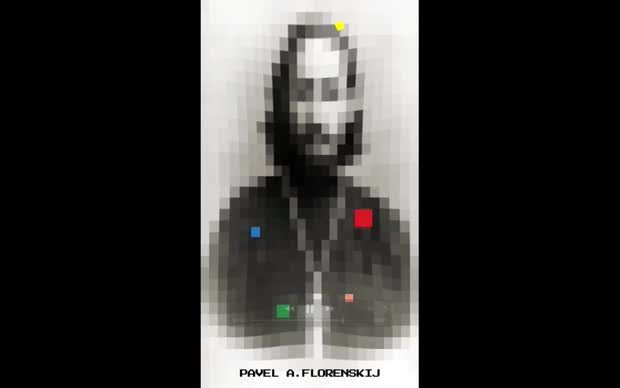
- "GOTTALISTEN", kurz für „Grab One Terrene Thought And Let It Slide To Eternal Nothingness”, beschäftigt sich mit der Zeit der Oktoberrevolution in Russland im Jahr 1917. Die Klebeband-Leinwände nehmen Bezug auf den Künstler Kasimir Malewitsch, der während dieser Epoche in Russland lebte. Zudem setzt Claus sich mit dem russischen Religionsphilosoph, Priester, Mathematiker und Kunstwissenschaftler Pavel Florenskij auseinander.
- Beschreibung (en)
- "GOTTALISTEN", short for "Grab One Terrene Thought And Let It Slide To Eternal Nothingness", deals with the time of the October Revolution in Russia in 1917. The tape canvases refer to the artist Kasimir Malewitsch, who lived in Russia during this era. Claus also deals with the Russian religious philosopher, priest, mathematician and art historian Pavel Florenskij.
- Kategorie
- Schlagworte
- Titel
- G.O.T.T.A.L.I.S.T.E.N.
- Projektleiter/in
- Semester
- Studiengang
- Typ der Abschlussarbeit
- Importiert am
- 08.08.2024
- Übergeordnete Sets
- 0
- Set enthält
- 1 27