26 GRAD: Ausgestellte Projekte
26 GRAD: Ausgestellte Projekte
| Titel |
|
20 Inhalte
- Seite 1 von 2
Plastic Fugue
Name that can easily go onto 2 lines
Author that can easily go onto 2 lines as well
- Titel
- Plastic Fugue
- Titel (en)
- Plastic Fugue
- Autor/in
- Beschreibung (de)
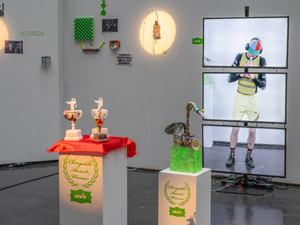
- Plastic Fugue ist eine interaktive Klanginstallation, die mit einer Kindheitserinnerung an die Konzertflöte beginnt, ein Instrument, das ich aufgrund finanzieller Schwierigkeiten nie erlernen konnte und das für mich zum Symbol des Klassismus wurde. Finanzielle Einschränkung ist nicht nur unangenehm, sondern lässt Kinder sich als ungeeignet empfinden, überhaupt etwas zu versuchen, und normalisiert dadurch Klassismus, selbst in der Kunst.
Es passierte mir erneut, als ich Malerei studierte. Die Materialien, Leinwand, Holz, Stoff, Papier, Farbe, Öl, ja sogar ein Bleistift, werden mit einer gewissen Aura vermarktet. Unsere Kunst ist längst zu sehr mit der neoliberalen Wirtschaft verstrickt, ironischerweise im Widerspruch zu ihrem eigentlichen Ziel, Freiheit. Die Qualität von Kunst über den Preis der Materialien zu definieren, ist eine Wiederholung alter Muster, so wie Blau und Grün einst als Zeichen des Reichtums galten und dem Adel vorbehalten waren.
Diese Struktur führte dazu, dass ich klassische Musik als die einzig wahre Musik betrachtete und die Leinwandmalerei, die im späten 15. Jahrhundert in Italien entstand, als den allein gültigen Standard in der bildenden Kunst. Jahrzehnte später erkannte ich, dass es jenseits dessen, was ich damals als Kunst verstand, auch Formen gab, die aus verschiedenen kulturellen Kontexten stammen und nicht als Teil dieses Standards wahrgenommen wurden. Dann versuchte ich, all diese ironischen Elemente in die verschiedenen Medien einzubringen, mit denen ich bisher gearbeitet hatte.
- Plastic Fugue ist eine interaktive Klanginstallation, die mit einer Kindheitserinnerung an die Konzertflöte beginnt, ein Instrument, das ich aufgrund finanzieller Schwierigkeiten nie erlernen konnte und das für mich zum Symbol des Klassismus wurde. Finanzielle Einschränkung ist nicht nur unangenehm, sondern lässt Kinder sich als ungeeignet empfinden, überhaupt etwas zu versuchen, und normalisiert dadurch Klassismus, selbst in der Kunst.
- Beschreibung (en)
- Plastic Fugue is an interactive sound installation project that begins with a childhood memory of the concert flute, which I couldn't learn due to financial hardship, and which came to symbolize classism to me. Being financially debilitated is not only a discomfort, but also makes children feel unqualified to even try, thereby normalizing this classism even in art.
It happened to me again when I studied painting. The materials are marketed with an aura, including canvas, wood, fabric, paper, paint, oil, and even a pencil. Our art already conspires too much with the neoliberal economy, ironically, against its supposed goal: liberty. Classifying the quality of art based on the price of materials is repetitive, much like how blue and green, once symbols of wealth, were valued and reserved for royalty in history.
This structure led me to view classical music as the only true form of music, and canvas painting, which originated in Italy in the late 15th century, as the sole standard in visual art. Decades later, I realized there was more art behind the things I once believed to be art alone. Then I attempted to gather all these ironical elements into diverse mediums I had experienced so far.
- Plastic Fugue is an interactive sound installation project that begins with a childhood memory of the concert flute, which I couldn't learn due to financial hardship, and which came to symbolize classism to me. Being financially debilitated is not only a discomfort, but also makes children feel unqualified to even try, thereby normalizing this classism even in art.
- Kategorie
- Typ des Projekts/Werks
- Schlagworte
- Datierung
- 09.07.2025 - 13.07.2025
- Mitwirkende
- Dank an
- Material
- Abmessungen
- Variable Maße
- Dauer
- Introducing air&dust: 9' 11" / Sax Recital: 16' 37"
- Ort: Institution
- Ort
- Lichthof
- Stadt
- Land
- Internetlinks
- Titel
- Plastic Fugue
- Projektleiter/in
- Semester
- Studiengang
- Typ der Abschlussarbeit
- Importiert am
- 29.06.2025
- Übergeordnete Sets
- 3
- Set enthält
- 4 1
By Users for Users

Name that can easily go onto 2 lines
Author that can easily go onto 2 lines as well
- Titel
- By Users for Users
- Untertitel
- Memes als digitale Folklore
- Untertitel des Projekts/Werks (en)
- Memes as Digital Folklore
- Autor/in
- Beschreibung (de)
- Die vorliegende Abschlussarbeit „By Users for Users. Memes als digitale Folklore“ untersucht die kulturellen, technologischen und politischen Dimensionen von Internet-Memes als eine der zentralen Bildpraktiken der Gegenwart. Memes werden dabei nicht nur als humoristische Phänomene, sondern als Ausdruck einer globalen, partizipativen Bildkultur verstanden, die häufig auch als eine Form digitaler Folklore-Kultur beschrieben wird. Die Arbeit untersucht die Bedeutungsebenen dieser Begrifflichkeit und analysiert neben den technischen und ästhetischen Rahmenbedingungen von Memes ihre identitätsstiftende Funktion innerhalb digital vernetzter Gemeinschaften sowie ihre Verstrickungen mit plattformkapitalistischen Infrastrukturen. Ein besonderer Fokus liegt darauf, wie einzelne Memes, Communitys und Plattformen durch reaktionäre Akteur:innen angeeignet und instrumentalisiert werden.
Als Fallbeispiel dient der Arbeit das sog. Wojak-Meme, eine dilettantisch erstellte Computergrafik eines melancholischen Gesichts. Wojak illustriert nicht nur die für Memes charakteristische Amateurästhetik, sondern auch, wie Memes als ‚visuelle Dialekte‘ bestimmter Communitys funktionieren und hierbei sowohl Gemeinschaft stiften als auch ausschließen können. Speziell das Wojak-Meme und seine Variationen werden durch die neurechte Alt-Right sowie durch die misogyne Incel-Community verwendet, um unter dem Deckmantel von Ironie und Humor Ideologien und Feindbilder zu erzeugen und zu verbreiten.
Genau wie der Philosoph Antonio Gramsci die Relevanz von Folklore für den frühen italienischen Faschismus beschrieb, trägt auch digitale Folklore maßgeblich zur Konstitution von Weltbildern bei und ist dabei oft wirkmächtiger als offizielle Normen und Gesetze. Was einst als eine ‚Demokratisierung der Bildproduktion‘ beschrieben wurde, ist längst zu einer Gefahr für die Demokratie geworden. Abschließend plädiert die Arbeit deshalb für eine kritische Folkloristik des Digitalen, die die Bildwelten der Partizipationskultur interdisziplinär zwischen Kunst- und Medienwissenschaften analysiert, um so deren Bildcharakter sowie die Dynamiken digitaler Infrastrukturen zu reflektieren.
- Die vorliegende Abschlussarbeit „By Users for Users. Memes als digitale Folklore“ untersucht die kulturellen, technologischen und politischen Dimensionen von Internet-Memes als eine der zentralen Bildpraktiken der Gegenwart. Memes werden dabei nicht nur als humoristische Phänomene, sondern als Ausdruck einer globalen, partizipativen Bildkultur verstanden, die häufig auch als eine Form digitaler Folklore-Kultur beschrieben wird. Die Arbeit untersucht die Bedeutungsebenen dieser Begrifflichkeit und analysiert neben den technischen und ästhetischen Rahmenbedingungen von Memes ihre identitätsstiftende Funktion innerhalb digital vernetzter Gemeinschaften sowie ihre Verstrickungen mit plattformkapitalistischen Infrastrukturen. Ein besonderer Fokus liegt darauf, wie einzelne Memes, Communitys und Plattformen durch reaktionäre Akteur:innen angeeignet und instrumentalisiert werden.
- Beschreibung (en)
- The M.A. thesis "By Users for Users. Memes as Digital Folklore" examines the cultural, technological and political dimensions of Internet memes as one of the central image practices of the present day. Memes are understood not only as a humorous phenomenon, but also as an expression of a global, participatory image culture, which is often described as a form of digital folklore culture. The text examines the layers of meaning of this terminology and, in addition to the technological and aesthetic conditions of memes, analyzes their identity-forming function within digitally networked communities as well as their entanglements with platform capitalist infrastructures. A particular focus is on how individual memes, communities and platforms are appropriated and instrumentalized by reactionary actors.
The so-called Wojak meme, an amateurishly created computer graphic of a melancholy face, serves as a case study. Wojak illustrates not only the amateur aesthetics characteristic of memes, but also the function of memes as ‘visual dialects’ of certain communities which simultaneously include and exclude individuals. In particular, the Wojak meme and its variations are used by the reactionary alt-right and the misogynistic incel community to create and disseminate ideologies and enemy images under the guise of irony and humor.
Just as philosopher Antonio Gramsci described the relevance of folklore for early Italian fascism, digital folklore also contributes significantly to the constitution of world views and, often proving more powerful than official laws and values. What was once described as a ‘democratization of image production’ has long since become a threat to democracy. In its conclusion, the thesis therefore advocates for a critical folkloristics of the digital that analyzes the visual worlds of participatory culture in an interdisciplinary way between art history and media studies in order to reflect on their visual character and the dynamics of digital infrastructures.
- The M.A. thesis "By Users for Users. Memes as Digital Folklore" examines the cultural, technological and political dimensions of Internet memes as one of the central image practices of the present day. Memes are understood not only as a humorous phenomenon, but also as an expression of a global, participatory image culture, which is often described as a form of digital folklore culture. The text examines the layers of meaning of this terminology and, in addition to the technological and aesthetic conditions of memes, analyzes their identity-forming function within digitally networked communities as well as their entanglements with platform capitalist infrastructures. A particular focus is on how individual memes, communities and platforms are appropriated and instrumentalized by reactionary actors.
- Kategorie
- Typ des Projekts/Werks
- Schlagworte
- Datierung
- 05.02.2025
- Dank an
- Sprache
- Abmessungen
- 144 Seiten (109 Textseiten)
- Titel
- By Users for Users
- Untertitel
- Memes als digitale Folklore
- Projektleiter/in
- Semester
- Studiengang
- Typ der Abschlussarbeit
- Importiert am
- 25.06.2025
- Übergeordnete Sets
- 3
- Set enthält
- 0 8
Das Wasser ist silberhell und durchsichtig und möchte unberührt sein
Name that can easily go onto 2 lines
Author that can easily go onto 2 lines as well
- Titel
- Das Wasser ist silberhell und durchsichtig und möchte unberührt sein
- Titel (en)
- The Water is Silver-Bright and Transparent and Wishes to Remain Untouched
- Autor/in
- Beschreibung (de)
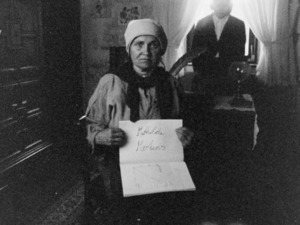
- Eine ländliche Region, ca. 1900. Die Landärztin Nerea Flores reist aus der Stadt in ein Dorf, um mit einer frühen Form einer Filmkamera Patientenfälle für ein medizinstudentisches Publikum zu dokumentieren. Der komplette Film erzählt sich ausschließlich aus dem Rohmaterial, das dabei entsteht – mitsamt Kameraein- und -ausschalten, Positionieren der Akteur*innen, Signalgebung etc.
Sie richtet eine improvisierte Praxis in einem leerstehenden Bauernhaus ein und probiert verschiedene, von schwer überwindbarer Distanz geprägte Therapiemethoden an den Personen aus – stets unter Anwesenheit der Kamera. Die Aufnahmepraxis irritiert die Patient*innen. Ein zur Kontrolle herbeigerufener Arztkollege bemängelt die Aufnahmen und befeuert eine radikalere Praxis beim Filmen, bei der ethische Fragen noch weiter in den Hintergrund treten sollen. Nerea fühlt sich in die Ecke gedrängt und innerlich zerrissen.
Schritt für Schritt löst sich unter Druck die Distanz zwischen Filmender und Gefilmtem auf. Flores bringt die Kamera schließlich auch mit in die Häuser der zu Behandelnden. Mit der Zeit empfinden die Patientinnen ihr Eingreifen als unangenehm und zu eindringlich und fliehen – um den Aufnahmeprozessen zu entgehen – ins Metaphysische. Nerea begegnet den zu Behandelnden nun in der Gestalt eines Waldstücks oder auch eines Baches. Da somit keine klassischen Therapieaufnahmen mehr möglich sind, wird das Projekt vorzeitig beendet.
- Eine ländliche Region, ca. 1900. Die Landärztin Nerea Flores reist aus der Stadt in ein Dorf, um mit einer frühen Form einer Filmkamera Patientenfälle für ein medizinstudentisches Publikum zu dokumentieren. Der komplette Film erzählt sich ausschließlich aus dem Rohmaterial, das dabei entsteht – mitsamt Kameraein- und -ausschalten, Positionieren der Akteur*innen, Signalgebung etc.
- Beschreibung (en)
- A rural region, around 1900. Country doctor Nerea Flores travels from the city to a village to document patient cases for a medical student audience using an early form of a film camera. The entire film is told exclusively through the raw material produced in the process – including switching the camera on and off, positioning the actors, giving cues, etc.
She sets up an improvised practice in an abandoned farmhouse and tries out various therapy methods shaped by a difficult-to-overcome emotional distance – always in the presence of the camera. The filming practice unsettles the patients. A doctor colleague, sent in for supervision, criticizes the recordings and pushes for a more radical filming approach in which ethical concerns are further sidelined. Nerea feels cornered and conflicted.
Step by step, under pressure, the distance between the filmer and the filmed dissolves. Flores eventually brings the camera into the homes of her patients. Over time, the patients perceive her interventions as too intrusive and uncomfortable and flee – in order to escape the filming process – into the metaphysical. Nerea now encounters those to be treated in the form of a patch of forest or even a stream. As a result, no further traditional therapy recordings can be made, and the project is prematurely ended.
- A rural region, around 1900. Country doctor Nerea Flores travels from the city to a village to document patient cases for a medical student audience using an early form of a film camera. The entire film is told exclusively through the raw material produced in the process – including switching the camera on and off, positioning the actors, giving cues, etc.
- Kategorie
- Typ des Projekts/Werks
- Schlagworte
- Datierung
- 2026
- Mitwirkende
- Dank an
- Sprache
- Untertitel (Film)
- Material
- Technik/Verfahren/Formate
- 4:3
- Dauer
- 72:29 min
- Land
- Titel
- Das Wasser ist silberhell und durchsichtig und möchte unberührt sein
- Projektleiter/in
- Semester
- Studiengang
- Typ der Abschlussarbeit
- Importiert am
- 30.05.2025
- Übergeordnete Sets
- 2
- Set enthält
- 0 10
Manchmal ist Schmerz ganz leise
Name that can easily go onto 2 lines
Author that can easily go onto 2 lines as well
- Titel
- Manchmal ist Schmerz ganz leise
- Titel (en)
- Sometimes pain is very quiet
- Autor/in
- Beschreibung (de)
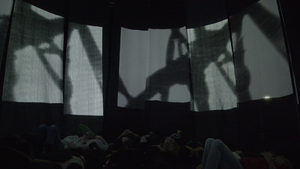
- „Manchmal ist Schmerz ganz leise“ ist eine immersive, autobiographische Hörstück-Installation, die den stillen und oft unsichtbaren Kampf mit einer schweren, namenlosen Krankheit in den Mittelpunkt stellt. Das Werk hinterfragt, was es bedeutet, in einer leistungsorientierten Gesellschaft plötzlich nicht mehr zu "funktionieren". Es geht den Ängsten, der Scham und dem tief empfundenen Gefühl des Versagens nach, das oft mit chronischer Krankheit einhergeht – Gefühle, die Betroffene selten teilen. Das Hörspiel verleiht einer Stimme Ausdruck, die für viele spricht und Einblicke in eine Realität gibt, die oft im Verborgenen bleibt.
- Beschreibung (en)
- ‘Sometimes pain is very quiet’ is an immersive, autobiographical audio play installation that focuses on the silent and often invisible battle with a serious, nameless illness. The work questions what it means to suddenly no longer ‘function’ in a performance-orientated society. It explores the fears, the shame and the deeply felt sense of failure that often accompanies chronic illness – feelings that are rarely shared by those affected. The radio play gives expression to a voice that speaks for many and provides insights into a reality that often remains hidden.
- Kategorie
- Typ des Projekts/Werks
- Schlagworte
- Datierung
- 30.10.2024
- Mitwirkende
- Dank an
- Finn Baygan
- Daniel Berwanger
- Pauline Cemeris
- Filipa Cesar
- Mark Patrick Damian
- Charlotte Eifler
- Flora Güldenpfennig
- Tobias Keilbach
- Eisenhart Keimeyer
- Alexander Knoppik
- Yael Kolb
- Isabelle Konrad
- Julian Kuf
- Barbara Kuon
- Josephine Leicht
- Laura Morcillo
- Ilja Morgenstern
- Sebastian Schäfer
- Sebastian Schönfeld
- Lorenz Schwarz
- Quirin Thalhammer
- Alexander Thelen
- Riemschneider Stiftung
- Zeitbild Lab
- Sprache
- Material
- Technik/Verfahren/Formate
- 4-Kanal-Audio/360° Projection Mapping
- Abmessungen
- Länge: 8m, Breite: 8m, Höhe: 6,50m
- Dauer
- 30min
- Ort: Institution
- Ort
- Großes Studio
- Stadt
- Land
- Titel
- Manchmal ist Schmerz ganz leise
- Projektleiter/in
- Semester
- Studiengang
- Typ der Abschlussarbeit
- Importiert am
- 17.04.2025
- Übergeordnete Sets
- 1
- Set enthält
- 1 5
Sekret
Name that can easily go onto 2 lines
Author that can easily go onto 2 lines as well
- Titel
- Sekret
- Untertitel
- Eine Tränen-Bar Performance
- Autor/in
- Beschreibung (de)
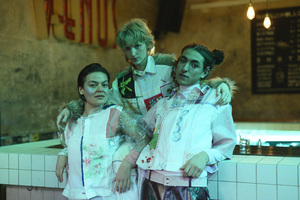
- In einer Bar, in der Innenstadt von Karlsruhe, trifft das Publikum auf ein tourendes Trio mit einer sonderbaren Geschichte: Es war einmal ein Nachtfalter, der lebte im Dschungel des brasilianischen Amazonas. Dieser Falter trug den Namen Gorgone macarea und hatte eine Angewohnheit, die für ein Lebewesen auf der Erde recht eigensinnig erschien. Gorgone macarea trank die Tränen schlafender Vögel. Für ihn: eine sichere Nahrungsquelle in unsicheren Zeiten. Da also Gorgone macareas Lebensraum sich immer mehr veränderte und auch die Vögel nach und nach wegzogen, machte der Falter sich auf, um andere Tränen zu suchen. Dabei kam ihm zu Ohren, dass der Mensch ganz besondere Tränen vergießt, wie kein anderes Lebewesen auf der Erde: Emotionale Tränen.
Und so entschloss sich der Nachtfalter, die Menschen einzuladen, um ihre Tränen mit ihm zu teilen.
Seither touren der Nachtfalter und seine zwei Kompliz*innen Sadgirl und Fluss von Bar zu Bar und lassen für einen Abend das Publikum Teil ihres Universums werden. Ein Universum – in dem Tränen die Hauptzutat des Abends sind und in jedem Cocktail serviert werden.
- In einer Bar, in der Innenstadt von Karlsruhe, trifft das Publikum auf ein tourendes Trio mit einer sonderbaren Geschichte: Es war einmal ein Nachtfalter, der lebte im Dschungel des brasilianischen Amazonas. Dieser Falter trug den Namen Gorgone macarea und hatte eine Angewohnheit, die für ein Lebewesen auf der Erde recht eigensinnig erschien. Gorgone macarea trank die Tränen schlafender Vögel. Für ihn: eine sichere Nahrungsquelle in unsicheren Zeiten. Da also Gorgone macareas Lebensraum sich immer mehr veränderte und auch die Vögel nach und nach wegzogen, machte der Falter sich auf, um andere Tränen zu suchen. Dabei kam ihm zu Ohren, dass der Mensch ganz besondere Tränen vergießt, wie kein anderes Lebewesen auf der Erde: Emotionale Tränen.
- Beschreibung (en)
- In a bar in downtown Karlsruhe, the audience encounters a touring trio with a peculiar story: Once upon a time, there was a moth living in the jungles of the Brazilian Amazon. This moth was called Gorgone macarea and had a habit that seemed rather unusual for a creature on Earth. Gorgone macarea drank the tears of sleeping birds. For the moth, it was a reliable source of nourishment in uncertain times. After all, even back then, the Amazon rainforest was considered a so-called tipping element, capable of disrupting the global climate balance. As Gorgone macarea’s habitat changed more and more, and the birds gradually disappeared, the moth set out in search of other tears. Along the way, it heard that humans shed a kind of tear unlike any other creature on Earth: emotional tears.
And so, the moth decided to invite humans to share their tears with it.
Since then, the moth and its two companions, Sadgirl and Fluss, have been touring from bar to bar, drawing the audience into their universe for one night. A universe where tears are the main ingredient of the evening—served in every cocktail.
- In a bar in downtown Karlsruhe, the audience encounters a touring trio with a peculiar story: Once upon a time, there was a moth living in the jungles of the Brazilian Amazon. This moth was called Gorgone macarea and had a habit that seemed rather unusual for a creature on Earth. Gorgone macarea drank the tears of sleeping birds. For the moth, it was a reliable source of nourishment in uncertain times. After all, even back then, the Amazon rainforest was considered a so-called tipping element, capable of disrupting the global climate balance. As Gorgone macarea’s habitat changed more and more, and the birds gradually disappeared, the moth set out in search of other tears. Along the way, it heard that humans shed a kind of tear unlike any other creature on Earth: emotional tears.
- Kategorie
- Typ des Projekts/Werks
- Schlagworte
- Datierung
- 20.12.2024
- Mitwirkende
- Dank an
- Dauer
- 40 Minuten
- Ort
- Venus Bar, Kaiserpassage
- Stadt
- Land
- Titel
- Sekret
- Untertitel
- Eine Tränen-Bar Performance
- Projektleiter/in
- Semester
- Studiengang
- Typ der Abschlussarbeit
- Importiert am
- 26.02.2025
- Übergeordnete Sets
- 3
- Set enthält
- 0 15
LET ME SEE (c) THE SUN
Name that can easily go onto 2 lines
Author that can easily go onto 2 lines as well
- Titel
- LET ME SEE (c) THE SUN
- Autor/in
- Beschreibung (de)
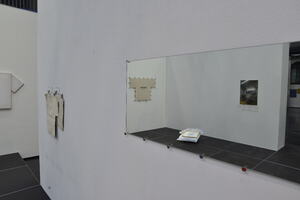
- Die Diplomarbeit „LET ME SEE (c) THE SUN“ setzt sich mit Sprache und Kommunikation auseinander, wobei das Medium Kleidung als Sprachrohr von Geschichten und als Bote von Identitäten analysiert werden soll.
Die ausgestellten Arbeiten greifen visuelle Elemente von Theaterkostümen, Bühnenrequisiten und Umkleidekabinen auf, um Besucher*innen einzuladen, sich selbst als Performer*innen von Sprache und Identität wahrzunehmen. Ein besonderer Schwerpunkt liegt dabei auf grafischen T-Shirts, da diese oft kulturelle Assoziationen oder oberflächliche Identitäten signalisieren (z. B. Bandshirts, Arbeitskleidung). Diese bekannte Struktur wird dekonstruiert und umgebaut, um Betrachter*innen die Bewohnbarkeit von Sprache zu verdeutlichen.
Die begleitende Performance beschäftigt sich mit der Mehrdeutigkeit von Sprache, die stets von persönlicher Interpretation abhängt. Wörter und Texte sind untrennbar mit ihrem Kontext sowie der Art und Weise verbunden, wie und wo sie erscheinen. In den Text-/Textil-Konstruktionen werden Wörter zu Requisiten, die Bedeutungen – sowohl offensichtlich als auch schwer fassbar – tragen und durch das Medium der Requisite von anderen „bewohnt“ werden können.
- Die Diplomarbeit „LET ME SEE (c) THE SUN“ setzt sich mit Sprache und Kommunikation auseinander, wobei das Medium Kleidung als Sprachrohr von Geschichten und als Bote von Identitäten analysiert werden soll.
- Beschreibung (en)
- The diploma project “LET ME SEE (c) THE SUN” deals with language and communication, analyzing the medium of clothing as a mouthpiece for stories and as a messenger of identities.
The exhibited works take up visual elements of theater costumes, stage props and dressing rooms to invite visitors to perceive themselves as performers of language and identity. A particular focus is placed on graphic T-shirts, as these often signal cultural associations or superficial identities (e.g. band shirts, work clothes). This familiar structure is deconstructed and rebuilt to show viewers the habitability of language.
The accompanying performance deals with the ambiguity of language, which always depends on personal interpretation. Words and texts are inextricably linked to their context and how and where they appear. In the text/textile constructions, words become props that carry meanings - both obvious and elusive - and can be “inhabited” by others through the medium of the prop.
- The diploma project “LET ME SEE (c) THE SUN” deals with language and communication, analyzing the medium of clothing as a mouthpiece for stories and as a messenger of identities.
- Kategorie
- Typ des Projekts/Werks
- Schlagworte
- Datierung
- 15.01.2025
- Mitwirkende
- Dank an
- Paul Bailey
- Jonathan Blaschke
- Céline Condorelli
- Amelie Enders
- Till Engelhardt
- Kira Fuchs
- Line-Gry Hørup
- Rafael Jörger
- Chiara Kern
- Simon Knebl
- Florian Knöbl
- Alexander Knoppik
- Barbara Kuon
- James Langdon
- Nina Overkott
- Leo Schick
- Henriette Schwabe (Jette Schwabe)
- Neele Seidel
- Isabel Seiffert
- Moritz Kamil Simon
- Charlotte Singer
- Niklas Weisenbach
- Maximilian Zschiesche
- Sprache
- Material
- Ort: Institution
- Ort
- Lichthof 3
- Stadt
- Land
- Titel
- LET ME SEE (c) THE SUN
- Projektleiter/in
- Semester
- Studiengang
- Typ der Abschlussarbeit
- Importiert am
- 11.02.2025
- Übergeordnete Sets
- 3
- Set enthält
- 0 11
It's okay now
Name that can easily go onto 2 lines
Author that can easily go onto 2 lines as well
- Titel
- It's okay now
- Titel (en)
- It's okay now
- Autor/in
- Beschreibung (de)
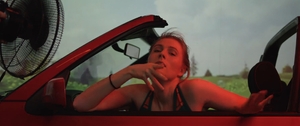
- "It’s okay now" ist ein autobiografisches Werk, das durch die Praxis des Erinnerns die Herkunft und Identität der beiden Protagonistinnen hinterfragt, analysiert und miteinander vergleicht. Das Erinnern dient dabei nicht nur als Mittel der Reflexion, sondern auch als eine Form des Träumens und Verarbeitens von Vergangenem. Fiktionale Szenen und Archivmaterial verweben sich zu einer Erzählung, die persönliche und kollektive Erinnerungen miteinander verschmelzen lässt.
- Beschreibung (en)
- "It’s okay now" is an autobiographical work that, through the practice of remembering, questions, analyzes, and compares the origins and identities of the two protagonists. In this process, remembering serves not only as a tool for reflection but also as a form of dreaming and processing the past. Fictional scenes and archival material intertwine to create a narrative that fuses personal and collective memories.
- Kategorie
- Typ des Projekts/Werks
- Schlagworte
- Datierung
- 01.10.2024 - 04.10.2024
- Mitwirkende
- Dank an
- Sprache
- Untertitel (Film)
- Material
- Technik/Verfahren/Formate
- 3-Kanal-Video-Audio Rauminstallation
- Abmessungen
- Breite: 10m; Tiefe: 10m; Höhe 4,5m
- Dauer
- 45 min
- Ort: Institution
- Ort
- Großes Studio
- Stadt
- Land
- Beteiligte Institution(en)
- Titel
- It's okay now
- Projektleiter/in
- Semester
- Studiengang
- Typ der Abschlussarbeit
- Archiv-Signatur
- its okay now
- Importiert am
- 10.10.2024
- Übergeordnete Sets
- 3
- Set enthält
- 0 11
.HYP
Name that can easily go onto 2 lines
Author that can easily go onto 2 lines as well
- Titel
- .HYP
- Untertitel
- A digital wildgrowth
- Autor/in
- Beschreibung (de)
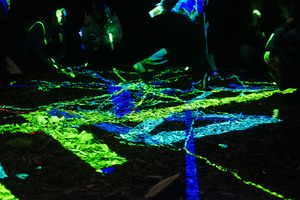
- .HYP ist eine multisensorische Installation und Projektionsarbeit einer sich verändernden digitalen Lebensform. Die Diplomarbeit .HYP lotet die Grenzen zwischen digitalem Leben und der analogen Welt mithilfe eines eigens entwickelten Programms mit spezialisierten Unterprogrammen aus, welches das biologische Verhalten von Pilzmyzel nachahmt. Der Titel der Arbeit leitet sich von Pilzzellen (Hyphen) ab.
Besucher*innen der Installation können mit dem Programm interagieren, indem sie ihre eigenen Dateien über einen QR-Code hochladen. .HYP „verdaut“ diese Daten und verwandelt sie in sich ständig weiterentwickelnde, farbenfrohe Muster, die in einem abgedunkelten Raum auf einen organischen Boden aus Rindenmulch projiziert werden. Die Installation wird zu einem immersiven Erlebnis.
- .HYP ist eine multisensorische Installation und Projektionsarbeit einer sich verändernden digitalen Lebensform. Die Diplomarbeit .HYP lotet die Grenzen zwischen digitalem Leben und der analogen Welt mithilfe eines eigens entwickelten Programms mit spezialisierten Unterprogrammen aus, welches das biologische Verhalten von Pilzmyzel nachahmt. Der Titel der Arbeit leitet sich von Pilzzellen (Hyphen) ab.
- Beschreibung (en)
- .HYP is a multisensory installation and projection piece depicting an evolving digital life form. The graduation project .HYP explores the boundaries between digital life and the analog world using a custom-developed program with specialized subroutines that mimic the biological behavior of fungal mycelium. The title of the work is derived from fungal cells (hyphae).
Visitors to the installation can interact with the program by uploading their own files via a QR code. .HYP “digests” this data and transforms it into constantly evolving, colorful patterns that are projected onto an organic floor of bark mulch in a darkened room. The installation becomes an immersive experience.
- .HYP is a multisensory installation and projection piece depicting an evolving digital life form. The graduation project .HYP explores the boundaries between digital life and the analog world using a custom-developed program with specialized subroutines that mimic the biological behavior of fungal mycelium. The title of the work is derived from fungal cells (hyphae).
- Kategorie
- Typ des Projekts/Werks
- Schlagworte
- Sprache
- Material
- Technik/Verfahren/Formate
- coding
- Abmessungen
- 8m x 4,5m
- Dauer
- open end
- Ort: Institution
- Ort
- Großes Studio in der Hochschule für Gestaltung in Karlsruhe
- Stadt
- Land
- Internetlinks
- Titel
- .HYP
- Untertitel
- A digital wildgrowth
- Projektleiter/in
- Semester
- Studiengang
- Typ der Abschlussarbeit
- Importiert am
- 05.03.2024
- Übergeordnete Sets
- 3
- Set enthält
- 0 8