Shadows of Reflection
Benachbarte Sets (109)Alle Zusammenhänge anzeigen
Diese Sets wurden den gleichen Sets hinzugefügt wie das ausgewählte Set.
109 Inhalte
- Seite 1 von 10
TOWER POWER
Name that can easily go onto 2 lines
Author that can easily go onto 2 lines as well
- Titel
- TOWER POWER
- Autor/in
- Beschreibung (de)
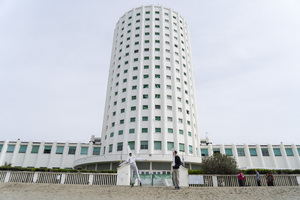
- TOWER POWER ist ein szenischer Kurzessay zur architektonischen Formensprache und Symbolik des Torre Fiat in Marina di Massa, Italien - einem Turm aus der Zeit des italienischen Faschismus und Ausstellungsort des POST-COLONIA Festivals of Architecture and Imaginaries in Transition, für das die Arbeit entwickelt wurde.
Als in Architektur materialisierte Ideologie steht der Turm scheinbar unausweichlich für eine lineare, gewaltvolle Erzählung von Geschichte. Mithilfe von Ursula K. Le Guins „Carrier Bag Theory of Fiction“ (1986) befragt TOWER POWER die dem Turm eingeschriebenen Narrative und den Umgang mit einem derart aufgeladenen baulichen Erbe:
"Are we in an airplane? A column? A ‚fascio littorio‘? What would each scenario mean? […] It’s just a building, right?" (deutsche Übersetzung: "Sitzen wir in einem Flugzeug? Einer Säule? Einem „Fascio Littorio“? Was würde das jeweils bedeuten? […] Es ist doch nur ein Gebäude, oder?")
- TOWER POWER ist ein szenischer Kurzessay zur architektonischen Formensprache und Symbolik des Torre Fiat in Marina di Massa, Italien - einem Turm aus der Zeit des italienischen Faschismus und Ausstellungsort des POST-COLONIA Festivals of Architecture and Imaginaries in Transition, für das die Arbeit entwickelt wurde.
- Beschreibung (en)
- TOWER POWER is a short performative essay, investigating the formal language and architectural symbolism of the Torre Fiat in Marina di Massa, Italy - a tower built during the Italian Fascist era, and the venue of POST-COLONIA Festival of Architecture and Imaginaries in Transition we had been invited to explore and exhibit in.
Steeped in ideology, the tower’s architecture inescapably seems to stand for a linear, violent historiography. TOWER POWER investigates the narratives inscribed into the tower through the lens of Ursula K. Le Guin’s Carrier Bag Theory of Fiction and poses questions on how to deal with such a charged architectural legacy:
"Are we in an airplane? A column? A ‚fascio littorio‘? What would each scenario mean? […] It’s just a building, right?"
- TOWER POWER is a short performative essay, investigating the formal language and architectural symbolism of the Torre Fiat in Marina di Massa, Italy - a tower built during the Italian Fascist era, and the venue of POST-COLONIA Festival of Architecture and Imaginaries in Transition we had been invited to explore and exhibit in.
- Kategorie
- Typ des Projekts/Werks
- Schlagworte
- Datierung
- 2025
- Mitwirkende
- Dank an
- Sprache
- Titel
- TOWER POWER
- Projektleiter/in
- Semester
- Studiengang
- Importiert am
- 27.06.2025
- Übergeordnete Sets
- 0
- Set enthält
- 0 7
Ministry for the Future
Name that can easily go onto 2 lines
Author that can easily go onto 2 lines as well
- Titel
- Ministry for the Future
- Titel (en)
- Ministry for the Future
- Autor/in
- Beschreibung (de)
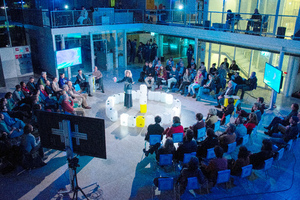
- Ministry for the Future ist eine transdisziplinäre Produktion über mögliche Zukünfte im Angesicht der Klimakrise – und darüber, wie wir sie verhandeln, bevor sie eintreten. Inspiriert vom gleichnamigen Roman von Kim Stanley Robinson entwickelte sich ein groß angelegtes Kooperationsprojekt zwischen dem Theater Neumarkt, dem Collegium Helveticum Zürich und der Hochschule für Gestaltung Karlsruhe.
Ausgangspunkt ist ein spekulatives Szenario im Jahr 2034: Die Erde hat Kipppunkte erreicht, Regierungen reagieren, eine neue Institution wird gegründet – das Ministerium für die Zukunft. Innerhalb dieser Fiktion operiert die Produktion als diskursives Format, das sich fortlaufend mit der zentralen Frage auseinandersetzt: Welche Handlungsspielräume bleiben uns?
Das Projekt kombiniert künstlerische, wissenschaftliche und gestalterische Perspektiven zu einem Format zwischen Preenactment und realer Wissenschaftskommunikation. Herzstück ist ein mobiles Bühnenbild, das drängende forschungsbasierte Diskurse in eine begehbare, funktionale Infrastruktur übersetzt. Die Szenografie wurde konsequent durch Re- und Upcycling-Prozesse entwickelt. Sie folgt einer Haltung, die den Anforderungen ökologischer Krisen standhalten will – indem sie aus dem Material jener Krisen selbst hervorgeht. In vier thematisch fokussierten Episoden an vier verschiedenen Orten in Zürich wird der Raum selbst zum Instrument: eine spekulative Versammlung, eine temporäre Institution, ein Möglichkeitslabor.
Die Inszenierung bringt reale Wissenschaftler:innen, Performer:innen und Bürger:innen im Modus eines fiktionalen Ministeriums in Austausch – und mit ihnen die Fragen: Wie lässt sich Zukunft verhandeln, wenn sie längst begonnen hat? Was bedeutet Teilhabe, wenn die Katastrophe strukturell geworden ist? Und wie kann Raum für solche Aushandlungen heute aussehen?
- Ministry for the Future ist eine transdisziplinäre Produktion über mögliche Zukünfte im Angesicht der Klimakrise – und darüber, wie wir sie verhandeln, bevor sie eintreten. Inspiriert vom gleichnamigen Roman von Kim Stanley Robinson entwickelte sich ein groß angelegtes Kooperationsprojekt zwischen dem Theater Neumarkt, dem Collegium Helveticum Zürich und der Hochschule für Gestaltung Karlsruhe.
- Beschreibung (en)
- Ministry for the Future is a transdisciplinary production about possible futures in the face of the climate crisis—and about how we negotiate them before they arrive. Inspired by the novel of the same name by Kim Stanley Robinson, the project evolved into a large-scale collaboration between Theater Neumarkt, the Collegium Helveticum Zurich, and the Karlsruhe University of Arts and Design (HfG).
Its starting point is a speculative scenario set in the year 2034: the Earth has reached tipping points, governments are reacting, and a new institution is established—the Ministry for the Future. Within this fiction, the production functions as a discursive format that continuously engages with the central question: What room for action remains?
The project combines artistic, scientific, and design perspectives into a hybrid format somewhere between preenactment and real science communication. At its core is a mobile stage design that translates urgent, research-based discourses into an immersive, functional infrastructure. The scenography was developed entirely through re- and upcycling processes, guided by an attitude that seeks to meet the demands of ecological crises—by emerging from their very material. Across four thematically focused episodes in four different locations in Zurich, the space itself becomes an instrument: a speculative assembly, a temporary institution, a lab of possibilities.
The performance brings together real scientists, performers, and citizens within the framework of a fictional ministry—and with them, the questions: How can we negotiate the future when it has already begun? What does participation mean when catastrophe has become structural? And what kind of space is needed for such negotiations today?
- Ministry for the Future is a transdisciplinary production about possible futures in the face of the climate crisis—and about how we negotiate them before they arrive. Inspired by the novel of the same name by Kim Stanley Robinson, the project evolved into a large-scale collaboration between Theater Neumarkt, the Collegium Helveticum Zurich, and the Karlsruhe University of Arts and Design (HfG).
- Kategorie
- Typ des Projekts/Werks
- Schlagworte
- Sprache
- Dauer
- 4 Episoden, jeweils 2 Stunden
- Ort: Institution
- Ort
- Episode 1: ETH Zürich
Episode 2: Naturhistorisches Museum Zürich
Episode 3: Wasserkirche Zürich
Episode 4: Semper Sternwarte / Collegium Helveticum Zürich
- Episode 1: ETH Zürich
- Land
- Beteiligte Institution(en)
- Titel
- Ministry for the Future
- Projektleiter/in
- Semester
- Studiengang
- Importiert am
- 29.06.2025
- Übergeordnete Sets
- 0
- Set enthält
- 0 39
Folded Sheets
Name that can easily go onto 2 lines
Author that can easily go onto 2 lines as well
- Titel
- Folded Sheets
- Autor/in
- Beschreibung (de)
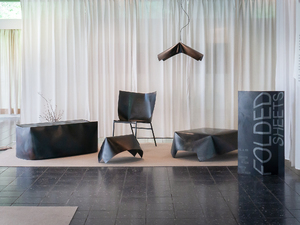
- Folded Sheets untersucht, wie sich Papier-Falttechniken auf Stahlbleche übertragen lassen. Rechteckige Tafeln werden durch gezielte Einschnitte und Faltungen in stabile dreidimensionale Formen gebracht, ohne dass Material verloren geht. Der Prozess des Schwarzbrennens, bei dem Leinöl in die Oberfläche eingebrannt wird, verleiht den Objekten ihre charakteristische schwarze Färbung, schützt sie vor Korrosion und unterstützt die strukturelle Festigkeit.
- Beschreibung (en)
- Folded Sheets explores the possiblities of transferring paper folds into steel sheet furniture. By using cuts and folds on rectangular steel sheets, tensioned rigid shapes without offcuts are created. The objects are further strengthend by blackening the surface with burnt linseed oil.
- Kategorie
- Typ des Projekts/Werks
- Schlagworte
- Datierung
- 2025
- Dank an
- Material
- Technik/Verfahren/Formate
- Falttechnik, Schwarzbrennen mit Leinöl
- Stadt
- Land
- Internetlinks
- Titel
- Folded Sheets
- Projektleiter/in
- Semester
- Studiengang
- Typ der Abschlussarbeit
- Importiert am
- 15.07.2025
- Übergeordnete Sets
- 3
- Set enthält
- 0 18
About Fighting the Fear (of the World)
Name that can easily go onto 2 lines
Author that can easily go onto 2 lines as well
- Titel
- About Fighting the Fear (of the World)
- Titel (en)
- About Fighting the Fear (of the World)
- Autor/in
- Beschreibung (de)
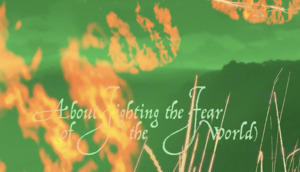
- "Über das Bekämpfen der Angst (vor der Welt)" ist eine spekulative Videoarbeit, die ein Spektrum von Phänomenen rund um Karten, Angst, Krieg, Reisen und den Körper abdeckt, wobei der Schwerpunkt auf der Praxis der Kartierung als Instrument zur Unterdrückung und Kontrolle von Land und Menschen liegt. Das Video versucht, einen Rahmen für das Thema zu schaffen, indem es viele verschiedene Geschichten zu einem Cluster zusammenführt, der vielleicht nicht repräsentativ ist, aber einige Teile des Themas beleuchtet. Ästhetisch und strukturell ist das Video von Rollenspielen, der Pre-Vis-Technik (die in Filmproduktionen verwendet wird) und Found Footage inspiriert. Das Szenario ist in einer fernen Zukunft angesiedelt, in der Klimawandel und Massenaussterben längst ihre Auswirkungen gezeigt haben und die Bestien, die vor der großen Kolonisierung über das Unbekannte wachten, zurückgekehrt sind. In der Rolle der Hauptfigur sucht der Zuschauer, angeleitet von einem Erzähler, nach Überresten der alten Welt, um zu verstehen, warum alles kartiert werden musste.
- Beschreibung (en)
- "About Fighting the Fear (of the World)" is a speculative video work that covers a spectrum of phenomena around maps, fear, war, traveling, and the body, with a focus on the practice of mapping as a tool to oppress and control land and people. The video attempts to frame the issue by bringing together many different stories to create a cluster that may not be representative but illuminates some parts of the issue. Aesthetically and structurally, the video is inspired by role-playing games, pre-vis technique (used in film productions), and found footage. The scenario is set in a distant future in which climate change and mass extinction have long since had an impact and beasts that used to watch over the unknown before the big colonization have returned. As the main character, the viewer searches for remnants of the old world, guided by a narrator, in order to understand why everything had to be mapped.
- Typ des Projekts/Werks
- Schlagworte
- Datierung
- 22.02.2024
- Mitwirkende
- Dank an
- Sprache
- Untertitel (Film)
- Material
- Technik/Verfahren/Formate
- MP4
- Abmessungen
- 2500 x 1080 px
- Dauer
- 26 min
- Ort: Institution
- Ort
- Werkschau und Diplominstallation in Raum 222, Video-Screening im Kino im Blauen Salon
- Stadt
- Land
- Titel
- About Fighting the Fear (of the World)
- Projektleiter/in
- Semester
- Studiengang
- Typ der Abschlussarbeit
- Importiert am
- 28.02.2024
- Übergeordnete Sets
- 3
- Set enthält
- 3 3
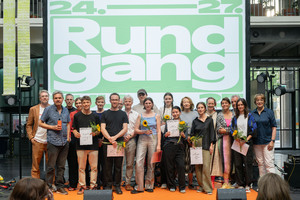
Preisverleihung Rundgang 2025
Name that can easily go onto 2 lines
Author that can easily go onto 2 lines as well
- Titel
- Preisverleihung Rundgang 2025
- Autor/in
- Datierung
- 24.07.2025
- Titel
- Preisverleihung Rundgang 2025
- Importiert am
- 28.07.2025
- Übergeordnete Sets
- 0
- Set enthält
- 0 18
Fernand Léger und Ballet Mécanique
Name that can easily go onto 2 lines
Author that can easily go onto 2 lines as well
- Titel
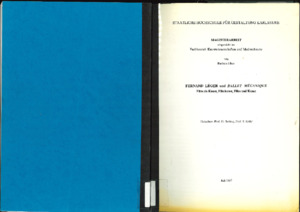
- Fernand Léger und Ballet Mécanique
- Untertitel
- Film als Kunst, Filmkunst, Film und Kunst
- Autor/in
- Beschreibung (de)
- „‚Ballet Mécanique‘ ist zu einer Zeit entstanden, die als Höhepunkt, und immer wieder auch als Wendepunkt in Légers Malerei verstanden wird. Der Film fügt sich nicht nur in seine künstlerische Konzeption ein, sondern hat diese auch zum Thema. ‚Ballet Mécanique‘ ist ein Manifest, nicht nur für seine Kunst, sondern auch für das Kino. Wie bei seinen Literatenfreunden ist Légers intensive Auseinandersetzung mit dem Kino von einer doppelten Intention geprägt, von deren Hinwendung zu dem jungen Medium als potentiellen Mittel, die eigene Kunst zu reformieren, und vom Entwurf eines neuen Konzepts von Film, der seinerseits durch die gestalterische Intervention von Dichtern und Malern zu seinen eigenen Ausdrucksmitteln findet."
- Beschreibung (en)
- “'Ballet Mécanique' was created at a time that is seen as a high point, and also repeatedly as a turning point, in Léger's painting. The film not only fits into his artistic conception, but also has it as its theme. 'Ballet Mécanique' is a manifesto, not only for his art, but also for cinema. As with his literary friends, Léger's intensive engagement with cinema is characterized by a double intention, by their turn to the young medium as a potential means of reforming their own art, and by the design of a new concept of film, which in turn finds its own means of expression through the creative intervention of poets and painters.”
- Kategorie
- Schlagworte
- Datierung
- Juli 1997
- Sprache
- Ort: Institution
- Stadt
- Land
- Titel
- Fernand Léger und Ballet Mécanique
- Untertitel
- Film als Kunst, Filmkunst, Film und Kunst
- Projektleiter/in
- Semester
- Studiengang
- Typ der Abschlussarbeit
- Archiv-Signatur
- HfG HS 1997 02
- Externes Archiv
- Importiert am
- 11.01.2024
- Übergeordnete Sets
- 2
- Set enthält
- 0 2
Path Tiles
Name that can easily go onto 2 lines
Author that can easily go onto 2 lines as well
- Titel
- Path Tiles
- Titel (en)
- Path Tiles
- Untertitel
- Knitting Coordinates into Patterns
- Untertitel des Projekts/Werks (en)
- Knitting Coordinates into Patterns
- Autor/in
- Beschreibung (de)
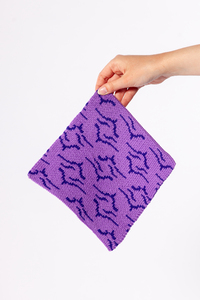
- Unsere Bewegungen können wie eine Performance begriffen werden, wie etwas Flüchtiges, das nur im Moment existiert und nach der Vollendung weder sichtbar noch fassbar ist. Nur die Erinnerungen an das Erlebte bleiben als Spuren der Bewegung in unserem Geist erhalten. Path Tiles nutzt GPS-Daten, um diese besonderen Momente individueller Erfahrung einzufangen und in Form von Mustern in die physische Welt des sicht- und tastbaren Textils zu übertragen. Es entsteht eine tiefe Bindung zwischen Mensch und Objekt.
Jedes Muster steht für eine Reise, für eine Erfahrung. Dabei ist es egal, ob es sich um einen Spaziergang in der Natur, eine Reise in ein fernes Land oder einen wiederkehrenden Weg des Alltags handelt. Die daraus entstehenden Muster erzählen von den Gefühlen und Begegnungen, von dem Gesehenen und dem Erlebten und erinnern uns an das, was uns ausmacht.
Mit der Path Tiles Website habe ich ein Werkzeug entwickelt, um diese Reisen in Form von GPS-Daten in strickbare Muster zu verwandeln. Ich habe die Website so gestaltet, dass die Ästhetik des Musters durch zusätzliche Verschiebung, Verzerrung und Spiegelung individualisiert werden kann. Dies stellt außerdem sicher, dass Menschen mit der gleichen Strecke trotzdem persönliche Muster erstellen können. Das entstandene Muster wird dann in Form eines gestricktes Objekts zum Leben erweckt und wird zur materialisierten persönlichen Erfahrung. Durch die Einbeziehung des Nutzers in den Gestaltungsprozess entsteht eine weitere Ebene der Bindung zwischen Mensch und Objekt.
Für das Diplom habe ich exemplarisch fünf Objekte gestaltet, die mit diesen Mustern personalisiert werden können. Das Design der Objekte konzentriert sich darauf, das Reisen oder das „unterwegs sein“ in verschiedenen Situationen zu erleichtern. In diesem Prozess ist ein Schal mit Taschen, ein Umhang, der gleichzeitig als Decke genutzt werden kann, eine Tasche, die zugleich ein Kissen ist, eine Balaklava mit Ohrenschützern und ein Nackenkissen mit Rückenstütze und Taschen in den verlängerten Seitenteilen entstanden.
Für die finale Herstellung der Objekte haben fünf Personen die GPS-Daten verschiedener Routen verwendet um ihre persönlichen Muster auf der Path Tiles Website zu erstellen. Jedes der Objekte wurde zu einer Person, einer Reise, einem Muster zugeordnet und entsprechend produziert. Die fertigen Objekte sind die materialisierten Erfahrungen und Erinnerungen dieser Menschen.
Begleitend zu dieser Arbeit habe ich mit der Sammlung von Reisen in Form von Geschichten und Mustern begonnen. Hierbei ist ein kleines Booklet entstanden, das die Beiträge von 19 Menschen beinhaltet. Sie alle haben eine Erinnerung von einer Reise in Form von Text und Muster mit mir geteilt.
- Unsere Bewegungen können wie eine Performance begriffen werden, wie etwas Flüchtiges, das nur im Moment existiert und nach der Vollendung weder sichtbar noch fassbar ist. Nur die Erinnerungen an das Erlebte bleiben als Spuren der Bewegung in unserem Geist erhalten. Path Tiles nutzt GPS-Daten, um diese besonderen Momente individueller Erfahrung einzufangen und in Form von Mustern in die physische Welt des sicht- und tastbaren Textils zu übertragen. Es entsteht eine tiefe Bindung zwischen Mensch und Objekt.
- Beschreibung (en)
- Movement is like a performance, something momentous becoming invisible and untouchable as soon as it is complete. Only the memories of the experience remain as traces of the movement in our minds. Path Tiles captures these valuable moments of individual experiences and transfers them into the physical world of visible and tactile textiles, creating a deep relationship between person and object.
Each pattern represents a journey, an experience. It doesn't matter whether it's a walk in nature, a trip to a distant country, or a repeating path in everyday life. The resulting patterns tell of the emotions evoked by landscapes, the lessons learned along the way and the power of the journey to shape our lives.
With the Path Tiles website, I have developed a tool to transform these journeys into knitable patterns using GPS data. I designed the website so that the aesthetics of the pattern can be individualized through shifting, distorting, and mirroring. This ensures that even people with the same route can create personal patterns. The resulting pattern is then brought to life in the form of a knitted object, becoming a materialized personal experience. By involving the user in the design process, an additional layer of connection between person and object is created.
For my diploma, I have designed five objects that can be personalized with these patterns. The design of these objects focuses on making travelling or being "on the go" more comfortable. This process has resulted in the creation of a scarf with pockets, a cape that can also be used as a blanket, a bag that doubles as a pillow, a balaclava with ear cushions, and a neck pillow with back support and pockets in the extended side parts.
For the final production of the objects, five people used the GPS data of different routes to create their personal patterns on the Path Tiles website. Each of the objects was assigned to a person, a journey, a pattern, and then produced accordingly. The finished objects are the materialized experiences and memories of these people.
Accompanying this work, I have started collecting journeys in the form of stories and patterns. This resulted in a small booklet that includes contributions from 19 people. They all shared a memory of a journey in the form of text and pattern with me.
- Movement is like a performance, something momentous becoming invisible and untouchable as soon as it is complete. Only the memories of the experience remain as traces of the movement in our minds. Path Tiles captures these valuable moments of individual experiences and transfers them into the physical world of visible and tactile textiles, creating a deep relationship between person and object.
- Kategorie
- Typ des Projekts/Werks
- Schlagworte
- Datierung
- April 2024
- Mitwirkende
- Dank an
- Material
- Ort: Institution
- Internetlinks
- Bemerkungen
- Die Diplomarbeit wurde von Prof. Wieki Somers und Prof. Céline Condorelli betreut.
- Titel
- Path Tiles
- Untertitel
- Knitting Coordinates into Patterns
- Projektleiter/in
- Semester
- Studiengang
- Typ der Abschlussarbeit
- Importiert am
- 28.05.2024
- Übergeordnete Sets
- 4
- Set enthält
- 0 42
Versuche zu überschreiben
Name that can easily go onto 2 lines
Author that can easily go onto 2 lines as well
- Titel
- Versuche zu überschreiben
- Titel (en)
- Attempts to rewrite
- Untertitel
- Ausstellung mit drei Videoarbeiten: Auf dem Weg zum Bahnhof, Prolog: Im Zoo, Germania Girl - Konzert im Schloss!
- Untertitel des Projekts/Werks (en)
- Exhibition with three video works: On the way to the station, Prologue: In the zoo, Germania Girl - Concert in the castle!
- Autor/in
- Beschreibung (de)
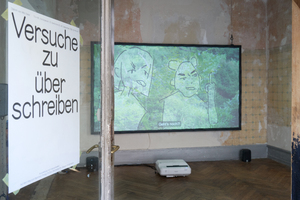
- Obszön, nerdy und aus Japan: Anime im Fernsehen zu schauen galt in vielen Haushalten in Deutschland als verrufen. Diese Rezeption von Anime entspricht zugleich den exotisierenden Stereotypen, die der (vorgeblich gesittete) Westen auf Japan projiziert. In ihrer Diplomarbeit nutzt Miki Feller Anime als Medium, um über anti-asiatischen Rassismus zu sprechen. Entstanden sind drei Videoarbeiten, die sie in ihrer Ausstellung „Versuche zu überschreiben“ gezeigt hat. Jedes Video erzählt eine eigene Geschichte, die in Karlsruhe spielt, unter anderem am Bahnhof, am Zoo und am Schloss. Es sind Versuche, eine vorherrschend weiße Umgebung zu beschreiben, sich dazu zu positionieren und davon zu distanzieren.
Die Videos wurden in Zusammenarbeit mit folgenden Personen realisiert und ausgestellt: „Versuche zu überschreiben“ mit Max Mandery (Dramaturgische Beratung), Bruno Jacoby (Grafik), Leia Walz (Ausstellungsgestaltung), Jaya Demmer (Textil), Johannes Thimm und Lina Determann (Rampe) / „Auf dem Weg zum Bahnhof“ mit Bruno Jacoby (Grafik) / „Prolog: Im Zoo“ mit Sophia Stadler (Storyboard, Schnitt & Fotos) / „Germania Girl – Konzert im Schloss!“ mit Max Mandery (Dramaturgische Beratung), Bruno Jacoby (Grafik), Yun-Wen Liu (Fotos & Farbkorrektur), Vanessa Bosch (Musik), Ricarda Fischer (Musik & Sounddesign), Meret Bhend und Paulina Mimberg (Farbkorrektur), Luise Peschko (Dialog Editing) sowie Nele Faust, Alejandra Janus, Melanie Berner, Rita Andrulyte, Nini Lü, Jörg Stegmann, Laura Haak und Josefine Scheu (Stimmen).
- Obszön, nerdy und aus Japan: Anime im Fernsehen zu schauen galt in vielen Haushalten in Deutschland als verrufen. Diese Rezeption von Anime entspricht zugleich den exotisierenden Stereotypen, die der (vorgeblich gesittete) Westen auf Japan projiziert. In ihrer Diplomarbeit nutzt Miki Feller Anime als Medium, um über anti-asiatischen Rassismus zu sprechen. Entstanden sind drei Videoarbeiten, die sie in ihrer Ausstellung „Versuche zu überschreiben“ gezeigt hat. Jedes Video erzählt eine eigene Geschichte, die in Karlsruhe spielt, unter anderem am Bahnhof, am Zoo und am Schloss. Es sind Versuche, eine vorherrschend weiße Umgebung zu beschreiben, sich dazu zu positionieren und davon zu distanzieren.
- Beschreibung (en)
- Obscene, nerdy, and from Japan: In many German households, it was forbidden to watch anime on television. This perception of anime mirrors the exoticizing stereotypes projected onto Japan by the (allegedly civilized) West. In her diploma project, Miki Feller addresses anti-Asian racism in Germany by using anime as the medium. She created three video works and showcased them in the exhibition “Versuche zu überschreiben.” Each video tells a story set in Karlsruhe, for example, at the train station, the zoo, and the castle. These videos serve as attempts to describe a predominantly white environment, to position oneself in relation to it, and to distance oneself from it.
The videos were created and presented in collaboration with the following people: "Versuche zu überschreiben" with Max Mandery (dramaturgical consultation), Bruno Jacoby (graphics), Leia Walz (exhibition design), Jaya Demmer (textile), Johannes Thimm and Lina Determann (ramp) / "Auf dem Weg zum Bahnhof" with Bruno Jacoby (graphics) / "Prolog: Im Zoo" with Sophia Stadler (storyboard, editing & photos) / "Germania Girl - Konzert im Schloss!" with Max Mandery (dramaturgical consultation), Bruno Jacoby (graphics), Yun-Wen Liu (photos & color grading), Vanessa Bosch (music), Ricarda Fischer (music & sound design), Meret Bhend and Paulina Mimberg (color grading), Luise Peschko (dialog editing) as well as Nele Faust, Alejandra Janus, Melanie Berner, Rita Andrulyte, Nini Lü, Jörg Stegmann, Laura Haak, and Josefine Scheu (voice acting).
- Obscene, nerdy, and from Japan: In many German households, it was forbidden to watch anime on television. This perception of anime mirrors the exoticizing stereotypes projected onto Japan by the (allegedly civilized) West. In her diploma project, Miki Feller addresses anti-Asian racism in Germany by using anime as the medium. She created three video works and showcased them in the exhibition “Versuche zu überschreiben.” Each video tells a story set in Karlsruhe, for example, at the train station, the zoo, and the castle. These videos serve as attempts to describe a predominantly white environment, to position oneself in relation to it, and to distance oneself from it.
- Typ des Projekts/Werks
- Schlagworte
- Datierung
- 22.09.2023 - 24.09.2023
- Mitwirkende
- Dank an
- Sprache
- Ort: Institution
- Stadt
- Land
- Titel
- Versuche zu überschreiben
- Untertitel
- Ausstellung mit drei Videoarbeiten: Auf dem Weg zum Bahnhof, Prolog: Im Zoo, Germania Girl - Konzert im Schloss!
- Projektleiter/in
- Semester
- Studiengang
- Typ der Abschlussarbeit
- Importiert am
- 04.03.2024
- Übergeordnete Sets
- 3
- Set enthält
- 0 9
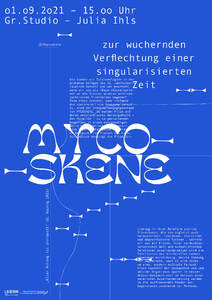
MYCOSKENE
Name that can easily go onto 2 lines
Author that can easily go onto 2 lines as well
- Titel
- MYCOSKENE
- Titel (en)
- Mycoskene
- Untertitel
- Zur wuchernden Verflechtung einer singularisierten Zeit
- Untertitel des Projekts/Werks (en)
- Or on the rampant interweaving of a singularized time
- Autor/in
- Beschreibung (de)
- MYCOSKENE ist eine material-theoretische Verflechtung rund um das Thema Mycelium, dem unterirdischen Hyphengeflecht der Pilze. Ob als sozio-philosophische Metapher, Bau- und Gestaltungsmaterial oder in Form einer multi-medialen Rauminstallation – in ihrer Arbeit folgte die Szenografin und Konzepterin Julia Ihls über 8 Monate den fein verwobenen Strukturen jener Organismen, die durch ihre eigene Zeitlichkeit und Qualitäten zu maßgeblichen Co-Gestaltenden wurden.
- Beschreibung (en)
- MYCOSKENE is a material-theoretical interweaving around the theme of mycelium, the subterranean network of hyphae of fungi. Whether as a socio-philosophical metaphor, building and design material or in the form of a multi-media spatial installation - in her work, scenographer and conceptual designer Julia Ihls followed the finely interwoven structures of these organisms for over 8 months, which became decisive co-creators through their own temporality and qualities.
- Kategorie
- Typ des Projekts/Werks
- Schlagworte
- Datierung
- 01.09.2021 - 03.09.2021
- Mitwirkende
- Sprache
- Ort: Institution
- Ort
- Großes Studio
- Stadt
- Land
- Internetlinks
- Walkthrough Video: https://vimeo.com/653230334
Doku Film:
Instagram: @mycoskene https://www.instagram.com/mycoskene/?hl=de
Website: https://mycoskene-.hotglue.me/
- Walkthrough Video: https://vimeo.com/653230334
- Titel
- MYCOSKENE
- Untertitel
- Zur wuchernden Verflechtung einer singularisierten Zeit
- Projektleiter/in
- Semester
- Studiengang
- Typ der Abschlussarbeit
- Importiert am
- 14.12.2023
- Übergeordnete Sets
- 2
- Set enthält
- 0 11
Excreta Fluxorum - Theatrum Instrumentorum
Name that can easily go onto 2 lines
Author that can easily go onto 2 lines as well
- Titel
- Excreta Fluxorum - Theatrum Instrumentorum
- Untertitel
- George Maciunas und die Kultur der „curiositas”
- Autor/in
- Beschreibung (de)
- „Möglicherweise erscheinen die intermediären Kunstformen der 60er-jahre als zu komplex, ihre Manifestationen zu sehr als Teil einer noch lebenden Kunstgeschichte, vielleicht hindert auch die noch nicht abgeschlossene Bewältigung der postmodernen Wende in Philosophie, Kunst und Literatur an einer generalüberholten wissenschaftlichen Annäherung an diesen Themenbereich, der sich von der fließenden, aus Künstlerkommentaren über Kritiken in methodischen Darstellungen hervorgegangenen bisherigen Versuchen einer vorläufigen Einordnung des Phänomens Fluxus abzugrenzen hätte."
- Beschreibung (en)
- “It is possible that the intermediary art forms of the 1960s appear too complex, their manifestations too much a part of a still living art history; perhaps the fact that the postmodern turn in philosophy, art and literature has not yet been completed also prevents a generally overhauled academic approach to this subject area, which would have to distinguish itself from the fluid attempts at a provisional classification of the phenomenon of Fluxus that have emerged from artists' commentaries on critiques in methodical presentations.”
- Kategorie
- Typ des Projekts/Werks
- Schlagworte
- Datierung
- 04.03.1999
- Sprache
- Ort: Institution
- Stadt
- Land
- Titel
- Excreta Fluxorum - Theatrum Instrumentorum
- Untertitel
- George Maciunas und die Kultur der „curiositas”
- Projektleiter/in
- Semester
- Studiengang
- Typ der Abschlussarbeit
- Archiv-Signatur
- HfG HS 1999 01
- Externes Archiv
- Importiert am
- 11.01.2024
- Übergeordnete Sets
- 2
- Set enthält
- 0 3
KLOTZSTUHL

Name that can easily go onto 2 lines
Author that can easily go onto 2 lines as well
- Titel
- KLOTZSTUHL
- Autor/in
- Beschreibung (de)
- Eine Studie des Stadtforschers William H. Whyte zeigt, dass es für Menschen ein positives Erlebnis ist, wenn sie Sitzmöbel selbst (um)positionieren dürfen. Der KLOTZSTUHL greift diesen Gedanken auf. Die Sitzfläche lässt sich verstellen, sodass sich der Stuhl an unterschiedliche Hangneigungen anpassen kann. Dadurch kann man ihn fast überall auf dem Hügel aufstellen. Er ist nicht fest installiert, aber durch seine "klotzige" Bauweise und das relative hohe Gewicht ist er auch nicht zum Mitnehmen gedacht.
Der KLOTZSTUHL wurde entworfen für Hänge in Parkanlagen wie beispielsweise dem MOUNT KLOTZ in der Günther-Klotz-Anlage in Karlsruhe. Er macht es möglich, auch an steilen Hängen bequem zu sitzen und die Aussicht auf den Sonnenuntergang mit einem kühlen Getränk zu genießen.
- Eine Studie des Stadtforschers William H. Whyte zeigt, dass es für Menschen ein positives Erlebnis ist, wenn sie Sitzmöbel selbst (um)positionieren dürfen. Der KLOTZSTUHL greift diesen Gedanken auf. Die Sitzfläche lässt sich verstellen, sodass sich der Stuhl an unterschiedliche Hangneigungen anpassen kann. Dadurch kann man ihn fast überall auf dem Hügel aufstellen. Er ist nicht fest installiert, aber durch seine "klotzige" Bauweise und das relative hohe Gewicht ist er auch nicht zum Mitnehmen gedacht.
- Beschreibung (en)
- A study by urban researcher William H. Whyte shows that people have a more positive experience in public spaces when they are allowed to (re)position seating furniture themselves. The KLOTZSTUHL embraces this idea. Its adjustable seat allows it to adapt to various slope angles, making it usable almost anywhere on a steep slope. It is not fixed in place, but due to its bulky design and quite heavy weight, it is also not meant to be carried away.
The KLOTZSTUHL was designed specifically for sloped areas in public parks, such as the MOUNT KLOTZ in the Günther-Klotz-Anlage in Karlsruhe. It makes it possible to sit comfortably even on steep hills, and to enjoy the view of the sunset with a cold drink.
- A study by urban researcher William H. Whyte shows that people have a more positive experience in public spaces when they are allowed to (re)position seating furniture themselves. The KLOTZSTUHL embraces this idea. Its adjustable seat allows it to adapt to various slope angles, making it usable almost anywhere on a steep slope. It is not fixed in place, but due to its bulky design and quite heavy weight, it is also not meant to be carried away.
- Titel
- KLOTZSTUHL
- Projektleiter/in
- Studiengang
- Importiert am
- 18.07.2025
- Übergeordnete Sets
- 1
- Set enthält
- 0 3
Dirty Computer
Name that can easily go onto 2 lines
Author that can easily go onto 2 lines as well
- Titel
- Dirty Computer
- Titel (en)
- Dirty Computer
- Autor/in
- Beschreibung (de)
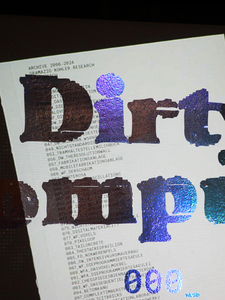
- Eine Dirty Publication, entstanden im Rahmen des Seminars Dirty Computer an der HfG Karlsruhe, basierend auf der gemeinsamen Seminarwoche am Institut für Technologie in der Architektur (ITA) der ETH Zürich, zusammen mit Studierenden der Fotografieklasse von Armin Linke an der Akademie der Bildenden Künste München sowie der Gramazio Kohler Research Gruppe.
- Kategorie
- Mitwirkende
- Ort: Institution
- Ort
- Exkursion und Auftakt : 21–26.10. in Zürich
- Stadt
- Bemerkungen
- Ein Projekt in Kollaboration mit Gramazio Kohler Research, ETH Zürich sowie der Professur für Fotografie, Armin Linke, Akademie der Bildenden Künste München.
- Titel
- Dirty Computer
- Projektleiter/in
- Semester
- Studiengang
- Importiert am
- 12.06.2025
- Übergeordnete Sets
- 1
- Set enthält
- 0 10