The Plenum – A Scripted Play
Benachbarte Sets (32)Alle Zusammenhänge anzeigen
Diese Sets wurden den gleichen Sets hinzugefügt wie das ausgewählte Set.
32 Inhalte
- Seite 1 von 3
Path Tiles
Name that can easily go onto 2 lines
Author that can easily go onto 2 lines as well
- Titel
- Path Tiles
- Titel (en)
- Path Tiles
- Untertitel
- Knitting Coordinates into Patterns
- Untertitel des Projekts/Werks (en)
- Knitting Coordinates into Patterns
- Autor/in
- Beschreibung (de)
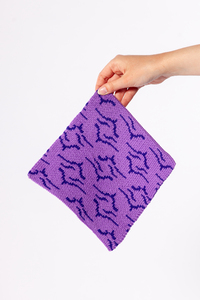
- Unsere Bewegungen können wie eine Performance begriffen werden, wie etwas Flüchtiges, das nur im Moment existiert und nach der Vollendung weder sichtbar noch fassbar ist. Nur die Erinnerungen an das Erlebte bleiben als Spuren der Bewegung in unserem Geist erhalten. Path Tiles nutzt GPS-Daten, um diese besonderen Momente individueller Erfahrung einzufangen und in Form von Mustern in die physische Welt des sicht- und tastbaren Textils zu übertragen. Es entsteht eine tiefe Bindung zwischen Mensch und Objekt.
Jedes Muster steht für eine Reise, für eine Erfahrung. Dabei ist es egal, ob es sich um einen Spaziergang in der Natur, eine Reise in ein fernes Land oder einen wiederkehrenden Weg des Alltags handelt. Die daraus entstehenden Muster erzählen von den Gefühlen und Begegnungen, von dem Gesehenen und dem Erlebten und erinnern uns an das, was uns ausmacht.
Mit der Path Tiles Website habe ich ein Werkzeug entwickelt, um diese Reisen in Form von GPS-Daten in strickbare Muster zu verwandeln. Ich habe die Website so gestaltet, dass die Ästhetik des Musters durch zusätzliche Verschiebung, Verzerrung und Spiegelung individualisiert werden kann. Dies stellt außerdem sicher, dass Menschen mit der gleichen Strecke trotzdem persönliche Muster erstellen können. Das entstandene Muster wird dann in Form eines gestricktes Objekts zum Leben erweckt und wird zur materialisierten persönlichen Erfahrung. Durch die Einbeziehung des Nutzers in den Gestaltungsprozess entsteht eine weitere Ebene der Bindung zwischen Mensch und Objekt.
Für das Diplom habe ich exemplarisch fünf Objekte gestaltet, die mit diesen Mustern personalisiert werden können. Das Design der Objekte konzentriert sich darauf, das Reisen oder das „unterwegs sein“ in verschiedenen Situationen zu erleichtern. In diesem Prozess ist ein Schal mit Taschen, ein Umhang, der gleichzeitig als Decke genutzt werden kann, eine Tasche, die zugleich ein Kissen ist, eine Balaklava mit Ohrenschützern und ein Nackenkissen mit Rückenstütze und Taschen in den verlängerten Seitenteilen entstanden.
Für die finale Herstellung der Objekte haben fünf Personen die GPS-Daten verschiedener Routen verwendet um ihre persönlichen Muster auf der Path Tiles Website zu erstellen. Jedes der Objekte wurde zu einer Person, einer Reise, einem Muster zugeordnet und entsprechend produziert. Die fertigen Objekte sind die materialisierten Erfahrungen und Erinnerungen dieser Menschen.
Begleitend zu dieser Arbeit habe ich mit der Sammlung von Reisen in Form von Geschichten und Mustern begonnen. Hierbei ist ein kleines Booklet entstanden, das die Beiträge von 19 Menschen beinhaltet. Sie alle haben eine Erinnerung von einer Reise in Form von Text und Muster mit mir geteilt.
- Unsere Bewegungen können wie eine Performance begriffen werden, wie etwas Flüchtiges, das nur im Moment existiert und nach der Vollendung weder sichtbar noch fassbar ist. Nur die Erinnerungen an das Erlebte bleiben als Spuren der Bewegung in unserem Geist erhalten. Path Tiles nutzt GPS-Daten, um diese besonderen Momente individueller Erfahrung einzufangen und in Form von Mustern in die physische Welt des sicht- und tastbaren Textils zu übertragen. Es entsteht eine tiefe Bindung zwischen Mensch und Objekt.
- Beschreibung (en)
- Movement is like a performance, something momentous becoming invisible and untouchable as soon as it is complete. Only the memories of the experience remain as traces of the movement in our minds. Path Tiles captures these valuable moments of individual experiences and transfers them into the physical world of visible and tactile textiles, creating a deep relationship between person and object.
Each pattern represents a journey, an experience. It doesn't matter whether it's a walk in nature, a trip to a distant country, or a repeating path in everyday life. The resulting patterns tell of the emotions evoked by landscapes, the lessons learned along the way and the power of the journey to shape our lives.
With the Path Tiles website, I have developed a tool to transform these journeys into knitable patterns using GPS data. I designed the website so that the aesthetics of the pattern can be individualized through shifting, distorting, and mirroring. This ensures that even people with the same route can create personal patterns. The resulting pattern is then brought to life in the form of a knitted object, becoming a materialized personal experience. By involving the user in the design process, an additional layer of connection between person and object is created.
For my diploma, I have designed five objects that can be personalized with these patterns. The design of these objects focuses on making travelling or being "on the go" more comfortable. This process has resulted in the creation of a scarf with pockets, a cape that can also be used as a blanket, a bag that doubles as a pillow, a balaclava with ear cushions, and a neck pillow with back support and pockets in the extended side parts.
For the final production of the objects, five people used the GPS data of different routes to create their personal patterns on the Path Tiles website. Each of the objects was assigned to a person, a journey, a pattern, and then produced accordingly. The finished objects are the materialized experiences and memories of these people.
Accompanying this work, I have started collecting journeys in the form of stories and patterns. This resulted in a small booklet that includes contributions from 19 people. They all shared a memory of a journey in the form of text and pattern with me.
- Movement is like a performance, something momentous becoming invisible and untouchable as soon as it is complete. Only the memories of the experience remain as traces of the movement in our minds. Path Tiles captures these valuable moments of individual experiences and transfers them into the physical world of visible and tactile textiles, creating a deep relationship between person and object.
- Kategorie
- Typ des Projekts/Werks
- Schlagworte
- Datierung
- April 2024
- Mitwirkende
- Dank an
- Material
- Ort: Institution
- Internetlinks
- Bemerkungen
- Die Diplomarbeit wurde von Prof. Wieki Somers und Prof. Céline Condorelli betreut.
- Titel
- Path Tiles
- Untertitel
- Knitting Coordinates into Patterns
- Projektleiter/in
- Semester
- Studiengang
- Typ der Abschlussarbeit
- Importiert am
- 28.05.2024
- Übergeordnete Sets
- 4
- Set enthält
- 0 42
Now or Nowhere
- Titel
- Now or Nowhere
- Autor/in
- Beschreibung (de)
- Now or Nowhere ist ein Projekt, das die Frage stellt, ob Technologie aus einer Notwendigkeit heraus entsteht – oder ob ihre Notwendigkeit erst erkannt wird, nachdem sie bereits erschienen ist. Neue Geräte versprechen stets Effizienz, Verbesserung und nahtlose Konnektivität und behaupten, unser Leben leichter zu machen. Automatisierung lindert Müdigkeit, Konnektivität beseitigt Trennung, und Updates gleichen Unvollkommenheit aus. Doch was genau machen wir in diesem Prozess eigentlich bequemer – und was geben wir dabei stillschweigend aus der Hand?
Das Projekt schlägt drei virtuelle Geräte vor, die repetitive und scheinbar unbedeutende körperliche Handlungen stellvertretend für den Nutzer ausführen. AutoPresence ist ein Gerät, das aufgezeichnete Mausbewegungen wiedergibt und selbst in Abwesenheit des Nutzers kontinuierlich Spuren von Arbeit produziert. Ruhe wird nicht erkannt, und der Cursor hält niemals an. The Sixth Finger ist ein am Finger getragenes Wearable, das das Wischen auf dem Smartphone automatisiert und die vertraute Bewegung des Daumens durch einen zweiten Daumen ersetzt. Die Hand hält das Gerät weiterhin fest, doch die Handlung wird an die Maschine delegiert. Artificial Sweat Gland for Mobile Devices überträgt die Funktion der menschlichen Schweißdrüsen auf ein Kühlsystem für das Gerät und synchronisiert so die Temperatur von Körper und Gerät. Das Telefon verlässt die Hand nie.
Diese Geräte werden so präsentiert, als stünden sie kurz vor der Markteinführung. In Anlehnung an Produktpräsentationen und Werbeformate rahmt das Projekt alltägliche Gesten als Funktionen, die optimiert werden können. Werden die Besucherinnen im Ausstellungsraum zu potenziellen Konsumentinnen dieser Geräte – oder erkennen sie, dass sie bereits Konsument*innen sind?
- Now or Nowhere ist ein Projekt, das die Frage stellt, ob Technologie aus einer Notwendigkeit heraus entsteht – oder ob ihre Notwendigkeit erst erkannt wird, nachdem sie bereits erschienen ist. Neue Geräte versprechen stets Effizienz, Verbesserung und nahtlose Konnektivität und behaupten, unser Leben leichter zu machen. Automatisierung lindert Müdigkeit, Konnektivität beseitigt Trennung, und Updates gleichen Unvollkommenheit aus. Doch was genau machen wir in diesem Prozess eigentlich bequemer – und was geben wir dabei stillschweigend aus der Hand?
- Beschreibung (en)
- Now or Nowhere is a project that asks whether technology emerges from necessity or whether its necessity is only recognized after it has appeared. New devices always promise efficiency, improvement, and seamless connectivity, claiming to make our lives lighter. Automation relieves fatigue, connectivity eliminates disconnection, and updates compensate for imperfection. So, in this process, what are we making more convenient, and what are we quietly handing over?
The project proposes three virtual devices that perform repetitive and minor physical actions on behalf of the user. AutoPresence is a device that replays recorded mouse movements, continuously producing traces of labor even in the user's absence. Rest is not detected, and the cursor never stops. The Sixth Finger is a finger-worn wearable that automates smartphone swiping, replacing the most familiar thumb movements with a second thumb. The hand still grips, but the action is delegated to the machine. Artificial Sweat Gland for Mobile Devices converts the hand's sweat gland function into a device cooling system, synchronizing the body's and device's temperatures. The phone never leaves the hand.
These devices are arranged as if they are ready for launch. Borrowing the format of product displays and promotional presentation, the project reframes everyday gestures as features to be optimized. In the exhibition space, do audiences become potential consumers in front of these devices, or do they become aware that they are already consumers?
- Now or Nowhere is a project that asks whether technology emerges from necessity or whether its necessity is only recognized after it has appeared. New devices always promise efficiency, improvement, and seamless connectivity, claiming to make our lives lighter. Automation relieves fatigue, connectivity eliminates disconnection, and updates compensate for imperfection. So, in this process, what are we making more convenient, and what are we quietly handing over?
- Kategorie
- Typ des Projekts/Werks
- Schlagworte
- Datierung
- November 2025 - 2026
- Mitwirkende
- Dank an
- Ort: Institution
- Stadt
- Land
- Titel
- Now or Nowhere
- Importiert am
- 09.03.2026
- Übergeordnete Sets
- 0
- Set enthält
- 0 0
Manchmal ist Schmerz ganz leise
Name that can easily go onto 2 lines
Author that can easily go onto 2 lines as well
- Titel
- Manchmal ist Schmerz ganz leise
- Titel (en)
- Sometimes pain is very quiet
- Autor/in
- Beschreibung (de)
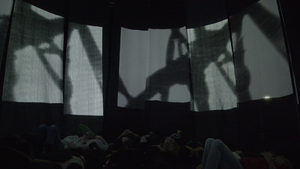
- „Manchmal ist Schmerz ganz leise“ ist eine immersive, autobiographische Hörstück-Installation, die den stillen und oft unsichtbaren Kampf mit einer schweren, namenlosen Krankheit in den Mittelpunkt stellt. Das Werk hinterfragt, was es bedeutet, in einer leistungsorientierten Gesellschaft plötzlich nicht mehr zu "funktionieren". Es geht den Ängsten, der Scham und dem tief empfundenen Gefühl des Versagens nach, das oft mit chronischer Krankheit einhergeht – Gefühle, die Betroffene selten teilen. Das Hörspiel verleiht einer Stimme Ausdruck, die für viele spricht und Einblicke in eine Realität gibt, die oft im Verborgenen bleibt.
- Beschreibung (en)
- ‘Sometimes pain is very quiet’ is an immersive, autobiographical audio play installation that focuses on the silent and often invisible battle with a serious, nameless illness. The work questions what it means to suddenly no longer ‘function’ in a performance-orientated society. It explores the fears, the shame and the deeply felt sense of failure that often accompanies chronic illness – feelings that are rarely shared by those affected. The radio play gives expression to a voice that speaks for many and provides insights into a reality that often remains hidden.
- Kategorie
- Typ des Projekts/Werks
- Schlagworte
- Datierung
- 30.10.2024
- Mitwirkende
- Dank an
- Finn Baygan
- Daniel Berwanger
- Pauline Cemeris
- Filipa Cesar
- Mark Patrick Damian
- Charlotte Eifler
- Flora Güldenpfennig
- Tobias Keilbach
- Eisenhart Keimeyer
- Alexander Knoppik
- Yael Kolb
- Isabelle Konrad
- Julian Kuf
- Barbara Kuon
- Josephine Leicht
- Laura Morcillo
- Ilja Morgenstern
- Sebastian Schäfer
- Sebastian Schönfeld
- Lorenz Schwarz
- Quirin Thalhammer
- Alexander Thelen
- Riemschneider Stiftung
- Zeitbild Lab
- Sprache
- Material
- Technik/Verfahren/Formate
- 4-Kanal-Audio/360° Projection Mapping
- Abmessungen
- Länge: 8m, Breite: 8m, Höhe: 6,50m
- Dauer
- 30min
- Ort: Institution
- Ort
- Großes Studio
- Stadt
- Land
- Titel
- Manchmal ist Schmerz ganz leise
- Projektleiter/in
- Semester
- Studiengang
- Typ der Abschlussarbeit
- Importiert am
- 17.04.2025
- Übergeordnete Sets
- 1
- Set enthält
- 1 5
Like Sediment in a Slow Current
Name that can easily go onto 2 lines
Author that can easily go onto 2 lines as well
- Titel
- Like Sediment in a Slow Current
- Titel (en)
- Like Sediment in a Slow Current
- Untertitel
- Reconnecting to a paralyzed river
- Untertitel des Projekts/Werks (en)
- Reconnecting to a paralyzed river
- Autor/in
- Beschreibung (de)
- „Wir sind zunehmend wasserundurchlässig geworden: gedanklich abgeschottet von den subtilen und vielfältigen Beziehungen zu Flüssen, auch wenn diese weiterhin unsere Körper, Gedanken, Lieder und Geschichten durchströmen. Flüsse fließen durch die Menschen ebenso sicher wie durch Orte.“
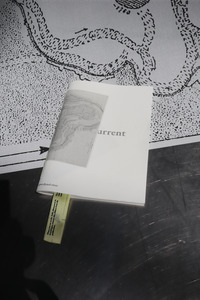
Dieses Zitat stammt aus Robert Macfarlanes Buch "Sind Flüsse Lebewesen?" und bildet den Einstieg in mein Diplomprojekt, „Like Sediment in a Slow Current“. Ausgehend von der Rheinbegradigung am Oberrhein untersuche ich die verzerrte Beziehung zwischen uns Menschen, Wasser und anderen Wasserkörpern. Das Projekt sammelt und kuratiert verschiedene Texte und Bilder aus Bereichen der Kunst, Biologie, Geologie und Philosophie und versucht, sich folgenden Fragen zu nähern:
Wie sind wir mit Flüssen verbunden? Wie sah der Rhein vor der Begradigung aus? Welche Folgen hat eine Begradigung für einen Fluss? Ist es möglich, einen Fluss als juristische Person anzusehen? Wie sind wir mit anderen Wasserkörpern verbunden? Was definiert einen Wasserkörper? Wie kann ich mich kritisch mit einem Ort und seiner Geschichte auseinandersetzen?
- „Wir sind zunehmend wasserundurchlässig geworden: gedanklich abgeschottet von den subtilen und vielfältigen Beziehungen zu Flüssen, auch wenn diese weiterhin unsere Körper, Gedanken, Lieder und Geschichten durchströmen. Flüsse fließen durch die Menschen ebenso sicher wie durch Orte.“
- Beschreibung (en)
- “We have become increasingly waterproofed: conceptually sealed against subtle and various relations with rivers, even as they continue to irrigate our bodies, thoughts, songs and stories. Rivers run through people as surely as they run through places.”
This quote from Robert Macfarlane’s book „Is a River Alive?“ serves as the point of entry to my diploma project, „Like Sediment in a Slow Current“. Taking the straightening of the Upper Rhine as my starting point, I explore the distorted relationship between us humans, water, and other bodies of water. The project collects and curates various texts and images from the fields of art, biology, geology, and philosophy and attempts to address questions like:
How are we connected to rivers? What did the Rhine look like before it was straightened? What are the consequences of straightening a river? Is it possible to view a river as a legal entity? How are we connected to other bodies of water? What defines a body of water? How can I critically engage with a place and its history?
- “We have become increasingly waterproofed: conceptually sealed against subtle and various relations with rivers, even as they continue to irrigate our bodies, thoughts, songs and stories. Rivers run through people as surely as they run through places.”
- Kategorie
- Typ des Projekts/Werks
- Schlagworte
- Datierung
- 24.06.2026
- Dank an
- Sprache
- Material
- Technik/Verfahren/Formate
- Digitaldruck, UV-Lack-Druck
- Abmessungen
- 175mm x 270mm
- Ort: Institution
- Ort
- Rhein
- Stadt
- Land
- Titel
- Like Sediment in a Slow Current
- Untertitel
- Reconnecting to a paralyzed river
- Projektleiter/in
- Semester
- Studiengang
- Typ der Abschlussarbeit
- Importiert am
- 20.07.2026
- Übergeordnete Sets
- 0
- Set enthält
- 0 10
“I see” “with my voice”
Name that can easily go onto 2 lines
Author that can easily go onto 2 lines as well
- Titel
- “I see” “with my voice”
- Autor/in
- Beschreibung (de)
- „I see“ „with my voice“ beschäftigt sich mit Themen wie Transformation, Gestaltwandel und Materialität durch ein Zusammenspiel von literarischen Fragmenten und entliehenen Stimmen. Das Ergebnis ist eine nicht-lineare, fluide Erzählung, die die flüchtige Natur von Visionen, Träumen und Metamorphosen einfängt.
- Beschreibung (en)
- “I see” “with my voice” engages with themes of transformation,
shapeshifting, and materiality through an interplay of literary
fragments and borrowed voices, resulting in a non-linear, fluid
narrative that encapsulates the ephemeral nature of visions,
dreams, and metamorphoses.
This project draws substantial inspiration from Alice Notley's
The Descent of Alette, a transformative odyssey that employs
rhythmic spoken language to explore continuous change.
Alongside Notley’s influence, the works of Hildegard von Bingen,
a 12th-century mystic, and the visionary narratives from the
biblical book of Ezekiel, serve as foundational texts that inform
the thematic and structural framework of this piece.
The text is presented as an audio recording, whispered as a 20 minute loop.
Visitors can listen to the piece when pressing their ear against the tents walls.
My objects are performers, maybe even imposters: frozen in a state of change or mimicry. My objects are performers, maybe even imposters: frozen in a state of change or mimicry.
They are skillfull imitators, but you can tell something is off.
Moving along this crack between the believable and the not quite right, I like to engage
with different realities and states of being. The artificial, almost real-life fakeness of their with different realities and states of being. The artificial, almost real-life fakeness of their
surfaces set the stage for my narrative of transformation, imitation and shapeshifting.
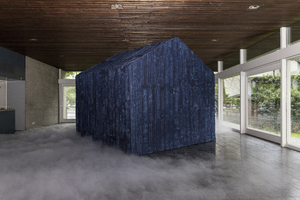
1. A wooden house crafted from smooth denim. Made by sanding the grain of wood
onto the denim fabric
2. Heavy fog covering the floor that could be perceived as dew, mixed with a light subtle
smoke of Incense burning.
The fragrance envokes sacred, holy feelings with its warm, resinous smell with peppery The fragrance envokes sacred, holy feelings with its warm, resinous smell with peppery
undertones.
3. 100 cherries made from a thick mixture of honey and almonds. The heavy sweetness
of the stoneless candy-imposter meant to linger in the visitors mouth as it is tasted. of the stoneless candy-imposter meant to linger in the visitors mouth as it is tasted.
A thin gelatine film – imitating the coolnes of cherry skin as it touches the lips A thin gelatine film – imitating the coolnes of cherry skin as it touches the lips
The installation is accompanied by a small reader containing the three part text to be taken The installation is accompanied by a small reader containing the three part text to be taken
home and serve as a keep sake or document of the fleeting spoken text.
The reader is bound with one simple staple. It does not have a beginning or end, but The reader is bound with one simple staple. It does not have a beginning or end, but
rather works like a gif. No cover or back. Just like wheels turning endlessly in a nonlinear rather works like a gif. No cover or back. Just like wheels turning endlessly in a nonlinear
storytelling.
- “I see” “with my voice” engages with themes of transformation,
- Kategorie
- Typ des Projekts/Werks
- Schlagworte
- Datierung
- 18.04.2024
- Sprache
- Ort: Institution
- Ort
- “I see” “with my voice” at ZKM Pavillon, Karlsruhe
- Stadt
- Land
- Titel
- “I see” “with my voice”
- Projektleiter/in
- Semester
- Studiengang
- Typ der Abschlussarbeit
- Importiert am
- 19.09.2024
- Übergeordnete Sets
- 0
- Set enthält
- 0 2
„Infanterie, Cavallerie, Artillerie“ statt „Liberté, égalite, fraternité“: Das Komische als Kampfmittel in Karl Marx' "Der achtzehnte Brumaire des Louis Bonaparte"
Name that can easily go onto 2 lines
Author that can easily go onto 2 lines as well
- Titel
- „Infanterie, Cavallerie, Artillerie“ statt „Liberté, égalite, fraternité“: Das Komische als Kampfmittel in Karl Marx' "Der achtzehnte Brumaire des Louis Bonaparte"
- Autor/in
- Beschreibung (de)
- Im Aufsatz „Der achtzehnte Brumaire des Louis Bonaparte“, welcher von Karl Marx im Kontext der politischen Unruhen des neunzehnten Jahrhunderts geschrieben wurde, ergründet dieser nicht nur den Aufstieg Louis Bonapartes zur Macht, sondern verwebt auch auf subtile Weise seinen charakteristisch analytischen Ansatz mit einem bemerkenswerten Sinn für Komik und raffinierte stilistische Nuancen.
So ist diese Magisterarbeit einer eingehenden Untersuchung der Rolle des Komischen und des Stils in Marx' „Achtzehnten Brumaire“ gewidmet, mit besonderem Augenmerk auf die Art und Weise, in der diese Elemente nicht nur zur kritischen Analyse beitragen, sondern das Werk auch in eine sinnvolle literarische Form bringen.
Es soll untersucht werden, auf welche Weise das Komische bei Marx eine Strategie sein könnte, um nicht nur seine Argumente zu untermauern, sondern auch, um als eine Art ‚Kampfmittel‘ in der politischen Landschaft zu fungieren. Mithilfe der Untersuchung des Zusammenspiels von politischer Analyse, komödiantischen Elementen und individuellem Stil im „Achtzehnten Brumaire“ ist es das Ziel dieser Arbeit, die tiefere Beziehung zwischen politischer Literatur und literarischer Form zu erfassen. Indem die Facetten des Komischen und des Marx'schen Stils beleuchtet werden, wird diese Magisterarbeit dazu beitragen, ein umfassenderes Verständnis für die Komplexität und Relevanz des „Achtzehnten Brumaire“ zu entwickeln.
- Im Aufsatz „Der achtzehnte Brumaire des Louis Bonaparte“, welcher von Karl Marx im Kontext der politischen Unruhen des neunzehnten Jahrhunderts geschrieben wurde, ergründet dieser nicht nur den Aufstieg Louis Bonapartes zur Macht, sondern verwebt auch auf subtile Weise seinen charakteristisch analytischen Ansatz mit einem bemerkenswerten Sinn für Komik und raffinierte stilistische Nuancen.
- Beschreibung (en)
- In the essay “The Eighteenth Brumaire of Louis Bonaparte”, written by Karl Marx in the context of the political turmoil of the nineteenth century, he not only explores Louis Bonaparte's rise to power but also subtly interweaves his characteristically analytical approach with a remarkable sense of comedy and refined stylistic nuance.
Thus, this master thesis is dedicated to an in-depth examination of the role of comedy and style in Marx's “Eighteenth Brumaire”, with particular attention to how these elements not only contribute to critical analysis but also give the work a meaningful literary form.
It will examine how the comic might be a strategy for Marx not only to support his arguments but also to function as a kind of 'means of struggle' in the political landscape. By examining the interplay of political analysis, comedic elements, and individual style in the “Eighteenth Brumaire”, this thesis aims to grasp the deeper relationship between political literature and literary form. By highlighting the facets of comedy and Marx's style, this thesis will help to develop a more comprehensive understanding of the complexity and relevance of the “Eighteenth Brumaire”.
- In the essay “The Eighteenth Brumaire of Louis Bonaparte”, written by Karl Marx in the context of the political turmoil of the nineteenth century, he not only explores Louis Bonaparte's rise to power but also subtly interweaves his characteristically analytical approach with a remarkable sense of comedy and refined stylistic nuance.
- Kategorie
- Typ des Projekts/Werks
- Datierung
- 31.08.2023
- Sprache
- Titel
- „Infanterie, Cavallerie, Artillerie“ statt „Liberté, égalite, fraternité“: Das Komische als Kampfmittel in Karl Marx' "Der achtzehnte Brumaire des Louis Bonaparte"
- Projektleiter/in
- Semester
- Studiengang
- Typ der Abschlussarbeit
- Importiert am
- 31.05.2024
- Übergeordnete Sets
- 3
- Set enthält
- 0 2
I Cried A Smile
Name that can easily go onto 2 lines
Author that can easily go onto 2 lines as well
- Titel
- I Cried A Smile
- Autor/in
- Beschreibung (de)
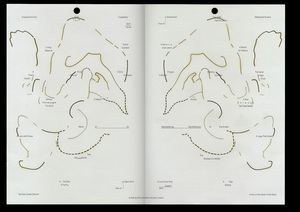
- Mit den Mitteln einer wissenschaftlichen Lecture erzählt „I Cried A Smile“ eine Geschichte über eine Person mit 2 Köpfen, Holz das zu Menschen wird, und die Erinnerung daran als Kind mit Neuropsychologie in Kontakt zu treten. Zwei übereinander hängende Projektionsflächen zeigen Zeichnungen, Animationen und gefundenes Bildmaterial während meine Stimme vom Band läuft und ich an einem Schreibtisch sitzend, mit dem Verfahren „Lip-Sync“ lautlos mitspreche. Das Publikum sitzt wie in einem anatomischen Theater in zwei Halbkreisen um mich herum.
- Beschreibung (en)
- Using the means of a scientific lecture, “I Cried A Smile” tells a story about a person with two heads, wood that becomes human, and the memory of coming into contact with neuropsychology as a child. Two projection screens hanging above me showcasing drawings, animations and found footage while my voice runs from the tape and I, sitting at a desk, speak along inaudibly using the “Lip-Sync” method. The audience sits around me like in an anatomical theater.
- Using the means of a scientific lecture, “I Cried A Smile” tells a story about a person with two heads, wood that becomes human, and the memory of coming into contact with neuropsychology as a child. Two projection screens hanging above me showcasing drawings, animations and found footage while my voice runs from the tape and I, sitting at a desk, speak along inaudibly using the “Lip-Sync” method. The audience sits around me like in an anatomical theater.
- Kategorie
- Typ des Projekts/Werks
- Schlagworte
- Mitwirkende
- Technik/Verfahren/Formate
- 2 Channel Video
- Dauer
- 8 Minuten
- Ort: Institution
- Stadt
- Land
- Titel
- I Cried A Smile
- Importiert am
- 30.09.2024
- Übergeordnete Sets
- 1
- Set enthält
- 0 5
G.O.T.T.A.L.I.S.T.E.N.
Name that can easily go onto 2 lines
Author that can easily go onto 2 lines as well
- Titel
- G.O.T.T.A.L.I.S.T.E.N.
- Autor/in
- Beschreibung (de)
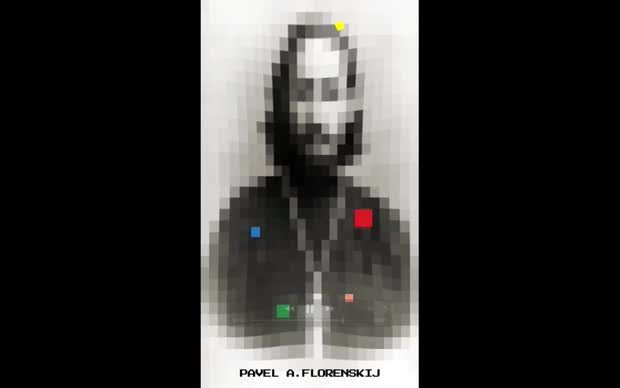
- "GOTTALISTEN", kurz für „Grab One Terrene Thought And Let It Slide To Eternal Nothingness”, beschäftigt sich mit der Zeit der Oktoberrevolution in Russland im Jahr 1917. Die Klebeband-Leinwände nehmen Bezug auf den Künstler Kasimir Malewitsch, der während dieser Epoche in Russland lebte. Zudem setzt Claus sich mit dem russischen Religionsphilosoph, Priester, Mathematiker und Kunstwissenschaftler Pavel Florenskij auseinander.
- Beschreibung (en)
- "GOTTALISTEN", short for "Grab One Terrene Thought And Let It Slide To Eternal Nothingness", deals with the time of the October Revolution in Russia in 1917. The tape canvases refer to the artist Kasimir Malewitsch, who lived in Russia during this era. Claus also deals with the Russian religious philosopher, priest, mathematician and art historian Pavel Florenskij.
- Kategorie
- Schlagworte
- Titel
- G.O.T.T.A.L.I.S.T.E.N.
- Projektleiter/in
- Semester
- Studiengang
- Typ der Abschlussarbeit
- Importiert am
- 08.08.2024
- Übergeordnete Sets
- 0
- Set enthält
- 1 27
Ghost Story
Name that can easily go onto 2 lines
Author that can easily go onto 2 lines as well
- Titel
- Ghost Story
- Autor/in
- Beschreibung (en)
- The project was born in response to the passing of an unaccompanied homeless individual in 2018, a person without known family or friends. Her death was cataloged—reduced to data archived in newsrooms and on digital servers. Yet, if this data remains untouched, and her memory fades into obscurity, does her existence persist? She lingers and remains unseen—a paradoxical state of both presence and absence. Within the digital void, she exists as a spectral trace, haunting the silence, waiting to be rediscovered, forever closed in on herself.
Such is the nature of ghosts—the living create them. We resurrect the departed in our own ways, through rituals, texts, and the intangible recipes of memory. We read, we create, we consume, and through this, we invite the dead to inhabit us once more. This project is an assemblage of fragments—an exploration of the processes through which we become haunted by the past.
- The project was born in response to the passing of an unaccompanied homeless individual in 2018, a person without known family or friends. Her death was cataloged—reduced to data archived in newsrooms and on digital servers. Yet, if this data remains untouched, and her memory fades into obscurity, does her existence persist? She lingers and remains unseen—a paradoxical state of both presence and absence. Within the digital void, she exists as a spectral trace, haunting the silence, waiting to be rediscovered, forever closed in on herself.
- Kategorie
- Typ des Projekts/Werks
- Schlagworte
- Datierung
- 18.04.2024
- Dank an
- Sprache
- Material
- Ort
- Pförtnerhäuser, Alter Schlachthof
- Stadt
- Land
- Titel
- Ghost Story
- Projektleiter/in
- Semester
- Studiengang
- Typ der Abschlussarbeit
- Importiert am
- 25.09.2024
- Übergeordnete Sets
- 0
- Set enthält
- 0 9
Eine Neue Umwelt
Name that can easily go onto 2 lines
Author that can easily go onto 2 lines as well
- Titel
- Eine Neue Umwelt
- Titel (en)
- A New Environment
- Untertitel
- Heinrich Klotz über Architektur und Neue Medien
- Untertitel des Projekts/Werks (en)
- Heinrich Klotz on Architecture and New Media
- Autor/in
- Beschreibung (de)
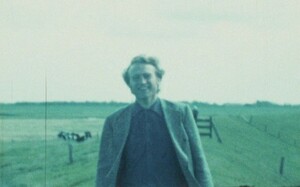
- Eine filmische Montage des Archivs von Kunsthistoriker Heinrich Klotz lässt Zusammenhänge erkennen zwischen Postmoderne, digitalen Medien und der Hoffnung auf eine neue Kunst.
Die alte Umwelt ist nicht mehr vorhanden, es klaffen Lücken, ganze Städte sind dem Boden gleich gemacht worden. Kann man eine lebenswerte Stadt wiederherstellen, ohne die Aggressionen des Krieges zu verdecken? Oder sind die Ruinen eine einmalige Chance, die Innenstädte von Grund auf neu zu gestalten? Ausgehend vom Wiederaufbau der deutschen Altstädte nach dem Zweiten Weltkrieg beschäftigte den Kunsthistoriker Heinrich Klotz die Rückgewinnung eines sinnlichen Erlebens in Architektur und Kunst. So sagte er den radikalen Forderungen einer alles erneuernden funktionalen Architektur den Kampf an, da sie nur noch gesichtslose Container baute. Die postmoderne Architektur verteidigte er wiederum gegen den Vorwurf des Kitsches. Und Computerspiele und virtuelle Realitäten erhob er zu Kunstwerken. 1984 gründete er das Deutsche Architekturmuseum in Frankfurt und 1989 das Zentrum für Kunst und Medien in Karlsruhe.
- Eine filmische Montage des Archivs von Kunsthistoriker Heinrich Klotz lässt Zusammenhänge erkennen zwischen Postmoderne, digitalen Medien und der Hoffnung auf eine neue Kunst.
- Beschreibung (en)
- A cinematic montage of the archive of art historian Heinrich Klotz reveals connections between postmodernism, digital media, and the hope for a new art.
The old environment is no longer there—gaps remain, entire cities have been leveled. Can a livable city be restored without covering up the aggressions of war? Or are the ruins a unique opportunity to redesign city centers from the ground up? Beginning with the post-World War II reconstruction of German historic towns, art historian Heinrich Klotz focused on reclaiming a sensual experience in architecture and art. He opposed the radical demands of an all-renewing functionalist architecture, which, in his view, only produced faceless containers. At the same time, he defended postmodern architecture against accusations of kitsch. He even elevated video games and virtual realities to the status of artworks. In 1984, he founded the German Architecture Museum in Frankfurt, followed by the Center for Art and Media in Karlsruhe in 1989.
- A cinematic montage of the archive of art historian Heinrich Klotz reveals connections between postmodernism, digital media, and the hope for a new art.
- Kategorie
- Typ des Projekts/Werks
- Schlagworte
- Datierung
- 2019
- Mitwirkende
- Sprache
- Untertitel (Film)
- Material
- Technik/Verfahren/Formate
- DCP, 2K, 3.0 in 5.1
- Abmessungen
- 4:3
- Dauer
- 01:19:05
- Land
- Beteiligte Institution(en)
- Bemerkungen
- Gefördert durch die Riemschneider Stiftung, die Gesellschaft zur Förderung der Kunst und Medientechnologie e.V. und das Zeitbild-Lab der HfG Karlsruhe.
Unterstützt durch den Südwestrundfunk, den Hessischen Rundfunk, dem Zentrum für Kunst und Medien Karlsruhe, Andec Filmtechnik und DCM - Digital Cinema Mastering.
Eine Studiolo Film Produktion
- Gefördert durch die Riemschneider Stiftung, die Gesellschaft zur Förderung der Kunst und Medientechnologie e.V. und das Zeitbild-Lab der HfG Karlsruhe.
- Titel
- Eine Neue Umwelt
- Untertitel
- Heinrich Klotz über Architektur und Neue Medien
- Projektleiter/in
- Semester
- Studiengang
- Typ der Abschlussarbeit
- Importiert am
- 03.03.2025
- Übergeordnete Sets
- 2
- Set enthält
- 0 7
Die Methode Duchamp – Magritte
Name that can easily go onto 2 lines
Author that can easily go onto 2 lines as well
- Titel
- Die Methode Duchamp – Magritte
- Untertitel
- Das „Musée d’Art Moderne. Département des Aigles” von Marcel Broodthaers unter dem Aspekt der strategischen Aneignung
- Autor/in
- Beschreibung (de)
- „Der Fall Marcel Broodthaers lädt den Rezipienten dazu ein, sich mit dessen Vorläufern auseinanderzusetzen. Nicht etwa, weil dort Geheimnisse aufzudecken wären – im Gegenteil, die broodthaers’schen Galionsfiguren sind in seinem Werk alle namentlich präsentiert –, sondern eher auf Grund der Tatsache, da er es wie kaum ein anderer verstanden hat, sich bestimmter Vorbilder zu bedienen, sprich, sich Teilaspekte aus deren Werken anzueignen und die darin enthaltenen Kerngedanken eigens fortzuschreiben. Dies geschieht auf eine Art und Weise, die es vermag, Hommage und Kritik zu vereinen.”
„Über zwei Doppelseiten hinweg breitet sich im Ausstellungskatalog zur Section des Figures [...] das graphisch aus, was Broodthaers als seine METHODE tituliert. Diese Blätter folgen in direktem Anschluß an das Vorwort, sie markieren den Anfang zu jenem Katalogteil, der sowohl inhaltlich, als auch formal maßgeblich vom Künstler gestaltet worden ist. Bereits die Typographie des Titelworts strahlt – in Majuskel gesetzt – eine hohe Wichtigkeit aus. Wer allerdings ausführliche Erläuterung erwartet hat, wird enttäuscht, es handelt sich vielmehr um eine anspielungsreiche Illustration als um eine schriftliche Erklärung, doch gleichwohl trägt diese Ausführung den Charakter des Manifests.”
- „Der Fall Marcel Broodthaers lädt den Rezipienten dazu ein, sich mit dessen Vorläufern auseinanderzusetzen. Nicht etwa, weil dort Geheimnisse aufzudecken wären – im Gegenteil, die broodthaers’schen Galionsfiguren sind in seinem Werk alle namentlich präsentiert –, sondern eher auf Grund der Tatsache, da er es wie kaum ein anderer verstanden hat, sich bestimmter Vorbilder zu bedienen, sprich, sich Teilaspekte aus deren Werken anzueignen und die darin enthaltenen Kerngedanken eigens fortzuschreiben. Dies geschieht auf eine Art und Weise, die es vermag, Hommage und Kritik zu vereinen.”
- Beschreibung (en)
- "The case of Marcel Broodthaers invites the recipient to engage with his precursors. Not because there are secrets to be uncovered there - on the contrary, Broodthaers' figureheads are all presented by name in his work - but rather due to the fact that he understood better than almost anyone else how to make use of certain role models, i.e. to appropriate partial aspects from their works and to continue the core ideas contained therein in his own way. This is done in a way that manages to combine homage and criticism."
"Over two double-page spreads in the exhibition catalogue for Section des Figures [...] Broodthaers' METHOD is presented graphically. These pages follow directly after the preface and mark the beginning of the section of the catalogue that was designed by the artist both in terms of content and form. Even the typography of the title word - set in majuscule - radiates great importance. However, anyone expecting a detailed explanation will be disappointed; it is more of an allusive illustration than a written explanation, but this version nevertheless has the character of a manifesto."
- "The case of Marcel Broodthaers invites the recipient to engage with his precursors. Not because there are secrets to be uncovered there - on the contrary, Broodthaers' figureheads are all presented by name in his work - but rather due to the fact that he understood better than almost anyone else how to make use of certain role models, i.e. to appropriate partial aspects from their works and to continue the core ideas contained therein in his own way. This is done in a way that manages to combine homage and criticism."
- Kategorie
- Schlagworte
- Datierung
- November 2010
- Sprache
- Ort: Institution
- Titel
- Die Methode Duchamp – Magritte
- Untertitel
- Das „Musée d’Art Moderne. Département des Aigles” von Marcel Broodthaers unter dem Aspekt der strategischen Aneignung
- Semester
- Archiv-Signatur
- HfG HS 2010 09
- Externes Archiv
- Importiert am
- 10.01.2025
- Übergeordnete Sets
- 2
- Set enthält
- 0 2
Die Kehrseite der Erinnerungskultur
Name that can easily go onto 2 lines
Author that can easily go onto 2 lines as well
- Titel
- Die Kehrseite der Erinnerungskultur
- Titel (en)
- The Other Side of Erinnerungskultur
- Untertitel
- Eine Kritik des Verhältnisses zur Vergangenheit im deutschen Gedenk- und im globalen Menschenrechtsdiskurs
- Autor/in
- Beschreibung (de)
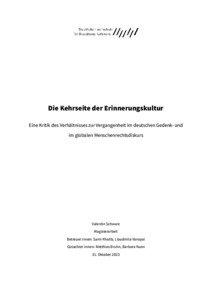
- In dieser Arbeit setze ich mich mit unterschiedlichen Geschichtsbegriffen auseinander. Dafür dienen mir die Diskussionen um die deutsche Erinnerungskultur als Einstiegspunkt. Das Ziel ist es allerdings nicht, unmittelbar in die polarisierte Debatte einzugreifen. Stattdessen richtet sich der Fokus auf das ideologische Fundament, das verschiedenen Formen, mit der eigenen Geschichte umzugehen, zugrunde liegt. Den theoretischen roten Faden bildet das Werk "After Evil" des Philosophen Robert Meister. Darin kritisiert er die Haltung, die Vergangenheit zwar als schlimm zu verurteilen, aber gleichzeitig auch als abgetrennt von der Gegenwart zu betrachten. Herausgearbeitet werden die Argumente unter anderem anhand von Filmen von Alexander Kluge und Harun Farocki.
- Beschreibung (en)
- In this work, I examine different concepts of history. The discussions surrounding the German culture of remembrance serve as my starting point. However, the aim is not to intervene directly in the polarized debate. Instead, the focus is on the ideological foundations that underlie different ways of dealing with one's own history. The work “After Evil” by philosopher Robert Meister forms the theoretical leitmotif. In it, he criticizes the position of condemning the past as evil, but treating it at the same as something that is separated from the present. The arguments are elaborated on the basis of films by Alexander Kluge and Harun Farocki, among others.
- In this work, I examine different concepts of history. The discussions surrounding the German culture of remembrance serve as my starting point. However, the aim is not to intervene directly in the polarized debate. Instead, the focus is on the ideological foundations that underlie different ways of dealing with one's own history. The work “After Evil” by philosopher Robert Meister forms the theoretical leitmotif. In it, he criticizes the position of condemning the past as evil, but treating it at the same as something that is separated from the present. The arguments are elaborated on the basis of films by Alexander Kluge and Harun Farocki, among others.
- Kategorie
- Typ des Projekts/Werks
- Schlagworte
- Datierung
- 31.10.2023
- Sprache
- Bemerkungen
- Eine kondensierte Fassung des Textes wurde von "Umbau" veröffentlicht: https://umbau.hfg-karlsruhe.de/posts/die-kehrseite…
- Titel
- Die Kehrseite der Erinnerungskultur
- Untertitel
- Eine Kritik des Verhältnisses zur Vergangenheit im deutschen Gedenk- und im globalen Menschenrechtsdiskurs
- Projektleiter/in
- Semester
- Studiengang
- Typ der Abschlussarbeit
- Importiert am
- 07.06.2024
- Übergeordnete Sets
- 3
- Set enthält
- 0 2