Karla Kniep
| Name | Karla Kniep |
4 Inhalte
- Seite 1 von 1
Elusive Unrealities
Name that can easily go onto 2 lines
Author that can easily go onto 2 lines as well
- Titel
- Elusive Unrealities
- Titel (en)
- Elusive Unrealities
- Untertitel
- On Calling, Grasping & Awakening Dreams
- Untertitel des Projekts/Werks (en)
- On Calling, Grasping & Awakening Dreams
- Autor/in
- Beschreibung (de)
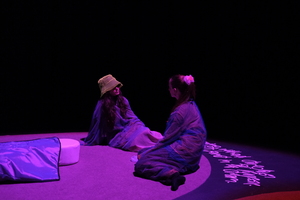
- Jeder Mensch träumt, manche Träume sind lebendig und bildhaft, andere abstrakt und symbolisch. In meiner Abschlussarbeitrbeit habe ich Traumerfahrungen in interaktive Objekte übersetzt und im Rahmen einer interaktive Ausstellung präsentiert. Darin werden sieben Traumthemen reflektiert: zwei der häufigsten Traumarten, Alptraum und Lusttraum; zwei wissenschaftliche Erkenntnisse, die Schwierigkeit des Gehirns, im Schlaf Gesichter und Figuren zu erkennen sowie die Unfähigkeit, Muster in geschriebener Schrift zu lesen; drei persönliche Faszinationen, das Ritual des Einschlafens, des Aufwachens sowie das Träumen als Reise in fantastische Welten.
- Beschreibung (en)
- Everyone dreams, some dreams are vivid and lifelike, others abstract and symbolic. In my diploma project I translated dream experiences into interactive objects and presented them in an interactive exhibition, reflecting seven dream themes: two addressing the most common dream types, nightmare and pleasure dreaming; two drawing on scientific research, the brain's difficulty recognising faces and figures during sleep, and its inability to read patterns in written text; three rooted in personal fascination, the rituals of falling asleep and waking, and dreaming as a passage to fantastical worlds.
- Kategorie
- Typ des Projekts/Werks
- Schlagworte
- Datierung
- 22.4.2025
- Dank an
- Sprache
- Material
- Abmessungen
- 90sqm
- Ort: Institution
- Stadt
- Land
- Internetlinks
- Titel
- Elusive Unrealities
- Untertitel
- On Calling, Grasping & Awakening Dreams
- Projektleiter/in
- Semester
- Studiengang
- Typ der Abschlussarbeit
- Importiert am
- 08.10.2025
- Übergeordnete Sets
- 3
- Set enthält
- 0 13
Imaginary Gardens with Real Toads in Them
Name that can easily go onto 2 lines
Author that can easily go onto 2 lines as well
- Titel
- Imaginary Gardens with Real Toads in Them
- Titel (en)
- Imaginary Gardens with Real Toads in Them
- Autor/in
- Beschreibung (de)
- „Imaginary Gardens with Real Toads in Them“ ist eine bekannte Zeile aus dem Gedicht „Poetry“ der amerikanischen Dichterin Marianne Moore. Es beschreibt ihre Einstellung zu Poesie und Kunst. „Imaginary gardens“ symbolisieren den idealisierten, fantastischen Teil von Kunst und Literatur – eine Vorstellung oder Wunschvorstellung, die die Fantasie anregt. Auf der anderen Seite stehen „real toads“ für die realen, greifbaren, oft unromantischen oder nicht idealisierten Aspekte der Welt – Dinge, die konkret und wahr sind, aber vielleicht nicht so schön wie die imaginären Visionen.
In meiner Ausstellung nahm ich mit drei Objekten Bezug auf diese Vorstellung:
– Eine Bank, die den Besucher zum Sitzen und Verweilen, zum Innehalten und Beobachten einlädt. Sie steht für Besinnung und die Erkenntnis der eigenen Position im Garten.
– Eine Kräuterkiste, die für das alte Wissen der Natur steht. Sie symbolisieren die verborgenen Schätze und Geheimnisse, die entdeckt und genutzt werden können. Hier ist der Besucher eingeladen, sich selbst einen Tee zusammenzustellen und aufzubrühen.
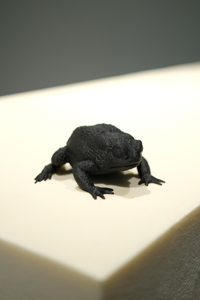
– Der Wächter des Gartens – die Kröte – und ihr Rückzugsort, der Brunnen, dienen als Quelle für alle Lebewesen. Der Brunnen steht für Tiefe und Erkenntnis, ein Ort, der durch Achtsamkeit zugänglich ist.
Begleitend zur Ausstellung lag am Eingang der Ausstellung ein kleines Leaflet für jeden Besucher mit einer von mir illustrierten Pflanze. Dazu habe ich eine kleine Geschichte zu meinem „Imaginary Garden“ abgedruckt, daneben ein Plan der Ausstellung mit Hinweisen zu den verschiedenen Objekten. Auf der Rückseite findet sich ein Impressum meiner ganzen Recherche.
- „Imaginary Gardens with Real Toads in Them“ ist eine bekannte Zeile aus dem Gedicht „Poetry“ der amerikanischen Dichterin Marianne Moore. Es beschreibt ihre Einstellung zu Poesie und Kunst. „Imaginary gardens“ symbolisieren den idealisierten, fantastischen Teil von Kunst und Literatur – eine Vorstellung oder Wunschvorstellung, die die Fantasie anregt. Auf der anderen Seite stehen „real toads“ für die realen, greifbaren, oft unromantischen oder nicht idealisierten Aspekte der Welt – Dinge, die konkret und wahr sind, aber vielleicht nicht so schön wie die imaginären Visionen.
- Beschreibung (en)
- „Imaginary Gardens with Real Toads in Them“ is a well-known line from the poem „Poetry“ by American poet Marianne Moore. It describes her attitude towards poetry and art.
„Imaginary gardens“ symbolises the idealised, fantastical part of art and literature – an idea or wishful thinking that stimulates the imagination. On the other hand, „real toads“ represents the real, tangible, often unromantic or non-idealised aspects of the world – things that are concrete and true, but perhaps not as beautiful as imaginary visions.
In my exhibition, I referenced this idea with three objects:
– A bench that invites visitors to sit and linger, to pause and observe. It stands for reflection and awareness of one's own position in the garden.
– A herb box, which represents the ancient knowledge of nature. They symbolise the hidden treasures and secrets that can be discovered and used. Here, visitors are invited to mix and brew their own tea.
– The guardian of the garden – the toad – and its retreat, the well, serve as a source for all living creatures. The well represents depth and insight, a place that can be accessed through mindfulness.
Accompanying the exhibition, a small leaflet was available for each visitor at the entrance, featuring a plant illustrated by me. I also printed a short story about my „Imaginary Garden“. Next to it was a map of the exhibition with information about the various objects. On the back is an imprint of my entire research.
- „Imaginary Gardens with Real Toads in Them“ is a well-known line from the poem „Poetry“ by American poet Marianne Moore. It describes her attitude towards poetry and art.
- Kategorie
- Typ des Projekts/Werks
- Schlagworte
- Datierung
- 22.01.2025 - 27.01.2025
- Dank an
- Sprache
- Material
- Abmessungen
- 5,8m x 8m
- Ort: Institution
- Ort
- Lichthof
- Stadt
- Land
- Titel
- Imaginary Gardens with Real Toads in Them
- Projektleiter/in
- Semester
- Studiengang
- Typ der Abschlussarbeit
- Importiert am
- 01.10.2025
- Übergeordnete Sets
- 3
- Set enthält
- 0 11
eternal girlhood
Name that can easily go onto 2 lines
Author that can easily go onto 2 lines as well
- Titel
- eternal girlhood
- Untertitel
- oh my dreams
- Autor/in
- Beschreibung (de)
- “eternal girlhood” ist eine konzeptionelle Arbeit, welche aus einer Rauminstallation und einer Publikation besteht.
Ursprünglich in den Chinesischen Pavillons des Fasanengartens in Karlsruhe installiert, wurde der Raum mit der Handlung der Publikation durch Requisiten sowie ein selbst produziertes Musikstück verknüpft.
Das Projekt ermöglicht eine Reise in eine poetische Geschichte, inspiriert von persönlichen und kulturellen Themen wie Girlhood, Coming-of-Age und Growing Pains.
Die handgebundene Publikation mit glitzerndem und geprägtem Umschlag umfasst auf ca. 100 Seiten neben Serien analoger Schwarzweiß-Fotografie farbige Mittelformat-Fotos, begleitet von analogen Schnappschüssen und Illustrationen im Riso-Druck.
Zwischen Fotoserien und Illustrationen sind Songtexte sowie Skriptfragmente und Gedichte eingestreut, in Referenz zu Filmsequenzen aus Coming-of-Age-Geschichten. Es ergibt sich die zeitlose Skizze eines Mädchens, das Teil einer innig verbundenen Mädchengruppe ist.
Transparente Drucke von drei Mittelformat-Fotografien werden vom Fensterlicht erleuchtet und symbolisieren in Zusammenhang mit dem Buch unterschiedliche Kapitel der Geschichte.
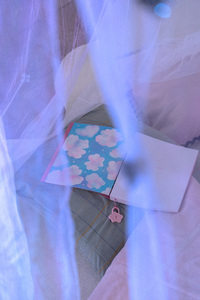
Unter einem Baldachin, umgeben von funkelnd tanzenden Schmetterlingen, können Besucher*innen in diese Welt eintauchen und sind eingeladen, für einen Moment Teil von „eternal girlhood“ zu sein, fernab der Echtzeit.
- “eternal girlhood” ist eine konzeptionelle Arbeit, welche aus einer Rauminstallation und einer Publikation besteht.
- Beschreibung (en)
- “eternal girlhood“ is a conceptional artwork, blending a publication with its installation space.
Initially installed in the Chinese pavillons of the Fasanengarten in Karlsruhe, the space was connected to the story of the book through props and a musical sound score.
The project offers a journey into a poetic story, inspired by personal and cultural ideas on girlhood, coming of age and growing pains.
Handbound, wrapped in a glittery embossed dustcover, the publication features around 100 pages with multiple series of black and white film photography, medium format shots underlined by analog snapshots and Riso printed Illustrations. In between the chapters of photography and Illustrations, lyrics, fragments of script and poems are inserted in reference to movie sequences from coming of age stories. A timeless profile of a girl being part of girlhood and a deeply connected friendship is created.
Transparent prints of three medium format photos are illuminated by the windows’ natural light and symbolize different chapters of the story in combination with the book.
Underneath a canopy, surrounded by sparkling dancing butterflies, visitors can dive into this world and are invited to become part of “eternal girlhood“, away from modern reality.
- “eternal girlhood“ is a conceptional artwork, blending a publication with its installation space.
- Kategorie
- Typ des Projekts/Werks
- Schlagworte
- Datierung
- 05.07.2024
- Mitwirkende
- Dank an
- Sprache
- Material
- Technik/Verfahren/Formate
- Risographie, Digitaldruck, Mediumformat-Fotografie, Schreibmaschine, Laser, Prägung
- Abmessungen
- Fläche: ca. 5m x 5m, Höhe der Aufhängung ca. 3m
- Ort: Institution
- Ort
- Chinesische Pavilions des Fasanengarten
- Stadt
- Land
- Beteiligte Institution(en)
- Titel
- eternal girlhood
- Untertitel
- oh my dreams
- Projektleiter/in
- Semester
- Studiengang
- Typ der Abschlussarbeit
- Importiert am
- 05.11.2024
- Übergeordnete Sets
- 3
- Set enthält
- 0 21
Ghost Story
Name that can easily go onto 2 lines
Author that can easily go onto 2 lines as well
- Titel
- Ghost Story
- Autor/in
- Beschreibung (en)
- The project was born in response to the passing of an unaccompanied homeless individual in 2018, a person without known family or friends. Her death was cataloged—reduced to data archived in newsrooms and on digital servers. Yet, if this data remains untouched, and her memory fades into obscurity, does her existence persist? She lingers and remains unseen—a paradoxical state of both presence and absence. Within the digital void, she exists as a spectral trace, haunting the silence, waiting to be rediscovered, forever closed in on herself.
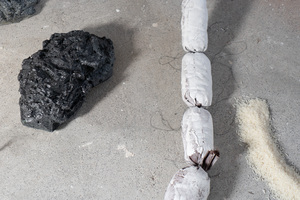
Such is the nature of ghosts—the living create them. We resurrect the departed in our own ways, through rituals, texts, and the intangible recipes of memory. We read, we create, we consume, and through this, we invite the dead to inhabit us once more. This project is an assemblage of fragments—an exploration of the processes through which we become haunted by the past.
- The project was born in response to the passing of an unaccompanied homeless individual in 2018, a person without known family or friends. Her death was cataloged—reduced to data archived in newsrooms and on digital servers. Yet, if this data remains untouched, and her memory fades into obscurity, does her existence persist? She lingers and remains unseen—a paradoxical state of both presence and absence. Within the digital void, she exists as a spectral trace, haunting the silence, waiting to be rediscovered, forever closed in on herself.
- Kategorie
- Typ des Projekts/Werks
- Schlagworte
- Datierung
- 18.04.2024
- Dank an
- Sprache
- Material
- Ort
- Pförtnerhäuser, Alter Schlachthof
- Stadt
- Land
- Titel
- Ghost Story
- Projektleiter/in
- Semester
- Studiengang
- Typ der Abschlussarbeit
- Importiert am
- 25.09.2024
- Übergeordnete Sets
- 0
- Set enthält
- 0 9