Nina Overkott
| Name | Nina Overkott |
4 Inhalte
- Seite 1 von 1
Umpolen Kollektiv
Name that can easily go onto 2 lines
Author that can easily go onto 2 lines as well
- Titel
- Umpolen Kollektiv
- Titel (en)
- Umpolen Collective
- Autor/in
- Merve Abt
- Klara Beck
- Franka Breunig
- Timothée Charon
- Athina Chrisofakis
- Edona Ibrahimi
- Alexander Johl
- Jule Köpke
- Peter Oellerich
- Anika Osbelt
- Nina Overkott
- Lasse Peters
- Elisabeth Potemkin
- Leo Schick
- Emil Schönert
- Charlot Schümann
- Asimina Sideris
- Estella Staader
- Joscha Thorn
- Laura Waterstradt
- Cédric Weber
- Max Werling
- Camilla Wondrak
- Lando
- Beschreibung (de)
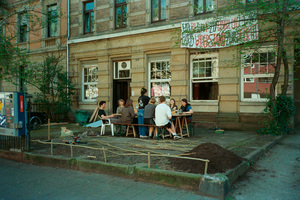
- Umpolen ist ein Kollektiv das leerstehende Räume in Karlsruhe nutzt, um temporäre, nicht-kommerzielle Orte der Begegnung und des Austauschs zu schaffen. Sie dienen als kurzfristige soziokulturelle Veranstaltungs- und Ausstellungsräume, aber auch einfache Treffpunkte. Im Januar 2026 bespielte Umpolen für eine Woche eine ehemalige Wohngemeinschaft in der Karlsruher Südstadt und widmete sich Fragen von Freund*innenschaft und Distanz. Dazu gab es Workshops, “Küche für Alle”, Filmvorführungen, Konzerte und Lesungen.
Seit Mai 2026 baut Umpolen einen temporären Nachbar*innenschaftstreff und Kulturort im ehemaligen Löwenbräukeller in der Karlsruher Weststadt auf. Ausgangspunkt ist jedes Mal der Raum selbst, von dem aus sich das Kollektiv dem Thema Nachbar*innenschaft widmen will. Die Orte stellen eine Brücke zwischen sozialem Raum, Werkstatt, Arbeitsraum, Ausstellungsraum, Garten und versuchen Menschen in Dialoge miteinander zu setzen. Dabei arbeitet Umpolen sowohl mit lokalen Initiativen als auch mit Menschen außerhalb Karlsruhes zusammen und entwickelt Formate, die gegenseitiges Lernen, Gespräche und Beisammensein ermöglichen.
Im ehemaligen Löwenbräukeller wird versucht im Alltag Strukturen zu schaffen in dem die Nachbar*innenschaft nicht nur fremde Gesichter bleiben, sondern Mitmenschen sind, mit denen man solidarisch lebt und in Kontakt tritt.
Der Raum ist zwei mal die Woche geöffnet und bespielt manchmal mit Programm manchmal als reinen Treffpunkt den Ort und beschäftigt sich auch mit den Erinnerungen, die an den Ort geknüpft sind.
Umpolen hat sich als Kollektiv im Sommer 2025 gegründet und besteht aus Studierenden der Studiengänge Ausstellungsdesign und Szenografie, Kunstwissenschaft und Medienphilosophie und Kommunikationsdesign von der HfG, Studierenden der Kunstakademie und Menschen aus Karlsruhe, die zusammengekommen sind um Gemeinschaft und Kulturarbeit in Karlsruhe zugänglich zu machen. Umpolen arbeitet zudem fest mit Radio ShbShb zusammen, die die Veranstaltungen live online übertragen.
- Umpolen ist ein Kollektiv das leerstehende Räume in Karlsruhe nutzt, um temporäre, nicht-kommerzielle Orte der Begegnung und des Austauschs zu schaffen. Sie dienen als kurzfristige soziokulturelle Veranstaltungs- und Ausstellungsräume, aber auch einfache Treffpunkte. Im Januar 2026 bespielte Umpolen für eine Woche eine ehemalige Wohngemeinschaft in der Karlsruher Südstadt und widmete sich Fragen von Freund*innenschaft und Distanz. Dazu gab es Workshops, “Küche für Alle”, Filmvorführungen, Konzerte und Lesungen.
- Beschreibung (en)
- Umpolen is a collective that uses vacant spaces in Karlsruhe to create temporary, non-commercial places for people to meet and exchange ideas. These spaces serve as short-term venues for sociocultural events and exhibitions, as well as simple gathering places. In January 2026, Umpolen took over a former shared apartment in Karlsruhe’s Südstadt neighborhood for a week and explored questions of friendship and distance. The event featured workshops, “Kitchen for All,” film screenings, concerts, and readings.
Since May 2026, the collective has been setting up a temporary neighborhood gathering place and cultural space in the former Löwenbräukeller in Karlsruhe’s Weststadt district. Each time, the starting point is the space itself, from which Umpolen aims to explore the theme of neighborliness. These spaces serve as a bridge between social space, workshop, workspace, exhibition space, and garden, and aim to bring people together in dialogue. In doing so, Umpolen collaborates with both local initiatives and people outside of Karlsruhe, developing formats that facilitate mutual learning, conversation, and socializing.
At the former Löwenbräukeller, Umpolen strives to create structures in our daily lives where neighbors aren’t just strangers, but fellow human beings with whom we live in solidarity and connect.
The space is open twice a week and serves as a venue, sometimes hosting events, sometimes simply as a gathering place, while also engaging with the memories tied to the location.
Umpolen was founded as a collective in the summer of 2025 and consists of students from the HfG and the Art Academy, as well as people from Karlsruhe who have come together to make community and cultural work accessible in Karlsruhe. Umpolen also collaborates closely with Radio ShbShb, which broadcasts the events live online.
- Umpolen is a collective that uses vacant spaces in Karlsruhe to create temporary, non-commercial places for people to meet and exchange ideas. These spaces serve as short-term venues for sociocultural events and exhibitions, as well as simple gathering places. In January 2026, Umpolen took over a former shared apartment in Karlsruhe’s Südstadt neighborhood for a week and explored questions of friendship and distance. The event featured workshops, “Kitchen for All,” film screenings, concerts, and readings.
- Kategorie
- Typ des Projekts/Werks
- Schlagworte
- Datierung
- 01.01.2026 - 01.11.2026
- Mitwirkende
- Sprache
- Ort
- Im Januar 2026 in der Rüppurerstr. 14, 76137 Karlsruhe
von Mai bis Oktober 2026 in der ehemaligen Gaststätte Löwenbräukeller in der Sophienstraße 95, 76135 Karlsruhe
- Im Januar 2026 in der Rüppurerstr. 14, 76137 Karlsruhe
- Stadt
- Land
- Internetlinks
- Titel
- Umpolen Kollektiv
- Importiert am
- 23.06.2026
- Übergeordnete Sets
- 1
- Set enthält
- 0 24
LET ME SEE (c) THE SUN
Name that can easily go onto 2 lines
Author that can easily go onto 2 lines as well
- Titel
- LET ME SEE (c) THE SUN
- Autor/in
- Beschreibung (de)
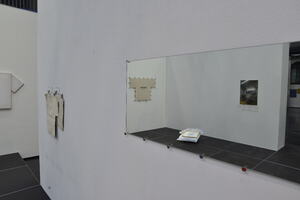
- Die Diplomarbeit „LET ME SEE (c) THE SUN“ setzt sich mit Sprache und Kommunikation auseinander, wobei das Medium Kleidung als Sprachrohr von Geschichten und als Bote von Identitäten analysiert werden soll.
Die ausgestellten Arbeiten greifen visuelle Elemente von Theaterkostümen, Bühnenrequisiten und Umkleidekabinen auf, um Besucher*innen einzuladen, sich selbst als Performer*innen von Sprache und Identität wahrzunehmen. Ein besonderer Schwerpunkt liegt dabei auf grafischen T-Shirts, da diese oft kulturelle Assoziationen oder oberflächliche Identitäten signalisieren (z. B. Bandshirts, Arbeitskleidung). Diese bekannte Struktur wird dekonstruiert und umgebaut, um Betrachter*innen die Bewohnbarkeit von Sprache zu verdeutlichen.
Die begleitende Performance beschäftigt sich mit der Mehrdeutigkeit von Sprache, die stets von persönlicher Interpretation abhängt. Wörter und Texte sind untrennbar mit ihrem Kontext sowie der Art und Weise verbunden, wie und wo sie erscheinen. In den Text-/Textil-Konstruktionen werden Wörter zu Requisiten, die Bedeutungen – sowohl offensichtlich als auch schwer fassbar – tragen und durch das Medium der Requisite von anderen „bewohnt“ werden können.
- Die Diplomarbeit „LET ME SEE (c) THE SUN“ setzt sich mit Sprache und Kommunikation auseinander, wobei das Medium Kleidung als Sprachrohr von Geschichten und als Bote von Identitäten analysiert werden soll.
- Beschreibung (en)
- The diploma project “LET ME SEE (c) THE SUN” deals with language and communication, analyzing the medium of clothing as a mouthpiece for stories and as a messenger of identities.
The exhibited works take up visual elements of theater costumes, stage props and dressing rooms to invite visitors to perceive themselves as performers of language and identity. A particular focus is placed on graphic T-shirts, as these often signal cultural associations or superficial identities (e.g. band shirts, work clothes). This familiar structure is deconstructed and rebuilt to show viewers the habitability of language.
The accompanying performance deals with the ambiguity of language, which always depends on personal interpretation. Words and texts are inextricably linked to their context and how and where they appear. In the text/textile constructions, words become props that carry meanings - both obvious and elusive - and can be “inhabited” by others through the medium of the prop.
- The diploma project “LET ME SEE (c) THE SUN” deals with language and communication, analyzing the medium of clothing as a mouthpiece for stories and as a messenger of identities.
- Kategorie
- Typ des Projekts/Werks
- Schlagworte
- Datierung
- 15.01.2025
- Mitwirkende
- Dank an
- Paul Bailey
- Jonathan Blaschke
- Céline Condorelli
- Amelie Enders
- Till Engelhardt
- Kira Fuchs
- Line-Gry Hørup
- Rafael Jörger
- Chiara Kern
- Simon Knebl
- Florian Knöbl
- Alexander Knoppik
- Barbara Kuon
- James Langdon
- Nina Overkott
- Leo Schick
- Henriette Schwabe (Jette Schwabe)
- Neele Seidel
- Isabel Seiffert
- Moritz Kamil Simon
- Charlotte Singer
- Niklas Weisenbach
- Maximilian Zschiesche
- Sprache
- Material
- Ort: Institution
- Ort
- Lichthof 3
- Stadt
- Land
- Titel
- LET ME SEE (c) THE SUN
- Projektleiter/in
- Semester
- Studiengang
- Typ der Abschlussarbeit
- Importiert am
- 11.02.2025
- Übergeordnete Sets
- 3
- Set enthält
- 0 11
WHERE LEGENDS ARE MADE AND LIES ARE TOLD
Name that can easily go onto 2 lines
Author that can easily go onto 2 lines as well
- Titel
- WHERE LEGENDS ARE MADE AND LIES ARE TOLD
- Autor/in
- Beschreibung (de)
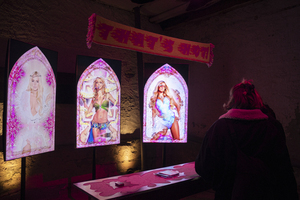
- WHERE LEGENDS ARE MADE AND LIES ARE TOLD (graduation project). Originated by this divine union of @parishilton @britneyspears @lindsaylohan (aka the Holy Trinity <3) the night of the infamous Bimbo Summit, WLAMALAT is the visual and critical translation of my obsession for the #y2k it-girls and #popculture in general. Mixing a religious with a highly commercial aesthetic, the project questions several topics such as women representation in the mass media, visual/celebrity culture consumption and new belief systems.
- WHERE LEGENDS ARE MADE AND LIES ARE TOLD (graduation project). Originated by this divine union of @parishilton @britneyspears @lindsaylohan (aka the Holy Trinity <3) the night of the infamous Bimbo Summit, WLAMALAT is the visual and critical translation of my obsession for the #y2k it-girls and #popculture in general. Mixing a religious with a highly commercial aesthetic, the project questions several topics such as women representation in the mass media, visual/celebrity culture consumption and new belief systems.
- Beschreibung (en)
- WHERE LEGENDS ARE MADE AND LIES ARE TOLD (graduation project). Originated by this divine union of @parishilton @britneyspears @lindsaylohan (aka the Holy Trinity <3) the night of the infamous Bimbo Summit, WLAMALAT is the visual and critical translation of my obsession for the #y2k it-girls and #popculture in general. Mixing a religious with a highly commercial aesthetic, the project questions several topics such as women representation in the mass media, visual/celebrity culture consumption and new belief systems.
- WHERE LEGENDS ARE MADE AND LIES ARE TOLD (graduation project). Originated by this divine union of @parishilton @britneyspears @lindsaylohan (aka the Holy Trinity <3) the night of the infamous Bimbo Summit, WLAMALAT is the visual and critical translation of my obsession for the #y2k it-girls and #popculture in general. Mixing a religious with a highly commercial aesthetic, the project questions several topics such as women representation in the mass media, visual/celebrity culture consumption and new belief systems.
- Kategorie
- Typ des Projekts/Werks
- Datierung
- 06.12.23
- Dank an
- Ort
- Rudolf 5
- Titel
- WHERE LEGENDS ARE MADE AND LIES ARE TOLD
- Projektleiter/in
- Semester
- Studiengang
- Typ der Abschlussarbeit
- Importiert am
- 05.11.2024
- Übergeordnete Sets
- 1
- Set enthält
- 3 8
sentimental gentle rental
Name that can easily go onto 2 lines
Author that can easily go onto 2 lines as well
- Titel
- sentimental gentle rental
- Untertitel
- performance for a portative organ
- Autor/in
- Beschreibung (de)
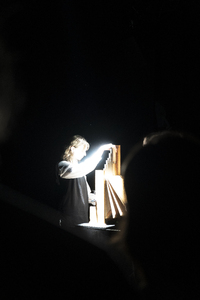
- "sentimental gentle rental”, das Abschlussprojekt von Juliane Schmitt, ist eine Performance- und Soundinstallation, die sich um die Portativorgel dreht, ein Instrument, das im Mittelalter populär war. Die Arbeit basiert auf der Recherche über Nonnen in mittelalterlichen Klöstern. Die Portativorgel prägt die Aufführung durch ihren atemähnlichen Rhythmus. Die begrenzte Tonreichweite wird durch die Verwendung von Tools erweitert, um die Pfeifenlängen zu verändern. Dabei entsteht Reibung durch Obertöne, Dissonanzen und schwingende Frequenzen. Die Performerinnen synchronisieren ihren Atem mit dem Instrument und schaffen so ein zartes Gleichgewicht von Klang und Stille. Die Portativorgel, geliehen von einem Orgelbauer, wird damit zu einem Stellvertreterobjekt zarter Sentimentalität und zeitlich begrenzter Transzendenz.
- "sentimental gentle rental”, das Abschlussprojekt von Juliane Schmitt, ist eine Performance- und Soundinstallation, die sich um die Portativorgel dreht, ein Instrument, das im Mittelalter populär war. Die Arbeit basiert auf der Recherche über Nonnen in mittelalterlichen Klöstern. Die Portativorgel prägt die Aufführung durch ihren atemähnlichen Rhythmus. Die begrenzte Tonreichweite wird durch die Verwendung von Tools erweitert, um die Pfeifenlängen zu verändern. Dabei entsteht Reibung durch Obertöne, Dissonanzen und schwingende Frequenzen. Die Performerinnen synchronisieren ihren Atem mit dem Instrument und schaffen so ein zartes Gleichgewicht von Klang und Stille. Die Portativorgel, geliehen von einem Orgelbauer, wird damit zu einem Stellvertreterobjekt zarter Sentimentalität und zeitlich begrenzter Transzendenz.
- Beschreibung (en)
- "sentimental gentle rental” the graduation project by Juliane Schmitt is a performance and sound installation centered on the portative organ, an instrument that was popular in medieval times.
The work is based on research on nuns in medieval monasteries. The portative organ shapes the performance through its rhythmic breath-like cadence. The limited tonal range is expanded by using tools to adjust pipe lengths, producing higher tones and creating friction with overtones, dissonances, and oscillating frequencies. The performers synchronize their breath with the instrument, creating a delicate balance of sound and silence, transforming the organ that was borrowed from an organ builder into a vessel of gentle sentimentality and temporal transcendence.
- "sentimental gentle rental” the graduation project by Juliane Schmitt is a performance and sound installation centered on the portative organ, an instrument that was popular in medieval times.
- Kategorie
- Typ des Projekts/Werks
- Schlagworte
- Datierung
- 23.02.2024
- Mitwirkende
- Dank an
- Jonathan Blaschke
- Julius Bläser
- Pauline Cemeris
- Tamara Goerhinger
- Jana Hofmann
- Matthias Holznagel
- Line-Gry Hørup
- Bruno Jacoby
- Rafael Jörger
- Alexander Knoppik
- Vincent Krüger
- Mona Mayer
- Isabel Motz
- Nina Overkott
- Nis Petersen
- Tereza Ruller
- Sebastian Schäfer
- Josefine Scheu
- Isabel Seiffert
- Saskia van der Meer
- Mathis Walter
- Leia Morgana Walz
- Sprache
- Material
- Dauer
- 8 min – theoretically infinite
- Ort: Institution
- Ort
- Großes Studio
- Stadt
- Land
- Internetlinks
- Titel
- sentimental gentle rental
- Untertitel
- performance for a portative organ
- Projektleiter/in
- Semester
- Studiengang
- Typ der Abschlussarbeit
- Importiert am
- 24.06.2024
- Übergeordnete Sets
- 2
- Set enthält
- 0 9