Joanne Dietz
| Name | Joanne Dietz |
4 Inhalte
- Seite 1 von 1
Elusive Unrealities
Name that can easily go onto 2 lines
Author that can easily go onto 2 lines as well
- Titel
- Elusive Unrealities
- Titel (en)
- Elusive Unrealities
- Untertitel
- On Calling, Grasping & Awakening Dreams
- Untertitel des Projekts/Werks (en)
- On Calling, Grasping & Awakening Dreams
- Autor/in
- Beschreibung (de)
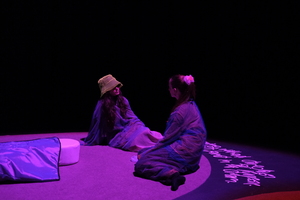
- Jeder Mensch träumt, manche Träume sind lebendig und bildhaft, andere abstrakt und symbolisch. In meiner Abschlussarbeitrbeit habe ich Traumerfahrungen in interaktive Objekte übersetzt und im Rahmen einer interaktive Ausstellung präsentiert. Darin werden sieben Traumthemen reflektiert: zwei der häufigsten Traumarten, Alptraum und Lusttraum; zwei wissenschaftliche Erkenntnisse, die Schwierigkeit des Gehirns, im Schlaf Gesichter und Figuren zu erkennen sowie die Unfähigkeit, Muster in geschriebener Schrift zu lesen; drei persönliche Faszinationen, das Ritual des Einschlafens, des Aufwachens sowie das Träumen als Reise in fantastische Welten.
- Beschreibung (en)
- Everyone dreams, some dreams are vivid and lifelike, others abstract and symbolic. In my diploma project I translated dream experiences into interactive objects and presented them in an interactive exhibition, reflecting seven dream themes: two addressing the most common dream types, nightmare and pleasure dreaming; two drawing on scientific research, the brain's difficulty recognising faces and figures during sleep, and its inability to read patterns in written text; three rooted in personal fascination, the rituals of falling asleep and waking, and dreaming as a passage to fantastical worlds.
- Kategorie
- Typ des Projekts/Werks
- Schlagworte
- Datierung
- 22.4.2025
- Dank an
- Sprache
- Material
- Abmessungen
- 90sqm
- Ort: Institution
- Stadt
- Land
- Internetlinks
- Titel
- Elusive Unrealities
- Untertitel
- On Calling, Grasping & Awakening Dreams
- Projektleiter/in
- Semester
- Studiengang
- Typ der Abschlussarbeit
- Importiert am
- 08.10.2025
- Übergeordnete Sets
- 3
- Set enthält
- 0 13
eternal girlhood
Name that can easily go onto 2 lines
Author that can easily go onto 2 lines as well
- Titel
- eternal girlhood
- Untertitel
- oh my dreams
- Autor/in
- Beschreibung (de)
- “eternal girlhood” ist eine konzeptionelle Arbeit, welche aus einer Rauminstallation und einer Publikation besteht.
Ursprünglich in den Chinesischen Pavillons des Fasanengartens in Karlsruhe installiert, wurde der Raum mit der Handlung der Publikation durch Requisiten sowie ein selbst produziertes Musikstück verknüpft.
Das Projekt ermöglicht eine Reise in eine poetische Geschichte, inspiriert von persönlichen und kulturellen Themen wie Girlhood, Coming-of-Age und Growing Pains.
Die handgebundene Publikation mit glitzerndem und geprägtem Umschlag umfasst auf ca. 100 Seiten neben Serien analoger Schwarzweiß-Fotografie farbige Mittelformat-Fotos, begleitet von analogen Schnappschüssen und Illustrationen im Riso-Druck.
Zwischen Fotoserien und Illustrationen sind Songtexte sowie Skriptfragmente und Gedichte eingestreut, in Referenz zu Filmsequenzen aus Coming-of-Age-Geschichten. Es ergibt sich die zeitlose Skizze eines Mädchens, das Teil einer innig verbundenen Mädchengruppe ist.
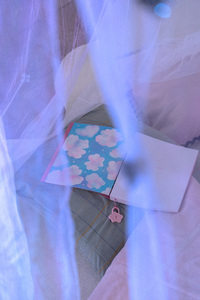
Transparente Drucke von drei Mittelformat-Fotografien werden vom Fensterlicht erleuchtet und symbolisieren in Zusammenhang mit dem Buch unterschiedliche Kapitel der Geschichte.
Unter einem Baldachin, umgeben von funkelnd tanzenden Schmetterlingen, können Besucher*innen in diese Welt eintauchen und sind eingeladen, für einen Moment Teil von „eternal girlhood“ zu sein, fernab der Echtzeit.
- “eternal girlhood” ist eine konzeptionelle Arbeit, welche aus einer Rauminstallation und einer Publikation besteht.
- Beschreibung (en)
- “eternal girlhood“ is a conceptional artwork, blending a publication with its installation space.
Initially installed in the Chinese pavillons of the Fasanengarten in Karlsruhe, the space was connected to the story of the book through props and a musical sound score.
The project offers a journey into a poetic story, inspired by personal and cultural ideas on girlhood, coming of age and growing pains.
Handbound, wrapped in a glittery embossed dustcover, the publication features around 100 pages with multiple series of black and white film photography, medium format shots underlined by analog snapshots and Riso printed Illustrations. In between the chapters of photography and Illustrations, lyrics, fragments of script and poems are inserted in reference to movie sequences from coming of age stories. A timeless profile of a girl being part of girlhood and a deeply connected friendship is created.
Transparent prints of three medium format photos are illuminated by the windows’ natural light and symbolize different chapters of the story in combination with the book.
Underneath a canopy, surrounded by sparkling dancing butterflies, visitors can dive into this world and are invited to become part of “eternal girlhood“, away from modern reality.
- “eternal girlhood“ is a conceptional artwork, blending a publication with its installation space.
- Kategorie
- Typ des Projekts/Werks
- Schlagworte
- Datierung
- 05.07.2024
- Mitwirkende
- Dank an
- Sprache
- Material
- Technik/Verfahren/Formate
- Risographie, Digitaldruck, Mediumformat-Fotografie, Schreibmaschine, Laser, Prägung
- Abmessungen
- Fläche: ca. 5m x 5m, Höhe der Aufhängung ca. 3m
- Ort: Institution
- Ort
- Chinesische Pavilions des Fasanengarten
- Stadt
- Land
- Beteiligte Institution(en)
- Titel
- eternal girlhood
- Untertitel
- oh my dreams
- Projektleiter/in
- Semester
- Studiengang
- Typ der Abschlussarbeit
- Importiert am
- 05.11.2024
- Übergeordnete Sets
- 3
- Set enthält
- 0 21
finding traces and placing connections
Name that can easily go onto 2 lines
Author that can easily go onto 2 lines as well
- Titel
- finding traces and placing connections
- Autor/in
- Beschreibung (de)
- „finding traces and placing connections“ ist eine interaktive Kunstinstallation und ein persönlicher Liebesbrief an das Material Kupfer. Die Arbeit zelebriert die Funktionalität, Vielseitigkeit und Schönheit des Kupfers.
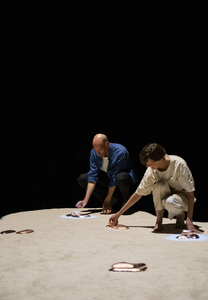
Besucher*innen können die in den Teppich eingelassenen Kupferflächen durch fünf verkupferte Steine verbinden und kontrollieren dadurch Klang und Licht des Raumes.
Die Komposition für das Werk wurde aus Aufnahmen, die durch Interaktion mit Kupferobjekten entstanden sind, generiert.
Jede aktivierte Fläche leuchtet auf und fügt eine Audiospur zur Komposition hinzu.
Dadurch entsteht nicht nur eine Interaktion mit der Arbeit, sondern auch eine Interaktion zwischen den Besucher*innen. Durch das Zusammenspiel entstehen individuelle Kompositionen und Kombinationen der Audiospuren und immer neue Abwandlungen des Klanges.
„finding traces and placing connections“ lädt ein, zu entdecken, zu hören.
- „finding traces and placing connections“ ist eine interaktive Kunstinstallation und ein persönlicher Liebesbrief an das Material Kupfer. Die Arbeit zelebriert die Funktionalität, Vielseitigkeit und Schönheit des Kupfers.
- Beschreibung (en)
- “finding traces and placing connections” is an interactive art installation and a personal love letter to the material copper. The work celebrates the functionality, versatility and beauty of copper.
Visitors can connect the copper surfaces embedded in the carpet with five copper-plated stones and thereby control the sound and light of the room.
The composition for the work was generated from recordings made through interaction with copper objects.
Each activated surface lights up and adds an audio track to the composition.
This not only creates an interaction with the work, but also an interaction between the visitors. The interplay creates individual compositions and combinations of audio tracks and ever new variations of the sound.
“finding traces and placing connections” invites you to discover and listen.
- “finding traces and placing connections” is an interactive art installation and a personal love letter to the material copper. The work celebrates the functionality, versatility and beauty of copper.
- Kategorie
- Typ des Projekts/Werks
- Schlagworte
- Datierung
- Juni 2024
- Mitwirkende
- Dank an
- Material
- Abmessungen
- 4m x 5m
- Ort: Institution
- Titel
- finding traces and placing connections
- Projektleiter/in
- Semester
- Studiengang
- Typ der Abschlussarbeit
- Importiert am
- 05.11.2024
- Übergeordnete Sets
- 3
- Set enthält
- 0 23
Ghost Story
Name that can easily go onto 2 lines
Author that can easily go onto 2 lines as well
- Titel
- Ghost Story
- Autor/in
- Beschreibung (en)
- The project was born in response to the passing of an unaccompanied homeless individual in 2018, a person without known family or friends. Her death was cataloged—reduced to data archived in newsrooms and on digital servers. Yet, if this data remains untouched, and her memory fades into obscurity, does her existence persist? She lingers and remains unseen—a paradoxical state of both presence and absence. Within the digital void, she exists as a spectral trace, haunting the silence, waiting to be rediscovered, forever closed in on herself.
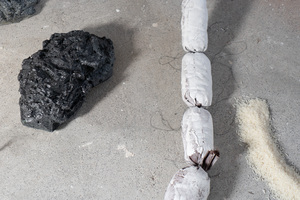
Such is the nature of ghosts—the living create them. We resurrect the departed in our own ways, through rituals, texts, and the intangible recipes of memory. We read, we create, we consume, and through this, we invite the dead to inhabit us once more. This project is an assemblage of fragments—an exploration of the processes through which we become haunted by the past.
- The project was born in response to the passing of an unaccompanied homeless individual in 2018, a person without known family or friends. Her death was cataloged—reduced to data archived in newsrooms and on digital servers. Yet, if this data remains untouched, and her memory fades into obscurity, does her existence persist? She lingers and remains unseen—a paradoxical state of both presence and absence. Within the digital void, she exists as a spectral trace, haunting the silence, waiting to be rediscovered, forever closed in on herself.
- Kategorie
- Typ des Projekts/Werks
- Schlagworte
- Datierung
- 18.04.2024
- Dank an
- Sprache
- Material
- Ort
- Pförtnerhäuser, Alter Schlachthof
- Stadt
- Land
- Titel
- Ghost Story
- Projektleiter/in
- Semester
- Studiengang
- Typ der Abschlussarbeit
- Importiert am
- 25.09.2024
- Übergeordnete Sets
- 0
- Set enthält
- 0 9