Sets
444 Inhalte
- Seite 1 von 37
Who cares?
Name that can easily go onto 2 lines
Author that can easily go onto 2 lines as well
- Titel
- Who cares?
- Titel (en)
- Who Cares?
- Untertitel
- Digitale Sozialität, Infrastrukturen der Fürsorge und konviviale Technologien
- Untertitel des Projekts/Werks (en)
- Digital sociality, care infrastructure and convivial technology
- Autor/in
- Beschreibung (de)
- Die Hackerkultur verbindet Theorie und Praxis (nach hand-on Prinzipien) und einen neuen Ansatz für Kulturmaterialien ("information wants to be free"), der nicht nur eine andere Epistemologie, sondern auch einen neuen politischen Diskurs über Digitalität, Geräte und Menschen impliziert. Das Verhältnis zwischen Technik und Politik dieser Gruppe wird im ersten Kapitel analysiert: Zuerst wird die Entstehung proprietärer Software betrachtet, dann die Unterschiede zwischen Open Source und freier Software, und wie im letzten die Privateigentum und die soziale Beziehung zwischen Programmen, Benutzern und Entwicklern radikal in Frage gestellt werden. Später wird diese Beziehung anhand von Hanna Arendts 'Die conditio humana' in Bezug auf Arbeit, Herstellen und Handlen, Notwendigkeit und Freiheit, die die Bedingungen für Politik schaffen, weiter diskutiert. Im zweiten Kapitel wird das Konzept der Konvivialität (Ivan Illich) vorgestellt und diskutiert. Diese Idee wird später in der Wartung als infrastrukturelle Vorsorge weiterentwickelt und als ein zentrales Element digitaler Technologien vorgeschlagen, das weiter diskutiert werden sollte. Diese Konstellation des Denkens und Handelns, des Spielens und Lernens, des Experimentierens und der Übernahme von Verantwortung sowie der Politik und der sozialen Beziehungen sollte in der Technologiedebatte eine wichtige Rolle spielen.
- Beschreibung (en)
- Hacker culture connects theory and praxis (following hand-on principles) and a new approach to culture materials ("information wants to be free"), that implies not only a different epistemology, but also a new political discourse on digitality, devices, and people. The relation between technic and politic of this group is analyzed in the first chapter: first focusing on the emergence of proprietary software; then considering the differences between open source and free software, the last one challenging radically the notion of private property and the social relation among programs, users, and developers. Later on, reading Hanna Arendts 'The Human condition, the relation will be further discussed in terms of labor, work and action, necessity and freedom, which establish the conditions for politics. In the second chapter, the concept of conviviality (Ivan Illich) is introduced and discussed. This idea is later developed in maintenance as infrastructural care and proposed as a central element of digital technologies that should be further discussed. This constellation of thinking and acting, playing and learning, experimenting and taking responsibility, as well as politics and social relations should play a prominent role in the debate about technology.
- Kategorie
- Typ des Projekts/Werks
- Schlagworte
- Datierung
- 30.03.2023
- Sprache
- Titel
- Who cares?
- Untertitel
- Digitale Sozialität, Infrastrukturen der Fürsorge und konviviale Technologien
- Projektleiter/in
- Semester
- Studiengang
- Typ der Abschlussarbeit
- Importiert am
- 30.11.2023
- Übergeordnete Sets
- 3
- Set enthält
- 0 4
WHERE LEGENDS ARE MADE AND LIES ARE TOLD
Name that can easily go onto 2 lines
Author that can easily go onto 2 lines as well
- Titel
- WHERE LEGENDS ARE MADE AND LIES ARE TOLD
- Autor/in
- Beschreibung (de)
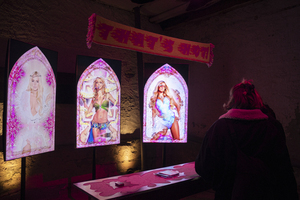
- WHERE LEGENDS ARE MADE AND LIES ARE TOLD (graduation project). Originated by this divine union of @parishilton @britneyspears @lindsaylohan (aka the Holy Trinity <3) the night of the infamous Bimbo Summit, WLAMALAT is the visual and critical translation of my obsession for the #y2k it-girls and #popculture in general. Mixing a religious with a highly commercial aesthetic, the project questions several topics such as women representation in the mass media, visual/celebrity culture consumption and new belief systems.
- WHERE LEGENDS ARE MADE AND LIES ARE TOLD (graduation project). Originated by this divine union of @parishilton @britneyspears @lindsaylohan (aka the Holy Trinity <3) the night of the infamous Bimbo Summit, WLAMALAT is the visual and critical translation of my obsession for the #y2k it-girls and #popculture in general. Mixing a religious with a highly commercial aesthetic, the project questions several topics such as women representation in the mass media, visual/celebrity culture consumption and new belief systems.
- Beschreibung (en)
- WHERE LEGENDS ARE MADE AND LIES ARE TOLD (graduation project). Originated by this divine union of @parishilton @britneyspears @lindsaylohan (aka the Holy Trinity <3) the night of the infamous Bimbo Summit, WLAMALAT is the visual and critical translation of my obsession for the #y2k it-girls and #popculture in general. Mixing a religious with a highly commercial aesthetic, the project questions several topics such as women representation in the mass media, visual/celebrity culture consumption and new belief systems.
- WHERE LEGENDS ARE MADE AND LIES ARE TOLD (graduation project). Originated by this divine union of @parishilton @britneyspears @lindsaylohan (aka the Holy Trinity <3) the night of the infamous Bimbo Summit, WLAMALAT is the visual and critical translation of my obsession for the #y2k it-girls and #popculture in general. Mixing a religious with a highly commercial aesthetic, the project questions several topics such as women representation in the mass media, visual/celebrity culture consumption and new belief systems.
- Kategorie
- Typ des Projekts/Werks
- Datierung
- 06.12.23
- Dank an
- Ort
- Rudolf 5
- Titel
- WHERE LEGENDS ARE MADE AND LIES ARE TOLD
- Projektleiter/in
- Semester
- Studiengang
- Typ der Abschlussarbeit
- Importiert am
- 05.11.2024
- Übergeordnete Sets
- 1
- Set enthält
- 3 8
Wet again
Name that can easily go onto 2 lines
Author that can easily go onto 2 lines as well
- Titel
- Wet again
- Titel (en)
- Wet again
- Untertitel
- Wahrnehmung und Abstraktion von Erhaltungsarbeit im ländlichen Raum
- Untertitel des Projekts/Werks (en)
- Perception and abstraction of maintenance work in rural areas
- Autor/in
- Beschreibung (de)
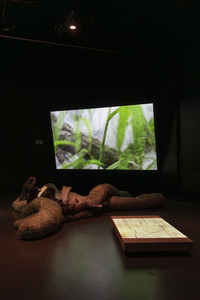
- „Wet again“ ist das Ergebnis eines zweijährigen Prozesses von Laura Haak, eine Moorregion als Akteur wahrzunehmen und zu begleiten. Es liegt in einem abgelegenen Terrain im Nordosten Deutschlands nahe dem Kummerower See im Malchiner Umland.
In einer Feldforschung wurde viel Zeit verbracht, Scores der Zusammenarbeit entwickelt, Wander- und Kanurouten 1:1 erschlossen. Dabei entstand ein Austausch mit den Menschen vor Ort, die eine längere Beziehung zum Torfboden pflegen und sich für die Wiedervernässung von Moorböden lokal und europaweit einsetzen.
Es entstand ein Gewebe aus verschiedenen Wahrnehmungsperspektiven und die Frage nach ihren machtpolitischen Auswirkungen auf ländliche Gestaltungsprozesse. Was sind die neuen Choreografien der Erhaltungsarbeit, auf welche Perspektiven wird Bezug genommen?
- „Wet again“ ist das Ergebnis eines zweijährigen Prozesses von Laura Haak, eine Moorregion als Akteur wahrzunehmen und zu begleiten. Es liegt in einem abgelegenen Terrain im Nordosten Deutschlands nahe dem Kummerower See im Malchiner Umland.
- Beschreibung (en)
- ‘Wet again’ is the result of a two-year process by Laura Haak to perceive and accompany a moorland region as an acting entity.
It is located in a remote area in north-eastern Germany near Lake Kummerow in the Surrounding Malchin.
A lot of time was spent conducting field research, developing scores of collaboration, and tracing hiking and canoe routes 1:1.
This led to an exchange with local people who have a long-standing relationship with the peat soil and are committed to the rewetting of moorland soils both locally and across Europe.
A fabric of different perspectives emerged, along with questions about their power-political implications for rural design processes. What are the new choreographies of maintenance work, and what perspectives are being referred to?
- ‘Wet again’ is the result of a two-year process by Laura Haak to perceive and accompany a moorland region as an acting entity.
- Kategorie
- Typ des Projekts/Werks
- Schlagworte
- Datierung
- Zwei Sommer und ein Frühjahr 2023-2025
- Sprache
- Bemerkungen
- Acknowledgements:
Dr Uta Berghöfer, Dr Joachim Borner Martina Zienert from Projekthof Karnitz , Nora Köhn from University Greifswald, Dr Ulf Schiefelbein from Ministry for Climate Protection, Agriculture, Rural Areas and the Environment Mecklenburg-Western Pomerania , Tobias Dahms from thermal drones GmbH, Richard Hurding from Zelfo Technology GmbH, the paludi farmers Ludwig Bork and Henning Voigt, Frank Zimmermann from "Uns lütt Museum“ Dargun and sculptor Kathrin Wetzel for their time and willingness to show themselves, interesting and realizing conversations, the opportunity for a bird‘s eye view and 150 kilograms of sedge cane grass, Tim Ingold for loaning captions and providing impulses for thoughts and perception
Celine Condorelli, Jaya Demmer, Lina Determann, Mascha Dilger, Benjamin Eisele, Constanze Fischbeck, Hanna Franke, Vera Gärtner, Marlene-, Michael-, Birgit- and Michaela Haak, Mira Hirtz, Franka Kampmeier, Alexander Knoppig, Hanne König, Christian‘Lübben, Leonie Mühlen, Wiebke Muller, Leonie Müller, Laura Morcillo and ZeitBildLab, Luise Peschko, Nis Petersen, Sebastian Schafer, Susanne Schmitt, Josefine Scheu, Phillip Schell, Arthur Schuman, Henriette Schwabe, Claud Teichmann, Alexander Thelen, Johannes Thimm, Leia Walz, Isabel Winter for countless support, the best of times, carrying hands, attentive eyes and continuous inquiries and Paulina Mimberg for the most splendid graphic.
- Acknowledgements:
- Titel
- Wet again
- Untertitel
- Wahrnehmung und Abstraktion von Erhaltungsarbeit im ländlichen Raum
- Projektleiter/in
- Semester
- Studiengang
- Typ der Abschlussarbeit
- Importiert am
- 30.06.2025
- Übergeordnete Sets
- 2
- Set enthält
- 2 3
Werkstätten
Name that can easily go onto 2 lines
Author that can easily go onto 2 lines as well
- Titel
- Werkstätten
- Titel (en)
- Workshops
- Titel
- Werkstätten
- Importiert am
- 26.08.2024
- Übergeordnete Sets
- 0
- Set enthält
- 1 2
Werkschau
Name that can easily go onto 2 lines
Author that can easily go onto 2 lines as well
- Titel
- Werkschau
- Autor/in
- Kategorie
- Titel
- Werkschau
- Importiert am
- 30.10.2024
- Übergeordnete Sets
- 1
- Set enthält
- 0 37
Well, don't you do wellness?
Name that can easily go onto 2 lines
Author that can easily go onto 2 lines as well
- Titel
- Well, don't you do wellness?
- Titel (en)
- Well, don't you do wellness?
- Autor/in
- Beschreibung (de)
- Well, don’t you do Wellness? untersucht Wellness im Spannungsfeld zwischen Wohlbefinden, Selbstoptimierung und Widerstand. Die Arbeit hinterfragt gesellschaftlich erlernte Vorstellungen von Gesundheit und Leistungsfähigkeit aus feministischer Perspektive. Dabei verbinden sich Bezüge zu historischen Badekulturen und Quilting als feministischer Handarbeitstechnik mit Schreien als spekulativer Methode im Kontrast zu gängigen Wellness-Trends. Folgende Formate und Arbeiten sind Teil des Projekts:
○ Public Screaming zur Bundestagswahl am 23.02.2025
öffentliches, kollektives Schreien zur ersten Hochrechnung um 18:00 Uhr auf dem Mount Klotz, Günther Klotz Anlage
○ Scream Your Heart Out, Workshop mit Andrzej Profus, 07.05.2025 ZKM Pavillion
Screaming-Workshop, organisiert in Kooperation mit Betty Potemkin und Edona Ibrahimi.
○ auch meine Zunge, die ich rausstrecke, ist rot, videodokumentierte Performance
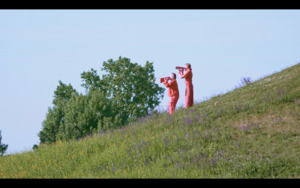
Während der 60 minütigen Performance sehen wir drei Scream Queens auf der Suche nach der optimalen Auszeit, der maximalen Entladung. Sie weihen als professionelle Schreier*innen einen Berg im Karlsruher Naherholungsgebiet als Mount Scream ein und eröffnen damit eine neue Phase der innerstädtischen Naherholung.
○ morning Session, Lecture Performance, 06.06.2025 Günther Klotz Anlage
Eine Einladung zu einer Lesung über Wellness, Baderituale und quilting auf einem roten Quilt aus ausrangierten, rot gefärbten Handtüchern. Beginn und Ende wird durch den Klang eines keramischen Zungengongs markiert.
○ Scream Queen Couture, Ausstellung, CU Karlsruhe 06.- 08.06.2025
Die dreitägige Ausstellung thematisiert Schreien als Gegenentwurf zu gängigen Wellness-Trends und lädt Besucher*innen dazu ein, sich durch das Ausleihen von Scream Queen Outfits, keramischen Schreirohren und Schreianleitungen selbst in Scream Queens zu verwandeln und Schreien im öffentlichen Raum als mögliche Form von Wellness zu erproben.
- Well, don’t you do Wellness? untersucht Wellness im Spannungsfeld zwischen Wohlbefinden, Selbstoptimierung und Widerstand. Die Arbeit hinterfragt gesellschaftlich erlernte Vorstellungen von Gesundheit und Leistungsfähigkeit aus feministischer Perspektive. Dabei verbinden sich Bezüge zu historischen Badekulturen und Quilting als feministischer Handarbeitstechnik mit Schreien als spekulativer Methode im Kontrast zu gängigen Wellness-Trends. Folgende Formate und Arbeiten sind Teil des Projekts:
- Beschreibung (en)
- 'Well, don't you do wellness?' examines wellness in the context of well-being, self-optimisation, and resistance. Consisting of several parts, the work questions socially learned ideas about health and productivity with a feminist approach. References to historical bathing cultures are combined with quilting as a feminist and activist handcraft technique, while screaming is tested as a speculative wellness method.
○ Public Screaming for the federal election on 23 February 2025
public, collective screaming at the first projection at 6 p.m. on Mount Klotz, Günther Klotz Anlage
○ Scream Your Heart Out, Screaming workshop by Andrzej Profus, 7 May 2025, ZKM Pavilion
organised in cooperation with Betty Potemkin and Edona Ibrahimi.
○ auch meine Zunge, die ich rausstrecke, ist rot video-documented performance
During the 60-minute performance, three scream queens seek the optimal time-out and maximum release. As professional screamers, they inaugurate Mount Scream in Karlsruhe's local recreation area, thus opening a new phase of urban recreation.
○ Scream Queen Couture exhibition, CU Karlsruhe, 6th - 8th May 2025
This three-day exhibition explores screaming as an alternative to current wellness trends. Visitors are invited to become Scream Queens by borrowing outfits, screaming tubes and instructions. They can also experience screaming in public spaces as a potential wellness practice.
- 'Well, don't you do wellness?' examines wellness in the context of well-being, self-optimisation, and resistance. Consisting of several parts, the work questions socially learned ideas about health and productivity with a feminist approach. References to historical bathing cultures are combined with quilting as a feminist and activist handcraft technique, while screaming is tested as a speculative wellness method.
- Kategorie
- Typ des Projekts/Werks
- Schlagworte
- Datierung
- 2025
- Mitwirkende
- Dank an
- Material
- Ort: Institution
- Stadt
- Titel
- Well, don't you do wellness?
- Projektleiter/in
- Semester
- Studiengang
- Typ der Abschlussarbeit
- Importiert am
- 14.09.2025
- Übergeordnete Sets
- 1
- Set enthält
- 0 14
weisse vernunft – siedlungsbau der 20er jahre
Name that can easily go onto 2 lines
Author that can easily go onto 2 lines as well
- Titel
- weisse vernunft – siedlungsbau der 20er jahre
- Untertitel
- architektur und lebensentwurf im neuen bauen
- Autor/in
- Beschreibung (de)
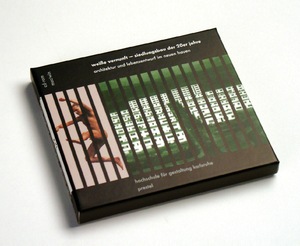
- Die CD-ROM thematisiert den modernen Siedlungsbau der 20er Jahre, der zwischen 1925 und 1931 im Rahmen des Neuen Bauens in Deutschland entstanden ist. Ausgangspunkt ist die 1929 in Karlsruhe-Rüppurr unter der künstlerischen Leitung von Walter Gropius und Otto Haesler errichtete Dammerstock-Siedlung. Sie wird hier zum Anlaß eines umfangreichen, interaktiv begehbaren und multimedial erschlossenen Rundgangs durch dieses wesentliche Kapitel der Architekturgeschichte des 20. Jahrhunderts. Die Errungenschaften und Modelle des modernen Siedlungsbaus werden nicht nur aus architektonischer und städtebaulicher Sichtweise präsentiert. Eine Reihe von Exkursionen führen darüber hinaus in das soziale, politische und kulturelle Umfeld: Aspekte wie beispielsweise der Neue Mensch und die Neue (Haus-)Frau, Architekturfotografie und Typografie, Wohnungsbaupolitik und Konstruktionsgeschichte bilden die Anknüpfungspunkte für weitgespannte thematische Bögen und inhaltliche Assoziationsketten.
- Typ des Projekts/Werks
- Schlagworte
- Datierung
- 1999
- Mitwirkende
- Sprache
- Material
- Beteiligte Institution(en)
- Titel
- weisse vernunft – siedlungsbau der 20er jahre
- Untertitel
- architektur und lebensentwurf im neuen bauen
- Importiert am
- 24.02.2017
- Übergeordnete Sets
- 0
- Set enthält
- 0 44
Weiß
Name that can easily go onto 2 lines
Author that can easily go onto 2 lines as well
- Titel
- Weiß
- Titel
- Weiß
- Importiert am
- 13.11.2025
- Übergeordnete Sets
- 1
- Set enthält
- 0 4
Weibelmaschine
Name that can easily go onto 2 lines
Author that can easily go onto 2 lines as well
- Titel
- Weibelmaschine
- Autor/in
- Beschreibung (de)
- weibelmaschine.net ist der Versuch, die Essenz von Peter Weibels Sprechen zu digitalisieren und so eine orakelhafte Version seines Geistes, auch als Inspiration für kommende Generationen, zu schaffen. Wir haben uns bewusst dafür entschieden, nur den Klang der Stimme zu simulieren, um den performativen Aspekt des Sprechens in den Vordergrund zu rücken. Die inhaltliche Ebene wird hingegen getrennt davon in Textform dargestellt.
- weibelmaschine.net ist der Versuch, die Essenz von Peter Weibels Sprechen zu digitalisieren und so eine orakelhafte Version seines Geistes, auch als Inspiration für kommende Generationen, zu schaffen. Wir haben uns bewusst dafür entschieden, nur den Klang der Stimme zu simulieren, um den performativen Aspekt des Sprechens in den Vordergrund zu rücken. Die inhaltliche Ebene wird hingegen getrennt davon in Textform dargestellt.
- Kategorie
- Schlagworte
- Datierung
- 2020/2021
- Mitwirkende
- Dank an
- Technik/Verfahren/Formate
- SampleRNN, GPT2-Modell, Transformers Library von Huggingface, RaspberryPi
- Auftrag durch
- In Zusammenarbeit mit Johannes Bechberger und Alexander Liebrich, produziert in Kooperation mit dem ZKM | Zentrum für Kunst und Medien Karlsruhe. Die Arbeit wird bis zum 28.08.2022 in der Ausstellung BioMedien am ZKM Karlsruhe gezeigt und wird dann in die Sammlung des ZKM aufgenommen.
- Internetlinks
- Website als virtuelle Repräsentation der Weibelmaschine:
https://weibelmaschine.net
Videodokumentation des ersten Zusammentreffens mit Peter Weibel:
https://youtu.be/rb3lDF0csew
Testlauf einer 360°- Kamera in Ausstellungssituation. Kamera wird durch eine besseres Modell ausgetauscht, die einen hochauflösenden 360°- Stream liefert:
https://youtu.be/-YH7Z5Ao5Gs
- Website als virtuelle Repräsentation der Weibelmaschine:
- Bemerkungen
- Cloudserver gesponsort von Nitrado.
- Titel
- Weibelmaschine
- Projektleiter/in
- Semester
- Studiengang
- Typ der Abschlussarbeit
- Importiert am
- 02.09.2024
- Übergeordnete Sets
- 2
- Set enthält
- 0 10
Wave Talk
Name that can easily go onto 2 lines
Author that can easily go onto 2 lines as well
- Titel
- Wave Talk
- Autor/in
- Beschreibung (de)
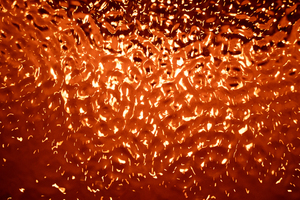
- Die Arbeit "Wave Talk" umfasst eine interaktive Kunstinstallation mit drei Objekten, die sich mit der tiefen philosophischen Frage der Selbsterkenntnis und der wechselseitigen Beziehung zwischen Individuum und Umwelt beschäftigt. Hinterfragt wird die Idee der Identität und Realität: Wie nehmen wir uns selbst wahr und wie wird diese Wahrnehmung durch unsere Umgebung, Handlungen und Worte verändert? Alle Objekte arbeiten mit der Darstellung von Sound (Kymatik). Die Frequenzen setzen das Material in Bewegung und verändern den Ist-Zustand. Die Installation lädt so den Betrachter ein zum Staunen, Besinnen, Meditieren und Erkennen, dass das Selbst nicht statisch, sondern dynamisch ist – ständig im Wandel, geformt und verzerrt durch äußere Einflüsse. Diese Verzerrungen spiegeln wider, wie unser Selbstbild und unsere Realität durch soziale, emotionale und körperliche Resonanzen beeinflusst werden. "Wave Talk" vermittelt die Idee, dass unsere Interaktionen mit der Umwelt eine ständige, nicht verbale Kommunikation darstellen – eine Art stiller Dialog, der die Veränderlichkeit und Sensibilität unserer Wahrnehmung symbolisiert.
Die Objekte:
1. Spiegel: Selbstreflexion und Resonanz
Ein runder Spiegel, der durch einen Näherungssensor und einen Körperschallwandler sanft zu vibrieren beginnt, wenn der Betrachter sich nähert. Die feine Vibration symbolisiert die subtile Resonanz zwischen Mensch und Umgebung und die fragile, fließende Natur der Selbstwahrnehmung – das Selbstbild verändert sich ständig im Austausch mit der Umwelt.
2. Wasserschale: Stimme und Resonanz
Ein kleineres Becken, dessen Wasser durch die Stimme des Betrachters in Schwingung gerät. Die Schwingungen stehen für die Kraft des inneren Ausdrucks, der sich im Außen manifestiert. Worte und Gedanken erzeugen Resonanzen, die sowohl die physische als auch die soziale Welt prägen – in jeder Schwingung offenbart sich die Tiefe des Moments.
3. Wasserbecken (120 cm Durchmesser): Berührung und Schwingung
Ein großes Becken, das auf Berührung reagiert und Wellen über die Wasseroberfläche schickt. Jede Berührung setzt Resonanzen frei, die sich ausbreiten und die Umgebung beeinflussen. Das Objekt verdeutlicht, dass selbst kleinste Handlungen Spuren in der Welt hinterlassen – ein stilles Gespräch zwischen uns und der Unendlichkeit.
- Die Arbeit "Wave Talk" umfasst eine interaktive Kunstinstallation mit drei Objekten, die sich mit der tiefen philosophischen Frage der Selbsterkenntnis und der wechselseitigen Beziehung zwischen Individuum und Umwelt beschäftigt. Hinterfragt wird die Idee der Identität und Realität: Wie nehmen wir uns selbst wahr und wie wird diese Wahrnehmung durch unsere Umgebung, Handlungen und Worte verändert? Alle Objekte arbeiten mit der Darstellung von Sound (Kymatik). Die Frequenzen setzen das Material in Bewegung und verändern den Ist-Zustand. Die Installation lädt so den Betrachter ein zum Staunen, Besinnen, Meditieren und Erkennen, dass das Selbst nicht statisch, sondern dynamisch ist – ständig im Wandel, geformt und verzerrt durch äußere Einflüsse. Diese Verzerrungen spiegeln wider, wie unser Selbstbild und unsere Realität durch soziale, emotionale und körperliche Resonanzen beeinflusst werden. "Wave Talk" vermittelt die Idee, dass unsere Interaktionen mit der Umwelt eine ständige, nicht verbale Kommunikation darstellen – eine Art stiller Dialog, der die Veränderlichkeit und Sensibilität unserer Wahrnehmung symbolisiert.
- Beschreibung (en)
- The work ‘Wave Talk’ comprises an interactive art installation with three objects that deals with the deep philosophical question of self-knowledge and the reciprocal relationship between the individual and the environment. It scrutinises the idea of identity and reality: how do we perceive ourselves, and how is this perception changed by our surroundings, actions, and words? All objects work with the representation of sound (cymatics). The frequencies set the material in motion and change the actual state. The installation thus invites the viewer to marvel, reflect, meditate, and recognise that the self is not static but dynamic—constantly changing, shaped, and distorted by external influences. These distortions reflect how our self-image and our reality are influenced by social, emotional, and physical resonances. ‘Wave Talk’ conveys the idea that our interactions with the environment are a constant, non-verbal communication—a kind of silent dialogue that symbolises the mutability and sensitivity of our perception.
The objects:
1. Mirror: Self-Reflection and Resonance
A round mirror that begins to vibrate gently when the viewer approaches, triggered by a proximity sensor and a tactile transducer. This subtle vibration symbolises the delicate resonance between human and environment, highlighting the fragile, fluid nature of self-perception—constantly shifting in interaction with the world.
2. Small Water Basin: Voice and Resonance
A smaller basin where the water is set in motion by the viewer's voice. The ripples represent the power of inner expression manifesting in the outer world. Words and thoughts create resonances that shape both the physical and social realms—in every vibration, the depth of the moment is revealed.
3. Large Water Basin (120 cm diameter): Touch and Vibration
A large basin that responds to touch by sending waves across the water’s surface. Every touch releases resonances that ripple outward, impacting the surroundings. This piece illustrates that even the smallest actions leave traces in the world—a silent conversation between us and infinity.
- The work ‘Wave Talk’ comprises an interactive art installation with three objects that deals with the deep philosophical question of self-knowledge and the reciprocal relationship between the individual and the environment. It scrutinises the idea of identity and reality: how do we perceive ourselves, and how is this perception changed by our surroundings, actions, and words? All objects work with the representation of sound (cymatics). The frequencies set the material in motion and change the actual state. The installation thus invites the viewer to marvel, reflect, meditate, and recognise that the self is not static but dynamic—constantly changing, shaped, and distorted by external influences. These distortions reflect how our self-image and our reality are influenced by social, emotional, and physical resonances. ‘Wave Talk’ conveys the idea that our interactions with the environment are a constant, non-verbal communication—a kind of silent dialogue that symbolises the mutability and sensitivity of our perception.
- Kategorie
- Typ des Projekts/Werks
- Schlagworte
- Datierung
- 24.10.2024
- Titel
- Wave Talk
- Projektleiter/in
- Semester
- Studiengang
- Typ der Abschlussarbeit
- Importiert am
- 03.11.2024
- Übergeordnete Sets
- 3
- Set enthält
- 0 34
Wall map
Name that can easily go onto 2 lines
Author that can easily go onto 2 lines as well
- Titel
- Wall map
- Titel
- Wall map
- Importiert am
- 10.03.2026
- Übergeordnete Sets
- 1
- Set enthält
- 0 5
Vom Nutzen der Kunst
Name that can easily go onto 2 lines
Author that can easily go onto 2 lines as well
- Titel
- Vom Nutzen der Kunst
- Titel (en)
- On the benefits of art
- Autor/in
- Beschreibung (de)
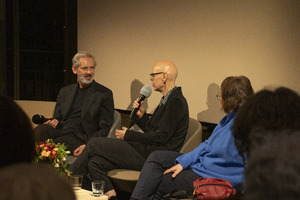
- In der gemeinsamen Gesprächsreihe "Vom Nutzen der Kunst" von ZKM und HfG, laden wir internationale Gäste aus Philosophie, Literatur und Kunst zum offenen Austausch mit den Hochschulangehörigen, den Mitarbeitenden des ZKM und der Karlsruher Bevölkerung ein.
- Beschreibung (en)
- In the joint series of talks between ZKM and HfG, we invite international guests from the fields of philosophy, literature and art to an open exchange with members of the university, ZKM staff and the people of Karlsruhe.
- Typ des Projekts/Werks
- Schlagworte
- Datierung
- 16.11.2023
- Ort: Institution
- Ort
- Media Lounge
- Stadt
- Land
- Titel
- Vom Nutzen der Kunst
- Importiert am
- 28.11.2023
- Übergeordnete Sets
- 1
- Set enthält
- 2 0