Sets
444 Inhalte
- Seite 1 von 37
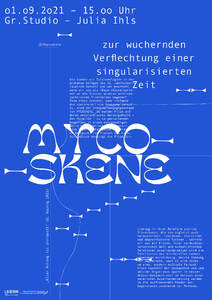
MYCOSKENE
Name that can easily go onto 2 lines
Author that can easily go onto 2 lines as well
- Titel
- MYCOSKENE
- Titel (en)
- Mycoskene
- Untertitel
- Zur wuchernden Verflechtung einer singularisierten Zeit
- Untertitel des Projekts/Werks (en)
- Or on the rampant interweaving of a singularized time
- Autor/in
- Beschreibung (de)
- MYCOSKENE ist eine material-theoretische Verflechtung rund um das Thema Mycelium, dem unterirdischen Hyphengeflecht der Pilze. Ob als sozio-philosophische Metapher, Bau- und Gestaltungsmaterial oder in Form einer multi-medialen Rauminstallation – in ihrer Arbeit folgte die Szenografin und Konzepterin Julia Ihls über 8 Monate den fein verwobenen Strukturen jener Organismen, die durch ihre eigene Zeitlichkeit und Qualitäten zu maßgeblichen Co-Gestaltenden wurden.
- Beschreibung (en)
- MYCOSKENE is a material-theoretical interweaving around the theme of mycelium, the subterranean network of hyphae of fungi. Whether as a socio-philosophical metaphor, building and design material or in the form of a multi-media spatial installation - in her work, scenographer and conceptual designer Julia Ihls followed the finely interwoven structures of these organisms for over 8 months, which became decisive co-creators through their own temporality and qualities.
- Kategorie
- Typ des Projekts/Werks
- Schlagworte
- Datierung
- 01.09.2021 - 03.09.2021
- Mitwirkende
- Sprache
- Ort: Institution
- Ort
- Großes Studio
- Stadt
- Land
- Internetlinks
- Walkthrough Video: https://vimeo.com/653230334
Doku Film:
Instagram: @mycoskene https://www.instagram.com/mycoskene/?hl=de
Website: https://mycoskene-.hotglue.me/
- Walkthrough Video: https://vimeo.com/653230334
- Titel
- MYCOSKENE
- Untertitel
- Zur wuchernden Verflechtung einer singularisierten Zeit
- Projektleiter/in
- Semester
- Studiengang
- Typ der Abschlussarbeit
- Importiert am
- 14.12.2023
- Übergeordnete Sets
- 2
- Set enthält
- 0 11
Mythos Großstadt
Name that can easily go onto 2 lines
Author that can easily go onto 2 lines as well
- Titel
- Mythos Großstadt
- Titel (en)
- The myth of the big city
- Untertitel
- Untersuchungen zur Stadtwahrnehmung in der Fotografie am Beispiel von Eugène Atget, Berenice Abbott und Andreas Feininger
- Autor/in
- Beschreibung (de)
- „Paris – New York, zwei Städte, deren Namen eine Flut von Begriffen, Bildern und Assoziationen in unserem Inneren auslösen. Zwei Weltstädte, die unterschiedlicher kaum sein können. Die eine, die verträumte Stadt an der Seine, gilt als das Mekka der Liebenden, ist der Inbegriff für Kunst und Kultur, war Sitz von Königen und Kaisern wir Ludwig XIV. oder Napoleon und blutiger Schauplatz zahlreicher Revolutionen. Sie ist geprägt von einer mehr als zweitausendjährigen Geschichte und verkörpert schlichtweg das, was man heute mit französischer Lebensart verbindet. Die andere, 'die wunderbare Katastrophe', wie Le Corbusier sie nennt, besticht durch ihre schier unerschöpfliche Energie und Wandlungsfähigkeit, ihre spektakuläre Hochhausarchitektur und ihre multikulturelle Gesellschaft. Ihr Name steht für Freiheit und Selbstverwirklichung. Sie ist die Hauptstadt des Kapitalismus, aber auch ein Ort extremer sozialer Gegensätze und krimineller Energien.
Das Großstadtleben beider ist legendär und es verwundert daher nicht, dass sowohl Paris als auch New York schon früh im Brennpunkt künstlerischen bzw. fotografischen Interesses standen.”
- „Paris – New York, zwei Städte, deren Namen eine Flut von Begriffen, Bildern und Assoziationen in unserem Inneren auslösen. Zwei Weltstädte, die unterschiedlicher kaum sein können. Die eine, die verträumte Stadt an der Seine, gilt als das Mekka der Liebenden, ist der Inbegriff für Kunst und Kultur, war Sitz von Königen und Kaisern wir Ludwig XIV. oder Napoleon und blutiger Schauplatz zahlreicher Revolutionen. Sie ist geprägt von einer mehr als zweitausendjährigen Geschichte und verkörpert schlichtweg das, was man heute mit französischer Lebensart verbindet. Die andere, 'die wunderbare Katastrophe', wie Le Corbusier sie nennt, besticht durch ihre schier unerschöpfliche Energie und Wandlungsfähigkeit, ihre spektakuläre Hochhausarchitektur und ihre multikulturelle Gesellschaft. Ihr Name steht für Freiheit und Selbstverwirklichung. Sie ist die Hauptstadt des Kapitalismus, aber auch ein Ort extremer sozialer Gegensätze und krimineller Energien.
- Beschreibung (en)
- "Paris - New York, two cities whose names trigger a flood of concepts, images and associations within us. Two cosmopolitan cities that could hardly be more different. One, the dreamy city on the Seine, is considered the Mecca of lovers, is the epitome of art and culture, was the seat of kings and emperors such as Louis XIV and Napoleon and the bloody scene of numerous revolutions. It is characterized by more than two thousand years of history and simply embodies what is associated with the French way of life today. The other, 'the marvelous catastrophe', as Le Corbusier called it, captivates with its sheer inexhaustible energy and adaptability, its spectacular high-rise architecture and its multicultural society. Its name stands for freedom and self-realization. It is the capital of capitalism, but also a place of extreme social contrasts and criminal energy.
The big city life of both is legendary and it is therefore not surprising that both Paris and New York were the focus of artistic and photographic interest early on."
- "Paris - New York, two cities whose names trigger a flood of concepts, images and associations within us. Two cosmopolitan cities that could hardly be more different. One, the dreamy city on the Seine, is considered the Mecca of lovers, is the epitome of art and culture, was the seat of kings and emperors such as Louis XIV and Napoleon and the bloody scene of numerous revolutions. It is characterized by more than two thousand years of history and simply embodies what is associated with the French way of life today. The other, 'the marvelous catastrophe', as Le Corbusier called it, captivates with its sheer inexhaustible energy and adaptability, its spectacular high-rise architecture and its multicultural society. Its name stands for freedom and self-realization. It is the capital of capitalism, but also a place of extreme social contrasts and criminal energy.
- Kategorie
- Typ des Projekts/Werks
- Schlagworte
- Datierung
- 2003
- Sprache
- Ort: Institution
- Stadt
- Titel
- Mythos Großstadt
- Untertitel
- Untersuchungen zur Stadtwahrnehmung in der Fotografie am Beispiel von Eugène Atget, Berenice Abbott und Andreas Feininger
- Projektleiter/in
- Semester
- Studiengang
- Typ der Abschlussarbeit
- Archiv-Signatur
- HfG HS 2003 02
- Externes Archiv
- Importiert am
- 16.06.2024
- Übergeordnete Sets
- 2
- Set enthält
- 0 2
Nichts, was uns passiert oder Genügend Anlass zur Erhebung der öffentlichen Klage
Name that can easily go onto 2 lines
Author that can easily go onto 2 lines as well
- Titel
- Nichts, was uns passiert oder Genügend Anlass zur Erhebung der öffentlichen Klage
- Titel (en)
- Nothing that happens to us or Sufficient reason to file a public complaint
- Untertitel
- Hörstück und (Körper-) Übung eines Dialogs
- Untertitel des Projekts/Werks (en)
- Audio piece and (physical) exercise of a dialog
- Autor/in
- Beschreibung (de)
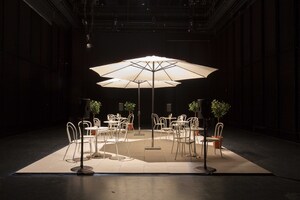
- Die Arbeit „Nichts, was uns passiert“ oder „Genügend Anlass zur Erhebung der öffentlichen Klage“ thematisiert den Umgang mit sexueller Gewalt in unserer Gesellschaft. Sie fragt, wie und vor allem ob wir durch unsere Sozialisierung gelernt haben, über sexuelle Gewalt zu sprechen. Sie fragt nach dem Vermögen, uns diese Art von Gewalt in unserem eigenen Umfeld (Familie, Freundeskreis, Arbeitsgemeinschaft, u.a.) vorzustellen und danach, warum Erzählungen über sexuelle Gewalt meist in der Ferne, im Abstrakten verortet werden.
- Beschreibung (en)
- The work "Nichts, was uns passiert" (Nothing that happens to us) or "Genügend Anlass zur Erhebung der öffentlichen Klage" (Sufficient reason to file a public complaint) addresses how we deal with sexual violence in our society. It asks how and, above all, whether we have learned to talk about sexual violence through our socialization. It asks about our ability to imagine this kind of violence in our own environment (family, circle of friends, work community, etc.) and why stories about sexual violence are usually located in the distance, in the abstract.
- Kategorie
- Schlagworte
- Mitwirkende
- Titel
- Nichts, was uns passiert oder Genügend Anlass zur Erhebung der öffentlichen Klage
- Untertitel
- Hörstück und (Körper-) Übung eines Dialogs
- Projektleiter/in
- Semester
- Studiengang
- Typ der Abschlussarbeit
- Importiert am
- 24.06.2024
- Übergeordnete Sets
- 2
- Set enthält
- 0 4
No Feeding
Name that can easily go onto 2 lines
Author that can easily go onto 2 lines as well
- Titel
- No Feeding
- Titel (en)
- No Feeding
- Autor/in
- Beschreibung (de)
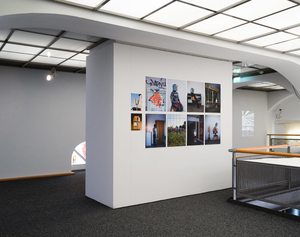
- Tauben gehören zu den alltäglichsten Tieren unseres urbanen Lebens. In allen Städten Deutschlands sieht man sie täglich in Gassen, auf Plätzen, Dächern und Geländern. Während meiner Recherche stieß ich sogar im Stadtarchiv Karlsruhe auf zahlreiche taubenbezogene Bilder, Texte und Dokumente.
Obwohl sie wie wir in der Stadt leben, werden Tauben oft übersehen, verachtet oder gar misshandelt. Man nennt sie manchmal „fliegende Staubsauger“, weil sie Essensreste vom Boden aufpicken, oder „fliegende Ratten“, da sie als Krankheitsüberträger gelten.
Doch als ich begann, mich intensiver mit der Geschichte der Tauben zu beschäftigen, entdeckte ich eine ganz andere Seite: Früher waren sie verlässliche Boten in der Kommunikation. Auf Reisen und in kolonialen Unternehmungen nahm man Tauben mit, als Begleiter und Nachrichtenübermittler. Mit der Ausbreitung globaler Mobilität verbreiteten sich auch Tauben weltweit. Heute benötigen wir sie durch den Fortschritt der Technik nicht mehr und begegnen ihnen mit Ablehnung, wie die allgegenwärtigen Taubenabwehrspitzen an Gebäuden zeigen.
In meinen Fotografien verwende ich die Taube auf humorvolle und absurde Weise als Symbol, um ihre komplexe Beziehung zum Menschen zu thematisieren und zugleich meine eigene Identitätsfrage zu reflektieren. Mal trägt sie Anzug, mal wirkt sie einsam und verloren. Ist es ein Mensch mit Taubenmaske oder eine Taube, die versucht, ein Mensch zu sein?
- Tauben gehören zu den alltäglichsten Tieren unseres urbanen Lebens. In allen Städten Deutschlands sieht man sie täglich in Gassen, auf Plätzen, Dächern und Geländern. Während meiner Recherche stieß ich sogar im Stadtarchiv Karlsruhe auf zahlreiche taubenbezogene Bilder, Texte und Dokumente.
- Beschreibung (en)
- Pigeons are perhaps the most familiar animals in our everyday urban life. In every city across Germany, you can spot them in alleys, on rooftops, in squares, always present, always overlooked. During my research, I even found numerous images, texts, and records related to pigeons in the city archive of Karlsruhe.
Despite being fellow residents of our cities, pigeons are often ignored, despised, or mistreated. They’re sometimes called “flying vacuum cleaners” for picking up crumbs from the ground, or “flying rats” due to their association with disease.
But when I started to explore their history more deeply, I discovered another side of them: pigeons were once trusted messengers. People used them for communication, especially during travel or colonial expansion, and they became companions on long journeys. As globalization advanced, pigeons spread across the world. Today, we no longer rely on them, yet we go to great lengths to drive them away, visible in the anti-pigeon spikes found on buildings everywhere.
In my photographs, I use the pigeon’s form as a symbol in a playful and absurd way, capturing its complex identity through staged, theatrical compositions. At times it wears a suit; at others, it seems lonely or melancholic. Is it a person in a pigeon mask or a pigeon pretending to be human?
- Pigeons are perhaps the most familiar animals in our everyday urban life. In every city across Germany, you can spot them in alleys, on rooftops, in squares, always present, always overlooked. During my research, I even found numerous images, texts, and records related to pigeons in the city archive of Karlsruhe.
- Kategorie
- Typ des Projekts/Werks
- Schlagworte
- Mitwirkende
- Dank an
- Material
- Abmessungen
- 420 x 594 mm x 8, 210 x 297 mm x 2
- Ort
- Art Karlsruhe, Halle 3 / H3/S08
- Stadt
- Land
- Beteiligte Institution(en)
- Titel
- No Feeding
- Projektleiter/in
- Semester
- Studiengang
- Importiert am
- 24.01.2026
- Übergeordnete Sets
- 1
- Set enthält
- 0 13
No Mythologies To Follow
Name that can easily go onto 2 lines
Author that can easily go onto 2 lines as well
- Titel
- No Mythologies To Follow
- Autor/in
- Beschreibung (de)
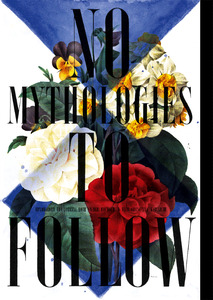
- "No Mythologies To Follow" zeigt Blumenarrangements für die neun Kulturgüter der Stadt Karlsruhe, die unter Schutz der Haager Konvention stehen.
Die Konvention ist ein völkerrechtlicher Vertrag, der auf Grund der Erfahrungen vorangegangener Weltkriege durch die UNESCO (United Nations Educational, Scientific and Cultural Organization) im Jahr 1954 ins Leben gerufen wurde. Sie stellt (un)bewegliche
Kulturgüter im bewaffneten Konfliktfall unter Schutz. Das heißt, die gelisteten Gebäude dürfen im Kriegsfall von Mitgliedsstaaten nicht geplündert oder attackiert werden, da „jede Schädigung von Kulturgut, gleichgültig welchem Volke es gehört, eine Schädigung des kulturellen Erbes der ganzen Menschheit bedeutet.“ Die Auswahlkriterien für schützenswertes Kulturgut sind dabei nicht immer klar nachzuvollziehen und zeigen, dass Kultur und ihre Bewertung stets an die jeweilige Gesellschaft und ihr Zeitverständnis gebunden ist. Nach der Haager Konvention gibt es Kulturgüter deren „Erhaltung (…) für alle Völker der Welt von großer Bedeutung ist.“
Die Blumenarrangements werden in der Ausstellung zu Akteuren, die für einen anderen Umgang mit Kulturgut stehen. Durch sie wird Vergänglichkeit artikuliert.
Zitate aus: Konvention zum Schutz von Kulturgut bei bewaffneten Konflikten – Haager Konvention vom 14. Mai 1954.
- "No Mythologies To Follow" zeigt Blumenarrangements für die neun Kulturgüter der Stadt Karlsruhe, die unter Schutz der Haager Konvention stehen.
- Beschreibung (en)
- “No Mythologies To Follow” shows flower arrangements for the nine cultural assets of the city of Karlsruhe that are protected by the Hague Convention.
The Convention is a treaty under international law that was brought into being by UNESCO (United Nations Educational, Scientific and Cultural Organization) in 1954 as a result of the experiences of previous world wars. It provides (in)movable
cultural property under protection in the event of armed conflict. This means that the listed buildings may not be looted or attacked by member states in the event of war, as “any damage to cultural property, regardless of the people to whom it belongs, means damage to the cultural heritage of all mankind.” The selection criteria for cultural property worthy of protection are not always clear and show that culture and its evaluation are always linked to the respective society and its understanding of the times.
is bound to the respective society and its understanding of time. According to the Hague Convention, there are cultural assets whose “preservation (...) is of great importance to all peoples of the world.”
In the exhibition, the flower arrangements become actors that stand for a different approach to cultural assets. They articulate transience.
Quotes from: Convention for the Protection of Cultural Property in the Event of Armed Conflict - Hague Convention of May 14, 1954.
- “No Mythologies To Follow” shows flower arrangements for the nine cultural assets of the city of Karlsruhe that are protected by the Hague Convention.
- Kategorie
- Typ des Projekts/Werks
- Schlagworte
- Mitwirkende
- Dank an
- Harald Bogdan
- Michael Clegg
- Anja Dorn
- Pham Minh Duc
- Friedemann Dupelius
- Lotte Effinger
- Susan Funk
- Hasan Halilovic
- Korbinian Herlein
- Erika Hoth
- Katharina Hoth
- Burkhard Hoth
- Achim Kaltwasser
- Wilfried Kuehn
- Barbara Kuon
- Gisbert Laaber
- Armin Linke
- Henrike Mall
- Isabel Mehl
- Nicolas Rauch
- Gerald Reinhardt
- Christiane Riedel
- Thomas Rustemeyer
- Martina Stern
- Felicitas Wetzel
- Tobias Wootton
- Emre Yilmaz
- Ort: Institution
- Ort
- Ausstellungsraum EG
- Stadt
- Beteiligte Institution(en)
- Titel
- No Mythologies To Follow
- Semester
- Studiengang
- Typ der Abschlussarbeit
- Importiert am
- 30.07.2024
- Übergeordnete Sets
- 2
- Set enthält
- 6 6
No Mythologies to Follow - Snapshots
Name that can easily go onto 2 lines
Author that can easily go onto 2 lines as well
- Titel
- No Mythologies to Follow - Snapshots
- Autor/in
- Beschreibung (de)
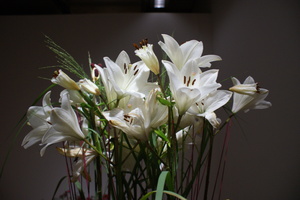
- Die Schnappschüsse gehören zum Diplomprojekt "No Mythologies to Follow":
https://madek.hfg-karlsruhe.de/sets/cceba5dd-8354-…
- Die Schnappschüsse gehören zum Diplomprojekt "No Mythologies to Follow":
- Titel
- No Mythologies to Follow - Snapshots
- Importiert am
- 30.07.2024
- Übergeordnete Sets
- 0
- Set enthält
- 0 117
no wind no word
Name that can easily go onto 2 lines
Author that can easily go onto 2 lines as well
- Titel
- no wind no word
- Autor/in
- Beschreibung (de)
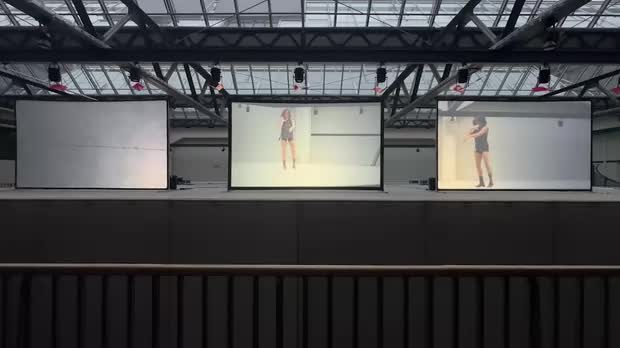
- *no wind no word* untersucht, wie Körper, Raum und bildgebende Technologien gemeinsam eine Wahrnehmungssituation hervorbringen. Die zwölfminütige Mehrkanal-Video- und Soundinstallation fragt, wie Wahrnehmung entsteht und wie sich Bedeutung bildet, wenn Bilder, Klänge und Bewegungen nicht auf eine eindeutige Aussage reduziert werden. Die Installation entstand in Zusammenarbeit mit der Tänzerin und Choreografin Sade Mamedova. An Stelle einer festgelegten Choreografie tritt ein klar definierter räumlicher und technischer Rahmen. Mehrere Kameras, verschiedene Mikrofone und ein Geophon zeichnen dieselbe Situation auf. Die Technik dient dabei nicht der Dokumentation einer Performance, sondern wird dabei selbst zum Akteur in der Arbeit. *no wind no word* fordert nicht dazu auf, eine Geschichte zu entschlüsseln. Die Installation lädt dazu ein, Zeit auszuhalten, Mehrdeutigkeit zuzulassen und Wahrnehmung als offenen Prozess zu erfahren.
- *no wind no word* untersucht, wie Körper, Raum und bildgebende Technologien gemeinsam eine Wahrnehmungssituation hervorbringen. Die zwölfminütige Mehrkanal-Video- und Soundinstallation fragt, wie Wahrnehmung entsteht und wie sich Bedeutung bildet, wenn Bilder, Klänge und Bewegungen nicht auf eine eindeutige Aussage reduziert werden. Die Installation entstand in Zusammenarbeit mit der Tänzerin und Choreografin Sade Mamedova. An Stelle einer festgelegten Choreografie tritt ein klar definierter räumlicher und technischer Rahmen. Mehrere Kameras, verschiedene Mikrofone und ein Geophon zeichnen dieselbe Situation auf. Die Technik dient dabei nicht der Dokumentation einer Performance, sondern wird dabei selbst zum Akteur in der Arbeit. *no wind no word* fordert nicht dazu auf, eine Geschichte zu entschlüsseln. Die Installation lädt dazu ein, Zeit auszuhalten, Mehrdeutigkeit zuzulassen und Wahrnehmung als offenen Prozess zu erfahren.
- Beschreibung (en)
- no wind no word explores the interplay between the body, space, and moving image. The twelve-minute multichannel video and sound installation explores how perception arises and how meaning is formed when images, sounds, and movements are not reduced to a single, unambiguous statement. The installation was created in collaboration with dancer and choreographer Sade Mamedova. Instead of a fixed choreography, the work establishes a clearly defined spatial and technical framework. Several cameras, various microphones, and a geophone record the same situation. Rather than simply documenting the performance, the technology itself becomes an active participant in the work. no wind no word invites viewers to linger, embrace ambiguity, and experience perception as an open-ended process.
- Kategorie
- Typ des Projekts/Werks
- Schlagworte
- Datierung
- 17.12.205
- Mitwirkende
- Dank an
- Sprache
- Technik/Verfahren/Formate
- Dreikanalige Video- und Soundinstallation
- Dauer
- 12 Minuten
- Ort: Institution
- Ort
- Auf dem Dach des großen Studios der HfG Karlsruhe
- Stadt
- Land
- Internetlinks
- Titel
- no wind no word
- Projektleiter/in
- Semester
- Studiengang
- Typ der Abschlussarbeit
- Importiert am
- 26.06.2026
- Übergeordnete Sets
- 3
- Set enthält
- 0 11
Now or Nowhere
- Titel
- Now or Nowhere
- Autor/in
- Beschreibung (de)
- Now or Nowhere ist ein Projekt, das die Frage stellt, ob Technologie aus einer Notwendigkeit heraus entsteht – oder ob ihre Notwendigkeit erst erkannt wird, nachdem sie bereits erschienen ist. Neue Geräte versprechen stets Effizienz, Verbesserung und nahtlose Konnektivität und behaupten, unser Leben leichter zu machen. Automatisierung lindert Müdigkeit, Konnektivität beseitigt Trennung, und Updates gleichen Unvollkommenheit aus. Doch was genau machen wir in diesem Prozess eigentlich bequemer – und was geben wir dabei stillschweigend aus der Hand?
Das Projekt schlägt drei virtuelle Geräte vor, die repetitive und scheinbar unbedeutende körperliche Handlungen stellvertretend für den Nutzer ausführen. AutoPresence ist ein Gerät, das aufgezeichnete Mausbewegungen wiedergibt und selbst in Abwesenheit des Nutzers kontinuierlich Spuren von Arbeit produziert. Ruhe wird nicht erkannt, und der Cursor hält niemals an. The Sixth Finger ist ein am Finger getragenes Wearable, das das Wischen auf dem Smartphone automatisiert und die vertraute Bewegung des Daumens durch einen zweiten Daumen ersetzt. Die Hand hält das Gerät weiterhin fest, doch die Handlung wird an die Maschine delegiert. Artificial Sweat Gland for Mobile Devices überträgt die Funktion der menschlichen Schweißdrüsen auf ein Kühlsystem für das Gerät und synchronisiert so die Temperatur von Körper und Gerät. Das Telefon verlässt die Hand nie.
Diese Geräte werden so präsentiert, als stünden sie kurz vor der Markteinführung. In Anlehnung an Produktpräsentationen und Werbeformate rahmt das Projekt alltägliche Gesten als Funktionen, die optimiert werden können. Werden die Besucherinnen im Ausstellungsraum zu potenziellen Konsumentinnen dieser Geräte – oder erkennen sie, dass sie bereits Konsument*innen sind?
- Now or Nowhere ist ein Projekt, das die Frage stellt, ob Technologie aus einer Notwendigkeit heraus entsteht – oder ob ihre Notwendigkeit erst erkannt wird, nachdem sie bereits erschienen ist. Neue Geräte versprechen stets Effizienz, Verbesserung und nahtlose Konnektivität und behaupten, unser Leben leichter zu machen. Automatisierung lindert Müdigkeit, Konnektivität beseitigt Trennung, und Updates gleichen Unvollkommenheit aus. Doch was genau machen wir in diesem Prozess eigentlich bequemer – und was geben wir dabei stillschweigend aus der Hand?
- Beschreibung (en)
- Now or Nowhere is a project that asks whether technology emerges from necessity or whether its necessity is only recognized after it has appeared. New devices always promise efficiency, improvement, and seamless connectivity, claiming to make our lives lighter. Automation relieves fatigue, connectivity eliminates disconnection, and updates compensate for imperfection. So, in this process, what are we making more convenient, and what are we quietly handing over?
The project proposes three virtual devices that perform repetitive and minor physical actions on behalf of the user. AutoPresence is a device that replays recorded mouse movements, continuously producing traces of labor even in the user's absence. Rest is not detected, and the cursor never stops. The Sixth Finger is a finger-worn wearable that automates smartphone swiping, replacing the most familiar thumb movements with a second thumb. The hand still grips, but the action is delegated to the machine. Artificial Sweat Gland for Mobile Devices converts the hand's sweat gland function into a device cooling system, synchronizing the body's and device's temperatures. The phone never leaves the hand.
These devices are arranged as if they are ready for launch. Borrowing the format of product displays and promotional presentation, the project reframes everyday gestures as features to be optimized. In the exhibition space, do audiences become potential consumers in front of these devices, or do they become aware that they are already consumers?
- Now or Nowhere is a project that asks whether technology emerges from necessity or whether its necessity is only recognized after it has appeared. New devices always promise efficiency, improvement, and seamless connectivity, claiming to make our lives lighter. Automation relieves fatigue, connectivity eliminates disconnection, and updates compensate for imperfection. So, in this process, what are we making more convenient, and what are we quietly handing over?
- Kategorie
- Typ des Projekts/Werks
- Schlagworte
- Datierung
- November 2025 - 2026
- Mitwirkende
- Dank an
- Ort: Institution
- Stadt
- Land
- Titel
- Now or Nowhere
- Importiert am
- 09.03.2026
- Übergeordnete Sets
- 0
- Set enthält
- 0 0
NVSHU - Nüshu
Name that can easily go onto 2 lines
Author that can easily go onto 2 lines as well
- Titel
- NVSHU - Nüshu
- Autor/in
- Beschreibung (de)
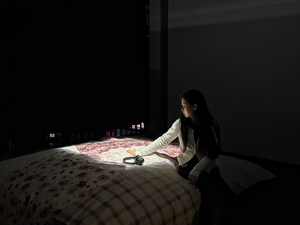
- Eine Feldstudie zur einzigen existierenden Geschlechtersprache (NVSHU - Nüshu). Mithilfe von Multimedia-Materialien konzentrierte ich mich auf die Geschichte, die sich im vergangenen Sommer zwischen mir und dem letzten Naturforscher ereignete, und dokumentierte sie. Die Papierarbeiten und Installationen drücken gleichzeitig meine eigenen Reflexionen über dieses kulturelle Phänomen aus.
- Beschreibung (en)
- A field exploration of the only existing gender language (NVSHU - Nüshu). Using multimedia materials, I focused on and documented the story that happened between me and the last naturalist last summer. The paper art and installation works simultaneously express my own reflections on this cultural phenomenon.
- Kategorie
- Typ des Projekts/Werks
- Schlagworte
- Datierung
- 26.02.2026
- Ort
- Vielfältige Kunstwerke an den Wänden der Lichtbrücke
- Stadt
- Land
- Titel
- NVSHU - Nüshu
- Projektleiter/in
- Semester
- Studiengang
- Typ der Abschlussarbeit
- Importiert am
- 27.02.2026
- Übergeordnete Sets
- 2
- Set enthält
- 0 10
Oberfläche schwarz/blau/grün
Name that can easily go onto 2 lines
Author that can easily go onto 2 lines as well
- Titel
- Oberfläche schwarz/blau/grün
- Titel (en)
- Surface Black/Blue/Green
- Autor/in
- Beschreibung (de)
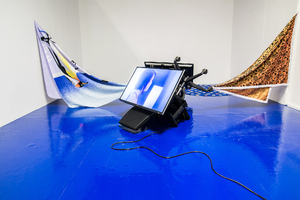
- Bei der 2-Kanal-Videoinstallation „Oberfläche schwarz/blau/grün“ zum Thema Migration werden zwei Situationen betrachtet und einander gegenübergestellt: Migration von einem Land in ein anderes und Migration auf einen anderen Planeten.
- Beschreibung (en)
- The two-channel video installation is about migration, in which two situations are considered and contrasted: migration from one country to another and migration to another planet.
- Kategorie
- Schlagworte
- Titel
- Oberfläche schwarz/blau/grün
- Projektleiter/in
- Semester
- Studiengang
- Typ der Abschlussarbeit
- Importiert am
- 01.08.2024
- Übergeordnete Sets
- 2
- Set enthält
- 1 10
Objekte
Name that can easily go onto 2 lines
Author that can easily go onto 2 lines as well
- Titel
- Objekte
- Autor/in
- Titel
- Objekte
- Studiengang
- Importiert am
- 08.07.2025
- Übergeordnete Sets
- 1
- Set enthält
- 0 10
Objekte
Name that can easily go onto 2 lines
Author that can easily go onto 2 lines as well
- Titel
- Objekte
- Autor/in
- Datierung
- 02.07.2025
- Titel
- Objekte
- Studiengang
- Typ der Abschlussarbeit
- Importiert am
- 22.07.2025
- Übergeordnete Sets
- 1
- Set enthält
- 0 4