PERMANENT BROKENNESS
Benachbarte Sets (45)Alle Zusammenhänge anzeigen
Diese Sets wurden den gleichen Sets hinzugefügt wie das ausgewählte Set.
45 Inhalte
- Seite 1 von 4
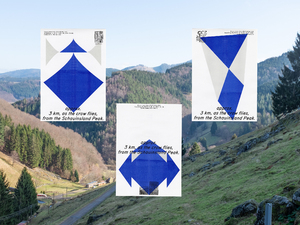
approx. 3km, as the crow flies, from the Schauinsland Peak.
Name that can easily go onto 2 lines
Author that can easily go onto 2 lines as well
- Titel
- approx. 3km, as the crow flies, from the Schauinsland Peak.
- Autor/in
- Beschreibung (de)
- "approx., 3km, as the crow flies, from the Schauinsland Peak." ist ein Zitat aus der Wegbeschreibung zum Zentralen Bergungsort der Bundesrepublik Deutschland (ZBO) aus dem Internationalen Register der Kulturgüter unter besonderem Schutz der UNESCO. Die Wegbeschreibung führt zum Barbarastollen, einem ehemaligen Erzbergbaustollen im Hintertal, nahe der Gemeinde Oberried im Schwarzwald.
Die Ausstellung versammelt Material in verschiedenen Formen, die den Barbarastollen und damit verbundene Aspekte erforschen. Anhand von Artefakten, die bei mehreren Besuchen im und um den Stollen herum gefunden wurden – Fotos, Geschichten, Zeitungsartikeln, E-Mails, Archivdokumenten, Ton- und Videoaufnahmen –, untersucht die Ausstellung, wie das Archiv im Stollen funktioniert und warum es noch existiert.
Themen wie Sicherheit, atomare Bedrohung, Hierarchien in der Archivauswahl, Langzeitbotschaften, Atomsemiotik, Friedensbewegung in Süddeutschland in den 80er Jahren werden verhandelt. Durch die Zusammenführung verschiedener Perspektiven auf die Idee eines zentralen Bergungsortes wurde ein Raum geschaffen, der die Besucher dazu anregt, sich kritisch mit den angesprochenen Themen auseinanderzusetzen.
- "approx., 3km, as the crow flies, from the Schauinsland Peak." ist ein Zitat aus der Wegbeschreibung zum Zentralen Bergungsort der Bundesrepublik Deutschland (ZBO) aus dem Internationalen Register der Kulturgüter unter besonderem Schutz der UNESCO. Die Wegbeschreibung führt zum Barbarastollen, einem ehemaligen Erzbergbaustollen im Hintertal, nahe der Gemeinde Oberried im Schwarzwald.
- Beschreibung (en)
- "approx., 3km, as the crow flies, from the Schauinsland Peak." is a quote from the route description to the Central Salvation Site of the Federal Republic of Germany (ZBO) from the UNESCO International Register of Cultural Property under Special Protection. The route description leads to Barbarastollen, a former ore mining tunnel in Hintertal, near the municipality of Oberried in the Black Forest.
The exhibition is gathering material of different forms researching the site of the Barbarastollen. Through several site visits inside and around the mine, photographs, stories, newspaper articles, e-mails, archival documents, sound recordings and videos investigate on how the archive works and why it still exists touching on topics of safety, nuclear threat, hierarchies in archive selections, long-time messages, atom semiotics, the peace- movement in south Germany in the 80s.
Through bringing together different perspectives on the idea of the central Salvation Site a room was created to encourage visitors to critically from their own idea on the topics addressed.
- "approx., 3km, as the crow flies, from the Schauinsland Peak." is a quote from the route description to the Central Salvation Site of the Federal Republic of Germany (ZBO) from the UNESCO International Register of Cultural Property under Special Protection. The route description leads to Barbarastollen, a former ore mining tunnel in Hintertal, near the municipality of Oberried in the Black Forest.
- Kategorie
- Typ des Projekts/Werks
- Schlagworte
- Datierung
- 05.07.2024
- Mitwirkende
- Sprache
- Material
- Ort: Institution
- Ort
- Großes Studio
- Stadt
- Land
- Titel
- approx. 3km, as the crow flies, from the Schauinsland Peak.
- Projektleiter/in
- Semester
- Studiengang
- Typ der Abschlussarbeit
- Importiert am
- 04.11.2024
- Übergeordnete Sets
- 3
- Set enthält
- 0 19
A man in the shape of...
Name that can easily go onto 2 lines
Author that can easily go onto 2 lines as well
- Titel
- A man in the shape of...
- Titel (en)
- A man in the shape of...
- Autor/in
- Beschreibung (de)
- „A man in the shape of...“ ist eine von Calvin Kudufia realisierte Ausstellung, die Februar 2024 im Rahmen seines Diploms stattfand. In der Ausstellung beschäftigt sich Kudufia mit der metaphorischen Praxis des Sammelns und Verdichtens: „gathering time and binding it“, wie es die dänische Dichterin Inger Christensen in ihrem Gedicht „Alphabet“ (1981) formuliert hat. Scheinbar unzusammenhängende ‚Dinge‘ werden im Gedicht zusammengetragen und durch die einfache Verwendung eines einzelnen Wortes, des "Existierens" in Zusammenhang gebracht und bedeutsam gemacht. Allein die Geste des Zusammentragen und Benennens verstärkt ihre symbolische Kraft.
Durch einen losen Kontaktpunkt in 2019 begann Kudufias Recherche an der Sepulkralkultur der fantasy coffins, einem traditionellen Kunsthandwerk der Ga-Ethnie in Ghana. Die individuell gestalteten Särge folgen einem mündlich überlieferten Bildindex und sind stellvertretende Gefäße für das ins Jenseits übertretende Leben. Die ‚fantasy coffins‘ verhüllen nicht nur den physischen Körper, ihre Hülle trägt konkrete Spuren der in ihnen gefassten Existenz.
Wie alle Gefäße schirmen die ‚fantasy coffins‘ ihren Inhalt vor den Blicken der Umgebung ab. Im selben Moment dienen sie als repräsentativer Körper des Verstorbenen. Die Suche nach dem richtig geformten Gefäß, sei es ein Weidenkorb für Früchte, ein Buch für Worte oder im Fall der ‚fantasy coffins‘ ein Fischernetz für Fischer, stellt die Suche nach Signifikanz des eigenen Lebens dar: eine treffende Metapher für die Odyssee des Lebens.
In seiner Arbeit „A man in the shape of...“ macht Kudufia sein väterliches Haus in Tema (Ghana) zum physischen Ausgangspunkt seiner Recherche. In Form einer trans-medialen Erzählung wird dessen Essenz eingefangen und greifbar gemacht. Poetische Artefakte und Beobachtungen aus dem Alltag in Ghana werden sorgfältig arrangiert und dienen als Verdinglichung von Zeit. Sie dienen als greifbare Säulen von Kudufias Zeit in Ghana.
„A man in the shape of...“ trägt der angeborenen Sehnsucht nach einer konkreten geografischen Verankerung Rechnung. Kudufia nutzt die gesamte Ausstellung als metaphorischen Fingerzeig auf einen Ort auf der Landkarte.
In Form einer Audioübertragung, einer speziellen Sitzposition auf der Nachbildung eines traditionellen Hockers, referentiellen Bautechniken und einer Dreikanal-Videoinstallation wird diese geografische Verankerung konkret vermittelt. Durch die Untersuchung der Rolle von Ritualen bei der Gestaltung unseres Zugehörigkeitsgefühls, inspiriert durch die philosophischen Überlegungen von Byung Chul Han, bietet die Ausstellung ein Fenster zu einer Kultur, die gleichzeitig vertraut und fremd ist.
Im Mittelpunkt der Ausstellung steht eine Videoinstallation, die in sieben Abschnitte unterteilt ist. Die Aufteilung bezieht sich auf die Tradition der „one-week observation“ und beschreibt jeweils eine Facette von Kudufias persönlicher Reise. Das Video wird begleitet von einem Musikstück der ghanaischen Theatermacherin Edufa T. Sutherland, das mit der Unterstützung des Cellisten Ben Grocock gespielt und aufgenommen wurde. Das Video lässt Kudufias Erinnerungen, Fiktionen und Realitäten verschwimmen und vermischt dabei die Identitäten von Kudufia mit denen seines Vaters und Großvaters und lässt so ein komplexes Netz aus Zugehörigkeiten entstehen.
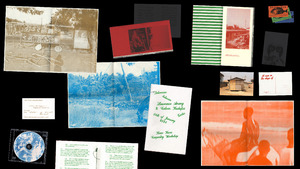
Eine Publikation, die integraler Bestandteil der Ausstellung ist, bedient sich der Form eines Gefäßes. Eine bedruckte Archivbox sammelt Kudufias Spuren auf seiner Suche nach den ‚fantasy coffins‘ und wird durch eine Hand voll ephemeraler Druckprodukte und Publikationen zum Dokumentationsapparat. Im Mittelpunkt der Archivbox steht ein Interview, zwischen Kudufia und dem Sargmacher Lawrence Anang in dessen Werkstatt in Teshie. Die einzige textliche Spur, die eine klare Verbindung zur Geschichte der Särge herstellt.
Das hölzerne Fundament einer nachgebauten Hütte dient als Sammelpunkt der Ausstellung und ermöglicht die Verbindung zwischen Druckerzeugnissen, Audio, Artefakten und den Betrachtenden. Die Kombination aus gesammeltem haptischen Material und audiovisuellen Arbeiten setzt sich zu einer transmedialen Collage zusammen, in der Kudufia die Geschichte seiner Verwurzelung auf intime Weise erzählt.
- „A man in the shape of...“ ist eine von Calvin Kudufia realisierte Ausstellung, die Februar 2024 im Rahmen seines Diploms stattfand. In der Ausstellung beschäftigt sich Kudufia mit der metaphorischen Praxis des Sammelns und Verdichtens: „gathering time and binding it“, wie es die dänische Dichterin Inger Christensen in ihrem Gedicht „Alphabet“ (1981) formuliert hat. Scheinbar unzusammenhängende ‚Dinge‘ werden im Gedicht zusammengetragen und durch die einfache Verwendung eines einzelnen Wortes, des "Existierens" in Zusammenhang gebracht und bedeutsam gemacht. Allein die Geste des Zusammentragen und Benennens verstärkt ihre symbolische Kraft.
- Beschreibung (en)
- "A man in the shape of..." is an exhibition realised by Calvin Kudufia, which took place in February 2024 as part of his diploma. In the exhibition, Kudufia deals with the metaphorical practice of "gathering time and binding it", as formulated by the Danish poet Inger Christensen. Through a trans-medial narration, the exhibition aims to capture the essence of his father's home in Tema (Ghana) and to make it tangible by carefully compiling poetic artefacts from the observed everyday life in Ghana.
Kudufia's research began with the so-called fantasy coffins, a traditional handicraft practiced by the Ga people of Ghana. The individually designed coffins follow an oral figurative index and are emblematic vessels for life passing into the afterlife. Not only do they conceal the physical body, but their shell bears imprints of the existence that preceded death. To give an example, the vessel of a fisherman might take the form of a boat or fishing net.
Similar to all vessels, they shield their content from its surroundings, simultaneously serving as a representation of the deceased to the eyes of the outside world. The search for the right-shaped vessel, be it a wicker basket for fruit or a book for words, mirrors the journey to discover one's own significance, as displayed figuratively by the fantasy coffins - an apt metaphor for the odyssey of life.
"A man in the shape of..." takes into account the innate longing for a concrete geographical rooting and uses the entirety of the exhibition as a metaphorical finger pointing to a place on the map. This geographical pinning is conveyed in the form of an audio transmission, a special seating position on a replica of a traditional stool, referential construction techniques and a three-channel video installation. By examining the role of rituals in shaping our sense of belonging, inspired by the philosophical reflections of Byung Chul Han, the exhibition offers a window into a culture that is both familiar and foreign at the same time.
At the heart of the exhibition is a video installation divided into seven segments referring to the tradition of the one-week observation, each describing a facet of Kudufia's personal journey. The video installation is accompanied by a musical piece composed by Edufa T. Sutherland, played and recorded with the assistance of cellist Ben Grocock. It blurs the boundaries between memory, fiction, and reality, inviting the viewer to reflect on the complexity of cultural identity and belonging.
The publication, an integral part of the exhibition, also takes the form of a vessel. Borrowing the shape of a printed archive box it collects Kudufia's traces on his search for the fantasy coffins and is conveyed through his graphic expression. At its center is an interview he conducted with coffin maker Lawrence Anang in his workshop in Teshie, the sole textual trace of the coffins' history.
In order to bring all of the pieces together, a wooden fundament of a hut serves as the gathering point of the exhibition, enabling the connection between printed matter, audio, artefacts, and the viewers.
The collected haptic material combined with the audiovisual pieces results in a trans-medial collage in which Kudufia intimately tells the story of his rooting.
- "A man in the shape of..." is an exhibition realised by Calvin Kudufia, which took place in February 2024 as part of his diploma. In the exhibition, Kudufia deals with the metaphorical practice of "gathering time and binding it", as formulated by the Danish poet Inger Christensen. Through a trans-medial narration, the exhibition aims to capture the essence of his father's home in Tema (Ghana) and to make it tangible by carefully compiling poetic artefacts from the observed everyday life in Ghana.
- Kategorie
- Typ des Projekts/Werks
- Schlagworte
- Datierung
- 22.02.2024
- Dank an
- Sprache
- Material
- Ort: Institution
- Ort
- Lichthof 04
- Stadt
- Land
- Titel
- A man in the shape of...
- Projektleiter/in
- Semester
- Studiengang
- Typ der Abschlussarbeit
- Importiert am
- 31.05.2024
- Übergeordnete Sets
- 4
- Set enthält
- 0 21
25 Grad: Vernissage
Name that can easily go onto 2 lines
Author that can easily go onto 2 lines as well
- Titel
- 25 Grad: Vernissage
- Titel (en)
- 25 Grad: Opening
- Kategorie
- Datierung
- 13.02.2025
- Ort
- Postgalerie Karlsruhe / Kaiserstraße 217 / 76133 Karlsruhe
- Postgalerie Karlsruhe / Kaiserstraße 217 / 76133 Karlsruhe
- Titel
- 25 Grad: Vernissage
- Importiert am
- 24.02.2025
- Übergeordnete Sets
- 1
- Set enthält
- 0 13
block to blob
Name that can easily go onto 2 lines
Author that can easily go onto 2 lines as well
- Titel
- block to blob
- Titel (en)
- block to blob
- Untertitel
- tracing back materiality
- Untertitel des Projekts/Werks (en)
- tracing back materiality
- Autor/in
- Beschreibung (de)
- Dieses Diplomprojekt dokumentiert den Materialstrom von synthetischen Kunststoffen durch einen rückwärtsgerichteten chronologischen Ansatz. Es kombiniert Feldforschung, visuelle Dokumentation und Materialexperimente, um die Reise von Kunststoffen von ihren Endprodukten zurück zu ihrem Ursprung im Erdöl nachzuvollziehen.
"Block to Blob" umfasst Besuche an verschiedenen Orten der Produktionskette, wie etwa Produktionsanlagen, Ölraffinerien, Pipelines und Förderstätten und endet in einem Waldökosystem, wo Rohöl auf natürliche Weise an die Erdoberfläche tritt. Diese Erfahrungen werden in einer Forschungspublikation zusammengestellt, die dieser rückwärtsgerichteten Erzählweise folgt.
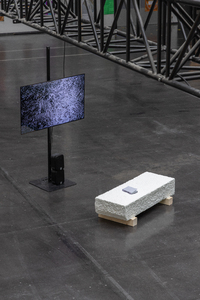
Eine Videoinstallation dokumentiert die besuchten Orte und liefert einen visuellen Kontext zu den industriellen Prozessen, der verborgenen Infrastruktur und der natürlichen Substanz im Wald. Zusätzlich verankert eine Reihe von Objekten, die aus mit Erdöl beschichtetem Holz und Polystyrol gefertigt sind, das Projekt in greifbaren Materialien.
- Dieses Diplomprojekt dokumentiert den Materialstrom von synthetischen Kunststoffen durch einen rückwärtsgerichteten chronologischen Ansatz. Es kombiniert Feldforschung, visuelle Dokumentation und Materialexperimente, um die Reise von Kunststoffen von ihren Endprodukten zurück zu ihrem Ursprung im Erdöl nachzuvollziehen.
- Beschreibung (en)
- This diploma project details the material stream of synthetic plastics through a reverse chronological approach. It combines field research, visual documentation, and material experimentation to retrace the journey of plastics from their final products back to their origins in petroleum.
‘block to blob’ includes visits to various sites in the production chain, such as manufacturing facilities, oil refineries, pipelines, and extraction sites, concluding in a forest ecosystem, where crude oil naturally seeps to the earth's surface. These experiences are compiled into a research publication that follows this reverse narrative.
A video installation documents the visited locations, providing visual context for the industrial processes, hidden infrastructure and the natural substance in the forest. Additionally, a series of objects made from petroleum-coated wood and polystyrene grounds the project in tangible materials.
- This diploma project details the material stream of synthetic plastics through a reverse chronological approach. It combines field research, visual documentation, and material experimentation to retrace the journey of plastics from their final products back to their origins in petroleum.
- Kategorie
- Typ des Projekts/Werks
- Schlagworte
- Datierung
- 2024
- Sprache
- Untertitel (Film)
- Material
- Technik/Verfahren/Formate
- Pine wood coated with petroleum, Wood soaked in gasoline and pressed/bonded with polystyrene
- Abmessungen
- L x B x H mm, Petroleum-coated wooden objects: Bench: 800 x 200 x 450, 2x T-Stool: 350 x 200 x 450, Stool (3-legged): 450 x 270 x 450, Stool (wide): 600 x 450 x 450, TV stand: - Polystyrene Objekts: Counter: 500 x 370 x 1100, 2x Bench1: 1000 x 570 x 400, Bench2: 1300 x 570 x 350, Stool: 500 x 370 x 570
- Dauer
- 1.: upstream 0 - oil seeping naturally to the surface - Alsace - 2:55min, 2.: upstream 1 - prospect drilling for oil reservoirs - Weingarten - 2:17min, 3.: upstream 2 - horse head pumps extracting oil - Landau - 3:50min, 4.: midstream - transalpine pipeline - Triest-Karlsruhe - 10:40min, 5.: downstream 1 - germany biggest oil refinery - Karlsruhe - 3:13min, 6.: downstream 2 - world biggest chemical plant - Ludwigshafen - 2:19min
- Ort: Institution
- Ort
- Lichthof 3
- Stadt
- Land
- Titel
- block to blob
- Untertitel
- tracing back materiality
- Projektleiter/in
- Semester
- Studiengang
- Typ der Abschlussarbeit
- Lehrveranstaltung
- Importiert am
- 03.11.2024
- Übergeordnete Sets
- 3
- Set enthält
- 4 1
25 Grad: Graduierte im Gespräch
- Titel
- 25 Grad: Graduierte im Gespräch
- Beschreibung (de)
- In den zwei Kolloquien tauschen sich Absolvent:innen aus den verschiedenen Disziplinen der HfG über ihre Abschlussarbeiten aus. In offener Runde geben sie einen Einblick in die Entstehung und Entwicklung ihrer Projekte. Das Publikum ist eingeladen, Fragen zu stellen und mit zu diskutieren.
15.02.2025: Julius Bläser, Eike Buff, Lara Landbrecht, Janosch Kratz
22.02.2025: Florian Knöbl, Mona Mayer, Bob Reinert
- In den zwei Kolloquien tauschen sich Absolvent:innen aus den verschiedenen Disziplinen der HfG über ihre Abschlussarbeiten aus. In offener Runde geben sie einen Einblick in die Entstehung und Entwicklung ihrer Projekte. Das Publikum ist eingeladen, Fragen zu stellen und mit zu diskutieren.
- Beschreibung (en)
- In the colloquia, graduates from the various disciplines at the HfG discuss their final projects. In open discussions, they provide an insight into the creation and development of their projects. The audience is invited to ask questions and join in the discussion.
15.02.2025: Julius Bläser, Eike Buff, Lara Landbrecht, Janosch Kratz
22.02.2025: Florian Knöbl, Mona Mayer, Bob Reinert
- In the colloquia, graduates from the various disciplines at the HfG discuss their final projects. In open discussions, they provide an insight into the creation and development of their projects. The audience is invited to ask questions and join in the discussion.
- Typ des Projekts/Werks
- Datierung
- 15.02.2025 und 22.02.2025
- Mitwirkende
- Ort: Institution
- Titel
- 25 Grad: Graduierte im Gespräch
- Importiert am
- 04.03.2025
- Übergeordnete Sets
- 1
- Set enthält
- 0 0
Crotto Collection
Name that can easily go onto 2 lines
Author that can easily go onto 2 lines as well
- Titel
- Crotto Collection
- Untertitel des Projekts/Werks (en)
- Translation of sanitary ceramics
- Autor/in
- Beschreibung (de)
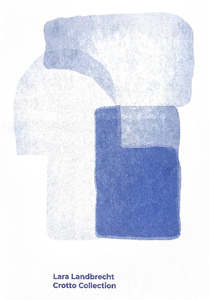
- Das Projekt „Crotto Collection“ untersucht den Raum des Badezimmers von der funktionalen Nasszelle bis zum häuslichen Refugium. Trotz ihrer Vielfalt teilen Baderäume ein zentrales, funktionales Element: die Sanitärkeramik.
Das Projekt beschäftigt sich mit den Gestaltungsmöglichkeiten durch die Übersetzung gebrannter Sanitärkeramik in ein neues Material. In Zusammenarbeit mit der Firma Geberit GmbH wird die Zusammensetzung des Materialentwurfs untersucht, auf ihre Eigenschaften geprüft und ein Gestaltungskonzept für Badezimmeraccessoires entwickelt. Basierend auf den Forschungsergebnissen wird ein Konzept entwickelt, das als Ansatz dient, keramische Abfälle innerhalb der Produktionskette einer Industrie weiter zu verwerten. Parallel zu verschiedenen Fliesenformen wird ein Zubehörset bestehend aus Spiegelhalter, Becher und Seifenschale entworfen. Darüber hinaus werden Vasen aus Toilettenformen entwickelt, als Symbol für die Ausweitung des Badezimmers in andere Wohnräume.
- Das Projekt „Crotto Collection“ untersucht den Raum des Badezimmers von der funktionalen Nasszelle bis zum häuslichen Refugium. Trotz ihrer Vielfalt teilen Baderäume ein zentrales, funktionales Element: die Sanitärkeramik.
- Beschreibung (en)
- The project “Crotto Collection” examines the bathroom space from the functional wet room to the domestic refuge. Despite their variety, bathrooms all serve a common purpose. The central component of any bathroom is the sanitary ceramics.
This fact gives rise to the project, which deals with the design possibilities of translating fired sanitary ceramics into a new material. In collaboration with Geberit GmbH, material properties and usability are being investigated. Based on the research results, a design concept is developed that serves as an approach to translate ceramic waste within the production chain of an industry. Parallel to different shapes of tiles, an accessory set consisting of a mirror holder, a tumbler and a soap dish is created. In addition, vases are designed from toilet forms, as a symbol of extending the bathroom space into other living spaces.
- The project “Crotto Collection” examines the bathroom space from the functional wet room to the domestic refuge. Despite their variety, bathrooms all serve a common purpose. The central component of any bathroom is the sanitary ceramics.
- Kategorie
- Typ des Projekts/Werks
- Schlagworte
- Datierung
- 24.04.2024
- Material
- Abmessungen
- Die Objekte sind als Set zu sehen: 1 Set beinhaltet drei Teile: Maße Set gesamt: 200mm x 200mm x 100mm. Es sind 5 Sets in jeweils einer Farbe – 5 Vasenobjekte: Maße 1 Vase: 150mm x 180mm x 300mm – Materialfliesen: 20 Stück à 40mm x 100mm x 5mm – Farbfliesen: 30 Stück à 100mm x 100mm x 8mm – Gipsformen: 8 Stück
- Ort: Institution
- Ort
- Lichthof 1
- Stadt
- Land
- Beteiligte Institution(en)
- Titel
- Crotto Collection
- Projektleiter/in
- Semester
- Studiengang
- Typ der Abschlussarbeit
- Archiv-Signatur
- Externes Archiv
- Importiert am
- 08.08.2024
- Übergeordnete Sets
- 3
- Set enthält
- 0 22
Die Methode Duchamp – Magritte
Name that can easily go onto 2 lines
Author that can easily go onto 2 lines as well
- Titel
- Die Methode Duchamp – Magritte
- Untertitel
- Das „Musée d’Art Moderne. Département des Aigles” von Marcel Broodthaers unter dem Aspekt der strategischen Aneignung
- Autor/in
- Beschreibung (de)
- „Der Fall Marcel Broodthaers lädt den Rezipienten dazu ein, sich mit dessen Vorläufern auseinanderzusetzen. Nicht etwa, weil dort Geheimnisse aufzudecken wären – im Gegenteil, die broodthaers’schen Galionsfiguren sind in seinem Werk alle namentlich präsentiert –, sondern eher auf Grund der Tatsache, da er es wie kaum ein anderer verstanden hat, sich bestimmter Vorbilder zu bedienen, sprich, sich Teilaspekte aus deren Werken anzueignen und die darin enthaltenen Kerngedanken eigens fortzuschreiben. Dies geschieht auf eine Art und Weise, die es vermag, Hommage und Kritik zu vereinen.”
„Über zwei Doppelseiten hinweg breitet sich im Ausstellungskatalog zur Section des Figures [...] das graphisch aus, was Broodthaers als seine METHODE tituliert. Diese Blätter folgen in direktem Anschluß an das Vorwort, sie markieren den Anfang zu jenem Katalogteil, der sowohl inhaltlich, als auch formal maßgeblich vom Künstler gestaltet worden ist. Bereits die Typographie des Titelworts strahlt – in Majuskel gesetzt – eine hohe Wichtigkeit aus. Wer allerdings ausführliche Erläuterung erwartet hat, wird enttäuscht, es handelt sich vielmehr um eine anspielungsreiche Illustration als um eine schriftliche Erklärung, doch gleichwohl trägt diese Ausführung den Charakter des Manifests.”
- „Der Fall Marcel Broodthaers lädt den Rezipienten dazu ein, sich mit dessen Vorläufern auseinanderzusetzen. Nicht etwa, weil dort Geheimnisse aufzudecken wären – im Gegenteil, die broodthaers’schen Galionsfiguren sind in seinem Werk alle namentlich präsentiert –, sondern eher auf Grund der Tatsache, da er es wie kaum ein anderer verstanden hat, sich bestimmter Vorbilder zu bedienen, sprich, sich Teilaspekte aus deren Werken anzueignen und die darin enthaltenen Kerngedanken eigens fortzuschreiben. Dies geschieht auf eine Art und Weise, die es vermag, Hommage und Kritik zu vereinen.”
- Beschreibung (en)
- "The case of Marcel Broodthaers invites the recipient to engage with his precursors. Not because there are secrets to be uncovered there - on the contrary, Broodthaers' figureheads are all presented by name in his work - but rather due to the fact that he understood better than almost anyone else how to make use of certain role models, i.e. to appropriate partial aspects from their works and to continue the core ideas contained therein in his own way. This is done in a way that manages to combine homage and criticism."
"Over two double-page spreads in the exhibition catalogue for Section des Figures [...] Broodthaers' METHOD is presented graphically. These pages follow directly after the preface and mark the beginning of the section of the catalogue that was designed by the artist both in terms of content and form. Even the typography of the title word - set in majuscule - radiates great importance. However, anyone expecting a detailed explanation will be disappointed; it is more of an allusive illustration than a written explanation, but this version nevertheless has the character of a manifesto."
- "The case of Marcel Broodthaers invites the recipient to engage with his precursors. Not because there are secrets to be uncovered there - on the contrary, Broodthaers' figureheads are all presented by name in his work - but rather due to the fact that he understood better than almost anyone else how to make use of certain role models, i.e. to appropriate partial aspects from their works and to continue the core ideas contained therein in his own way. This is done in a way that manages to combine homage and criticism."
- Kategorie
- Schlagworte
- Datierung
- November 2010
- Sprache
- Ort: Institution
- Titel
- Die Methode Duchamp – Magritte
- Untertitel
- Das „Musée d’Art Moderne. Département des Aigles” von Marcel Broodthaers unter dem Aspekt der strategischen Aneignung
- Semester
- Archiv-Signatur
- HfG HS 2010 09
- Externes Archiv
- Importiert am
- 10.01.2025
- Übergeordnete Sets
- 2
- Set enthält
- 0 2
Testzentrum für chronischen Automobilismus
- Titel
- Testzentrum für chronischen Automobilismus
- Autor/in
- Beschreibung (de)
- Radweg Ende, kein Zebrastreifen, Parkplatz voll, Bahn verpasst and stop and go, jemand hupt alle schauen, rote Ampel niemand da, falsch abgebogen, Licht vergessen, vollgas Lichthupe, Überholmaneuver trotz Geschwindigkeitsbegrenzung, ups! Personenschaden, Spiegel abgebrochen, Fenster runter „Arschloch!“, selber! Brumm. Kennen Sie das?
Verkehr ist eine höchst emotionale Angelegenheit. Die vielen kleinen Entscheidungen, die wir im automobilen Individualverkehr treffen müssen, sind immer auch mit einem Risiko behaftet. Sehen wir den "Personenschaden" als Katastrophe an, so müssen wir doch zugeben, dass auch die kleinen Fehlentscheidungen für Stress, Frust und Wut sorgen können. Ebendiese Reaktionen möchten wir im Kontext der sogenannten Mobilitätswende anerkennen, attestieren und aus ihnen Forderungen ableiten, die wir gerne für unsere Besucher*innen an die lokalen Behörden weiterleiten.
Auto, Fahrrad, Zufuß? Egal! Unsere 20-minütige Erstuntersuchung richtet sich an alle Verkehrsteilnehmer*innen. Erfahren Sie fachkundige Beratung und die Anwendung neuester Technologie. Tipp: Buchen Sie schon jetzt einen Termin und vermeiden Sie Wartezeiten. Wir freuen uns auf ihren Besuch!
- Radweg Ende, kein Zebrastreifen, Parkplatz voll, Bahn verpasst and stop and go, jemand hupt alle schauen, rote Ampel niemand da, falsch abgebogen, Licht vergessen, vollgas Lichthupe, Überholmaneuver trotz Geschwindigkeitsbegrenzung, ups! Personenschaden, Spiegel abgebrochen, Fenster runter „Arschloch!“, selber! Brumm. Kennen Sie das?
- Kategorie
- Typ des Projekts/Werks
- Schlagworte
- Datierung
- 25.03.2024 - 28.03.2024
- Mitwirkende
- Sprache
- Material
- Technik/Verfahren/Formate
- GameMaker Studio 2 (Game)
- Abmessungen
- 5 x 7,5 m
- Dauer
- 25 Minuten (Erstuntersuchung)
- Ort: Institution
- Stadt
- Land
- Internetlinks
- Bemerkungen
- Dank an: Alexander Knoppik, Alexander Thelen, Anna Haas (Badisches Staatstheater), Astrid Lindner-Maier, Barbara Kuon, Charlotte Singer, Christian Platz, Cornelia Herzog, Daniel Heiss (ZKM), Dario Schmid, Emelie Schreiner, Felix Fisgus, Franzi Wentz, Isabelle Schneider, Julian Kuf, Laura Richter, Leonie Mühlen, Martin Mangold (ZKM), Marvin Uhde (cant-deci.de), Max Bernhard, Miri, Omni-Mobil GmbH, Paula Schacke (die Anstoss e.V.), Pavel Polenz, Ralph Saam (Scheck-In Center Durlach), Richard Brunner, Sebastian Schäfer, Sebastian Schillbach, Sebastian Schönfeld, Silke Roth (die Anstoss e.V.), Susanne Henneberger (WERKRAUM: Karlsruhe e.V.), Susanne Schmitt, Sven Krahl, Timothée Charon, Tobias Keilbach, Tjark Schönfeld, Ute Wienberg (Badisches Staatstheater), Vlado Petrovic, Waldemar Schwab, Yun-Wen Liu
- Dank an: Alexander Knoppik, Alexander Thelen, Anna Haas (Badisches Staatstheater), Astrid Lindner-Maier, Barbara Kuon, Charlotte Singer, Christian Platz, Cornelia Herzog, Daniel Heiss (ZKM), Dario Schmid, Emelie Schreiner, Felix Fisgus, Franzi Wentz, Isabelle Schneider, Julian Kuf, Laura Richter, Leonie Mühlen, Martin Mangold (ZKM), Marvin Uhde (cant-deci.de), Max Bernhard, Miri, Omni-Mobil GmbH, Paula Schacke (die Anstoss e.V.), Pavel Polenz, Ralph Saam (Scheck-In Center Durlach), Richard Brunner, Sebastian Schäfer, Sebastian Schillbach, Sebastian Schönfeld, Silke Roth (die Anstoss e.V.), Susanne Henneberger (WERKRAUM: Karlsruhe e.V.), Susanne Schmitt, Sven Krahl, Timothée Charon, Tobias Keilbach, Tjark Schönfeld, Ute Wienberg (Badisches Staatstheater), Vlado Petrovic, Waldemar Schwab, Yun-Wen Liu
- Titel
- Testzentrum für chronischen Automobilismus
- Projektleiter/in
- Semester
- Studiengang
- Typ der Abschlussarbeit
- Importiert am
- 31.05.2024
- Übergeordnete Sets
- 2
- Set enthält
- 0 0
“I see” “with my voice”
Name that can easily go onto 2 lines
Author that can easily go onto 2 lines as well
- Titel
- “I see” “with my voice”
- Autor/in
- Beschreibung (de)
- „I see“ „with my voice“ beschäftigt sich mit Themen wie Transformation, Gestaltwandel und Materialität durch ein Zusammenspiel von literarischen Fragmenten und entliehenen Stimmen. Das Ergebnis ist eine nicht-lineare, fluide Erzählung, die die flüchtige Natur von Visionen, Träumen und Metamorphosen einfängt.
- Beschreibung (en)
- “I see” “with my voice” engages with themes of transformation,
shapeshifting, and materiality through an interplay of literary
fragments and borrowed voices, resulting in a non-linear, fluid
narrative that encapsulates the ephemeral nature of visions,
dreams, and metamorphoses.
This project draws substantial inspiration from Alice Notley's
The Descent of Alette, a transformative odyssey that employs
rhythmic spoken language to explore continuous change.
Alongside Notley’s influence, the works of Hildegard von Bingen,
a 12th-century mystic, and the visionary narratives from the
biblical book of Ezekiel, serve as foundational texts that inform
the thematic and structural framework of this piece.
The text is presented as an audio recording, whispered as a 20 minute loop.
Visitors can listen to the piece when pressing their ear against the tents walls.
My objects are performers, maybe even imposters: frozen in a state of change or mimicry. My objects are performers, maybe even imposters: frozen in a state of change or mimicry.
They are skillfull imitators, but you can tell something is off.
Moving along this crack between the believable and the not quite right, I like to engage
with different realities and states of being. The artificial, almost real-life fakeness of their with different realities and states of being. The artificial, almost real-life fakeness of their
surfaces set the stage for my narrative of transformation, imitation and shapeshifting.
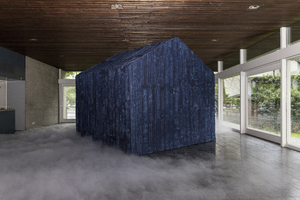
1. A wooden house crafted from smooth denim. Made by sanding the grain of wood
onto the denim fabric
2. Heavy fog covering the floor that could be perceived as dew, mixed with a light subtle
smoke of Incense burning.
The fragrance envokes sacred, holy feelings with its warm, resinous smell with peppery The fragrance envokes sacred, holy feelings with its warm, resinous smell with peppery
undertones.
3. 100 cherries made from a thick mixture of honey and almonds. The heavy sweetness
of the stoneless candy-imposter meant to linger in the visitors mouth as it is tasted. of the stoneless candy-imposter meant to linger in the visitors mouth as it is tasted.
A thin gelatine film – imitating the coolnes of cherry skin as it touches the lips A thin gelatine film – imitating the coolnes of cherry skin as it touches the lips
The installation is accompanied by a small reader containing the three part text to be taken The installation is accompanied by a small reader containing the three part text to be taken
home and serve as a keep sake or document of the fleeting spoken text.
The reader is bound with one simple staple. It does not have a beginning or end, but The reader is bound with one simple staple. It does not have a beginning or end, but
rather works like a gif. No cover or back. Just like wheels turning endlessly in a nonlinear rather works like a gif. No cover or back. Just like wheels turning endlessly in a nonlinear
storytelling.
- “I see” “with my voice” engages with themes of transformation,
- Kategorie
- Typ des Projekts/Werks
- Schlagworte
- Datierung
- 18.04.2024
- Sprache
- Ort: Institution
- Ort
- “I see” “with my voice” at ZKM Pavillon, Karlsruhe
- Stadt
- Land
- Titel
- “I see” “with my voice”
- Projektleiter/in
- Semester
- Studiengang
- Typ der Abschlussarbeit
- Importiert am
- 19.09.2024
- Übergeordnete Sets
- 0
- Set enthält
- 0 2
finding traces and placing connections
Name that can easily go onto 2 lines
Author that can easily go onto 2 lines as well
- Titel
- finding traces and placing connections
- Autor/in
- Beschreibung (de)
- „finding traces and placing connections“ ist eine interaktive Kunstinstallation und ein persönlicher Liebesbrief an das Material Kupfer. Die Arbeit zelebriert die Funktionalität, Vielseitigkeit und Schönheit des Kupfers.
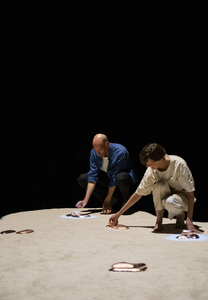
Besucher*innen können die in den Teppich eingelassenen Kupferflächen durch fünf verkupferte Steine verbinden und kontrollieren dadurch Klang und Licht des Raumes.
Die Komposition für das Werk wurde aus Aufnahmen, die durch Interaktion mit Kupferobjekten entstanden sind, generiert.
Jede aktivierte Fläche leuchtet auf und fügt eine Audiospur zur Komposition hinzu.
Dadurch entsteht nicht nur eine Interaktion mit der Arbeit, sondern auch eine Interaktion zwischen den Besucher*innen. Durch das Zusammenspiel entstehen individuelle Kompositionen und Kombinationen der Audiospuren und immer neue Abwandlungen des Klanges.
„finding traces and placing connections“ lädt ein, zu entdecken, zu hören.
- „finding traces and placing connections“ ist eine interaktive Kunstinstallation und ein persönlicher Liebesbrief an das Material Kupfer. Die Arbeit zelebriert die Funktionalität, Vielseitigkeit und Schönheit des Kupfers.
- Beschreibung (en)
- “finding traces and placing connections” is an interactive art installation and a personal love letter to the material copper. The work celebrates the functionality, versatility and beauty of copper.
Visitors can connect the copper surfaces embedded in the carpet with five copper-plated stones and thereby control the sound and light of the room.
The composition for the work was generated from recordings made through interaction with copper objects.
Each activated surface lights up and adds an audio track to the composition.
This not only creates an interaction with the work, but also an interaction between the visitors. The interplay creates individual compositions and combinations of audio tracks and ever new variations of the sound.
“finding traces and placing connections” invites you to discover and listen.
- “finding traces and placing connections” is an interactive art installation and a personal love letter to the material copper. The work celebrates the functionality, versatility and beauty of copper.
- Kategorie
- Typ des Projekts/Werks
- Schlagworte
- Datierung
- Juni 2024
- Mitwirkende
- Dank an
- Material
- Abmessungen
- 4m x 5m
- Ort: Institution
- Titel
- finding traces and placing connections
- Projektleiter/in
- Semester
- Studiengang
- Typ der Abschlussarbeit
- Importiert am
- 05.11.2024
- Übergeordnete Sets
- 3
- Set enthält
- 0 23
Letters of Dissent
Name that can easily go onto 2 lines
Author that can easily go onto 2 lines as well
- Titel
- Letters of Dissent
- Titel (en)
- Letters of Dissent
- Autor/in
- Beschreibung (de)
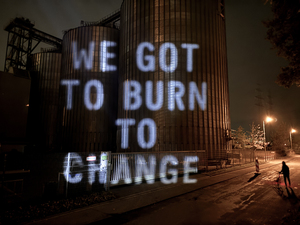
- Mein Diplomprojekt mit dem Titel „LETTERS OF DISSENT“ hatte zum Ziel, praktische und zugängliche Mittel des nächtlichen Protests zu erforschen. Dieses Projekt, das sich mit der Wechselbeziehung von Geschichtenerzählen und Punk-Einflüssen befasst, soll durch künstlerische Intervention ein Schlaglicht auf soziale und politische Themen werfen. Es handelt sich um selbst geschriebene Erzählungen, die in einer auf optimale Lesbarkeit ausgelegten Schriftart verfasst sind. Die Einfachheit der verwendeten Technik sorgt für Tragbarkeit und Zugänglichkeit. Das Engagement der Gemeinschaft ist integraler Bestandteil des Werks, das sowohl als Lasercut- als auch als 3D-Druckversion vorliegt und als Open-Source-Initiative zur Verfügung gestellt wird. Die Gesamtästhetik ist von auffallender Helligkeit geprägt und schafft eine visuell beeindruckende und deutlich wahrnehmbare Präsenz. Neben der Hauptdiplomarbeit ist es erforderlich, neuere Arbeiten in einer Ausstellung zu präsentieren, in der sorgfältig ausgewählte Projekte vorgestellt werden. In dem Bemühen, das Ausstellungsdesign auf das übergreifende Thema des Diplomprojekts abzustimmen, zielte der Designansatz darauf ab, wesentliche Prinzipien wie Zugänglichkeit, Abfallminimierung und eine ephemere Pop-up-Sensibilität zu verkörpern.
- Beschreibung (en)
- My diploma project titled "LETTERS OF DISSENT," aimed to explore practical and approachable means of protesting during the nighttime. Delving into the interrelation of storytelling and punk influence, this project seeks to cast a spotlight on social and political subjects through artistic intervention. It involves self-written narratives, utilising a font designed for optimal readability. The simplicity of the technique employed ensures portability and accessibility. Community engagement is integral, using both a lasercut and 3D-print version of the work, which is made available as an open-source initiative. The overall aesthetic is marked by striking brightness, creating a visually impactful and overtly noticeable presence. In addition to the primary diploma project, it is required to showcase recent works in an exhibition, featuring carefully chosen projects. In an effort to align the exhibition design with the overarching theme of the diploma project, the design approach aimed to encapsulate essential principles such as accessibility, waste minimisation, and an ephemeral, pop-up sensibility.
- Kategorie
- Schlagworte
- Datierung
- 03.11.2023
- Titel
- Letters of Dissent
- Projektleiter/in
- Semester
- Studiengang
- Typ der Abschlussarbeit
- Importiert am
- 30.10.2024
- Übergeordnete Sets
- 3
- Set enthält
- 1 11