Sets
404 Inhalte
- Seite 1 von 34
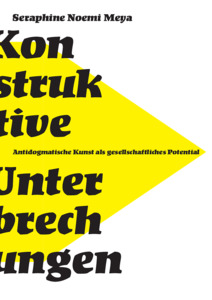
Konstruktive Unterbrechungen
Name that can easily go onto 2 lines
Author that can easily go onto 2 lines as well
- Titel
- Konstruktive Unterbrechungen
- Untertitel
- Antidogmatische Kunst als gesellschaftliches Potenzial
- Autor/in
- Beschreibung (de)
- „Immer wieder beschäftigten sich in den letzten Jahren Ausstellungen mit explizit politischer Kunst. Kunst, politische Kunst, künstlerischer Aktivismus und politischer Aktivismus entwickelten sich in der Wahrnehmung der BetrachterInnen zu einem Knoten, dessen künstlerische Wirkmacht im formalen institutionellen Rahmen auf der Strecke blieb.”
„Dort, wo Altes durch Neues herausgefordert wird. Dort, wo Kunst und Theater auf das alltägliche und das politische Leben treffen. Nicht umsonst forderten Künstler wiederholt die Annäherung von Kunst und Leben. Denn dort, wo beides aufeinander prallt, findet Auseinandersetzung statt. Dabei ist es nicht wichtig, was Kunst genau ist und wo sie anfängt oder aufhört. Relevant ist, dass Brüche geschaffen werden im reibungslosen Ablauf eines problematischen Systems. Es geht um eine Fraktur der Erwartung, um eine Unterbrechung des Gewohnten. Diese Strategie der Unterbrechung ist interessant für die vorliegende Arbeit.”
- „Immer wieder beschäftigten sich in den letzten Jahren Ausstellungen mit explizit politischer Kunst. Kunst, politische Kunst, künstlerischer Aktivismus und politischer Aktivismus entwickelten sich in der Wahrnehmung der BetrachterInnen zu einem Knoten, dessen künstlerische Wirkmacht im formalen institutionellen Rahmen auf der Strecke blieb.”
- Beschreibung (en)
- ‘In recent years, exhibitions have repeatedly focussed on explicitly political art. In the perception of viewers, art, political art, artistic activism and political activism have developed into a knot whose artistic impact has fallen by the wayside within the formal institutional framework.’
‘Where the old is challenged by the new. Where art and theatre meet everyday and political life. It is not for nothing that artists have repeatedly called for the convergence of art and life. Because where the two collide, confrontation takes place. It is not important what exactly art is and where it begins or ends. What is relevant is that breaks are created in the smooth running of a problematic system. It is about a fracture of expectation, an interruption of the familiar. This strategy of interruption is interesting for the present work.’
- ‘In recent years, exhibitions have repeatedly focussed on explicitly political art. In the perception of viewers, art, political art, artistic activism and political activism have developed into a knot whose artistic impact has fallen by the wayside within the formal institutional framework.’
- Kategorie
- Typ des Projekts/Werks
- Schlagworte
- Datierung
- 10.07.2014
- Sprache
- Ort: Institution
- Titel
- Konstruktive Unterbrechungen
- Untertitel
- Antidogmatische Kunst als gesellschaftliches Potenzial
- Projektleiter/in
- Semester
- Studiengang
- Typ der Abschlussarbeit
- Archiv-Signatur
- HfG HS 2014 01
- Externes Archiv
- Importiert am
- 30.03.2025
- Übergeordnete Sets
- 2
- Set enthält
- 0 4
25 Grad: Graduierte im Gespräch
- Titel
- 25 Grad: Graduierte im Gespräch
- Beschreibung (de)
- In den zwei Kolloquien tauschen sich Absolvent:innen aus den verschiedenen Disziplinen der HfG über ihre Abschlussarbeiten aus. In offener Runde geben sie einen Einblick in die Entstehung und Entwicklung ihrer Projekte. Das Publikum ist eingeladen, Fragen zu stellen und mit zu diskutieren.
15.02.2025: Julius Bläser, Eike Buff, Lara Landbrecht, Janosch Kratz
22.02.2025: Florian Knöbl, Mona Mayer, Bob Reinert
- In den zwei Kolloquien tauschen sich Absolvent:innen aus den verschiedenen Disziplinen der HfG über ihre Abschlussarbeiten aus. In offener Runde geben sie einen Einblick in die Entstehung und Entwicklung ihrer Projekte. Das Publikum ist eingeladen, Fragen zu stellen und mit zu diskutieren.
- Beschreibung (en)
- In the colloquia, graduates from the various disciplines at the HfG discuss their final projects. In open discussions, they provide an insight into the creation and development of their projects. The audience is invited to ask questions and join in the discussion.
15.02.2025: Julius Bläser, Eike Buff, Lara Landbrecht, Janosch Kratz
22.02.2025: Florian Knöbl, Mona Mayer, Bob Reinert
- In the colloquia, graduates from the various disciplines at the HfG discuss their final projects. In open discussions, they provide an insight into the creation and development of their projects. The audience is invited to ask questions and join in the discussion.
- Typ des Projekts/Werks
- Datierung
- 15.02.2025 und 22.02.2025
- Mitwirkende
- Ort: Institution
- Titel
- 25 Grad: Graduierte im Gespräch
- Importiert am
- 04.03.2025
- Übergeordnete Sets
- 1
- Set enthält
- 0 0
Eine Neue Umwelt
Name that can easily go onto 2 lines
Author that can easily go onto 2 lines as well
- Titel
- Eine Neue Umwelt
- Titel (en)
- A New Environment
- Untertitel
- Heinrich Klotz über Architektur und Neue Medien
- Untertitel des Projekts/Werks (en)
- Heinrich Klotz on Architecture and New Media
- Autor/in
- Beschreibung (de)
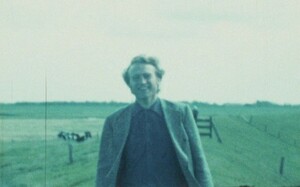
- Eine filmische Montage des Archivs von Kunsthistoriker Heinrich Klotz lässt Zusammenhänge erkennen zwischen Postmoderne, digitalen Medien und der Hoffnung auf eine neue Kunst.
Die alte Umwelt ist nicht mehr vorhanden, es klaffen Lücken, ganze Städte sind dem Boden gleich gemacht worden. Kann man eine lebenswerte Stadt wiederherstellen, ohne die Aggressionen des Krieges zu verdecken? Oder sind die Ruinen eine einmalige Chance, die Innenstädte von Grund auf neu zu gestalten? Ausgehend vom Wiederaufbau der deutschen Altstädte nach dem Zweiten Weltkrieg beschäftigte den Kunsthistoriker Heinrich Klotz die Rückgewinnung eines sinnlichen Erlebens in Architektur und Kunst. So sagte er den radikalen Forderungen einer alles erneuernden funktionalen Architektur den Kampf an, da sie nur noch gesichtslose Container baute. Die postmoderne Architektur verteidigte er wiederum gegen den Vorwurf des Kitsches. Und Computerspiele und virtuelle Realitäten erhob er zu Kunstwerken. 1984 gründete er das Deutsche Architekturmuseum in Frankfurt und 1989 das Zentrum für Kunst und Medien in Karlsruhe.
- Eine filmische Montage des Archivs von Kunsthistoriker Heinrich Klotz lässt Zusammenhänge erkennen zwischen Postmoderne, digitalen Medien und der Hoffnung auf eine neue Kunst.
- Beschreibung (en)
- A cinematic montage of the archive of art historian Heinrich Klotz reveals connections between postmodernism, digital media, and the hope for a new art.
The old environment is no longer there—gaps remain, entire cities have been leveled. Can a livable city be restored without covering up the aggressions of war? Or are the ruins a unique opportunity to redesign city centers from the ground up? Beginning with the post-World War II reconstruction of German historic towns, art historian Heinrich Klotz focused on reclaiming a sensual experience in architecture and art. He opposed the radical demands of an all-renewing functionalist architecture, which, in his view, only produced faceless containers. At the same time, he defended postmodern architecture against accusations of kitsch. He even elevated video games and virtual realities to the status of artworks. In 1984, he founded the German Architecture Museum in Frankfurt, followed by the Center for Art and Media in Karlsruhe in 1989.
- A cinematic montage of the archive of art historian Heinrich Klotz reveals connections between postmodernism, digital media, and the hope for a new art.
- Kategorie
- Typ des Projekts/Werks
- Schlagworte
- Datierung
- 2019
- Mitwirkende
- Sprache
- Untertitel (Film)
- Material
- Technik/Verfahren/Formate
- DCP, 2K, 3.0 in 5.1
- Abmessungen
- 4:3
- Dauer
- 01:19:05
- Land
- Beteiligte Institution(en)
- Bemerkungen
- Gefördert durch die Riemschneider Stiftung, die Gesellschaft zur Förderung der Kunst und Medientechnologie e.V. und das Zeitbild-Lab der HfG Karlsruhe.
Unterstützt durch den Südwestrundfunk, den Hessischen Rundfunk, dem Zentrum für Kunst und Medien Karlsruhe, Andec Filmtechnik und DCM - Digital Cinema Mastering.
Eine Studiolo Film Produktion
- Gefördert durch die Riemschneider Stiftung, die Gesellschaft zur Förderung der Kunst und Medientechnologie e.V. und das Zeitbild-Lab der HfG Karlsruhe.
- Titel
- Eine Neue Umwelt
- Untertitel
- Heinrich Klotz über Architektur und Neue Medien
- Projektleiter/in
- Semester
- Studiengang
- Typ der Abschlussarbeit
- Importiert am
- 03.03.2025
- Übergeordnete Sets
- 2
- Set enthält
- 0 7
Sekret
Name that can easily go onto 2 lines
Author that can easily go onto 2 lines as well
- Titel
- Sekret
- Untertitel
- Eine Tränen-Bar Performance
- Autor/in
- Beschreibung (de)
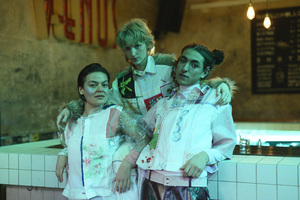
- In einer Bar, in der Innenstadt von Karlsruhe, trifft das Publikum auf ein tourendes Trio mit einer sonderbaren Geschichte: Es war einmal ein Nachtfalter, der lebte im Dschungel des brasilianischen Amazonas. Dieser Falter trug den Namen Gorgone macarea und hatte eine Angewohnheit, die für ein Lebewesen auf der Erde recht eigensinnig erschien. Gorgone macarea trank die Tränen schlafender Vögel. Für ihn: eine sichere Nahrungsquelle in unsicheren Zeiten. Da also Gorgone macareas Lebensraum sich immer mehr veränderte und auch die Vögel nach und nach wegzogen, machte der Falter sich auf, um andere Tränen zu suchen. Dabei kam ihm zu Ohren, dass der Mensch ganz besondere Tränen vergießt, wie kein anderes Lebewesen auf der Erde: Emotionale Tränen.
Und so entschloss sich der Nachtfalter, die Menschen einzuladen, um ihre Tränen mit ihm zu teilen.
Seither touren der Nachtfalter und seine zwei Kompliz*innen Sadgirl und Fluss von Bar zu Bar und lassen für einen Abend das Publikum Teil ihres Universums werden. Ein Universum – in dem Tränen die Hauptzutat des Abends sind und in jedem Cocktail serviert werden.
- In einer Bar, in der Innenstadt von Karlsruhe, trifft das Publikum auf ein tourendes Trio mit einer sonderbaren Geschichte: Es war einmal ein Nachtfalter, der lebte im Dschungel des brasilianischen Amazonas. Dieser Falter trug den Namen Gorgone macarea und hatte eine Angewohnheit, die für ein Lebewesen auf der Erde recht eigensinnig erschien. Gorgone macarea trank die Tränen schlafender Vögel. Für ihn: eine sichere Nahrungsquelle in unsicheren Zeiten. Da also Gorgone macareas Lebensraum sich immer mehr veränderte und auch die Vögel nach und nach wegzogen, machte der Falter sich auf, um andere Tränen zu suchen. Dabei kam ihm zu Ohren, dass der Mensch ganz besondere Tränen vergießt, wie kein anderes Lebewesen auf der Erde: Emotionale Tränen.
- Beschreibung (en)
- In a bar in downtown Karlsruhe, the audience encounters a touring trio with a peculiar story: Once upon a time, there was a moth living in the jungles of the Brazilian Amazon. This moth was called Gorgone macarea and had a habit that seemed rather unusual for a creature on Earth. Gorgone macarea drank the tears of sleeping birds. For the moth, it was a reliable source of nourishment in uncertain times. After all, even back then, the Amazon rainforest was considered a so-called tipping element, capable of disrupting the global climate balance. As Gorgone macarea’s habitat changed more and more, and the birds gradually disappeared, the moth set out in search of other tears. Along the way, it heard that humans shed a kind of tear unlike any other creature on Earth: emotional tears.
And so, the moth decided to invite humans to share their tears with it.
Since then, the moth and its two companions, Sadgirl and Fluss, have been touring from bar to bar, drawing the audience into their universe for one night. A universe where tears are the main ingredient of the evening—served in every cocktail.
- In a bar in downtown Karlsruhe, the audience encounters a touring trio with a peculiar story: Once upon a time, there was a moth living in the jungles of the Brazilian Amazon. This moth was called Gorgone macarea and had a habit that seemed rather unusual for a creature on Earth. Gorgone macarea drank the tears of sleeping birds. For the moth, it was a reliable source of nourishment in uncertain times. After all, even back then, the Amazon rainforest was considered a so-called tipping element, capable of disrupting the global climate balance. As Gorgone macarea’s habitat changed more and more, and the birds gradually disappeared, the moth set out in search of other tears. Along the way, it heard that humans shed a kind of tear unlike any other creature on Earth: emotional tears.
- Kategorie
- Typ des Projekts/Werks
- Schlagworte
- Datierung
- 20.12.2024
- Mitwirkende
- Dank an
- Dauer
- 40 Minuten
- Ort
- Venus Bar, Kaiserpassage
- Stadt
- Land
- Titel
- Sekret
- Untertitel
- Eine Tränen-Bar Performance
- Projektleiter/in
- Semester
- Studiengang
- Typ der Abschlussarbeit
- Importiert am
- 26.02.2025
- Übergeordnete Sets
- 3
- Set enthält
- 0 15
Semestereröffnung Sommer 2024
Name that can easily go onto 2 lines
Author that can easily go onto 2 lines as well
- Titel
- Semestereröffnung Sommer 2024
- Beschreibung (de)
- EINLADUNG // INVITATION
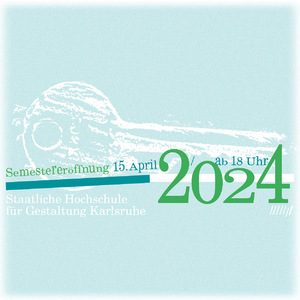
Hiermit laden wir herzlich ein zur Eröffnung des Sommersemesters am 15. April 2024 ab 18 Uhr.
Die Staatliche Hochschule für Gestaltung Karlsruhe startet in das Sommersemester mit einer Reihe neuer Mitarbeitenden sowie zwei Neuberufungen für die Studiengänge Kunstwissenschaft und Medienphilosophie.
Die Professorin für Digitale Ästhetik, Dr. Nina Zschocke und der Professor für Theorie im Bereich Kritische Theorie und Medienphilosophie, Simon Sheikh werden als international angesehene Wissenschaftler:innen nicht nur unser Lehrangebot, sondern auch das kulturelle Leben der Stadt Karlsruhe bereichern. Weitere Berufungen im Theoriebereich der Hochschule stehen im Laufe des Sommer- und des Wintersemesters an. Die HfG freut sich auf die weitere Entwicklung im neuen akademischen Jahr.
Wie gewohnt wird der Eröffnungsabend auch für die Überreichung von Diplomzeugnissen genutzt. Der Abend wird performativ und musikalisch durch Beiträge von SMITTNESS begleitet.
Wir würden uns freuen, Sie und Euch zu diesem Anlass wieder in den Lichthöfen der HfG willkommen zu heißen.
- EINLADUNG // INVITATION
- Datierung
- 15.04.2024
- Titel
- Semestereröffnung Sommer 2024
- Importiert am
- 24.02.2025
- Übergeordnete Sets
- 1
- Set enthält
- 0 1
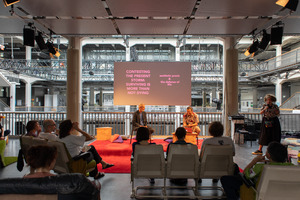
CONTESTING THE PRESENT STORM: SURVIVING IS MORE THAN NOT DYING
Name that can easily go onto 2 lines
Author that can easily go onto 2 lines as well
- Titel
- CONTESTING THE PRESENT STORM: SURVIVING IS MORE THAN NOT DYING
- Titel (en)
- CONTESTING THE PRESENT STORM: SURVIVING IS MORE THAN NOT DYING
- Untertitel des Projekts/Werks (en)
- Aesthetic praxis and the defense of life
- Autor/in
- Beschreibung (en)
- To address today’s political conjunctures, it becomes crucial to study the link between extractivism and warfare as pillars of capitalist democracy and global colonialism. The Zapatista Army of National Liberation (EZLN) has been warning us about the present storm, underlining how the global territorial reordering between imperialist powers has turned into a total war threatening all forms of life: the living, the dead, and the non-dead. The present storm carries a monster of multiple heads, the capitalist hydra – as they name multilayered systematic oppression and exploitation with a voracious ecocidal drive. The Zapatistas have also warned us that in the face of this growing threat, “there will be no landscape left to account for.”
This talk will debate some characteristics of the present storm by analyzing contemporary mechanisms that are renewing the systematic forms of global oppression and exploitation in the context of Mexico. To set the context, it will focus on the 2019 infrastructural National Development Plan, the interrelated impacts, and characteristics of involved actors: military, paramilitary, organized crime, national and transnational corporations. The implementation of these projects carries a documented violent dispossession of communal and agrarian territories, targeted incarceration of land defenders, disappearances and murders, displacement and dissolution of communities, destruction of cultural artifacts and archeological sites, erosion of vital ecosystems, scorched atmospheres, and the risk of irreversible ecological consequences.
It will zoom into the present multilayered critical scenario of the south and southeast Mexican regions, setting grounds for introducing a few keys to the historical indigenous and non-indigenous resistance in the struggle for self-determination and autonomy at the heart of an aesthetic praxis. **/
David Muñoz-Alcántara is a guest professor in Media Art at the HfG. Alistair Hudson is the Scientific-Artistic Chairman of the ZKM.
- To address today’s political conjunctures, it becomes crucial to study the link between extractivism and warfare as pillars of capitalist democracy and global colonialism. The Zapatista Army of National Liberation (EZLN) has been warning us about the present storm, underlining how the global territorial reordering between imperialist powers has turned into a total war threatening all forms of life: the living, the dead, and the non-dead. The present storm carries a monster of multiple heads, the capitalist hydra – as they name multilayered systematic oppression and exploitation with a voracious ecocidal drive. The Zapatistas have also warned us that in the face of this growing threat, “there will be no landscape left to account for.”
- Typ des Projekts/Werks
- Datierung
- 19.06.2024
- Ort: Institution
- Ort
- Lichtbrücke
- Beteiligte Institution(en)
- Titel
- CONTESTING THE PRESENT STORM: SURVIVING IS MORE THAN NOT DYING
- Importiert am
- 24.02.2025
- Übergeordnete Sets
- 1
- Set enthält
- 0 11
Semestereröffnung Wintersemester 2024/2025
Name that can easily go onto 2 lines
Author that can easily go onto 2 lines as well
- Titel
- Semestereröffnung Wintersemester 2024/2025
- Titel (en)
- Opening Winter Semester 2024/2025
- Beschreibung (de)
- An diesem Abend lädt die HfG Karlsruhe zur feierlichen Eröffnung des Wintersemesters ein und begrüßt zu diesem Anlass nicht nur Gäste und Freunde der Hochschule, sondern vor allem neue Studierende und Mitarbeitende sowie zwei Neuberufungen:
Prof. Charlotte Eifler (Professur für Mixed Realities) und Prof. Paul Bailey (Professur für Design in den Bereichen Visuelle Kommunikation und Forschung), zwei international renommierte Künstler*innen, die nicht nur das Leben an der Hochschule, sondern auch das kulturelle Leben der Stadt Karlsruhe bereichern.
Begrüßung und Grußworte von:
Prof Constanze Fischbeck, Stellvertretende Rektorin
Dr. Albert Käuflein, Bürgermeister der Stadt Karlsruhe
Britta Wirtz, Stellvertretende Vorsitzende des Hochschulrats und Geschäftsführerin der Karlsruher Messe- und Kongress GmbH (KMK)
Wie gewohnt, wird der Eröffnungsabend auch für die Überreichung von Diplomzeugnissen an unsere Absolvent*innen genutzt. Das Bühnendesign des Abends wird von HfG-Almuni Vera Gärtner gestaltet.
Wir freuen uns außerdem auf viele spannende Projekte, Neuerungen und Termine, die an diesem Abend vorgestellt werden. Beispielsweise das in Kooperation mit dem ZKM erstmals stattfindende Forschungssymposium „Shifting Paradigms“, welches mit internationalen Gästen zur Diskussion rund um Transformationen in den Strukturen künstlerischer und wissenschaftlicher Forschung am 5. Und 6. Dezember 2024 an der Hochschule stattfinden wird.
Im Anschluss Asta After Party & Konzert mit Ildikó
- An diesem Abend lädt die HfG Karlsruhe zur feierlichen Eröffnung des Wintersemesters ein und begrüßt zu diesem Anlass nicht nur Gäste und Freunde der Hochschule, sondern vor allem neue Studierende und Mitarbeitende sowie zwei Neuberufungen:
- Beschreibung (en)
- On this evening, the HfG Karlsruhe invites you to the ceremonial opening of the winter semester and welcomes not only guests and friends of the university, but above all new students and employees as well as two new appointments:
Prof. Charlotte Eifler (Professorship for Mixed Realities) and Prof. Paul Bailey (Professorship for Design in the fields of Visual Communication and Research), two internationally renowned artists* who not only enrich life at the university, but also the cultural life of the city of Karlsruhe.
Welcome and greetings from:
Prof. Constanze Fischbeck, Deputy Rector
Dr. Albert Käuflein, Mayor of the City of Karlsruhe
Britta Wirtz, Deputy Chairwoman of the University Council and Managing Director of Karlsruher Messe- und Kongress GmbH (KMK)
As usual, the opening evening will also be used for the presentation of diplomas to our graduates. The stage design for the evening will be created by HfG alumna Vera Gärtner.
We are also looking forward to many exciting projects, innovations and dates that will be presented on this evening. For example, the research symposium “Shifting Paradigms”, which will take place for the first time in cooperation with the ZKM, which will take place at the university on December 5 and 6, 2024 with international guests to discuss transformations in the structures of artistic and scientific research.
Afterwards Asta After Party & Concert with Ildikó
- On this evening, the HfG Karlsruhe invites you to the ceremonial opening of the winter semester and welcomes not only guests and friends of the university, but above all new students and employees as well as two new appointments:
- Datierung
- 14.10.2024
- Titel
- Semestereröffnung Wintersemester 2024/2025
- Importiert am
- 24.02.2025
- Übergeordnete Sets
- 1
- Set enthält
- 0 1
BookBauFestival 2
Name that can easily go onto 2 lines
Author that can easily go onto 2 lines as well
- Titel
- BookBauFestival 2
- Titel (en)
- BookBauFestival 2
- Autor/in
- Beschreibung (de)
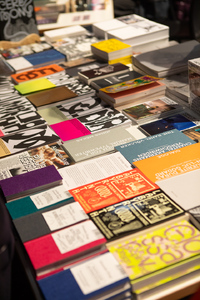
- Vom 31. Januar bis 2. Februar 2025 findet zum zweiten Mal das BookBauFestival an der Hochschule für Gestaltung Karlsruhe (HfG Karlsruhe) statt. Das Festival bringt Studierende unserer und anderer Hochschulen sowie Protagonisten der internationalen und nationalen Künstlerbuchszene zusammen, um ihr vielfältiges Angebot an Künstlerbüchern einem engagierten Publikum zu präsentieren.
Im Mittelpunkt des BookBauFestivals stehen die Themen Ökonomie, nachhaltige Produktion und die Ausstellung/Sammlung von Künstlerbüchern. Während der drei Tage sind Workshops für Kinder und Erwachsene sowie Vorträge von Protagonisten der Szene geplant, die für alle offen sind. Von der HfG beteiligen sich die Initiativen BookBoi*, KLAK, die Studentenzeitschrift Schwarm sowie die Zeitschriften UMBAU. Die gemeinsame Bibliothek von ZKM und HfG stellt eine Auswahl historischer Bücher aus.
Das BookBauFestival wurde interdisziplinär konzipiert, unter Beteiligung von Studierenden des Seminars „Künstlerbücher mit Fotografie“ unter der Leitung von Prof. Susanne Kriemann, der Lehrbeauftragten Hangyan Chen sowie Teilnehmern des Seminars „BookBauScenography“ unter der Leitung von Vera Gärtner.
Programm
Freitag
17:00 – 20:00 Eröffnung (Lichthof 3 & 4)
17:00 – 19:00 It’s time to grow up, Workshop: Bookboi*, bring your own book (Living Library Space)
18:00 – 19:00 The Famliy Album: Reading and Sharing, Literatursalon mit Monilola Olayemi Ilupeju, Moderation: Paolo Caffoni (Lichthof 4)
Samstag
12:00 – 19:00 Art BookFair (Lichthof 3 & 4)
12:00 –19:00 Kids BookBau-Stammtisch (unter der Lichtbrücke)
14:00 – 17:00 It’s time to grow up, Workshop: Bookboi*, bring your own book (Living Library Space)
12:00 – 15:00 The Family Album: Workshop, A Writing and Drawing mit Monilola Olayemi Ilupeju (Room 115)
12:00 – 12:30 Economy and sustainable production, Reading and Sharing: Mark Pezinger Books (Lichthof 4)
12:30 – 13:00 A book a day keeps publishers in play, Reading and Sharing: Spector Books (Lichthof 4)
13:00 – 13:30 Independent publishing: a footnote, Reading and Sharing: BackBoneBooks (Lichthof 4)
13:30 – 14:30 Students lead presentation, Reading and Sharing: ABK Stuttgart, Uni Siegen, HBK Braunschweig, HfG Offenbach, HfG Karlsruhe (Lichthof 4)
15:00 – 16:00 Bookstop Bookshop Buchhaus Round Table: einBuch.haus, ABA Air Berlin Bookstop Alexanderplatz, Limestone Books, Moderation: Susanne Kriemann (Lichthof 4)
Sonntag
12.00 – 18.00 Art BookFair (Lichthof 3 & 4)
12.00 – 18.00 BookBau-Stammtisch for kids (unter der Lichtbrücke)
14:00 – 17:00 It’s time to grow up, Workshop: Bookboi*, bring your own book (Living Library Space)
12.00 – 12.30 Selfpublishing — collective sharing session, Reading and Sharing: Katrin Kamrau (Lichthof 4)
12.30 – 13.00 Making, Meeting, Exchanging around art books in China, Reading and Sharing: abC China (Lichthof 4)
13.00 – 13.30 Reading and Sharing: Everyedition (Lichthof 4)
13.30 – 14.30 Reading and Sharing: Monroe Books (Lichthof 4)
14.00 - 14.30 Literarische Miniaturen, Reading and Sharing: KLAK (HfG Karlsruhe, Lichthof 4)
15:00 bis 16:00 Round Table: Publishing als artistic practice: Kenneth Ting-Yu Lin (Nomad Papaya Books), Yun Chen (51 Personae), Ronak Moshtaghi (Bazar Artbooks) and moderated by Céline Condorelli (HfG Karlsruhe)
18.00 Ende BookBauFestival
- Vom 31. Januar bis 2. Februar 2025 findet zum zweiten Mal das BookBauFestival an der Hochschule für Gestaltung Karlsruhe (HfG Karlsruhe) statt. Das Festival bringt Studierende unserer und anderer Hochschulen sowie Protagonisten der internationalen und nationalen Künstlerbuchszene zusammen, um ihr vielfältiges Angebot an Künstlerbüchern einem engagierten Publikum zu präsentieren.
- Beschreibung (en)
- The second edition of the BookBauFestival, hosted by the Karlsruhe University of Arts and Design (HfG Karlsruhe), will take place from January 31st to February 2nd, 2025. This festival will bring together students from our and other universities and protagonists from the international and national artists' book scene, to present their diverse range of artists' books to an engaged visitors.
The BookBauFestival will focus on the themes of economics, sustainable production, and the exhibition/collection of artists' books. During the three days, workshops for children and adults as well as talks by protagonists of the scene are planned and are open to all. From HfG, the initiatives BookBoi*, KLAK, the student publication Schwarm as well as the magazines UMBAU take part. The joint library of ZKM and HfG exhibits a selection of historical books.
The BookBauFestival was conceived in an interdisciplinary way, involving students from the seminar “artists’ books with photography” led by Prof. Susanne Kriemann, associate teacher Hangyan Chen as well as participants from the seminar “BookBauScenography” led by Vera Gärtner.
Program
Friday
17:00 – 20:00 Eröffnung (Lichthof 3 & 4)
17:00 – 19:00 It’s time to grow up, Workshop: Bookboi*, bring your own book (Living Library Space)
18:00 – 19:00 The Family Album: Reading and Sharing: Literatursalon with Monilola Olayemi Ilupeju, moderated by Paolo Caffoni, Lichthof 4
Samstag
12:00 – 19:00 BookFair (Lichthof 3 & 4)
12:00 –1 9:00 Kids BookBau-Stammtisch (Lichthof 3)
14:00 – 17:00 It’s time to grow up, Workshop: Bookboi*, bring your own book (Living Library Space)
12:00 – 15:00 The Family Album: Workshop: A Writing and Drawing with Monilola Olayemi Ilupeju (Room 115)
12:00 – 12:30 Economy and sustainable production, Reading and Sharing: Mark Pezinger Books (Lichthof 4)
12:30 – 13:00 A book a day keeps publishers in play, Reading and Sharing: Spector Books (Lichthof 4)
13:00 – 13:30 Independent publishing: a footnote, Reading and Sharing: BackBoneBooks (Lichthof 4)
13:30 – 14:30 Students lead presentation, Reading and Sharing: ABK Stuttgart, Uni Siegen, Uni Siegen, HBK Braunschweig, HfG Offenbach, HfG Karlsruhe (Lichthof 4)
15:00 – 16:00 Bookstop Bookshop Buchhaus, Round Table: einBuch.haus, ABA Air Berlin Bookstop Alexanderplatz, Limestone Books, HfG Karlsruhe (Lichthof 4)
Sonntag
12.00 – 18.00 BookFair (Lichthof 3, Lichthof 4)
12.00 – 18.00 BookBau-Stammtisch for kids (Lichthof 3)
14:00 – 17:00 It’s time to grow up, Workshop: Bookboi*, bring your own book (Living Library Space)
12.00 – 12.30 Selfpublishing — collective sharing session, Reading and Sharing: Katrin Kamrau (Lichthof 4)
12.30 – 13.00 Making, Meeting, Exchanging around art books in China, Reading and Sharing: abC China (Lichthof 4)
13.00 – 13.30 Reading and Sharing: Everyedition (Lichthof 4)
13.30 – 14.30 Reading and Sharing: Monroe Books (Lichthof 4)
14.00 - 14.30 Literarische Miniaturen, Reading and Sharing: KLAK (HfG Karlsruhe, Lichthof 4)
15:00 bis 16:00 Round Table: Publishing als artistic practice: Kenneth Ting-Yu Lin (Nomad Papaya Books), Yun Chen (51 Personae), Ronak Moshtaghi (Bazar Artbooks) and moderated by Céline Condorelli (HfG Karlsruhe)
18.00 End BookBauFestival
- The second edition of the BookBauFestival, hosted by the Karlsruhe University of Arts and Design (HfG Karlsruhe), will take place from January 31st to February 2nd, 2025. This festival will bring together students from our and other universities and protagonists from the international and national artists' book scene, to present their diverse range of artists' books to an engaged visitors.
- Kategorie
- Datierung
- 31.01.2025 - 02.02.2025
- Mitwirkende
- Ort: Institution
- Internetlinks
- Titel
- BookBauFestival 2
- Importiert am
- 24.02.2025
- Übergeordnete Sets
- 1
- Set enthält
- 0 35
25 Grad: Vernissage
Name that can easily go onto 2 lines
Author that can easily go onto 2 lines as well
- Titel
- 25 Grad: Vernissage
- Titel (en)
- 25 Grad: Opening
- Kategorie
- Datierung
- 13.02.2025
- Ort
- Postgalerie Karlsruhe / Kaiserstraße 217 / 76133 Karlsruhe
- Postgalerie Karlsruhe / Kaiserstraße 217 / 76133 Karlsruhe
- Titel
- 25 Grad: Vernissage
- Importiert am
- 24.02.2025
- Übergeordnete Sets
- 1
- Set enthält
- 0 13
Onkel Rudi als...
Name that can easily go onto 2 lines
Author that can easily go onto 2 lines as well
- Titel
- Onkel Rudi als...
- Untertitel
- Zur Werk- und Wirkungsgeschichte eines Gemäldes von Gerhard Richter im Spiegel seiner Selbstäußerungen
- Autor/in
- Beschreibung (de)
- „Das Jahr 2012 stand ganz im Zeichen Gerhard Richters. So konnte man ihm im Kino bei der Arbeit bei der Arbeit über die Schulter schauen – so der bereits erstmals im September 2011 präsentierte Kinofilm Painting von Corinna Belz .., was einherging mit dem beachtlichen Erfolg auf dem secondary market, dem Auktionsmarkt, wo seine vornehmlich abstrakten Gemälde dank Höchstpreisen zu Kunstmarktlieblingen avancierten.”
„Gerade ein Gemälde scheint anders als viele andere in den letzten Jahren immer mehr mit symbolischer Bedeutung aufgeladen worden zu sein: Onkel Rudi (Abb.1), entstanden 1965. Die fotografische Vorlage entnahm Richter dem eigenen Familienalbum. Als ‚Privates öffentlich’ machen, wurde diese Vorgehensweise in der Motivauswahl der so genannten Foto-Bilder vielfach begründet. Dies zeigt sich nicht zuletzt in den Fotografien, die Richter auf Einladung der Tageszeitung „Die Welt” für eine Sonderausgabe ausdrucken ließ – und damit ist “der große Zweifler der Gegenwartskunst” erst der dritte Künstler, nach Georg Baselitz und Ellsworth Kelly, die die „Welt-Herrschaft” für einen Tag übernommen hat.”
- „Das Jahr 2012 stand ganz im Zeichen Gerhard Richters. So konnte man ihm im Kino bei der Arbeit bei der Arbeit über die Schulter schauen – so der bereits erstmals im September 2011 präsentierte Kinofilm Painting von Corinna Belz .., was einherging mit dem beachtlichen Erfolg auf dem secondary market, dem Auktionsmarkt, wo seine vornehmlich abstrakten Gemälde dank Höchstpreisen zu Kunstmarktlieblingen avancierten.”
- Beschreibung (en)
- "The year 2012 was all about Gerhard Richter. It was possible to watch him at work in the cinema - for example, the cinema film Painting by Corinna Belz, first presented in September 2011 ... which was accompanied by considerable success on the secondary market, the auction market, where his predominantly abstract paintings became art market favourites thanks to top prices.‘
’One painting in particular, unlike many others, seems to have been increasingly charged with symbolic meaning in recent years: Onkel Rudi, created in 1965. Richter took the photographic model from his own family album. This approach was often justified as “publicising the private” in the choice of motifs for the so-called photo images. This can be seen not least in the photographs that Richter had printed for a special edition at the invitation of the daily newspaper ‘Die Welt’ - making ‘the great doubter of contemporary art’ only the third artist, after Georg Baselitz and Ellsworth Kelly, to take over ‘Welt/world domination’ for a day."
- "The year 2012 was all about Gerhard Richter. It was possible to watch him at work in the cinema - for example, the cinema film Painting by Corinna Belz, first presented in September 2011 ... which was accompanied by considerable success on the secondary market, the auction market, where his predominantly abstract paintings became art market favourites thanks to top prices.‘
- Kategorie
- Typ des Projekts/Werks
- Schlagworte
- Datierung
- 15.02.2013
- Sprache
- Ort: Institution
- Titel
- Onkel Rudi als...
- Untertitel
- Zur Werk- und Wirkungsgeschichte eines Gemäldes von Gerhard Richter im Spiegel seiner Selbstäußerungen
- Projektleiter/in
- Semester
- Studiengang
- Typ der Abschlussarbeit
- Archiv-Signatur
- HfG HS 2013 01
- Externes Archiv
- Importiert am
- 20.02.2025
- Übergeordnete Sets
- 2
- Set enthält
- 0 4
Die Erfahrung des Digitalen Spieles
Name that can easily go onto 2 lines
Author that can easily go onto 2 lines as well
- Titel
- Die Erfahrung des Digitalen Spieles
- Untertitel
- Eine Philosophie des algorithmischen Mediums
- Autor/in
- Beschreibung (de)
- „Jede Generation hat ein eigenen Zugang zu der ästhetischen Erfahrung, und für die des 21. Jahrhunderts stellt das Computerspiel ein zentrales Initiationsmedium hierzu dar. Es scheint sich im allgemeinen Bewusstsein mehr und mehr die Überzeugung durchzusetzen, dass Computerspiele als Leitmedium des 21. Jahrhunderts die Rolle des Films und des Kinos als Leitmedien des 20. Jahrhunderts übernehmen. Nicht nur sind historisch betrachtet Videospiele als Vorläufer der Medienkunst zu verstehen, sie stellen auch als zeitgenössische Phänomen zentrale Errungenschaften der Medienkunst in Form eines Massenmedium dar.”
„Das Internet hat uns gelehrt, dass wir in Systemen leben, in welchen wir arbeiten und lernen. Spiele basieren auf Systemen und in einem Spiel sich zu bewegen bedeutet, sich im System zu bewegen. In einer Zeit, in der das komplexe Funktionieren von ineinander greifenden Systemen nicht mehr durch eindimensionale Denkleistung begriffen werden kann, bieten die medialen Künste ein Denk- und Handlungsmodell an, dass nicht nur von Repräsentationen und direkten Bezügen geleitet wird, sondern ein größere Sensibilität gegenüber komplexeren Parametern und Variabilitäten anbietet.”
- „Jede Generation hat ein eigenen Zugang zu der ästhetischen Erfahrung, und für die des 21. Jahrhunderts stellt das Computerspiel ein zentrales Initiationsmedium hierzu dar. Es scheint sich im allgemeinen Bewusstsein mehr und mehr die Überzeugung durchzusetzen, dass Computerspiele als Leitmedium des 21. Jahrhunderts die Rolle des Films und des Kinos als Leitmedien des 20. Jahrhunderts übernehmen. Nicht nur sind historisch betrachtet Videospiele als Vorläufer der Medienkunst zu verstehen, sie stellen auch als zeitgenössische Phänomen zentrale Errungenschaften der Medienkunst in Form eines Massenmedium dar.”
- Beschreibung (en)
- "Every generation has its own approach to the aesthetic experience and for those of the 21st century, the computer game represents a central initiation medium for this. There seems to be a growing conviction in the general consciousness that computer games, as the leading medium of the 21st century, are taking over the role of film and cinema as the leading media of the 20th century. Not only can video games be seen historically as precursors of media art, they also represent central achievements of media art in the form of a mass medium as a contemporary phenomenon.
"The Internet has taught us that we live in systems in which we work and learn. Games are based on systems and to move in a game means to move in the system. At a time when the complex functioning of interlocking systems can no longer be understood through one-dimensional thinking, the media arts offer a model of thought and action that is not only guided by representations and direct references, but offers a greater sensitivity to more complex parameters and variabilities."
- "Every generation has its own approach to the aesthetic experience and for those of the 21st century, the computer game represents a central initiation medium for this. There seems to be a growing conviction in the general consciousness that computer games, as the leading medium of the 21st century, are taking over the role of film and cinema as the leading media of the 20th century. Not only can video games be seen historically as precursors of media art, they also represent central achievements of media art in the form of a mass medium as a contemporary phenomenon.
- Kategorie
- Typ des Projekts/Werks
- Schlagworte
- Datierung
- 06.07.2010
- Sprache
- Ort: Institution
- Titel
- Die Erfahrung des Digitalen Spieles
- Untertitel
- Eine Philosophie des algorithmischen Mediums
- Projektleiter/in
- Semester
- Studiengang
- Typ der Abschlussarbeit
- Archiv-Signatur
- HfG HS 2010 07
- Externes Archiv
- Importiert am
- 20.02.2025
- Übergeordnete Sets
- 2
- Set enthält
- 0 4