Sets
444 Inhalte
- Seite 1 von 37
Forest Souvenirs
Name that can easily go onto 2 lines
Author that can easily go onto 2 lines as well
- Titel
- Forest Souvenirs
- Autor/in
- Beschreibung (de)
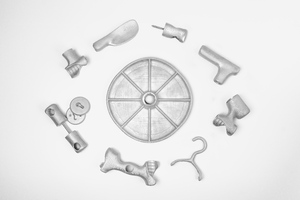
- Forest Souvenirs ist ein modulares System langlebiger Verbindungselemente, das aus ausrangierten Aluminium-Autofelgen gefertigt wird und recyceltes Metall mit von den Nutzer:innen gesammelten, ausgewählten und bearbeiteten Holzästen kombiniert. So entstehen flexible Alltagsobjekte wie Stühle, Lampen, Garderoben oder Kleiderhaken aus lokal gefundenen Materialien. Statt fertiger Produkte bietet das System eine einfache, robuste metallische Schnittstelle, die zur aktiven Aneignung einlädt. Die leimfreien, wiederverwendbaren Verbinder ermöglichen den Aufbau ohne spezielle Werkzeuge oder Vorkenntnisse und machen Materialkreisläufe im Gebrauch unmittelbar erfahrbar.
Forest Souvenirs versteht sich als offenes, zirkuläres Designsystem zwischen industrieller Logik und naturbasiertem Gestalten. Es verlängert nicht nur Materiallebenszyklen, sondern schafft eine hybride Formensprache, die den Archetyp des selbstgebauten Möbels neu interpretiert. Die entstehenden Objekte sind keine fixen Produkte, sondern wandelbare Konfigurationen – ein kontinuierlicher Dialog zwischen Material, Umwelt und Nutzer:innen, die zu Co-Designer:innen werden und eine stärkere emotionale Bindung sowie ein vertieftes Materialbewusstsein entwickeln.
- Forest Souvenirs ist ein modulares System langlebiger Verbindungselemente, das aus ausrangierten Aluminium-Autofelgen gefertigt wird und recyceltes Metall mit von den Nutzer:innen gesammelten, ausgewählten und bearbeiteten Holzästen kombiniert. So entstehen flexible Alltagsobjekte wie Stühle, Lampen, Garderoben oder Kleiderhaken aus lokal gefundenen Materialien. Statt fertiger Produkte bietet das System eine einfache, robuste metallische Schnittstelle, die zur aktiven Aneignung einlädt. Die leimfreien, wiederverwendbaren Verbinder ermöglichen den Aufbau ohne spezielle Werkzeuge oder Vorkenntnisse und machen Materialkreisläufe im Gebrauch unmittelbar erfahrbar.
- Beschreibung (en)
- Forest Souvenirs reimagines our relationship with everyday objects by bridging industrial production and nature-based making. Rooted in humanity's earliest practices of sourcing and shaping materials from the immediate environment, the project responds to the detachment created by global industrialization. Instead of offering finished products, it transforms a discarded aluminum car rim into a modular system of nine durable connectors, each made from 100% recycled material. These elements serve as a simple yet precise interface, enabling users to combine them with wooden branches they collect, select, and shape themselves.
Through this process, found materials become functional objects such as chairs, lamps, coat racks, hangers, or even a walking cane. Assembly requires no adhesives or specialized tools, making the system accessible, reusable, and fully recyclable. The mono-material aluminum ensures a closed material cycle, while the organic variability of wood introduces uniqueness and adaptability. Each object becomes a reflection of its maker and its environment.
Forest Souvenirs places the user at the center of creation. The act of gathering wood becomes an intentional journey—an invitation to slow down, step outside urban routines, and reconnect with nature. Walking replaces driving, making replaces consuming. This participatory approach fosters emotional attachment, material awareness, and a deeper appreciation for resources and processes.
By merging industrial logic with the archetype of self-crafted furniture, the project establishes a hybrid design language that is both contemporary and timeless. The aluminum connector acts as a threshold between two worlds: standardized production and organic growth. In doing so, Forest Souvenirs challenges conventional systems of consumption and proposes an alternative grounded in reuse, care, and engagement.
Ultimately, the project reframes everyday objects as evolving, personal artifacts. It empowers users as co-designers and encourages a shift from passive consumption toward active participation—offering not just objects, but meaningful experiences and a renewed connection to our surroundings.
- Forest Souvenirs reimagines our relationship with everyday objects by bridging industrial production and nature-based making. Rooted in humanity's earliest practices of sourcing and shaping materials from the immediate environment, the project responds to the detachment created by global industrialization. Instead of offering finished products, it transforms a discarded aluminum car rim into a modular system of nine durable connectors, each made from 100% recycled material. These elements serve as a simple yet precise interface, enabling users to combine them with wooden branches they collect, select, and shape themselves.
- Kategorie
- Typ des Projekts/Werks
- Schlagworte
- Datierung
- 30.10.2025
- Mitwirkende
- Material
- Technik/Verfahren/Formate
- Aluminium Sandguss
- Ort: Institution
- Ort
- Lichthof
- Stadt
- Land
- Titel
- Forest Souvenirs
- Projektleiter/in
- Semester
- Studiengang
- Typ der Abschlussarbeit
- Archiv-Signatur
- Importiert am
- 13.03.2026
- Übergeordnete Sets
- 1
- Set enthält
- 0 26
Folded Sheets
Name that can easily go onto 2 lines
Author that can easily go onto 2 lines as well
- Titel
- Folded Sheets
- Autor/in
- Beschreibung (de)
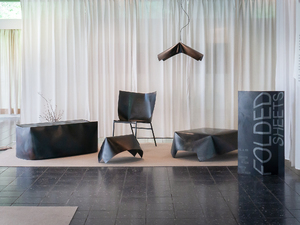
- Folded Sheets untersucht, wie sich Papier-Falttechniken auf Stahlbleche übertragen lassen. Rechteckige Tafeln werden durch gezielte Einschnitte und Faltungen in stabile dreidimensionale Formen gebracht, ohne dass Material verloren geht. Der Prozess des Schwarzbrennens, bei dem Leinöl in die Oberfläche eingebrannt wird, verleiht den Objekten ihre charakteristische schwarze Färbung, schützt sie vor Korrosion und unterstützt die strukturelle Festigkeit.
- Beschreibung (en)
- Folded Sheets explores the possiblities of transferring paper folds into steel sheet furniture. By using cuts and folds on rectangular steel sheets, tensioned rigid shapes without offcuts are created. The objects are further strengthend by blackening the surface with burnt linseed oil.
- Kategorie
- Typ des Projekts/Werks
- Schlagworte
- Datierung
- 2025
- Dank an
- Material
- Technik/Verfahren/Formate
- Falttechnik, Schwarzbrennen mit Leinöl
- Stadt
- Land
- Internetlinks
- Titel
- Folded Sheets
- Projektleiter/in
- Semester
- Studiengang
- Typ der Abschlussarbeit
- Importiert am
- 15.07.2025
- Übergeordnete Sets
- 3
- Set enthält
- 0 18
Flyer/ Poster
Name that can easily go onto 2 lines
Author that can easily go onto 2 lines as well
- Titel
- Flyer/ Poster
- Titel (en)
- 7sqm - inside views
- Autor/in
- Titel
- Flyer/ Poster
- Semester
- Studiengang
- Typ der Abschlussarbeit
- Importiert am
- 26.07.2023
- Übergeordnete Sets
- 1
- Set enthält
- 0 6
Float
Name that can easily go onto 2 lines
Author that can easily go onto 2 lines as well
- Titel
- Float
- Titel (en)
- Float
- Autor/in
- Beschreibung (de)
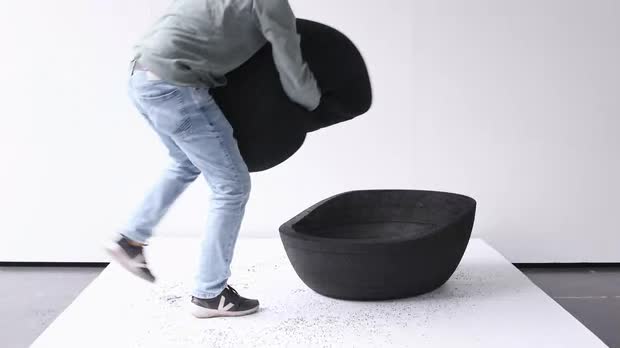
- Der Float Lounger, entworfen von Felix Reif und Finn de Bruyn, hebt den Sitzsack auf das Niveau eines vollwertigen Relaxmöbels.
Sowohl die Basis als auch das Kissen bestehen aus expandiertem Polypropylen. Der Einsatz dieses innovativen Materials, das in der Möbelproduktion nur selten verwendet wird, ermöglicht einen leichten, robusten und zu 100 % recycelbaren Sitz. Das mit expandierten Polypropylen-Perlen gefüllte Kissen passt sich jeder Körperform an, steigert die Entspannung und vermittelt dabei das Gefühl, an einem Sonntagabend in einem Schaumbad zu versinken.
- Der Float Lounger, entworfen von Felix Reif und Finn de Bruyn, hebt den Sitzsack auf das Niveau eines vollwertigen Relaxmöbels.
- Beschreibung (en)
- The Float lounger, designed by Felix Reif and Finn de Bruyn, elevates the bean bag to the level of a full-fledged piece of relaxation furniture.
The base and cushion are made of expanded polypropylene. The use of this innovative material, which is rarely found in furniture production, allows for a lightweight, resilient, and 100% recyclable seat. The cushion, filled with expanded polypropylene beads, adapts to every body shape enhancing relaxation while creating the sensation of sinking into a bubble bath on a Sunday evening.
- The Float lounger, designed by Felix Reif and Finn de Bruyn, elevates the bean bag to the level of a full-fledged piece of relaxation furniture.
- Kategorie
- Typ des Projekts/Werks
- Datierung
- 02.2025
- Mitwirkende
- Dank an
- Material
- Titel
- Float
- Importiert am
- 21.07.2025
- Übergeordnete Sets
- 1
- Set enthält
- 0 7
FLAME SPRAYED
Name that can easily go onto 2 lines
Author that can easily go onto 2 lines as well
- Titel
- FLAME SPRAYED
- Autor/in
- Beschreibung (de)
- FLAME SPRAYED
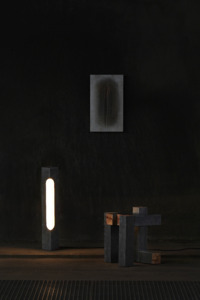
Metall und Holz sind einander nicht fremd. Eisennägel halten seit Jahrhunderten Holzstücke zusammen. Aber was passiert, wenn diese uralte Verbindung aus einer mechanischen zu einer alchemistischen Einheit wird? Die Antwort liegt nicht in der mittelalterlichen Zauberei, sondern in einem industriellen Hightech-Verfahren. Das Metallflammspritzen geht auf Beobachtungen zurück, als Munition mit den Objekten verschmolz, auf die sie abgefeuert wurde, und hat sich zu einer Technik entwickelt, die in spezialisierten Werkstätten vor allem für den Korrosionsschutz von Metallen eingesetzt wird. Bei der Arbeit mit einem Metallsprüher fielen mir die Holzabschnitte auf, die als Träger für die besprühten Objekte verwendet wurden, sie wirkten wie metallisiert.
Der Spiegel, die Lampe und der Hocker der Serie FLAME SPRAYED reflektieren die hybriden Eigenschaften des Materials: Eine spiegelartig polierte Holzmaserung, ein in Stücke geschnittener Balken mit offenen Enden und eine leitfähige Holzoberfläche, die als Schalter fungiert.
- FLAME SPRAYED
- Beschreibung (en)
- FLAME SPRAYED
Metal and wood are no strangers to each other. Iron nails have been holding pieces of wood together for centuries. But what happens when this age-old bond gets transforms from a mechanical to an alchemical unison? The answer doesn't come from medieval wizardry but from a high-tech industrial process. Metal Flame Spraying dates back to observations, when ammunition fused with the objects it was fired at, developed into a technique that sits tucked away in specialised workshops primarily used for metal corrosion protection. Working with a metal-sprayer, I noticed the sacrificial wood offcuts being used as supports for the sprayed objects, and was caught by their unexpected appeal when seemingly metallified.
The mirror, lamp and stool of the series FLAME SPRAYED reflect the hybrid properties of the material: A mirror-like polished wood grain, a beam cut into pieces with open ends and a conductive wooden surface that acts as a switch.
- FLAME SPRAYED
- Kategorie
- Typ des Projekts/Werks
- Schlagworte
- Datierung
- 2023/24
- Material
- Abmessungen
- Mirror 57 x 33 x 3 cm, Stool (open ends) 49 x 40 x 40 cm, Lamp 100 x 12 x 12 cm
- Ort
- ?
- Stadt
- Land
- Bemerkungen
- Mein Projekt FLAME SPRAYED hat im Afterfire Seminar WS22/23 begonnen (Januar 2023 Projekt start) und ist danach zu einem freien Projekt geworden, an dem ich jetzt noch arbeite.
- Titel
- FLAME SPRAYED
- Projektleiter/in
- Studiengang
- Importiert am
- 07.06.2024
- Übergeordnete Sets
- 1
- Set enthält
- 0 6
finding traces and placing connections
Name that can easily go onto 2 lines
Author that can easily go onto 2 lines as well
- Titel
- finding traces and placing connections
- Autor/in
- Beschreibung (de)
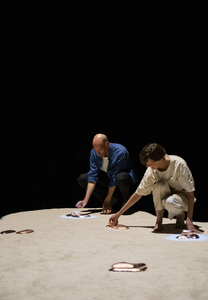
- „finding traces and placing connections“ ist eine interaktive Kunstinstallation und ein persönlicher Liebesbrief an das Material Kupfer. Die Arbeit zelebriert die Funktionalität, Vielseitigkeit und Schönheit des Kupfers.
Besucher*innen können die in den Teppich eingelassenen Kupferflächen durch fünf verkupferte Steine verbinden und kontrollieren dadurch Klang und Licht des Raumes.
Die Komposition für das Werk wurde aus Aufnahmen, die durch Interaktion mit Kupferobjekten entstanden sind, generiert.
Jede aktivierte Fläche leuchtet auf und fügt eine Audiospur zur Komposition hinzu.
Dadurch entsteht nicht nur eine Interaktion mit der Arbeit, sondern auch eine Interaktion zwischen den Besucher*innen. Durch das Zusammenspiel entstehen individuelle Kompositionen und Kombinationen der Audiospuren und immer neue Abwandlungen des Klanges.
„finding traces and placing connections“ lädt ein, zu entdecken, zu hören.
- „finding traces and placing connections“ ist eine interaktive Kunstinstallation und ein persönlicher Liebesbrief an das Material Kupfer. Die Arbeit zelebriert die Funktionalität, Vielseitigkeit und Schönheit des Kupfers.
- Beschreibung (en)
- “finding traces and placing connections” is an interactive art installation and a personal love letter to the material copper. The work celebrates the functionality, versatility and beauty of copper.
Visitors can connect the copper surfaces embedded in the carpet with five copper-plated stones and thereby control the sound and light of the room.
The composition for the work was generated from recordings made through interaction with copper objects.
Each activated surface lights up and adds an audio track to the composition.
This not only creates an interaction with the work, but also an interaction between the visitors. The interplay creates individual compositions and combinations of audio tracks and ever new variations of the sound.
“finding traces and placing connections” invites you to discover and listen.
- “finding traces and placing connections” is an interactive art installation and a personal love letter to the material copper. The work celebrates the functionality, versatility and beauty of copper.
- Kategorie
- Typ des Projekts/Werks
- Schlagworte
- Datierung
- Juni 2024
- Mitwirkende
- Dank an
- Material
- Abmessungen
- 4m x 5m
- Ort: Institution
- Titel
- finding traces and placing connections
- Projektleiter/in
- Semester
- Studiengang
- Typ der Abschlussarbeit
- Importiert am
- 05.11.2024
- Übergeordnete Sets
- 3
- Set enthält
- 0 23
Finale Objektserie
Name that can easily go onto 2 lines
Author that can easily go onto 2 lines as well
- Titel
- Finale Objektserie
- Autor/in
- Beschreibung (de)
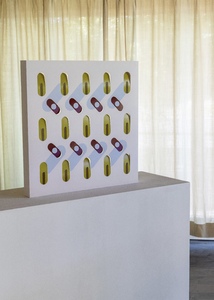
- Eine fotografische Dokumentation der Objektserie "Patterns in Perception" mit den drei Arbeiten "Pattern of Breath", "Weaving Spaces" und "Shifting Shadows". Die Serie zeigt unterschiedliche Wege, wie Muster durch Bewegung, räumliche Struktur und Licht über ihre zweidimensionale Form hinaus erweitert und neu wahrgenommen werden können.
- Beschreibung (en)
- A photographic documentation of the series “Patterns in Perception,” featuring the three works “Pattern of Breath,” “Weaving Spaces,” and “Shifting Shadows.” The series explores different ways in which patterns can be expanded beyond their two-dimensional form and perceived anew through movement, spatial structure, and light.
- Kategorie
- Schlagworte
- Mitwirkende
- Dank an
- Material
- Ort: Institution
- Stadt
- Land
- Titel
- Finale Objektserie
- Projektleiter/in
- Semester
- Studiengang
- Typ der Abschlussarbeit
- Importiert am
- 12.08.2026
- Übergeordnete Sets
- 1
- Set enthält
- 0 20
Filmstills
Name that can easily go onto 2 lines
Author that can easily go onto 2 lines as well
- Titel
- Filmstills
- Titel (en)
- About Fighting the Fear (of the World)
- Autor/in
- Beschreibung (de)
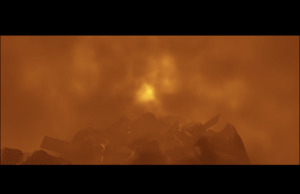
- "Über das Bekämpfen der Angst (vor der Welt)" ist eine spekulative Videoarbeit, die ein Spektrum von Phänomenen rund um Karten, Angst, Krieg, Reisen und den Körper abdeckt, wobei der Schwerpunkt auf der Praxis der Kartierung als Instrument zur Unterdrückung und Kontrolle von Land und Menschen liegt. Das Video versucht, einen Rahmen für das Thema zu schaffen, indem es viele verschiedene Geschichten zu einem Cluster zusammenführt, der vielleicht nicht repräsentativ ist, aber einige Teile des Themas beleuchtet. Ästhetisch und strukturell ist das Video von Rollenspielen, der Pre-Vis-Technik (die in Filmproduktionen verwendet wird) und Found Footage inspiriert. Das Szenario ist in einer fernen Zukunft angesiedelt, in der Klimawandel und Massenaussterben längst ihre Auswirkungen gezeigt haben und die Bestien, die vor der großen Kolonisierung über das Unbekannte wachten, zurückgekehrt sind. In der Rolle der Hauptfigur sucht der Zuschauer, angeleitet von einem Erzähler, nach Überresten der alten Welt, um zu verstehen, warum alles kartiert werden musste.
- Beschreibung (en)
- "About Fighting the Fear (of the World)" is a speculative video work that covers a spectrum of phenomena around maps, fear, war, traveling, and the body, with a focus on the practice of mapping as a tool to oppress and control land and people. The video attempts to frame the issue by bringing together many different stories to create a cluster that may not be representative but illuminates some parts of the issue. Aesthetically and structurally, the video is inspired by role-playing games, pre-vis technique (used in film productions), and found footage. The scenario is set in a distant future in which climate change and mass extinction have long since had an impact and beasts that used to watch over the unknown before the big colonization have returned. As the main character, the viewer searches for remnants of the old world, guided by a narrator, in order to understand why everything had to be mapped.
- Typ des Projekts/Werks
- Schlagworte
- Datierung
- 22.02.2024
- Mitwirkende
- Dank an
- Sprache
- Untertitel (Film)
- Material
- Technik/Verfahren/Formate
- MP4
- Abmessungen
- 2500 x 1080 px
- Dauer
- 26 min
- Ort: Institution
- Ort
- Werkschau und Diplominstallation in Raum 222, Video-Screening im Kino im Blauen Salon
- Stadt
- Land
- Titel
- Filmstills
- Projektleiter/in
- Semester
- Studiengang
- Typ der Abschlussarbeit
- Importiert am
- 28.02.2024
- Übergeordnete Sets
- 1
- Set enthält
- 0 16
Filmstills
Name that can easily go onto 2 lines
Author that can easily go onto 2 lines as well
- Titel
- Filmstills
- Autor/in
- Titel
- Filmstills
- Projektleiter/in
- Semester
- Studiengang
- Typ der Abschlussarbeit
- Importiert am
- 22.10.2025
- Übergeordnete Sets
- 1
- Set enthält
- 0 10
Fernand Léger und Ballet Mécanique
Name that can easily go onto 2 lines
Author that can easily go onto 2 lines as well
- Titel
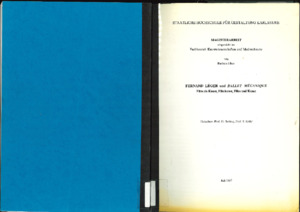
- Fernand Léger und Ballet Mécanique
- Untertitel
- Film als Kunst, Filmkunst, Film und Kunst
- Autor/in
- Beschreibung (de)
- „‚Ballet Mécanique‘ ist zu einer Zeit entstanden, die als Höhepunkt, und immer wieder auch als Wendepunkt in Légers Malerei verstanden wird. Der Film fügt sich nicht nur in seine künstlerische Konzeption ein, sondern hat diese auch zum Thema. ‚Ballet Mécanique‘ ist ein Manifest, nicht nur für seine Kunst, sondern auch für das Kino. Wie bei seinen Literatenfreunden ist Légers intensive Auseinandersetzung mit dem Kino von einer doppelten Intention geprägt, von deren Hinwendung zu dem jungen Medium als potentiellen Mittel, die eigene Kunst zu reformieren, und vom Entwurf eines neuen Konzepts von Film, der seinerseits durch die gestalterische Intervention von Dichtern und Malern zu seinen eigenen Ausdrucksmitteln findet."
- Beschreibung (en)
- “'Ballet Mécanique' was created at a time that is seen as a high point, and also repeatedly as a turning point, in Léger's painting. The film not only fits into his artistic conception, but also has it as its theme. 'Ballet Mécanique' is a manifesto, not only for his art, but also for cinema. As with his literary friends, Léger's intensive engagement with cinema is characterized by a double intention, by their turn to the young medium as a potential means of reforming their own art, and by the design of a new concept of film, which in turn finds its own means of expression through the creative intervention of poets and painters.”
- Kategorie
- Schlagworte
- Datierung
- Juli 1997
- Sprache
- Ort: Institution
- Stadt
- Land
- Titel
- Fernand Léger und Ballet Mécanique
- Untertitel
- Film als Kunst, Filmkunst, Film und Kunst
- Projektleiter/in
- Semester
- Studiengang
- Typ der Abschlussarbeit
- Archiv-Signatur
- HfG HS 1997 02
- Externes Archiv
- Importiert am
- 11.01.2024
- Übergeordnete Sets
- 2
- Set enthält
- 0 2
Fake it till you make it
Name that can easily go onto 2 lines
Author that can easily go onto 2 lines as well
- Titel
- Fake it till you make it
- Titel (en)
- Fake it till you make it
- Autor/in
- Beschreibung (de)
- Stuckmarmor ist eine historische Stucktechnik des 16. und 17. Jahrhunderts aus Italien, die für ihre Marmorimitation bekannt ist. Dabei wurden Gips, Wasser, Pigmente und tierischer Leim gemischt, um marmorähnliche Oberflächen zu schaffen.
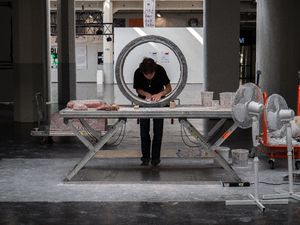
"Fake it till you make it" ist eine Erkundung dieses traditionellen Handwerks. Ziel ist es, die alte Kunst der Marmorimitation wiederzubeleben und ihre ästhetischen Werte in der heutigen Welt zu präsentieren. Darüber hinaus befasst sich das Projekt mit der Frage, was "echt" und was "unecht" ist, und untersucht die Rolle der Inszenierung. Inspiriert von den drei Teilen einer Säule (Basis, Schaft, Kapitell) habe ich drei Objekte entwickelt, die als Einzelstücke im Raum zu finden sind. Alle drei Objekte sind aus Holz gefertigt, zwei davon durch ein Stahlgerüst stabilisiert. Die Unterkonstruktion wurde dann mit Streckmetall verkleidet, verputzt und diente schließlich als Untergrund für den Stuckmarmor. Ein Making-of-Video zeigt die Herstellung des Stuckmarmors. Jedes der Objekte ist auf eine andere Art und Weise verkleidet, um die Konstruktion nicht immer zu verbergen, sondern sie vielmehr zu enthüllen, ganz nach dem Motto "fake it till you make it".
- Stuckmarmor ist eine historische Stucktechnik des 16. und 17. Jahrhunderts aus Italien, die für ihre Marmorimitation bekannt ist. Dabei wurden Gips, Wasser, Pigmente und tierischer Leim gemischt, um marmorähnliche Oberflächen zu schaffen.
- Beschreibung (en)
- Stucco marble is a historic plasterwork technique originating from 16th and 17th-century Italy, celebrated for its imitation of marble. This involved blending gypsum plaster, water, pigments, and animal glue to create marble-like surfaces.
„fake it till you make it“ is an exploration of this traditional craft of stucco marble. The aim is to revive the ancient art of imitating marble and to present its aesthetic values in today‘s world. In addition, the project will address the question of what is „real“ and what is „fake“ and examine the role of staging. Inspired by the three parts of a column (base, shaft, capital) I have developed three objects that can be found as individual pieces in the room. All three objects are made of wood, two of them stabilized by a steel framework. Ribbed expanded metal lath was then stapled onto the wood and plastered, serving as the base for the stucco marble. A making of video shows the production of the stucco marble. Each of the objects is covered in a different way, intended not to always conceal the construction but rather to reveal it, embodying the spirit of „fake it till you make it.“
- Stucco marble is a historic plasterwork technique originating from 16th and 17th-century Italy, celebrated for its imitation of marble. This involved blending gypsum plaster, water, pigments, and animal glue to create marble-like surfaces.
- Kategorie
- Typ des Projekts/Werks
- Schlagworte
- Datierung
- 25.06.2024
- Dank an
- Material
- Ort: Institution
- Ort
- Unter der Lichtbrücke
- Stadt
- Land
- Titel
- Fake it till you make it
- Projektleiter/in
- Semester
- Studiengang
- Typ der Abschlussarbeit
- Importiert am
- 20.12.2025
- Übergeordnete Sets
- 1
- Set enthält
- 0 16
existence.exe
Name that can easily go onto 2 lines
Author that can easily go onto 2 lines as well
- Titel
- existence.exe
- Titel (en)
- existence.exe
- Autor/in
- Beschreibung (de)
- Das Konzept der „Selbstoptimierung“ hat eine zunehmende gesellschaftliche Relevanz erreicht, dementsprechend haben zahlreiche Apps, die sich auf den Körper, die Emotionen und das Selbstmanagement konzentrieren, nach und nach mein Leben durchdrungen.
Ich scheine gleichzeitig in zwei Formen zu existieren: einerseits als organisches Wesen, das aus Wahrnehmung, Widersprüchen und zufälligen Erfahrungen besteht; andererseits als digitales Modell, das von verschiedenen Anwendungen konstruiert wurde.
Allmählich gewöhnte ich mich daran, mich selbst über Zahlen zu messen und zu analysieren – von der Kalorienaufnahme über Schlafzyklen bis hin zu feinen Schwankungen der Herzfrequenz – doch dabei verlor ich zunehmend das Vertrauen in die natürliche Wahrnehmung meines Körpers.
Diese Programme geben vor, „personalisierte Dienste“ zu sein, verwandeln uns letztlich aber in ein einheitliches Datenformat, das sich bequem kategorisieren, vergleichen und extrahieren lässt.
Je mehr Daten es über mich gibt, desto weniger scheine ich mich selbst zu spüren.
- Das Konzept der „Selbstoptimierung“ hat eine zunehmende gesellschaftliche Relevanz erreicht, dementsprechend haben zahlreiche Apps, die sich auf den Körper, die Emotionen und das Selbstmanagement konzentrieren, nach und nach mein Leben durchdrungen.
- Beschreibung (en)
- As “self-optimization” has become a widely accepted life concept, a large number of apps focusing on the body, emotions, and self-management have gradually infiltrated my life.
I seem to exist in two forms at the same time: one, an organic being composed of perception, contradictions, and incidental experiences; the other, a digital model constructed by various applications.
I gradually got used to measuring and examining myself through numbers—from calorie intake to sleep cycles and subtle fluctuations in heart rate—but in doing so, I slowly lost trust in my body’s natural perception.
These programs present themselves as “personalized services,” yet ultimately convert us into a single data format, convenient for categorization, comparison, and extraction.
The more data there is about me, the less I seem to feel myself.
- As “self-optimization” has become a widely accepted life concept, a large number of apps focusing on the body, emotions, and self-management have gradually infiltrated my life.
- Kategorie
- Typ des Projekts/Werks
- Schlagworte
- Datierung
- 14.05.2025
- Mitwirkende
- Dank an
- Dauer
- 2 Tage
- Ort: Institution
- Ort
- Lichthof 4
- Stadt
- Land
- Titel
- existence.exe
- Projektleiter/in
- Semester
- Studiengang
- Typ der Abschlussarbeit
- Importiert am
- 19.05.2025
- Übergeordnete Sets
- 2
- Set enthält
- 0 26