Sets
402 Inhalte
- Seite 1 von 34
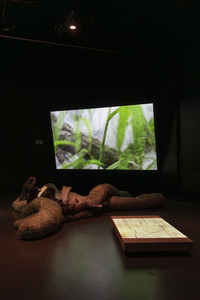
Bilder der Ausstellung
Name that can easily go onto 2 lines
Author that can easily go onto 2 lines as well
- Titel
- Bilder der Ausstellung
- Titel (en)
- Exhibition views
- Autor/in
- Kategorie
- Titel
- Bilder der Ausstellung
- Projektleiter/in
- Semester
- Studiengang
- Typ der Abschlussarbeit
- Importiert am
- 09.07.2025
- Übergeordnete Sets
- 1
- Set enthält
- 0 18
Bildkompost
Name that can easily go onto 2 lines
Author that can easily go onto 2 lines as well
- Titel
- Bildkompost
- Autor/in
- Beschreibung (de)
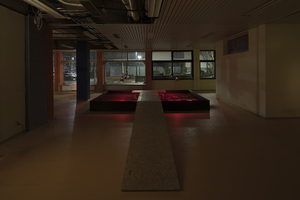
- Über einen Zeitraum von vier Wochen führte Ulf Beck in einer Versuchsanordnung Fotografien aus der Tagespresse einem Kompost mit Kompostwürmern zu. Ausgehend von der Untersuchung, welche Schlagzeilen es auf die erste Seite schaffen sowie deren fotografischer Darstellung, beschäftigte er sich mit dem Nachleben dieser Bilder. Dafür schnitt er jeden Tag die Abbildungen der Titelseite dreier großer Tageszeitungen aus und legte sie in einem Raster auf ein Becken mit Komposterde.
Das fotografische Bild wird als Teil des Medienorganismus durch die Verdauung der Würmer und verschiedener Mikroorganismen innerhalb von ca. 15 Tagen in den Erdorganismus überführt. Der Transformationsprozess ist am Ende nicht mehr sichtbar. Das Bild verliert seine Form und wird zu wertvollem Humus, welcher als Ansammlung von Millionen von Mikrobildern betrachtet werden kann.
- Über einen Zeitraum von vier Wochen führte Ulf Beck in einer Versuchsanordnung Fotografien aus der Tagespresse einem Kompost mit Kompostwürmern zu. Ausgehend von der Untersuchung, welche Schlagzeilen es auf die erste Seite schaffen sowie deren fotografischer Darstellung, beschäftigte er sich mit dem Nachleben dieser Bilder. Dafür schnitt er jeden Tag die Abbildungen der Titelseite dreier großer Tageszeitungen aus und legte sie in einem Raster auf ein Becken mit Komposterde.
- Beschreibung (en)
- Over a period of four weeks, Ulf Beck experimented with composting, using photographs from the daily press with compost worms. Based on the investigation of which headlines make it to the first page and their photographic representation, he deals with the afterlife of these images. For this, every day he cut out the illustrations of the front page of three large daily newspapers and put them in a grid on a basin with compost soil.
The photographic image is transferred as part of the media organism through the digestion of worms and various microorganisms into the earth organism, in around 15 days. The transformation process is no longer visible at the end. The image loses its form and becomes valuable humus, which can be regarded as an accumulation of millions of micro-images.
- Over a period of four weeks, Ulf Beck experimented with composting, using photographs from the daily press with compost worms. Based on the investigation of which headlines make it to the first page and their photographic representation, he deals with the afterlife of these images. For this, every day he cut out the illustrations of the front page of three large daily newspapers and put them in a grid on a basin with compost soil.
- Kategorie
- Typ des Projekts/Werks
- Schlagworte
- Datierung
- 07.12.2017 - 10.12.2017
- Material
- Abmessungen
- variable Maße
- Ort
- Markgrafenstraße 25, 76131 Karlsruhe
- Stadt
- Land
- Beteiligte Institution(en)
- Bemerkungen
- Die Arbeit war - in veränderter Form - am 27. & 28.01.2018 im Rahmen von Plat(t)form 2018, dem zwölften kuratierten internationalen Portfolio-Viewing für junge Künstler aus Europa, im renommierten Fotomuseum Winterthur (CH) zu sehen.
- Titel
- Bildkompost
- Projektleiter/in
- Semester
- Studiengang
- Typ der Abschlussarbeit
- Importiert am
- 05.03.2024
- Übergeordnete Sets
- 2
- Set enthält
- 0 11
Bildstrategien: eine Betrachtung des von Heinrich Hoffmann herausgegebenen Bildbandes "Hitler wie ihn keiner kennt."
Name that can easily go onto 2 lines
Author that can easily go onto 2 lines as well
- Titel
- Bildstrategien: eine Betrachtung des von Heinrich Hoffmann herausgegebenen Bildbandes "Hitler wie ihn keiner kennt."
- Autor/in
- Beschreibung (de)
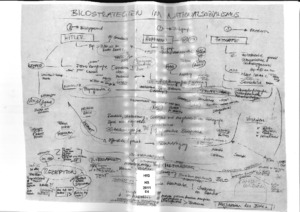
- „Rudolf Herz hat mit seiner Ausstellung im Fotomuseum im Münchner Stadtmuseum und der gleichnamigen Publikation „Hoffmann und Hitler – Fotografie als Medium des Führer-Mythos“ 1994 einen wichtigen Grundstein für die Forschung um Heinrich Hoffmann, Adolf Hitler und die fotografische Führerpropaganda gelegt. Herz führt in seiner Darlegung in gewisser Weise eine Genealogie des „Hitlerbildes“ aus, das durch die Fotografie Hoffmanns seinen Ausdruck fand: Beginnend mit frühen fotografischen Portraitstudien, die von Heinrich Hoffmann als Postkarten vertrieben wurden, eröffnet der Medienforscher Herz in seinem Buch ein Panorama, das nicht nur die Herausformung der Figur Hitler zeigt, sondern auch die darauf folgenden Bildgattungen, in denen Hitler als Mensch vermarktet wurde.”
„Dieser Band ist nicht der erste Versuch, Adolf Hitler als Bildkonstante in die Gesellschaft einzuführen. Allerdings ist es der erste erfolgreiche Bildband, der es schafft, nicht nur von Hitler zu erzählen, sondern ihn mittels geschickt arrangierter Bildfolge zugleich als Führer und als natürlichen Menschen erscheinen zu lassen. In welchem Zeitraum des Jahres 1932 genau der Bildband „Hitler wie ihn keiner kennt“ erschienen ist, kann mittels der heute noch vorliegenden Bände nicht mehr rekonstruiert werden. Es ist vor allem der Rückgriff auf den Kontext, der in der analytischen Betrachtung und Einordnung des Bandes helfen muss. Das Medium Fotografie wird hier ein zweites Mal wirksam, jedoch nicht immanent (narrativ), sondern aus historischer Perspektive: eine Perspektive, die an dieser Stelle trotz propagandistischer Bildkonzeption auch dokumentarisch Auskunft geben kann.”
- „Rudolf Herz hat mit seiner Ausstellung im Fotomuseum im Münchner Stadtmuseum und der gleichnamigen Publikation „Hoffmann und Hitler – Fotografie als Medium des Führer-Mythos“ 1994 einen wichtigen Grundstein für die Forschung um Heinrich Hoffmann, Adolf Hitler und die fotografische Führerpropaganda gelegt. Herz führt in seiner Darlegung in gewisser Weise eine Genealogie des „Hitlerbildes“ aus, das durch die Fotografie Hoffmanns seinen Ausdruck fand: Beginnend mit frühen fotografischen Portraitstudien, die von Heinrich Hoffmann als Postkarten vertrieben wurden, eröffnet der Medienforscher Herz in seinem Buch ein Panorama, das nicht nur die Herausformung der Figur Hitler zeigt, sondern auch die darauf folgenden Bildgattungen, in denen Hitler als Mensch vermarktet wurde.”
- Beschreibung (en)
- ‘With his exhibition at the Fotomuseum in Munich's Stadtmuseum and the publication of the same name ‘Hoffmann and Hitler - Photography as a Medium of the Führer Myth’ in 1994, Rudolf Herz laid an important foundation stone for research into Heinrich Hoffmann, Adolf Hitler and photographic Führer propaganda. In his account, Herz sets out a kind of genealogy of the ‘Hitler image’, which found its expression through Hoffmann's photography: Beginning with early photographic portrait studies that were distributed by Heinrich Hoffmann as postcards, media researcher Herz opens up a panorama in his book that shows not only the moulding of the figure of Hitler, but also the subsequent image genres in which Hitler was marketed as a human being.’
‘This volume is not the first attempt to introduce Adolf Hitler into society as an image constant. However, it is the first successful illustrated book that manages not only to tell the story of Hitler, but also to make him appear both as a leader and as a natural human being by means of a skilfully arranged sequence of images. It is no longer possible to reconstruct exactly when the illustrated book ‘Hitler wie ihn keiner kennt’ was published in 1932 using the volumes still available today. It is above all the recourse to the context that must help in the analytical consideration and categorisation of the volume. The medium of photography becomes effective a second time here, but not immanently (narratively), but from a historical perspective: a perspective that can also provide documentary information at this point, despite the propagandistic image concept.’
- ‘With his exhibition at the Fotomuseum in Munich's Stadtmuseum and the publication of the same name ‘Hoffmann and Hitler - Photography as a Medium of the Führer Myth’ in 1994, Rudolf Herz laid an important foundation stone for research into Heinrich Hoffmann, Adolf Hitler and photographic Führer propaganda. In his account, Herz sets out a kind of genealogy of the ‘Hitler image’, which found its expression through Hoffmann's photography: Beginning with early photographic portrait studies that were distributed by Heinrich Hoffmann as postcards, media researcher Herz opens up a panorama in his book that shows not only the moulding of the figure of Hitler, but also the subsequent image genres in which Hitler was marketed as a human being.’
- Kategorie
- Typ des Projekts/Werks
- Schlagworte
- Datierung
- 01.03.2011
- Sprache
- Ort: Institution
- Titel
- Bildstrategien: eine Betrachtung des von Heinrich Hoffmann herausgegebenen Bildbandes "Hitler wie ihn keiner kennt."
- Projektleiter/in
- Semester
- Studiengang
- Typ der Abschlussarbeit
- Archiv-Signatur
- HfG HS 2011 04
- Externes Archiv
- Importiert am
- 03.04.2025
- Übergeordnete Sets
- 2
- Set enthält
- 0 3
Bio Design Lab
Name that can easily go onto 2 lines
Author that can easily go onto 2 lines as well
- Titel
- Bio Design Lab
- Beschreibung (de)
- Das Bio Design Lab ist ein hybrider und evolutiver Ort, der sowohl im digitalen als auch im physischen Raum existiert. Konzipiert als wachsende Plattform, die die Fachbereiche der Staatlichen Hochschule für Gestaltung miteinander verbindet, wird das Labor als Raum für Präsentation, Bildung und Wissensvermittlung genutzt.
Das Bio Design Lab konzentriert sich auf die lokale Region, ihre Ressourcen und Möglichkeiten und zielt aktiv darauf ab, die Produktionsweisen in Karlsruhe und Süddeutschland umzugestalten und neu zu überdenken. Zur Interaktion mit diesen Themen und Materialien, sowohl im digitalen als auch im physischen Raum, lädt das Labor lokale ExpertInnen und BesucherInnen gleichermaßen ein an gemeinsamen Projekten zu arbeiten.
Spuren dieser Aktivitäten komplementieren ein ständig wachsenden Netzwerk.Das Wissen über diese Ressourcen wird durch die Erstellung eines Know-how-Glossars und einer Materialbibliothek destilliert, durch virtuelle und physische Workshops vermittelt, sowie durch die Präsentationen herausragender Projekte, die sich mit nachhaltigen Materialien befassen, kommuniziert.
Das Labor fungiert als Inkubator und Modell für Zusammenarbeit und Produktion, das im Einklang mit dem aktuellen Wandel der Staatlichen Hochschule für Gestaltung Karlsruhe steht.
- Das Bio Design Lab ist ein hybrider und evolutiver Ort, der sowohl im digitalen als auch im physischen Raum existiert. Konzipiert als wachsende Plattform, die die Fachbereiche der Staatlichen Hochschule für Gestaltung miteinander verbindet, wird das Labor als Raum für Präsentation, Bildung und Wissensvermittlung genutzt.
- Beschreibung (en)
- The Bio Design Lab is a hybrid and evolutive environment that exists in both the digital and physical space. Conceived as a platform for connection and collaboration with local partners and using local resources, the Lab hosts the presentation, education and transmission of knowledge. As students and experts are invited to work on bio-design related projects, visitors can explore and interact with the Lab’s production and lines of inquiry.
Projects within the Lab focus on the local region, its materials and possibilities, and actively aim to reshuffle and rethink modes of production in Karlsruhe and the south of Germany. Topics under exploration include Algae, Soil, Plants, Body, and Agriculture. To interact with these themes and related materials, both within the digital and physical space, the Lab invites local experts and visitors alike.
Within the Bio Design Lab, regional resources are collected by connecting with local partners; they are then distilled through the making of a know-how glossary and a material library, aiming to develop local materials. The knowledge around these resources is disseminated through virtual workshops and multimedia presentations of outstanding projects dealing with sustainable materials. Ultimately, traces of these activities will remain in a constantly growing network, both in the digital platform and in physical displays of existing and future objects.
The Lab works as an incubator and a model for collaboration and production that is in line with the current transformation of the Karlsruhe University of the Arts and Design Karlsruhe. It was first presented to the public in the context of Critical Zones, an exhibition at ZKM | Center for Art and Media.
- The Bio Design Lab is a hybrid and evolutive environment that exists in both the digital and physical space. Conceived as a platform for connection and collaboration with local partners and using local resources, the Lab hosts the presentation, education and transmission of knowledge. As students and experts are invited to work on bio-design related projects, visitors can explore and interact with the Lab’s production and lines of inquiry.
- Schlagworte
- Ort: Institution
- Ort
- Bio Design Lab
- Stadt
- Land
- Internetlinks
- Titel
- Bio Design Lab
- Projektleiter/in
- Importiert am
- 23.10.2023
- Übergeordnete Sets
- 0
- Set enthält
- 5 2
Bio Design Lab
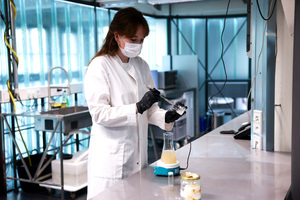
Name that can easily go onto 2 lines
Author that can easily go onto 2 lines as well
- Titel
- Bio Design Lab
- Titel
- Bio Design Lab
- Importiert am
- 10.03.2026
- Übergeordnete Sets
- 1
- Set enthält
- 0 9
Biosensorium
Name that can easily go onto 2 lines
Author that can easily go onto 2 lines as well
- Titel
- Biosensorium
- Titel (en)
- Biosensorium
- Beschreibung (de)
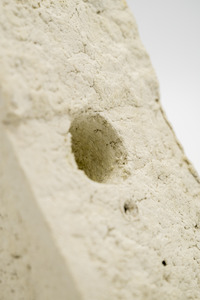
- Wie können wir einen organischen Erfahrungsraum herstellen, der uns auf sinnlicher Ebene berührt? Und was genau bedeutet es, mit nicht-menschlichen Akteuren in einen kollaborativen Gestaltungsprozess zu treten? Im „Bio-Sensorium“ kommen verschiedene lebendige Werkstoffe zu einem raumgreifenden Experiment zusammen. Gemeinsam mit Studierenden wurde so im Bio Design Lab für das Wissenschaftsfestival „Effekte“ (12.–20.06.2021) ein temporärer Pavillon aus
alternativen Baustoffen entwickelt, der ein mögliches Szenario auf materieller wie gestalterischer Ebene erlebbar werden lässt. Eine selbstgefertigte Struktur aus Papercrete (Spezialbeton aus Recyclingpapier) dient dabei auf dem HfG Open Campus als multifunktionales, wachsendes Display-System, in dem weitere biobasierte Materialexperimente ihren Platz finden. Ob Mycelium-Komposit (Baustoff aus Pilzgeflecht), Bioplastik oder Kombucha-Leder – die Samples erlauben mit ihren unterschiedlichen Formen, Haptiken und Gerüchen vielseitige Perspektiven auf biobasierte Werkstoffe im Design-Kontext und geben zugleich Anstoß zum Umdenken bisheriger Produktions-und Konsumprozesse.
Zudem ergänzte der Hands-On Workshop “Ein Haus aus Papier?” die analoge Inszenierung auf dem HfG Gelände im digitalen Raum. So wurden am Sonntag, den 13.06.2021 von 13.00–17.00 Uhr, Material-Hintergründe wie auch die Herstellungsmethode von Papercrete Schritt für Schritt in einem Streaming-Format vermittelt. Ein speziell gefertigtes Home-Kit-Paket mit weiteren Informationen und Materialien wurde den Teilnehmer geschickt, sodass ein gemeinsames Gestalten (über-)regional mit und trotz Abstand möglich war.
Ein Bühnentalk auf dem Kronenplatz (14.06.2021, 20.00 Uhr), bei dem die Macher und Studierenden Einblicke in die Hintergründe des Projekts gaben, vervollständigte das Programm.
Das Bio-Sensorium war im Anschluss an das Effekte Festival der Stadt Karlsruhe im Rahmen der deutsch-französischen Wanderausstellung „Frugalité Créative (03.07–07.08.2021) noch bis Anfang August als Außen-Exponat zu sehen.
- Wie können wir einen organischen Erfahrungsraum herstellen, der uns auf sinnlicher Ebene berührt? Und was genau bedeutet es, mit nicht-menschlichen Akteuren in einen kollaborativen Gestaltungsprozess zu treten? Im „Bio-Sensorium“ kommen verschiedene lebendige Werkstoffe zu einem raumgreifenden Experiment zusammen. Gemeinsam mit Studierenden wurde so im Bio Design Lab für das Wissenschaftsfestival „Effekte“ (12.–20.06.2021) ein temporärer Pavillon aus
- Beschreibung (en)
- How can we create an organic experiential space that touches us on a sensory level? And what exactly does it mean to enter into a collaborative design process with non-human actors? In the "Bio-Sensorium", various living materials come together in a space-filling experiment. Together with students, a temporary pavilion was developed in the Bio Design Lab for the "Effekte" science festival (June 12-20, 2021) using alternative building materials, which allows us to expierience a possible scenario on a material and design level. In this context, a self-made structure of Papercrete (special concrete made of recycled paper) serves as a multifunctional, growing display system on the HfG Open Campus, in which further bio-based material experiments find their place. Whether mycelium composite (building material made of mushroom mesh), bioplastics or kombucha leather - with their different shapes, haptics and smells, the samples allow versatile perspectives on bio-based materials in the design context and at the same time provide impulses for rethinking previous production and consumption processes.
In addition, the hands-on workshop "A house made of paper?" complemented the analog staging on the HfG grounds in the digital space. Thus, on Sunday, June 13, 2021 from 13:00-17:00, material backgrounds as well as the manufacturing method of Papercrete were taught step by step in a streaming format. A specially made Home-Kit with further information and materials was sent to the participants, so that a joint design (over-)regionally with and despite distance was possible.
A stage talk on the Kronenplatz (14.06.2021, 20.00), where the makers and students gave insights into the background of the project, completed the program.
The Bio-Sensorium was on display as an outdoor exhibit following the Effekte Festival of the City of Karlsruhe as part of the German-French traveling exhibition "Frugalité Créative (03.07-07.08.2021) until the beginning of August.
- How can we create an organic experiential space that touches us on a sensory level? And what exactly does it mean to enter into a collaborative design process with non-human actors? In the "Bio-Sensorium", various living materials come together in a space-filling experiment. Together with students, a temporary pavilion was developed in the Bio Design Lab for the "Effekte" science festival (June 12-20, 2021) using alternative building materials, which allows us to expierience a possible scenario on a material and design level. In this context, a self-made structure of Papercrete (special concrete made of recycled paper) serves as a multifunctional, growing display system on the HfG Open Campus, in which further bio-based material experiments find their place. Whether mycelium composite (building material made of mushroom mesh), bioplastics or kombucha leather - with their different shapes, haptics and smells, the samples allow versatile perspectives on bio-based materials in the design context and at the same time provide impulses for rethinking previous production and consumption processes.
- Typ des Projekts/Werks
- Schlagworte
- Mitwirkende
- Material
- Ort: Institution
- Ort
- HfG Open Campus
- Stadt
- Land
- Beteiligte Institution(en)
- Titel
- Biosensorium
- Projektleiter/in
- Semester
- Lehrveranstaltung
- Importiert am
- 26.10.2023
- Übergeordnete Sets
- 1
- Set enthält
- 0 43
Blast or Bless 2024/2025
Name that can easily go onto 2 lines
Author that can easily go onto 2 lines as well
- Titel
- Blast or Bless 2024/2025
- Titel (en)
- Blast or Bless 2024/2025
- Untertitel
- Eine Einführung in den Siebdruck
- Untertitel des Projekts/Werks (en)
- An introduction into screen printing
- Beschreibung (de)
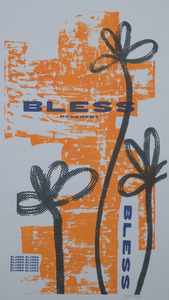
- Inspiriert vom Manifest des Vortizismus "Blast!" kreieren Studierende ein experimentelles, grafisches Poster als Teil des Siebdruck-Grundlagenkurses an der HfG. Während des viertägigen Kurses, der die praktischen und theoretischen Grundlagen der Druckvorstufe und des Siebdruckes an die Studierenden vermittelt, lernen Studierende über die historische und kunstgeschichtliche Entwicklung des Druckverfahrens und wie sie mit Ölkreide und Papierschablonen erste, experimentelle Siebe mit kleinem Budget herstellen können. Des Weiteren erfahren Studierende, wie sie ihre Motive und die Siebe vorbereiten, um sie fotografisch zu entwickeln, wie sie mit wasserbasierten Farben umgehen, die Drucktische einrichten, um die unterschiedlichen Ebenen ihres mehrfarbigen Posters zu registrieren und wie sie die Siebdruckrahmen im Anschluss entschichten.
- Beschreibung (en)
- Inspired by the "Blast!" Manifestos of Vorticism, students create an experimental, graphic poster as part of the screen printing foundation course at the HfG. During the four-day course, which teaches students the practical and theoretical basics of prepress and screen printing, students learn about the historical and art-historical development of the printing process and how they can use oil pastels and paper stencils to produce their first experimental screens on a small budget. Furthermore, students learn how to prepare their motifs and the screens in order to develop them photographically, how to deal with water-based inks, how to set up the printing tables to register the different levels of their multicoloured poster and how to decoat the screen printing frame.
- Kategorie
- Typ des Projekts/Werks
- Schlagworte
- Datierung
- 01.10.2024 - 01.08.2025
- Mitwirkende
- Titel
- Blast or Bless 2024/2025
- Untertitel
- Eine Einführung in den Siebdruck
- Projektleiter/in
- Semester
- Studiengang
- Importiert am
- 15.07.2025
- Übergeordnete Sets
- 1
- Set enthält
- 0 31
Blau
Name that can easily go onto 2 lines
Author that can easily go onto 2 lines as well
- Titel
- Blau
- Titel
- Blau
- Importiert am
- 13.11.2025
- Übergeordnete Sets
- 1
- Set enthält
- 0 7
block to blob
Name that can easily go onto 2 lines
Author that can easily go onto 2 lines as well
- Titel
- block to blob
- Titel (en)
- block to blob
- Untertitel
- tracing back materiality
- Untertitel des Projekts/Werks (en)
- tracing back materiality
- Autor/in
- Beschreibung (de)
- Dieses Diplomprojekt dokumentiert den Materialstrom von synthetischen Kunststoffen durch einen rückwärtsgerichteten chronologischen Ansatz. Es kombiniert Feldforschung, visuelle Dokumentation und Materialexperimente, um die Reise von Kunststoffen von ihren Endprodukten zurück zu ihrem Ursprung im Erdöl nachzuvollziehen.
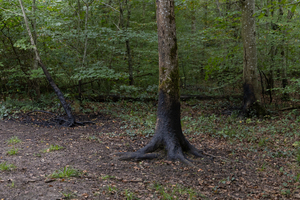
"Block to Blob" umfasst Besuche an verschiedenen Orten der Produktionskette, wie etwa Produktionsanlagen, Ölraffinerien, Pipelines und Förderstätten und endet in einem Waldökosystem, wo Rohöl auf natürliche Weise an die Erdoberfläche tritt. Diese Erfahrungen werden in einer Forschungspublikation zusammengestellt, die dieser rückwärtsgerichteten Erzählweise folgt.
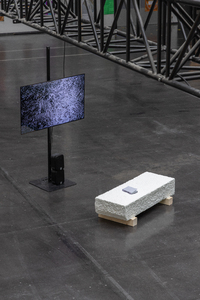
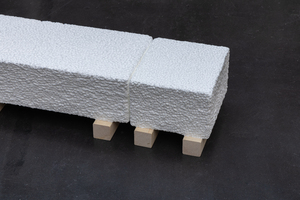
Eine Videoinstallation dokumentiert die besuchten Orte und liefert einen visuellen Kontext zu den industriellen Prozessen, der verborgenen Infrastruktur und der natürlichen Substanz im Wald. Zusätzlich verankert eine Reihe von Objekten, die aus mit Erdöl beschichtetem Holz und Polystyrol gefertigt sind, das Projekt in greifbaren Materialien.
- Dieses Diplomprojekt dokumentiert den Materialstrom von synthetischen Kunststoffen durch einen rückwärtsgerichteten chronologischen Ansatz. Es kombiniert Feldforschung, visuelle Dokumentation und Materialexperimente, um die Reise von Kunststoffen von ihren Endprodukten zurück zu ihrem Ursprung im Erdöl nachzuvollziehen.
- Beschreibung (en)
- This diploma project details the material stream of synthetic plastics through a reverse chronological approach. It combines field research, visual documentation, and material experimentation to retrace the journey of plastics from their final products back to their origins in petroleum.
‘block to blob’ includes visits to various sites in the production chain, such as manufacturing facilities, oil refineries, pipelines, and extraction sites, concluding in a forest ecosystem, where crude oil naturally seeps to the earth's surface. These experiences are compiled into a research publication that follows this reverse narrative.
A video installation documents the visited locations, providing visual context for the industrial processes, hidden infrastructure and the natural substance in the forest. Additionally, a series of objects made from petroleum-coated wood and polystyrene grounds the project in tangible materials.
- This diploma project details the material stream of synthetic plastics through a reverse chronological approach. It combines field research, visual documentation, and material experimentation to retrace the journey of plastics from their final products back to their origins in petroleum.
- Kategorie
- Typ des Projekts/Werks
- Schlagworte
- Datierung
- 2024
- Sprache
- Untertitel (Film)
- Material
- Technik/Verfahren/Formate
- Pine wood coated with petroleum, Wood soaked in gasoline and pressed/bonded with polystyrene
- Abmessungen
- L x B x H mm, Petroleum-coated wooden objects: Bench: 800 x 200 x 450, 2x T-Stool: 350 x 200 x 450, Stool (3-legged): 450 x 270 x 450, Stool (wide): 600 x 450 x 450, TV stand: - Polystyrene Objekts: Counter: 500 x 370 x 1100, 2x Bench1: 1000 x 570 x 400, Bench2: 1300 x 570 x 350, Stool: 500 x 370 x 570
- Dauer
- 1.: upstream 0 - oil seeping naturally to the surface - Alsace - 2:55min, 2.: upstream 1 - prospect drilling for oil reservoirs - Weingarten - 2:17min, 3.: upstream 2 - horse head pumps extracting oil - Landau - 3:50min, 4.: midstream - transalpine pipeline - Triest-Karlsruhe - 10:40min, 5.: downstream 1 - germany biggest oil refinery - Karlsruhe - 3:13min, 6.: downstream 2 - world biggest chemical plant - Ludwigshafen - 2:19min
- Ort: Institution
- Ort
- Lichthof 3
- Stadt
- Land
- Titel
- block to blob
- Untertitel
- tracing back materiality
- Projektleiter/in
- Semester
- Studiengang
- Typ der Abschlussarbeit
- Lehrveranstaltung
- Importiert am
- 03.11.2024
- Übergeordnete Sets
- 3
- Set enthält
- 4 1
block to blob - exhibition
Name that can easily go onto 2 lines
Author that can easily go onto 2 lines as well
- Titel
- block to blob - exhibition
- Titel (en)
- block to blob - exhibition
- Autor/in
- Kategorie
- Titel
- block to blob - exhibition
- Projektleiter/in
- Studiengang
- Typ der Abschlussarbeit
- Importiert am
- 19.11.2024
- Übergeordnete Sets
- 1
- Set enthält
- 0 7
block to blob - objects
Name that can easily go onto 2 lines
Author that can easily go onto 2 lines as well
- Titel
- block to blob - objects
- Titel (en)
- block to blob - objects
- Autor/in
- Kategorie
- Titel
- block to blob - objects
- Projektleiter/in
- Studiengang
- Typ der Abschlussarbeit
- Importiert am
- 19.11.2024
- Übergeordnete Sets
- 1
- Set enthält
- 0 4
block to blob - publication
Name that can easily go onto 2 lines
Author that can easily go onto 2 lines as well
- Titel
- block to blob - publication
- Titel (en)
- block to blob - publication
- Autor/in
- Kategorie
- Titel
- block to blob - publication
- Projektleiter/in
- Studiengang
- Typ der Abschlussarbeit
- Importiert am
- 19.11.2024
- Übergeordnete Sets
- 1
- Set enthält
- 0 2