Sets
444 Inhalte
- Seite 1 von 37
Path Tiles
Name that can easily go onto 2 lines
Author that can easily go onto 2 lines as well
- Titel
- Path Tiles
- Titel (en)
- Path Tiles
- Untertitel
- Knitting Coordinates into Patterns
- Untertitel des Projekts/Werks (en)
- Knitting Coordinates into Patterns
- Autor/in
- Beschreibung (de)
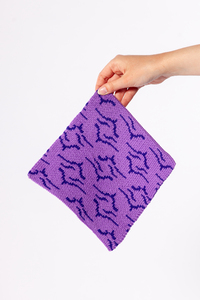
- Unsere Bewegungen können wie eine Performance begriffen werden, wie etwas Flüchtiges, das nur im Moment existiert und nach der Vollendung weder sichtbar noch fassbar ist. Nur die Erinnerungen an das Erlebte bleiben als Spuren der Bewegung in unserem Geist erhalten. Path Tiles nutzt GPS-Daten, um diese besonderen Momente individueller Erfahrung einzufangen und in Form von Mustern in die physische Welt des sicht- und tastbaren Textils zu übertragen. Es entsteht eine tiefe Bindung zwischen Mensch und Objekt.
Jedes Muster steht für eine Reise, für eine Erfahrung. Dabei ist es egal, ob es sich um einen Spaziergang in der Natur, eine Reise in ein fernes Land oder einen wiederkehrenden Weg des Alltags handelt. Die daraus entstehenden Muster erzählen von den Gefühlen und Begegnungen, von dem Gesehenen und dem Erlebten und erinnern uns an das, was uns ausmacht.
Mit der Path Tiles Website habe ich ein Werkzeug entwickelt, um diese Reisen in Form von GPS-Daten in strickbare Muster zu verwandeln. Ich habe die Website so gestaltet, dass die Ästhetik des Musters durch zusätzliche Verschiebung, Verzerrung und Spiegelung individualisiert werden kann. Dies stellt außerdem sicher, dass Menschen mit der gleichen Strecke trotzdem persönliche Muster erstellen können. Das entstandene Muster wird dann in Form eines gestricktes Objekts zum Leben erweckt und wird zur materialisierten persönlichen Erfahrung. Durch die Einbeziehung des Nutzers in den Gestaltungsprozess entsteht eine weitere Ebene der Bindung zwischen Mensch und Objekt.
Für das Diplom habe ich exemplarisch fünf Objekte gestaltet, die mit diesen Mustern personalisiert werden können. Das Design der Objekte konzentriert sich darauf, das Reisen oder das „unterwegs sein“ in verschiedenen Situationen zu erleichtern. In diesem Prozess ist ein Schal mit Taschen, ein Umhang, der gleichzeitig als Decke genutzt werden kann, eine Tasche, die zugleich ein Kissen ist, eine Balaklava mit Ohrenschützern und ein Nackenkissen mit Rückenstütze und Taschen in den verlängerten Seitenteilen entstanden.
Für die finale Herstellung der Objekte haben fünf Personen die GPS-Daten verschiedener Routen verwendet um ihre persönlichen Muster auf der Path Tiles Website zu erstellen. Jedes der Objekte wurde zu einer Person, einer Reise, einem Muster zugeordnet und entsprechend produziert. Die fertigen Objekte sind die materialisierten Erfahrungen und Erinnerungen dieser Menschen.
Begleitend zu dieser Arbeit habe ich mit der Sammlung von Reisen in Form von Geschichten und Mustern begonnen. Hierbei ist ein kleines Booklet entstanden, das die Beiträge von 19 Menschen beinhaltet. Sie alle haben eine Erinnerung von einer Reise in Form von Text und Muster mit mir geteilt.
- Unsere Bewegungen können wie eine Performance begriffen werden, wie etwas Flüchtiges, das nur im Moment existiert und nach der Vollendung weder sichtbar noch fassbar ist. Nur die Erinnerungen an das Erlebte bleiben als Spuren der Bewegung in unserem Geist erhalten. Path Tiles nutzt GPS-Daten, um diese besonderen Momente individueller Erfahrung einzufangen und in Form von Mustern in die physische Welt des sicht- und tastbaren Textils zu übertragen. Es entsteht eine tiefe Bindung zwischen Mensch und Objekt.
- Beschreibung (en)
- Movement is like a performance, something momentous becoming invisible and untouchable as soon as it is complete. Only the memories of the experience remain as traces of the movement in our minds. Path Tiles captures these valuable moments of individual experiences and transfers them into the physical world of visible and tactile textiles, creating a deep relationship between person and object.
Each pattern represents a journey, an experience. It doesn't matter whether it's a walk in nature, a trip to a distant country, or a repeating path in everyday life. The resulting patterns tell of the emotions evoked by landscapes, the lessons learned along the way and the power of the journey to shape our lives.
With the Path Tiles website, I have developed a tool to transform these journeys into knitable patterns using GPS data. I designed the website so that the aesthetics of the pattern can be individualized through shifting, distorting, and mirroring. This ensures that even people with the same route can create personal patterns. The resulting pattern is then brought to life in the form of a knitted object, becoming a materialized personal experience. By involving the user in the design process, an additional layer of connection between person and object is created.
For my diploma, I have designed five objects that can be personalized with these patterns. The design of these objects focuses on making travelling or being "on the go" more comfortable. This process has resulted in the creation of a scarf with pockets, a cape that can also be used as a blanket, a bag that doubles as a pillow, a balaclava with ear cushions, and a neck pillow with back support and pockets in the extended side parts.
For the final production of the objects, five people used the GPS data of different routes to create their personal patterns on the Path Tiles website. Each of the objects was assigned to a person, a journey, a pattern, and then produced accordingly. The finished objects are the materialized experiences and memories of these people.
Accompanying this work, I have started collecting journeys in the form of stories and patterns. This resulted in a small booklet that includes contributions from 19 people. They all shared a memory of a journey in the form of text and pattern with me.
- Movement is like a performance, something momentous becoming invisible and untouchable as soon as it is complete. Only the memories of the experience remain as traces of the movement in our minds. Path Tiles captures these valuable moments of individual experiences and transfers them into the physical world of visible and tactile textiles, creating a deep relationship between person and object.
- Kategorie
- Typ des Projekts/Werks
- Schlagworte
- Datierung
- April 2024
- Mitwirkende
- Dank an
- Material
- Ort: Institution
- Internetlinks
- Bemerkungen
- Die Diplomarbeit wurde von Prof. Wieki Somers und Prof. Céline Condorelli betreut.
- Titel
- Path Tiles
- Untertitel
- Knitting Coordinates into Patterns
- Projektleiter/in
- Semester
- Studiengang
- Typ der Abschlussarbeit
- Importiert am
- 28.05.2024
- Übergeordnete Sets
- 4
- Set enthält
- 0 42
Patterns in Perception
Name that can easily go onto 2 lines
Author that can easily go onto 2 lines as well
- Titel
- Patterns in Perception
- Titel (en)
- Patterns in Perception
- Autor/in
- Beschreibung (de)
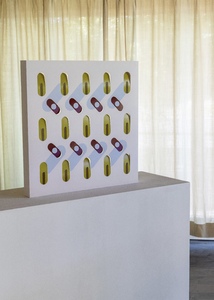
- "Patterns in Perception" untersucht, wie sich Muster über die Fläche hinaus zu lebendigen räumlichen Strukturen entwickeln können. Ausgangspunkt ist ein offener experimenteller Prozess, der erforscht, wie Material, Bewegung und Licht gemusterte Oberflächen aktivieren und verändern können. Durch Techniken wie Biegen, Falten, Ineinanderstecken und Verschieben entwickeln sich zweidimensionale Muster nach und nach zu räumlichen Formen und eröffnen durch das Experimentieren neue gestalterische Möglichkeiten.
Aus diesen Untersuchungen entstand schließlich eine Serie aus drei Objekten, die jeweils eine andere Entdeckung aus dem experimentellen Prozess aufgreifen. "Pattern of Breath" nutzt Bewegung, um ein Muster in eine responsive Atemerfahrung zu übersetzen. "Weaving Spaces" überträgt den manuellen Prozess des Biegens und Ineinandersteckens in einen architektonischen Maßstab und schafft dadurch neue räumliche Beziehungen. "Shifting Shadows" nutzt die Bewegung einzelner Elemente, um Licht gezielt zu lenken und durch wechselnde Reflexionen und Schatten die Wahrnehmung des umgebenden Raumes kontinuierlich zu verändern.
Gemeinsam zeigen die drei Objekte unterschiedliche Möglichkeiten, Muster über ihre vertraute zweidimensionale Form hinaus zu aktivieren, wahrzunehmen und zu erleben.
- "Patterns in Perception" untersucht, wie sich Muster über die Fläche hinaus zu lebendigen räumlichen Strukturen entwickeln können. Ausgangspunkt ist ein offener experimenteller Prozess, der erforscht, wie Material, Bewegung und Licht gemusterte Oberflächen aktivieren und verändern können. Durch Techniken wie Biegen, Falten, Ineinanderstecken und Verschieben entwickeln sich zweidimensionale Muster nach und nach zu räumlichen Formen und eröffnen durch das Experimentieren neue gestalterische Möglichkeiten.
- Beschreibung (en)
- "Patterns in Perception" explores how patterns can move beyond the surface to become living spatial structures. Beginning with an open process of experimentation, the project investigates how material, movement, and light can activate and transform patterned surfaces. Through techniques such as bending, folding, interlocking, and shifting, two-dimensional patterns gradually evolve into spatial forms, revealing new possibilities through the process of making.
These explorations ultimately unfold into a series of three objects, each translating a different discovery from the experimental process. "Pattern of Breath" uses movement to transform a pattern into a responsive breathing experience. "Weaving Spaces" brings the hands-on process of bending and interlocking into an architectural scale, shaping new spatial relationships. "Shifting Shadows" uses the movement of individual elements to redirect light, creating changing reflections and shadows that continuously reshape the perception of the surrounding space.
Together, the three objects reflect different ways in which patterns can be activated, experienced, and perceived beyond their familiar two-dimensional form.
- "Patterns in Perception" explores how patterns can move beyond the surface to become living spatial structures. Beginning with an open process of experimentation, the project investigates how material, movement, and light can activate and transform patterned surfaces. Through techniques such as bending, folding, interlocking, and shifting, two-dimensional patterns gradually evolve into spatial forms, revealing new possibilities through the process of making.
- Kategorie
- Schlagworte
- Mitwirkende
- Material
- Technik/Verfahren/Formate
- Schneideplotten, Materialexperimente, Arbeiten mit Formgedächtnislegierungen, kinetische und responsive Bewegung, manuelle und sensorbasierte Aktivierung
- Titel
- Patterns in Perception
- Projektleiter/in
- Semester
- Studiengang
- Typ der Abschlussarbeit
- Importiert am
- 12.08.2026
- Übergeordnete Sets
- 2
- Set enthält
- 2 4
PCO 1810
Name that can easily go onto 2 lines
Author that can easily go onto 2 lines as well
- Titel
- PCO 1810
- Titel (en)
- PCO 1810
- Autor/in
- Beschreibung (de)
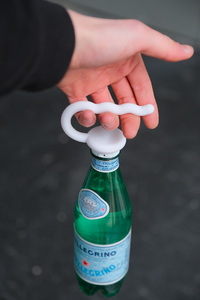
- Der neu geformte Flaschendeckel fordert auf, eine Plastikflasche zu adoptieren und sie zur persönlichen Begleiterin im Alltag zu machen.
Seine Form ermöglicht es, die Flasche auf viele Weisen körpernah zu tragen und in die Umgebung einzubinden.
So wird die Flasche zur persönlichen, was dazu einlädt sie nach dem Leeren nicht wegzuwerfen, sondern immer wieder aufzufüllen.
Die ständige Verfügbarkeit von Wasser fördert ganz nebenbei einen erhöhten Wasserkonsum.
Dank des standardisierten PCO-Gewindes ist bei Bedarf ein flexibler Wechsel zu einer neuen Flasche jederzeit möglich.
- Der neu geformte Flaschendeckel fordert auf, eine Plastikflasche zu adoptieren und sie zur persönlichen Begleiterin im Alltag zu machen.
- Beschreibung (en)
- The newly shaped bottle lid invites you to adopt a plastic bottle and make it your personal companion in everyday life.
It's shape makes it possible to carry the bottle close to the body and integrate it into your environment creatively.
In this way, the bottle becomes personal, inviting you not to throw it away after emptying it, but to refill it again and again.
The constant availability of water also encourages increased water consumption.
Thanks to the standardized PCO thread, a flexible change to a new bottle is possible at any time if required.
- The newly shaped bottle lid invites you to adopt a plastic bottle and make it your personal companion in everyday life.
- Typ des Projekts/Werks
- Schlagworte
- Datierung
- 18.02.2025
- Titel
- PCO 1810
- Projektleiter/in
- Studiengang
- Importiert am
- 17.07.2025
- Übergeordnete Sets
- 1
- Set enthält
- 0 11
Pedagogies of digital archives [Workshop on New Media Art Archiving]
![Bild: Pedagogies of digital archives [Workshop on New Media Art Archiving]](/media/1a9ef36b-b6b5-4f35-ad12-d17bb391e355.jpg "Pedagogies of digital archives [Workshop on New Media Art Archiving]")
Name that can easily go onto 2 lines
Author that can easily go onto 2 lines as well
- Titel
- Pedagogies of digital archives [Workshop on New Media Art Archiving]
- Titel
- Pedagogies of digital archives [Workshop on New Media Art Archiving]
- Importiert am
- 23.04.2025
- Übergeordnete Sets
- 0
- Set enthält
- 0 2
Performances im öffentlichen Raum
Name that can easily go onto 2 lines
Author that can easily go onto 2 lines as well
- Titel
- Performances im öffentlichen Raum
- Autor/in
- Titel
- Performances im öffentlichen Raum
- Studiengang
- Importiert am
- 08.07.2025
- Übergeordnete Sets
- 1
- Set enthält
- 0 3
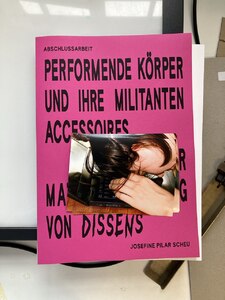
Performende Körper und ihre militanten Accessoires
Name that can easily go onto 2 lines
Author that can easily go onto 2 lines as well
- Titel
- Performende Körper und ihre militanten Accessoires
- Untertitel
- Zur Materialisierung von Dissens
- Autor/in
- Beschreibung (de)
- Ausgehend von der Annahme, dass Protest nicht nur durch Sprache oder Körper, sondern vor allem durch Gegenstände artikuliert wird, richtet die Magistraarbeit den Fokus auf die materiell-symbolischen Politiken feministischer Protestperformances. Dafür schlage ich das Konzept des "militanten Accessoires" als Analysekategorie für feministische Performancepraktiken vor. Das Accessoire, das oft mit weiblich* gelesenen Körpern assoziiert ist, wird als scheinbar harmloses, alltägliches und schmückendes Modeelement in einen handlungsorientierten, widerständigen Gegenstand umgedeutet und neu kontextualisiert. Anhand von zwei aktivistisch-performativen Aktionen der Women’s Social and Political Union (Window Smashing Campaign, 1912 ) und Pussy Riot (Punk Prayer, 2012) werden zwei Gegenstände, ein 19cm großer Toffeehammer sowie eine neonbunte Sturmhaube, als "militante Accessoires" identifiziert. In ihrem wechselwirkenden Verhältnis mit Körpern ermöglicht das "militante Accessoire" diesen, politische und emanzipatorische Potenziale zu entfalten und Orte in Räume des Protests zu transformieren.
Dieser Analyse folgend übertrage ich die Bedingungen des "militanten Accessoires" im letzten Kapitel auf künstlerische Protestperformances. Dabei betrachte ich unter anderem künstlerische Produktionen von Selma Selman (You Have No Idea), Pipilotti Rist (Ever Is Over All) und Milica Tomić (One Day, Instead of One Night, a Burst of Machine-Gun Fire Will Flash, if Light Cannot Come Otherwise) und frage, inwiefern "militante Accessoires" nicht nur in kollektiven Protestperformances, sondern auch für einzelne Körper in feministischen, künstlerischen Performances eine Möglichkeit des Ausdrucks von Protest bieten.
Die Magistraarbeit rückt die kompliz*innenhafte Beziehung zwischen Kunst und Protest in den Fokus und zeigt, dass "militante Accessoires" nicht nur symbolische Bedeutungsträger*innen sind, sondern in ihrer relationalen und körperlich-performativen Dimension als Mittel des Widerstands agieren. Im Zusammenspiel mit den handelnden Körpern treten sie als Katalysator*innen und Vermittler*innen auf und entfalten eine doppelte Rolle als materiell-semiotische Akteur*innen.
- Ausgehend von der Annahme, dass Protest nicht nur durch Sprache oder Körper, sondern vor allem durch Gegenstände artikuliert wird, richtet die Magistraarbeit den Fokus auf die materiell-symbolischen Politiken feministischer Protestperformances. Dafür schlage ich das Konzept des "militanten Accessoires" als Analysekategorie für feministische Performancepraktiken vor. Das Accessoire, das oft mit weiblich* gelesenen Körpern assoziiert ist, wird als scheinbar harmloses, alltägliches und schmückendes Modeelement in einen handlungsorientierten, widerständigen Gegenstand umgedeutet und neu kontextualisiert. Anhand von zwei aktivistisch-performativen Aktionen der Women’s Social and Political Union (Window Smashing Campaign, 1912 ) und Pussy Riot (Punk Prayer, 2012) werden zwei Gegenstände, ein 19cm großer Toffeehammer sowie eine neonbunte Sturmhaube, als "militante Accessoires" identifiziert. In ihrem wechselwirkenden Verhältnis mit Körpern ermöglicht das "militante Accessoire" diesen, politische und emanzipatorische Potenziale zu entfalten und Orte in Räume des Protests zu transformieren.
- Beschreibung (en)
- Based on the premise that protest is articulated not only through language or the body, but above all through objects, the magistra's thesis focuses on the material-symbolic politics of feminist protest performances.
In this regard, I propose the concept of the "militant accessory" as an analytical category for feminist performance practices. The accessory as an everyday, decorative fashion element, which is often associated with bodies read as female*, is reinterpreted and transformed into an action-oriented, resistant object.
In consideration of two activist-performative actions by the Women's Social and Political Union (Window Smashing Campaign, 1912) and Pussy Riot (Punk Prayer, 2012), two objects, a 19cm toffee hammer and a neon-coloured balaclava, are identified as "militant accessories". In their reciprocal relationship with bodies, "militant accessories" enable them to develop political and emancipatory potential and transform places into spaces of protest. Building on this analysis, I apply the conditions of the "militant accessory" to artistic protest performances. To this end, I focus on artistic productions by artists such as Selma Selman (You Have No Idea), Pipilotti Rist (Ever Is Over All), and Milica Tomić (One Day, Instead of One Night, a Burst of Machine-Gun Fire Will Flash, if Light Cannot Come Otherwise), asking to what extent "militant accessories" act as tools for expressing dissent in collective protest performances and individual bodies within feminist artistic practices.
- Based on the premise that protest is articulated not only through language or the body, but above all through objects, the magistra's thesis focuses on the material-symbolic politics of feminist protest performances.
- Kategorie
- Schlagworte
- Datierung
- 01.07.2024
- Dank an
- Sprache
- Titel
- Performende Körper und ihre militanten Accessoires
- Untertitel
- Zur Materialisierung von Dissens
- Projektleiter/in
- Semester
- Studiengang
- Typ der Abschlussarbeit
- Importiert am
- 21.06.2025
- Übergeordnete Sets
- 2
- Set enthält
- 1 3
Performing Difference
- Titel
- Performing Difference
- Beschreibung (en)
- A score is not just a set of instructions; it creates a collective body that breathes and moves as one. Through embodiment, the score is transformed into a dynamic interplay of movement, sound, and presence, a merging of the physical and the ephemeral.
We become not just individuals but one body. Individuality is blurred, and there is no longer any sense of who is who. Boundaries disappear, and physicality flows freely. Differences are acknowledged, and points of connection.
In this shared experience, the present moment is crucial. We are fully present in the score, not merely seen. Each movement represents the present and captures the essence of the momentary and the eternal.
The collective body expresses the power of unity in diversity. We share an understanding of how creativity emerges from being together.
Embracing the fluidity and immediacy of the present evokes new dimensions of connection and expression. Our scores offer a transformative experience in which everyone becomes part of a collectivity.
The scores from 'Performing Difference’ are not just a guide but a gateway to a deeper understanding of embodiment and presence. We invite everyone to participate in an infinite connection with each other, where the boundaries between self and other blur and become a shared expression.
Seminar
Prof. Filipa César
Helin Hulas
Lucas Gutierrez
Nico Hain
Media Art
Performing Difference
"As you can see, 'difference' is essentially 'division' in the understanding of many. It is no more than a tool of self-defense and conquest."
–Trinh T Minh Ha
Historically and contemporarily, "difference" has been deployed in social politics to produce separation and division between people, groups, and agencies. Although "difference" can be the departing point for connection, exchange, collaboration, affect, and togetherness, its otherwise aspects have been insistingly instrumentalized as political tools towards divide, separation, conflict, privilege, and inequality, which has been informing socialities, inscribing bodies, and affecting and impacting relations. Critical artistic positions in film and performance have been focusing on and reflecting through these social phenomena and performing socialities of togetherness within difference.
Performing Difference is a four-part hands-on block seminar where students will work with performance, moving-image, and display technologies in dialogue with various artistic and theoretical positions. The block-seminar will draw a curve of practical experimentation and production in four phases, with the following learning outcomes:
PERFORMING DIFFERENCE #1: from thought to body
Exercising with body awareness, score, and performance; research artistic positions of historical filmmakers working with performance to engage in body politics, social ethics, and power relations. Inquire about the relationship between women's relations to computation, score, and algorithm, learning about parameters of the body & parameters of the software. Render an idea, a trouble, a cause, a feeling into a performance score;
PERFORMING DIFFERENCE #2: from skin to grain
Experimenting with camera work and performance; revisit concepts of the "model" in Robert Bresson's reflections on cinematography. Produce the shooting of students' scores.
PERFORMING DIFFERENCE #3: from pixel to surface
Experimenting with post-production and interactive displaying formats and studying technologies, aesthetics, and politics of visibility. Knowledge and experience with the most popular cross-platform game engines and multimedia software that supports 2D and 3D graphics, such as Madmapper, Resolume, TouchDesigner, and Unity3d. Learn how to use Mediapipe on pre-recorded footage, apply computer vision for motion tracking using TouchDesigner, and transfer data via OSC to the VJ software.
PERFORMING DIFFERENCE #4: Rundgang presentations
Setting up one collective installation or a series of individual installations for the Rundgang.
- A score is not just a set of instructions; it creates a collective body that breathes and moves as one. Through embodiment, the score is transformed into a dynamic interplay of movement, sound, and presence, a merging of the physical and the ephemeral.
- Kategorie
- Schlagworte
- Datierung
- 2024
- Ort: Institution
- Titel
- Performing Difference
- Semester
- Studiengang
- Importiert am
- 19.11.2025
- Übergeordnete Sets
- 0
- Set enthält
- 0 0
PERMANENT BROKENNESS
Name that can easily go onto 2 lines
Author that can easily go onto 2 lines as well
- Titel
- PERMANENT BROKENNESS
- Autor/in
- Beschreibung (de)
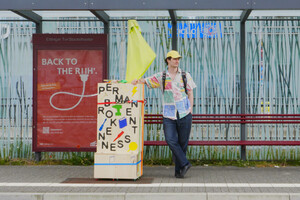
- PERMANENT BROKENNESS ist eine mobile (Infra-)Struktur, die das transformative Potential von öffentlichen Orten aufzeigt, indem sie die Reparatur von Haushalts- und Konsumgeräten verfügbar und sichtbar macht. Angelehnt an das Format des Reparatur-Cafés, werden Benutzer*innen dazu eingeladen eigenständig und gemeinsam Dinge zu reparieren. Hierbei steht nicht nur die Müllvermeidung und Ressourcenschonung im Vordergrund, sondern vor allem der selbstwirksame Zugang zur dinglichen Umwelt. Das Projekt basiert auf einer umfangreichen Recherche zur kulturellen Praxis des Reparierens und formuliert ein Gegennarrativ zu Hegemonien der Produktion, der Innovation und des unreflektierten Massenkonsums.
- Beschreibung (en)
- PERMANENT BROKENNESS is a mobile (infra-)structure that demonstrates the transformative potential of public spaces by making the repair of household and consumer appliances available and visible. Inspired by the repair café format, users are invited to repair things independently and together. The focus here is not only on avoiding waste and conserving resources, but above all on self-effective access to the material environment. The project is based on extensive research into the cultural practice of repairing and formulates a counter-narrative to hegemonies of production, innovation and unreflected mass consumption.
- Kategorie
- Schlagworte
- Datierung
- 26.06.2024
- Mitwirkende
- Dank an
- Titel
- PERMANENT BROKENNESS
- Projektleiter/in
- Semester
- Studiengang
- Typ der Abschlussarbeit
- Importiert am
- 01.11.2024
- Übergeordnete Sets
- 1
- Set enthält
- 0 6
Photosymbiosen – On Co-Developing with Plant Accomplices
Name that can easily go onto 2 lines
Author that can easily go onto 2 lines as well
- Titel
- Photosymbiosen – On Co-Developing with Plant Accomplices
- Titel (en)
- Photosymbiosen – On Co-Developing with Plant Accomplices
- Untertitel
- Sustainable Photography
- Beschreibung (de)
- Wie können wir fotografische Verfahren entwickeln, die nicht auf einem Ausbeutungsverhältnis der Umwelt beruhen, sondern vielmehr mit nicht-menschlichen Akteuren in Kollaboration treten? Wenn auch ein solches Unterfangen aufgrund der anthropozentrischen Perspektive zu kurz kommen muss, so eröffnet jenes unmögliche Driften hin zum pflanzlicheren Denken ein Spannungsfeld der künstlerischen Auseinandersetzung. Vom Flanieren in den Wäldern, dem Sammeln von Kräutern bis hin zur Ambivalenz zwischen städtischem Raum, pflanzlicher Peripherie und Ruderaler Vegetation – all jene dynamischen Wechselverhältnisse eines geteilten Habitats stellen den gedanklichen Ausgangspunkt der Arbeiten von “Photosymbiosen – On Co-Developing with Plant Accomplices” dar. Neben dem Bemühen um einen Fotografischen Blick, der sich ins mutuale Beziehungsgeflecht jener Co-Existenzen einfügt, steht das Bildgebungsverfahren analoger, nachhaltiger Fotografie im Fokus der Recherche. Denn jene alte Technik, die in Zeiten digitaler Bilderflut zunehmend ein Comeback erfährt, stellt vor einige Herausforderungen:
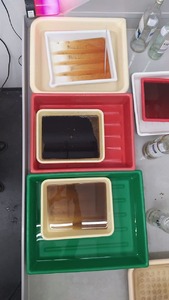
So basiert jenes Verfahren der Bilderzeugung auf der Lichtempfindlichkeit von Silberhalogenidkristallen, die in einer Gelatineemulsion auf einem Filmträger (zur Herstellung des Negativs) und auf Papier (zur Herstellung des Fotos) aufgebracht sind. Um die Kristalle in metallisches Silber umzuwandeln und so ein (negatives) Bild auf Film zu erhalten, beziehungsweise es dann auf Papier zu verarbeiten und zu vergrößern (positives fotografisches Bild), ist es notwendig, verschiedene, hochgiftige chemische Lösungen zu verwenden. Diese Produkte sind nicht nur gesundheitsgefährdend für diejenigen, die mit ihnen umgehen, sondern stellen auch eine große Quelle für die Verschmutzung von Gewässern, Pipelines und ganz allgemein der Umwelt dar – und müssen daher in besonderer Weise entsorgt und behandelt werden. Darüber hinaus ist nicht nur die Giftigkeit dieser Bildentwicklungsmethode problematisch, sondern auch ihr Medium. Die auf Film und Papier aufgebrachte Gelatine ist tierischen Ursprungs – in der Regel eine Rindergelatine – und wird damit Teil der vielfältigen Probleme der Fleischindustrie. Letztlich macht die Industrialisierung der analogen Fotografie, von ihren chemischen Komponenten bis hin zur Entwicklung der Fotos in Labors, ihre Anwender abhängig von vorgefertigten, in der Regel teuren Produkten.
Getragen von dem Wunsch, neue experimentelle Formen der Kreation zu erforschen und die Umweltbelastung durch jene fotografische Technik zu reflektieren, wurden so verschiedene alternative Verfahren zur Reduktion von Chemikalieneinsatz entwickelt. Dabei gaben verschiedene internationale Initiativen aus dem Bereich der nachhaltigen Fotografie Inspirationen zur Herstellung eigener Schwarz-Weiß-Entwickler, die auf regionalen und saisonalen Pflanzen der städtischen Umgebung Karlsruhes basieren (Kräuter, Blätter, Blumen, Baumrinde, Moos, Gemüse, etc.). Die ausgestellten Werke geben Einblicke in die experimentelle Forschung, eine ergänzende Website gibt weitere Informationen zu Dokumentationen wie auch Herstellungsverfahren und Recherchen.
- Wie können wir fotografische Verfahren entwickeln, die nicht auf einem Ausbeutungsverhältnis der Umwelt beruhen, sondern vielmehr mit nicht-menschlichen Akteuren in Kollaboration treten? Wenn auch ein solches Unterfangen aufgrund der anthropozentrischen Perspektive zu kurz kommen muss, so eröffnet jenes unmögliche Driften hin zum pflanzlicheren Denken ein Spannungsfeld der künstlerischen Auseinandersetzung. Vom Flanieren in den Wäldern, dem Sammeln von Kräutern bis hin zur Ambivalenz zwischen städtischem Raum, pflanzlicher Peripherie und Ruderaler Vegetation – all jene dynamischen Wechselverhältnisse eines geteilten Habitats stellen den gedanklichen Ausgangspunkt der Arbeiten von “Photosymbiosen – On Co-Developing with Plant Accomplices” dar. Neben dem Bemühen um einen Fotografischen Blick, der sich ins mutuale Beziehungsgeflecht jener Co-Existenzen einfügt, steht das Bildgebungsverfahren analoger, nachhaltiger Fotografie im Fokus der Recherche. Denn jene alte Technik, die in Zeiten digitaler Bilderflut zunehmend ein Comeback erfährt, stellt vor einige Herausforderungen:
- Beschreibung (en)
- How can we develop photographic processes that are not based on a relationship of exploitation of the environment, but rather enter into collaboration with non-human actors? Even if such an endeavour must fall short due to the anthropocentric perspective, that impossible drift towards more plant-based thinking opens up a field of tension for artistic exploration. From strolling in the woods, collecting herbs to the ambivalence between urban space, plant periphery and ruderal vegetation – all those dynamic interrelationships of a shared habitat represent the intellectual starting point of the works of "Photosymbioses – On Co-Developing with Plant Accomplices". In addition to the effort to create a photographic gaze that fits into the mutual network of relationships of these co-existences, the research focuses on the imaging process of analogue, sustainable photography. This old technique, which is increasingly making a comeback in times of a flood of digital images, poses a number of challenges:
For example, this method of image creation is based on the light sensitivity of silver halide crystals, which are deposited in a gelatine emulsion on a film carrier (to produce the negative) and on paper (to produce the photograph). In order to convert the crystals into metallic silver and thus obtain a (negative) image on film, or then process and enlarge it on paper (positive photographic image), it is necessary to use various highly toxic chemical solutions. These products are not only hazardous to the health of those who handle them, but are also a major source of pollution of water, pipelines and the environment in general - and must therefore be disposed of and treated in a special way. Furthermore, it is not only the toxicity of this image development method that is problematic, but also its medium. The gelatine applied to film and paper is of animal origin - usually a bovine gelatine - and thus becomes part of the manifold problems of the meat industry. Ultimately, the industrialisation of analogue photography, from its chemical components to the development of the photos in laboratories, makes its users dependent on prefabricated, usually expensive products.
Driven by the desire to explore new experimental forms of creation and to reflect on the environmental impact of that photographic technique, various alternative methods for reducing chemical use were thus developed. In the process, various international initiatives from the field of sustainable photography provided inspiration for the production of own black-and-white developers based on regional and seasonal plants from Karlsruhe's urban environment (herbs, leaves, flowers, tree bark, moss, vegetables, etc.). The exhibited works provide insights into the experimental research, a complementary website gives further information on documentation as well as production processes and research.
- How can we develop photographic processes that are not based on a relationship of exploitation of the environment, but rather enter into collaboration with non-human actors? Even if such an endeavour must fall short due to the anthropocentric perspective, that impossible drift towards more plant-based thinking opens up a field of tension for artistic exploration. From strolling in the woods, collecting herbs to the ambivalence between urban space, plant periphery and ruderal vegetation – all those dynamic interrelationships of a shared habitat represent the intellectual starting point of the works of "Photosymbioses – On Co-Developing with Plant Accomplices". In addition to the effort to create a photographic gaze that fits into the mutual network of relationships of these co-existences, the research focuses on the imaging process of analogue, sustainable photography. This old technique, which is increasingly making a comeback in times of a flood of digital images, poses a number of challenges:
- Typ des Projekts/Werks
- Schlagworte
- Datierung
- Sommersemester 2021
- Mitwirkende
- Material
- Ort: Institution
- Stadt
- Land
- Internetlinks
- Titel
- Photosymbiosen – On Co-Developing with Plant Accomplices
- Untertitel
- Sustainable Photography
- Semester
- Importiert am
- 30.10.2023
- Übergeordnete Sets
- 1
- Set enthält
- 0 33
Physical Living Library
Name that can easily go onto 2 lines
Author that can easily go onto 2 lines as well
- Titel
- Physical Living Library
- Titel
- Physical Living Library
- Importiert am
- 10.03.2026
- Übergeordnete Sets
- 1
- Set enthält
- 0 6
Physische Living Library
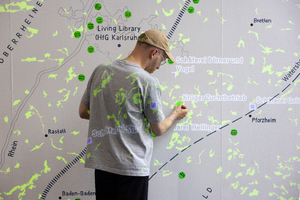
Name that can easily go onto 2 lines
Author that can easily go onto 2 lines as well
- Titel
- Physische Living Library
- Titel (en)
- Physical Living Library
- Titel
- Physische Living Library
- Importiert am
- 13.01.2025
- Übergeordnete Sets
- 1
- Set enthält
- 4 0
PINK ELEPHANT
Name that can easily go onto 2 lines
Author that can easily go onto 2 lines as well
- Titel
- PINK ELEPHANT
- Titel (en)
- PINK ELEPHANT
- Autor/in
- Beschreibung (de)
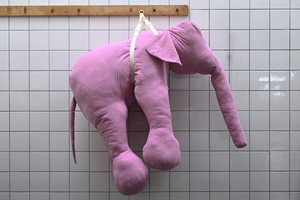
- Pink Elephant ist eine textile Skulptur, die im Rahmen der Sprint Residency im Studio Hö der Hoepfner Stiftung entstanden ist. Das Werk übersetzt das Sprichwort „Seeing Pink Elephants“ in den Raum – eine Redewendung für Halluzinationen, die normalerweise durch schweren Alkoholentzug oder alkoholische Halluzinose verursacht werden und einen Zustand des Deliriums darstellen, in dem der Geist bizarre Bilder wie leuchtend rosa Elefanten erzeugt. Damit spielt die Arbeit auf den Kontext an, in dem sie präsentiert wird, nämlich die Kunststiftung einer Brauerei.
- Pink Elephant ist eine textile Skulptur, die im Rahmen der Sprint Residency im Studio Hö der Hoepfner Stiftung entstanden ist. Das Werk übersetzt das Sprichwort „Seeing Pink Elephants“ in den Raum – eine Redewendung für Halluzinationen, die normalerweise durch schweren Alkoholentzug oder alkoholische Halluzinose verursacht werden und einen Zustand des Deliriums darstellen, in dem der Geist bizarre Bilder wie leuchtend rosa Elefanten erzeugt. Damit spielt die Arbeit auf den Kontext an, in dem sie präsentiert wird, nämlich die Kunststiftung einer Brauerei.
- Beschreibung (en)
- Pink Elephant is a textile sculpture created as part of the Sprint Residency at Studio Hö of the Hoepfner Foundation. The work translates the saying “seeing pink elephants” into space, an idiom for hallucinations, usually caused by severe alcohol withdrawal or alcoholic hallucinosis, representing a state of delirium where the mind fabricates bizarre sights like bright pink elephants. The work thus alludes to the context for which it was originally made and presented, the art foundation of a brewery.
- Kategorie
- Datierung
- 2025
- Technik/Verfahren/Formate
- Textilobjekt
- Abmessungen
- Höhe: 120cm Breite: 150cm Tiefe: 50cm
- Stadt
- Land
- Auftrag durch
- Hoepfner Stiftung
- Internetlinks
- Titel
- PINK ELEPHANT
- Semester
- Studiengang
- Importiert am
- 26.01.2026
- Übergeordnete Sets
- 1
- Set enthält
- 0 6