Sets
444 Inhalte
- Seite 1 von 37
Gelb
Name that can easily go onto 2 lines
Author that can easily go onto 2 lines as well
- Titel
- Gelb
- Titel
- Gelb
- Importiert am
- 13.11.2025
- Übergeordnete Sets
- 1
- Set enthält
- 0 5
Lila
Name that can easily go onto 2 lines
Author that can easily go onto 2 lines as well
- Titel
- Lila
- Titel
- Lila
- Importiert am
- 13.11.2025
- Übergeordnete Sets
- 1
- Set enthält
- 0 3
Hellblau
Name that can easily go onto 2 lines
Author that can easily go onto 2 lines as well
- Titel
- Hellblau
- Titel
- Hellblau
- Importiert am
- 13.11.2025
- Übergeordnete Sets
- 1
- Set enthält
- 0 5
Garten
Name that can easily go onto 2 lines
Author that can easily go onto 2 lines as well
- Titel
- Garten
- Titel
- Garten
- Importiert am
- 13.11.2025
- Übergeordnete Sets
- 1
- Set enthält
- 0 1
Performing Difference
- Titel
- Performing Difference
- Beschreibung (en)
- A score is not just a set of instructions; it creates a collective body that breathes and moves as one. Through embodiment, the score is transformed into a dynamic interplay of movement, sound, and presence, a merging of the physical and the ephemeral.
We become not just individuals but one body. Individuality is blurred, and there is no longer any sense of who is who. Boundaries disappear, and physicality flows freely. Differences are acknowledged, and points of connection.
In this shared experience, the present moment is crucial. We are fully present in the score, not merely seen. Each movement represents the present and captures the essence of the momentary and the eternal.
The collective body expresses the power of unity in diversity. We share an understanding of how creativity emerges from being together.
Embracing the fluidity and immediacy of the present evokes new dimensions of connection and expression. Our scores offer a transformative experience in which everyone becomes part of a collectivity.
The scores from 'Performing Difference’ are not just a guide but a gateway to a deeper understanding of embodiment and presence. We invite everyone to participate in an infinite connection with each other, where the boundaries between self and other blur and become a shared expression.
Seminar
Prof. Filipa César
Helin Hulas
Lucas Gutierrez
Nico Hain
Media Art
Performing Difference
"As you can see, 'difference' is essentially 'division' in the understanding of many. It is no more than a tool of self-defense and conquest."
–Trinh T Minh Ha
Historically and contemporarily, "difference" has been deployed in social politics to produce separation and division between people, groups, and agencies. Although "difference" can be the departing point for connection, exchange, collaboration, affect, and togetherness, its otherwise aspects have been insistingly instrumentalized as political tools towards divide, separation, conflict, privilege, and inequality, which has been informing socialities, inscribing bodies, and affecting and impacting relations. Critical artistic positions in film and performance have been focusing on and reflecting through these social phenomena and performing socialities of togetherness within difference.
Performing Difference is a four-part hands-on block seminar where students will work with performance, moving-image, and display technologies in dialogue with various artistic and theoretical positions. The block-seminar will draw a curve of practical experimentation and production in four phases, with the following learning outcomes:
PERFORMING DIFFERENCE #1: from thought to body
Exercising with body awareness, score, and performance; research artistic positions of historical filmmakers working with performance to engage in body politics, social ethics, and power relations. Inquire about the relationship between women's relations to computation, score, and algorithm, learning about parameters of the body & parameters of the software. Render an idea, a trouble, a cause, a feeling into a performance score;
PERFORMING DIFFERENCE #2: from skin to grain
Experimenting with camera work and performance; revisit concepts of the "model" in Robert Bresson's reflections on cinematography. Produce the shooting of students' scores.
PERFORMING DIFFERENCE #3: from pixel to surface
Experimenting with post-production and interactive displaying formats and studying technologies, aesthetics, and politics of visibility. Knowledge and experience with the most popular cross-platform game engines and multimedia software that supports 2D and 3D graphics, such as Madmapper, Resolume, TouchDesigner, and Unity3d. Learn how to use Mediapipe on pre-recorded footage, apply computer vision for motion tracking using TouchDesigner, and transfer data via OSC to the VJ software.
PERFORMING DIFFERENCE #4: Rundgang presentations
Setting up one collective installation or a series of individual installations for the Rundgang.
- A score is not just a set of instructions; it creates a collective body that breathes and moves as one. Through embodiment, the score is transformed into a dynamic interplay of movement, sound, and presence, a merging of the physical and the ephemeral.
- Kategorie
- Schlagworte
- Datierung
- 2024
- Ort: Institution
- Titel
- Performing Difference
- Semester
- Studiengang
- Importiert am
- 19.11.2025
- Übergeordnete Sets
- 0
- Set enthält
- 0 0
Midnight Zone

Name that can easily go onto 2 lines
Author that can easily go onto 2 lines as well
- Titel
- Midnight Zone
- Titel (en)
- Midnight Zone
- Autor/in
- Beschreibung (de)
- Midnight Zone ist eine Performance über die Tiefsee, jenen Raum, in den kein Sonnenlicht mehr dringt. In dieser absolut dunklen und hohem Druck ausgesetzten Umgebung verschieben sich unsere Wahrnehmungen von Zeit, Körper und Orientierung.
In einem Raum, der das eigene Körpergefühl verschwimmen lässt, durchziehen Fischlaute, Maschinengeräusche und ferne Erdbeben die verschiedenen atmosphärischen Bedingungen des größten Lebensraums der Erde. Performerinnen bewegen sich wie fremde Wesen, zugleich Teil der Natur und Spiegel menschlicher Eingriffe. Mit jeder Bewegung beeinflussen die Besucher*innen das Netz aus Klang, Schatten und Choreografie und werden selbst Teil des Ökosystems, das sie beobachten.
Midnight Zone macht das fragile System der Tiefsee sinnlich erfahrbar: Dort, wo das Leben möglicherweise begann, wo Zeit anders fließt und Prozesse Jahrhunderte dauern können, ist der menschliche Einfluss zunehmend spürbar. Die Arbeit lässt Traum und Realität, Mensch und Natur, Oberfläche und Tiefe ineinander übergehen. Sie lädt dazu ein, lineare Zeitvorstellungen hinter sich zu lassen und alternative Rhythmen zu erspüren. Rhythmen, die im Einklang mit planetarischen Zyklen stehen und dem beschleunigten Takt des Anthropozäns etwas entgegensetzen.
- Midnight Zone ist eine Performance über die Tiefsee, jenen Raum, in den kein Sonnenlicht mehr dringt. In dieser absolut dunklen und hohem Druck ausgesetzten Umgebung verschieben sich unsere Wahrnehmungen von Zeit, Körper und Orientierung.
- Beschreibung (en)
- Midnight Zone is a performance about the deep sea, that realm into which no sunlight can penetrate. In this environment of absolute darkness and immense pressure, our perceptions of time, body, and orientation begin to shift.
In a space where one’s sense of the body starts to blur, fish sounds, mechanical noises, and distant earthquakes move through the atmospheric layers of the largest habitat on Earth. The performers move like unfamiliar beings, at once part of nature and a reflection of human impact. With every movement, the visitors influence the network of sound, shadow, and choreography, becoming part of the very ecosystem they are observing.
Midnight Zone makes the fragile system of the deep sea sensually perceptible: a place where life may have begun, where time flows differently and processes can take centuries, and where human presence is increasingly noticeable. The work allows dream and reality, human and nature, surface and depth to merge. It invites the audience to let go of linear notions of time and attune themselves to alternative rhythms, rhythms aligned with planetary cycles, offering a counterpoint to the accelerated tempo of the Anthropocene.
- Midnight Zone is a performance about the deep sea, that realm into which no sunlight can penetrate. In this environment of absolute darkness and immense pressure, our perceptions of time, body, and orientation begin to shift.
- Kategorie
- Typ des Projekts/Werks
- Schlagworte
- Datierung
- 30.10.25 und 31.10.25
- Mitwirkende
- Dank an
- Dauer
- 1 Stunde
- Ort: Institution
- Ort
- Großes Studio
- Stadt
- Land
- Beteiligte Institution(en)
- Titel
- Midnight Zone
- Projektleiter/in
- Semester
- Studiengang
- Typ der Abschlussarbeit
- Importiert am
- 03.12.2025
- Übergeordnete Sets
- 3
- Set enthält
- 0 13
Fake it till you make it
Name that can easily go onto 2 lines
Author that can easily go onto 2 lines as well
- Titel
- Fake it till you make it
- Titel (en)
- Fake it till you make it
- Autor/in
- Beschreibung (de)
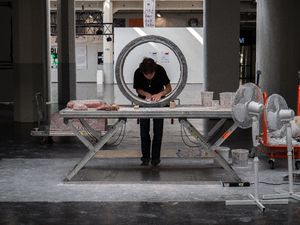
- Stuckmarmor ist eine historische Stucktechnik des 16. und 17. Jahrhunderts aus Italien, die für ihre Marmorimitation bekannt ist. Dabei wurden Gips, Wasser, Pigmente und tierischer Leim gemischt, um marmorähnliche Oberflächen zu schaffen.
"Fake it till you make it" ist eine Erkundung dieses traditionellen Handwerks. Ziel ist es, die alte Kunst der Marmorimitation wiederzubeleben und ihre ästhetischen Werte in der heutigen Welt zu präsentieren. Darüber hinaus befasst sich das Projekt mit der Frage, was "echt" und was "unecht" ist, und untersucht die Rolle der Inszenierung. Inspiriert von den drei Teilen einer Säule (Basis, Schaft, Kapitell) habe ich drei Objekte entwickelt, die als Einzelstücke im Raum zu finden sind. Alle drei Objekte sind aus Holz gefertigt, zwei davon durch ein Stahlgerüst stabilisiert. Die Unterkonstruktion wurde dann mit Streckmetall verkleidet, verputzt und diente schließlich als Untergrund für den Stuckmarmor. Ein Making-of-Video zeigt die Herstellung des Stuckmarmors. Jedes der Objekte ist auf eine andere Art und Weise verkleidet, um die Konstruktion nicht immer zu verbergen, sondern sie vielmehr zu enthüllen, ganz nach dem Motto "fake it till you make it".
- Stuckmarmor ist eine historische Stucktechnik des 16. und 17. Jahrhunderts aus Italien, die für ihre Marmorimitation bekannt ist. Dabei wurden Gips, Wasser, Pigmente und tierischer Leim gemischt, um marmorähnliche Oberflächen zu schaffen.
- Beschreibung (en)
- Stucco marble is a historic plasterwork technique originating from 16th and 17th-century Italy, celebrated for its imitation of marble. This involved blending gypsum plaster, water, pigments, and animal glue to create marble-like surfaces.
„fake it till you make it“ is an exploration of this traditional craft of stucco marble. The aim is to revive the ancient art of imitating marble and to present its aesthetic values in today‘s world. In addition, the project will address the question of what is „real“ and what is „fake“ and examine the role of staging. Inspired by the three parts of a column (base, shaft, capital) I have developed three objects that can be found as individual pieces in the room. All three objects are made of wood, two of them stabilized by a steel framework. Ribbed expanded metal lath was then stapled onto the wood and plastered, serving as the base for the stucco marble. A making of video shows the production of the stucco marble. Each of the objects is covered in a different way, intended not to always conceal the construction but rather to reveal it, embodying the spirit of „fake it till you make it.“
- Stucco marble is a historic plasterwork technique originating from 16th and 17th-century Italy, celebrated for its imitation of marble. This involved blending gypsum plaster, water, pigments, and animal glue to create marble-like surfaces.
- Kategorie
- Typ des Projekts/Werks
- Schlagworte
- Datierung
- 25.06.2024
- Dank an
- Material
- Ort: Institution
- Ort
- Unter der Lichtbrücke
- Stadt
- Land
- Titel
- Fake it till you make it
- Projektleiter/in
- Semester
- Studiengang
- Typ der Abschlussarbeit
- Importiert am
- 20.12.2025
- Übergeordnete Sets
- 1
- Set enthält
- 0 16
Leaving on a High Note
Name that can easily go onto 2 lines
Author that can easily go onto 2 lines as well
- Titel
- Leaving on a High Note
- Autor/in
- Beschreibung (de)
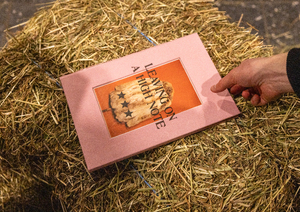
- "Leaving on a High Note" ist eine Reflexion über Schönheit und das Medium Buch. Die Arbeit bringt vielfältiges visuelles Material, von gescannten Fotografien und Kunstwerken über handgezeichnete Textilmuster bis hin zu in Auftrag gegebenen künstlerischen Beiträgen, zusammen. Als eine Art poetisches Moodboard geht das Projekt der Frage nach, wie sich Atmosphäre, Schönheit und visuelle Intuition durch Kuration im Zusammenspiel mit materiellen Entscheidungen formen lassen. Das Papier wurde akribisch gewählt, um die Betrachtung um eine haptische Ebene zu erweitern. Die Bindung durch den Rücken des Hardcovers verweist auf den konzeptuellen, redaktionellen und praktischen Prozess, der zum finalen Objekt geführt hat. Das Buch enthält künstlerische Beiträge von Alva Bücking sowie Zeichnungen von Charlotte Singer.
"Leaving on a High Note" wurde im Rahmen einer Ausstellung gezeigt, die die Stimmung des Buches in den Raum übertrug. Die Soirée fand am 17. Dezember 2025 im ZKM Pavillon in Karlsruhe statt und umfasste eine Installation und eine Chorperformance. Der Chor wurde von Leonie Inga Klopstock geleitet und mit von Anton Schüler designten Krägen ausgestattet.
- "Leaving on a High Note" ist eine Reflexion über Schönheit und das Medium Buch. Die Arbeit bringt vielfältiges visuelles Material, von gescannten Fotografien und Kunstwerken über handgezeichnete Textilmuster bis hin zu in Auftrag gegebenen künstlerischen Beiträgen, zusammen. Als eine Art poetisches Moodboard geht das Projekt der Frage nach, wie sich Atmosphäre, Schönheit und visuelle Intuition durch Kuration im Zusammenspiel mit materiellen Entscheidungen formen lassen. Das Papier wurde akribisch gewählt, um die Betrachtung um eine haptische Ebene zu erweitern. Die Bindung durch den Rücken des Hardcovers verweist auf den konzeptuellen, redaktionellen und praktischen Prozess, der zum finalen Objekt geführt hat. Das Buch enthält künstlerische Beiträge von Alva Bücking sowie Zeichnungen von Charlotte Singer.
- Beschreibung (en)
- "Leaving on a High Note" is a reflection on beauty as well as on bookmaking. It is a collection of diverse visual material ranging from scanned photography and artworks to hand-drawn textile patterns and commissioned artistic contributions. It functions as a poetic moodboard, exploring how atmosphere, beauty and visual intuition can be shaped through curation and material decisions. The paper was chosen meticulously in order to introduce a refined tactile experience to the act of viewing. The work is bound with thread punched through the hardcover spine, referencing the conceptual, editorial and practical process that led to the final object. The book includes commissioned work by Alva Bücking as well as drawings by Charlotte Singer.
"Leaving on a High Note" was shown in an exhibition that translated the book’s mood into the space. The soirée took place at the ZKM Pavillon in Karlsruhe on December 17, 2025 and featured an installation alongside a choir performance. The choir was conducted by Leonie Inga Klopstock and outfitted with collars by Anton Schüler.
- "Leaving on a High Note" is a reflection on beauty as well as on bookmaking. It is a collection of diverse visual material ranging from scanned photography and artworks to hand-drawn textile patterns and commissioned artistic contributions. It functions as a poetic moodboard, exploring how atmosphere, beauty and visual intuition can be shaped through curation and material decisions. The paper was chosen meticulously in order to introduce a refined tactile experience to the act of viewing. The work is bound with thread punched through the hardcover spine, referencing the conceptual, editorial and practical process that led to the final object. The book includes commissioned work by Alva Bücking as well as drawings by Charlotte Singer.
- Kategorie
- Typ des Projekts/Werks
- Schlagworte
- Datierung
- 17.12.2025
- Mitwirkende
- Dank an
- Paul Bailey
- Vincent Carl Becher
- Alva Bücking
- Rahel Diederich
- Till Engelhardt
- Marie Faaß
- Line-Gry Hørup
- Dans Jirgensons
- Tobias Keilbach
- Leonie Inga Klopstock
- Susanne Kriemann
- Ida Kuczewski
- Barbara Kuon
- Isabel Motz
- Tereza Ruller
- Luis Rüttiger
- Jana Schmeckenbecher
- Anton Schüler
- Isabel Seiffert
- Moritz Kamil Simon
- Charlotte Singer
- Lilith Stumpf
- Pierre Zimmer
- Petra Zimmermann
- HfG Chor
- Sprache
- Ort: Institution
- Stadt
- Land
- Titel
- Leaving on a High Note
- Projektleiter/in
- Semester
- Studiengang
- Typ der Abschlussarbeit
- Importiert am
- 05.01.2026
- Übergeordnete Sets
- 2
- Set enthält
- 0 10
Shiftings Paradigms Symposium 2024
- Titel
- Shiftings Paradigms Symposium 2024
- Titel (en)
- Shiftings Paradigms Symposium 2024
- Untertitel
- 1. gemeinsames Symposium zu den Postgradualen Programmen von HfG Karlsruhe und ZKM
- Untertitel des Projekts/Werks (en)
- 1st symposium on the postgraduate programs by HfG Karlsruhe and ZKM
- Beschreibung (de)
- Die Staatliche Hochschule für Gestaltung und das Zentrum für Kunst und Medien in Karlsruhe wurden in den 1990er Jahren von Gründungsdirektor Heinrich Klotz als Orte einer zeitgemäßen, auf die Neuen Medien gerichteten Forschung konzipiert. Sie bieten in ihrer Kombination von Hochschule und Kulturinstitution ausgezeichnete Vorbedingungen für eine Vernetzung künstlerischer und wissenschaftlicher Ansätze, für die es in Deutschland allerdings noch veränderte Rahmenbedingungen braucht.
Ein übergreifendes postgraduales Programm sollte interdisziplinäre Expertise versammeln und nutzen, um die Beziehungen von Kunst, Theorie und Gestaltung neu auszuloten und auf diese Weise an die wegweisende Gründungsidee von HfG und ZKM anzuknüpfen. Es sollte zugleich auf einen größeren Paradigmenwechsel antworten, der sich in Kunst und Kultur wie auch im wissenschaftlichen Bereich zu vollziehen scheint und der sich einerseits in Legitimationskrisen, andererseits in neuen und kreativen Formen der Recherche und Produktion von Wissen äußert. Die HfG Karlsruhe nimmt die Diagnose zum Anlass, um hybride Formate der Forschung neu zu konzipieren und auch die Funktion wissenschaftlicher Promotionen zu befragen.
Zur Vorstellung und Diskussion dieser programmatischen Überlegungen veranstaltete die HfG in Kooperation mit dem ZKM Karlsruhe am 5. und 6. Dezember 2024 ein erstes Symposium mit internationalen Gästen, das darauf abzielt, Räume und Ideen für eine sich transformierende Forschungspraxis zu entwerfen.
In vier Panels performten und diskutierten unter anderem die französische Wissenschaftshistorikerin und -philosophin Bernadette Bensaude-Vincent, der Professor für Kunstwissenschaft und Medientheorie Matthias Bruhn, die Professorin für Time Based Media und Performance Filipa César, die Szenografin und stellvertretende HfG-Rektorin Constanze Fischbeck, der ZKM-Direktor Alistair Hudson, die Künstlerin und Professorin für Code and Image Susanne Kriemann, der Professor der ADBK München Armin Linke, die Leiterin des ZKM-Hertzlabs Tina Lorenz, die Künstlerin, Kuratorin und Mitglied des Raqs Media Collectives Monica Narula, der Professor für kritische Theorie und Medienphilosophie Simon Sheikh, die Performancekünstlerin und Aktivistin Joy Mariama Smith, die Professorin für Design Füsun Türetken und die Professorin für Digitale Ästhetik Nina Zschocke mit weiteren Expertinnen und Experten, dem Publikum sowie den Angehörigen beider Häuser.
- Die Staatliche Hochschule für Gestaltung und das Zentrum für Kunst und Medien in Karlsruhe wurden in den 1990er Jahren von Gründungsdirektor Heinrich Klotz als Orte einer zeitgemäßen, auf die Neuen Medien gerichteten Forschung konzipiert. Sie bieten in ihrer Kombination von Hochschule und Kulturinstitution ausgezeichnete Vorbedingungen für eine Vernetzung künstlerischer und wissenschaftlicher Ansätze, für die es in Deutschland allerdings noch veränderte Rahmenbedingungen braucht.
- Beschreibung (en)
- The Staatliche Hochschule für Gestaltung (HfG) Karlsruhe and the Center for Art and Media in Karlsruhe (ZKM) were conceived in the 1990s by founding director Heinrich Klotz as places for contemporary research focused on new media. With their combination of university and cultural institution, they offer excellent preconditions for the networking of artistic and scientific approaches, for which, however, a different framework is still needed in Germany.
An overarching postgraduate program was intended to bring together and utilize interdisciplinary expertise in order to explore the relationships between art, theory and design in a new way, thus building on the pioneering founding idea of the HfG and ZKM. At the same time, it is intended to respond to a larger paradigm shift that seems to be taking place in art and culture as well as in the scientific field and which is expressed on the one hand in crises of legitimization and on the other in new and creative forms of research and production of knowledge. The HfG Karlsruhe was taking this diagnosis as an opportunity to redesign hybrid formats of research and also to question the function of academic doctorates.
To present and discuss these programmatic considerations, the HfG organized a first symposium with international guests in cooperation with the ZKM Karlsruhe on 5 and 6 December 2024, which aims to design spaces and ideas for a transforming research practice.
In four panels, the French historian and philosopher of science Bernadette Bensaude-Vincent, the professor of art studies and media theory Matthias Bruhn, the professor of time-based media and performance Filipa César, the scenographer and deputy HfG rector Constanze Fischbeck, the ZKM director Alistair Hudson, the artist and professor of code and image Susanne Kriemann, ADBK Munich Professor Armin Linke, ZKM-Hertzlab Director Tina Lorenz, artist, curator and member of the Raqs Media Collective Monica Narula, Professor of Critical Theory and Media Philosophy Simon Sheikh, performance artist and activist Joy Mariama Smith, Professor for Design Füsun Türetken and Professor of Digital Aesthetics Nina Zschocke discussed with other experts, the audience and members of both institutions.
- The Staatliche Hochschule für Gestaltung (HfG) Karlsruhe and the Center for Art and Media in Karlsruhe (ZKM) were conceived in the 1990s by founding director Heinrich Klotz as places for contemporary research focused on new media. With their combination of university and cultural institution, they offer excellent preconditions for the networking of artistic and scientific approaches, for which, however, a different framework is still needed in Germany.
- Typ des Projekts/Werks
- Schlagworte
- Datierung
- 05.12.2024 - 06.12.2024
- Mitwirkende
- Dank an
- Ort: Institution
- Ort
- Lichthof 3 (HfG), Useum (ZKM)
- Stadt
- Land
- Beteiligte Institution(en)
- Auftrag durch
- Rektorat
- Titel
- Shiftings Paradigms Symposium 2024
- Untertitel
- 1. gemeinsames Symposium zu den Postgradualen Programmen von HfG Karlsruhe und ZKM
- Importiert am
- 05.01.2026
- Übergeordnete Sets
- 1
- Set enthält
- 6 0
Shifting Paradigms Symposium I Panel 1
- Titel
- Shifting Paradigms Symposium I Panel 1
- Beschreibung (de)
- Panel 1 (Donnerstag) Polykrise
Als Einführung in das Konzept des Paradigmenwechsels befasst sich das Panel mit den zahlreichen Krisen, denen wir in der Wissenschaft und darüber hinaus gegenüberstehen und die eine kritische Reflexion und Überprüfung unserer Forschungsmethoden erfordern. Angesichts dieser Polykrisen (Umweltkatastrophen, bröckelnde Infrastrukturen, soziale Ungleichheiten, politische Depression und die Unsicherheit des Wissens) werden wir stattdessen Konzepte der Instabilität postulieren, und Monica Narula wird in ihrem Vortrag von den Begriffen „Twilight Language” und „Cavalcade” ausgehen, gefolgt von Antworten von Alistair Hudson, Simon Sheikh und Nina Zschocke.
- Panel 1 (Donnerstag) Polykrise
- Beschreibung (en)
- Panel 1 (Thursday) Polycrisis
As an introduction to the idea of shifting paradigms, the panel will look at the many crises that we are facing, in academia and beyond, and which requires a critical reflection and revisitation of the modes of inquiry we are using. In the face of this polycrisis (environmental disaster, crumbling infrastructures, socil inequalities, political depression, and the uncertainty of knowledge), we will instead posit concepts of instability, and in her lecture performance Monica Narula will depart from notions of twilight language and cavalcade, followed by responses from Alistair Hudson, Simon Sheikh and Nina Zschocke.
- Panel 1 (Thursday) Polycrisis
- Typ des Projekts/Werks
- Schlagworte
- Datierung
- 05.12.2024
- Ort
- Useum, ZKM
- Beteiligte Institution(en)
- Titel
- Shifting Paradigms Symposium I Panel 1
- Importiert am
- 05.01.2026
- Übergeordnete Sets
- 1
- Set enthält
- 0 0
Shifting Paradigms Symposium I Panel 4
- Titel
- Shifting Paradigms Symposium I Panel 4
- Beschreibung (de)
- Panel 4 (Freitag): Die Kunst der Forschung
Künstlerische Forschung kann in Bezug auf soziale und ökologische Veränderungen westliche epistemologische Perspektiven in Frage stellen. Welche Paradigmenwechsel können zu einer künstlerischen Forschungspraxis beitragen, die den Forderungen nach planetarischer Gerechtigkeit gerecht wird? Welche Forschungsumgebung können das ZKM und die HfG als Institutionen für Medienkunst und Design bieten, um diesen Veränderungen Rechnung zu tragen und künstlerische Laborprozesse und daraus resultierende Diskurse zu beherbergen?
- Panel 4 (Freitag): Die Kunst der Forschung
- Beschreibung (en)
- Panel 4 (Friday): The Art of Research
Artistic research, in relation to social and environmental changes, can challenge Western ontoepistemological perspectives. Which paradigm shifts can contribute to an artistic research practice to respond to demands for planetary justice? What kind of research environment can ZKM and HfG offer, as institutions for media art and design, to attend to these transformations and host artistic laboratory processes and resulting discourses?
- Panel 4 (Friday): The Art of Research
- Typ des Projekts/Werks
- Schlagworte
- Datierung
- 06.12.2024
- Ort
- Lichthof 3, HfG
- Beteiligte Institution(en)
- Titel
- Shifting Paradigms Symposium I Panel 4
- Importiert am
- 05.01.2026
- Übergeordnete Sets
- 1
- Set enthält
- 0 0