Onkel Rudi als...
Benachbarte Sets (132)Alle Zusammenhänge anzeigen
Diese Sets wurden den gleichen Sets hinzugefügt wie das ausgewählte Set.
132 Inhalte
- Seite 1 von 11
Honey
Name that can easily go onto 2 lines
Author that can easily go onto 2 lines as well
- Titel
- Honey
- Titel (en)
- Honey
- Untertitel
- hotbag
- Untertitel des Projekts/Werks (en)
- hotbag
- Autor/in
- Beschreibung (de)
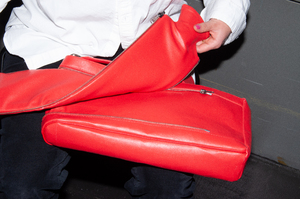
- Wie können wir Wärme mobilisieren? Diese Handtasche mit integrierter Wärmflasche ist eine Antwort auf diese Frage. Sie wurde speziell entwickelt, um Menstruationsbeschwerden zu lindern, ohne diese natürlichen Bedürfnisse zu verbergen oder zu tabuisieren. Stattdessen setzt sie ein sichtbares und selbstbewusstes Statement, das zeigt: Wohlbefinden verdient Aufmerksamkeit und Designlösungen, bei denen weibliche Designerinnen eine zentrale Rolle im heutigen gesellschaftlichen Diskurs spielen. Die Tasche ist so konzipiert, dass sie Komfort auf Reisen bietet, beispielsweise bei der Arbeit oder in öffentlichen Räumen.
Die extra lange Wärmflasche für Bauch und Rücken speichert die Wärme stundenlang und lässt sich leicht wieder auffüllen. Ein modulares Reißverschlusssystem sorgt für Vielseitigkeit in der Anwendung, und eine thermische Einlage schützt vor Überhitzung im Inneren der Tasche.
- Wie können wir Wärme mobilisieren? Diese Handtasche mit integrierter Wärmflasche ist eine Antwort auf diese Frage. Sie wurde speziell entwickelt, um Menstruationsbeschwerden zu lindern, ohne diese natürlichen Bedürfnisse zu verbergen oder zu tabuisieren. Stattdessen setzt sie ein sichtbares und selbstbewusstes Statement, das zeigt: Wohlbefinden verdient Aufmerksamkeit und Designlösungen, bei denen weibliche Designerinnen eine zentrale Rolle im heutigen gesellschaftlichen Diskurs spielen. Die Tasche ist so konzipiert, dass sie Komfort auf Reisen bietet, beispielsweise bei der Arbeit oder in öffentlichen Räumen.
- Beschreibung (en)
- How can we mobilise heat? This handbag with an integrated hot water bottle is an answer to this question. It is specially designed to relieve menstrual pain without hiding or tabooing these natural needs. Instead, it makes a visible and confident statement that shows: Well-being deserves attention and design solutions, where female designers play a central role in today's social discourse. The bag is designed to provide comfort when travelling, for example at work or in public spaces.
The extra-long hot water bottle for for stomach and back retains heat for hours and can be filled up again easily. A modular zip system ensures versatility of use, and a thermal inlay protects against overheating inside the bag.
- How can we mobilise heat? This handbag with an integrated hot water bottle is an answer to this question. It is specially designed to relieve menstrual pain without hiding or tabooing these natural needs. Instead, it makes a visible and confident statement that shows: Well-being deserves attention and design solutions, where female designers play a central role in today's social discourse. The bag is designed to provide comfort when travelling, for example at work or in public spaces.
- Kategorie
- Typ des Projekts/Werks
- Schlagworte
- Datierung
- Februar 2025
- Material
- Technik/Verfahren/Formate
- textile Handarbeit
- Ort: Institution
- Ort
- Lichtbrücke
- Stadt
- Land
- Titel
- Honey
- Untertitel
- hotbag
- Importiert am
- 17.07.2025
- Übergeordnete Sets
- 1
- Set enthält
- 0 9
ChitoTinkering
Name that can easily go onto 2 lines
Author that can easily go onto 2 lines as well
- Titel
- ChitoTinkering
- Titel (en)
- ChitoTinkering
- Untertitel
- neue perspektiven für chitosan
- Untertitel des Projekts/Werks (en)
- new perspectives for chitosan
- Autor/in
- Beschreibung (de)
- Im Rahmen ihres Materialforschungsprojekts entwickelten Benjamin Kaltenbach, Lilith Stumpf, Felix Harr und Julia Ihls innovative Anwendungen für Chitosan – ein vielseitiges Biopolymer, das aus Chitin gewonnen wird. Chitin ist nach Cellulose das zweithäufigste natürliche Polymer und bildet die strukturelle Basis für die Schalen von Krebstieren, die Exoskelette von Insekten sowie Zellwände bestimmter Pilze.
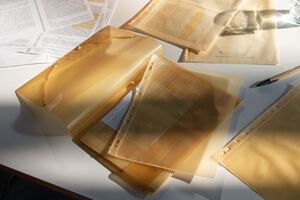
Inspiriert von der schützenden Funktion von Chitin in der Natur übertrugen die Designer*innen die Materialeigenschaften von Chitosan in einen alltagsnahen Kontext. Der Fokus lag dabei auf den Konzepten von Gehäusen und Hüllen – Anwendungen, die Schutz und Struktur vereinen. Das Ergebnis sind eine Reihe funktionaler Prototypen, darunter ein Lampenschirm, ein Stift, transparente Dokumentenhüllen sowie eine Dokumentenmappe, die aus dem Chitosan-Komposit gefertigt wurden.
Um die gestalterischen und technischen Möglichkeiten des Materials auszuloten, wurden unterschiedliche Bearbeitungstechniken erprobt: Das Chitosan-Material wurde genäht, genietet, gebügelt, gefaltet, selbstverklebt sowie mittels CNC-Laser graviert und geschnitten. Diese experimentelle Auseinandersetzung mit Verarbeitungstechniken hebt die gestalterische Vielseitigkeit von Chitosan hervor und zeigt sein Potenzial als nachhaltige Material Alternative auf.
Durch diese gestalterische und technische sowie konzeptuelle Auseinandersetzung eröffnen die Designer*innen neue Perspektiven für Chitosan und unterstreichen sein Potenzial als nachhaltige Material Alternative.
- Im Rahmen ihres Materialforschungsprojekts entwickelten Benjamin Kaltenbach, Lilith Stumpf, Felix Harr und Julia Ihls innovative Anwendungen für Chitosan – ein vielseitiges Biopolymer, das aus Chitin gewonnen wird. Chitin ist nach Cellulose das zweithäufigste natürliche Polymer und bildet die strukturelle Basis für die Schalen von Krebstieren, die Exoskelette von Insekten sowie Zellwände bestimmter Pilze.
- Beschreibung (en)
- As part of their material research project, Benjamin Kaltenbach, Lilith Stumpf, Felix Harr, and Julia Ihls developed innovative applications for chitosan – a versatile biopolymer derived from chitin. Chitin is the second most abundant natural polymer after cellulose and forms the structural basis of crustacean shells, insect exoskeletons, and the cell walls of certain fungi.
Inspired by chitin’s protective function in nature, the designers translated the material properties of chitosan into everyday applications. Their focus was on the concept of enclosures and casings – objects that combine protection and structure. The result is a series of functional prototypes, including a lampshade, a pen, transparent document sleeves, and a folder, all made from chitosan composite material.
To explore the material’s creative and technical potential, various processing techniques were tested: The chitosan material was sewn, riveted, ironed, folded, self-adhered, and engraved or cut using a CNC laser. This experimental approach highlights the versatility of chitosan and demonstrates its potential as a sustainable material alternative.
Through this design and technical exploration, the designers open up new perspectives for chitosan and emphasize its potential as an innovative, bio-based material.
- As part of their material research project, Benjamin Kaltenbach, Lilith Stumpf, Felix Harr, and Julia Ihls developed innovative applications for chitosan – a versatile biopolymer derived from chitin. Chitin is the second most abundant natural polymer after cellulose and forms the structural basis of crustacean shells, insect exoskeletons, and the cell walls of certain fungi.
- Kategorie
- Typ des Projekts/Werks
- Schlagworte
- Datierung
- Februar 2025
- Mitwirkende
- Dank an
- Material
- Ort: Institution
- Ort
- Unter dem Bio Design Lab
- Stadt
- Land
- Internetlinks
- Titel
- ChitoTinkering
- Untertitel
- neue perspektiven für chitosan
- Importiert am
- 17.07.2025
- Übergeordnete Sets
- 1
- Set enthält
- 0 9
Herkules & Karl
Name that can easily go onto 2 lines
Author that can easily go onto 2 lines as well
- Titel
- Herkules & Karl
- Titel (en)
- Herkules & Karl
- Autor/in
- Beschreibung (de)
- Die Statue „Herkules Farnese“ war sowohl in der Antike als auch während der Renaissance und des Barock eine der bekanntesten Ikonen. Der eigentlich unbesiegbare Held stützt sich erschöpft auf seine Keule und versteckt hinter seinem Rücken fast kindlich drei goldene Früchte. Laut der mythologischen Erzählung steht Herkules zu diesem Zeitpunkt kurz vor dem Ende der ihm auferlegten Aufgabenreihe, die ihm seinen rechtmäßigen Platz im Olymp verspricht. Die goldenen Früchte aus der Erzählung symbolisieren Fruchtbarkeit, Unsterblichkeit und Macht. Ursprünglich wurden sie als Äpfel interpretiert, sobald Zitrusfrüchte auf den europäischen Markt kamen, wurden aus ihnen Zitronen, Pomeranzen oder Orangen.
Mit dem stilisierten Aufleben der griechischen Antike zur Zeit der Renaissance gewann auch der „Herkules Farnese“ stärker an Bedeutung und wurde von vielen Adligen in ihren neu errichteten Gartenanlagen erst im Stil italienischer und später im Barock im Stil französischer Gärten verarbeitet sowie reproduziert. Orangerien, die zu den meisten barocken Gärten gehörten, wurden als Sammlungs- und Ausstellungsort der erworbenen Gewächse erbaut. August der Starke lies sich beispielsweise auf dem Dach seiner Orangerie als Herkules, der das Himmelsgewölbe trägt, darstellen.
Die barocken Gärten zeichnen sich besonders dadurch aus, dass die Architektur des Schloss oder Palast immer gemeinsam mit der künstlichen Landschaft entworfen wird. In Karlsruhe wurde allerdings nicht nur die Parkanlage im Gedanken des Absolutismus passend als Fortführung des Schloss gebaut, sondern auch durch die Stadtgründung 1715 die gesamte Stadtplanung dieser Ideologie folgend angelegt. Das Schloss und auch die langen Alleen, die Blickachsen auf das historische Machtzentrum erzeugen, existieren heute noch. Der Garten ist, wie fast alle anderen Anlagen im französischen Stil, relativ zügig nach der Erbauung in einen englischen Landschaftsgarten umgeplant worden.
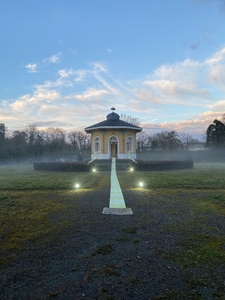
Die Spuren der ursprüngliche Anlage sind in der Linolschnittserie mit einem Motiv basierend auf einem Bepflanzungsplan des Karlsruher Barockgartens sichtbar und ziehen die Besucher:innen der Installation von einer Metallplatte, die über die historischen Zusammenhänge der Arbeit aufklärt, in das Teehaus, den letzten Überrest des Barockgartens. Im Inneren des Pavillons steht eine Gedenkstätte für Karl, Barockgärten und die vergangenen Zeit, für die diese Männer zu Symbolfiguren wurden.
- Die Statue „Herkules Farnese“ war sowohl in der Antike als auch während der Renaissance und des Barock eine der bekanntesten Ikonen. Der eigentlich unbesiegbare Held stützt sich erschöpft auf seine Keule und versteckt hinter seinem Rücken fast kindlich drei goldene Früchte. Laut der mythologischen Erzählung steht Herkules zu diesem Zeitpunkt kurz vor dem Ende der ihm auferlegten Aufgabenreihe, die ihm seinen rechtmäßigen Platz im Olymp verspricht. Die goldenen Früchte aus der Erzählung symbolisieren Fruchtbarkeit, Unsterblichkeit und Macht. Ursprünglich wurden sie als Äpfel interpretiert, sobald Zitrusfrüchte auf den europäischen Markt kamen, wurden aus ihnen Zitronen, Pomeranzen oder Orangen.
- Beschreibung (en)
-
The ‘Hercules Farnese’ statue was one of the most famous icons in antiquity as well as during the Renaissance and Baroque periods. The actually invincible hero leans exhaustedly on his club and hides three golden fruits behind his back in an almost childlike manner. According to the mythological tale, at this point Hercules is about to complete the series of tasks imposed on him, which promises him his rightful place in Olympus. The golden fruits in the story symbolise fertility, immortality and power. Originally they were interpreted as apples, but as soon as citrus fruits came onto the European market, they became lemons, bitter orange or oranges.
With the stylised revival of Greek antiquity during the Renaissance, the ‘Hercules Farnese’ also became more important and was used and reproduced by many aristocrats in their newly built gardens, first in the style of Italian gardens and later in the Baroque period in the style of French gardens. Orangeries, which were part of most Baroque gardens, were built as a place to collect and display the plants acquired. Augustus the Strong, for example, had himself depicted on the roof of his orangery as Hercules carrying the vault of heaven.
Baroque gardens are particularly characterised by the fact that the architecture of the castle or palace is always designed together with the artificial landscape. In Karlsruhe, however, not only was the park built in the spirit of absolutism as a continuation of the palace, but the entire urban planning was also designed in line with this ideology when the city was founded in 1715. The palace and the long avenues, which create lines of sight to the historic centre of power, still exist today. Like almost all other French-style gardens, the garden was converted into an English landscape garden relatively quickly after its construction.
The traces of the original layout are visible in the linocut series with a motif based on a planting plan of the Karlsruhe Baroque garden and draw visitors to the installation from a metal plate, which explains the historical context of the work, into the tea house, the last remnant of the Baroque garden. Inside the pavilion is a memorial to Karl, baroque gardens and the bygone era for which these men became symbolic figures.
-
- Kategorie
- Typ des Projekts/Werks
- Schlagworte
- Datierung
- 25.02.2025 - 27.02.2025
- Mitwirkende
- Dank an
- Sprache
- Material
- Technik/Verfahren/Formate
- Linolschnitt, Lasergravur, audio-visuelle Installation, Animation, fiktionalisierte Geschichte
- Dauer
- ca 5min (Video)
- Ort
- Teehaus im Schlosspark
- Stadt
- Land
- Titel
- Herkules & Karl
- Studiengang
- Importiert am
- 17.07.2025
- Übergeordnete Sets
- 1
- Set enthält
- 0 12
Blast or Bless 2024/2025
Name that can easily go onto 2 lines
Author that can easily go onto 2 lines as well
- Titel
- Blast or Bless 2024/2025
- Titel (en)
- Blast or Bless 2024/2025
- Untertitel
- Eine Einführung in den Siebdruck
- Untertitel des Projekts/Werks (en)
- An introduction into screen printing
- Beschreibung (de)
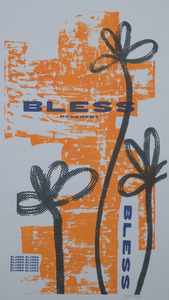
- Inspiriert vom Manifest des Vortizismus "Blast!" kreieren Studierende ein experimentelles, grafisches Poster als Teil des Siebdruck-Grundlagenkurses an der HfG. Während des viertägigen Kurses, der die praktischen und theoretischen Grundlagen der Druckvorstufe und des Siebdruckes an die Studierenden vermittelt, lernen Studierende über die historische und kunstgeschichtliche Entwicklung des Druckverfahrens und wie sie mit Ölkreide und Papierschablonen erste, experimentelle Siebe mit kleinem Budget herstellen können. Des Weiteren erfahren Studierende, wie sie ihre Motive und die Siebe vorbereiten, um sie fotografisch zu entwickeln, wie sie mit wasserbasierten Farben umgehen, die Drucktische einrichten, um die unterschiedlichen Ebenen ihres mehrfarbigen Posters zu registrieren und wie sie die Siebdruckrahmen im Anschluss entschichten.
- Beschreibung (en)
- Inspired by the "Blast!" Manifestos of Vorticism, students create an experimental, graphic poster as part of the screen printing foundation course at the HfG. During the four-day course, which teaches students the practical and theoretical basics of prepress and screen printing, students learn about the historical and art-historical development of the printing process and how they can use oil pastels and paper stencils to produce their first experimental screens on a small budget. Furthermore, students learn how to prepare their motifs and the screens in order to develop them photographically, how to deal with water-based inks, how to set up the printing tables to register the different levels of their multicoloured poster and how to decoat the screen printing frame.
- Kategorie
- Typ des Projekts/Werks
- Schlagworte
- Datierung
- 01.10.2024 - 01.08.2025
- Mitwirkende
- Titel
- Blast or Bless 2024/2025
- Untertitel
- Eine Einführung in den Siebdruck
- Projektleiter/in
- Semester
- Studiengang
- Importiert am
- 15.07.2025
- Übergeordnete Sets
- 1
- Set enthält
- 0 31
„Meine Zuständigkeit hört auf, da wo der Strom kommt“
Name that can easily go onto 2 lines
Author that can easily go onto 2 lines as well
- Titel
- „Meine Zuständigkeit hört auf, da wo der Strom kommt“
- Autor/in
- Beschreibung (de)
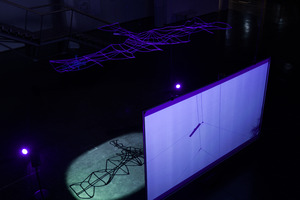
- „Meine Zuständigkeit hört auf, da wo der Strom kommt“ ist eine Installation über Straßenbahnoberleitungen. Sie setzt sich mit Infrastrukturen im öffentlichen Raum auseinander, die für uns im Alltag essenziell sind, die wir aber gelernt haben auszublenden. Sie soll diesen scheinbar banalen, anonymen Zweckbauten einen Wert verleihen und auf sie aufmerksam machen.
Oberleitungen sind in einer Stadt mit vielen Straßenbahnen, wie Karlsruhe, wenn man sich auf der Straße bewegt, immer da. Alles, was man im öffentlichen Raum sieht, sieht man durch das Netz der Oberleitungen. Sie sind allgegenwärtig und ein wichtiger Bestandteil der täglichen Fortbewegung, doch die meisten Leute blenden das im alltäglichen Leben aus. Und das ist kein Zufall: die Stadt schreibt vor, Oberleitungen so zu planen, dass sie möglichst unauffällig sind und in ihrer Umgebung untergehen. Es gibt keine Wertschätzung dafür, wie viel Technik und Material dahinter steckt, dass man sich mit der Straßenbahn durch die Stadt bewegen kann.
Auf diese Themen soll die Installation aufmerksam machen. Ich habe durch diese Arbeit einen intensiven Blick auf Oberleitungen bekommen und wollte diesen durch meine Installation teilen.
In der Installation „Meine Zuständigkeit hört auf, da wo der Strom kommt“ steht man, unter dem im Maßstab 1:26, aus blauen Seilen nachgebildeten, freischwebenden Muster, einer großen Kreuzung in Karlsruhe. Auf der Leinwand läuft ein Stop Motion Video, das alltägliche Momentaufnahmen und Blicke in Bewegung auf die Oberleitungen zeigt.
Aus drei verschiedenen Richtungen kommen Sounds. Einmal die Klänge der Bahnen, denen man auch auf einer Kreuzung zuhören könnte, und dann von rechts und links, zwei verschiedene Blickwinkel, von verschiedenen Personen auf das Thema Oberleitungen. Eins ist der technische Blick von einer Person, die mit Oberleitungen arbeitet, und der andere ist meiner, ein eher poetischer Blick den ich auf die bildliche Ebene der Oberleitungen gewonnen habe. Die eine Seite sagt, dass die Oberleitungen möglichst unauffällig sein sollen, um nicht aufzufallen, und die andere sagt, schaut nach oben, schaut was da alles hängt.
Die Installation soll den Blick der Leute, die sie anschauen, in Zukunft etwas öfter nach oben auf die Oberleitungen lenken
- „Meine Zuständigkeit hört auf, da wo der Strom kommt“ ist eine Installation über Straßenbahnoberleitungen. Sie setzt sich mit Infrastrukturen im öffentlichen Raum auseinander, die für uns im Alltag essenziell sind, die wir aber gelernt haben auszublenden. Sie soll diesen scheinbar banalen, anonymen Zweckbauten einen Wert verleihen und auf sie aufmerksam machen.
- Beschreibung (en)
- “Meine Zuständigkeit hört auf, da wo der Strom kommt” is an installation about tram overhead lines. It explores infrastructures in public spaces that are essential to our everyday lives but which we have learnt to ignore. It is intended to give these seemingly banal, anonymous functional structures a value and draw attention to them.
In a city with a lot of trams, like Karlsruhe, overhead lines are always present when you move along the street. Everything you see in public space is seen through the web of overhead lines. They are omnipresent and essential to everyday transport, however most people ignore them in their day to day lives. And this is no coincidence: the city requires overhead lines to be planned in such a way that they are as discreet as possible and blend into their surroundings. There is no appreciation of how much technology and material goes into getting a tram through the city.
The installation is intended to draw attention to this topic. This work and research has allowed me an immersive view of overhead lines, which I wanted to share and visualise through my installation.
In the installation “Meine Zuständigkeit hört auf, da wo der Strom kommt”, one stands and moves under the free-floating pattern of a large intersection in Karlsruhe, modelled on a scale of 1:26 using blue ropes. A stop motion video runs on the projection screen, showing everyday snapshots and views of the overhead lines in motion.
Sounds come from three different directions. Firstly, the sounds of the trains, which you could also listen to at a crossing, and then from the right and left, two different perspectives, from different people on the subject of overhead lines. One is the technical view of a person who works with overhead lines, and the other is mine, a more poetic view that I have gained of the visual level of the overhead lines. One side says that the overhead lines should be as subtle as possible in order not to attract attention, and the other says, look up, see what's hanging there.
With my installation I hope to draw people’s attention to the overhead lines that play such an important yet invisible role in our daily lives.
- “Meine Zuständigkeit hört auf, da wo der Strom kommt” is an installation about tram overhead lines. It explores infrastructures in public spaces that are essential to our everyday lives but which we have learnt to ignore. It is intended to give these seemingly banal, anonymous functional structures a value and draw attention to them.
- Kategorie
- Typ des Projekts/Werks
- Datierung
- 24.04.2025
- Ort
- Lichthof drei
- Titel
- „Meine Zuständigkeit hört auf, da wo der Strom kommt“
- Projektleiter/in
- Semester
- Studiengang
- Typ der Abschlussarbeit
- Importiert am
- 15.07.2025
- Übergeordnete Sets
- 1
- Set enthält
- 0 7
Folded Sheets
Name that can easily go onto 2 lines
Author that can easily go onto 2 lines as well
- Titel
- Folded Sheets
- Autor/in
- Beschreibung (de)
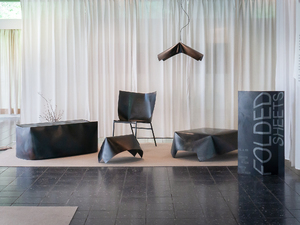
- Folded Sheets untersucht, wie sich Papier-Falttechniken auf Stahlbleche übertragen lassen. Rechteckige Tafeln werden durch gezielte Einschnitte und Faltungen in stabile dreidimensionale Formen gebracht, ohne dass Material verloren geht. Der Prozess des Schwarzbrennens, bei dem Leinöl in die Oberfläche eingebrannt wird, verleiht den Objekten ihre charakteristische schwarze Färbung, schützt sie vor Korrosion und unterstützt die strukturelle Festigkeit.
- Beschreibung (en)
- Folded Sheets explores the possiblities of transferring paper folds into steel sheet furniture. By using cuts and folds on rectangular steel sheets, tensioned rigid shapes without offcuts are created. The objects are further strengthend by blackening the surface with burnt linseed oil.
- Kategorie
- Typ des Projekts/Werks
- Schlagworte
- Datierung
- 2025
- Dank an
- Material
- Technik/Verfahren/Formate
- Falttechnik, Schwarzbrennen mit Leinöl
- Stadt
- Land
- Internetlinks
- Titel
- Folded Sheets
- Projektleiter/in
- Semester
- Studiengang
- Typ der Abschlussarbeit
- Importiert am
- 15.07.2025
- Übergeordnete Sets
- 3
- Set enthält
- 0 18
Love over Taste II
Name that can easily go onto 2 lines
Author that can easily go onto 2 lines as well
- Titel
- Love over Taste II
- Untertitel
- Piggy's World
- Autor/in
- Beschreibung (de)
- Meine künstlerische Arbeit beschäftigt sich mit Tierschutz, Veganismus und der Frage, warum wir bestimmte Tiere lieben und andere essen. Es ist ein Thema, das mich sowohl auf persönlicher als auch auf künstlerischer Ebene tief bewegt. Vor rund vier Jahren habe ich mich dazu entschieden, mich vegetarisch zu ernähren – und bin bald darauf vegan geworden. Mein jüngeres Ich, das meine Mutter liebevoll „kleine Fleischfresserin“ nannte, hätte sich das kaum vorstellen können. Und doch war der Impuls schon früh da. Ich erinnere mich an meinen achten Geburtstag auf den Philippinen: Meine Familie bereitete ein Fest vor, das Schwein im Garten meiner Tante wurde ausgewählt, geschlachtet, aufgespießt. Erst beim Anblick des toten Körpers auf dem Buffet wurde mir klar, was passiert war – und dass es wegen mir geschah. Das mulmige Gefühl, das ich damals im Bauch hatte, begleitet mich bis heute.
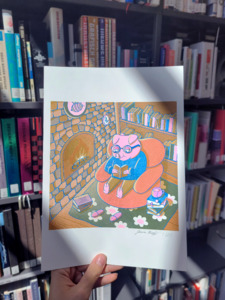
Inspiriert von Melanie Joys Buch Why We Love Dogs, Eat Pigs, and Wear Cows hinterfrage ich in meinem Projekt Love over Taste die gesellschaftlich akzeptierte Trennung zwischen „Nutztieren“ und „Haustieren“, zwischen Leben und Produkt. Im Mittelpunkt steht Piggy – ein liebevoll gestalteter, anthropomorpher Schweine-Charakter, der eine Stimme bekommt, wo Tiere in der Realität keine haben. Basierend auf Recherchen, Dokumentationen wie Dominion oder Mission Erde, erzählt Piggy seine Geschichte als Mastschwein – und findet zugleich in meinen Illustrationen eine Welt jenseits von Leid und Ausbeutung.
Piggy lebt in Szenen weiter, die eine Art Gegenrealität entwerfen: whimsical, freundlich, voller Leichtigkeit. In diesen Bildern ist Piggy allein oder mit seinen Tierfreund*innen zu sehen – in Momenten von Freiheit, Genuss, Selbstbestimmung. Durch die Vermenschlichung möchte ich Empathie wecken: Auch ein Schwein hat ein Recht auf ein leidfreies, selbstbestimmtes Leben.
Zum Projekt gehören neben den Illustrationen auch die Love over Taste Sticker, die Tiere zeigen, die häufig in der Massentierhaltung konsumiert werden – dargestellt mit einem liebevollen, persönlichen Blick.
Mit diesen kleinen, aber sprechenden Arbeiten möchte ich einen Raum öffnen für Gespräche über Mitgefühl, Carnismus und unsere alltäglichen Entscheidungen. Love over Taste ist eine Einladung, die Welt mit anderen Augen zu sehen – mit Piggy’s Augen.
- Meine künstlerische Arbeit beschäftigt sich mit Tierschutz, Veganismus und der Frage, warum wir bestimmte Tiere lieben und andere essen. Es ist ein Thema, das mich sowohl auf persönlicher als auch auf künstlerischer Ebene tief bewegt. Vor rund vier Jahren habe ich mich dazu entschieden, mich vegetarisch zu ernähren – und bin bald darauf vegan geworden. Mein jüngeres Ich, das meine Mutter liebevoll „kleine Fleischfresserin“ nannte, hätte sich das kaum vorstellen können. Und doch war der Impuls schon früh da. Ich erinnere mich an meinen achten Geburtstag auf den Philippinen: Meine Familie bereitete ein Fest vor, das Schwein im Garten meiner Tante wurde ausgewählt, geschlachtet, aufgespießt. Erst beim Anblick des toten Körpers auf dem Buffet wurde mir klar, was passiert war – und dass es wegen mir geschah. Das mulmige Gefühl, das ich damals im Bauch hatte, begleitet mich bis heute.
- Beschreibung (en)
- My artistic work deals with animal welfare, veganism and the question of why we love certain animals and eat others. It's a topic that moves me deeply on both a personal and artistic level. About four years ago, I decided to go vegetarian - and soon after became vegan. My younger self, whom my mother affectionately called ‘little carnivore’, could hardly have imagined it. And yet the impulse was there early on. I remember my eighth birthday in the Philippines: my family was preparing a feast, the pig in my aunt's garden was selected, slaughtered and speared. It was only when I saw the dead body on the buffet that I realised what had happened - and that it was because of me. The queasy feeling I had in my stomach back then is still with me today.
Inspired by Melanie Joy's book Why We Love Dogs, Eat Pigs, and Wear Cows, my project Love over Taste questions the socially accepted separation between ‘farm animals’ and ‘pets’, between life and product. At the centre is Piggy - a lovingly designed, anthropomorphic pig character who is given a voice where animals have none in reality. Based on research and documentaries such as Dominion or Mission Earth, Piggy tells his story as a fattening pig - and at the same time finds a world beyond suffering and exploitation in my illustrations.
Piggy lives on in scenes that create a kind of counter-reality: whimsical, friendly, full of lightness. In these images, Piggy can be seen alone or with her animal friends - in moments of freedom, pleasure and self-determination. By humanising them, I want to awaken empathy: A pig also has a right to a life free of suffering and self-determination.
In addition to the illustrations, the project also includes the Love over Taste stickers, which show animals that are often consumed in factory farming - depicted with a loving, personal view.
With these small but eloquent works, I want to open up a space for conversations about compassion, carnism and our everyday choices. Love over Taste is an invitation to see the world through different eyes - Piggy's eyes.
- My artistic work deals with animal welfare, veganism and the question of why we love certain animals and eat others. It's a topic that moves me deeply on both a personal and artistic level. About four years ago, I decided to go vegetarian - and soon after became vegan. My younger self, whom my mother affectionately called ‘little carnivore’, could hardly have imagined it. And yet the impulse was there early on. I remember my eighth birthday in the Philippines: my family was preparing a feast, the pig in my aunt's garden was selected, slaughtered and speared. It was only when I saw the dead body on the buffet that I realised what had happened - and that it was because of me. The queasy feeling I had in my stomach back then is still with me today.
- Kategorie
- Typ des Projekts/Werks
- Schlagworte
- Datierung
- 2024–ongoing
- Dank an
- Sprache
- Material
- Technik/Verfahren/Formate
- Risografie, Animation mit Hilfe von Cartoon Animator, Illustrationen in den Formaten A5 bis A3
- Abmessungen
- A5 bis A3
- Dauer
- ca. 12 Minuten Animation
- Ort: Institution
- Stadt
- Land
- Beteiligte Institution(en)
- Auftrag durch
- Tereza Ruller's Seminar All About Love
- Internetlinks
- Titel
- Love over Taste II
- Untertitel
- Piggy's World
- Projektleiter/in
- Semester
- Studiengang
- Lehrveranstaltung
- Archiv-Signatur
- Importiert am
- 06.07.2025
- Übergeordnete Sets
- 1
- Set enthält
- 0 18
Currents of Change

Name that can easily go onto 2 lines
Author that can easily go onto 2 lines as well
- Titel
- Currents of Change
- Autor/in
- Beschreibung (de)
- Was bedeutet es, zu fliehen, wenn die Strömungen einen immer noch unter die Haut ziehen?
„Currents of Change“ ist eine Eigenproduktion, die ich während meines Praktikums im Studio Riso Pop in Amsterdam geschrieben, illustriert und produziert habe. Es erzählt die Geschichte eines Oktopus, der sich auf der Suche nach Freiheit verändert – ein Spiegelbild des Kampfes ums Überleben in einer unsicheren Welt.
- Was bedeutet es, zu fliehen, wenn die Strömungen einen immer noch unter die Haut ziehen?
- Beschreibung (en)
- What does it mean to escape, when the currents still pull you beneath your skin?
"Currents of Change" is a self-made I wrote, illustrated and produced during my internship at the studio Riso Pop in Amsterdam. It tells the story of an octopus undergoing transformation to reshape itself in search of freedom – mirroring the struggle to survive in an uncertain world.
- What does it mean to escape, when the currents still pull you beneath your skin?
- Kategorie
- Typ des Projekts/Werks
- Schlagworte
- Datierung
- 2025
- Sprache
- Material
- Technik/Verfahren/Formate
- Risografie
- Ort: Institution
- Stadt
- Land
- Internetlinks
- Bemerkungen
- Interesse an einem Exemplar? Dann schreibe mir eine Mail an jkessler@hfg-karlsruhe.de
- Titel
- Currents of Change
- Semester
- Studiengang
- Lehrveranstaltung
- Archiv-Signatur
- Externes Archiv
- Importiert am
- 06.07.2025
- Übergeordnete Sets
- 1
- Set enthält
- 0 9
Wrapping Waste
Name that can easily go onto 2 lines
Author that can easily go onto 2 lines as well
- Titel
- Wrapping Waste
- Titel (en)
- Wrapping Waste
- Untertitel
- Generative Design-Tools für die Verwertung von Lederverschnitt
- Untertitel des Projekts/Werks (en)
- Generative design tools for the reuse of leather waste
- Autor/in
- Beschreibung (de)
- Fast eine halbe Milliarde m² Leder weltweit endet jedes Jahr als Verschnitt in der Polsterproduktion.
Viel zu lange mussten sich natürliche Materialien starren Vorlagen unterordnen: Wir schneiden zu, wir kürzen, wir verwerfen – wir erzeugen Verschnitt durch Design.
Was wäre, wenn sich Technologie endlich der Natur anpassen könnte – und nicht umgekehrt?
Algorithmen können unreguläre Materialien und den Verschnitt als eine neue Ressource verwenden. Es geht dabei nicht nur um Effizienz; es geht darum, die Produkt-Ästhetik neu zu definieren – Schönheit in der natürlichen Variation und den natürlichen Fehlern zu sehen und zu erkennen, dass ein gutes Produkt am besten attraktiv, nachhaltig aber vor allem auch skalierbar ist.
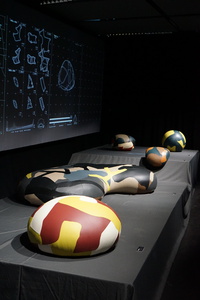
Ich habe Algorithmen entwickelt, die Polsterobjekte aus digitalisiertem Lederabfall generieren. Dieses Programm kann gewünschte Objekte direkt anhand verschiedener Designrichtlinien und Parameter erstellen und nutzt dabei jedes Lederstück zu fast 90% im Durchschnitt aus. Es entsteht ein auf das Material zugeschnittenes Design.
Danach habe ich es selbst ausprobiert und eine Serie von wassertropfenförmigen Polstermöbeln hergestellt. Das Material wurde von der Möbelfirma MOROSO und einer deutschen Polsterfirma gesponsort.
- Fast eine halbe Milliarde m² Leder weltweit endet jedes Jahr als Verschnitt in der Polsterproduktion.
- Beschreibung (en)
- Nearly half a billion square meters of global leather ends up as offcuts on upholstery production every year.
For so long, natural materials have been forced to conform to rigid templates: We trim, we crop, we discard - we create waste by design.
What if technology could finally adapt to nature and not the other way around?
Using algorithms to find hidden potential in imperfect materials. This is more than efficiency; it's about redefining the product aesthetic, to see beauty in variation and to recognize that the most attractive design is one that is both: sustainable and scalable.
I have created such algorithms that generate upholstery objects from leather waste, which has been digitalized. This program can directly create desired objects based on a variety of design guidelines, parameters and constraints. It utilizes each leather piece up to 90% in average. The outcome is a design that is 100% based on the material's shape.
Afterwards I have tried it myself and made a series of upholstered furniture from leather waste. The leather was sponsored by MOROSO, the filling by a german upholstery company.
- Nearly half a billion square meters of global leather ends up as offcuts on upholstery production every year.
- Kategorie
- Schlagworte
- Datierung
- 09.07.2025
- Dank an
- Sprache
- Technik/Verfahren/Formate
- Digitale Arbeit, Pythoncode, Grasshopper, Nähen, Polstern
- Abmessungen
- 205cm x 130cm x 42cm / 50cm x 50cm x 32cm / 78cm x 78cm x 40cm und kleinere.
- Ort: Institution
- Ort
- Glaskubus, 2. OG, Raum 208
- Stadt
- Land
- Titel
- Wrapping Waste
- Untertitel
- Generative Design-Tools für die Verwertung von Lederverschnitt
- Projektleiter/in
- Semester
- Studiengang
- Typ der Abschlussarbeit
- Importiert am
- 30.06.2025
- Übergeordnete Sets
- 2
- Set enthält
- 0 19
Wet again
Name that can easily go onto 2 lines
Author that can easily go onto 2 lines as well
- Titel
- Wet again
- Titel (en)
- Wet again
- Untertitel
- Wahrnehmung und Abstraktion von Erhaltungsarbeit im ländlichen Raum
- Untertitel des Projekts/Werks (en)
- Perception and abstraction of maintenance work in rural areas
- Autor/in
- Beschreibung (de)
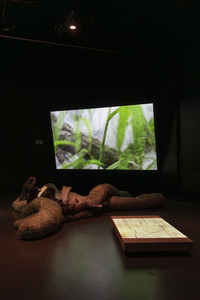
- „Wet again“ ist das Ergebnis eines zweijährigen Prozesses von Laura Haak, eine Moorregion als Akteur wahrzunehmen und zu begleiten. Es liegt in einem abgelegenen Terrain im Nordosten Deutschlands nahe dem Kummerower See im Malchiner Umland.
In einer Feldforschung wurde viel Zeit verbracht, Scores der Zusammenarbeit entwickelt, Wander- und Kanurouten 1:1 erschlossen. Dabei entstand ein Austausch mit den Menschen vor Ort, die eine längere Beziehung zum Torfboden pflegen und sich für die Wiedervernässung von Moorböden lokal und europaweit einsetzen.
Es entstand ein Gewebe aus verschiedenen Wahrnehmungsperspektiven und die Frage nach ihren machtpolitischen Auswirkungen auf ländliche Gestaltungsprozesse. Was sind die neuen Choreografien der Erhaltungsarbeit, auf welche Perspektiven wird Bezug genommen?
- „Wet again“ ist das Ergebnis eines zweijährigen Prozesses von Laura Haak, eine Moorregion als Akteur wahrzunehmen und zu begleiten. Es liegt in einem abgelegenen Terrain im Nordosten Deutschlands nahe dem Kummerower See im Malchiner Umland.
- Beschreibung (en)
- ‘Wet again’ is the result of a two-year process by Laura Haak to perceive and accompany a moorland region as an acting entity.
It is located in a remote area in north-eastern Germany near Lake Kummerow in the Surrounding Malchin.
A lot of time was spent conducting field research, developing scores of collaboration, and tracing hiking and canoe routes 1:1.
This led to an exchange with local people who have a long-standing relationship with the peat soil and are committed to the rewetting of moorland soils both locally and across Europe.
A fabric of different perspectives emerged, along with questions about their power-political implications for rural design processes. What are the new choreographies of maintenance work, and what perspectives are being referred to?
- ‘Wet again’ is the result of a two-year process by Laura Haak to perceive and accompany a moorland region as an acting entity.
- Kategorie
- Typ des Projekts/Werks
- Schlagworte
- Datierung
- Zwei Sommer und ein Frühjahr 2023-2025
- Sprache
- Bemerkungen
- Acknowledgements:
Dr Uta Berghöfer, Dr Joachim Borner Martina Zienert from Projekthof Karnitz , Nora Köhn from University Greifswald, Dr Ulf Schiefelbein from Ministry for Climate Protection, Agriculture, Rural Areas and the Environment Mecklenburg-Western Pomerania , Tobias Dahms from thermal drones GmbH, Richard Hurding from Zelfo Technology GmbH, the paludi farmers Ludwig Bork and Henning Voigt, Frank Zimmermann from "Uns lütt Museum“ Dargun and sculptor Kathrin Wetzel for their time and willingness to show themselves, interesting and realizing conversations, the opportunity for a bird‘s eye view and 150 kilograms of sedge cane grass, Tim Ingold for loaning captions and providing impulses for thoughts and perception
Celine Condorelli, Jaya Demmer, Lina Determann, Mascha Dilger, Benjamin Eisele, Constanze Fischbeck, Hanna Franke, Vera Gärtner, Marlene-, Michael-, Birgit- and Michaela Haak, Mira Hirtz, Franka Kampmeier, Alexander Knoppig, Hanne König, Christian‘Lübben, Leonie Mühlen, Wiebke Muller, Leonie Müller, Laura Morcillo and ZeitBildLab, Luise Peschko, Nis Petersen, Sebastian Schafer, Susanne Schmitt, Josefine Scheu, Phillip Schell, Arthur Schuman, Henriette Schwabe, Claud Teichmann, Alexander Thelen, Johannes Thimm, Leia Walz, Isabel Winter for countless support, the best of times, carrying hands, attentive eyes and continuous inquiries and Paulina Mimberg for the most splendid graphic.
- Acknowledgements:
- Titel
- Wet again
- Untertitel
- Wahrnehmung und Abstraktion von Erhaltungsarbeit im ländlichen Raum
- Projektleiter/in
- Semester
- Studiengang
- Typ der Abschlussarbeit
- Importiert am
- 30.06.2025
- Übergeordnete Sets
- 2
- Set enthält
- 2 3
Plastic Fugue
Name that can easily go onto 2 lines
Author that can easily go onto 2 lines as well
- Titel
- Plastic Fugue
- Titel (en)
- Plastic Fugue
- Autor/in
- Beschreibung (de)
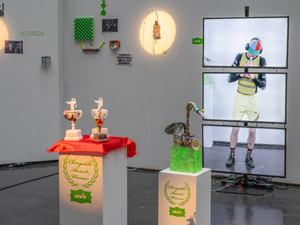
- Plastic Fugue ist eine interaktive Klanginstallation, die mit einer Kindheitserinnerung an die Konzertflöte beginnt, ein Instrument, das ich aufgrund finanzieller Schwierigkeiten nie erlernen konnte und das für mich zum Symbol des Klassismus wurde. Finanzielle Einschränkung ist nicht nur unangenehm, sondern lässt Kinder sich als ungeeignet empfinden, überhaupt etwas zu versuchen, und normalisiert dadurch Klassismus, selbst in der Kunst.
Es passierte mir erneut, als ich Malerei studierte. Die Materialien, Leinwand, Holz, Stoff, Papier, Farbe, Öl, ja sogar ein Bleistift, werden mit einer gewissen Aura vermarktet. Unsere Kunst ist längst zu sehr mit der neoliberalen Wirtschaft verstrickt, ironischerweise im Widerspruch zu ihrem eigentlichen Ziel, Freiheit. Die Qualität von Kunst über den Preis der Materialien zu definieren, ist eine Wiederholung alter Muster, so wie Blau und Grün einst als Zeichen des Reichtums galten und dem Adel vorbehalten waren.
Diese Struktur führte dazu, dass ich klassische Musik als die einzig wahre Musik betrachtete und die Leinwandmalerei, die im späten 15. Jahrhundert in Italien entstand, als den allein gültigen Standard in der bildenden Kunst. Jahrzehnte später erkannte ich, dass es jenseits dessen, was ich damals als Kunst verstand, auch Formen gab, die aus verschiedenen kulturellen Kontexten stammen und nicht als Teil dieses Standards wahrgenommen wurden. Dann versuchte ich, all diese ironischen Elemente in die verschiedenen Medien einzubringen, mit denen ich bisher gearbeitet hatte.
- Plastic Fugue ist eine interaktive Klanginstallation, die mit einer Kindheitserinnerung an die Konzertflöte beginnt, ein Instrument, das ich aufgrund finanzieller Schwierigkeiten nie erlernen konnte und das für mich zum Symbol des Klassismus wurde. Finanzielle Einschränkung ist nicht nur unangenehm, sondern lässt Kinder sich als ungeeignet empfinden, überhaupt etwas zu versuchen, und normalisiert dadurch Klassismus, selbst in der Kunst.
- Beschreibung (en)
- Plastic Fugue is an interactive sound installation project that begins with a childhood memory of the concert flute, which I couldn't learn due to financial hardship, and which came to symbolize classism to me. Being financially debilitated is not only a discomfort, but also makes children feel unqualified to even try, thereby normalizing this classism even in art.
It happened to me again when I studied painting. The materials are marketed with an aura, including canvas, wood, fabric, paper, paint, oil, and even a pencil. Our art already conspires too much with the neoliberal economy, ironically, against its supposed goal: liberty. Classifying the quality of art based on the price of materials is repetitive, much like how blue and green, once symbols of wealth, were valued and reserved for royalty in history.
This structure led me to view classical music as the only true form of music, and canvas painting, which originated in Italy in the late 15th century, as the sole standard in visual art. Decades later, I realized there was more art behind the things I once believed to be art alone. Then I attempted to gather all these ironical elements into diverse mediums I had experienced so far.
- Plastic Fugue is an interactive sound installation project that begins with a childhood memory of the concert flute, which I couldn't learn due to financial hardship, and which came to symbolize classism to me. Being financially debilitated is not only a discomfort, but also makes children feel unqualified to even try, thereby normalizing this classism even in art.
- Kategorie
- Typ des Projekts/Werks
- Schlagworte
- Datierung
- 09.07.2025 - 13.07.2025
- Mitwirkende
- Dank an
- Material
- Abmessungen
- Variable Maße
- Dauer
- Introducing air&dust: 9' 11" / Sax Recital: 16' 37"
- Ort: Institution
- Ort
- Lichthof
- Stadt
- Land
- Internetlinks
- Titel
- Plastic Fugue
- Projektleiter/in
- Semester
- Studiengang
- Typ der Abschlussarbeit
- Importiert am
- 29.06.2025
- Übergeordnete Sets
- 3
- Set enthält
- 4 1
In Defense of Mis Caprichos
Name that can easily go onto 2 lines
Author that can easily go onto 2 lines as well
- Titel
- In Defense of Mis Caprichos
- Untertitel
- When someone says you canʼt do something. Do it twice, and take pictures.
- Autor/in
- Beschreibung (de)
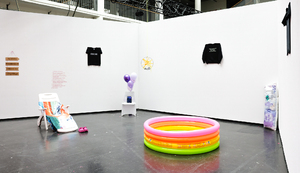
- "In Defense of Mis Caprichos" ist eine multimediale Ausstellung, die auf einem selbst kuratierten Archiv von 140 gefundenen und eigenen Bildern basiert. Sie setzt sich mit der vernakulären Bildsprache Lateinamerikas auseinander – von Memes und persönlichen Fotos bis zu Screenshots. Viele Bilder sind durch digitale Verbreitung nur in niedriger Auflösung erhalten und spiegeln so die visuelle Textur des Internets wider. Sie vermitteln eine Sensibilität, die sich nicht erklären lässt, sondern sich durch Stimmung, Ton und Wiederholung entfaltet. Viele der Bilder stammen aus oder zeigen Kontexte des Globalen Südens und verstehen sich als Hommage an dortige alltägliche, informelle Gesten. Zusammen bilden sie eine visuelle Sprache, die intim, vielschichtig, instabil und oft humorvoll ist.
Das Projekt bezieht sich auf Hal Fosters Aufsatz "An Archival Impulse", der das Archivieren als künstlerische Praxis versteht und Fragmentierung der Kohärenz vorzieht – zentrale Konzepte für dieses sich stetig wandelnde Archiv. Daraus wurden zehn künstlerische Objekte entwickelt, die die Skurrilitäten der Sammlung erfassen: Repliken, Performances oder hybride Assemblagen. Ihre Logik beruht auf Aneignung, Kopie und Transformation – im Sinne Byung-Chul Hans, der Replikation als kreative Strategie für neue Bedeutungen begreift.
Einige Werke greifen konkrete Bilder auf: Eine Performance, bei der ein Plastikpool auf einem Motorrad transportiert wird, bezieht sich auf ein Archivbild. Ein anderes verwandelt einen falsch übersetzten Tweet in ein dekoratives Holzschild. Ein drittes ist ein Traumfänger aus gelber Unterwäsche – inspiriert von einem kolumbianischen Neujahrsbrauch, wonach gelbe Unterwäsche Glück bringen soll.
Ein zentrales Element ist eine Videoarbeit, die das gesamte Archiv in Endlosschleife zeigt, begleitet von Texten aus unterschiedlichen Quellen: akademisch, persönlich oder aus sozialen Medien. Die Anordnung ist nicht erklärend, sondern atmosphärisch. Die Ausstellung schafft einen hierarchiefreien Raum, der Intuition, spielerische Ernsthaftigkeit und visuelle Alltagskulturen in den Mittelpunkt stellt.
- "In Defense of Mis Caprichos" ist eine multimediale Ausstellung, die auf einem selbst kuratierten Archiv von 140 gefundenen und eigenen Bildern basiert. Sie setzt sich mit der vernakulären Bildsprache Lateinamerikas auseinander – von Memes und persönlichen Fotos bis zu Screenshots. Viele Bilder sind durch digitale Verbreitung nur in niedriger Auflösung erhalten und spiegeln so die visuelle Textur des Internets wider. Sie vermitteln eine Sensibilität, die sich nicht erklären lässt, sondern sich durch Stimmung, Ton und Wiederholung entfaltet. Viele der Bilder stammen aus oder zeigen Kontexte des Globalen Südens und verstehen sich als Hommage an dortige alltägliche, informelle Gesten. Zusammen bilden sie eine visuelle Sprache, die intim, vielschichtig, instabil und oft humorvoll ist.
- Beschreibung (en)
- In Defense of Mis Caprichos is a multimedia exhibition based in a self-curated archive of 140 found and self-produced images that reflect the vernacular visual language of Latin America. These images—ranging from memes and personal photographs to screenshots— carry a distinct sensibility: one that resists explanation and instead unfolds through mood, tone, and repetition. Often low in resolution due to constant digital circulation, the images reflect the visual texture of the internet. Many celebrate vernacular and informal gestures, circulating quickly across digital platforms to form a visual language that is intimate, layered, unstable, and often humorous.
The work draws on Hal Foster’s An Archival Impulse, where archiving is seen as an artistic practice and a preference for fragmentation over coherence reflects a deliberate artistic strategy.
From this archive, ten objects were developed, each guided by a specific premise. Some take the form of replicas, others of performances or hybrid assemblages. These objects operate as attempts to “grasp” the underlying sensibility of the archive. Their logic often draws on the aesthetics of appropriation, copying, and transformation—resonating with Byung-Chul Han’s Shanzhai: Deconstruction in Chinese, where copying and sampling are understood as creative strategies capable of generating new meaning.
A second core component of the exhibition is a video slideshow that presents the full image archive in a loop. The video has no beginning and no end, as it is conceived as a work in progress—the archive is constantly evolving. Each image is accompanied by 1–2 lines of text drawn from diverse sources: academic texts, social media posts, and personal writings. The arrangement is not explanatory but atmospheric, evoking how Susan Sontag, in Notes on Camp, approaches a sensibility not through linear explanation but through curation and juxtaposition.
In Defense of Mis Caprichos does not seek resolution or synthesis. Instead, it inhabits a space of connection without hierarchy. It is an argument for intuition, for playful seriousness, and for honoring the seemingly trivial gestures we encounter every day.
- In Defense of Mis Caprichos is a multimedia exhibition based in a self-curated archive of 140 found and self-produced images that reflect the vernacular visual language of Latin America. These images—ranging from memes and personal photographs to screenshots— carry a distinct sensibility: one that resists explanation and instead unfolds through mood, tone, and repetition. Often low in resolution due to constant digital circulation, the images reflect the visual texture of the internet. Many celebrate vernacular and informal gestures, circulating quickly across digital platforms to form a visual language that is intimate, layered, unstable, and often humorous.
- Kategorie
- Typ des Projekts/Werks
- Schlagworte
- Dank an
- Sprache
- Material
- Technik/Verfahren/Formate
- Diashow / Skulptur / Performance
- Ort: Institution
- Ort
- Lichthof 4
- Stadt
- Land
- Titel
- In Defense of Mis Caprichos
- Untertitel
- When someone says you canʼt do something. Do it twice, and take pictures.
- Projektleiter/in
- Semester
- Studiengang
- Typ der Abschlussarbeit
- Importiert am
- 27.06.2025
- Übergeordnete Sets
- 2
- Set enthält
- 4 2