Abschlussarbeiten-Archiv
Abschlussarbeiten-Archiv
| Titel |
|
102 Inhalte
- Seite 1 von 9
eternal girlhood
Name that can easily go onto 2 lines
Author that can easily go onto 2 lines as well
- Titel
- eternal girlhood
- Untertitel
- oh my dreams
- Autor/in
- Beschreibung (de)
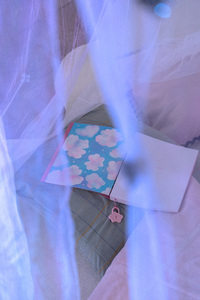
- “eternal girlhood” ist eine konzeptionelle Arbeit, welche aus einer Rauminstallation und einer Publikation besteht.
Ursprünglich in den Chinesischen Pavillons des Fasanengartens in Karlsruhe installiert, wurde der Raum mit der Handlung der Publikation durch Requisiten sowie ein selbst produziertes Musikstück verknüpft.
Das Projekt ermöglicht eine Reise in eine poetische Geschichte, inspiriert von persönlichen und kulturellen Themen wie Girlhood, Coming-of-Age und Growing Pains.
Die handgebundene Publikation mit glitzerndem und geprägtem Umschlag umfasst auf ca. 100 Seiten neben Serien analoger Schwarzweiß-Fotografie farbige Mittelformat-Fotos, begleitet von analogen Schnappschüssen und Illustrationen im Riso-Druck.
Zwischen Fotoserien und Illustrationen sind Songtexte sowie Skriptfragmente und Gedichte eingestreut, in Referenz zu Filmsequenzen aus Coming-of-Age-Geschichten. Es ergibt sich die zeitlose Skizze eines Mädchens, das Teil einer innig verbundenen Mädchengruppe ist.
Transparente Drucke von drei Mittelformat-Fotografien werden vom Fensterlicht erleuchtet und symbolisieren in Zusammenhang mit dem Buch unterschiedliche Kapitel der Geschichte.
Unter einem Baldachin, umgeben von funkelnd tanzenden Schmetterlingen, können Besucher*innen in diese Welt eintauchen und sind eingeladen, für einen Moment Teil von „eternal girlhood“ zu sein, fernab der Echtzeit.
- “eternal girlhood” ist eine konzeptionelle Arbeit, welche aus einer Rauminstallation und einer Publikation besteht.
- Beschreibung (en)
- “eternal girlhood“ is a conceptional artwork, blending a publication with its installation space.
Initially installed in the Chinese pavillons of the Fasanengarten in Karlsruhe, the space was connected to the story of the book through props and a musical sound score.
The project offers a journey into a poetic story, inspired by personal and cultural ideas on girlhood, coming of age and growing pains.
Handbound, wrapped in a glittery embossed dustcover, the publication features around 100 pages with multiple series of black and white film photography, medium format shots underlined by analog snapshots and Riso printed Illustrations. In between the chapters of photography and Illustrations, lyrics, fragments of script and poems are inserted in reference to movie sequences from coming of age stories. A timeless profile of a girl being part of girlhood and a deeply connected friendship is created.
Transparent prints of three medium format photos are illuminated by the windows’ natural light and symbolize different chapters of the story in combination with the book.
Underneath a canopy, surrounded by sparkling dancing butterflies, visitors can dive into this world and are invited to become part of “eternal girlhood“, away from modern reality.
- “eternal girlhood“ is a conceptional artwork, blending a publication with its installation space.
- Kategorie
- Typ des Projekts/Werks
- Schlagworte
- Datierung
- 05.07.2024
- Mitwirkende
- Dank an
- Sprache
- Material
- Technik/Verfahren/Formate
- Risographie, Digitaldruck, Mediumformat-Fotografie, Schreibmaschine, Laser, Prägung
- Abmessungen
- Fläche: ca. 5m x 5m, Höhe der Aufhängung ca. 3m
- Ort: Institution
- Ort
- Chinesische Pavilions des Fasanengarten
- Stadt
- Land
- Beteiligte Institution(en)
- Titel
- eternal girlhood
- Untertitel
- oh my dreams
- Projektleiter/in
- Semester
- Studiengang
- Typ der Abschlussarbeit
- Importiert am
- 05.11.2024
- Übergeordnete Sets
- 3
- Set enthält
- 0 21
Etwas Aufnehmen
Name that can easily go onto 2 lines
Author that can easily go onto 2 lines as well
- Titel
- Etwas Aufnehmen
- Titel (en)
- Get in touch with
- Untertitel
- Eine Reading Performance in 4 Teilen
- Untertitel des Projekts/Werks (en)
- A reading performance in 4 chapters
- Autor/in
- Beschreibung (de)
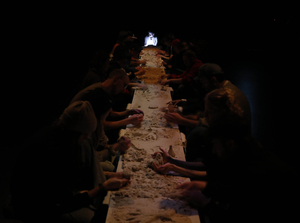
- "Etwas Aufnehmen" ist eine 30-minütige interaktive Reading Performance über den (Tast-) Sinn. Sie findet an einem 15 m langen Steintisch statt, 80 kg kinetischer Sand liegen auf ihm verteilt. Die Performance entstand in sechsmonatiger Recherche und im Austausch mit einer blinden Künstlerin, einem Tastforscher, einem Übersetzer von visuellen Lernmaterialien und einer Tierkommunikationsexpertin und erzählt außerdem von einer Kollaboration mit einem Hund (Betty). Welchen Stellenwert nimmt der Tastsinn in unserer Wahrnehmung ein, um Dinge wortwörtlich zu "begreifen"? Wie kommuniziere oder gestalte ich mit einem Tier, welches auf ganz andere Sinne zurückgreifen kann? "Etwas Aufnehmen" hinterfragt die eigene Wahrnehmung und beschreibt den Drang nach Verständigung. Die Reading Performance ist sowohl taktil, auditiv als auch visuell wahrnehmbar.
- Beschreibung (en)
- "Get in touch with" is a 30-minute interactive reading performance about the (tactile) sense. It takes place on a 15 metre long stone table with 80 kg of kinetic sand on top. The performance is the result of a six-month research and exchange with a blind artist, a tactile researcher, a translator of visual learning materials and an animal communication expert, and also tells of a collaboration with a dog (Betty). What role does the sense of touch play in our perception? How do I communicate or design with an animal that has access to completely different senses? "Etwas Aufnehmen" questions our own perception and describes the urge for understanding. The reading performance can be experienced tactilely, acoustically and visually.
- Kategorie
- Typ des Projekts/Werks
- Schlagworte
- Datierung
- Februar 2023
- Mitwirkende
- Dank an
- Sprache
- Untertitel (Film)
- Material
- Abmessungen
- Länge: 15m, Breite: 25cm, Höhe: 25cm
- Dauer
- 30min
- Ort: Institution
- Ort
- Großes Studio
- Stadt
- Land
- Internetlinks
- Titel
- Etwas Aufnehmen
- Untertitel
- Eine Reading Performance in 4 Teilen
- Projektleiter/in
- Semester
- Studiengang
- Typ der Abschlussarbeit
- Importiert am
- 05.10.2024
- Übergeordnete Sets
- 2
- Set enthält
- 0 16
Excreta Fluxorum - Theatrum Instrumentorum
Name that can easily go onto 2 lines
Author that can easily go onto 2 lines as well
- Titel
- Excreta Fluxorum - Theatrum Instrumentorum
- Untertitel
- George Maciunas und die Kultur der „curiositas”
- Autor/in
- Beschreibung (de)
- „Möglicherweise erscheinen die intermediären Kunstformen der 60er-jahre als zu komplex, ihre Manifestationen zu sehr als Teil einer noch lebenden Kunstgeschichte, vielleicht hindert auch die noch nicht abgeschlossene Bewältigung der postmodernen Wende in Philosophie, Kunst und Literatur an einer generalüberholten wissenschaftlichen Annäherung an diesen Themenbereich, der sich von der fließenden, aus Künstlerkommentaren über Kritiken in methodischen Darstellungen hervorgegangenen bisherigen Versuchen einer vorläufigen Einordnung des Phänomens Fluxus abzugrenzen hätte."
- Beschreibung (en)
- “It is possible that the intermediary art forms of the 1960s appear too complex, their manifestations too much a part of a still living art history; perhaps the fact that the postmodern turn in philosophy, art and literature has not yet been completed also prevents a generally overhauled academic approach to this subject area, which would have to distinguish itself from the fluid attempts at a provisional classification of the phenomenon of Fluxus that have emerged from artists' commentaries on critiques in methodical presentations.”
- Kategorie
- Typ des Projekts/Werks
- Schlagworte
- Datierung
- 04.03.1999
- Sprache
- Ort: Institution
- Stadt
- Land
- Titel
- Excreta Fluxorum - Theatrum Instrumentorum
- Untertitel
- George Maciunas und die Kultur der „curiositas”
- Projektleiter/in
- Semester
- Studiengang
- Typ der Abschlussarbeit
- Archiv-Signatur
- HfG HS 1999 01
- Externes Archiv
- Importiert am
- 11.01.2024
- Übergeordnete Sets
- 2
- Set enthält
- 0 3
existence.exe
Name that can easily go onto 2 lines
Author that can easily go onto 2 lines as well
- Titel
- existence.exe
- Titel (en)
- existence.exe
- Autor/in
- Beschreibung (de)
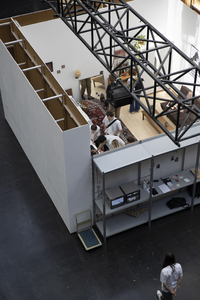
- Das Konzept der „Selbstoptimierung“ hat eine zunehmende gesellschaftliche Relevanz erreicht, dementsprechend haben zahlreiche Apps, die sich auf den Körper, die Emotionen und das Selbstmanagement konzentrieren, nach und nach mein Leben durchdrungen.
Ich scheine gleichzeitig in zwei Formen zu existieren: einerseits als organisches Wesen, das aus Wahrnehmung, Widersprüchen und zufälligen Erfahrungen besteht; andererseits als digitales Modell, das von verschiedenen Anwendungen konstruiert wurde.
Allmählich gewöhnte ich mich daran, mich selbst über Zahlen zu messen und zu analysieren – von der Kalorienaufnahme über Schlafzyklen bis hin zu feinen Schwankungen der Herzfrequenz – doch dabei verlor ich zunehmend das Vertrauen in die natürliche Wahrnehmung meines Körpers.
Diese Programme geben vor, „personalisierte Dienste“ zu sein, verwandeln uns letztlich aber in ein einheitliches Datenformat, das sich bequem kategorisieren, vergleichen und extrahieren lässt.
Je mehr Daten es über mich gibt, desto weniger scheine ich mich selbst zu spüren.
- Das Konzept der „Selbstoptimierung“ hat eine zunehmende gesellschaftliche Relevanz erreicht, dementsprechend haben zahlreiche Apps, die sich auf den Körper, die Emotionen und das Selbstmanagement konzentrieren, nach und nach mein Leben durchdrungen.
- Beschreibung (en)
- As “self-optimization” has become a widely accepted life concept, a large number of apps focusing on the body, emotions, and self-management have gradually infiltrated my life.
I seem to exist in two forms at the same time: one, an organic being composed of perception, contradictions, and incidental experiences; the other, a digital model constructed by various applications.
I gradually got used to measuring and examining myself through numbers—from calorie intake to sleep cycles and subtle fluctuations in heart rate—but in doing so, I slowly lost trust in my body’s natural perception.
These programs present themselves as “personalized services,” yet ultimately convert us into a single data format, convenient for categorization, comparison, and extraction.
The more data there is about me, the less I seem to feel myself.
- As “self-optimization” has become a widely accepted life concept, a large number of apps focusing on the body, emotions, and self-management have gradually infiltrated my life.
- Kategorie
- Typ des Projekts/Werks
- Schlagworte
- Datierung
- 14.05.2025
- Mitwirkende
- Dank an
- Dauer
- 2 Tage
- Ort: Institution
- Ort
- Lichthof 4
- Stadt
- Land
- Titel
- existence.exe
- Projektleiter/in
- Semester
- Studiengang
- Typ der Abschlussarbeit
- Importiert am
- 19.05.2025
- Übergeordnete Sets
- 2
- Set enthält
- 0 26
Fernand Léger und Ballet Mécanique
Name that can easily go onto 2 lines
Author that can easily go onto 2 lines as well
- Titel
- Fernand Léger und Ballet Mécanique
- Untertitel
- Film als Kunst, Filmkunst, Film und Kunst
- Autor/in
- Beschreibung (de)
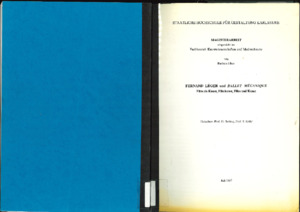
- „‚Ballet Mécanique‘ ist zu einer Zeit entstanden, die als Höhepunkt, und immer wieder auch als Wendepunkt in Légers Malerei verstanden wird. Der Film fügt sich nicht nur in seine künstlerische Konzeption ein, sondern hat diese auch zum Thema. ‚Ballet Mécanique‘ ist ein Manifest, nicht nur für seine Kunst, sondern auch für das Kino. Wie bei seinen Literatenfreunden ist Légers intensive Auseinandersetzung mit dem Kino von einer doppelten Intention geprägt, von deren Hinwendung zu dem jungen Medium als potentiellen Mittel, die eigene Kunst zu reformieren, und vom Entwurf eines neuen Konzepts von Film, der seinerseits durch die gestalterische Intervention von Dichtern und Malern zu seinen eigenen Ausdrucksmitteln findet."
- Beschreibung (en)
- “'Ballet Mécanique' was created at a time that is seen as a high point, and also repeatedly as a turning point, in Léger's painting. The film not only fits into his artistic conception, but also has it as its theme. 'Ballet Mécanique' is a manifesto, not only for his art, but also for cinema. As with his literary friends, Léger's intensive engagement with cinema is characterized by a double intention, by their turn to the young medium as a potential means of reforming their own art, and by the design of a new concept of film, which in turn finds its own means of expression through the creative intervention of poets and painters.”
- Kategorie
- Schlagworte
- Datierung
- Juli 1997
- Sprache
- Ort: Institution
- Stadt
- Land
- Titel
- Fernand Léger und Ballet Mécanique
- Untertitel
- Film als Kunst, Filmkunst, Film und Kunst
- Projektleiter/in
- Semester
- Studiengang
- Typ der Abschlussarbeit
- Archiv-Signatur
- HfG HS 1997 02
- Externes Archiv
- Importiert am
- 11.01.2024
- Übergeordnete Sets
- 2
- Set enthält
- 0 2
finding traces and placing connections
Name that can easily go onto 2 lines
Author that can easily go onto 2 lines as well
- Titel
- finding traces and placing connections
- Autor/in
- Beschreibung (de)
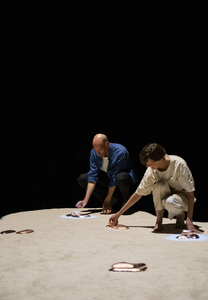
- „finding traces and placing connections“ ist eine interaktive Kunstinstallation und ein persönlicher Liebesbrief an das Material Kupfer. Die Arbeit zelebriert die Funktionalität, Vielseitigkeit und Schönheit des Kupfers.
Besucher*innen können die in den Teppich eingelassenen Kupferflächen durch fünf verkupferte Steine verbinden und kontrollieren dadurch Klang und Licht des Raumes.
Die Komposition für das Werk wurde aus Aufnahmen, die durch Interaktion mit Kupferobjekten entstanden sind, generiert.
Jede aktivierte Fläche leuchtet auf und fügt eine Audiospur zur Komposition hinzu.
Dadurch entsteht nicht nur eine Interaktion mit der Arbeit, sondern auch eine Interaktion zwischen den Besucher*innen. Durch das Zusammenspiel entstehen individuelle Kompositionen und Kombinationen der Audiospuren und immer neue Abwandlungen des Klanges.
„finding traces and placing connections“ lädt ein, zu entdecken, zu hören.
- „finding traces and placing connections“ ist eine interaktive Kunstinstallation und ein persönlicher Liebesbrief an das Material Kupfer. Die Arbeit zelebriert die Funktionalität, Vielseitigkeit und Schönheit des Kupfers.
- Beschreibung (en)
- “finding traces and placing connections” is an interactive art installation and a personal love letter to the material copper. The work celebrates the functionality, versatility and beauty of copper.
Visitors can connect the copper surfaces embedded in the carpet with five copper-plated stones and thereby control the sound and light of the room.
The composition for the work was generated from recordings made through interaction with copper objects.
Each activated surface lights up and adds an audio track to the composition.
This not only creates an interaction with the work, but also an interaction between the visitors. The interplay creates individual compositions and combinations of audio tracks and ever new variations of the sound.
“finding traces and placing connections” invites you to discover and listen.
- “finding traces and placing connections” is an interactive art installation and a personal love letter to the material copper. The work celebrates the functionality, versatility and beauty of copper.
- Kategorie
- Typ des Projekts/Werks
- Schlagworte
- Datierung
- Juni 2024
- Mitwirkende
- Dank an
- Material
- Abmessungen
- 4m x 5m
- Ort: Institution
- Titel
- finding traces and placing connections
- Projektleiter/in
- Semester
- Studiengang
- Typ der Abschlussarbeit
- Importiert am
- 05.11.2024
- Übergeordnete Sets
- 3
- Set enthält
- 0 23
Folded Sheets
Name that can easily go onto 2 lines
Author that can easily go onto 2 lines as well
- Titel
- Folded Sheets
- Autor/in
- Beschreibung (de)
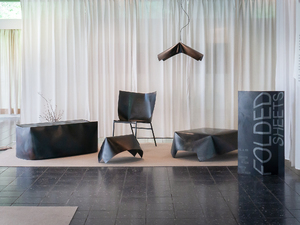
- Folded Sheets untersucht, wie sich Papier-Falttechniken auf Stahlbleche übertragen lassen. Rechteckige Tafeln werden durch gezielte Einschnitte und Faltungen in stabile dreidimensionale Formen gebracht, ohne dass Material verloren geht. Der Prozess des Schwarzbrennens, bei dem Leinöl in die Oberfläche eingebrannt wird, verleiht den Objekten ihre charakteristische schwarze Färbung, schützt sie vor Korrosion und unterstützt die strukturelle Festigkeit.
- Beschreibung (en)
- Folded Sheets explores the possiblities of transferring paper folds into steel sheet furniture. By using cuts and folds on rectangular steel sheets, tensioned rigid shapes without offcuts are created. The objects are further strengthend by blackening the surface with burnt linseed oil.
- Kategorie
- Typ des Projekts/Werks
- Schlagworte
- Datierung
- 2025
- Dank an
- Material
- Technik/Verfahren/Formate
- Falttechnik, Schwarzbrennen mit Leinöl
- Stadt
- Land
- Internetlinks
- Titel
- Folded Sheets
- Projektleiter/in
- Semester
- Studiengang
- Typ der Abschlussarbeit
- Importiert am
- 15.07.2025
- Übergeordnete Sets
- 3
- Set enthält
- 0 18
Geography is destiny
Name that can easily go onto 2 lines
Author that can easily go onto 2 lines as well
- Titel
- Geography is destiny
- Titel (en)
- Geography is destiny
- Autor/in
- Beschreibung (de)
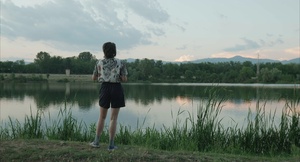
- In einem bulgarischen Tal, in dem die Produktion von Rosen und Waffen das Klima des Lebensraums bestimmt, begibt sich die Autorin des Films auf eine Identitätssuche, eine Reise entlang der bipolaren, psychogeografischen Realität ihres Geburtsorts.
- Beschreibung (en)
- In a Bulgarian valley where the production of roses and weapons determines the climate of the living environment, the film’s author takes off on an identity quest, a journey along the bipolar, psychogeographic reality of her birthplace.
- Typ des Projekts/Werks
- Schlagworte
- Datierung
- 01.09.2023
- Mitwirkende
- Dank an
- Sprache
- Untertitel (Film)
- Technik/Verfahren/Formate
- dcp
- Dauer
- 75min.
- Ort: Institution
- Ort
- Blauer Salon
- Stadt
- Land
- Bemerkungen
- The film copy will be archived at the Film Archiv of HFG. Current contact person as per 2023 - Philip Lawall
- Titel
- Geography is destiny
- Projektleiter/in
- Semester
- Studiengang
- Typ der Abschlussarbeit
- Importiert am
- 26.09.2023
- Übergeordnete Sets
- 2
- Set enthält
- 0 3
Guter Dinge
Name that can easily go onto 2 lines
Author that can easily go onto 2 lines as well
- Titel
- Guter Dinge
- Autor/in
- Beschreibung (de)
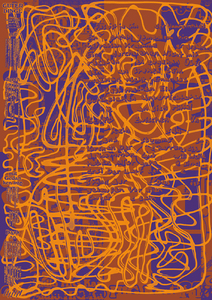
- "Guter Dinge" ist ein choreografischer Dialog zwischen drei Maschinendingen und einem Performer und verbindet Elemente aus Theaterstück, Installation und Tanz.
- Beschreibung (en)
- "Guter Dinge" is a choreographic dialogue between three machine-things and one performer, combining elements from theater play, installation and dance.
- Kategorie
- Typ des Projekts/Werks
- Schlagworte
- Mitwirkende
- Dank an
- Dauer
- ca. 40 Min.
- Ort: Institution
- Ort
- Großes Studio
- Stadt
- Land
- Internetlinks
- Trailer: https://vimeo.com/455579122
- Bemerkungen
- Aufbau und Organisatorisches:
Das Publikum kann sich frei im Raum bewegen (und dabei den Mindestabstand einhalten).
Für ATELIER No. 64 kann die ursprünglich etwa 40minütige Fassung auf etwa 15 Min gekürzt werden.
Gekürzte Fassung für PACT Zollverein: ca 15min (original ca. 40min)
- Aufbau und Organisatorisches:
- Titel
- Guter Dinge
- Projektleiter/in
- Semester
- Studiengang
- Typ der Abschlussarbeit
- Importiert am
- 24.06.2024
- Übergeordnete Sets
- 2
- Set enthält
- 0 7
HOCHHAUS Audiowalk
Name that can easily go onto 2 lines
Author that can easily go onto 2 lines as well
- Titel
- HOCHHAUS Audiowalk
- Autor/in
- Beschreibung (de)
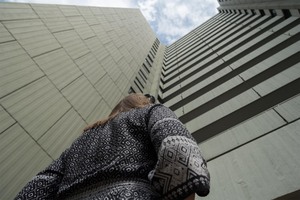
- Der HOCHHAUS Audiowalk führt die Teilnehmer*innen an spezifische Orte des Hochhauses der Kaiserallee 15 in Karlsruhe und lässt das Gebäude zum Hauptakteur werden. In neun Audiotracks werden collageartig Texte aus verschiedenen Perspektiven verarbeitet.
- Beschreibung (en)
- The HOCHHAUS audio walk takes participants to specific locations in the high-rise building at Kaiserallee 15 in Karlsruhe, making the building the main protagonist. In nine audio tracks, texts from different perspectives are collaged together.
- Kategorie
- Typ des Projekts/Werks
- Schlagworte
- Datierung
- 20.07.2019
- Mitwirkende
- Dauer
- 55 min
- Ort
- Hochhaus Kaiserallee 15
- Stadt
- Land
- Bemerkungen
- Referenzen:
J.G. Ballard: Hochhaus
EWG Wohnzentrum Kaiserallee Informationsprospekt von 1968
Interviews mit Bewohner*innen der Kaiserallee 15
Interview mit Hausmeister der Kaiserallee 15
George Perec: Träume von Räumen
Unter der Verwendung von:
Magix Music Maker
Mit Sounds und Musik von:
white bicycle
Title: April Sun Playalong
Link: https://www.audiyou.de/beitrag/april-sun-playalong…
(Veränderungen wurden vorgenommen)
Starscade
Title: sfx-radio-static.flac
Link: https://freesound.org/people/Starscade/sounds/3973…
(Veränderungen wurden vorgenommen)
Satuniman
Title: Gramophone
Link: https://freesound.org/people/Setuniman/sounds/1785…
(Veränderungen wurden vorgenommen)
- Referenzen:
- Titel
- HOCHHAUS Audiowalk
- Projektleiter/in
- Semester
- Studiengang
- Typ der Abschlussarbeit
- Importiert am
- 14.06.2024
- Übergeordnete Sets
- 2
- Set enthält
- 0 15
.HYP
Name that can easily go onto 2 lines
Author that can easily go onto 2 lines as well
- Titel
- .HYP
- Untertitel
- A digital wildgrowth
- Autor/in
- Beschreibung (de)
- .HYP ist eine multisensorische Installation und Projektionsarbeit einer sich verändernden digitalen Lebensform. Die Diplomarbeit .HYP lotet die Grenzen zwischen digitalem Leben und der analogen Welt mithilfe eines eigens entwickelten Programms mit spezialisierten Unterprogrammen aus, welches das biologische Verhalten von Pilzmyzel nachahmt. Der Titel der Arbeit leitet sich von Pilzzellen (Hyphen) ab.
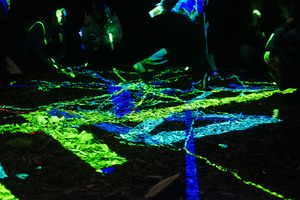
Besucher*innen der Installation können mit dem Programm interagieren, indem sie ihre eigenen Dateien über einen QR-Code hochladen. .HYP „verdaut“ diese Daten und verwandelt sie in sich ständig weiterentwickelnde, farbenfrohe Muster, die in einem abgedunkelten Raum auf einen organischen Boden aus Rindenmulch projiziert werden. Die Installation wird zu einem immersiven Erlebnis.
- .HYP ist eine multisensorische Installation und Projektionsarbeit einer sich verändernden digitalen Lebensform. Die Diplomarbeit .HYP lotet die Grenzen zwischen digitalem Leben und der analogen Welt mithilfe eines eigens entwickelten Programms mit spezialisierten Unterprogrammen aus, welches das biologische Verhalten von Pilzmyzel nachahmt. Der Titel der Arbeit leitet sich von Pilzzellen (Hyphen) ab.
- Beschreibung (en)
- .HYP is a multisensory installation and projection piece depicting an evolving digital life form. The graduation project .HYP explores the boundaries between digital life and the analog world using a custom-developed program with specialized subroutines that mimic the biological behavior of fungal mycelium. The title of the work is derived from fungal cells (hyphae).
Visitors to the installation can interact with the program by uploading their own files via a QR code. .HYP “digests” this data and transforms it into constantly evolving, colorful patterns that are projected onto an organic floor of bark mulch in a darkened room. The installation becomes an immersive experience.
- .HYP is a multisensory installation and projection piece depicting an evolving digital life form. The graduation project .HYP explores the boundaries between digital life and the analog world using a custom-developed program with specialized subroutines that mimic the biological behavior of fungal mycelium. The title of the work is derived from fungal cells (hyphae).
- Kategorie
- Typ des Projekts/Werks
- Schlagworte
- Sprache
- Material
- Technik/Verfahren/Formate
- coding
- Abmessungen
- 8m x 4,5m
- Dauer
- open end
- Ort: Institution
- Ort
- Großes Studio in der Hochschule für Gestaltung in Karlsruhe
- Stadt
- Land
- Internetlinks
- Titel
- .HYP
- Untertitel
- A digital wildgrowth
- Projektleiter/in
- Semester
- Studiengang
- Typ der Abschlussarbeit
- Importiert am
- 05.03.2024
- Übergeordnete Sets
- 3
- Set enthält
- 0 8
Ich hatte vom feeling her ein gutes Gefühl
Name that can easily go onto 2 lines
Author that can easily go onto 2 lines as well
- Titel
- Ich hatte vom feeling her ein gutes Gefühl
- Autor/in
- Beschreibung (de)
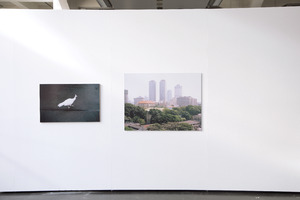
- „Der Weg ist das Ziel“ ist meine Devise. Der Arbeitsprozess ist daher ein wichtiger Teil meines Diploms. Ich zeige Fotos aus unterschiedlichen Teilen der Welt mit sehr unterschiedlichen Bildsprachen. Sie sind Momentaufnahmen aus meinem Blick durch die Kamera. Diese Bilder setze ich in Bezug zueinander, wobei manche Bilder miteinander harmonieren, funktionieren, kommunizieren – andere wiederum nicht. Durch die projizierten Bilder ändern sich die Bezüge und zeigen, dass die Bilder anders kommunizieren, je nachdem, welche Bilder an ihrer Seite sind. Dabei ist die Abfolge der Bilder eine Endlosschleife, und eine Bildkombination einer Wand kehrt immer wieder. Die Betrachtenden sind frei, selbst zu assoziieren, und jeder Blick sieht einen neuen, ganz eigenen Zusammenhang in der Konstellation der Fotografien.
Fotografieausstellung mit 18 Bildern auf Holz und Aludibond und 30 Bildern projiziert auf zwei Beamern.
- „Der Weg ist das Ziel“ ist meine Devise. Der Arbeitsprozess ist daher ein wichtiger Teil meines Diploms. Ich zeige Fotos aus unterschiedlichen Teilen der Welt mit sehr unterschiedlichen Bildsprachen. Sie sind Momentaufnahmen aus meinem Blick durch die Kamera. Diese Bilder setze ich in Bezug zueinander, wobei manche Bilder miteinander harmonieren, funktionieren, kommunizieren – andere wiederum nicht. Durch die projizierten Bilder ändern sich die Bezüge und zeigen, dass die Bilder anders kommunizieren, je nachdem, welche Bilder an ihrer Seite sind. Dabei ist die Abfolge der Bilder eine Endlosschleife, und eine Bildkombination einer Wand kehrt immer wieder. Die Betrachtenden sind frei, selbst zu assoziieren, und jeder Blick sieht einen neuen, ganz eigenen Zusammenhang in der Konstellation der Fotografien.
- Beschreibung (en)
- “The journey is the reward” is my motto. The work process is therefore an important part of my diploma. I show photos from different parts of the world with very different visual languages. They are snapshots from my view through the camera. I place these images in relation to each other, whereby some images harmonize, function and communicate with each other - others do not. The projected images change the references and show that the images communicate differently depending on which images are at their side. The sequence of images is an endless loop and a combination of images on a wall is repeated again and again. Viewers are free to make their own associations and each view sees a new, unique context in the constellation of photographs.
Photography exhibition with 18 pictures on wood and Aludibond and 30 pictures projected on two beamers.
- “The journey is the reward” is my motto. The work process is therefore an important part of my diploma. I show photos from different parts of the world with very different visual languages. They are snapshots from my view through the camera. I place these images in relation to each other, whereby some images harmonize, function and communicate with each other - others do not. The projected images change the references and show that the images communicate differently depending on which images are at their side. The sequence of images is an endless loop and a combination of images on a wall is repeated again and again. Viewers are free to make their own associations and each view sees a new, unique context in the constellation of photographs.
- Kategorie
- Material
- Titel
- Ich hatte vom feeling her ein gutes Gefühl
- Projektleiter/in
- Semester
- Studiengang
- Typ der Abschlussarbeit
- Importiert am
- 30.07.2024
- Übergeordnete Sets
- 2
- Set enthält
- 0 12