Simon Sheikh
| Name | Simon Sheikh |
4 Inhalte
- Seite 1 von 1
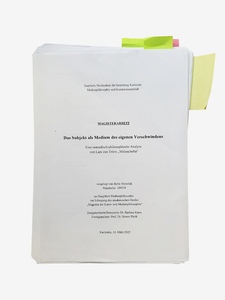
Das Subjekt als Medium des eigenen Verschwindens
Name that can easily go onto 2 lines
Author that can easily go onto 2 lines as well
- Titel
- Das Subjekt als Medium des eigenen Verschwindens
- Titel (en)
- The Subject as the Medium of Its Own Disappearance
- Untertitel
- Eine nomadisch-philosophische Analyse von Lars von Triers "Melancholia"
- Untertitel des Projekts/Werks (en)
- A Nomadic-Philosophical Reading of Lars von Trier’s Melancholia
- Autor/in
- Beschreibung (de)
- Die vorliegende Magisterarbeit untersucht Lars von Triers Film Melancholia als filmischen Denk-
und Wahrnehmungsraum, in dem sich Subjektivität unter Bedingungen einer als „absolute
Gegenwart“ beschriebenen Gegenwartsanalyse konstituiert. Der Begriff geht auf den von Marcus
Quent herausgegebenen Sammelband Absolute Gegenwart (2016) zurück. Dieser beschreibt
gegenwärtige Erfahrungs- und Zeitstrukturen als Spannungsfeld von Beschleunigung,
Bewegungsstarre und der Erosion von Differenz, verbunden mit einem Zustand der Ohnmacht, in
dem Handlung und Denken zunehmend eingeschränkt werden. Diese Analyse bildet den
Ausgangspunkt einer Perspektive, die den Film nicht als Illustration theoretischer Modelle versteht,
sondern ihn aus seiner eigenen Wahrnehmungslogik heraus erschließen möchte.
Im Zentrum steht die Melancholie als Wahrnehmungsmodus, der nicht als klinisch-pathologische
Depression verstanden wird, sondern als Transformation eines Weltbezugs, in dem sich die
Erfahrung des Anderen in eine verschobene und intensivierte Form der Zugänglichkeit ausbildet.
Der Planet Melancholia fungiert dabei nicht als äußeres Symbol, sondern als Schwellenfigur eines
paradoxen Außen, das zugleich Welt-Außen und inneres Außen des Subjekts ist. In dieser Struktur
erscheint das Andere nicht als stabile Gegeninstanz, sondern als entziehende Bewegung, die
Wahrnehmung affiziert, entsichert und verschiebt. Die melancholische Intention steht zu diesem
Außen in einer paradoxen Relation der Annäherung durch Nicht-Aneignung bzw. der Aneignung
im Modus des Nicht-Besitzes, in der sich ein virtuelles Gefüge des Sinnlich-Unsinnlichen eröffnet,
das den Raum der Erfahrung selbst reorganisiert.
Die Arbeit verbindet psychoanalytische Perspektiven (Sigmund Freud, Jacques Lacan) und
kulturphilosophische Ansätze der Melancholie (Giorgio Agamben) mit dem Denken Gilles
Deleuzes, das die zentrale theoretische Perspektive der Arbeit bildet. Im Zentrum stehen seine
Konzeption eines Begehrens jenseits von Subjekt und Objekt sowie seine Differenzphilosophie.
Ergänzend werden zeitdiagnostische Positionen von Byung-Chul Han und Alain Badiou sowie
weitere theoretische Perspektiven, unter anderem von Mark Fisher und Judith Butler, herangezogen.
Die Analyse des Films folgt einer Struktur aus Prolog und apokalyptischem Ereignis, zwischen
denen sich ein Erfahrungs- und Psychologieraum zwischen einem ersten und einem zweiten
Untergang eröffnet. Melancholia erscheint dabei als Versuchsanordnung, in der das Ende der Welt
als prekäre Schwelle erscheint, in der Wahrnehmung, Begehren und Weltverhältnis neu konfiguriert
werden. Ziel ist eine Lesart, in der Subjektivität gerade im Entwurf ihres Verschwindens ein
Vermögen der Öffnung gegenüber Alterität gewinnt.
- Die vorliegende Magisterarbeit untersucht Lars von Triers Film Melancholia als filmischen Denk-
- Beschreibung (en)
- This master's thesis examines Lars von Trier’s Melancholia as a cinematic space of thought and
perception in which subjectivity is constituted under the conditions of a temporal diagnosis
described in contemporary German theory as the “absolute Gegenwart” (literally: “absolute
present“). The term originates in Absolute Gegenwart (2016), an edited volume by Marcus Quent.
This volume describes contemporary structures of experience and temporality as a field of tension
between acceleration, stasis, and the erosion of difference, accompanied by a state of impotence in
which action and thought are increasingly constrained. This analysis serves as the point of departure
for an approach that does not treat the film as an illustration of theoretical models, but instead seeks
to engage it on the basis of its own logic of perception.
At the center of the analysis lies melancholy as a mode of perception, not understood as a clinical
pathology, but as a transformation of one’s relation to the world, in which the experience of the
Other is transformed into a shifted and intensified form of accessibility. The planet Melancholia
does not function as a symbolic object, but as a threshold figure of a paradoxical outside that is
simultaneously external to the world and internal to the subject. Within this structure, the Other no
longer appears as a stable counterpart, but as a movement of withdrawal that affects, destabilizes,
and displaces perception. The melancholic intention stands in a paradoxical relation to this outside,
characterized by an approach through non-appropriation, or appropriation in the mode of non-
possession, within which a virtual field of the sensible and the non-sensible emerges, reorganizing
the very space of experience.
The thesis combines psychoanalytic perspectives (Sigmund Freud, Jacques Lacan) and
philosophical approaches to melancholy (Giorgio Agamben) with the thought of Gilles Deleuze,
which constitutes the central theoretical framework of the study. Particular emphasis is placed on
his conception of desire beyond subject and object and on his philosophy of difference. In addition,
contemporary diagnoses of the present by Byung-Chul Han and Alain Badiou, as well as further
theoretical contributions by authors such as Mark Fisher and Judith Butler, are incorporated.
The analysis of the film follows a structure of prologue and apocalyptic event, within which an
experiential and psychological space unfolds between a first and a second downfall. Melancholia is
thus read as an experimental arrangement in which the end of the world appears as a precarious
threshold, in which perception, desire, and world relation are reconfigured. The thesis argues that
subjectivity gains its capacity for openness toward alterity precisely in the projection of its own
disappearance.
- This master's thesis examines Lars von Trier’s Melancholia as a cinematic space of thought and
- Kategorie
- Typ des Projekts/Werks
- Schlagworte
- Datierung
- 10.03.2025
- Sprache
- Titel
- Das Subjekt als Medium des eigenen Verschwindens
- Untertitel
- Eine nomadisch-philosophische Analyse von Lars von Triers "Melancholia"
- Projektleiter/in
- Semester
- Studiengang
- Typ der Abschlussarbeit
- Importiert am
- 27.06.2026
- Übergeordnete Sets
- 1
- Set enthält
- 0 3
Writing the History Of the Future
Name that can easily go onto 2 lines
Author that can easily go onto 2 lines as well
- Titel
- Writing the History Of the Future
- Titel (en)
- Writing the History Of the Future
- Untertitel
- Das ZKM und die kulturelle Arbeit der Medienkunstkonservierung
- Untertitel des Projekts/Werks (en)
- ZKM and the Cultural Work of Media Art Conservation
- Autor/in
- Beschreibung (de)
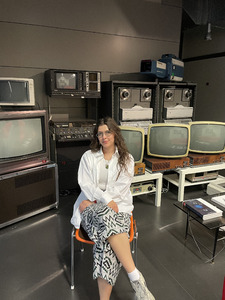
- Obwohl die Medienkunst in der zeitgenössischen Kultur zunehmend an Bedeutung gewinnt, ist sie in institutionellen Sammlungen immer noch unterrepräsentiert. Die schnelle technologische Entwicklung von Hard- und Software sowie geplante Obsoleszenz stellen die Konservierung vor große Herausforderungen. Seit den 1960er Jahren hat sich die westliche Kunst von objektbasierten hin zu performativen und prozessorientierten Formen gewandelt. Dies wurde von einem Paradigmenwechsel in der Konservierungstheorie begleitet, in der Konzepte und Subjekt stärker gewichtet werden als Materialität und Objekt. Museen und der Kunstmarkt haben jedoch Schwierigkeiten, ihre Sammelpraktiken entsprechend anzupassen. In dieser Arbeit werden die Herausforderungen der Integration von Medienkunst in institutionelle Kontexte untersucht und der Bedarf an theoretischen und praktischen Anpassungen betont. Ziel ist es, Strategien zur nachhaltigen Einbindung technologisch vermittelter Kunstwerke in Sammlungen und das kulturelle Gedächtnis zu entwickeln. Im Fokus steht dabei das ZKM in Karlsruhe als führende Institution der Medienkunstkonservierung. Auf Basis interdisziplinärer Forschung und Interviews werden zentrale Themen wie Interaktivität, Variabilität, Authentizität, Zeitlichkeit und der Wandel des Kunstobjekts analysiert.
- Beschreibung (en)
- Media art, despite its growing prominence in contemporary culture, remains underrepresented in institutional collections. Rapid technological obsolescence—affecting both hardware and software—poses major challenges for preservation. Since the 1960s, Western art has shifted from object-based works toward performative and process-oriented practices, paralleled by changes in conservation theory that prioritize concepts and subject over object and materiality. However, museums and the art market have struggled to adapt their collecting practices to these developments. This thesis examines the challenges of integrating media art into institutional contexts, emphasizing the need for conceptual and theoretical shifts in both museum practices and art theory. It aims to describe the strategies for incorporating technologically mediated artworks into collections and cultural memory. The study focuses on the ZKM (Center for Art and Media) in Karlsruhe, a leading institution in media art preservation. Through analysis of its frameworks and interdisciplinary research including interviews, the thesis explores key themes like interactivity, variability, authenticity, temporality, and the evolving nature of the art object.
- Kategorie
- Schlagworte
- Dank an
- Sprache
- Abmessungen
- 272 Seiten (169 Textseiten)
- Titel
- Writing the History Of the Future
- Untertitel
- Das ZKM und die kulturelle Arbeit der Medienkunstkonservierung
- Projektleiter/in
- Semester
- Studiengang
- Typ der Abschlussarbeit
- Importiert am
- 25.03.2026
- Übergeordnete Sets
- 4
- Set enthält
- 0 5
Shiftings Paradigms Symposium 2024
- Titel
- Shiftings Paradigms Symposium 2024
- Titel (en)
- Shiftings Paradigms Symposium 2024
- Untertitel
- 1. gemeinsames Symposium zu den Postgradualen Programmen von HfG Karlsruhe und ZKM
- Untertitel des Projekts/Werks (en)
- 1st symposium on the postgraduate programs by HfG Karlsruhe and ZKM
- Beschreibung (de)
- Die Staatliche Hochschule für Gestaltung und das Zentrum für Kunst und Medien in Karlsruhe wurden in den 1990er Jahren von Gründungsdirektor Heinrich Klotz als Orte einer zeitgemäßen, auf die Neuen Medien gerichteten Forschung konzipiert. Sie bieten in ihrer Kombination von Hochschule und Kulturinstitution ausgezeichnete Vorbedingungen für eine Vernetzung künstlerischer und wissenschaftlicher Ansätze, für die es in Deutschland allerdings noch veränderte Rahmenbedingungen braucht.
Ein übergreifendes postgraduales Programm sollte interdisziplinäre Expertise versammeln und nutzen, um die Beziehungen von Kunst, Theorie und Gestaltung neu auszuloten und auf diese Weise an die wegweisende Gründungsidee von HfG und ZKM anzuknüpfen. Es sollte zugleich auf einen größeren Paradigmenwechsel antworten, der sich in Kunst und Kultur wie auch im wissenschaftlichen Bereich zu vollziehen scheint und der sich einerseits in Legitimationskrisen, andererseits in neuen und kreativen Formen der Recherche und Produktion von Wissen äußert. Die HfG Karlsruhe nimmt die Diagnose zum Anlass, um hybride Formate der Forschung neu zu konzipieren und auch die Funktion wissenschaftlicher Promotionen zu befragen.
Zur Vorstellung und Diskussion dieser programmatischen Überlegungen veranstaltete die HfG in Kooperation mit dem ZKM Karlsruhe am 5. und 6. Dezember 2024 ein erstes Symposium mit internationalen Gästen, das darauf abzielt, Räume und Ideen für eine sich transformierende Forschungspraxis zu entwerfen.
In vier Panels performten und diskutierten unter anderem die französische Wissenschaftshistorikerin und -philosophin Bernadette Bensaude-Vincent, der Professor für Kunstwissenschaft und Medientheorie Matthias Bruhn, die Professorin für Time Based Media und Performance Filipa César, die Szenografin und stellvertretende HfG-Rektorin Constanze Fischbeck, der ZKM-Direktor Alistair Hudson, die Künstlerin und Professorin für Code and Image Susanne Kriemann, der Professor der ADBK München Armin Linke, die Leiterin des ZKM-Hertzlabs Tina Lorenz, die Künstlerin, Kuratorin und Mitglied des Raqs Media Collectives Monica Narula, der Professor für kritische Theorie und Medienphilosophie Simon Sheikh, die Performancekünstlerin und Aktivistin Joy Mariama Smith, die Professorin für Design Füsun Türetken und die Professorin für Digitale Ästhetik Nina Zschocke mit weiteren Expertinnen und Experten, dem Publikum sowie den Angehörigen beider Häuser.
- Die Staatliche Hochschule für Gestaltung und das Zentrum für Kunst und Medien in Karlsruhe wurden in den 1990er Jahren von Gründungsdirektor Heinrich Klotz als Orte einer zeitgemäßen, auf die Neuen Medien gerichteten Forschung konzipiert. Sie bieten in ihrer Kombination von Hochschule und Kulturinstitution ausgezeichnete Vorbedingungen für eine Vernetzung künstlerischer und wissenschaftlicher Ansätze, für die es in Deutschland allerdings noch veränderte Rahmenbedingungen braucht.
- Beschreibung (en)
- The Staatliche Hochschule für Gestaltung (HfG) Karlsruhe and the Center for Art and Media in Karlsruhe (ZKM) were conceived in the 1990s by founding director Heinrich Klotz as places for contemporary research focused on new media. With their combination of university and cultural institution, they offer excellent preconditions for the networking of artistic and scientific approaches, for which, however, a different framework is still needed in Germany.
An overarching postgraduate program was intended to bring together and utilize interdisciplinary expertise in order to explore the relationships between art, theory and design in a new way, thus building on the pioneering founding idea of the HfG and ZKM. At the same time, it is intended to respond to a larger paradigm shift that seems to be taking place in art and culture as well as in the scientific field and which is expressed on the one hand in crises of legitimization and on the other in new and creative forms of research and production of knowledge. The HfG Karlsruhe was taking this diagnosis as an opportunity to redesign hybrid formats of research and also to question the function of academic doctorates.
To present and discuss these programmatic considerations, the HfG organized a first symposium with international guests in cooperation with the ZKM Karlsruhe on 5 and 6 December 2024, which aims to design spaces and ideas for a transforming research practice.
In four panels, the French historian and philosopher of science Bernadette Bensaude-Vincent, the professor of art studies and media theory Matthias Bruhn, the professor of time-based media and performance Filipa César, the scenographer and deputy HfG rector Constanze Fischbeck, the ZKM director Alistair Hudson, the artist and professor of code and image Susanne Kriemann, ADBK Munich Professor Armin Linke, ZKM-Hertzlab Director Tina Lorenz, artist, curator and member of the Raqs Media Collective Monica Narula, Professor of Critical Theory and Media Philosophy Simon Sheikh, performance artist and activist Joy Mariama Smith, Professor for Design Füsun Türetken and Professor of Digital Aesthetics Nina Zschocke discussed with other experts, the audience and members of both institutions.
- The Staatliche Hochschule für Gestaltung (HfG) Karlsruhe and the Center for Art and Media in Karlsruhe (ZKM) were conceived in the 1990s by founding director Heinrich Klotz as places for contemporary research focused on new media. With their combination of university and cultural institution, they offer excellent preconditions for the networking of artistic and scientific approaches, for which, however, a different framework is still needed in Germany.
- Typ des Projekts/Werks
- Schlagworte
- Datierung
- 05.12.2024 - 06.12.2024
- Mitwirkende
- Dank an
- Ort: Institution
- Ort
- Lichthof 3 (HfG), Useum (ZKM)
- Stadt
- Land
- Beteiligte Institution(en)
- Auftrag durch
- Rektorat
- Titel
- Shiftings Paradigms Symposium 2024
- Untertitel
- 1. gemeinsames Symposium zu den Postgradualen Programmen von HfG Karlsruhe und ZKM
- Importiert am
- 05.01.2026
- Übergeordnete Sets
- 1
- Set enthält
- 6 0
Big Hat Big Problems
Name that can easily go onto 2 lines
Author that can easily go onto 2 lines as well
- Titel
- Big Hat Big Problems
- Titel (en)
- Big Hat Big Problems
- Untertitel
- A salonesque affair hosted by Filler Verlag
- Untertitel des Projekts/Werks (en)
- A salonesque affair hosted by Filler Verlag
- Autor/in
- Beschreibung (de)
- Filler Verlag ist eine unabhängige Plattform für das Buch und für den Diskurs, der aus ihm hervorgeht. „Verlegen“ wird dabei nicht als Akt der Verteilung, sondern als ein Akt des Teilens verstanden. Der Fokus liegt auf der kollektiven Entwicklung und dem Fördern von Diskurs. Mit diesem experimentellen Ansatz denkt Filler das Buch weiter: Wie kann es als Medium in einer zunehmend digitalen und schnelllebigen Welt relevant bleiben? Welche Rolle spielen unabhängige Verlage in einer Zeit, in der Massenproduktion und Standardisierung dominieren?
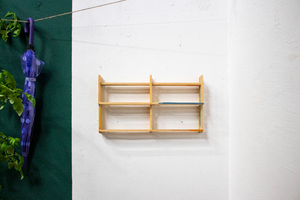
Aus diesen Fragen heraus entstand Big Hat Big Problems – eine Reihe von Zusammenkünften. Sowohl im physischen als auch im metaphorischen Sinne ist Big Hat Big Problems ein Ort der ständigen Verhandlung und des Austauschs, aber auch des Verweilens. In der Struktur gibt es Referenzen zu literarischen Salons. Lesungen, Gespräche, dicke Teppiche, gemütliche Sessel und gedimmtes Licht. Ein entscheidender Unterschied: Die Gästeliste ist nicht exklusiv.
Big Hat Big Problems ist eine Einladung, das Buch nicht wie üblich als ersten Schritt des Veröffentlichens zu begreifen, sondern als Mittel, um Öffentlichkeiten zu schaffen. An diesen Öffentlichkeiten bedient sich Filler, denn aus jedem Treffen sollen Nachträge der Beitragenden, aber auch Einfälle oder offene Fragen der Teilnehmenden hervorgehen und festgehalten werden. Diese sollen das anfängliche Skript und somit den Inhalt des Buches fortschreiben. Als Gegenthese zum traditionellen Austellungskatalog, der ein Projekt abschließt, wird der Katalog zu Big Hat Big Problems durch jede Veranstaltung erweitert. Er ist modular, jede Zusammenkunft ein Kapitel.
Das Programm ist nicht thematisch gegliedert, Schwerpunkt liegt auf ephemeren Aspekten. Die Fokussierung auf einen Abend – dass alles nur einmal zu hören oder zu sehen ist –
lenkt die Kuration. Den Großteil der Beiträge machen gelesene Texte aus, auch die Aufnahme eines Hörspiels wird nur einmal abgespielt. Die Straße vor dem Ausstellungsraum wird auch durch eine große Kreidezeichnung bespielt. Der Salon öffnet sich; veröffentlicht sich. Im Grunde ist das schon Kunst im öffentlichen Raum, am nächsten Tag aber wieder weg. Das Programm hat keinen Zeitplan, nur eine Reihenfolge und im Laufe des Abends kommt es zu zufälligen Begegnungen und ungeplanten Beziehungen zwischen den Texten. Und innerhalb des Publikums auch, dass à la Salon in den Pausen zwischen den Interventionen über das Erfahrene diskutiert. Big Hat Big Problems will zeigen, dass jede Bewegung und jedes Verstehen nur im Bezug auf andere und ihre Worte möglich ist – auch das Verstehen der eigenen Position, der eigenen Arbeitsweisen und ihrer Wirkung. Kunst, die uns oder etwas berührt, entsteht stets im Dialog mit den Ideen anderer.
Es bleibt Raum für Zweifel, für unvollendete Gedanken und ein Glas zwischendurch. Es gibt keine Botschaften zu entschlüsseln – nur die Einladung, Mehrdeutigkeiten zu akzeptieren.
Die Dokumentation ist absichtlich reduziert, um Performer*innen aber auch Besucher*innen einen freien Raum zu geben.
- Filler Verlag ist eine unabhängige Plattform für das Buch und für den Diskurs, der aus ihm hervorgeht. „Verlegen“ wird dabei nicht als Akt der Verteilung, sondern als ein Akt des Teilens verstanden. Der Fokus liegt auf der kollektiven Entwicklung und dem Fördern von Diskurs. Mit diesem experimentellen Ansatz denkt Filler das Buch weiter: Wie kann es als Medium in einer zunehmend digitalen und schnelllebigen Welt relevant bleiben? Welche Rolle spielen unabhängige Verlage in einer Zeit, in der Massenproduktion und Standardisierung dominieren?
- Beschreibung (en)
- Filler Verlag is an independent platform for the book and for the discourse that emerges from it. “Publishing” is not understood as an act of distribution, but as an act of sharing. The focus is on collective development and the promotion of discourse. With this experimental approach, Filler thinks the book further: How can it remain relevant as a medium in an increasingly digital and fast-moving world? What role do independent publishers play in an age dominated by mass production and standardization? these questions gave rise to Big Hat Big Problems - a series of gatherings. In both a physical and metaphorical sense, Big Hat Big Problems is a place of constant negotiation and exchange, but also of dwelling. There are references to literary salons in the structure. Readings, conversations, thick carpets, cozy armchairs and dimmed lights. One decisive difference: the guest list is not exclusive.Big Hat Big Problems is an invitation to see the book not as the first step towards publication, as is usually the case, but as a means of creating publics. Filler makes use of these publics, as each meeting is intended to produce and record additions from the contributors, as well as ideas or open questions from the participants. These are intended to continue the initial script and thus the content of the book. As an antithesis to the traditional exhibition catalog that concludes a project, the catalog for Big Hat Big Problems is expanded through each event. It is modular, each meeting is a chapter, the program is not thematically structured, the focus is on ephemeral aspects. The focus on the single evening - that everything can only be heard or seen once - guides the curation. The majority of the contributions consist of read texts, even the recording of a audio play is only played once. The street in front of the exhibition space is covered by a large chalk drawing. The salon opens up; publishes itself. Basically, this is already art in public space, but it's gone again the next day. The program has no schedule, only a sequence, and in the course of the evening there are chance encounters and unplanned relationships between the texts. And within the audience, too, that à la Salon discusses what they have experienced in the breaks between the performances. Big Hat Big Problems wants to show that every movement and every understanding is only possible in relation to others and their words - including the understanding of one's own position, one's own working methods and their effect. Art that touches us or something is always created in dialog with the ideas of others. There is room for doubt, for unfinished thoughts and a glass in between. There are no messages to decipher - only the invitation to accept ambiguity. The documentation is intentionally reduced to create an open space for both performers and visitors.
- Kategorie
- Typ des Projekts/Werks
- Schlagworte
- Datierung
- 3./15. Juli 2025, fortlaufend
- Mitwirkende
- Sprache
- Material
- Ort: Institution
- Stadt
- Land
- Titel
- Big Hat Big Problems
- Untertitel
- A salonesque affair hosted by Filler Verlag
- Projektleiter/in
- Semester
- Studiengang
- Importiert am
- 27.06.2025
- Übergeordnete Sets
- 0
- Set enthält
- 0 13