Quirin Thalhammer
| Name | Quirin Thalhammer |
7 Inhalte
- Seite 1 von 1
KFZ-MechatronikerInnen
Name that can easily go onto 2 lines
Author that can easily go onto 2 lines as well
- Titel
- KFZ-MechatronikerInnen
- Titel (en)
- KFZ-MechatronikerInnen
- Autor/in
- Beschreibung (de)
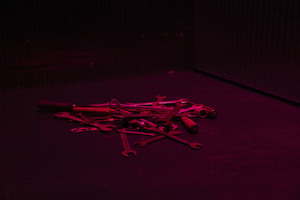
- Die multimediale Installation mit dem Titel "KFZ-MechatronikerInnen" besteht aus einem barrierefrei gestaltetem Raum, welcher durch Hohl- und Theaterwände zum Leben erweckt wird. In ihr sind fünf Objektinstallationen und eine Videoinstallation zu erkunden. Das Projekt beschäftigt sich thematisch mit Frauen in der KFZ-Mechatronik, ihrer Leidenschaft für Technik und ihrem Lebensstil. Dabei werden neben ihrer Begeisterung für Kraftfahrzeuge auch Themen von Diskriminierung und Sexismus am Arbeitsplatz und in der Szene thematisiert.
- Die multimediale Installation mit dem Titel "KFZ-MechatronikerInnen" besteht aus einem barrierefrei gestaltetem Raum, welcher durch Hohl- und Theaterwände zum Leben erweckt wird. In ihr sind fünf Objektinstallationen und eine Videoinstallation zu erkunden. Das Projekt beschäftigt sich thematisch mit Frauen in der KFZ-Mechatronik, ihrer Leidenschaft für Technik und ihrem Lebensstil. Dabei werden neben ihrer Begeisterung für Kraftfahrzeuge auch Themen von Diskriminierung und Sexismus am Arbeitsplatz und in der Szene thematisiert.
- Beschreibung (en)
- The multimedia installation entitled “KFZ-MechatronikerInnen” (Automotive Mechatronics Technicians) consists of a barrier-free room that is brought to life by hollow and theater walls. Inside, there are five object installations and a video installation to explore. The project deals with the theme of women in automotive mechatronics, their passion for technology, and their lifestyle. In addition to their enthusiasm for motor vehicles, topics such as discrimination and sexism in the workplace and in the scene are also addressed.
- The multimedia installation entitled “KFZ-MechatronikerInnen” (Automotive Mechatronics Technicians) consists of a barrier-free room that is brought to life by hollow and theater walls. Inside, there are five object installations and a video installation to explore. The project deals with the theme of women in automotive mechatronics, their passion for technology, and their lifestyle. In addition to their enthusiasm for motor vehicles, topics such as discrimination and sexism in the workplace and in the scene are also addressed.
- Kategorie
- Typ des Projekts/Werks
- Schlagworte
- Datierung
- 17.12.2025
- Mitwirkende
- Dank an
- Paul Bailey
- Patricia Capalija
- Athina Chrisofakis
- Finn De Bruyn
- Selina Decker
- Maïmouna Diop (Mai)
- Line-Gry Hørup
- Chiara Kern
- Alexander Knoppik
- Felix Köder
- Anouk Merceron
- Jana Renger
- Michael Rothfuß
- Antonia Sanden
- Sebastian Schäfer
- Leo Schick
- Sebastian Schilbach
- Sebastian Schönfeld
- Marlon Schüch
- Leon Stark
- Eric Stelse
- Quirin Thalhammer
- Yannik Thamm
- Leonard Wille
- Sprache
- Untertitel (Film)
- Material
- Technik/Verfahren/Formate
- dokumentarischer Kurzfilm (16:9), Objekt 1: Flyerwand, Objekt 2: Werkzeug, Objekt 3: Bücher, Objekt 4: Werkzeugkasten, Objekt 5: Bett
- Abmessungen
- Höhe: 2,40m, Breite: 6m, Länge: 6m
- Dauer
- 15 Minuten
- Ort: Institution
- Ort
- Die Installation war im Großen Studio begehbar.
- Stadt
- Land
- Beteiligte Institution(en)
- Auftrag durch
- Lea Möscheid
- Internetlinks
- Film anschauen unter: https://youtu.be/ynFWiT6uYa8
- Bemerkungen
- Lea Möscheid
Diplomarbeit, WiSe 25/26, im Studiengang Kommunikationsdesign und Nebenfach Szenografie
Betreuende ProfessorInnen: Paul Bailey & Line-Gry Hørup
- Lea Möscheid
- Titel
- KFZ-MechatronikerInnen
- Projektleiter/in
- Semester
- Studiengang
- Typ der Abschlussarbeit
- Importiert am
- 19.02.2026
- Übergeordnete Sets
- 2
- Set enthält
- 0 5
Midnight Zone
Name that can easily go onto 2 lines
Author that can easily go onto 2 lines as well
- Titel
- Midnight Zone
- Titel (en)
- Midnight Zone
- Autor/in
- Beschreibung (de)
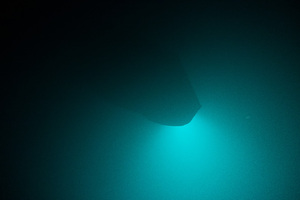
- Midnight Zone ist eine Performance über die Tiefsee, jenen Raum, in den kein Sonnenlicht mehr dringt. In dieser absolut dunklen und hohem Druck ausgesetzten Umgebung verschieben sich unsere Wahrnehmungen von Zeit, Körper und Orientierung.
In einem Raum, der das eigene Körpergefühl verschwimmen lässt, durchziehen Fischlaute, Maschinengeräusche und ferne Erdbeben die verschiedenen atmosphärischen Bedingungen des größten Lebensraums der Erde. Performerinnen bewegen sich wie fremde Wesen, zugleich Teil der Natur und Spiegel menschlicher Eingriffe. Mit jeder Bewegung beeinflussen die Besucher*innen das Netz aus Klang, Schatten und Choreografie und werden selbst Teil des Ökosystems, das sie beobachten.
Midnight Zone macht das fragile System der Tiefsee sinnlich erfahrbar: Dort, wo das Leben möglicherweise begann, wo Zeit anders fließt und Prozesse Jahrhunderte dauern können, ist der menschliche Einfluss zunehmend spürbar. Die Arbeit lässt Traum und Realität, Mensch und Natur, Oberfläche und Tiefe ineinander übergehen. Sie lädt dazu ein, lineare Zeitvorstellungen hinter sich zu lassen und alternative Rhythmen zu erspüren. Rhythmen, die im Einklang mit planetarischen Zyklen stehen und dem beschleunigten Takt des Anthropozäns etwas entgegensetzen.
- Midnight Zone ist eine Performance über die Tiefsee, jenen Raum, in den kein Sonnenlicht mehr dringt. In dieser absolut dunklen und hohem Druck ausgesetzten Umgebung verschieben sich unsere Wahrnehmungen von Zeit, Körper und Orientierung.
- Beschreibung (en)
- Midnight Zone is a performance about the deep sea, that realm into which no sunlight can penetrate. In this environment of absolute darkness and immense pressure, our perceptions of time, body, and orientation begin to shift.
In a space where one’s sense of the body starts to blur, fish sounds, mechanical noises, and distant earthquakes move through the atmospheric layers of the largest habitat on Earth. The performers move like unfamiliar beings, at once part of nature and a reflection of human impact. With every movement, the visitors influence the network of sound, shadow, and choreography, becoming part of the very ecosystem they are observing.
Midnight Zone makes the fragile system of the deep sea sensually perceptible: a place where life may have begun, where time flows differently and processes can take centuries, and where human presence is increasingly noticeable. The work allows dream and reality, human and nature, surface and depth to merge. It invites the audience to let go of linear notions of time and attune themselves to alternative rhythms, rhythms aligned with planetary cycles, offering a counterpoint to the accelerated tempo of the Anthropocene.
- Midnight Zone is a performance about the deep sea, that realm into which no sunlight can penetrate. In this environment of absolute darkness and immense pressure, our perceptions of time, body, and orientation begin to shift.
- Kategorie
- Typ des Projekts/Werks
- Schlagworte
- Datierung
- 30.10.25 und 31.10.25
- Mitwirkende
- Dank an
- Dauer
- 1 Stunde
- Ort: Institution
- Ort
- Großes Studio
- Stadt
- Land
- Beteiligte Institution(en)
- Titel
- Midnight Zone
- Projektleiter/in
- Semester
- Studiengang
- Typ der Abschlussarbeit
- Importiert am
- 03.12.2025
- Übergeordnete Sets
- 3
- Set enthält
- 0 13
Elusive Unrealities
Name that can easily go onto 2 lines
Author that can easily go onto 2 lines as well
- Titel
- Elusive Unrealities
- Titel (en)
- Elusive Unrealities
- Untertitel
- On Calling, Grasping & Awakening Dreams
- Untertitel des Projekts/Werks (en)
- On Calling, Grasping & Awakening Dreams
- Autor/in
- Beschreibung (de)
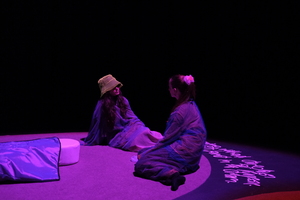
- Jeder Mensch träumt, manche Träume sind lebendig und bildhaft, andere abstrakt und symbolisch. In meiner Abschlussarbeitrbeit habe ich Traumerfahrungen in interaktive Objekte übersetzt und im Rahmen einer interaktive Ausstellung präsentiert. Darin werden sieben Traumthemen reflektiert: zwei der häufigsten Traumarten, Alptraum und Lusttraum; zwei wissenschaftliche Erkenntnisse, die Schwierigkeit des Gehirns, im Schlaf Gesichter und Figuren zu erkennen sowie die Unfähigkeit, Muster in geschriebener Schrift zu lesen; drei persönliche Faszinationen, das Ritual des Einschlafens, des Aufwachens sowie das Träumen als Reise in fantastische Welten.
- Beschreibung (en)
- Everyone dreams, some dreams are vivid and lifelike, others abstract and symbolic. In my diploma project I translated dream experiences into interactive objects and presented them in an interactive exhibition, reflecting seven dream themes: two addressing the most common dream types, nightmare and pleasure dreaming; two drawing on scientific research, the brain's difficulty recognising faces and figures during sleep, and its inability to read patterns in written text; three rooted in personal fascination, the rituals of falling asleep and waking, and dreaming as a passage to fantastical worlds.
- Kategorie
- Typ des Projekts/Werks
- Schlagworte
- Datierung
- 22.4.2025
- Dank an
- Sprache
- Material
- Abmessungen
- 90sqm
- Ort: Institution
- Stadt
- Land
- Internetlinks
- Titel
- Elusive Unrealities
- Untertitel
- On Calling, Grasping & Awakening Dreams
- Projektleiter/in
- Semester
- Studiengang
- Typ der Abschlussarbeit
- Importiert am
- 08.10.2025
- Übergeordnete Sets
- 3
- Set enthält
- 0 13
IDoll
Name that can easily go onto 2 lines
Author that can easily go onto 2 lines as well
- Titel
- IDoll
- Untertitel
- 1.2b.TV
- Autor/in
- Beschreibung (de)
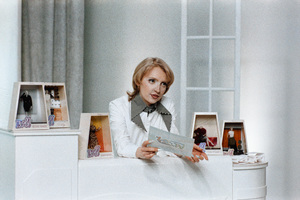
- Die fiktive Teleshopping-Show “1.2b.TV” untersucht popkulturelle Codes, neoliberale Selbstinszenierungen und den Zwang zur Einzigartigkeit in unserer Gesellschaft. Präsentiert werden fünf Produkte in Form von fünf Puppen im Barbieformat.
IDoll BOSS BABE EFFECT
If I’m a Boss Babe everything I touch becomes pure independence & financial freedom.
IDoll LEO GIRL EFFEKT
If I’m a Leo everything I touch becomes roaring golden confidence and self love.
IDoll CUNT EFFEKT
If I'm a Cunt everything I touch becomes pure pleasure.
IDoll WIFEY EFFEKT
If I'm a Wifey everything I touch becomes a sign of care.
IDoll EDGY ONE EFFEKT
If I‘m an Edgy One everything I touch becomes a question to the normative order.
Die Kits enthalten Outfits, Accessoires und Motto-Sprüche, die die performative Konstruktion dieser Rollen greifbar machen. In Erscheinung von Erika Mustermann verkörpert die Moderatorin in einer endlosen Repetition die Rollen der IDolls. Als „Töchter“ und Nachfolgerinnen von Erika Mustermann tragen sie ihre Privilegien weiter und machen diese zur Grundlage ihrer eigenen Existenz.
Die Show nutzt satirische Überzeichnung, um den heutigen Individualismuskult kritisch zu reflektieren, der permanente Identitätsarbeit fordert. Sie beleuchtet die Widersprüche dieses Systems aus feministischer Perspektive und fragt, welche Normen, Rollenbilder und Erwartungen unser Verständnis von weiblicher* Identität prägen und einschränken.
- Die fiktive Teleshopping-Show “1.2b.TV” untersucht popkulturelle Codes, neoliberale Selbstinszenierungen und den Zwang zur Einzigartigkeit in unserer Gesellschaft. Präsentiert werden fünf Produkte in Form von fünf Puppen im Barbieformat.
- Beschreibung (en)
- The fictional teleshopping show “1.2b.TV” explores neoliberal self-promotion, pop culture codes and the societal pressure to be unique. Five products are presented in the form of Barbie-sized dolls:
IDoll – BOSS BABE EFFECT
If I'm a Boss Babe, everything I touch becomes pure independence and financial freedom.
IDoll – LEO GIRL EFFECT
If I'm a Leo, everything I touch becomes roaring golden confidence and self-love.
IDoll – CUNT EFFECT
If I'm a Cunt, everything I touch becomes pure pleasure.
IDoll – WIFEY EFFECT
If I'm a Wifey, everything I touch becomes a sign of care.
IDoll – EDGY ONE EFFECT
If I'm an Edgy One, everything I touch becomes a question to the normative order.
The kits contain outfits, accessories, and slogans that make the performative construction of these roles tangible. Appearing as Erika Mustermann, the presenter endlessly embodies the roles of the IDOLLS. As Erika Mustermann’s “daughters” and successors, they carry forward her privileges and make them the very foundation of their own existence.
Through satirical exaggeration, the show critically reflects on today’s “cult of individualism”, which demands constant identity work. It highlights the contradictions of this system from a feminist perspective and asks which norms, role models, and expectations shape and limit our understanding of female* identity.
- The fictional teleshopping show “1.2b.TV” explores neoliberal self-promotion, pop culture codes and the societal pressure to be unique. Five products are presented in the form of Barbie-sized dolls:
- Kategorie
- Schlagworte
- Mitwirkende
- Titel
- IDoll
- Untertitel
- 1.2b.TV
- Projektleiter/in
- Semester
- Studiengang
- Typ der Abschlussarbeit
- Importiert am
- 29.09.2025
- Übergeordnete Sets
- 1
- Set enthält
- 0 13
Erikas Töchter

Name that can easily go onto 2 lines
Author that can easily go onto 2 lines as well
- Titel
- Erikas Töchter
- Autor/in
- Beschreibung (de)
- "Erikas Töchter" untersucht anhand der fiktiven Figur Erika Mustermann Perspektiven auf die weibliche* Identitätsbildung in Deutschland. Seit 1987 existiert Erika als Musteridentität in amtlichen Dokumenten - weiß, blond, blau- oder grünäugig. Als ein lächelnder Anachronismus geistert sie, erschreckend unkommentiert, durch die Bürokratielandschaft Deutschlands. Ihre durchdringende Augen blicken uns alle aufmerksam an, die Mundwinkel deuten ein neutrales Lächeln an. Doch je länger man sie betrachtet, desto schwerer wiegt ihr Blick: normierend, klassifizierend und ausschließend.
Die Arbeit übersetzt diese fiktive Identität in ein irritierendes Szenario, das zwischen Gartenfest, Ausstellung, Performance und Büroalltag changiert. Im Zentrum stehen zwei Ebenen: Zum einen die Präsentation der IDOLLs, einer Serie neuer weiblicher Musteridentitäten, die im Format einer Teleshopping-Show als innovative Lösung zeitgenössischer Identitätsprobleme vermarktet werden. Zum anderen der Blick in Erikas Büroalltag. Umgeben von Plastik-Buchsbaumbüschen, Teppichboden und generischen Büromöbeln ist sie gefangen im Moment des Fotos und der Reproduktion ihres Gesichtes.
- "Erikas Töchter" untersucht anhand der fiktiven Figur Erika Mustermann Perspektiven auf die weibliche* Identitätsbildung in Deutschland. Seit 1987 existiert Erika als Musteridentität in amtlichen Dokumenten - weiß, blond, blau- oder grünäugig. Als ein lächelnder Anachronismus geistert sie, erschreckend unkommentiert, durch die Bürokratielandschaft Deutschlands. Ihre durchdringende Augen blicken uns alle aufmerksam an, die Mundwinkel deuten ein neutrales Lächeln an. Doch je länger man sie betrachtet, desto schwerer wiegt ihr Blick: normierend, klassifizierend und ausschließend.
- Beschreibung (en)
- “Erikas Töchter” explores perspectives on female* identity formation in Germany through the fictional figure of Erika Mustermann. Since 1987, Erika has served as the standard identity in official documents – white, blonde, blue- or green-eyed. As a smiling anachronism, she continues to haunt Germany’s bureaucratic landscape. Erika’s eyes look directly at the viewer, the corners of her mouth suggesting a neutral smile. Yet the longer she gazes at you, the more insistent her expression becomes: classifying and excluding
The work translates this fictional identity into a scenario that shifts between garden party, exhibition, performance, and office routine. At its center are two layers: on the one hand, the presentation of the IDOLLs – a series of new female standard identities, presented in the style of a teleshopping show, offering an innovative approach to contemporary issues of identity; on the other hand, a glimpse into Erika’s everyday office life. Surrounded by plastic boxwood shrubs, carpeting, and generic office furniture, she remains trapped in the moment of the photograph and the endless reproduction of her own face.
- “Erikas Töchter” explores perspectives on female* identity formation in Germany through the fictional figure of Erika Mustermann. Since 1987, Erika has served as the standard identity in official documents – white, blonde, blue- or green-eyed. As a smiling anachronism, she continues to haunt Germany’s bureaucratic landscape. Erika’s eyes look directly at the viewer, the corners of her mouth suggesting a neutral smile. Yet the longer she gazes at you, the more insistent her expression becomes: classifying and excluding
- Kategorie
- Typ des Projekts/Werks
- Schlagworte
- Datierung
- 22.07.2025
- Mitwirkende
- Sprache
- Material
- Abmessungen
- Ein kleines Haus mit Garten
- Dauer
- 4 Stunden
- Ort: Institution
- Stadt
- Land
- Titel
- Erikas Töchter
- Projektleiter/in
- Semester
- Studiengang
- Typ der Abschlussarbeit
- Importiert am
- 29.09.2025
- Übergeordnete Sets
- 3
- Set enthält
- 2 23
Manchmal ist Schmerz ganz leise
Name that can easily go onto 2 lines
Author that can easily go onto 2 lines as well
- Titel
- Manchmal ist Schmerz ganz leise
- Titel (en)
- Sometimes pain is very quiet
- Autor/in
- Beschreibung (de)
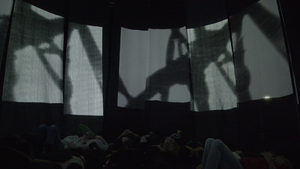
- „Manchmal ist Schmerz ganz leise“ ist eine immersive, autobiographische Hörstück-Installation, die den stillen und oft unsichtbaren Kampf mit einer schweren, namenlosen Krankheit in den Mittelpunkt stellt. Das Werk hinterfragt, was es bedeutet, in einer leistungsorientierten Gesellschaft plötzlich nicht mehr zu "funktionieren". Es geht den Ängsten, der Scham und dem tief empfundenen Gefühl des Versagens nach, das oft mit chronischer Krankheit einhergeht – Gefühle, die Betroffene selten teilen. Das Hörspiel verleiht einer Stimme Ausdruck, die für viele spricht und Einblicke in eine Realität gibt, die oft im Verborgenen bleibt.
- Beschreibung (en)
- ‘Sometimes pain is very quiet’ is an immersive, autobiographical audio play installation that focuses on the silent and often invisible battle with a serious, nameless illness. The work questions what it means to suddenly no longer ‘function’ in a performance-orientated society. It explores the fears, the shame and the deeply felt sense of failure that often accompanies chronic illness – feelings that are rarely shared by those affected. The radio play gives expression to a voice that speaks for many and provides insights into a reality that often remains hidden.
- Kategorie
- Typ des Projekts/Werks
- Schlagworte
- Datierung
- 30.10.2024
- Mitwirkende
- Dank an
- Finn Baygan
- Daniel Berwanger
- Pauline Cemeris
- Filipa Cesar
- Mark Patrick Damian
- Charlotte Eifler
- Flora Güldenpfennig
- Tobias Keilbach
- Eisenhart Keimeyer
- Alexander Knoppik
- Yael Kolb
- Isabelle Konrad
- Julian Kuf
- Barbara Kuon
- Josephine Leicht
- Laura Morcillo
- Ilja Morgenstern
- Sebastian Schäfer
- Sebastian Schönfeld
- Lorenz Schwarz
- Quirin Thalhammer
- Alexander Thelen
- Riemschneider Stiftung
- Zeitbild Lab
- Sprache
- Material
- Technik/Verfahren/Formate
- 4-Kanal-Audio/360° Projection Mapping
- Abmessungen
- Länge: 8m, Breite: 8m, Höhe: 6,50m
- Dauer
- 30min
- Ort: Institution
- Ort
- Großes Studio
- Stadt
- Land
- Titel
- Manchmal ist Schmerz ganz leise
- Projektleiter/in
- Semester
- Studiengang
- Typ der Abschlussarbeit
- Importiert am
- 17.04.2025
- Übergeordnete Sets
- 1
- Set enthält
- 1 5
It's okay now
Name that can easily go onto 2 lines
Author that can easily go onto 2 lines as well
- Titel
- It's okay now
- Titel (en)
- It's okay now
- Autor/in
- Beschreibung (de)
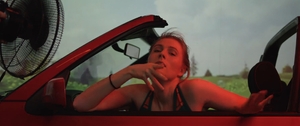
- "It’s okay now" ist ein autobiografisches Werk, das durch die Praxis des Erinnerns die Herkunft und Identität der beiden Protagonistinnen hinterfragt, analysiert und miteinander vergleicht. Das Erinnern dient dabei nicht nur als Mittel der Reflexion, sondern auch als eine Form des Träumens und Verarbeitens von Vergangenem. Fiktionale Szenen und Archivmaterial verweben sich zu einer Erzählung, die persönliche und kollektive Erinnerungen miteinander verschmelzen lässt.
- Beschreibung (en)
- "It’s okay now" is an autobiographical work that, through the practice of remembering, questions, analyzes, and compares the origins and identities of the two protagonists. In this process, remembering serves not only as a tool for reflection but also as a form of dreaming and processing the past. Fictional scenes and archival material intertwine to create a narrative that fuses personal and collective memories.
- Kategorie
- Typ des Projekts/Werks
- Schlagworte
- Datierung
- 01.10.2024 - 04.10.2024
- Mitwirkende
- Dank an
- Sprache
- Untertitel (Film)
- Material
- Technik/Verfahren/Formate
- 3-Kanal-Video-Audio Rauminstallation
- Abmessungen
- Breite: 10m; Tiefe: 10m; Höhe 4,5m
- Dauer
- 45 min
- Ort: Institution
- Ort
- Großes Studio
- Stadt
- Land
- Beteiligte Institution(en)
- Titel
- It's okay now
- Projektleiter/in
- Semester
- Studiengang
- Typ der Abschlussarbeit
- Archiv-Signatur
- its okay now
- Importiert am
- 10.10.2024
- Übergeordnete Sets
- 3
- Set enthält
- 0 11