Medieneinträge
4287 Inhalte
- Seite 1 von 358
The Arbiter
Name that can easily go onto 2 lines
Author that can easily go onto 2 lines as well
- Titel
- The Arbiter
- Untertitel
- Two-channel video installation ( right part, vertical screen)
- Titel
- The Arbiter
- Untertitel
- Two-channel video installation ( right part, vertical screen)
- Urheberrechtshinweis
- Anna Manankina©
- Importiert am
- 26.06.2026
- Übergeordnete Sets
- 1
The Arbiter_Manankina
Name that can easily go onto 2 lines
Author that can easily go onto 2 lines as well
- Titel
- The Arbiter_Manankina
- Titel
- The Arbiter_Manankina
- Urheberrechtshinweis
- Anna Manankina©
- Importiert am
- 26.06.2026
- Übergeordnete Sets
- 1
The Arbiter, video excerpt
Name that can easily go onto 2 lines
Author that can easily go onto 2 lines as well
- Titel
- The Arbiter, video excerpt
- Titel
- The Arbiter, video excerpt
- Urheberrechtshinweis
- ©Anna Manankina
- Medien-Beschreibung (en)
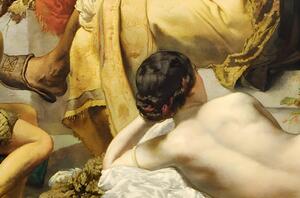
- In this project, I examine how the male gaze is built within AI systems content moderation , where censorship and sexualization coexist. Drawing from Anselm Feuerbach’s 1852 painting Hafis vor der Schenke, depicting the poet Hafez and two silent women, the work poses the question: if freed from spectatorship, what voices might they reveal? This two-channel video installation reimagines the scene through AI video generation and live narration. Referencing Valerie Solanas’s S.C.U.M. Manifesto, it reflects on how Gen-AI, governed by moral bias, mirrors a patriarchal worldview - still defining what is visible and what must remain unseen.
- Importiert am
- 28.06.2026
- Übergeordnete Sets
- 1
The Arbiter, video excerpt
Name that can easily go onto 2 lines
Author that can easily go onto 2 lines as well
- Titel
- The Arbiter, video excerpt
- Titel
- The Arbiter, video excerpt
- Urheberrechtshinweis
- ©Anna Manankina
- Medien-Beschreibung
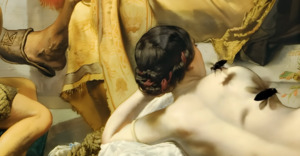
- In this project, I examine how the male gaze is built within AI systems content moderation , where censorship and sexualization coexist. Drawing from Anselm Feuerbach’s 1852 painting Hafis vor der Schenke, depicting the poet Hafez and two silent women, the work poses the question: if freed from spectatorship, what voices might they reveal? This two-channel video installation reimagines the scene through AI video generation and live narration. Referencing Valerie Solanas’s S.C.U.M. Manifesto, it reflects on how Gen-AI, governed by moral bias, mirrors a patriarchal worldview - still defining what is visible and what must remain unseen.
- Importiert am
- 28.06.2026
- Übergeordnete Sets
- 1
The Breath of Metal
Name that can easily go onto 2 lines
Author that can easily go onto 2 lines as well
- Titel
- The Breath of Metal
- Untertitel
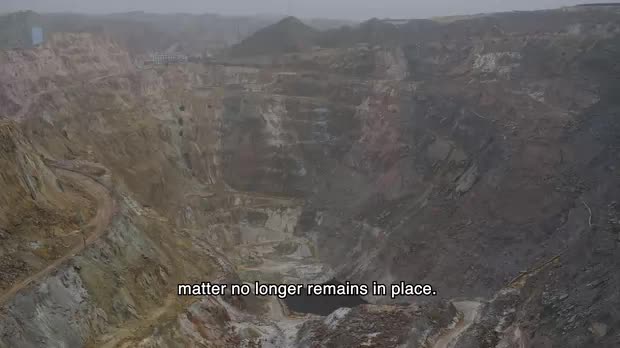
- Baiyin - what the mine left behind
- Autor/in
- Titel
- The Breath of Metal
- Untertitel
- Baiyin - what the mine left behind
- Urheberrechtshinweis
- © Dakang Wang
- Rechtsschutz/Lizenz
- Freigabe Nutzung HfG
- Beziehung/Funktion
- Medien-Beschreibung
- Video mit Audio, 10 min and 19 s.
- Projektleiter/in
- Semester
- Studiengang
- Typ der Abschlussarbeit
- Importiert am
- 11.03.2026
- Übergeordnete Sets
- 1
The Chimes of Humanity and Kindness

Name that can easily go onto 2 lines
Author that can easily go onto 2 lines as well
- Titel
- The Chimes of Humanity and Kindness
- Titel (en)
- The Chimes of Humanity and Kindness
- Beschreibung (de)
- In dieser Arbeit wurde sich mit der Geschichte von Aussichtstürmen (wie dem Turmberg) beschäftigt. Sie dienten als Ausguck, als Beobachtungsplattform um sich nähernde, gegnerische Armeen rechtzeitig
entdecken und mit Hilfe einer Alarmkanone die Menschen vor der drohenden Gefahr warnen zu können. Solche Türme sind Zeugen von Menschen, von Kämpfen, von Einnahmen, von Zerstörung, von Wiederaufbau, von Leben und Tod.
In dieser Arbeit wurde der Fokus auf das Zyklische eines solchen Konstruktes gelegt. Der Aufbau, das Gedeihen, der Kampf, die Zerstörung, der Wiederaufbau, das Gedeihen, der Kampf, die Zerstörung, der Wiederaufbau ...
Der Animationsfilm wurde mit einem Beamer und Lautsprechern audiovisuell auf das Gesetein des Turmbergs oberhalb eines Brunnens projeziert.
- In dieser Arbeit wurde sich mit der Geschichte von Aussichtstürmen (wie dem Turmberg) beschäftigt. Sie dienten als Ausguck, als Beobachtungsplattform um sich nähernde, gegnerische Armeen rechtzeitig
- Typ des Projekts/Werks
- Material
- Technik/Verfahren/Formate
- 3D
- Titel
- The Chimes of Humanity and Kindness
- Urheberrechtshinweis
- Sebastian Finzenhagen
- Medienersteller/in
- Importiert am
- 19.12.2018
- Übergeordnete Sets
- 2
The Fishbone
Name that can easily go onto 2 lines
Author that can easily go onto 2 lines as well
- Titel
- The Fishbone
- Autor/in
- Kategorie
- Typ des Projekts/Werks
- Schlagworte
- Datierung
- 28.02.2025
- Technik/Verfahren/Formate
- Experimenteller Siebdruck
- Ort: Institution
- Bemerkungen
- Druck 1/5
- Titel
- The Fishbone
- Titel (en)
- The Fishbone
- Urheberrechtshinweis
- © Jonathan Reissinger
- Rechtsschutz/Lizenz
- Freigabe Nutzung HfG
- Medienersteller/in
- Beziehung/Funktion
- Projektleiter/in
- Semester
- Importiert am
- 11.07.2025
- Übergeordnete Sets
- 1
the flying handkerchief
Name that can easily go onto 2 lines
Author that can easily go onto 2 lines as well
- Titel
- the flying handkerchief
- Autor/in
- Kategorie
- Typ des Projekts/Werks
- Schlagworte
- Datierung
- 23.02.2024
- Titel
- the flying handkerchief
- Urheberrechtshinweis
- © Juliane Schmitt
- Freigabe Nutzung HfG
- Medienersteller/in
- Medien-Beschreibung
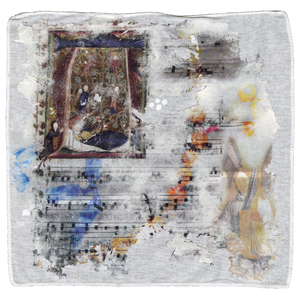
- Zu sehen auf 'The flying handkerchief': Ein Ausschnitt aus den 'Wonnetaler Graduale' einem mittelalterlichen Gesangbuch, Fragmente von Abbildungen von Rosenkränzen aus dem Onlineshop einer Schwester Juliane und ein Portativorgel spielender Engel aus Hans Memlings Altargemälde 'Christus met zingende en musicerende engelen'.
Taschentuch (15x15cm) aus 100% Baumwolle mithilfe von Transfertechniken mit digitaler Collage bedruckt.
- Zu sehen auf 'The flying handkerchief': Ein Ausschnitt aus den 'Wonnetaler Graduale' einem mittelalterlichen Gesangbuch, Fragmente von Abbildungen von Rosenkränzen aus dem Onlineshop einer Schwester Juliane und ein Portativorgel spielender Engel aus Hans Memlings Altargemälde 'Christus met zingende en musicerende engelen'.
- Medien-Beschreibung (en)
- To be seen on 'The flying handkerchief': an excerpt from the 'Wonnetaler Graduale' a medieval hymnal, fragments of images of rosaries from the online store of a Sister Juliane and an angel playing the portative organ from Hans Memling's altarpiece 'Christus met zingende en musicerende engelen'.
Handkerchief (15x15cm) made of 100% cotton printed with digital collage using transfer techniques.
- To be seen on 'The flying handkerchief': an excerpt from the 'Wonnetaler Graduale' a medieval hymnal, fragments of images of rosaries from the online store of a Sister Juliane and an angel playing the portative organ from Hans Memling's altarpiece 'Christus met zingende en musicerende engelen'.
- Projektleiter/in
- Semester
- Studiengang
- Typ der Abschlussarbeit
- Importiert am
- 09.08.2024
- Übergeordnete Sets
- 1
The Living Library (English)
Name that can easily go onto 2 lines
Author that can easily go onto 2 lines as well
- Titel
- The Living Library (English)
- Autor/in
- Typ des Projekts/Werks
- Schlagworte
- Mitwirkende
- Dank an
- Titel
- The Living Library (English)
- Urheberrechtshinweis
- (CC BY-NC 4.0) Karlsruhe University of Arts and Design and the authors
- Rechtsschutz/Lizenz
- Medienersteller/in
- Medien-Beschreibung
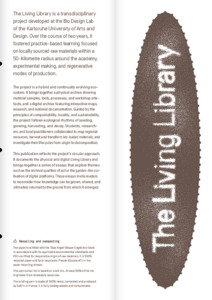
- The Living Library is a transdisciplinary project developed at the Bio Design Lab of the Karlsruhe University of Arts and Design. Over the course of two years, it fostered practice-based learning focused on locally sourced raw materials within a 50-kilometre radius around the academy, experimental making, and regenerative modes of production.
The project is a hybrid and continually evolving ecosystem. It brings together a physical archive showing material samples, tools, processes, and workshop artefacts, and a digital archive featuring interactive maps, research, and material documentation. Guided by the principles of compostability, locality, and sustainability, the project follows ecological rhythms of seeding, growing, harvesting, and decay. Students, researchers, and local practitioners collaborated to map regional resources, harvest and transform bio-based materials, and investigate their lifecycles from origin to decomposition.
This publication reflects the project’s circular approach. It documents the physical and digital Living Library and brings together a series of essays that explore themes such as the archival qualities of soil or the garden-like cultivation of digital platforms. These essays invite readers to reconsider how knowledge can be grown, shared, and ultimately returned to the ground from which it emerged.
- The Living Library is a transdisciplinary project developed at the Bio Design Lab of the Karlsruhe University of Arts and Design. Over the course of two years, it fostered practice-based learning focused on locally sourced raw materials within a 50-kilometre radius around the academy, experimental making, and regenerative modes of production.
- Importiert am
- 04.03.2026
- Übergeordnete Sets
- 1
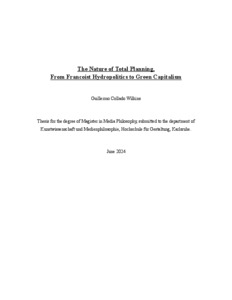
The Nature of Total Planning, From Francoist Hydropolitics to Green Capitalism
Name that can easily go onto 2 lines
Author that can easily go onto 2 lines as well
- Titel
- The Nature of Total Planning, From Francoist Hydropolitics to Green Capitalism
- Autor/in
- Beschreibung (de)
- Magisterarbeit in Medienphilosophie
- Beschreibung (en)
- Thesis for the degree of Magister in Media Philosophy
- Kategorie
- Schlagworte
- Datierung
- 06.06.2024
- Sprache
- Ort: Institution
- Land
- Titel
- The Nature of Total Planning, From Francoist Hydropolitics to Green Capitalism
- Titel (en)
- The Nature of Total Planning, From Francoist Hydropolitics to Green Capitalism
- Urheberrechtshinweis
- © Guillermo Collado Wilkins
- Rechtsschutz/Lizenz
- Freigabe Nutzung HfG
- Medienersteller/in
- Medien-Beschreibung (en)
- This paper provides a critical examination of ecological planning based on the continuities that it displays across seemingly disparate political projects and historical periods. In order to do so, it draws on the small rural valley of La Bizkaia in Navarre, Spain. It produces an environmental history of the valley through a detailed study of its hydro-forestry resources, periodising such history according to a materialist reading of its ‘metabolic regimes’. That is to say, through the particular configurations between the natural and social orders that dictate life in La Bizkaia.
Initially, the study introduces the valley’s natural characteristics and its property structure, laying the foundations upon which the rest of this paper sits. Subsequently, it undertakes a detailed investigation of Francoist interventions in the 1940s-60s; a massive monoculture of pine trees was planted by the Francoist Forestry Council, which radically undermined La Bizkaia’s natural systems and depopulated it. This paper thus analyses the planning logic behind this natural intervention which, borrowing a term from one of its draftsmen, is named ‘total planning’.
The thesis then explores contemporary management of the valley by the Government of Navarre, which has maintained ownership until this day, aligning its plans with the international protocols and standards characteristic of green capitalism. By looking at projects undertaken in the valley for nature conservation and climate change adaptation, which receive funding from the European Union, this research reveals the continuities between Francoist policies and green capitalism, and how both operate under the logic of Total Planning. Under this planning logic, they both fail to accommodate the unpredictability of political conflict and natural systems.
Planning thus serves as a lens to explore the political and epistemological dimensions of ecological thought, placing a materialist reading of a small case study into the broader context of contemporary ecological intervention.
- This paper provides a critical examination of ecological planning based on the continuities that it displays across seemingly disparate political projects and historical periods. In order to do so, it draws on the small rural valley of La Bizkaia in Navarre, Spain. It produces an environmental history of the valley through a detailed study of its hydro-forestry resources, periodising such history according to a materialist reading of its ‘metabolic regimes’. That is to say, through the particular configurations between the natural and social orders that dictate life in La Bizkaia.
- Alternativ-Text (de)
- Vollständiger Text der Magisterarbeit
- Alternativ-Text (en)
- Complete text of the Magisterarbeit
- Projektleiter/in
- Semester
- Studiengang
- Typ der Abschlussarbeit
- Importiert am
- 22.10.2024
- Übergeordnete Sets
- 1
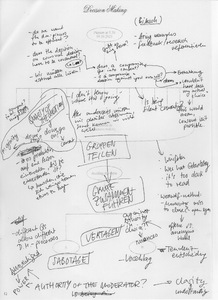
The Plenum: A Scripted Play
Name that can easily go onto 2 lines
Author that can easily go onto 2 lines as well
- Titel
- The Plenum: A Scripted Play
- Titel
- The Plenum: A Scripted Play
- Urheberrechtshinweis
- © Sven Krahl & Timothée Charon
- Medienersteller/in
- Studiengang
- Typ der Abschlussarbeit
- Importiert am
- 17.06.2024
- Übergeordnete Sets
- 1
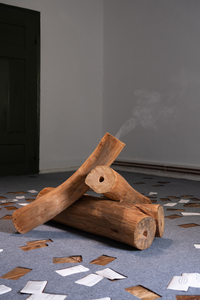
The Plenum: A Scripted Play
Name that can easily go onto 2 lines
Author that can easily go onto 2 lines as well
- Titel
- The Plenum: A Scripted Play
- Titel
- The Plenum: A Scripted Play
- Urheberrechtshinweis
- © Sven Krahl & Timothée Charon
- Medienersteller/in
- Studiengang
- Typ der Abschlussarbeit
- Importiert am
- 17.06.2024
- Übergeordnete Sets
- 1