Sets
444 Inhalte
- Seite 1 von 37
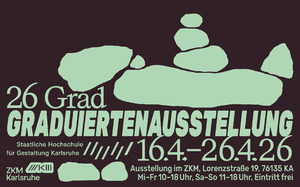
26 GRAD: Grafik und Katalog
Name that can easily go onto 2 lines
Author that can easily go onto 2 lines as well
- Titel
- 26 GRAD: Grafik und Katalog
- Titel
- 26 GRAD: Grafik und Katalog
- Importiert am
- 09.03.2026
- Übergeordnete Sets
- 1
- Set enthält
- 0 5
Graduiertenausstellung 2023
Name that can easily go onto 2 lines
Author that can easily go onto 2 lines as well
- Titel
- Graduiertenausstellung 2023
- Titel (en)
- Graduate Show 2023
- Autor/in
- Beschreibung (de)
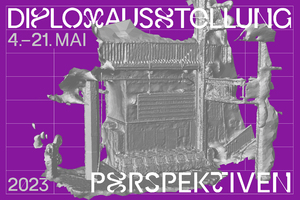
- Vom 04. bis 21. Mai 2023 werden in den Lichthöfen der HfG Karlsruhe unter dem Titel Diplomausstellung 2023 – Perspektiven, die zwischen 2022 und 2023 an der Staatlichen Hochschule für Gestaltung entstandenen Abschlussarbeiten – darunter Filme, Fotografien, Publikationen, Performances, Video- und Soundinstallationen sowie neu entwickelte Werkzeuge, Produkte und Materialien – präsentiert.
- Beschreibung (en)
- From May 04 to 21, 2023, the graduation works created at the Staatliche Hochschule für Gestaltung between 2022 and 2023 - including films, photographs, publications, performances, video and sound installations as well as newly developed tools, products and materials - will be presented in the Lichthof of the HfG Karlsruhe under the title Diploma Exhibition 2023 - Perspectives.
- From May 04 to 21, 2023, the graduation works created at the Staatliche Hochschule für Gestaltung between 2022 and 2023 - including films, photographs, publications, performances, video and sound installations as well as newly developed tools, products and materials - will be presented in the Lichthof of the HfG Karlsruhe under the title Diploma Exhibition 2023 - Perspectives.
- Datierung
- 04.05.2023 - 21.05.2023
- Bemerkungen
- Curation: Kathi Rüll, Marie Luise Stein, Mona Altmann, Rebecca Zink, Tatjana Pfeiffer
Exhibition design: Marie Luise Stein
Text & Editing: Mona Altmann
Art Direction & Graphics: Kathi Rüll, Rebecca Zink, Tatjana Pfeiffer
Planning & coordination of the supporting program: Kathi Rüll
Exhibiting artists and designers: Adrian Dickhoff, Angelica Gut, Arno Schlipf, Benjamin Breitkopf, Bruno Jacoby, Christina Vinke, Felix Grünschloß, Heidi Herzig, Iden Sunyoung Kim, Johanna Schäfer, Kathi Rüll, Katja Anina, Brosius, Lizzy Ellbrück, Manuel Sékou, Marie-Luise Stein, Max Zickenheiner, Moritz Appich, Nele Faust, Nina Overkott, Nino Alonso, Rebecca Zink, Tatjana Pfeiffer, Zaza Barisch
- Curation: Kathi Rüll, Marie Luise Stein, Mona Altmann, Rebecca Zink, Tatjana Pfeiffer
- Titel
- Graduiertenausstellung 2023
- Importiert am
- 25.03.2026
- Übergeordnete Sets
- 1
- Set enthält
- 0 1
Well, don't you do wellness?
Name that can easily go onto 2 lines
Author that can easily go onto 2 lines as well
- Titel
- Well, don't you do wellness?
- Titel (en)
- Well, don't you do wellness?
- Autor/in
- Beschreibung (de)
- Well, don’t you do Wellness? untersucht Wellness im Spannungsfeld zwischen Wohlbefinden, Selbstoptimierung und Widerstand. Die Arbeit hinterfragt gesellschaftlich erlernte Vorstellungen von Gesundheit und Leistungsfähigkeit aus feministischer Perspektive. Dabei verbinden sich Bezüge zu historischen Badekulturen und Quilting als feministischer Handarbeitstechnik mit Schreien als spekulativer Methode im Kontrast zu gängigen Wellness-Trends. Folgende Formate und Arbeiten sind Teil des Projekts:
○ Public Screaming zur Bundestagswahl am 23.02.2025
öffentliches, kollektives Schreien zur ersten Hochrechnung um 18:00 Uhr auf dem Mount Klotz, Günther Klotz Anlage
○ Scream Your Heart Out, Workshop mit Andrzej Profus, 07.05.2025 ZKM Pavillion
Screaming-Workshop, organisiert in Kooperation mit Betty Potemkin und Edona Ibrahimi.
○ auch meine Zunge, die ich rausstrecke, ist rot, videodokumentierte Performance
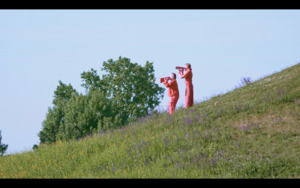
Während der 60 minütigen Performance sehen wir drei Scream Queens auf der Suche nach der optimalen Auszeit, der maximalen Entladung. Sie weihen als professionelle Schreier*innen einen Berg im Karlsruher Naherholungsgebiet als Mount Scream ein und eröffnen damit eine neue Phase der innerstädtischen Naherholung.
○ morning Session, Lecture Performance, 06.06.2025 Günther Klotz Anlage
Eine Einladung zu einer Lesung über Wellness, Baderituale und quilting auf einem roten Quilt aus ausrangierten, rot gefärbten Handtüchern. Beginn und Ende wird durch den Klang eines keramischen Zungengongs markiert.
○ Scream Queen Couture, Ausstellung, CU Karlsruhe 06.- 08.06.2025
Die dreitägige Ausstellung thematisiert Schreien als Gegenentwurf zu gängigen Wellness-Trends und lädt Besucher*innen dazu ein, sich durch das Ausleihen von Scream Queen Outfits, keramischen Schreirohren und Schreianleitungen selbst in Scream Queens zu verwandeln und Schreien im öffentlichen Raum als mögliche Form von Wellness zu erproben.
- Well, don’t you do Wellness? untersucht Wellness im Spannungsfeld zwischen Wohlbefinden, Selbstoptimierung und Widerstand. Die Arbeit hinterfragt gesellschaftlich erlernte Vorstellungen von Gesundheit und Leistungsfähigkeit aus feministischer Perspektive. Dabei verbinden sich Bezüge zu historischen Badekulturen und Quilting als feministischer Handarbeitstechnik mit Schreien als spekulativer Methode im Kontrast zu gängigen Wellness-Trends. Folgende Formate und Arbeiten sind Teil des Projekts:
- Beschreibung (en)
- 'Well, don't you do wellness?' examines wellness in the context of well-being, self-optimisation, and resistance. Consisting of several parts, the work questions socially learned ideas about health and productivity with a feminist approach. References to historical bathing cultures are combined with quilting as a feminist and activist handcraft technique, while screaming is tested as a speculative wellness method.
○ Public Screaming for the federal election on 23 February 2025
public, collective screaming at the first projection at 6 p.m. on Mount Klotz, Günther Klotz Anlage
○ Scream Your Heart Out, Screaming workshop by Andrzej Profus, 7 May 2025, ZKM Pavilion
organised in cooperation with Betty Potemkin and Edona Ibrahimi.
○ auch meine Zunge, die ich rausstrecke, ist rot video-documented performance
During the 60-minute performance, three scream queens seek the optimal time-out and maximum release. As professional screamers, they inaugurate Mount Scream in Karlsruhe's local recreation area, thus opening a new phase of urban recreation.
○ Scream Queen Couture exhibition, CU Karlsruhe, 6th - 8th May 2025
This three-day exhibition explores screaming as an alternative to current wellness trends. Visitors are invited to become Scream Queens by borrowing outfits, screaming tubes and instructions. They can also experience screaming in public spaces as a potential wellness practice.
- 'Well, don't you do wellness?' examines wellness in the context of well-being, self-optimisation, and resistance. Consisting of several parts, the work questions socially learned ideas about health and productivity with a feminist approach. References to historical bathing cultures are combined with quilting as a feminist and activist handcraft technique, while screaming is tested as a speculative wellness method.
- Kategorie
- Typ des Projekts/Werks
- Schlagworte
- Datierung
- 2025
- Mitwirkende
- Dank an
- Material
- Ort: Institution
- Stadt
- Titel
- Well, don't you do wellness?
- Projektleiter/in
- Semester
- Studiengang
- Typ der Abschlussarbeit
- Importiert am
- 14.09.2025
- Übergeordnete Sets
- 1
- Set enthält
- 0 14
Graduiertenausstellung 2022: All we as
Name that can easily go onto 2 lines
Author that can easily go onto 2 lines as well
- Titel
- Graduiertenausstellung 2022: All we as
- Beschreibung (de)
- "HfG GRADUATES 21/22 - All we as"
02.-19.06.22
- "HfG GRADUATES 21/22 - All we as"
- Beschreibung (en)
- "HfG GRADUATES 21/22 - All we as"
02.-19.06.22
- "HfG GRADUATES 21/22 - All we as"
- Internetlinks
- Titel
- Graduiertenausstellung 2022: All we as
- Importiert am
- 25.03.2026
- Übergeordnete Sets
- 1
- Set enthält
- 0 1
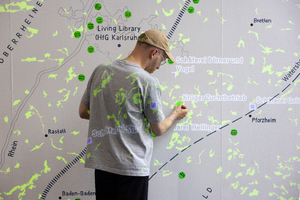
Physische Living Library
Name that can easily go onto 2 lines
Author that can easily go onto 2 lines as well
- Titel
- Physische Living Library
- Titel (en)
- Physical Living Library
- Titel
- Physische Living Library
- Importiert am
- 13.01.2025
- Übergeordnete Sets
- 1
- Set enthält
- 4 0
Living Library (2024-2026)
Name that can easily go onto 2 lines
Author that can easily go onto 2 lines as well
- Titel
- Living Library (2024-2026)
- Autor/in
- Beschreibung (de)
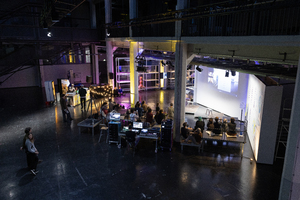
- Die Living Library ist ein transdisziplinäres Projekt, das am Bio Design Lab der Staatlichen Hochschule für Gestaltung Karlsruhe entwickelt wurde. Im Laufe von zwei Jahren förderte es praxisorientiertes Lernen mit Schwerpunkt auf lokal gewonnenen Rohstoffen aus einem Umkreis von 50 Kilometern um die Hochschule, experimentellem Arbeiten und regenerativen Produktionsweisen.
Das Projekt ist ein hybrides und sich ständig weiterentwickelndes Ökosystem. Es vereint ein physisches Archiv mit Materialproben, Werkzeugen, Prozessen und Workshop-Artefakten sowie ein digitales Archiv mit interaktiven Karten, Forschungsergebnissen und Materialdokumentationen. Geleitet von den Prinzipien der Kompostierbarkeit, Lokalität und Nachhaltigkeit folgt das Projekt den ökologischen Zyklen der Aussaat, des Wachstums, der Ernte und des Verfalls. Studierende, Forschende und lokale Praktiker:innen arbeiteten zusammen, um regionale Ressourcen zu lokalisieren, biobasierte Materialien zu ernten und zu verarbeiten sowie deren Lebenszyklen von der Entstehung bis zur Zersetzung zu untersuchen.
Eine Open-Access-Publikation die physische und digitale Living Library und vereint eine Reihe von Essays, die Themen wie die archivarischen Qualitäten der Erde oder die gartenähnliche Kultivierung digitaler Plattformen untersuchen. Diese Essays laden die Leser:innen dazu ein, zu überdenken, wie Wissen angebaut, geteilt und schließlich wieder in den Boden zurückgeführt werden kann, aus dem es entstanden ist.
- Die Living Library ist ein transdisziplinäres Projekt, das am Bio Design Lab der Staatlichen Hochschule für Gestaltung Karlsruhe entwickelt wurde. Im Laufe von zwei Jahren förderte es praxisorientiertes Lernen mit Schwerpunkt auf lokal gewonnenen Rohstoffen aus einem Umkreis von 50 Kilometern um die Hochschule, experimentellem Arbeiten und regenerativen Produktionsweisen.
- Beschreibung (en)
- The Living Library is a transdisciplinary project developed at the Bio Design Lab of the Karlsruhe University of Arts and Design. Over the course of two years, it fostered practice-based learning focused on locally sourced raw materials within a 50-kilometre radius around the academy, experimental making, and regenerative modes of production.
The project is a hybrid and continually evolving ecosystem. It brings together a physical archive showing material samples, tools, processes, and workshop artefacts, and a digital archive featuring interactive maps, research, and material documentation. Guided by the principles of compostability, locality, and sustainability, the project follows ecological rhythms of seeding, growing, harvesting, and decay. Students, researchers, and local practitioners collaborated to map regional resources, harvest and transform bio-based materials, and investigate their lifecycles from origin to decomposition.
An open access publication documents the physical and digital Living Library and brings together a series of essays that explore themes such as the archival qualities of soil or the garden-like cultivation of digital platforms. These essays invite readers to reconsider how knowledge can be grown, shared, and ultimately returned to the ground from which it emerged.
- The Living Library is a transdisciplinary project developed at the Bio Design Lab of the Karlsruhe University of Arts and Design. Over the course of two years, it fostered practice-based learning focused on locally sourced raw materials within a 50-kilometre radius around the academy, experimental making, and regenerative modes of production.
- Kategorie
- Typ des Projekts/Werks
- Datierung
- 31.03.2024 - 31.03.2026
- Mitwirkende
- Dank an
- Sprache
- Internetlinks
- Bemerkungen
- Funded by the Stiftung Innovation in der Hochschullehre
- Titel
- Living Library (2024-2026)
- Semester
- Importiert am
- 08.10.2024
- Übergeordnete Sets
- 1
- Set enthält
- 9 0
In Defense of Mis Caprichos
Name that can easily go onto 2 lines
Author that can easily go onto 2 lines as well
- Titel
- In Defense of Mis Caprichos
- Untertitel
- When someone says you canʼt do something. Do it twice, and take pictures.
- Autor/in
- Beschreibung (de)
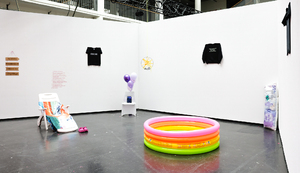
- "In Defense of Mis Caprichos" ist eine multimediale Ausstellung, die auf einem selbst kuratierten Archiv von 140 gefundenen und eigenen Bildern basiert. Sie setzt sich mit der vernakulären Bildsprache Lateinamerikas auseinander – von Memes und persönlichen Fotos bis zu Screenshots. Viele Bilder sind durch digitale Verbreitung nur in niedriger Auflösung erhalten und spiegeln so die visuelle Textur des Internets wider. Sie vermitteln eine Sensibilität, die sich nicht erklären lässt, sondern sich durch Stimmung, Ton und Wiederholung entfaltet. Viele der Bilder stammen aus oder zeigen Kontexte des Globalen Südens und verstehen sich als Hommage an dortige alltägliche, informelle Gesten. Zusammen bilden sie eine visuelle Sprache, die intim, vielschichtig, instabil und oft humorvoll ist.
Das Projekt bezieht sich auf Hal Fosters Aufsatz "An Archival Impulse", der das Archivieren als künstlerische Praxis versteht und Fragmentierung der Kohärenz vorzieht – zentrale Konzepte für dieses sich stetig wandelnde Archiv. Daraus wurden zehn künstlerische Objekte entwickelt, die die Skurrilitäten der Sammlung erfassen: Repliken, Performances oder hybride Assemblagen. Ihre Logik beruht auf Aneignung, Kopie und Transformation – im Sinne Byung-Chul Hans, der Replikation als kreative Strategie für neue Bedeutungen begreift.
Einige Werke greifen konkrete Bilder auf: Eine Performance, bei der ein Plastikpool auf einem Motorrad transportiert wird, bezieht sich auf ein Archivbild. Ein anderes verwandelt einen falsch übersetzten Tweet in ein dekoratives Holzschild. Ein drittes ist ein Traumfänger aus gelber Unterwäsche – inspiriert von einem kolumbianischen Neujahrsbrauch, wonach gelbe Unterwäsche Glück bringen soll.
Ein zentrales Element ist eine Videoarbeit, die das gesamte Archiv in Endlosschleife zeigt, begleitet von Texten aus unterschiedlichen Quellen: akademisch, persönlich oder aus sozialen Medien. Die Anordnung ist nicht erklärend, sondern atmosphärisch. Die Ausstellung schafft einen hierarchiefreien Raum, der Intuition, spielerische Ernsthaftigkeit und visuelle Alltagskulturen in den Mittelpunkt stellt.
- "In Defense of Mis Caprichos" ist eine multimediale Ausstellung, die auf einem selbst kuratierten Archiv von 140 gefundenen und eigenen Bildern basiert. Sie setzt sich mit der vernakulären Bildsprache Lateinamerikas auseinander – von Memes und persönlichen Fotos bis zu Screenshots. Viele Bilder sind durch digitale Verbreitung nur in niedriger Auflösung erhalten und spiegeln so die visuelle Textur des Internets wider. Sie vermitteln eine Sensibilität, die sich nicht erklären lässt, sondern sich durch Stimmung, Ton und Wiederholung entfaltet. Viele der Bilder stammen aus oder zeigen Kontexte des Globalen Südens und verstehen sich als Hommage an dortige alltägliche, informelle Gesten. Zusammen bilden sie eine visuelle Sprache, die intim, vielschichtig, instabil und oft humorvoll ist.
- Beschreibung (en)
- In Defense of Mis Caprichos is a multimedia exhibition based in a self-curated archive of 140 found and self-produced images that reflect the vernacular visual language of Latin America. These images—ranging from memes and personal photographs to screenshots— carry a distinct sensibility: one that resists explanation and instead unfolds through mood, tone, and repetition. Often low in resolution due to constant digital circulation, the images reflect the visual texture of the internet. Many celebrate vernacular and informal gestures, circulating quickly across digital platforms to form a visual language that is intimate, layered, unstable, and often humorous.
The work draws on Hal Foster’s An Archival Impulse, where archiving is seen as an artistic practice and a preference for fragmentation over coherence reflects a deliberate artistic strategy.
From this archive, ten objects were developed, each guided by a specific premise. Some take the form of replicas, others of performances or hybrid assemblages. These objects operate as attempts to “grasp” the underlying sensibility of the archive. Their logic often draws on the aesthetics of appropriation, copying, and transformation—resonating with Byung-Chul Han’s Shanzhai: Deconstruction in Chinese, where copying and sampling are understood as creative strategies capable of generating new meaning.
A second core component of the exhibition is a video slideshow that presents the full image archive in a loop. The video has no beginning and no end, as it is conceived as a work in progress—the archive is constantly evolving. Each image is accompanied by 1–2 lines of text drawn from diverse sources: academic texts, social media posts, and personal writings. The arrangement is not explanatory but atmospheric, evoking how Susan Sontag, in Notes on Camp, approaches a sensibility not through linear explanation but through curation and juxtaposition.
In Defense of Mis Caprichos does not seek resolution or synthesis. Instead, it inhabits a space of connection without hierarchy. It is an argument for intuition, for playful seriousness, and for honoring the seemingly trivial gestures we encounter every day.
- In Defense of Mis Caprichos is a multimedia exhibition based in a self-curated archive of 140 found and self-produced images that reflect the vernacular visual language of Latin America. These images—ranging from memes and personal photographs to screenshots— carry a distinct sensibility: one that resists explanation and instead unfolds through mood, tone, and repetition. Often low in resolution due to constant digital circulation, the images reflect the visual texture of the internet. Many celebrate vernacular and informal gestures, circulating quickly across digital platforms to form a visual language that is intimate, layered, unstable, and often humorous.
- Kategorie
- Typ des Projekts/Werks
- Schlagworte
- Dank an
- Sprache
- Material
- Technik/Verfahren/Formate
- Diashow / Skulptur / Performance
- Ort: Institution
- Ort
- Lichthof 4
- Stadt
- Land
- Titel
- In Defense of Mis Caprichos
- Untertitel
- When someone says you canʼt do something. Do it twice, and take pictures.
- Projektleiter/in
- Semester
- Studiengang
- Typ der Abschlussarbeit
- Importiert am
- 27.06.2025
- Übergeordnete Sets
- 2
- Set enthält
- 4 2
IDoll
Name that can easily go onto 2 lines
Author that can easily go onto 2 lines as well
- Titel
- IDoll
- Untertitel
- 1.2b.TV
- Autor/in
- Beschreibung (de)
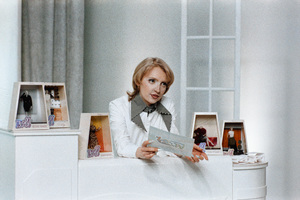
- Die fiktive Teleshopping-Show “1.2b.TV” untersucht popkulturelle Codes, neoliberale Selbstinszenierungen und den Zwang zur Einzigartigkeit in unserer Gesellschaft. Präsentiert werden fünf Produkte in Form von fünf Puppen im Barbieformat.
IDoll BOSS BABE EFFECT
If I’m a Boss Babe everything I touch becomes pure independence & financial freedom.
IDoll LEO GIRL EFFEKT
If I’m a Leo everything I touch becomes roaring golden confidence and self love.
IDoll CUNT EFFEKT
If I'm a Cunt everything I touch becomes pure pleasure.
IDoll WIFEY EFFEKT
If I'm a Wifey everything I touch becomes a sign of care.
IDoll EDGY ONE EFFEKT
If I‘m an Edgy One everything I touch becomes a question to the normative order.
Die Kits enthalten Outfits, Accessoires und Motto-Sprüche, die die performative Konstruktion dieser Rollen greifbar machen. In Erscheinung von Erika Mustermann verkörpert die Moderatorin in einer endlosen Repetition die Rollen der IDolls. Als „Töchter“ und Nachfolgerinnen von Erika Mustermann tragen sie ihre Privilegien weiter und machen diese zur Grundlage ihrer eigenen Existenz.
Die Show nutzt satirische Überzeichnung, um den heutigen Individualismuskult kritisch zu reflektieren, der permanente Identitätsarbeit fordert. Sie beleuchtet die Widersprüche dieses Systems aus feministischer Perspektive und fragt, welche Normen, Rollenbilder und Erwartungen unser Verständnis von weiblicher* Identität prägen und einschränken.
- Die fiktive Teleshopping-Show “1.2b.TV” untersucht popkulturelle Codes, neoliberale Selbstinszenierungen und den Zwang zur Einzigartigkeit in unserer Gesellschaft. Präsentiert werden fünf Produkte in Form von fünf Puppen im Barbieformat.
- Beschreibung (en)
- The fictional teleshopping show “1.2b.TV” explores neoliberal self-promotion, pop culture codes and the societal pressure to be unique. Five products are presented in the form of Barbie-sized dolls:
IDoll – BOSS BABE EFFECT
If I'm a Boss Babe, everything I touch becomes pure independence and financial freedom.
IDoll – LEO GIRL EFFECT
If I'm a Leo, everything I touch becomes roaring golden confidence and self-love.
IDoll – CUNT EFFECT
If I'm a Cunt, everything I touch becomes pure pleasure.
IDoll – WIFEY EFFECT
If I'm a Wifey, everything I touch becomes a sign of care.
IDoll – EDGY ONE EFFECT
If I'm an Edgy One, everything I touch becomes a question to the normative order.
The kits contain outfits, accessories, and slogans that make the performative construction of these roles tangible. Appearing as Erika Mustermann, the presenter endlessly embodies the roles of the IDOLLS. As Erika Mustermann’s “daughters” and successors, they carry forward her privileges and make them the very foundation of their own existence.
Through satirical exaggeration, the show critically reflects on today’s “cult of individualism”, which demands constant identity work. It highlights the contradictions of this system from a feminist perspective and asks which norms, role models, and expectations shape and limit our understanding of female* identity.
- The fictional teleshopping show “1.2b.TV” explores neoliberal self-promotion, pop culture codes and the societal pressure to be unique. Five products are presented in the form of Barbie-sized dolls:
- Kategorie
- Schlagworte
- Mitwirkende
- Titel
- IDoll
- Untertitel
- 1.2b.TV
- Projektleiter/in
- Semester
- Studiengang
- Typ der Abschlussarbeit
- Importiert am
- 29.09.2025
- Übergeordnete Sets
- 1
- Set enthält
- 0 13
Erikas Töchter
Name that can easily go onto 2 lines
Author that can easily go onto 2 lines as well
- Titel
- Erikas Töchter
- Autor/in
- Beschreibung (de)
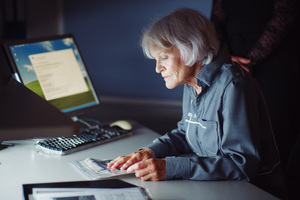
- "Erikas Töchter" untersucht anhand der fiktiven Figur Erika Mustermann Perspektiven auf die weibliche* Identitätsbildung in Deutschland. Seit 1987 existiert Erika als Musteridentität in amtlichen Dokumenten - weiß, blond, blau- oder grünäugig. Als ein lächelnder Anachronismus geistert sie, erschreckend unkommentiert, durch die Bürokratielandschaft Deutschlands. Ihre durchdringende Augen blicken uns alle aufmerksam an, die Mundwinkel deuten ein neutrales Lächeln an. Doch je länger man sie betrachtet, desto schwerer wiegt ihr Blick: normierend, klassifizierend und ausschließend.
Die Arbeit übersetzt diese fiktive Identität in ein irritierendes Szenario, das zwischen Gartenfest, Ausstellung, Performance und Büroalltag changiert. Im Zentrum stehen zwei Ebenen: Zum einen die Präsentation der IDOLLs, einer Serie neuer weiblicher Musteridentitäten, die im Format einer Teleshopping-Show als innovative Lösung zeitgenössischer Identitätsprobleme vermarktet werden. Zum anderen der Blick in Erikas Büroalltag. Umgeben von Plastik-Buchsbaumbüschen, Teppichboden und generischen Büromöbeln ist sie gefangen im Moment des Fotos und der Reproduktion ihres Gesichtes.
- "Erikas Töchter" untersucht anhand der fiktiven Figur Erika Mustermann Perspektiven auf die weibliche* Identitätsbildung in Deutschland. Seit 1987 existiert Erika als Musteridentität in amtlichen Dokumenten - weiß, blond, blau- oder grünäugig. Als ein lächelnder Anachronismus geistert sie, erschreckend unkommentiert, durch die Bürokratielandschaft Deutschlands. Ihre durchdringende Augen blicken uns alle aufmerksam an, die Mundwinkel deuten ein neutrales Lächeln an. Doch je länger man sie betrachtet, desto schwerer wiegt ihr Blick: normierend, klassifizierend und ausschließend.
- Beschreibung (en)
- “Erikas Töchter” explores perspectives on female* identity formation in Germany through the fictional figure of Erika Mustermann. Since 1987, Erika has served as the standard identity in official documents – white, blonde, blue- or green-eyed. As a smiling anachronism, she continues to haunt Germany’s bureaucratic landscape. Erika’s eyes look directly at the viewer, the corners of her mouth suggesting a neutral smile. Yet the longer she gazes at you, the more insistent her expression becomes: classifying and excluding
The work translates this fictional identity into a scenario that shifts between garden party, exhibition, performance, and office routine. At its center are two layers: on the one hand, the presentation of the IDOLLs – a series of new female standard identities, presented in the style of a teleshopping show, offering an innovative approach to contemporary issues of identity; on the other hand, a glimpse into Erika’s everyday office life. Surrounded by plastic boxwood shrubs, carpeting, and generic office furniture, she remains trapped in the moment of the photograph and the endless reproduction of her own face.
- “Erikas Töchter” explores perspectives on female* identity formation in Germany through the fictional figure of Erika Mustermann. Since 1987, Erika has served as the standard identity in official documents – white, blonde, blue- or green-eyed. As a smiling anachronism, she continues to haunt Germany’s bureaucratic landscape. Erika’s eyes look directly at the viewer, the corners of her mouth suggesting a neutral smile. Yet the longer she gazes at you, the more insistent her expression becomes: classifying and excluding
- Kategorie
- Typ des Projekts/Werks
- Schlagworte
- Datierung
- 22.07.2025
- Mitwirkende
- Sprache
- Material
- Abmessungen
- Ein kleines Haus mit Garten
- Dauer
- 4 Stunden
- Ort: Institution
- Stadt
- Land
- Titel
- Erikas Töchter
- Projektleiter/in
- Semester
- Studiengang
- Typ der Abschlussarbeit
- Importiert am
- 29.09.2025
- Übergeordnete Sets
- 3
- Set enthält
- 2 23
Deckenstimme
Name that can easily go onto 2 lines
Author that can easily go onto 2 lines as well
- Titel
- Deckenstimme
- Autor/in
- Kategorie
- Titel
- Deckenstimme
- Projektleiter/in
- Semester
- Studiengang
- Typ der Abschlussarbeit
- Importiert am
- 21.10.2025
- Übergeordnete Sets
- 1
- Set enthält
- 0 2
entre-temps
Name that can easily go onto 2 lines
Author that can easily go onto 2 lines as well
- Titel
- entre-temps
- Autor/in
- Beschreibung (de)
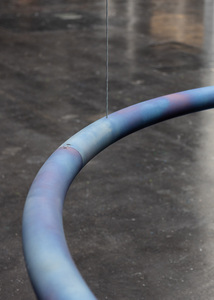
- Unter dem Einfluss von Hitze offenbart Stahl eine unbekannte Seite. Wolkenartige Farbmuster entstehen auf seiner Oberfläche und widersetzen sich materialgebundenen Definitionen. Die Arbeit untersucht die Beziehung zwischen Schwerem und Leichtem sowie Fragen der Komplexität.
- Beschreibung (en)
- Under the influence of heat, steel reveals an unknown side. Cloudlike patterns of color emerge on its surface, resisting materialbound definitions. The work explores the relationship between the heavy and the light, as well as questions of complexity.
- Kategorie
- Typ des Projekts/Werks
- Schlagworte
- Datierung
- 2025
- Dank an
- Kevin Beckmann
- Adrien Benoit
- Matthias Bruhn
- Lukas Clark
- Finn De Bruyn
- Kira Fuchs
- Josephine Gerhardt
- Josef Grair
- Dorothea Griep
- Cansu Gündoğdu
- Jule Heinzelmann
- Hannah Hugger
- Tina Jander
- Chris Kabel
- Valentina Karga
- Florian Knöbl
- Alexander Knoppik
- Philipp Kriebel
- Julian Kuf
- Barbara Kuon
- Florian Lips
- Nini Lue
- Tim Miler
- Sebastian Schäfer
- Sebastian Schilbach
- Susanne Schmitt
- Jules Scoubart
- Manèkè Som
- Pei Zhou
- Material
- Technik/Verfahren/Formate
- Heat Coloring
- Abmessungen
- Ring: 4x4m, Spiegel: 80x4cm
- Ort: Institution
- Stadt
- Land
- Beteiligte Institution(en)
- Internetlinks
- Titel
- entre-temps
- Projektleiter/in
- Semester
- Studiengang
- Typ der Abschlussarbeit
- Importiert am
- 24.02.2026
- Übergeordnete Sets
- 3
- Set enthält
- 0 21
Graduiertenausstellung
Name that can easily go onto 2 lines
Author that can easily go onto 2 lines as well
- Titel
- Graduiertenausstellung
- Titel
- Graduiertenausstellung
- Importiert am
- 15.01.2025
- Übergeordnete Sets
- 1
- Set enthält
- 4 0