Sets
444 Inhalte
- Seite 1 von 37
block to blob - objects
Name that can easily go onto 2 lines
Author that can easily go onto 2 lines as well
- Titel
- block to blob - objects
- Titel (en)
- block to blob - objects
- Autor/in
- Kategorie
- Titel
- block to blob - objects
- Projektleiter/in
- Studiengang
- Typ der Abschlussarbeit
- Importiert am
- 19.11.2024
- Übergeordnete Sets
- 1
- Set enthält
- 0 4
block to blob - publication
Name that can easily go onto 2 lines
Author that can easily go onto 2 lines as well
- Titel
- block to blob - publication
- Titel (en)
- block to blob - publication
- Autor/in
- Kategorie
- Titel
- block to blob - publication
- Projektleiter/in
- Studiengang
- Typ der Abschlussarbeit
- Importiert am
- 19.11.2024
- Übergeordnete Sets
- 1
- Set enthält
- 0 2
block to blob - exhibition
Name that can easily go onto 2 lines
Author that can easily go onto 2 lines as well
- Titel
- block to blob - exhibition
- Titel (en)
- block to blob - exhibition
- Autor/in
- Kategorie
- Titel
- block to blob - exhibition
- Projektleiter/in
- Studiengang
- Typ der Abschlussarbeit
- Importiert am
- 19.11.2024
- Übergeordnete Sets
- 1
- Set enthält
- 0 7
block to blob - videos
Name that can easily go onto 2 lines
Author that can easily go onto 2 lines as well
- Titel
- block to blob - videos
- Titel (en)
- block to blob - videos
- Autor/in
- Kategorie
- Typ des Projekts/Werks
- Titel
- block to blob - videos
- Projektleiter/in
- Studiengang
- Typ der Abschlussarbeit
- Importiert am
- 19.11.2024
- Übergeordnete Sets
- 1
- Set enthält
- 0 6
block to blob
Name that can easily go onto 2 lines
Author that can easily go onto 2 lines as well
- Titel
- block to blob
- Titel (en)
- block to blob
- Untertitel
- tracing back materiality
- Untertitel des Projekts/Werks (en)
- tracing back materiality
- Autor/in
- Beschreibung (de)
- Dieses Diplomprojekt dokumentiert den Materialstrom von synthetischen Kunststoffen durch einen rückwärtsgerichteten chronologischen Ansatz. Es kombiniert Feldforschung, visuelle Dokumentation und Materialexperimente, um die Reise von Kunststoffen von ihren Endprodukten zurück zu ihrem Ursprung im Erdöl nachzuvollziehen.
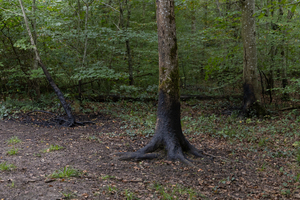
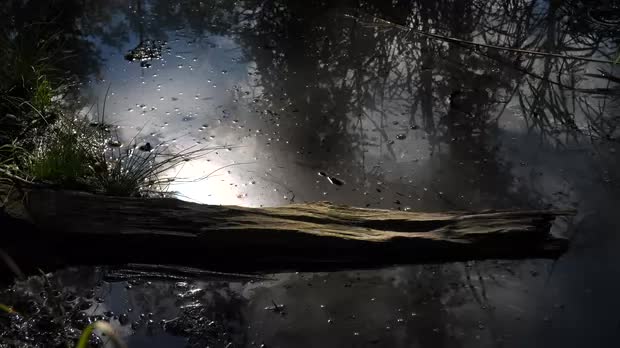
"Block to Blob" umfasst Besuche an verschiedenen Orten der Produktionskette, wie etwa Produktionsanlagen, Ölraffinerien, Pipelines und Förderstätten und endet in einem Waldökosystem, wo Rohöl auf natürliche Weise an die Erdoberfläche tritt. Diese Erfahrungen werden in einer Forschungspublikation zusammengestellt, die dieser rückwärtsgerichteten Erzählweise folgt.
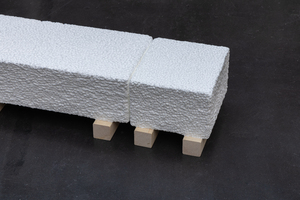
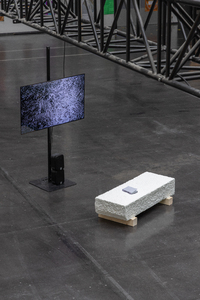
Eine Videoinstallation dokumentiert die besuchten Orte und liefert einen visuellen Kontext zu den industriellen Prozessen, der verborgenen Infrastruktur und der natürlichen Substanz im Wald. Zusätzlich verankert eine Reihe von Objekten, die aus mit Erdöl beschichtetem Holz und Polystyrol gefertigt sind, das Projekt in greifbaren Materialien.
- Dieses Diplomprojekt dokumentiert den Materialstrom von synthetischen Kunststoffen durch einen rückwärtsgerichteten chronologischen Ansatz. Es kombiniert Feldforschung, visuelle Dokumentation und Materialexperimente, um die Reise von Kunststoffen von ihren Endprodukten zurück zu ihrem Ursprung im Erdöl nachzuvollziehen.
- Beschreibung (en)
- This diploma project details the material stream of synthetic plastics through a reverse chronological approach. It combines field research, visual documentation, and material experimentation to retrace the journey of plastics from their final products back to their origins in petroleum.
‘block to blob’ includes visits to various sites in the production chain, such as manufacturing facilities, oil refineries, pipelines, and extraction sites, concluding in a forest ecosystem, where crude oil naturally seeps to the earth's surface. These experiences are compiled into a research publication that follows this reverse narrative.
A video installation documents the visited locations, providing visual context for the industrial processes, hidden infrastructure and the natural substance in the forest. Additionally, a series of objects made from petroleum-coated wood and polystyrene grounds the project in tangible materials.
- This diploma project details the material stream of synthetic plastics through a reverse chronological approach. It combines field research, visual documentation, and material experimentation to retrace the journey of plastics from their final products back to their origins in petroleum.
- Kategorie
- Typ des Projekts/Werks
- Schlagworte
- Datierung
- 2024
- Sprache
- Untertitel (Film)
- Material
- Technik/Verfahren/Formate
- Pine wood coated with petroleum, Wood soaked in gasoline and pressed/bonded with polystyrene
- Abmessungen
- L x B x H mm, Petroleum-coated wooden objects: Bench: 800 x 200 x 450, 2x T-Stool: 350 x 200 x 450, Stool (3-legged): 450 x 270 x 450, Stool (wide): 600 x 450 x 450, TV stand: - Polystyrene Objekts: Counter: 500 x 370 x 1100, 2x Bench1: 1000 x 570 x 400, Bench2: 1300 x 570 x 350, Stool: 500 x 370 x 570
- Dauer
- 1.: upstream 0 - oil seeping naturally to the surface - Alsace - 2:55min, 2.: upstream 1 - prospect drilling for oil reservoirs - Weingarten - 2:17min, 3.: upstream 2 - horse head pumps extracting oil - Landau - 3:50min, 4.: midstream - transalpine pipeline - Triest-Karlsruhe - 10:40min, 5.: downstream 1 - germany biggest oil refinery - Karlsruhe - 3:13min, 6.: downstream 2 - world biggest chemical plant - Ludwigshafen - 2:19min
- Ort: Institution
- Ort
- Lichthof 3
- Stadt
- Land
- Titel
- block to blob
- Untertitel
- tracing back materiality
- Projektleiter/in
- Semester
- Studiengang
- Typ der Abschlussarbeit
- Lehrveranstaltung
- Importiert am
- 03.11.2024
- Übergeordnete Sets
- 3
- Set enthält
- 4 1
25 Grad: Graduierte im Gespräch
- Titel
- 25 Grad: Graduierte im Gespräch
- Beschreibung (de)
- In den zwei Kolloquien tauschen sich Absolvent:innen aus den verschiedenen Disziplinen der HfG über ihre Abschlussarbeiten aus. In offener Runde geben sie einen Einblick in die Entstehung und Entwicklung ihrer Projekte. Das Publikum ist eingeladen, Fragen zu stellen und mit zu diskutieren.
15.02.2025: Julius Bläser, Eike Buff, Lara Landbrecht, Janosch Kratz
22.02.2025: Florian Knöbl, Mona Mayer, Bob Reinert
- In den zwei Kolloquien tauschen sich Absolvent:innen aus den verschiedenen Disziplinen der HfG über ihre Abschlussarbeiten aus. In offener Runde geben sie einen Einblick in die Entstehung und Entwicklung ihrer Projekte. Das Publikum ist eingeladen, Fragen zu stellen und mit zu diskutieren.
- Beschreibung (en)
- In the colloquia, graduates from the various disciplines at the HfG discuss their final projects. In open discussions, they provide an insight into the creation and development of their projects. The audience is invited to ask questions and join in the discussion.
15.02.2025: Julius Bläser, Eike Buff, Lara Landbrecht, Janosch Kratz
22.02.2025: Florian Knöbl, Mona Mayer, Bob Reinert
- In the colloquia, graduates from the various disciplines at the HfG discuss their final projects. In open discussions, they provide an insight into the creation and development of their projects. The audience is invited to ask questions and join in the discussion.
- Typ des Projekts/Werks
- Datierung
- 15.02.2025 und 22.02.2025
- Mitwirkende
- Ort: Institution
- Titel
- 25 Grad: Graduierte im Gespräch
- Importiert am
- 04.03.2025
- Übergeordnete Sets
- 1
- Set enthält
- 0 0
The Nature of Total Planning
Name that can easily go onto 2 lines
Author that can easily go onto 2 lines as well
- Titel
- The Nature of Total Planning
- Titel (en)
- The Nature of Total Planning
- Untertitel
- From Francoist Hydropolitics to Green Capitalism
- Untertitel des Projekts/Werks (en)
- From Francoist Hydropolitics to Green Capitalism
- Autor/in
- Beschreibung (en)
- To what extent is sustainable development truly sustainable? In which ways is it different from previous ecological regimes, such as the extractivist practices of XXth century authoritarianisms? How do plans, and models, mediate between different temporalities? What can we learn about our social metabolism by studying climate scenarios as political techniques of government?
'The Nature of Total Planning' tries to answer these question by doing a close reading of the environmental history of La Bizkaia, a godforsaken valley in northern Spain. Historicising La Bizkaia’s social metabolism is the first step for a political and epistemological critique of green capitalism. A broader investigation of Francoist hydropolitics contextualises the pine monoculture as part of a national programme to enrol nature into Franco’s political project. The last section of this thesis compares that model with how La Bizkaia is managed today, under the sustainable development paradigm. While, discursively, sustainable development distances itself from the extractivist practices of fascist autarky, 'The Nature of Total Planning' reveals striking continuities in the material practices of La Bizkaia’s forestry management.
- To what extent is sustainable development truly sustainable? In which ways is it different from previous ecological regimes, such as the extractivist practices of XXth century authoritarianisms? How do plans, and models, mediate between different temporalities? What can we learn about our social metabolism by studying climate scenarios as political techniques of government?
- Kategorie
- Typ des Projekts/Werks
- Schlagworte
- Datierung
- 06.06.2024
- Mitwirkende
- Dank an
- Boris Buden
- Nagore Chivite Lizarraga
- Ariana Dongus
- Christian Egerer
- Víctor Fancelli Capdevila
- Max Grünberg
- Sami Khatib
- Jule Köpke
- Barbara Kuon
- Livia Lazzarini
- Iñigo Mazkiaran
- Matteo Pasquinelli
- César Alonso Porras
- Juan José Recalde
- Jess Saxby
- Valentin Schwarz
- Mariana Silva
- Ionel Spanachi
- Iñigo Villafranca Apesteguía
- Lioudmila Voropai
- Sprache
- Ort: Institution
- Stadt
- Land
- Beteiligte Institution(en)
- Internetlinks
- Titel
- The Nature of Total Planning
- Untertitel
- From Francoist Hydropolitics to Green Capitalism
- Projektleiter/in
- Studiengang
- Typ der Abschlussarbeit
- Importiert am
- 22.10.2024
- Übergeordnete Sets
- 0
- Set enthält
- 0 1
There are Biocomposites Growing in My Garden
Name that can easily go onto 2 lines
Author that can easily go onto 2 lines as well
- Titel
- There are Biocomposites Growing in My Garden
- Titel (en)
- There are Biocomposites Growing in My Garden
- Beschreibung (de)
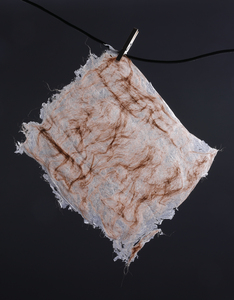
- Für das Eröffnungsfestival von Driving the Human am 20.–22.11.2020 trug das Bio Design Lab neben dem Panel-Programm mit dem Remote-Workshop „There are Biocomposites Growing in my Garden“ einen tragenden Programmpunkt bei. Vorab wurde hierzu in Zusammenarbeit mit dem ZKM ein Trailer produziert, welcher das Lab, sowie dessen Beteiligung an der ZKM Ausstellung „Critical Zones“, bisherige Aktivitäten und Materialien vorstellte und zur Eröffnung des Streaming-Festivals am Freitagabend gezeigt wurde. Anschließend ermöglichte ein technisches Set-Up mit mehreren Kameras einen Remote-Workshop, der das Panel-Programm des Festivals von Samstag bis Sonntag als Hands-On-Komponente ergänzte. Als Workshop-Leiter konnte hierfür Kim André Lange gewonnen werden. Der Alumni der HfG Karlsruhe, der bereits eine umfassende Recherche zu Bioplastik in seinen bisherigen Arbeiten vorweisen konnte, führte via Stream durch die zwei Tage. Offen für alle Interessierten, gab es so jeweils am Morgen eine einstündige Lecture, in der die Historie und materialtechnische Aspekte zu Bioplastik sowie dessen aktuelle Entwicklung und Einsatzbereiche vorgestellt wurden. Darauf folgte freies Experimentieren und Betreuung durch das Bio Design Lab Team mit Ina Grabosch und Julia Ihls. Da ein Arbeiten on-site Corona-bedingt allerdings nicht möglich war, mussten einige alternative Lösungen zur Umsetzung erdacht werden: So wurde im Vorfeld eine Einkaufsliste mit benötigten Materialien und Utensilien auf der ZKM- und BDL-Website kommuniziert. Während des Workshops begleitete ein Social Media Team die Arbeiten im Lab via Instagram auf den BioDesignLab und Driving The Human Kanälen. Entsprechend konnten die internationalen Teilnehmer dem Workshop-Programm live folgen, Fragen stellen und auch ihre eigenen Workshop-Ergebnisse mit der DtH-Community teilen. Den Abschluss des zweitägigen Programms bot eine Live-Q&A auf dem Bio Design Lab Instagram-Kanal. Hier diskutierten Grabosch, Ihls und Lange den Nutzen und die Grenzen des Bio-Materials, gaben Einblicke in die Workshop-Erzeugnisse und beantworteten offene Fragen der Community.
- Für das Eröffnungsfestival von Driving the Human am 20.–22.11.2020 trug das Bio Design Lab neben dem Panel-Programm mit dem Remote-Workshop „There are Biocomposites Growing in my Garden“ einen tragenden Programmpunkt bei. Vorab wurde hierzu in Zusammenarbeit mit dem ZKM ein Trailer produziert, welcher das Lab, sowie dessen Beteiligung an der ZKM Ausstellung „Critical Zones“, bisherige Aktivitäten und Materialien vorstellte und zur Eröffnung des Streaming-Festivals am Freitagabend gezeigt wurde. Anschließend ermöglichte ein technisches Set-Up mit mehreren Kameras einen Remote-Workshop, der das Panel-Programm des Festivals von Samstag bis Sonntag als Hands-On-Komponente ergänzte. Als Workshop-Leiter konnte hierfür Kim André Lange gewonnen werden. Der Alumni der HfG Karlsruhe, der bereits eine umfassende Recherche zu Bioplastik in seinen bisherigen Arbeiten vorweisen konnte, führte via Stream durch die zwei Tage. Offen für alle Interessierten, gab es so jeweils am Morgen eine einstündige Lecture, in der die Historie und materialtechnische Aspekte zu Bioplastik sowie dessen aktuelle Entwicklung und Einsatzbereiche vorgestellt wurden. Darauf folgte freies Experimentieren und Betreuung durch das Bio Design Lab Team mit Ina Grabosch und Julia Ihls. Da ein Arbeiten on-site Corona-bedingt allerdings nicht möglich war, mussten einige alternative Lösungen zur Umsetzung erdacht werden: So wurde im Vorfeld eine Einkaufsliste mit benötigten Materialien und Utensilien auf der ZKM- und BDL-Website kommuniziert. Während des Workshops begleitete ein Social Media Team die Arbeiten im Lab via Instagram auf den BioDesignLab und Driving The Human Kanälen. Entsprechend konnten die internationalen Teilnehmer dem Workshop-Programm live folgen, Fragen stellen und auch ihre eigenen Workshop-Ergebnisse mit der DtH-Community teilen. Den Abschluss des zweitägigen Programms bot eine Live-Q&A auf dem Bio Design Lab Instagram-Kanal. Hier diskutierten Grabosch, Ihls und Lange den Nutzen und die Grenzen des Bio-Materials, gaben Einblicke in die Workshop-Erzeugnisse und beantworteten offene Fragen der Community.
- Beschreibung (en)
- For the opening festival of Driving the Human on 20-22.11.2020, the Bio Design Lab contributed to the panel program and the remote workshop "There are Biocomposites Growing in my Garden". In advance, a trailer was produced in collaboration with the ZKM, which introduced the Lab and its participation in the ZKM exhibition "Critical Zones", previous activities and materials, and was shown at the opening of the streaming festival on Friday evening. Afterwards, a technical set-up with several cameras enabled a remote workshop that complemented the festival's panel program from Saturday to Sunday as a hands-on component. Kim André Lange was recruited to lead the workshop. The alumnus of the HfG Karlsruhe, who has already done extensive research on bioplastics in his previous work, led through the two days via stream. Open to all interested parties, there was a one-hour lecture in the morning in which the history and material-technical aspects of bioplastics as well as their current development and areas of application were presented. This was followed by free experimentation and supervision by the Bio Design Lab team with Ina Grabosch and Julia Ihls. Since it was not possible to work on-site at Corona, however, some alternative solutions had to be devised for implementation: For example, a shopping list of required materials and utensils was communicated in advance on the ZKM and BDL websites. During the workshop, a social media team accompanied the work in the lab via Instagram on the BioDesignLab and Driving The Human channels. Accordingly, international participants were able to follow the workshop program live, ask questions and also share their own workshop results with the DtH community. The two-day program concluded with a live Q&A on the Bio Design Lab Instagram channel. Here, Grabosch, Ihls and Lange discussed the benefits and limitations of biomaterials, provided insights into workshop deliverables and answered open questions from the community.
- Typ des Projekts/Werks
- Schlagworte
- Datierung
- 20.11.2020 - 22.11.2020
- Mitwirkende
- Material
- Ort: Institution
- Ort
- Bio Design Lab
- Stadt
- Land
- Beteiligte Institution(en)
- Titel
- There are Biocomposites Growing in My Garden
- Projektleiter/in
- Semester
- Importiert am
- 25.10.2023
- Übergeordnete Sets
- 1
- Set enthält
- 0 21
Biosensorium
Name that can easily go onto 2 lines
Author that can easily go onto 2 lines as well
- Titel
- Biosensorium
- Titel (en)
- Biosensorium
- Beschreibung (de)
- Wie können wir einen organischen Erfahrungsraum herstellen, der uns auf sinnlicher Ebene berührt? Und was genau bedeutet es, mit nicht-menschlichen Akteuren in einen kollaborativen Gestaltungsprozess zu treten? Im „Bio-Sensorium“ kommen verschiedene lebendige Werkstoffe zu einem raumgreifenden Experiment zusammen. Gemeinsam mit Studierenden wurde so im Bio Design Lab für das Wissenschaftsfestival „Effekte“ (12.–20.06.2021) ein temporärer Pavillon aus
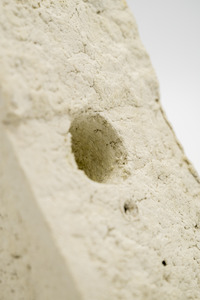
alternativen Baustoffen entwickelt, der ein mögliches Szenario auf materieller wie gestalterischer Ebene erlebbar werden lässt. Eine selbstgefertigte Struktur aus Papercrete (Spezialbeton aus Recyclingpapier) dient dabei auf dem HfG Open Campus als multifunktionales, wachsendes Display-System, in dem weitere biobasierte Materialexperimente ihren Platz finden. Ob Mycelium-Komposit (Baustoff aus Pilzgeflecht), Bioplastik oder Kombucha-Leder – die Samples erlauben mit ihren unterschiedlichen Formen, Haptiken und Gerüchen vielseitige Perspektiven auf biobasierte Werkstoffe im Design-Kontext und geben zugleich Anstoß zum Umdenken bisheriger Produktions-und Konsumprozesse.
Zudem ergänzte der Hands-On Workshop “Ein Haus aus Papier?” die analoge Inszenierung auf dem HfG Gelände im digitalen Raum. So wurden am Sonntag, den 13.06.2021 von 13.00–17.00 Uhr, Material-Hintergründe wie auch die Herstellungsmethode von Papercrete Schritt für Schritt in einem Streaming-Format vermittelt. Ein speziell gefertigtes Home-Kit-Paket mit weiteren Informationen und Materialien wurde den Teilnehmer geschickt, sodass ein gemeinsames Gestalten (über-)regional mit und trotz Abstand möglich war.
Ein Bühnentalk auf dem Kronenplatz (14.06.2021, 20.00 Uhr), bei dem die Macher und Studierenden Einblicke in die Hintergründe des Projekts gaben, vervollständigte das Programm.
Das Bio-Sensorium war im Anschluss an das Effekte Festival der Stadt Karlsruhe im Rahmen der deutsch-französischen Wanderausstellung „Frugalité Créative (03.07–07.08.2021) noch bis Anfang August als Außen-Exponat zu sehen.
- Wie können wir einen organischen Erfahrungsraum herstellen, der uns auf sinnlicher Ebene berührt? Und was genau bedeutet es, mit nicht-menschlichen Akteuren in einen kollaborativen Gestaltungsprozess zu treten? Im „Bio-Sensorium“ kommen verschiedene lebendige Werkstoffe zu einem raumgreifenden Experiment zusammen. Gemeinsam mit Studierenden wurde so im Bio Design Lab für das Wissenschaftsfestival „Effekte“ (12.–20.06.2021) ein temporärer Pavillon aus
- Beschreibung (en)
- How can we create an organic experiential space that touches us on a sensory level? And what exactly does it mean to enter into a collaborative design process with non-human actors? In the "Bio-Sensorium", various living materials come together in a space-filling experiment. Together with students, a temporary pavilion was developed in the Bio Design Lab for the "Effekte" science festival (June 12-20, 2021) using alternative building materials, which allows us to expierience a possible scenario on a material and design level. In this context, a self-made structure of Papercrete (special concrete made of recycled paper) serves as a multifunctional, growing display system on the HfG Open Campus, in which further bio-based material experiments find their place. Whether mycelium composite (building material made of mushroom mesh), bioplastics or kombucha leather - with their different shapes, haptics and smells, the samples allow versatile perspectives on bio-based materials in the design context and at the same time provide impulses for rethinking previous production and consumption processes.
In addition, the hands-on workshop "A house made of paper?" complemented the analog staging on the HfG grounds in the digital space. Thus, on Sunday, June 13, 2021 from 13:00-17:00, material backgrounds as well as the manufacturing method of Papercrete were taught step by step in a streaming format. A specially made Home-Kit with further information and materials was sent to the participants, so that a joint design (over-)regionally with and despite distance was possible.
A stage talk on the Kronenplatz (14.06.2021, 20.00), where the makers and students gave insights into the background of the project, completed the program.
The Bio-Sensorium was on display as an outdoor exhibit following the Effekte Festival of the City of Karlsruhe as part of the German-French traveling exhibition "Frugalité Créative (03.07-07.08.2021) until the beginning of August.
- How can we create an organic experiential space that touches us on a sensory level? And what exactly does it mean to enter into a collaborative design process with non-human actors? In the "Bio-Sensorium", various living materials come together in a space-filling experiment. Together with students, a temporary pavilion was developed in the Bio Design Lab for the "Effekte" science festival (June 12-20, 2021) using alternative building materials, which allows us to expierience a possible scenario on a material and design level. In this context, a self-made structure of Papercrete (special concrete made of recycled paper) serves as a multifunctional, growing display system on the HfG Open Campus, in which further bio-based material experiments find their place. Whether mycelium composite (building material made of mushroom mesh), bioplastics or kombucha leather - with their different shapes, haptics and smells, the samples allow versatile perspectives on bio-based materials in the design context and at the same time provide impulses for rethinking previous production and consumption processes.
- Typ des Projekts/Werks
- Schlagworte
- Mitwirkende
- Material
- Ort: Institution
- Ort
- HfG Open Campus
- Stadt
- Land
- Beteiligte Institution(en)
- Titel
- Biosensorium
- Projektleiter/in
- Semester
- Lehrveranstaltung
- Importiert am
- 26.10.2023
- Übergeordnete Sets
- 1
- Set enthält
- 0 43
Bacteria Battery
Name that can easily go onto 2 lines
Author that can easily go onto 2 lines as well
- Titel
- Bacteria Battery
- Titel (en)
- Bacteria Battery
- Beschreibung (de)
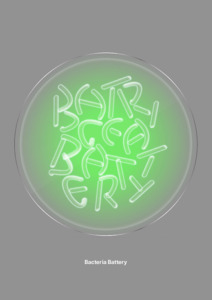
- Die Poesie grüner Energie – Auf der Suche nach regenerativer Stromerzeugung gehen wir für einen Tag eine spannende Verflechtung mit winzigen Mikro-Organismen ein. So zeigen uns die Bio Artists und Forscher Rasa Smite und Raitis Smits / RIXC in ihrem Hands-On Workshop, wie mit Hilfe von Elektroden und Schlamm sogenannte „Bakterien Batterien“ hergestellt werden können. Dabei bekommen wir nicht nur einen Einblick in die faszinierende Technologie Mikrobieller Brennstoffzellen, sondern auch in die unterschiedlichen Forschungsstände, die Studierende der HfG Karlsruhe hierzu in einem vorangegangenen, gleichnamigen Seminar während des letzten Semesters erarbeitet haben. Mit diesem theoretischen Input geht es anschließend an die eigene künstlerische useinandersetzung: In einer Schritt-für-Schritt-Anleitung stellen wir so mittels eines bereitgestellten DIY-KITS unsere eigenen Bakterien-Batterien her.
- Beschreibung (en)
- The poetics of green energy – In the search for regenerative power generation, we enter into an exciting entanglement with tiny micro-organisms for one day. In their hands-on workshop, bio-artists and researchers Rasa Smite and Raitis Smits / RIXC will show us how so-called "bacteria batteries" can be produced with the help of electrodes and mud. We will not only get an insight into the fascinating technology of microbial fuel cells, but also into the different research results that students of the HfG Karlsruhe have developed in a related previous seminar during the last semester. With this theoretical input, we will then get down to our own artistic exploration: in step-by-step instructions, we will make our own bacteria batteries using a provided DIY Kit.
- Typ des Projekts/Werks
- Schlagworte
- Datierung
- 29.01.2021
- Mitwirkende
- Material
- Ort: Institution
- Ort
- Bio Design Lab
- Stadt
- Land
- Internetlinks
- Titel
- Bacteria Battery
- Projektleiter/in
- Semester
- Importiert am
- 25.10.2023
- Übergeordnete Sets
- 1
- Set enthält
- 0 10
Kritische Zone riechen und sehen
Name that can easily go onto 2 lines
Author that can easily go onto 2 lines as well
- Titel
- Kritische Zone riechen und sehen
- Titel (en)
- Seeing and smelling the Critical Zone
- Beschreibung (de)
- Welche Möglichkeiten gibt es, unsere Umgebung, das Leben in unseren ruderalen Ökosystemen auf und wie kann man diese Erfahrungen festhalten?
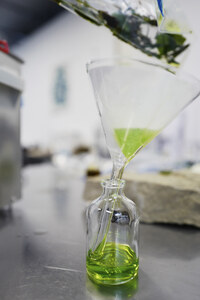
Gemeinsam mit dem ZKM bot das BioDesignLab einen Workshop zum Thema die "Kritische Zone sehen und riechen" an. Nach dem Aufsammeln von weggeworfenen Gegenständen, Pflanzen und Pilzen in der Stadt verwandelten die Teilnehmer das Ungesehene und Vergessene in Artefakte, die mit Gedanken und Erinnerungen aufgeladen waren. Durch Ultraschallextraktion wurden die ätherischen Öle, die Gerüche und die Farben der gesammelten Gegenstände zu Düften, die von diesen sensorischen Begegnungen erzählen.
- Welche Möglichkeiten gibt es, unsere Umgebung, das Leben in unseren ruderalen Ökosystemen auf und wie kann man diese Erfahrungen festhalten?
- Beschreibung (en)
- What possibilities are there to explore our surroundings, the life in our ruderal ecologies in a
sensory way and how to capture these experiences?
Together with the ZKM the BioDesignLab offered a workshop about „Seeing and smelling the Critical Zone“. After picking up discarded objects, plants and fungi around the city the participants turned the unseen and forgotten into artifacts, charged with thoughts and memories. Using ultrasonic extraction, the essential oils, the smells and the colors of the collections became fragrances narrating these sensorial encounters.
- What possibilities are there to explore our surroundings, the life in our ruderal ecologies in a
- Typ des Projekts/Werks
- Schlagworte
- Datierung
- Sommersemester 2021
- Mitwirkende
- Material
- Ort: Institution
- Ort
- Bio Design Lab
- Stadt
- Land
- Beteiligte Institution(en)
- Internetlinks
- Titel
- Kritische Zone riechen und sehen
- Projektleiter/in
- Semester
- Importiert am
- 30.10.2023
- Übergeordnete Sets
- 1
- Set enthält
- 0 14