Sets
417 Inhalte
- Seite 1 von 35
Publikation
Name that can easily go onto 2 lines
Author that can easily go onto 2 lines as well
- Titel
- Publikation
- Titel
- Publikation
- Importiert am
- 22.07.2025
- Übergeordnete Sets
- 1
- Set enthält
- 0 4
Publikation
Name that can easily go onto 2 lines
Author that can easily go onto 2 lines as well
- Titel
- Publikation
- Autor/in
- Datierung
- 02.07.2025
- Titel
- Publikation
- Studiengang
- Typ der Abschlussarbeit
- Importiert am
- 22.07.2025
- Übergeordnete Sets
- 1
- Set enthält
- 0 7
rethinking public space
Name that can easily go onto 2 lines
Author that can easily go onto 2 lines as well
- Titel
- rethinking public space
- Titel (en)
- rethinking public space
- Autor/in
- Beschreibung (de)
- „rethinking public space“ ist ein Projekt, das sich mit Street-Skating und Skate-Kultur befasst und untersucht, wie Skateboarder öffentliche Räume neudenken und umgestalten können.
Das Projekt besteht aus einer Publikation mit Fotos von Street-Skate-Spots und Interviews. Es enthält ein Interview mit der Stadt Stuttgart, über den Bau von Skateparks, DIY-Parks und Skate-Stoppern, und ein zweites Interview mit einem Skateboarder und Content Creator aus San Diego, der über die Skate-Kultur, ihre Beziehung zur Öffentlichkeit und die kreativen Wege spricht, mit denen Skateboarder Herausforderungen überwinden.
Die Publikation funktioniert wie ein Daumenkino, das alle Skate-Spots aus dem gleichen Blickwinkel zeigt und die Bewegung des Grindens durch sie hindurch nachahmt, unterbrochen nur durch Skate-Stopper-Seiten. Darauf folgen die Interviews.
Die Publikation ist in ein mit Wachs versiegeltes, siebgedrucktes Stoffband mit dem Namen der Publikation eingewickelt.
Weitere Wachsbänder, die jeweils einen Auszug aus einem der Interviews zeigen, sind über die gesamte Ausstellung verteilt.
Ein weiteres Element des Projekts auf Wachsbasis sind die Skatestopper-Wachsrepliken, die den Skatestoppern in Karlsruhe nachempfunden sind und das Skateboarden ermöglichen, anstatt es zu verhindern.
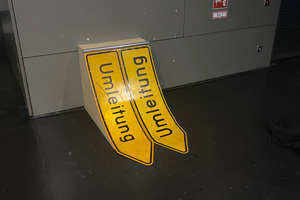
Begleitend zur Publikation gibt es eine Rampe aus alten Straßenschildern und Holzabfällen sowie eine Rail aus einem alten Rutschen-Seitenteil. Diese Elemente sind eine Hommage an DIY-Skate-Spots und nutzen kostengünstige, leicht verfügbare Ressourcen.
- „rethinking public space“ ist ein Projekt, das sich mit Street-Skating und Skate-Kultur befasst und untersucht, wie Skateboarder öffentliche Räume neudenken und umgestalten können.
- Beschreibung (en)
- 'rethinking public space' is a project focusing on street skating and skate culture, as well as exploring how skateboarders can reuse and reshape public spaces.
The project consists of a publication containing photographs of street skate spots and interviews. There is one interview with a city official talking about the process of building skate parks, DIY parks and skate stoppers, and a second interview with a skateboarder and content creator from San Diego talking about skate culture, its relationship with the public, and the creative ways skateboarders overcome obstacles.
The publication functions as a flipbook, showing all the skate spots from the same angle and emulating the motion of grinding through them, interrupted only by skate stopper pages. These are followed by the interviews.
The publication is wrapped in a wax-sealed, screen-printed cloth band bearing the publication's name.
More wax bands, each showcasing an excerpt from one of the interviews, are spread throughout the exhibition.
Another wax-based element of the project is the skatestopper wax replicas, modelled on those found in Karlsruhe, which enable skateboarding rather than prevent it.
Accompanying the publication is a ramp made from scrap street signs and discarded wood, as well as a rail made from an old slide side piece. These elements pay homage to DIY skate spots and utilise affordable, readily available resources.
- 'rethinking public space' is a project focusing on street skating and skate culture, as well as exploring how skateboarders can reuse and reshape public spaces.
- Kategorie
- Typ des Projekts/Werks
- Schlagworte
- Datierung
- 02.07.2025
- Dank an
- Sprache
- Material
- Technik/Verfahren/Formate
- Siebdruck, Lumbecken, Folienplott,
- Abmessungen
- Breite: 195mm, Höhe: 140mm
- Ort: Institution
- Ort
- Unter der Lichtbrücke
- Stadt
- Land
- Titel
- rethinking public space
- Projektleiter/in
- Semester
- Studiengang
- Typ der Abschlussarbeit
- Importiert am
- 21.07.2025
- Übergeordnete Sets
- 1
- Set enthält
- 3 0
Approaching X
Name that can easily go onto 2 lines
Author that can easily go onto 2 lines as well
- Titel
- Approaching X
- Autor/in
- Beschreibung (en)
- What is X anyway? What does X mean to me and what does it mean to others? Where is X used and what do we see in it? What do we project onto X? Do we need to define X?
This projects goal was to find an approach to what the letter, the symbol, the figure X means to different people. Starting out as obsession with seeing the pattern of three Xes everywhere in my daily life , this work led to a collection of the meanings that X might or might not inherit and is an Invite to look for the pattern as well. I present my current approach to the theme of X; trying to find a way of connecting different ideas into a pattern. It runs through my life—and really through all of ours—and I share my perspective with the viewer. In my exhibition, I captured my exploration in 22 posters and a 130-page publication.
- What is X anyway? What does X mean to me and what does it mean to others? Where is X used and what do we see in it? What do we project onto X? Do we need to define X?
- Kategorie
- Typ des Projekts/Werks
- Schlagworte
- Datierung
- 02.07.2025
- Dank an
- Sprache
- Material
- Technik/Verfahren/Formate
- Lumbeck-Verfahren,
- Abmessungen
- 594X420
- Ort: Institution
- Ort
- Der Gang neben der PD-Sauna und dem Glaskubus im 2.OG, ebenfalls die Brücke zum ZKM im 2.OG
- Stadt
- Land
- Bemerkungen
- Dieses Projekt besteht teils aus eigenen, teils aus mir zugesendeten Bildern, deren Rechte mir übertragen wurden
- Titel
- Approaching X
- Importiert am
- 21.07.2025
- Übergeordnete Sets
- 0
- Set enthält
- 2 18
OffCuts
Name that can easily go onto 2 lines
Author that can easily go onto 2 lines as well
- Titel
- OffCuts
- Autor/in
- Beschreibung (de)
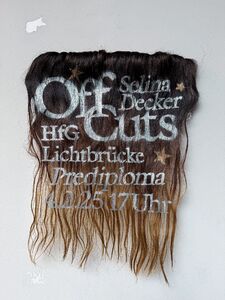
- Ich habe menschliches Haar als Material und Textil erforscht. Haare sind etwas zutiefst Persönliches, aber auch eine weithin verfügbare und oft weggeworfene Ressource. Im Rahmen meiner Recherchen habe ich das Material aus verschiedenen Blickwinkeln - wissenschaftlich, kulturell und künstlerisch - untersucht und gleichzeitig mit ihm gearbeitet, um Textilien und Teppiche mit verschiedenen Techniken herzustellen.
- Beschreibung (en)
- I explored human hair as a material and textile. Hair is something deeply personal, yet it is also a widely available and often discarded resource. Through my research, I examined the material from different perspectives - scientific, cultural, and artistic, while also working hands-on with it to create textiles and carpets using various techniques.
- Kategorie
- Typ des Projekts/Werks
- Schlagworte
- Datierung
- 04.02.2025
- Mitwirkende
- Material
- Ort: Institution
- Titel
- OffCuts
- Projektleiter/in
- Semester
- Studiengang
- Typ der Abschlussarbeit
- Importiert am
- 21.07.2025
- Übergeordnete Sets
- 1
- Set enthält
- 0 7
Float
Name that can easily go onto 2 lines
Author that can easily go onto 2 lines as well
- Titel
- Float
- Titel (en)
- Float
- Autor/in
- Beschreibung (de)
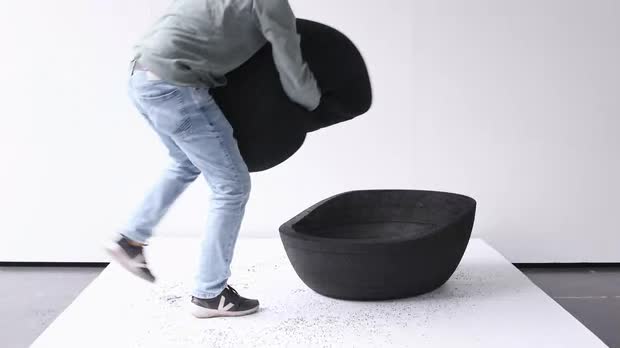
- Der Float Lounger, entworfen von Felix Reif und Finn de Bruyn, hebt den Sitzsack auf das Niveau eines vollwertigen Relaxmöbels.
Sowohl die Basis als auch das Kissen bestehen aus expandiertem Polypropylen. Der Einsatz dieses innovativen Materials, das in der Möbelproduktion nur selten verwendet wird, ermöglicht einen leichten, robusten und zu 100 % recycelbaren Sitz. Das mit expandierten Polypropylen-Perlen gefüllte Kissen passt sich jeder Körperform an, steigert die Entspannung und vermittelt dabei das Gefühl, an einem Sonntagabend in einem Schaumbad zu versinken.
- Der Float Lounger, entworfen von Felix Reif und Finn de Bruyn, hebt den Sitzsack auf das Niveau eines vollwertigen Relaxmöbels.
- Beschreibung (en)
- The Float lounger, designed by Felix Reif and Finn de Bruyn, elevates the bean bag to the level of a full-fledged piece of relaxation furniture.
The base and cushion are made of expanded polypropylene. The use of this innovative material, which is rarely found in furniture production, allows for a lightweight, resilient, and 100% recyclable seat. The cushion, filled with expanded polypropylene beads, adapts to every body shape enhancing relaxation while creating the sensation of sinking into a bubble bath on a Sunday evening.
- The Float lounger, designed by Felix Reif and Finn de Bruyn, elevates the bean bag to the level of a full-fledged piece of relaxation furniture.
- Kategorie
- Typ des Projekts/Werks
- Datierung
- 02.2025
- Mitwirkende
- Dank an
- Material
- Titel
- Float
- Importiert am
- 21.07.2025
- Übergeordnete Sets
- 1
- Set enthält
- 0 7
PARAVENT
Name that can easily go onto 2 lines
Author that can easily go onto 2 lines as well
- Titel
- PARAVENT
- Autor/in
- Beschreibung (de)
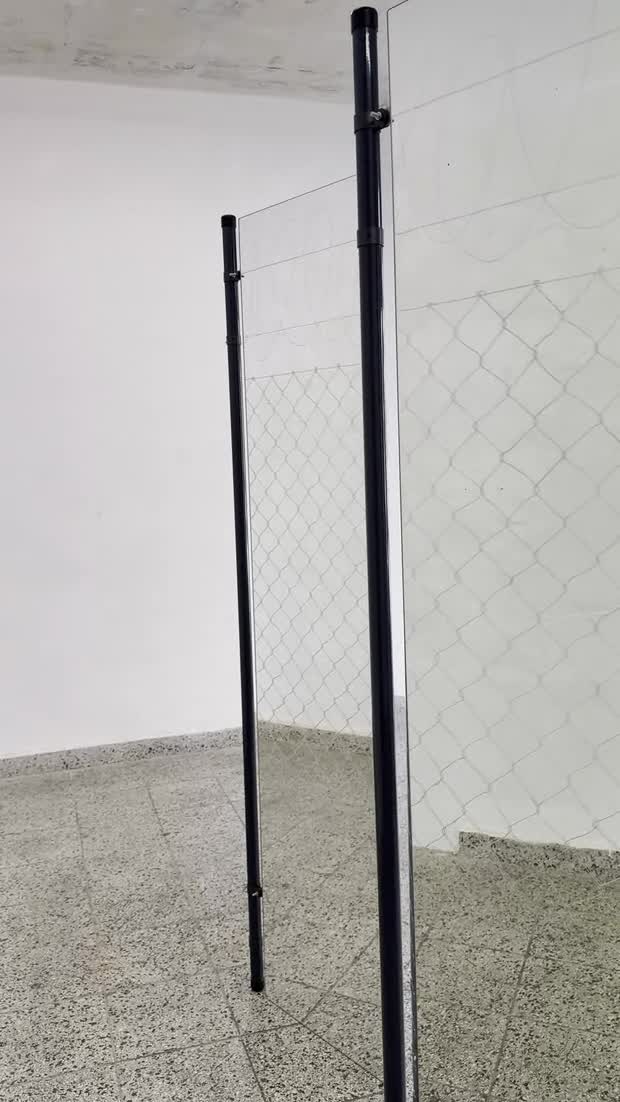
- Eine multidisziplinäre audiovisuelle Diplominstallation in Form eines Paravents aus handgravierten Spiegeln. Die Arbeit vereint Medienkunst und Produktdesign und präsentiert sich als Hybrid zwischen skulpturalem Kunstobjekt und funktionalem Möbelstück.
- Beschreibung (en)
- A multidisciplinary audiovisual diploma installation in the form of a folding screen made of hand-engraved mirrors. The work merges media art and product design, presenting itself as a hybrid between sculptural art object and functional piece of furniture.
- Kategorie
- Typ des Projekts/Werks
- Schlagworte
- Datierung
- 09.07.2025
- Mitwirkende
- Dank an
- Material
- Technik/Verfahren/Formate
- Gravur, Montage, Duft, Ultraschall- und Tieffrequenztöne
- Abmessungen
- H 2m x L 3m x B 1m
- Dauer
- infinite loop
- Ort: Institution
- Stadt
- Land
- Titel
- PARAVENT
- Projektleiter/in
- Semester
- Studiengang
- Typ der Abschlussarbeit
- Importiert am
- 21.07.2025
- Übergeordnete Sets
- 2
- Set enthält
- 0 4
Stromkreis
Name that can easily go onto 2 lines
Author that can easily go onto 2 lines as well
- Titel
- Stromkreis
- Titel (en)
- cirquit
- Autor/in
- Beschreibung (de)
- Die kreisförmige Mehrfachsteckdose gibt einem oft unbeachteten
Alltagsobjekt eine Stimme.
Der Kreis steht dabei sinnbildlich für Ordnung, Übersicht und Bewegung.
Anders als klassische Steckleisten, die sich in Ecken drängen lassen,
behauptet dieses Objekt seine Präsenz –
es verweigert das Verstecktsein und fühlt sich im Zentrum des Raums am
wohlsten.
Durch die mehrdirektionale Anordnung lassen sich Geräte aus allen
Richtungen mit Strom versorgen – eine Auflösung der linearen Nutzung
zugunsten räumlicher Offenheit.
Bis zu sieben Meter Kabel, die außen aufgewickelt werden, ermöglichen eine
flexible Nutzung in unterschiedlichsten Raumsituationen.
Die transparente Gestaltung der Seitenteile aus Plexiglas fördert ein neues
Bewusstsein für das Objekt – sie macht Funktion sichtbar und
Haltung greifbar.
So wird aus einem technischen Alltagsgegenstand ein
flexibler Begleiter, der sichtbar, nutzbar und verständlich
im Raum existiert.
- Die kreisförmige Mehrfachsteckdose gibt einem oft unbeachteten
- Beschreibung (en)
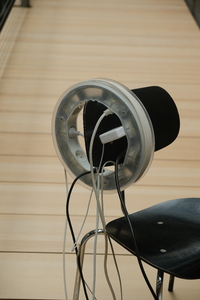
- The circular multiplug gives a voice to an often unnoticed everyday object. Here the circle symbolizes order, overview and movement. Unlike classic power strips, which can be pushed into corners, this object asserts its presence - it refuses to be hidden and feels most comfortable in the center of the room. The multi-directional arrangement allows devices to be supplied with power from all directions - a dissolution of linear use in favour of spatial openness. Up to seven meters of cable, which are wound up on the outside, enable flexible use in a wide variety of room situations. The transparent design of the Plexiglas side panels promotes a new awareness of the object - it makes function visible and attitude tangible. This turns an everyday technical object into a flexible companion that is visible, usable and understandable in the room.
- Kategorie
- Typ des Projekts/Werks
- Datierung
- 22.07.2025
- Titel
- Stromkreis
- Projektleiter/in
- Studiengang
- Importiert am
- 18.07.2025
- Übergeordnete Sets
- 1
- Set enthält
- 0 9
KLOTZSTUHL

Name that can easily go onto 2 lines
Author that can easily go onto 2 lines as well
- Titel
- KLOTZSTUHL
- Autor/in
- Beschreibung (de)
- Eine Studie des Stadtforschers William H. Whyte zeigt, dass es für Menschen ein positives Erlebnis ist, wenn sie Sitzmöbel selbst (um)positionieren dürfen. Der KLOTZSTUHL greift diesen Gedanken auf. Die Sitzfläche lässt sich verstellen, sodass sich der Stuhl an unterschiedliche Hangneigungen anpassen kann. Dadurch kann man ihn fast überall auf dem Hügel aufstellen. Er ist nicht fest installiert, aber durch seine "klotzige" Bauweise und das relative hohe Gewicht ist er auch nicht zum Mitnehmen gedacht.
Der KLOTZSTUHL wurde entworfen für Hänge in Parkanlagen wie beispielsweise dem MOUNT KLOTZ in der Günther-Klotz-Anlage in Karlsruhe. Er macht es möglich, auch an steilen Hängen bequem zu sitzen und die Aussicht auf den Sonnenuntergang mit einem kühlen Getränk zu genießen.
- Eine Studie des Stadtforschers William H. Whyte zeigt, dass es für Menschen ein positives Erlebnis ist, wenn sie Sitzmöbel selbst (um)positionieren dürfen. Der KLOTZSTUHL greift diesen Gedanken auf. Die Sitzfläche lässt sich verstellen, sodass sich der Stuhl an unterschiedliche Hangneigungen anpassen kann. Dadurch kann man ihn fast überall auf dem Hügel aufstellen. Er ist nicht fest installiert, aber durch seine "klotzige" Bauweise und das relative hohe Gewicht ist er auch nicht zum Mitnehmen gedacht.
- Beschreibung (en)
- A study by urban researcher William H. Whyte shows that people have a more positive experience in public spaces when they are allowed to (re)position seating furniture themselves. The KLOTZSTUHL embraces this idea. Its adjustable seat allows it to adapt to various slope angles, making it usable almost anywhere on a steep slope. It is not fixed in place, but due to its bulky design and quite heavy weight, it is also not meant to be carried away.
The KLOTZSTUHL was designed specifically for sloped areas in public parks, such as the MOUNT KLOTZ in the Günther-Klotz-Anlage in Karlsruhe. It makes it possible to sit comfortably even on steep hills, and to enjoy the view of the sunset with a cold drink.
- A study by urban researcher William H. Whyte shows that people have a more positive experience in public spaces when they are allowed to (re)position seating furniture themselves. The KLOTZSTUHL embraces this idea. Its adjustable seat allows it to adapt to various slope angles, making it usable almost anywhere on a steep slope. It is not fixed in place, but due to its bulky design and quite heavy weight, it is also not meant to be carried away.
- Titel
- KLOTZSTUHL
- Projektleiter/in
- Studiengang
- Importiert am
- 18.07.2025
- Übergeordnete Sets
- 1
- Set enthält
- 0 3
Anima Sola

Name that can easily go onto 2 lines
Author that can easily go onto 2 lines as well
- Titel
- Anima Sola
- Titel (en)
- Anima Sola
- Autor/in
- Beschreibung (de)
- Ein Fahrradschloss das leuchtet ist nicht nur eine naheliegende Zusammenlegung zweier Objekte die sich unter dem Sattel in die Quere kommen, sondern verhindert zur gleichen Zeit den Diebstahl akkubetriebener Rücklichter.
- Beschreibung (en)
- A bike lock that lights up is not only an obvious combination of two objects that contest the space under the saddle, but also prevents the theft of battery-powered rear lights at the same time.
- Typ des Projekts/Werks
- Schlagworte
- Datierung
- 18.07.2024
- Titel
- Anima Sola
- Projektleiter/in
- Studiengang
- Importiert am
- 18.07.2025
- Übergeordnete Sets
- 1
- Set enthält
- 0 8
PCO 1810
Name that can easily go onto 2 lines
Author that can easily go onto 2 lines as well
- Titel
- PCO 1810
- Titel (en)
- PCO 1810
- Autor/in
- Beschreibung (de)
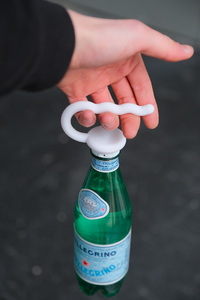
- Der neu geformte Flaschendeckel fordert auf, eine Plastikflasche zu adoptieren und sie zur persönlichen Begleiterin im Alltag zu machen.
Seine Form ermöglicht es, die Flasche auf viele Weisen körpernah zu tragen und in die Umgebung einzubinden.
So wird die Flasche zur persönlichen, was dazu einlädt sie nach dem Leeren nicht wegzuwerfen, sondern immer wieder aufzufüllen.
Die ständige Verfügbarkeit von Wasser fördert ganz nebenbei einen erhöhten Wasserkonsum.
Dank des standardisierten PCO-Gewindes ist bei Bedarf ein flexibler Wechsel zu einer neuen Flasche jederzeit möglich.
- Der neu geformte Flaschendeckel fordert auf, eine Plastikflasche zu adoptieren und sie zur persönlichen Begleiterin im Alltag zu machen.
- Beschreibung (en)
- The newly shaped bottle lid invites you to adopt a plastic bottle and make it your personal companion in everyday life.
It's shape makes it possible to carry the bottle close to the body and integrate it into your environment creatively.
In this way, the bottle becomes personal, inviting you not to throw it away after emptying it, but to refill it again and again.
The constant availability of water also encourages increased water consumption.
Thanks to the standardized PCO thread, a flexible change to a new bottle is possible at any time if required.
- The newly shaped bottle lid invites you to adopt a plastic bottle and make it your personal companion in everyday life.
- Typ des Projekts/Werks
- Schlagworte
- Datierung
- 18.02.2025
- Titel
- PCO 1810
- Projektleiter/in
- Studiengang
- Importiert am
- 17.07.2025
- Übergeordnete Sets
- 1
- Set enthält
- 0 11
FROM ENLIGHTENMENT TO ENLICHENMENT
Name that can easily go onto 2 lines
Author that can easily go onto 2 lines as well
- Titel
- FROM ENLIGHTENMENT TO ENLICHENMENT
- Titel (en)
- FROM ENLIGHTENMENT TO ENLICHENMENT
- Untertitel
- Flechten, Symbiose und posthumanistische Perspektiven in Kunst und Theorie
- Untertitel des Projekts/Werks (en)
- Lichens, symbiosis and posthumanist perspectives in art and theory
- Autor/in
- Beschreibung (de)
- Die Aufklärung („Enlightenment“) stellte den Menschen ins Zentrum des Denkens – doch Flechten („Lichen“) lehren uns eine andere Art der Weltwahrnehmung: relational, vernetzt, nicht-menschlich-zentriert. Als symbiotische Verbindungen von Pilzen und Algen oder Cyanobakterien verkörpern sie ein Denken jenseits des Individuellen: Sie sind mehr-als-menschliche Organismen, Holobionten, Netzwerke aus Kooperation und Anpassung. Sie gedeihen in extremen Umgebungen, überdauern Jahrhunderte und bilden fragile Ökologien,
die oft übersehen werden – und doch fundamentale Lektionen für unser eigenes Dasein bereithalten. Dieses transdisziplinäre Seminar bewegt sich zwischen Wissenschaft, Philosophie und Medienkunst. Eine Exkursion mit Lichenolog*innen macht uns mit der stillen, aber
hochkomplexen Existenz der Flechten vertraut. Meditative Audiowalks laden dazu ein, das Netzwerk dieser Lebensformen zu dokumentieren und sich mit ihrer Zeitlichkeit und Materialität zu verbinden. Durch das Lesen zentraler Texte von Lynn Margulis, Scott Gilbert, Donna Haraway und Anna Tsing hinterfragen wir Konzepte von Autonomie, Subjektivität und multispeziesalem Zusammenleben. Schließlich werden wir in einem Workshop das gesammelte Wissen in Medienkunstwerke überführen – als spekulative Antworten auf die ökologischen und philosophischen Herausforderungen unserer Zeit.
- Die Aufklärung („Enlightenment“) stellte den Menschen ins Zentrum des Denkens – doch Flechten („Lichen“) lehren uns eine andere Art der Weltwahrnehmung: relational, vernetzt, nicht-menschlich-zentriert. Als symbiotische Verbindungen von Pilzen und Algen oder Cyanobakterien verkörpern sie ein Denken jenseits des Individuellen: Sie sind mehr-als-menschliche Organismen, Holobionten, Netzwerke aus Kooperation und Anpassung. Sie gedeihen in extremen Umgebungen, überdauern Jahrhunderte und bilden fragile Ökologien,
- Beschreibung (en)
- The Enlightenment placed humans at the centre of thought – but
lichens teach us a different way of perceiving the world: relational, interconnected,
non-human-centred. As symbiotic combinations of fungi and algae or cyanobacteria, they embody a way of thinking beyond the individual: they are more-than-human organisms, holobionts, networks of cooperation and adaptation. They
thrive in extreme environments, survive for centuries and form fragile ecologies
that are often overlooked – yet hold fundamental lessons for our own existence
.
This transdisciplinary seminar moves between science, philosophy and
media art. An excursion with lichenologists familiarises us with the quiet but
highly complex existence of lichens. Meditative audio walks invite us to document the
network of these life forms and connect with their temporality and
materiality. By reading key texts by Lynn Margulis, Scott Gilbert,
Donna Haraway and Anna Tsing, we question concepts of autonomy, subjectivity and
multispecies coexistence. Finally, in a workshop, we will transform the
knowledge we have gathered into media artworks – as speculative responses to the
ecological and philosophical challenges of our time.
- The Enlightenment placed humans at the centre of thought – but
- Kategorie
- Typ des Projekts/Werks
- Schlagworte
- Datierung
- Juni 2025
- Mitwirkende
- Dank an
- Sprache
- Ort: Institution
- Ort
- Bio Design Lab
- Stadt
- Land
- Titel
- FROM ENLIGHTENMENT TO ENLICHENMENT
- Untertitel
- Flechten, Symbiose und posthumanistische Perspektiven in Kunst und Theorie
- Importiert am
- 17.07.2025
- Übergeordnete Sets
- 1
- Set enthält
- 0 21