BookBauFestival 2
Benachbarte Sets (21)Alle Zusammenhänge anzeigen
Diese Sets wurden den gleichen Sets hinzugefügt wie das ausgewählte Set.
21 Inhalte
- Seite 1 von 2
Shiftings Paradigms Symposium 2024
- Titel
- Shiftings Paradigms Symposium 2024
- Titel (en)
- Shiftings Paradigms Symposium 2024
- Untertitel
- 1. gemeinsames Symposium zu den Postgradualen Programmen von HfG Karlsruhe und ZKM
- Untertitel des Projekts/Werks (en)
- 1st symposium on the postgraduate programs by HfG Karlsruhe and ZKM
- Beschreibung (de)
- Die Staatliche Hochschule für Gestaltung und das Zentrum für Kunst und Medien in Karlsruhe wurden in den 1990er Jahren von Gründungsdirektor Heinrich Klotz als Orte einer zeitgemäßen, auf die Neuen Medien gerichteten Forschung konzipiert. Sie bieten in ihrer Kombination von Hochschule und Kulturinstitution ausgezeichnete Vorbedingungen für eine Vernetzung künstlerischer und wissenschaftlicher Ansätze, für die es in Deutschland allerdings noch veränderte Rahmenbedingungen braucht.
Ein übergreifendes postgraduales Programm sollte interdisziplinäre Expertise versammeln und nutzen, um die Beziehungen von Kunst, Theorie und Gestaltung neu auszuloten und auf diese Weise an die wegweisende Gründungsidee von HfG und ZKM anzuknüpfen. Es sollte zugleich auf einen größeren Paradigmenwechsel antworten, der sich in Kunst und Kultur wie auch im wissenschaftlichen Bereich zu vollziehen scheint und der sich einerseits in Legitimationskrisen, andererseits in neuen und kreativen Formen der Recherche und Produktion von Wissen äußert. Die HfG Karlsruhe nimmt die Diagnose zum Anlass, um hybride Formate der Forschung neu zu konzipieren und auch die Funktion wissenschaftlicher Promotionen zu befragen.
Zur Vorstellung und Diskussion dieser programmatischen Überlegungen veranstaltete die HfG in Kooperation mit dem ZKM Karlsruhe am 5. und 6. Dezember 2024 ein erstes Symposium mit internationalen Gästen, das darauf abzielt, Räume und Ideen für eine sich transformierende Forschungspraxis zu entwerfen.
In vier Panels performten und diskutierten unter anderem die französische Wissenschaftshistorikerin und -philosophin Bernadette Bensaude-Vincent, der Professor für Kunstwissenschaft und Medientheorie Matthias Bruhn, die Professorin für Time Based Media und Performance Filipa César, die Szenografin und stellvertretende HfG-Rektorin Constanze Fischbeck, der ZKM-Direktor Alistair Hudson, die Künstlerin und Professorin für Code and Image Susanne Kriemann, der Professor der ADBK München Armin Linke, die Leiterin des ZKM-Hertzlabs Tina Lorenz, die Künstlerin, Kuratorin und Mitglied des Raqs Media Collectives Monica Narula, der Professor für kritische Theorie und Medienphilosophie Simon Sheikh, die Performancekünstlerin und Aktivistin Joy Mariama Smith, die Professorin für Design Füsun Türetken und die Professorin für Digitale Ästhetik Nina Zschocke mit weiteren Expertinnen und Experten, dem Publikum sowie den Angehörigen beider Häuser.
- Die Staatliche Hochschule für Gestaltung und das Zentrum für Kunst und Medien in Karlsruhe wurden in den 1990er Jahren von Gründungsdirektor Heinrich Klotz als Orte einer zeitgemäßen, auf die Neuen Medien gerichteten Forschung konzipiert. Sie bieten in ihrer Kombination von Hochschule und Kulturinstitution ausgezeichnete Vorbedingungen für eine Vernetzung künstlerischer und wissenschaftlicher Ansätze, für die es in Deutschland allerdings noch veränderte Rahmenbedingungen braucht.
- Beschreibung (en)
- The Staatliche Hochschule für Gestaltung (HfG) Karlsruhe and the Center for Art and Media in Karlsruhe (ZKM) were conceived in the 1990s by founding director Heinrich Klotz as places for contemporary research focused on new media. With their combination of university and cultural institution, they offer excellent preconditions for the networking of artistic and scientific approaches, for which, however, a different framework is still needed in Germany.
An overarching postgraduate program was intended to bring together and utilize interdisciplinary expertise in order to explore the relationships between art, theory and design in a new way, thus building on the pioneering founding idea of the HfG and ZKM. At the same time, it is intended to respond to a larger paradigm shift that seems to be taking place in art and culture as well as in the scientific field and which is expressed on the one hand in crises of legitimization and on the other in new and creative forms of research and production of knowledge. The HfG Karlsruhe was taking this diagnosis as an opportunity to redesign hybrid formats of research and also to question the function of academic doctorates.
To present and discuss these programmatic considerations, the HfG organized a first symposium with international guests in cooperation with the ZKM Karlsruhe on 5 and 6 December 2024, which aims to design spaces and ideas for a transforming research practice.
In four panels, the French historian and philosopher of science Bernadette Bensaude-Vincent, the professor of art studies and media theory Matthias Bruhn, the professor of time-based media and performance Filipa César, the scenographer and deputy HfG rector Constanze Fischbeck, the ZKM director Alistair Hudson, the artist and professor of code and image Susanne Kriemann, ADBK Munich Professor Armin Linke, ZKM-Hertzlab Director Tina Lorenz, artist, curator and member of the Raqs Media Collective Monica Narula, Professor of Critical Theory and Media Philosophy Simon Sheikh, performance artist and activist Joy Mariama Smith, Professor for Design Füsun Türetken and Professor of Digital Aesthetics Nina Zschocke discussed with other experts, the audience and members of both institutions.
- The Staatliche Hochschule für Gestaltung (HfG) Karlsruhe and the Center for Art and Media in Karlsruhe (ZKM) were conceived in the 1990s by founding director Heinrich Klotz as places for contemporary research focused on new media. With their combination of university and cultural institution, they offer excellent preconditions for the networking of artistic and scientific approaches, for which, however, a different framework is still needed in Germany.
- Typ des Projekts/Werks
- Schlagworte
- Datierung
- 05.12.2024 - 06.12.2024
- Mitwirkende
- Dank an
- Ort: Institution
- Ort
- Lichthof 3 (HfG), Useum (ZKM)
- Stadt
- Land
- Beteiligte Institution(en)
- Auftrag durch
- Rektorat
- Titel
- Shiftings Paradigms Symposium 2024
- Untertitel
- 1. gemeinsames Symposium zu den Postgradualen Programmen von HfG Karlsruhe und ZKM
- Importiert am
- 05.01.2026
- Übergeordnete Sets
- 1
- Set enthält
- 6 0
Thinking inside out
- Titel
- Thinking inside out
- Titel (en)
- Thinking inside out
- Untertitel
- ZKM & HfG Gesprächsreihe
- Untertitel des Projekts/Werks (en)
- HfG & ZKM Talk Series
- Autor/in
- Beschreibung (de)
- In der Vortragsreihe »thinking inside out« laden das ZKM und die HfG Karlsruhe dazu ein, den Blick über vertraute Grenzen hinaus zu wagen. Internationale Stimmen aus Philosophie, Literatur und Kunst treffen hier auf Studierende, Forschende, Kulturschaffende und interessierte Bürger:innen – für inspirierende Begegnungen, unerwartete Perspektiven und offene Diskussionen.
- Beschreibung (en)
- As part of the lecture series »thinking inside out«, ZKM and HfG Karlsruhe invite audiences to look beyond familiar boundaries. International voices from philosophy, literature, and the arts come together with students, researchers, cultural practitioners, and engaged members of the public—for inspiring encounters, unexpected perspectives, and open dialogue.
- Typ des Projekts/Werks
- Mitwirkende
- Ort: Institution
- Titel
- Thinking inside out
- Untertitel
- ZKM & HfG Gesprächsreihe
- Importiert am
- 13.05.2025
- Übergeordnete Sets
- 1
- Set enthält
- 1 0
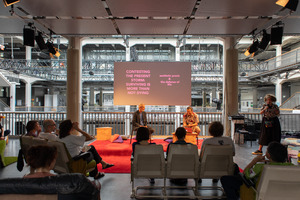
CONTESTING THE PRESENT STORM: SURVIVING IS MORE THAN NOT DYING
Name that can easily go onto 2 lines
Author that can easily go onto 2 lines as well
- Titel
- CONTESTING THE PRESENT STORM: SURVIVING IS MORE THAN NOT DYING
- Titel (en)
- CONTESTING THE PRESENT STORM: SURVIVING IS MORE THAN NOT DYING
- Untertitel des Projekts/Werks (en)
- Aesthetic praxis and the defense of life
- Autor/in
- Beschreibung (en)
- To address today’s political conjunctures, it becomes crucial to study the link between extractivism and warfare as pillars of capitalist democracy and global colonialism. The Zapatista Army of National Liberation (EZLN) has been warning us about the present storm, underlining how the global territorial reordering between imperialist powers has turned into a total war threatening all forms of life: the living, the dead, and the non-dead. The present storm carries a monster of multiple heads, the capitalist hydra – as they name multilayered systematic oppression and exploitation with a voracious ecocidal drive. The Zapatistas have also warned us that in the face of this growing threat, “there will be no landscape left to account for.”
This talk will debate some characteristics of the present storm by analyzing contemporary mechanisms that are renewing the systematic forms of global oppression and exploitation in the context of Mexico. To set the context, it will focus on the 2019 infrastructural National Development Plan, the interrelated impacts, and characteristics of involved actors: military, paramilitary, organized crime, national and transnational corporations. The implementation of these projects carries a documented violent dispossession of communal and agrarian territories, targeted incarceration of land defenders, disappearances and murders, displacement and dissolution of communities, destruction of cultural artifacts and archeological sites, erosion of vital ecosystems, scorched atmospheres, and the risk of irreversible ecological consequences.
It will zoom into the present multilayered critical scenario of the south and southeast Mexican regions, setting grounds for introducing a few keys to the historical indigenous and non-indigenous resistance in the struggle for self-determination and autonomy at the heart of an aesthetic praxis. **/
David Muñoz-Alcántara is a guest professor in Media Art at the HfG. Alistair Hudson is the Scientific-Artistic Chairman of the ZKM.
- To address today’s political conjunctures, it becomes crucial to study the link between extractivism and warfare as pillars of capitalist democracy and global colonialism. The Zapatista Army of National Liberation (EZLN) has been warning us about the present storm, underlining how the global territorial reordering between imperialist powers has turned into a total war threatening all forms of life: the living, the dead, and the non-dead. The present storm carries a monster of multiple heads, the capitalist hydra – as they name multilayered systematic oppression and exploitation with a voracious ecocidal drive. The Zapatistas have also warned us that in the face of this growing threat, “there will be no landscape left to account for.”
- Typ des Projekts/Werks
- Datierung
- 19.06.2024
- Ort: Institution
- Ort
- Lichtbrücke
- Beteiligte Institution(en)
- Titel
- CONTESTING THE PRESENT STORM: SURVIVING IS MORE THAN NOT DYING
- Importiert am
- 24.02.2025
- Übergeordnete Sets
- 1
- Set enthält
- 0 11
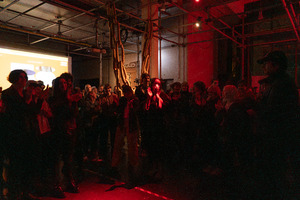
UMBAU Launch 3: Chaining
Name that can easily go onto 2 lines
Author that can easily go onto 2 lines as well
- Titel
- UMBAU Launch 3: Chaining
- Internetlinks
- Titel
- UMBAU Launch 3: Chaining
- Importiert am
- 15.01.2025
- Übergeordnete Sets
- 2
- Set enthält
- 0 25
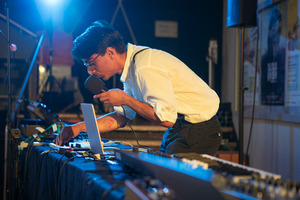
rOundabOut
Name that can easily go onto 2 lines
Author that can easily go onto 2 lines as well
- Titel
- rOundabOut
- Kategorie
- Titel
- rOundabOut
- Importiert am
- 15.01.2025
- Übergeordnete Sets
- 1
- Set enthält
- 1 0
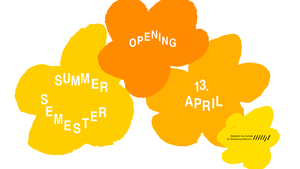
Semestereröffnung
Name that can easily go onto 2 lines
Author that can easily go onto 2 lines as well
- Titel
- Semestereröffnung
- Titel
- Semestereröffnung
- Importiert am
- 15.01.2025
- Übergeordnete Sets
- 1
- Set enthält
- 5 0
Tag der Offenen Tür
Name that can easily go onto 2 lines
Author that can easily go onto 2 lines as well
- Titel
- Tag der Offenen Tür
- Titel
- Tag der Offenen Tür
- Importiert am
- 15.01.2025
- Übergeordnete Sets
- 1
- Set enthält
- 1 0
KaMuNa
Name that can easily go onto 2 lines
Author that can easily go onto 2 lines as well
- Titel
- KaMuNa
- Titel
- KaMuNa
- Importiert am
- 15.01.2025
- Übergeordnete Sets
- 1
- Set enthält
- 1 0
Gulaschprogrammiernacht
Name that can easily go onto 2 lines
Author that can easily go onto 2 lines as well
- Titel
- Gulaschprogrammiernacht
- Titel
- Gulaschprogrammiernacht
- Importiert am
- 15.01.2025
- Übergeordnete Sets
- 1
- Set enthält
- 1 0
Studieninformationstag
Name that can easily go onto 2 lines
Author that can easily go onto 2 lines as well
- Titel
- Studieninformationstag
- Titel
- Studieninformationstag
- Importiert am
- 15.01.2025
- Übergeordnete Sets
- 1
- Set enthält
- 1 0
Graduiertenausstellung
Name that can easily go onto 2 lines
Author that can easily go onto 2 lines as well
- Titel
- Graduiertenausstellung
- Titel
- Graduiertenausstellung
- Importiert am
- 15.01.2025
- Übergeordnete Sets
- 1
- Set enthält
- 4 0
Bunte Nacht der Digitalisierung 2024

Name that can easily go onto 2 lines
Author that can easily go onto 2 lines as well
- Titel
- Bunte Nacht der Digitalisierung 2024
- Titel (en)
- Colourful Night of Digitalization 2024
- Beschreibung (de)
- Am 7. Juni findet die Bunte Nacht der Digitalisierung statt, ein Festival, das die Vielfalt der Perspektiven und Herausforderungen der Digitalisierung in Karlsruhe feiert. Diese Initiative öffnet den Karlsruher Bürgern die Türen von mehr als 60 Institutionen (Bibliotheken, Museen, Universitäten, Unternehmen, Bürgerinitiativen), um verschiedene Themen und Ansätze zur Digitalisierung zu zeigen und zu diskutieren.
- Beschreibung (en)
- On June 7th, the Colourful Night of Digitization, a festival to celebrate the diversity of perspectives and challenges on digitization that exists in Karlsruhe, will take place. This initiative opens the doors of more than 60 institutions (libraries, museums, universities, enterprises, civil initiatives) to the citizens of Karlsruhe to show and discuss diverse topics and approaches to digitality.
- Typ des Projekts/Werks
- Schlagworte
- Datierung
- 07.06.2024
- Mitwirkende
- Ort: Institution
- Ort
- Hochschule für Gestaltung: 112
Kronenplatz;
Werkstatt und Studio von Triangel
- Hochschule für Gestaltung: 112
- Stadt
- Land
- Beteiligte Institution(en)
- Internetlinks
- Titel
- Bunte Nacht der Digitalisierung 2024
- Importiert am
- 05.06.2024
- Übergeordnete Sets
- 1
- Set enthält
- 3 1