Dakang Wang
| Name | Dakang Wang |
3 Inhalte
- Seite 1 von 1
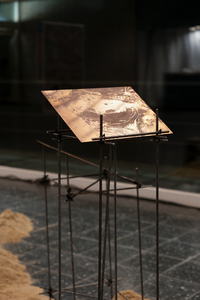
The Breath of Metal
Name that can easily go onto 2 lines
Author that can easily go onto 2 lines as well
- Titel
- The Breath of Metal
- Titel (en)
- The Breath of Metal
- Untertitel
- Baiyin - what the mine left behind
- Untertitel des Projekts/Werks (en)
- Baiyin - what the mine left behind
- Autor/in
- Beschreibung (de)
- Meine künstlerische Arbeit beschäftigt sich mit den Beziehungen zwischen Metall, Bergbau sowie familiären und urbanen Archiven. Metall fungiert dabei sowohl als Material als auch als Sprache: Es trägt Gewicht, Klang und Zeit in sich und bewahrt Spuren politischer, industrieller und arbeitsgeschichtlicher Prozesse.
Ich bin in Baiyin in der chinesischen Provinz Gansu aufgewachsen, einer durch den Bergbau entstandenen Industriestadt, auch bekannt als „Kupferstadt“. Mehrere Generationen meiner Familie waren im Bergbau, in der Verhüttung und in der Erzverarbeitung tätig. Diese biografischen Hintergründe erscheinen in meiner Arbeit nicht als Nostalgie, sondern als struktureller Rahmen, der mein Verständnis von Materialität, Körper und Stadt prägt. Die Mine ist für mich kein fixer Ort, sondern ein sich wandelndes System vom Erz zum Metall, von der Infrastruktur zur Stadt und schließlich zur Ruine.
Methodisch arbeite ich mit Fotografie, Archivmaterial, industriellen Überresten sowie mit Video, Klang und Installation. Fotografie verstehe ich dabei als Prozess der Extraktion und Transformation, der Materialien aus ihrem ursprünglichen Funktionszusammenhang löst und in einen Zustand suspendierter Evidenz überführt.
- Meine künstlerische Arbeit beschäftigt sich mit den Beziehungen zwischen Metall, Bergbau sowie familiären und urbanen Archiven. Metall fungiert dabei sowohl als Material als auch als Sprache: Es trägt Gewicht, Klang und Zeit in sich und bewahrt Spuren politischer, industrieller und arbeitsgeschichtlicher Prozesse.
- Beschreibung (en)
- My artistic work explores the relationships between metal, mining, and familial and urban archives. Metal functions both as a material and as a language: it carries weight, sound, and time, and preserves traces of political, industrial, and labor-related processes.
I grew up in Baiyin in Gansu Province, China, an industrial city shaped by mining, also known as the “Copper City.” Several generations of my family were involved in mining, smelting, and ore processing. These biographical backgrounds do not appear in my work as nostalgia, but rather as a structural framework that shapes my understanding of materiality, the body, and the city. For me, the mine is not a fixed place, but a constantly evolving system — from ore to metal, from infrastructure to the city, and ultimately to ruin.
Methodologically, I work with photography, archival materials, industrial remnants, as well as video, sound, and installation. I understand photography as a process of extraction and transformation, one that removes materials from their original functional context and transfers them into a state of suspended evidence.
- My artistic work explores the relationships between metal, mining, and familial and urban archives. Metal functions both as a material and as a language: it carries weight, sound, and time, and preserves traces of political, industrial, and labor-related processes.
- Kategorie
- Mitwirkende
- Material
- Technik/Verfahren/Formate
- Fotografie, Installation, Video
- Abmessungen
- 6 große Bilder je 900 x 1400 mm, 8 kleine Bilder je 210 x 297 mm, 4 Kupferpalette, 3 davon je 210 x 297 mm, 1 420 x 594 mm, 4 Ständer je 70 bis 100 cm hoch.
- Dauer
- Ein Video dauert 10 Minuten und 19 Sekunden.
- Titel
- The Breath of Metal
- Untertitel
- Baiyin - what the mine left behind
- Projektleiter/in
- Semester
- Studiengang
- Typ der Abschlussarbeit
- Importiert am
- 11.03.2026
- Übergeordnete Sets
- 3
- Set enthält
- 0 24
No Feeding
Name that can easily go onto 2 lines
Author that can easily go onto 2 lines as well
- Titel
- No Feeding
- Titel (en)
- No Feeding
- Autor/in
- Beschreibung (de)
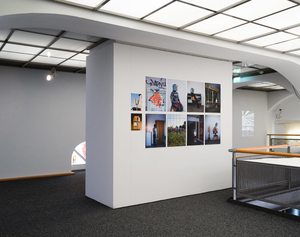
- Tauben gehören zu den alltäglichsten Tieren unseres urbanen Lebens. In allen Städten Deutschlands sieht man sie täglich in Gassen, auf Plätzen, Dächern und Geländern. Während meiner Recherche stieß ich sogar im Stadtarchiv Karlsruhe auf zahlreiche taubenbezogene Bilder, Texte und Dokumente.
Obwohl sie wie wir in der Stadt leben, werden Tauben oft übersehen, verachtet oder gar misshandelt. Man nennt sie manchmal „fliegende Staubsauger“, weil sie Essensreste vom Boden aufpicken, oder „fliegende Ratten“, da sie als Krankheitsüberträger gelten.
Doch als ich begann, mich intensiver mit der Geschichte der Tauben zu beschäftigen, entdeckte ich eine ganz andere Seite: Früher waren sie verlässliche Boten in der Kommunikation. Auf Reisen und in kolonialen Unternehmungen nahm man Tauben mit, als Begleiter und Nachrichtenübermittler. Mit der Ausbreitung globaler Mobilität verbreiteten sich auch Tauben weltweit. Heute benötigen wir sie durch den Fortschritt der Technik nicht mehr und begegnen ihnen mit Ablehnung, wie die allgegenwärtigen Taubenabwehrspitzen an Gebäuden zeigen.
In meinen Fotografien verwende ich die Taube auf humorvolle und absurde Weise als Symbol, um ihre komplexe Beziehung zum Menschen zu thematisieren und zugleich meine eigene Identitätsfrage zu reflektieren. Mal trägt sie Anzug, mal wirkt sie einsam und verloren. Ist es ein Mensch mit Taubenmaske oder eine Taube, die versucht, ein Mensch zu sein?
- Tauben gehören zu den alltäglichsten Tieren unseres urbanen Lebens. In allen Städten Deutschlands sieht man sie täglich in Gassen, auf Plätzen, Dächern und Geländern. Während meiner Recherche stieß ich sogar im Stadtarchiv Karlsruhe auf zahlreiche taubenbezogene Bilder, Texte und Dokumente.
- Beschreibung (en)
- Pigeons are perhaps the most familiar animals in our everyday urban life. In every city across Germany, you can spot them in alleys, on rooftops, in squares, always present, always overlooked. During my research, I even found numerous images, texts, and records related to pigeons in the city archive of Karlsruhe.
Despite being fellow residents of our cities, pigeons are often ignored, despised, or mistreated. They’re sometimes called “flying vacuum cleaners” for picking up crumbs from the ground, or “flying rats” due to their association with disease.
But when I started to explore their history more deeply, I discovered another side of them: pigeons were once trusted messengers. People used them for communication, especially during travel or colonial expansion, and they became companions on long journeys. As globalization advanced, pigeons spread across the world. Today, we no longer rely on them, yet we go to great lengths to drive them away, visible in the anti-pigeon spikes found on buildings everywhere.
In my photographs, I use the pigeon’s form as a symbol in a playful and absurd way, capturing its complex identity through staged, theatrical compositions. At times it wears a suit; at others, it seems lonely or melancholic. Is it a person in a pigeon mask or a pigeon pretending to be human?
- Pigeons are perhaps the most familiar animals in our everyday urban life. In every city across Germany, you can spot them in alleys, on rooftops, in squares, always present, always overlooked. During my research, I even found numerous images, texts, and records related to pigeons in the city archive of Karlsruhe.
- Kategorie
- Typ des Projekts/Werks
- Schlagworte
- Mitwirkende
- Dank an
- Material
- Abmessungen
- 420 x 594 mm x 8, 210 x 297 mm x 2
- Ort
- Art Karlsruhe, Halle 3 / H3/S08
- Stadt
- Land
- Beteiligte Institution(en)
- Titel
- No Feeding
- Projektleiter/in
- Semester
- Studiengang
- Importiert am
- 24.01.2026
- Übergeordnete Sets
- 1
- Set enthält
- 0 13
She and her, white and white
Name that can easily go onto 2 lines
Author that can easily go onto 2 lines as well
- Titel
- She and her, white and white
- Autor/in
- Beschreibung (de)
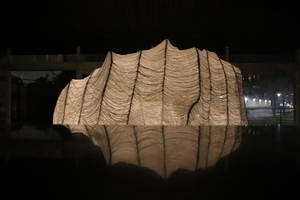
- Diese Ausstellung erzählt von mir, meiner Mutter und der Farbe Weiß, die für meine erste Erinnerung, Verzweiflung und letztlich Hoffnung steht. Weiß symbolisiert die Kraft, die mich immer wieder zum Ursprung zurückführt.
- Beschreibung (en)
- This exhibition is about me, my mother, and my connection to the world, exploring emotions through light, sound, and fog. White, my first memory from the womb, evolved from despair during personal crises to a symbol of hope and strength, guiding me back to life’s essence.
- Kategorie
- Typ des Projekts/Werks
- Schlagworte
- Datierung
- 04.12.2024
- Mitwirkende
- Dank an
- Sprache
- Material
- Abmessungen
- 2*3*4 M
- Dauer
- Die Gesamtlaufzeit des Audios beträgt zehn Minuten.
- Ort
- zkm Pavillon
- Stadt
- Land
- Titel
- She and her, white and white
- Projektleiter/in
- Semester
- Studiengang
- Typ der Abschlussarbeit
- Importiert am
- 12.12.2024
- Übergeordnete Sets
- 2
- Set enthält
- 0 10