Sets
443 Inhalte
- Seite 1 von 37
Eine Irrfahrt
Name that can easily go onto 2 lines
Author that can easily go onto 2 lines as well
- Titel
- Eine Irrfahrt
- Autor/in
- Beschreibung (de)
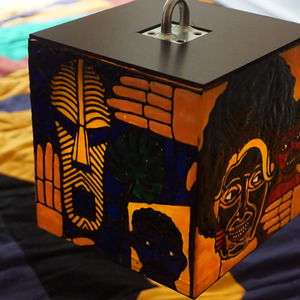
- Über einem Quilt, der den Rhein in seiner natürlichen und begradigten Form zeigt, hängen fünf beleuchtete Laternen mit Motiven aus Calibans Leben, eine schwarze Fähre und ein Schwarm Tigermücken. Begleitet wird die Installation von einem Soundstück. Gemeinsam erzählen die Elemente die Geschichte Calibans, der versucht, sich in einer Welt zu orientieren, deren Kategorien nicht ausreichen, um seine Erfahrung zu beschreiben.
Die Arbeit folgt zunächst der Logik des Märchens vom hässlichen Entlein. Die wiederholte Begegnung mit dem Anderen wird dort als Erfahrung von Ablehnung erzählt. Erlösung verspricht erst die Begegnung mit den eigenen Gleichen. Das Märchen entwirft damit eine Vorstellung von Identität und Zugehörigkeit, die auf Ähnlichkeit beruht und die Welt in klare Kategorien von Eigenem und Anderem ordnet.
Anhand der Figur Caliban untersucht die Arbeit, was geschieht, wenn Zugehörigkeit und Identität nicht durch Herkunft, Ähnlichkeit oder Ankunft hergestellt werden können.
Während der Schriftsteller und Denker Édouard Glissant Identität als etwas versteht, das in Beziehung entsteht und sich fortwährend verändert, folgen auch die afroamerikanischen mündlichen Erzählungen um die Trickster-Figur Brer Rabbit keiner endgültigen Auflösung. Anders als im Märchen vom hässlichen Entlein führt die Suche hier nicht zu einem Zustand dauerhaften Gleichgewichts. Stattdessen offenbart sich eine andere Logik, in der Identität und Zugehörigkeit nicht durch die Begegnung mit den eigenen Gleichen entstehen, sondern durch fortwährende Beziehungen, Verschiebungen und Neuorientierungen.
- Über einem Quilt, der den Rhein in seiner natürlichen und begradigten Form zeigt, hängen fünf beleuchtete Laternen mit Motiven aus Calibans Leben, eine schwarze Fähre und ein Schwarm Tigermücken. Begleitet wird die Installation von einem Soundstück. Gemeinsam erzählen die Elemente die Geschichte Calibans, der versucht, sich in einer Welt zu orientieren, deren Kategorien nicht ausreichen, um seine Erfahrung zu beschreiben.
- Beschreibung (en)
- Suspended above a quilt depicting the Rhine in both its natural and canalized form are five illuminated lanterns featuring scenes from Caliban's life, a black ferry, and a swarm of tiger mosquitoes. The installation is accompanied by a sound piece. Together, these elements tell the story of Caliban, who attempts to navigate a world whose categories are insufficient to describe his experience.
The work initially follows the logic of The Ugly Duckling. In the fairy tale, repeated encounters with the Other are experienced as rejection. Redemption is promised only through the encounter with one's own kind. The story thus presents an understanding of identity and belonging based on similarity, dividing the world into clear categories of self and other.
Through the figure of Caliban, the work explores what happens when belonging and identity can no longer be established through origin, similarity, or arrival.
While the writer and thinker Édouard Glissant understands identity as something that emerges through relation and is constantly transformed, the African American oral tales surrounding the trickster figure Brer Rabbit likewise resist any final resolution. Unlike The Ugly Duckling, the search does not lead to a lasting state of equilibrium. Instead, another logic emerges, in which identity and belonging are shaped not through the encounter with one's own kind, but through ongoing relations, shifts, and reorientations.
- Suspended above a quilt depicting the Rhine in both its natural and canalized form are five illuminated lanterns featuring scenes from Caliban's life, a black ferry, and a swarm of tiger mosquitoes. The installation is accompanied by a sound piece. Together, these elements tell the story of Caliban, who attempts to navigate a world whose categories are insufficient to describe his experience.
- Kategorie
- Schlagworte
- Mitwirkende
- Dank an
- Ort: Institution
- Stadt
- Titel
- Eine Irrfahrt
- Typ der Abschlussarbeit
- Importiert am
- 27.06.2026
- Übergeordnete Sets
- 1
- Set enthält
- 0 14
The Arbiter
Name that can easily go onto 2 lines
Author that can easily go onto 2 lines as well
- Titel
- The Arbiter
- Titel (en)
- The Arbiter
- Untertitel
- Two-channel video installation
- Autor/in
- Beschreibung (de)
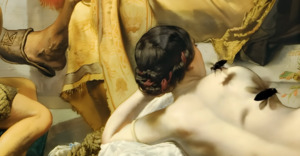
- In this project, I examine how the male gaze is built within AI systems content moderation , where censorship and sexualization coexist. Drawing from Anselm Feuerbach’s 1852 painting Hafis vor der Schenke, depicting the poet Hafez and two silent women, the work poses the question: if freed from spectatorship, what voices might they reveal? This two-channel video installation reimagines the scene through AI video generation and live narration. Referencing Valerie Solanas’s S.C.U.M. Manifesto, it reflects on how Gen-AI, governed by moral bias, mirrors a patriarchal worldview - still defining what is visible and what must remain unseen.
- Beschreibung (en)
- THE (A)RB(I)TER
In this project, I examine how the male gaze is built within AI systems content moderation , where censorship and sexualization coexist. Drawing from Anselm Feuerbach’s 1852 painting Hafis vor der Schenke, depicting the poet Hafez and two silent women, the work poses the question: if freed from spectatorship, what voices might they reveal? This two-channel video installation reimagines the scene through AI video generation and live narration. Referencing Valerie Solanas’s S.C.U.M. Manifesto, it reflects on how Gen-AI, governed by moral bias, mirrors a patriarchal worldview - still defining what is visible and what must remain unseen.
- THE (A)RB(I)TER
- Kategorie
- Typ des Projekts/Werks
- Schlagworte
- Datierung
- November 2025
- Sprache
- Material
- Abmessungen
- 1920x1080
- Dauer
- 00:02:33
- Internetlinks
- Titel
- The Arbiter
- Untertitel
- Two-channel video installation
- Projektleiter/in
- Lehrveranstaltung
- Importiert am
- 26.06.2026
- Übergeordnete Sets
- 1
- Set enthält
- 0 14
no wind no word
Name that can easily go onto 2 lines
Author that can easily go onto 2 lines as well
- Titel
- no wind no word
- Autor/in
- Beschreibung (de)
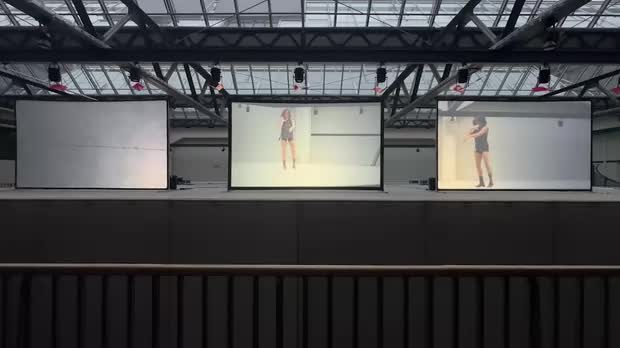
- *no wind no word* untersucht, wie Körper, Raum und bildgebende Technologien gemeinsam eine Wahrnehmungssituation hervorbringen. Die zwölfminütige Mehrkanal-Video- und Soundinstallation fragt, wie Wahrnehmung entsteht und wie sich Bedeutung bildet, wenn Bilder, Klänge und Bewegungen nicht auf eine eindeutige Aussage reduziert werden. Die Installation entstand in Zusammenarbeit mit der Tänzerin und Choreografin Sade Mamedova. An Stelle einer festgelegten Choreografie tritt ein klar definierter räumlicher und technischer Rahmen. Mehrere Kameras, verschiedene Mikrofone und ein Geophon zeichnen dieselbe Situation auf. Die Technik dient dabei nicht der Dokumentation einer Performance, sondern wird dabei selbst zum Akteur in der Arbeit. *no wind no word* fordert nicht dazu auf, eine Geschichte zu entschlüsseln. Die Installation lädt dazu ein, Zeit auszuhalten, Mehrdeutigkeit zuzulassen und Wahrnehmung als offenen Prozess zu erfahren.
- *no wind no word* untersucht, wie Körper, Raum und bildgebende Technologien gemeinsam eine Wahrnehmungssituation hervorbringen. Die zwölfminütige Mehrkanal-Video- und Soundinstallation fragt, wie Wahrnehmung entsteht und wie sich Bedeutung bildet, wenn Bilder, Klänge und Bewegungen nicht auf eine eindeutige Aussage reduziert werden. Die Installation entstand in Zusammenarbeit mit der Tänzerin und Choreografin Sade Mamedova. An Stelle einer festgelegten Choreografie tritt ein klar definierter räumlicher und technischer Rahmen. Mehrere Kameras, verschiedene Mikrofone und ein Geophon zeichnen dieselbe Situation auf. Die Technik dient dabei nicht der Dokumentation einer Performance, sondern wird dabei selbst zum Akteur in der Arbeit. *no wind no word* fordert nicht dazu auf, eine Geschichte zu entschlüsseln. Die Installation lädt dazu ein, Zeit auszuhalten, Mehrdeutigkeit zuzulassen und Wahrnehmung als offenen Prozess zu erfahren.
- Beschreibung (en)
- no wind no word explores the interplay between the body, space, and moving image. The twelve-minute multichannel video and sound installation explores how perception arises and how meaning is formed when images, sounds, and movements are not reduced to a single, unambiguous statement. The installation was created in collaboration with dancer and choreographer Sade Mamedova. Instead of a fixed choreography, the work establishes a clearly defined spatial and technical framework. Several cameras, various microphones, and a geophone record the same situation. Rather than simply documenting the performance, the technology itself becomes an active participant in the work. no wind no word invites viewers to linger, embrace ambiguity, and experience perception as an open-ended process.
- Kategorie
- Typ des Projekts/Werks
- Schlagworte
- Datierung
- 17.12.205
- Mitwirkende
- Dank an
- Sprache
- Technik/Verfahren/Formate
- Dreikanalige Video- und Soundinstallation
- Dauer
- 12 Minuten
- Ort: Institution
- Ort
- Auf dem Dach des großen Studios der HfG Karlsruhe
- Stadt
- Land
- Internetlinks
- Titel
- no wind no word
- Projektleiter/in
- Semester
- Studiengang
- Typ der Abschlussarbeit
- Importiert am
- 26.06.2026
- Übergeordnete Sets
- 1
- Set enthält
- 0 11
Umpolen Kollektiv
Name that can easily go onto 2 lines
Author that can easily go onto 2 lines as well
- Titel
- Umpolen Kollektiv
- Titel (en)
- Umpolen Collective
- Autor/in
- Merve Abt
- Klara Beck
- Franka Breunig
- Timothée Charon
- Athina Chrisofakis
- Edona Ibrahimi
- Alexander Johl
- Jule Köpke
- Peter Oellerich
- Anika Osbelt
- Nina Overkott
- Lasse Peters
- Elisabeth Potemkin
- Leo Schick
- Emil Schönert
- Charlot Schümann
- Asimina Sideris
- Estella Staader
- Joscha Thorn
- Laura Waterstradt
- Cédric Weber
- Max Werling
- Camilla Wondrak
- Lando
- Beschreibung (de)
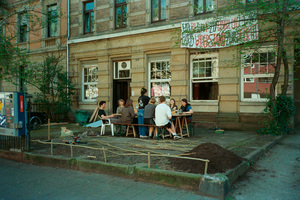
- Umpolen ist ein Kollektiv das leerstehende Räume in Karlsruhe nutzt, um temporäre, nicht-kommerzielle Orte der Begegnung und des Austauschs zu schaffen. Sie dienen als kurzfristige soziokulturelle Veranstaltungs- und Ausstellungsräume, aber auch einfache Treffpunkte. Im Januar 2026 bespielte Umpolen für eine Woche eine ehemalige Wohngemeinschaft in der Karlsruher Südstadt und widmete sich Fragen von Freund*innenschaft und Distanz. Dazu gab es Workshops, “Küche für Alle”, Filmvorführungen, Konzerte und Lesungen.
Seit Mai 2026 baut Umpolen einen temporären Nachbar*innenschaftstreff und Kulturort im ehemaligen Löwenbräukeller in der Karlsruher Weststadt auf. Ausgangspunkt ist jedes Mal der Raum selbst, von dem aus sich das Kollektiv dem Thema Nachbar*innenschaft widmen will. Die Orte stellen eine Brücke zwischen sozialem Raum, Werkstatt, Arbeitsraum, Ausstellungsraum, Garten und versuchen Menschen in Dialoge miteinander zu setzen. Dabei arbeitet Umpolen sowohl mit lokalen Initiativen als auch mit Menschen außerhalb Karlsruhes zusammen und entwickelt Formate, die gegenseitiges Lernen, Gespräche und Beisammensein ermöglichen.
Im ehemaligen Löwenbräukeller wird versucht im Alltag Strukturen zu schaffen in dem die Nachbar*innenschaft nicht nur fremde Gesichter bleiben, sondern Mitmenschen sind, mit denen man solidarisch lebt und in Kontakt tritt.
Der Raum ist zwei mal die Woche geöffnet und bespielt manchmal mit Programm manchmal als reinen Treffpunkt den Ort und beschäftigt sich auch mit den Erinnerungen, die an den Ort geknüpft sind.
Umpolen hat sich als Kollektiv im Sommer 2025 gegründet und besteht aus Studierenden der Studiengänge Ausstellungsdesign und Szenografie, Kunstwissenschaft und Medienphilosophie und Kommunikationsdesign von der HfG, Studierenden der Kunstakademie und Menschen aus Karlsruhe, die zusammengekommen sind um Gemeinschaft und Kulturarbeit in Karlsruhe zugänglich zu machen. Umpolen arbeitet zudem fest mit Radio ShbShb zusammen, die die Veranstaltungen live online übertragen.
- Umpolen ist ein Kollektiv das leerstehende Räume in Karlsruhe nutzt, um temporäre, nicht-kommerzielle Orte der Begegnung und des Austauschs zu schaffen. Sie dienen als kurzfristige soziokulturelle Veranstaltungs- und Ausstellungsräume, aber auch einfache Treffpunkte. Im Januar 2026 bespielte Umpolen für eine Woche eine ehemalige Wohngemeinschaft in der Karlsruher Südstadt und widmete sich Fragen von Freund*innenschaft und Distanz. Dazu gab es Workshops, “Küche für Alle”, Filmvorführungen, Konzerte und Lesungen.
- Beschreibung (en)
- Umpolen is a collective that uses vacant spaces in Karlsruhe to create temporary, non-commercial places for people to meet and exchange ideas. These spaces serve as short-term venues for sociocultural events and exhibitions, as well as simple gathering places. In January 2026, Umpolen took over a former shared apartment in Karlsruhe’s Südstadt neighborhood for a week and explored questions of friendship and distance. The event featured workshops, “Kitchen for All,” film screenings, concerts, and readings.
Since May 2026, the collective has been setting up a temporary neighborhood gathering place and cultural space in the former Löwenbräukeller in Karlsruhe’s Weststadt district. Each time, the starting point is the space itself, from which Umpolen aims to explore the theme of neighborliness. These spaces serve as a bridge between social space, workshop, workspace, exhibition space, and garden, and aim to bring people together in dialogue. In doing so, Umpolen collaborates with both local initiatives and people outside of Karlsruhe, developing formats that facilitate mutual learning, conversation, and socializing.
At the former Löwenbräukeller, Umpolen strives to create structures in our daily lives where neighbors aren’t just strangers, but fellow human beings with whom we live in solidarity and connect.
The space is open twice a week and serves as a venue, sometimes hosting events, sometimes simply as a gathering place, while also engaging with the memories tied to the location.
Umpolen was founded as a collective in the summer of 2025 and consists of students from the HfG and the Art Academy, as well as people from Karlsruhe who have come together to make community and cultural work accessible in Karlsruhe. Umpolen also collaborates closely with Radio ShbShb, which broadcasts the events live online.
- Umpolen is a collective that uses vacant spaces in Karlsruhe to create temporary, non-commercial places for people to meet and exchange ideas. These spaces serve as short-term venues for sociocultural events and exhibitions, as well as simple gathering places. In January 2026, Umpolen took over a former shared apartment in Karlsruhe’s Südstadt neighborhood for a week and explored questions of friendship and distance. The event featured workshops, “Kitchen for All,” film screenings, concerts, and readings.
- Kategorie
- Typ des Projekts/Werks
- Schlagworte
- Datierung
- 01.01.2026 - 01.11.2026
- Mitwirkende
- Sprache
- Ort
- Im Januar 2026 in der Rüppurerstr. 14, 76137 Karlsruhe
von Mai bis Oktober 2026 in der ehemaligen Gaststätte Löwenbräukeller in der Sophienstraße 95, 76135 Karlsruhe
- Im Januar 2026 in der Rüppurerstr. 14, 76137 Karlsruhe
- Stadt
- Land
- Internetlinks
- Titel
- Umpolen Kollektiv
- Importiert am
- 23.06.2026
- Übergeordnete Sets
- 1
- Set enthält
- 0 24
MS Guilty Pleasure

Name that can easily go onto 2 lines
Author that can easily go onto 2 lines as well
- Titel
- MS Guilty Pleasure
- Titel (en)
- MS Guilty Pleasure
- Autor/in
- Beschreibung (de)
- Meine Abschlussarbeit beschäftigt sich mit dem Kreuzfahrtschiff als einer Form von Architektur, die zwei parallel voneinander laufende Wirklichkeiten konstituiert, mit eigenen Regeln, Bewegungen und sozialen Codes.
Das Schiff organisiert diese Trennung bis ins Detail. Wege, Blickrichtungen und Abläufe lenken den Körper beinahe intuitiv durch den Raum. Bestimmte Rollen erscheinen selbstverständlich: der entspannte Gast, die serviceorientierte Crew, der verborgene Bereich hinter den Kulissen, der den reibungslosen Ablauf überhaupt erst ermöglicht.
Die Installation greift die Gleichzeitigkeit über eine räumliche und akustische Situation auf.
Während im Hintergrund versucht wird, den Betrieb aufrechtzuerhalten, dringen in den öffentlichen Bereich nur Fragmente der Störung: Durchsagen, Gesprächsfetzen, Beschwerden und das Weiterlaufen eines Unterhaltungsprogramms.
Für einen kurzen Moment wird hörbar, was normalerweise hinter der Oberfläche des scheinbar mühelosen Urlaubs verschwindet. Doch Unterhaltung und Betrieb laufen auch dort nahezu ohne Unterbrechung weiter, wo Erschöpfung, Zeitdruck oder technische Störungen Teil des Systems sind.
Dabei ist die Kreuzfahrt nur ein Luxusgut unter vielen, das sich auf technische Infrastruktur, Versorgungssysteme, Reinigung und Wartung sowie Handwerker, Fachkräfte und Hilfsarbeiter aus aller Welt stützt.
Nicht die Welt eines permanent inszenierten Erlebens steht im Mittelpunkt, sondern das Sichtbarwerden einer Infrastruktur, die sonst hinter Oberfläche, Routine und Unterhaltung verschwindet.
- Meine Abschlussarbeit beschäftigt sich mit dem Kreuzfahrtschiff als einer Form von Architektur, die zwei parallel voneinander laufende Wirklichkeiten konstituiert, mit eigenen Regeln, Bewegungen und sozialen Codes.
- Beschreibung (en)
- My diploma explores the cruise ship as an architectural structure that produces two parallel realities, each governed by its own rules, movements, and social codes.
The ship organizes this separation down to the smallest detail. Pathways, sightlines, and routines guide bodies through space almost intuitively. Certain roles appear self-evident: the relaxed guest, the service-oriented crew member, and the hidden backstage areas that make the ship’s seamless operation possible in the first place.
The installation addresses this simultaneity through a spatial and acoustic setting.
While continuous efforts are made behind the scenes to keep operations running, only fragments of disruption reach the public areas: announcements, snippets of conversation, complaints, and the ongoing entertainment programme. For a brief moment, what normally disappears beneath the surface of the seemingly effortless holiday becomes audible. Yet entertainment and operations continue almost uninterrupted, even where exhaustion, time pressure, or technical failures are built into the system.
At the same time, the cruise industry is only one example of a luxury product that depends on extensive technical infrastructure, global supply chains, cleaning and maintenance services, as well as skilled and unskilled labour from around the world.
The focus is not the world of permanently staged experiences itself, but rather the visibility of an infrastructure that usually disappears behind surfaces, routines, and entertainment.
- My diploma explores the cruise ship as an architectural structure that produces two parallel realities, each governed by its own rules, movements, and social codes.
- Kategorie
- Schlagworte
- Material
- Technik/Verfahren/Formate
- Situatives Hörspiel
- Dauer
- 25 Minuten
- Ort: Institution
- Ort
- Waldstraße
- Titel
- MS Guilty Pleasure
- Projektleiter/in
- Semester
- Studiengang
- Typ der Abschlussarbeit
- Importiert am
- 20.06.2026
- Übergeordnete Sets
- 2
- Set enthält
- 0 18
Rote Saat
Name that can easily go onto 2 lines
Author that can easily go onto 2 lines as well
- Titel
- Rote Saat
- Autor/in
- Beschreibung (de)
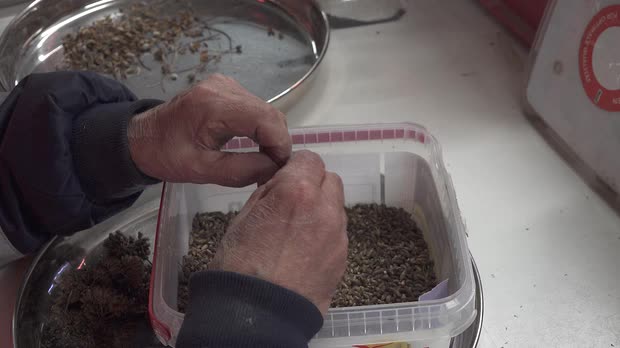
- „Rote Saat“ ist eine installative Arbeit, die sich mit dem Verschwinden traditioneller Nutzpflanzen in Deutschland und der Bedeutung von Saatgutbanken als lebendige Archive auseinandersetzt. Ausgangspunkt ist die Beobachtung eines drastischen Rückgangs der Sortenvielfalt seit dem 20. Jahrhundert, bedingt durch industrielle Landwirtschaft, gesetzliche Regulierungen und die Konzentration auf wenige Hochleistungssorten. Viele regional angepasste Landsorten erfüllen heutige Zulassungskriterien nicht mehr und sind dadurch aus dem Anbau verschwunden. Die Arbeit nimmt diese Entwicklung zum Anlass, um Prozesse der Erhaltung und Weitergabe von Saatgut sichtbar und erfahrbar zu machen.
Sie entstand im Kontext einer künstlerischen Recherche zu agrarökologischen Praktiken, Saatgutpolitik und kollektiven Formen der Wissensweitergabe. Ausgangspunkt war die Zusammenarbeit mit lokalen Initiativen in Karlsruhe, insbesondere der Solidarischen Landwirtschaft KArotte, dem Sozialen Garten (afka) sowie der Genbank für Wildpflanzen für Ernährung und Landwirtschaft (WEL).
Im Mittelpunkt steht eine 8-Kanal-Soundinstallation, die den Übergang vom Winter zum Frühling auf den Feldern der Solidarischen Landwirtschaft dokumentiert. Die Komposition verbindet Umgebungsgeräusche der Jahreszeiten mit Arbeitsgeräuschen auf dem Feld und der Saatgutaufbereitung: das Umgraben der Erde, das Sieben und Reinigen der Samen, das Abdecken der Beete. Die Konzentration auf kleinste Handgriffe lenkt die Aufmerksamkeit auf die oft unsichtbaren Praktiken, die für den Erhalt von Saatgut notwendig sind.
Ergänzt wird die Soundinstallation durch eine Reihe räumlicher Elemente, die unterschiedliche Formen des Umgangs mit Saatgut aufgreifen. Fünf gefährdete Nutzpflanzensorten aus Baden-Württemberg, die in der Roten Liste geführt werden, sind offen ausgestellt. Sie können berührt, mitgenommen und wieder ausgesät werden.
Auf einem 25 Meter langen Landwirtschaftsnetz werden dokumentarische Videoaufnahmen gezeigt, die die Arbeit von Saatgutbanken und lokalen Initiativen in Karlsruhe in ihren wiederkehrenden Abläufen sichtbar machen.
Ein weiteres Element ist eine Pflanzentransportkiste, die sich formal an den historischen Ward’schen Kasten anlehnt. Dieses im 19. Jahrhundert entwickelte Transportmittel ermöglichte den globalen Austausch von Pflanzen unter kontrollierten Bedingungen und war eng mit kolonialen Handelsstrukturen verknüpft. In der Installation dient der Kasten als Display für die Geschichte der Alb-Linse, einer regionalen Sorte von der Schwäbischen Alb, die lange als verschollen galt und erst durch eine Saatgutbank in Sankt Petersburg wiederentdeckt wurde. Die Arbeit stellt damit lokale landwirtschaftliche Praktiken in einen größeren politischen Zusammenhang und zeigt, dass pflanzliche Vielfalt nur durch gemeinsames Handeln erhalten bleibt.
- „Rote Saat“ ist eine installative Arbeit, die sich mit dem Verschwinden traditioneller Nutzpflanzen in Deutschland und der Bedeutung von Saatgutbanken als lebendige Archive auseinandersetzt. Ausgangspunkt ist die Beobachtung eines drastischen Rückgangs der Sortenvielfalt seit dem 20. Jahrhundert, bedingt durch industrielle Landwirtschaft, gesetzliche Regulierungen und die Konzentration auf wenige Hochleistungssorten. Viele regional angepasste Landsorten erfüllen heutige Zulassungskriterien nicht mehr und sind dadurch aus dem Anbau verschwunden. Die Arbeit nimmt diese Entwicklung zum Anlass, um Prozesse der Erhaltung und Weitergabe von Saatgut sichtbar und erfahrbar zu machen.
- Kategorie
- Schlagworte
- Mitwirkende
- Dank an
- Material
- Titel
- Rote Saat
- Projektleiter/in
- Semester
- Studiengang
- Typ der Abschlussarbeit
- Importiert am
- 20.06.2026
- Übergeordnete Sets
- 1
- Set enthält
- 0 16
PLAY DATE
Name that can easily go onto 2 lines
Author that can easily go onto 2 lines as well
- Titel
- PLAY DATE
- Untertitel
- PLAY DATE OBJECTS
- Autor/in
- Beschreibung (de)
- Ausgehend von der Idee des freien Spielens in der Kindheit entfaltet sich PLAY DATE als Studienreihe, die die Entdeckung des zwecklosen Spielens im Erwachsenenalter erforscht. Oft von gesellschaftlichen Normen und sozialen Hemmungen überdeckt, bleibt der Spieltrieb doch bestehen, sobald man ihm wieder Raum gibt.
Ausgangspunkt war die Beobachtung, dass traditionelle Spielplätze fast ausschließlich Kindern vorbehalten sind, während erwachsene Personen kaum Raum finden, einfach verspielt zu sein.
In PLAY DATE 1, dem ersten experimentellen Spielplatz, wurde untersucht, welche nicht-kompetitiven Spielarten Erwachsene ansprechen. Die Ergebnisse zeigten, dass freies Spiel für Erwachsene angenommen würde, wenn der soziale Rahmen als akzeptierend wahrgenommen wird.
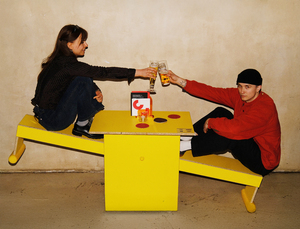
Darauf aufbauend fand PLAY DATE 2 in einer Bar statt, wo spielerische Bewegungsformen situativ in den Kontext des sozialen Zusammenkommens und geselligen Beisammenseins integriert wurden. Spielerische Gesten konnten so nahtlos in gewohnte Beschäftigungen eingeschrieben werden.
Mit PLAY DATE 3 wurde die Erkundung im Alltag erweitert: temporäre Spielobjekte wurden in die Stadtlandschaft gebracht, um zu beobachten, wie Passant:innen auf unerwartete Momente des Spiels reagieren, die den Alltag durchbrechen.
PLAY DATE OBJECTS zeigen, wie freies Spiel für jedes Alter wieder zugänglich gemacht werden kann und neue soziale, kulturelle und räumliche Kontexte eröffnet.
- Ausgehend von der Idee des freien Spielens in der Kindheit entfaltet sich PLAY DATE als Studienreihe, die die Entdeckung des zwecklosen Spielens im Erwachsenenalter erforscht. Oft von gesellschaftlichen Normen und sozialen Hemmungen überdeckt, bleibt der Spieltrieb doch bestehen, sobald man ihm wieder Raum gibt.
- Beschreibung (en)
- Starting from the idea of uninhibited play in childhood, PLAY DATE unfolds as a series of studies exploring the rediscovery of purposeless play in adulthood. Although often obscured by social norms and inhibitions, the impulse to play persists, emerging again once it is given space.
The project originated from the observation that traditional playgrounds are almost exclusively designed for children, while adults rarely find spaces where they can simply be playful.
PLAY DATE 1, the first experimental playground, investigated which forms of non-competitive play appeal to adults. The results suggested that adults readily embrace free play when the social environment is perceived as accepting and non-judgmental.
Building on these findings, PLAY DATE 2 took place in a bar, where playful modes of movement were introduced into the social setting of gathering and spending time together. Playful gestures became seamlessly integrated into familiar social activities.
With PLAY DATE 3, the investigation expanded into everyday urban life. Temporary play objects were placed throughout the city to observe how passersby respond to unexpected moments of play that interrupt the routines of daily life.
PLAY DATE OBJECTS demonstrate how free play can be made accessible again for people of all ages, opening up new social, cultural, and spatial contexts.
- Starting from the idea of uninhibited play in childhood, PLAY DATE unfolds as a series of studies exploring the rediscovery of purposeless play in adulthood. Although often obscured by social norms and inhibitions, the impulse to play persists, emerging again once it is given space.
- Kategorie
- Schlagworte
- Material
- Titel
- PLAY DATE
- Untertitel
- PLAY DATE OBJECTS
- Projektleiter/in
- Semester
- Studiengang
- Importiert am
- 12.06.2026
- Übergeordnete Sets
- 1
- Set enthält
- 0 25
2.5
Name that can easily go onto 2 lines
Author that can easily go onto 2 lines as well
- Titel
- 2.5
- Titel (en)
- 2.5
- Untertitel
- applied material study on 2.5mm peeled Veneer
- Untertitel des Projekts/Werks (en)
- Eine angewandte Materialstudie zu 2.5mm Schälfunier
- Autor/in
- Beschreibung (de)
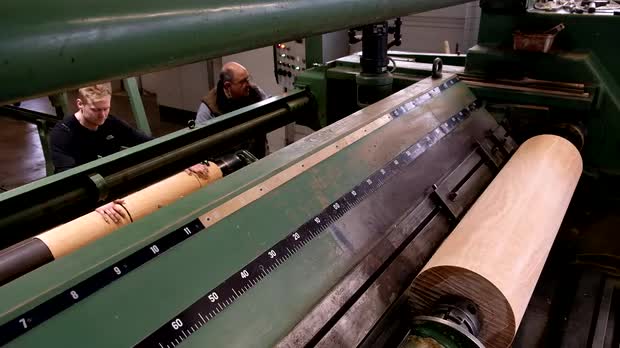
- Schälfurnier ist eine der wenigen Holzgewinnungsmethoden,
die sich an der natürlichen, runden Form des
Baumes orientiert. Ein zuvor entasteter und gedämpfter
Stamm rotiert horizontal gegen eine lange Klinge
ähnlich einem Spitzer für Stifte.
Dabei entsteht eine kontinuierliche Bahn aus Holz.
Da keine klassische Sägemechanik zum Einsatz
kommt, fällt kaum Staub an und es entsteht nahezu
kein Materialverlust durch Sägeschnitte. Durch das rota torische
Arbeiten am runden Stamm ist der Materialertrag
besonders effizient. Im Vergleich zum Aufsä gen
eines Stammes im Sägewerk bei dem ein runder
Stamm in eckige Massivholzteile zerlegt wird
liegt der Ertrag etwa 30–40 % höher.
Furnier wird meist dekorativ eingesetzt, um Oberflächen
aufzuwerten. Eine tragende Rolle erhält es vor
allem in sperrverleimten Schichtwerkstoffen, in de nen
es im Verbund überraschende Stabilität und gestalterische
Flexibilität entwickelt.
Durch kleine Interventionen im Produktionsprozess
lässt sich das Furnier nicht nur als einzelne Blätter,
sondern als kontinuierliche Rolle mit definiertem Maß
entnehmen. Diese Rolle bildet den Ausgangspunkt
und Rohstoff für eine Möbel-Kleinserie.
Die Serie „2.5“ untersucht die strukturellen Möglichkeiten
dieses Materials durch eine Neuinterpretation
klassischer Verarbeitungsmethoden.
2.5.H1
Ein Hocker mit zweifach gekrümmter Sitzschale aus
form verleimtem Furnier. Ein extrudierter Kantenanleimer
setzt sich spiralförmig im Inneren fort und bildet
eine tragende Struktur. Die durch die Geometrie der
Sitzschale entstehende Schattenfuge zum Boden legt
zugleich die textile Erscheinung der natürlichen Verwerfungen
offen, die im Furnier während des Trocknungsprozesses
entstehen.
2.5.R1
Ein Wandregalsystem, das die Kontinuität der Furnierrolle
nutzt, die durch ihr frühzeitiges Entnehmen im
Produktionsprozess möglich wird. Eine dünne Sperrschicht stabiisiert
die Faserstruktur und nimmt Zugkräfte
auf die sie zu den frei Plazierbaren Klemmträgern leitett. So bleibt eine
minimale Materialstärke bei maximaler Flexibilität
erhalten. Frei platzierbare Regalträger ermöglichen eine
spielerische Gestaltungsfreiheit und erzeugen ein
leichtes, dennoch tragfähiges Regalsystem mit geringem
Materialeinsatz.
2.5.R2
Ein Wandregal, das die Querfasern des Furniers entlang
der kurzen Seite nutzt. Was zunächst wie eine Schwäche
erscheint, ermöglicht durch die Sicherung der Kanten
eine hohe Stabilität bei sehr geringer Materialstärke.
Die Fixierung erfolgt ausschließlich entlang der Wandseite.
Natürliche Verwerfungen im Material erzeugen
dabei eine spannungsreiche Interaktion zwischen den
Furnierschichten und eine ausdrucksstarke Stirnseite.
2.5.S1
Der Sessel verbindet Formverleimung mit Prinzipien des
Kassettenbaus. Querfaseriges Furnier leitet Kräfte
direkt zu zwei tragenden Längsfriesen. An besonders
belasteten Stellen verdoppelt sich das Material, ohne
zwingend verklebt zu werden. Windungen unter der Sitzfläche
legen die Konstruktion offen. Starre Verbindungen
entstehen nur dort, wo sie notwendig sind, sodass
die Flexibilität des Materials vollständig genutzt wird
und Komfort sowie eine natürliche Dämpfung entstehen.
- Schälfurnier ist eine der wenigen Holzgewinnungsmethoden,
- Beschreibung (en)
- Rotary-cut veneer is one of the few methods of wood processing that follows the tree’s natural, cylindrical form. A debarked and steamed log rotates horizontally against a long blade, much like a pencil being sharpened. This process produces a continuous sheet of wood.
Because no conventional sawing is involved, very little dust is generated and material loss through saw kerfs is virtually eliminated. By working directly with the round log, the process achieves a particularly high material yield. Compared to sawing a log into rectangular timber sections in a sawmill—where a cylindrical trunk is converted into square lumber—the yield is approximately 30–40% higher.
Veneer is most commonly used as a decorative surface material. Its structural potential is typically realized in engineered wood products such as plywood and laminated composites, where thin layers of veneer combine to create remarkable strength and design flexibility.
With minor interventions in the production process, veneer can be extracted not only as individual sheets but also as a continuous roll of defined dimensions. This roll becomes both the starting point and the raw material for a small furniture collection.
The 2.5 series explores the structural possibilities of rotary-cut veneer through a reinterpretation of traditional manufacturing techniques.
2.5.H1
A stool featuring a doubly curved seat shell made from molded veneer. An extruded edge band continues in a spiral within the interior, forming the load-bearing structure. The shadow gap created between the seat shell and the floor reveals the textile-like appearance of the natural distortions that develop in the veneer during the drying process.
2.5.R1
A wall-mounted shelving system that takes advantage of the continuity of the veneer roll, made possible by removing the material early in the production process. A thin backing layer stabilizes the fibre structure and absorbs tensile forces, transferring them to freely positionable clamping supports. This allows for minimal material thickness while maintaining maximum flexibility.
The movable supports enable playful customization and create a lightweight yet load-bearing shelving system with a minimal use of material.
2.5.R2
A wall shelf that exploits the cross-grain properties of veneer along its shorter dimension. What initially appears to be a weakness becomes a source of strength: by reinforcing the edges, high stability can be achieved despite the extremely thin material.
The shelf is fixed exclusively along the wall side. Natural deformations within the material create a dynamic interaction between the veneer layers and result in a distinctive and expressive edge profile.
2.5.S1
This lounge chair combines molded veneer construction with principles derived from box-beam structures. Cross-grain veneer transfers loads directly to two longitudinal structural rails. In highly stressed areas, the material doubles in thickness without necessarily being bonded, allowing the construction to remain efficient and adaptable.
The layered folds beneath the seat expose the structural logic of the piece. Rigid connections are used only where structurally required, allowing the material’s inherent flexibility to be fully utilized. The result is a chair that offers comfort, natural damping, and an honest expression of its construction.
- Rotary-cut veneer is one of the few methods of wood processing that follows the tree’s natural, cylindrical form. A debarked and steamed log rotates horizontally against a long blade, much like a pencil being sharpened. This process produces a continuous sheet of wood.
- Kategorie
- Typ des Projekts/Werks
- Schlagworte
- Datierung
- 16.04.2026
- Dank an
- Sprache
- Material
- Technik/Verfahren/Formate
- Holzarbeiten
- Abmessungen
- Hocker: 50x30x45 Tisch 100x50x50 Lounge Chair 60x80x80 Regal 180x20x3.1
- Stadt
- Land
- Beteiligte Institution(en)
- Titel
- 2.5
- Untertitel
- applied material study on 2.5mm peeled Veneer
- Studiengang
- Typ der Abschlussarbeit
- Importiert am
- 09.06.2026
- Übergeordnete Sets
- 1
- Set enthält
- 0 32
Rundgang 2026 - Nominierungen
Name that can easily go onto 2 lines
Author that can easily go onto 2 lines as well
- Titel
- Rundgang 2026 - Nominierungen
- Titel
- Rundgang 2026 - Nominierungen
- Importiert am
- 01.06.2026
- Übergeordnete Sets
- 1
- Set enthält
- 15 0
Rundgang 2026
Name that can easily go onto 2 lines
Author that can easily go onto 2 lines as well
- Titel
- Rundgang 2026
- Autor/in
- Beschreibung (de)
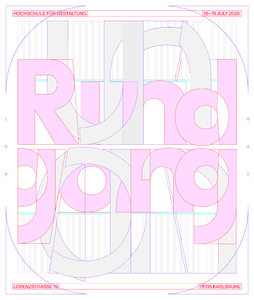
- Traditionell zum Ende des Sommersemesters öffnet die Staatliche Hochschule für Gestaltung Karlsruhe ihre Türen zum Rundgang und lädt Besucher:innen dazu ein, die Hochschule über mehrere Tage hinweg als Ausstellungs- und Begegnungsort zu erleben. Vom 16. bis 19. Juli 2026 verwandeln sich die Lichthöfe, Werkstätten, Ateliers und Seminarräume der HfG Karlsruhe erneut in ein weitläufiges Forum für aktuelle studentische Arbeiten und Projekte.
- Traditionell zum Ende des Sommersemesters öffnet die Staatliche Hochschule für Gestaltung Karlsruhe ihre Türen zum Rundgang und lädt Besucher:innen dazu ein, die Hochschule über mehrere Tage hinweg als Ausstellungs- und Begegnungsort zu erleben. Vom 16. bis 19. Juli 2026 verwandeln sich die Lichthöfe, Werkstätten, Ateliers und Seminarräume der HfG Karlsruhe erneut in ein weitläufiges Forum für aktuelle studentische Arbeiten und Projekte.
- Beschreibung (en)
- As is tradition at the end of the summer semester, the Karlsruhe University of Arts and Design opens its doors for a campus tour and invites visitors to experience the university as a venue for exhibitions and encounters over the course of several days. From July 16 to 19, 2026, the atriums, workshops, studios, and seminar rooms of the HfG Karlsruhe will once again be transformed into a spacious forum for current student work and projects.
- As is tradition at the end of the summer semester, the Karlsruhe University of Arts and Design opens its doors for a campus tour and invites visitors to experience the university as a venue for exhibitions and encounters over the course of several days. From July 16 to 19, 2026, the atriums, workshops, studios, and seminar rooms of the HfG Karlsruhe will once again be transformed into a spacious forum for current student work and projects.
- Datierung
- 16.07.2026 - 19.07.2026
- Ort: Institution
- Titel
- Rundgang 2026
- Importiert am
- 01.06.2026
- Übergeordnete Sets
- 1
- Set enthält
- 1 1
26 Grad: Artist Talk
- Titel
- 26 Grad: Artist Talk
- Untertitel
- Life After the Academy – Künstlerische Praxis zwischen Institutionen und Kulturpolitik
- Autor/in
- Beschreibung (de)
- Im Rahmen der Graduiertenausstellung »26 Grad« der Karlsruher Hochschule für Gestaltung (HfG) findet der Talk „Life After the Academy – Künstlerische Praxis zwischen Institutionen und Kulturpolitik“ statt. Mit Alistair Hudson (Wissenschaftlich-künstlerischer Vorstand des ZKM) und Dominika Szope (Leiterin Kulturamt Karlsruhe).
- Datierung
- 22.04.2026
- Mitwirkende
- Ort: Institution
- Ort
- Lichthof 8+9, 1. OG
- Titel
- 26 Grad: Artist Talk
- Untertitel
- Life After the Academy – Künstlerische Praxis zwischen Institutionen und Kulturpolitik
- Importiert am
- 28.04.2026
- Übergeordnete Sets
- 1
- Set enthält
- 0 0
(Trailer) Eine neue Umwelt
Name that can easily go onto 2 lines
Author that can easily go onto 2 lines as well
- Titel
- (Trailer) Eine neue Umwelt
- Untertitel
- Heinrich Klotz über Architektur und Neue Medien
- Autor/in
- Beschreibung (de)
- (Trailer)
Titel: Eine neue Umwelt – Heinrich Klotz über Architektur und Neue Medien
Regie: Christian Haardt
Jahr: 2019
Länge: 80 Minuten
Genre: Dokumentarfilm
Sprache: Deutsch (Untertitel: Englisch)
Produktionsland: Deutschland
Trailerlänge: 01.31
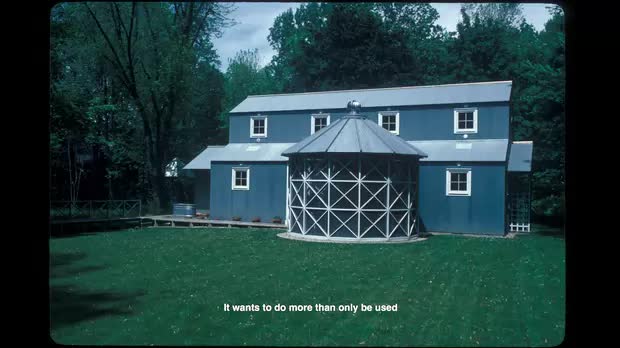
Eine filmische Montage aus dem Archiv des Kunsthistorikers Heinrich Klotz zeigt Zusammenhänge zwischen postmoderner Architektur, digitalen Medien und der Hoffnung auf eine neue Kunst. Ausgehend vom Wiederaufbau deutscher Städte nach dem Zweiten Weltkrieg reflektiert der Film über Verlust und Neubeginn urbaner Räume. Klotz verteidigt das sinnliche Erleben in der Architektur, kritisiert funktionale Entwürfe und erkennt auch digitale Welten als Kunstform an.
More informations: https://madek.hfg-karlsruhe.de/sets/haardt_eine-ne…
- (Trailer)
- Beschreibung (en)
- (Trailer)
Title: A New Environment – Heinrich Klotz on Architecture and New Media
Director: Christian Haardt
Year: 2019
Duration: 80 minutes
Genre: Documentary film
Language: German (subtitles: English)
Country of Production: Germany
Trailer Length: 01.31
A filmic montage of the archive of art historian Heinrich Klotz reveals connections between postmodern architecture, digital media, and the hope for a new form of art. Exploring the rebuilding of German cities after WWII, the film reflects on the loss of old environments and the possibilities of reconstruction. Klotz defends sensory experience in architecture, critiques functionalist design, and elevates digital worlds such as video games to the status of art.
More informations: https://madek.hfg-karlsruhe.de/sets/haardt_eine-ne…
- (Trailer)
- Kategorie
- Schlagworte
- Dauer
- 01.31
- Titel
- (Trailer) Eine neue Umwelt
- Untertitel
- Heinrich Klotz über Architektur und Neue Medien
- Studiengang
- Importiert am
- 25.04.2026
- Übergeordnete Sets
- 1
- Set enthält
- 0 1