Luise Peschko
| Name | Luise Peschko |
2 Inhalte
- Seite 1 von 1
IDoll
Name that can easily go onto 2 lines
Author that can easily go onto 2 lines as well
- Titel
- IDoll
- Untertitel
- 1.2b.TV
- Autor/in
- Beschreibung (de)
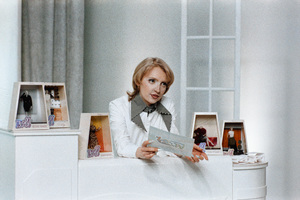
- Die fiktive Teleshopping-Show “1.2b.TV” untersucht popkulturelle Codes, neoliberale Selbstinszenierungen und den Zwang zur Einzigartigkeit in unserer Gesellschaft. Präsentiert werden fünf Produkte in Form von fünf Puppen im Barbieformat.
IDoll BOSS BABE EFFECT
If I’m a Boss Babe everything I touch becomes pure independence & financial freedom.
IDoll LEO GIRL EFFEKT
If I’m a Leo everything I touch becomes roaring golden confidence and self love.
IDoll CUNT EFFEKT
If I'm a Cunt everything I touch becomes pure pleasure.
IDoll WIFEY EFFEKT
If I'm a Wifey everything I touch becomes a sign of care.
IDoll EDGY ONE EFFEKT
If I‘m an Edgy One everything I touch becomes a question to the normative order.
Die Kits enthalten Outfits, Accessoires und Motto-Sprüche, die die performative Konstruktion dieser Rollen greifbar machen. In Erscheinung von Erika Mustermann verkörpert die Moderatorin in einer endlosen Repetition die Rollen der IDolls. Als „Töchter“ und Nachfolgerinnen von Erika Mustermann tragen sie ihre Privilegien weiter und machen diese zur Grundlage ihrer eigenen Existenz.
Die Show nutzt satirische Überzeichnung, um den heutigen Individualismuskult kritisch zu reflektieren, der permanente Identitätsarbeit fordert. Sie beleuchtet die Widersprüche dieses Systems aus feministischer Perspektive und fragt, welche Normen, Rollenbilder und Erwartungen unser Verständnis von weiblicher* Identität prägen und einschränken.
- Die fiktive Teleshopping-Show “1.2b.TV” untersucht popkulturelle Codes, neoliberale Selbstinszenierungen und den Zwang zur Einzigartigkeit in unserer Gesellschaft. Präsentiert werden fünf Produkte in Form von fünf Puppen im Barbieformat.
- Beschreibung (en)
- The fictional teleshopping show “1.2b.TV” explores neoliberal self-promotion, pop culture codes and the societal pressure to be unique. Five products are presented in the form of Barbie-sized dolls:
IDoll – BOSS BABE EFFECT
If I'm a Boss Babe, everything I touch becomes pure independence and financial freedom.
IDoll – LEO GIRL EFFECT
If I'm a Leo, everything I touch becomes roaring golden confidence and self-love.
IDoll – CUNT EFFECT
If I'm a Cunt, everything I touch becomes pure pleasure.
IDoll – WIFEY EFFECT
If I'm a Wifey, everything I touch becomes a sign of care.
IDoll – EDGY ONE EFFECT
If I'm an Edgy One, everything I touch becomes a question to the normative order.
The kits contain outfits, accessories, and slogans that make the performative construction of these roles tangible. Appearing as Erika Mustermann, the presenter endlessly embodies the roles of the IDOLLS. As Erika Mustermann’s “daughters” and successors, they carry forward her privileges and make them the very foundation of their own existence.
Through satirical exaggeration, the show critically reflects on today’s “cult of individualism”, which demands constant identity work. It highlights the contradictions of this system from a feminist perspective and asks which norms, role models, and expectations shape and limit our understanding of female* identity.
- The fictional teleshopping show “1.2b.TV” explores neoliberal self-promotion, pop culture codes and the societal pressure to be unique. Five products are presented in the form of Barbie-sized dolls:
- Kategorie
- Schlagworte
- Mitwirkende
- Titel
- IDoll
- Untertitel
- 1.2b.TV
- Projektleiter/in
- Semester
- Studiengang
- Typ der Abschlussarbeit
- Importiert am
- 29.09.2025
- Übergeordnete Sets
- 1
- Set enthält
- 0 13
Well, don't you do wellness?
- Titel
- Well, don't you do wellness?
- Titel (en)
- Well, don't you do wellness?
- Autor/in
- Beschreibung (de)
- Das Projekt "Well, don’t you do Wellness?" untersucht Wellness als Spannungsfeld zwischen Selbstoptimierung und Widerstand. Es fragt, was Wohlbefinden bedeutet, wenn Erholung zur gesellschaftlichen Pflicht geworden ist, und wie Körper und Stimme zu Werkzeugen der Selbstermächtigung werden können.
"Well, don’t you do Wellness?" versteht Wohlbefinden als politische, kollektive Praxis und skizziert Möglichkeiten, Körper, Stimme und Sorgearbeit jenseits von Optimierung zu denken.
Ausgangspunkt der Arbeit ist die Beschäftigung mit Badekultur, feministischen Handarbeitstechniken und historischen Formen der kollektiven Selbstfürsorge. Dabei greift das Projekt auf textile und therapeutische Methoden zurück, wie sie in Gesundheitsbewegungen, psychiatrischen Einrichtungen sowie in feministischen Kontexten entstanden sind – als Ausdruck kollektiver Fürsorge und Widerständigkeit.
- Das Projekt "Well, don’t you do Wellness?" untersucht Wellness als Spannungsfeld zwischen Selbstoptimierung und Widerstand. Es fragt, was Wohlbefinden bedeutet, wenn Erholung zur gesellschaftlichen Pflicht geworden ist, und wie Körper und Stimme zu Werkzeugen der Selbstermächtigung werden können.
- Beschreibung (en)
- The project 'Well, don't you do wellness?' considers wellness as an area of tension between self-optimisation and resistance. Considering what well-being means when wellness has become a social obligation, it explores how the body and voice can be used as tools of agency.
The project understands well-being as a political, collective practice and outlines possibilities for rethinking the body beyond optimisation.
The research begins with an examination of bathing culture, feminist craft techniques, and historical forms of (collective) self-care. Drawing on textile and therapeutic methods that emerged in health movements, psychiatric institutions and feminist contexts, the project presents these as expressions of care and resistance.
- The project 'Well, don't you do wellness?' considers wellness as an area of tension between self-optimisation and resistance. Considering what well-being means when wellness has become a social obligation, it explores how the body and voice can be used as tools of agency.
- Kategorie
- Typ des Projekts/Werks
- Schlagworte
- Datierung
- 2025
- Mitwirkende
- Dank an
- Material
- Ort: Institution
- Stadt
- Titel
- Well, don't you do wellness?
- Projektleiter/in
- Studiengang
- Typ der Abschlussarbeit
- Importiert am
- 14.09.2025
- Übergeordnete Sets
- 0
- Set enthält
- 0 0