Melanie Gloria Wisser
| Name | Melanie Gloria Wisser |
4 Inhalte
- Seite 1 von 1
PLAY DATE
Name that can easily go onto 2 lines
Author that can easily go onto 2 lines as well
- Titel
- PLAY DATE
- Untertitel
- PLAY DATE OBJECTS
- Autor/in
- Beschreibung (de)
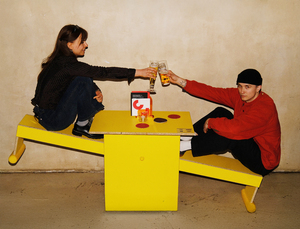
- Ausgehend von der Idee des freien Spielens in der Kindheit entfaltet sich PLAY DATE als Studienreihe, die die Entdeckung des zwecklosen Spielens im Erwachsenenalter erforscht. Oft von gesellschaftlichen Normen und sozialen Hemmungen überdeckt, bleibt der Spieltrieb doch bestehen, sobald man ihm wieder Raum gibt.
Ausgangspunkt war die Beobachtung, dass traditionelle Spielplätze fast ausschließlich Kindern vorbehalten sind, während erwachsene Personen kaum Raum finden, einfach verspielt zu sein.
In PLAY DATE 1, dem ersten experimentellen Spielplatz, wurde untersucht, welche nicht-kompetitiven Spielarten Erwachsene ansprechen. Die Ergebnisse zeigten, dass freies Spiel für Erwachsene angenommen würde, wenn der soziale Rahmen als akzeptierend wahrgenommen wird.
Darauf aufbauend fand PLAY DATE 2 in einer Bar statt, wo spielerische Bewegungsformen situativ in den Kontext des sozialen Zusammenkommens und geselligen Beisammenseins integriert wurden. Spielerische Gesten konnten so nahtlos in gewohnte Beschäftigungen eingeschrieben werden.
Mit PLAY DATE 3 wurde die Erkundung im Alltag erweitert: temporäre Spielobjekte wurden in die Stadtlandschaft gebracht, um zu beobachten, wie Passant:innen auf unerwartete Momente des Spiels reagieren, die den Alltag durchbrechen.
PLAY DATE OBJECTS zeigen, wie freies Spiel für jedes Alter wieder zugänglich gemacht werden kann und neue soziale, kulturelle und räumliche Kontexte eröffnet.
- Ausgehend von der Idee des freien Spielens in der Kindheit entfaltet sich PLAY DATE als Studienreihe, die die Entdeckung des zwecklosen Spielens im Erwachsenenalter erforscht. Oft von gesellschaftlichen Normen und sozialen Hemmungen überdeckt, bleibt der Spieltrieb doch bestehen, sobald man ihm wieder Raum gibt.
- Beschreibung (en)
- Starting from the idea of uninhibited play in childhood, PLAY DATE unfolds as a series of studies exploring the rediscovery of purposeless play in adulthood. Although often obscured by social norms and inhibitions, the impulse to play persists, emerging again once it is given space.
The project originated from the observation that traditional playgrounds are almost exclusively designed for children, while adults rarely find spaces where they can simply be playful.
PLAY DATE 1, the first experimental playground, investigated which forms of non-competitive play appeal to adults. The results suggested that adults readily embrace free play when the social environment is perceived as accepting and non-judgmental.
Building on these findings, PLAY DATE 2 took place in a bar, where playful modes of movement were introduced into the social setting of gathering and spending time together. Playful gestures became seamlessly integrated into familiar social activities.
With PLAY DATE 3, the investigation expanded into everyday urban life. Temporary play objects were placed throughout the city to observe how passersby respond to unexpected moments of play that interrupt the routines of daily life.
PLAY DATE OBJECTS demonstrate how free play can be made accessible again for people of all ages, opening up new social, cultural, and spatial contexts.
- Starting from the idea of uninhibited play in childhood, PLAY DATE unfolds as a series of studies exploring the rediscovery of purposeless play in adulthood. Although often obscured by social norms and inhibitions, the impulse to play persists, emerging again once it is given space.
- Kategorie
- Schlagworte
- Material
- Titel
- PLAY DATE
- Untertitel
- PLAY DATE OBJECTS
- Projektleiter/in
- Semester
- Studiengang
- Importiert am
- 12.06.2026
- Übergeordnete Sets
- 1
- Set enthält
- 0 25
Forest Souvenirs
Name that can easily go onto 2 lines
Author that can easily go onto 2 lines as well
- Titel
- Forest Souvenirs
- Autor/in
- Beschreibung (de)
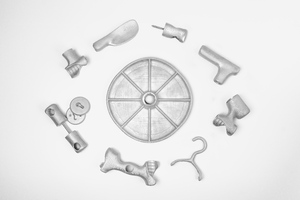
- Forest Souvenirs ist ein modulares System langlebiger Verbindungselemente, das aus ausrangierten Aluminium-Autofelgen gefertigt wird und recyceltes Metall mit von den Nutzer:innen gesammelten, ausgewählten und bearbeiteten Holzästen kombiniert. So entstehen flexible Alltagsobjekte wie Stühle, Lampen, Garderoben oder Kleiderhaken aus lokal gefundenen Materialien. Statt fertiger Produkte bietet das System eine einfache, robuste metallische Schnittstelle, die zur aktiven Aneignung einlädt. Die leimfreien, wiederverwendbaren Verbinder ermöglichen den Aufbau ohne spezielle Werkzeuge oder Vorkenntnisse und machen Materialkreisläufe im Gebrauch unmittelbar erfahrbar.
Forest Souvenirs versteht sich als offenes, zirkuläres Designsystem zwischen industrieller Logik und naturbasiertem Gestalten. Es verlängert nicht nur Materiallebenszyklen, sondern schafft eine hybride Formensprache, die den Archetyp des selbstgebauten Möbels neu interpretiert. Die entstehenden Objekte sind keine fixen Produkte, sondern wandelbare Konfigurationen – ein kontinuierlicher Dialog zwischen Material, Umwelt und Nutzer:innen, die zu Co-Designer:innen werden und eine stärkere emotionale Bindung sowie ein vertieftes Materialbewusstsein entwickeln.
- Forest Souvenirs ist ein modulares System langlebiger Verbindungselemente, das aus ausrangierten Aluminium-Autofelgen gefertigt wird und recyceltes Metall mit von den Nutzer:innen gesammelten, ausgewählten und bearbeiteten Holzästen kombiniert. So entstehen flexible Alltagsobjekte wie Stühle, Lampen, Garderoben oder Kleiderhaken aus lokal gefundenen Materialien. Statt fertiger Produkte bietet das System eine einfache, robuste metallische Schnittstelle, die zur aktiven Aneignung einlädt. Die leimfreien, wiederverwendbaren Verbinder ermöglichen den Aufbau ohne spezielle Werkzeuge oder Vorkenntnisse und machen Materialkreisläufe im Gebrauch unmittelbar erfahrbar.
- Beschreibung (en)
- Forest Souvenirs reimagines our relationship with everyday objects by bridging industrial production and nature-based making. Rooted in humanity's earliest practices of sourcing and shaping materials from the immediate environment, the project responds to the detachment created by global industrialization. Instead of offering finished products, it transforms a discarded aluminum car rim into a modular system of nine durable connectors, each made from 100% recycled material. These elements serve as a simple yet precise interface, enabling users to combine them with wooden branches they collect, select, and shape themselves.
Through this process, found materials become functional objects such as chairs, lamps, coat racks, hangers, or even a walking cane. Assembly requires no adhesives or specialized tools, making the system accessible, reusable, and fully recyclable. The mono-material aluminum ensures a closed material cycle, while the organic variability of wood introduces uniqueness and adaptability. Each object becomes a reflection of its maker and its environment.
Forest Souvenirs places the user at the center of creation. The act of gathering wood becomes an intentional journey—an invitation to slow down, step outside urban routines, and reconnect with nature. Walking replaces driving, making replaces consuming. This participatory approach fosters emotional attachment, material awareness, and a deeper appreciation for resources and processes.
By merging industrial logic with the archetype of self-crafted furniture, the project establishes a hybrid design language that is both contemporary and timeless. The aluminum connector acts as a threshold between two worlds: standardized production and organic growth. In doing so, Forest Souvenirs challenges conventional systems of consumption and proposes an alternative grounded in reuse, care, and engagement.
Ultimately, the project reframes everyday objects as evolving, personal artifacts. It empowers users as co-designers and encourages a shift from passive consumption toward active participation—offering not just objects, but meaningful experiences and a renewed connection to our surroundings.
- Forest Souvenirs reimagines our relationship with everyday objects by bridging industrial production and nature-based making. Rooted in humanity's earliest practices of sourcing and shaping materials from the immediate environment, the project responds to the detachment created by global industrialization. Instead of offering finished products, it transforms a discarded aluminum car rim into a modular system of nine durable connectors, each made from 100% recycled material. These elements serve as a simple yet precise interface, enabling users to combine them with wooden branches they collect, select, and shape themselves.
- Kategorie
- Typ des Projekts/Werks
- Schlagworte
- Datierung
- 30.10.2025
- Mitwirkende
- Material
- Technik/Verfahren/Formate
- Aluminium Sandguss
- Ort: Institution
- Ort
- Lichthof
- Stadt
- Land
- Titel
- Forest Souvenirs
- Projektleiter/in
- Semester
- Studiengang
- Typ der Abschlussarbeit
- Archiv-Signatur
- Importiert am
- 13.03.2026
- Übergeordnete Sets
- 1
- Set enthält
- 0 26
KLOTZSTUHL

Name that can easily go onto 2 lines
Author that can easily go onto 2 lines as well
- Titel
- KLOTZSTUHL
- Autor/in
- Beschreibung (de)
- Eine Studie des Stadtforschers William H. Whyte zeigt, dass es für Menschen ein positives Erlebnis ist, wenn sie Sitzmöbel selbst (um)positionieren dürfen. Der KLOTZSTUHL greift diesen Gedanken auf. Die Sitzfläche lässt sich verstellen, sodass sich der Stuhl an unterschiedliche Hangneigungen anpassen kann. Dadurch kann man ihn fast überall auf dem Hügel aufstellen. Er ist nicht fest installiert, aber durch seine "klotzige" Bauweise und das relative hohe Gewicht ist er auch nicht zum Mitnehmen gedacht.
Der KLOTZSTUHL wurde entworfen für Hänge in Parkanlagen wie beispielsweise dem MOUNT KLOTZ in der Günther-Klotz-Anlage in Karlsruhe. Er macht es möglich, auch an steilen Hängen bequem zu sitzen und die Aussicht auf den Sonnenuntergang mit einem kühlen Getränk zu genießen.
- Eine Studie des Stadtforschers William H. Whyte zeigt, dass es für Menschen ein positives Erlebnis ist, wenn sie Sitzmöbel selbst (um)positionieren dürfen. Der KLOTZSTUHL greift diesen Gedanken auf. Die Sitzfläche lässt sich verstellen, sodass sich der Stuhl an unterschiedliche Hangneigungen anpassen kann. Dadurch kann man ihn fast überall auf dem Hügel aufstellen. Er ist nicht fest installiert, aber durch seine "klotzige" Bauweise und das relative hohe Gewicht ist er auch nicht zum Mitnehmen gedacht.
- Beschreibung (en)
- A study by urban researcher William H. Whyte shows that people have a more positive experience in public spaces when they are allowed to (re)position seating furniture themselves. The KLOTZSTUHL embraces this idea. Its adjustable seat allows it to adapt to various slope angles, making it usable almost anywhere on a steep slope. It is not fixed in place, but due to its bulky design and quite heavy weight, it is also not meant to be carried away.
The KLOTZSTUHL was designed specifically for sloped areas in public parks, such as the MOUNT KLOTZ in the Günther-Klotz-Anlage in Karlsruhe. It makes it possible to sit comfortably even on steep hills, and to enjoy the view of the sunset with a cold drink.
- A study by urban researcher William H. Whyte shows that people have a more positive experience in public spaces when they are allowed to (re)position seating furniture themselves. The KLOTZSTUHL embraces this idea. Its adjustable seat allows it to adapt to various slope angles, making it usable almost anywhere on a steep slope. It is not fixed in place, but due to its bulky design and quite heavy weight, it is also not meant to be carried away.
- Titel
- KLOTZSTUHL
- Projektleiter/in
- Studiengang
- Importiert am
- 18.07.2025
- Übergeordnete Sets
- 1
- Set enthält
- 0 3
Folded Sheets
Name that can easily go onto 2 lines
Author that can easily go onto 2 lines as well
- Titel
- Folded Sheets
- Autor/in
- Beschreibung (de)
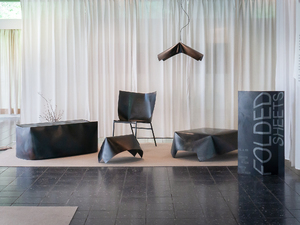
- Folded Sheets untersucht, wie sich Papier-Falttechniken auf Stahlbleche übertragen lassen. Rechteckige Tafeln werden durch gezielte Einschnitte und Faltungen in stabile dreidimensionale Formen gebracht, ohne dass Material verloren geht. Der Prozess des Schwarzbrennens, bei dem Leinöl in die Oberfläche eingebrannt wird, verleiht den Objekten ihre charakteristische schwarze Färbung, schützt sie vor Korrosion und unterstützt die strukturelle Festigkeit.
- Beschreibung (en)
- Folded Sheets explores the possiblities of transferring paper folds into steel sheet furniture. By using cuts and folds on rectangular steel sheets, tensioned rigid shapes without offcuts are created. The objects are further strengthend by blackening the surface with burnt linseed oil.
- Kategorie
- Typ des Projekts/Werks
- Schlagworte
- Datierung
- 2025
- Dank an
- Material
- Technik/Verfahren/Formate
- Falttechnik, Schwarzbrennen mit Leinöl
- Stadt
- Land
- Internetlinks
- Titel
- Folded Sheets
- Projektleiter/in
- Semester
- Studiengang
- Typ der Abschlussarbeit
- Importiert am
- 15.07.2025
- Übergeordnete Sets
- 3
- Set enthält
- 0 18