Isabel Winter
| Name | Isabel Winter |
3 Inhalte
- Seite 1 von 1
Well, don't you do wellness?
- Titel
- Well, don't you do wellness?
- Titel (en)
- Well, don't you do wellness?
- Autor/in
- Beschreibung (de)
- Das Projekt "Well, don’t you do Wellness?" untersucht Wellness als Spannungsfeld zwischen Selbstoptimierung und Widerstand. Es fragt, was Wohlbefinden bedeutet, wenn Erholung zur gesellschaftlichen Pflicht geworden ist, und wie Körper und Stimme zu Werkzeugen der Selbstermächtigung werden können.
"Well, don’t you do Wellness?" versteht Wohlbefinden als politische, kollektive Praxis und skizziert Möglichkeiten, Körper, Stimme und Sorgearbeit jenseits von Optimierung zu denken.
Ausgangspunkt der Arbeit ist die Beschäftigung mit Badekultur, feministischen Handarbeitstechniken und historischen Formen der kollektiven Selbstfürsorge. Dabei greift das Projekt auf textile und therapeutische Methoden zurück, wie sie in Gesundheitsbewegungen, psychiatrischen Einrichtungen sowie in feministischen Kontexten entstanden sind – als Ausdruck kollektiver Fürsorge und Widerständigkeit.
- Das Projekt "Well, don’t you do Wellness?" untersucht Wellness als Spannungsfeld zwischen Selbstoptimierung und Widerstand. Es fragt, was Wohlbefinden bedeutet, wenn Erholung zur gesellschaftlichen Pflicht geworden ist, und wie Körper und Stimme zu Werkzeugen der Selbstermächtigung werden können.
- Beschreibung (en)
- The project 'Well, don't you do wellness?' considers wellness as an area of tension between self-optimisation and resistance. Considering what well-being means when wellness has become a social obligation, it explores how the body and voice can be used as tools of agency.
The project understands well-being as a political, collective practice and outlines possibilities for rethinking the body beyond optimisation.
The research begins with an examination of bathing culture, feminist craft techniques, and historical forms of (collective) self-care. Drawing on textile and therapeutic methods that emerged in health movements, psychiatric institutions and feminist contexts, the project presents these as expressions of care and resistance.
- The project 'Well, don't you do wellness?' considers wellness as an area of tension between self-optimisation and resistance. Considering what well-being means when wellness has become a social obligation, it explores how the body and voice can be used as tools of agency.
- Kategorie
- Typ des Projekts/Werks
- Schlagworte
- Datierung
- 2025
- Mitwirkende
- Dank an
- Material
- Ort: Institution
- Stadt
- Titel
- Well, don't you do wellness?
- Projektleiter/in
- Studiengang
- Typ der Abschlussarbeit
- Importiert am
- 14.09.2025
- Übergeordnete Sets
- 0
- Set enthält
- 0 0
Manchmal ist Schmerz ganz leise
Name that can easily go onto 2 lines
Author that can easily go onto 2 lines as well
- Titel
- Manchmal ist Schmerz ganz leise
- Titel (en)
- Sometimes pain is very quiet
- Autor/in
- Beschreibung (de)
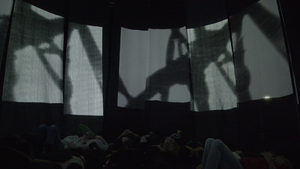
- „Manchmal ist Schmerz ganz leise“ ist eine immersive, autobiographische Hörstück-Installation, die den stillen und oft unsichtbaren Kampf mit einer schweren, namenlosen Krankheit in den Mittelpunkt stellt. Das Werk hinterfragt, was es bedeutet, in einer leistungsorientierten Gesellschaft plötzlich nicht mehr zu "funktionieren". Es geht den Ängsten, der Scham und dem tief empfundenen Gefühl des Versagens nach, das oft mit chronischer Krankheit einhergeht – Gefühle, die Betroffene selten teilen. Das Hörspiel verleiht einer Stimme Ausdruck, die für viele spricht und Einblicke in eine Realität gibt, die oft im Verborgenen bleibt.
- Beschreibung (en)
- ‘Sometimes pain is very quiet’ is an immersive, autobiographical audio play installation that focuses on the silent and often invisible battle with a serious, nameless illness. The work questions what it means to suddenly no longer ‘function’ in a performance-orientated society. It explores the fears, the shame and the deeply felt sense of failure that often accompanies chronic illness – feelings that are rarely shared by those affected. The radio play gives expression to a voice that speaks for many and provides insights into a reality that often remains hidden.
- Kategorie
- Typ des Projekts/Werks
- Schlagworte
- Datierung
- 30.10.2024
- Mitwirkende
- Dank an
- Finn Baygan
- Daniel Berwanger
- Pauline Cemeris
- Filipa Cesar
- Mark Patrick Damian
- Charlotte Eifler
- Flora Güldenpfennig
- Tobias Keilbach
- Eisenhart Keimeyer
- Alexander Knoppik
- Yael Kolb
- Isabelle Konrad
- Julian Kuf
- Barbara Kuon
- Josephine Leicht
- Laura Morcillo
- Ilja Morgenstern
- Sebastian Schäfer
- Sebastian Schönfeld
- Lorenz Schwarz
- Quirin Thalhammer
- Alexander Thelen
- Riemschneider Stiftung
- Zeitbild Lab
- Sprache
- Material
- Technik/Verfahren/Formate
- 4-Kanal-Audio/360° Projection Mapping
- Abmessungen
- Länge: 8m, Breite: 8m, Höhe: 6,50m
- Dauer
- 30min
- Ort: Institution
- Ort
- Großes Studio
- Stadt
- Land
- Titel
- Manchmal ist Schmerz ganz leise
- Projektleiter/in
- Semester
- Studiengang
- Typ der Abschlussarbeit
- Importiert am
- 17.04.2025
- Übergeordnete Sets
- 0
- Set enthält
- 1 5
DNS #68
Name that can easily go onto 2 lines
Author that can easily go onto 2 lines as well
- Titel
- DNS #68
- Untertitel
- Tragödienbastard
- Autor/in
- Beschreibung (de)
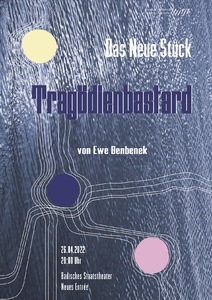
- Es ist ein Akt der Emanzipation. Das mit dem Mühlheimer Dramatikerpreis gekrönte Stück erzählt in einem rhythmisch tobenden Redestrom davon, wie sich die Tochter polnischer Einwanderer und ihre „chosen sisters“ von der Last des Migrationsnarrativs befreien und zu dem werden, was sie eigentlich immer waren: Göttinnen.
Das Stück “Tragödienbastard” von Ewe Benbenek wurde im Wintersemester 2021/2022 im Rahmen des Seminars ‘Das neue Stück’ von Studierenden technisch und künstlerisch erarbeitet und in eine knapp zweistündige szenische Lesung umgesetzt. Das Projekt wurde von Constanze Fischbeck, Anna Haas und Eivind Haugland betreut sowie von Sandra Blatterer, welche in einem einwöchigen Lichtworkshop spannende Impulse zur Erarbeitung des Licht- und Bühnenkonzepts gab.
Im Anschluss an die szenische Lesung findet ein Nachgespräch mit der Autorin Ewe Benbenek und den Mitwirkenden statt.
- Es ist ein Akt der Emanzipation. Das mit dem Mühlheimer Dramatikerpreis gekrönte Stück erzählt in einem rhythmisch tobenden Redestrom davon, wie sich die Tochter polnischer Einwanderer und ihre „chosen sisters“ von der Last des Migrationsnarrativs befreien und zu dem werden, was sie eigentlich immer waren: Göttinnen.
- Beschreibung (en)
- It is an act of emancipation. The play, which was awarded the Mühlheim Dramatist Prize, tells the story of how the daughter of Polish immigrants and her "chosen sisters" free themselves from the burden of the migration narrative in a rhythmically raging stream of speech and become what they actually always were: Goddesses.
The play "Tragödienbastard" by Ewe Benbenek was technically and artistically developed by students in the winter semester 2021/2022 as part of the seminar 'Das neue Stück' and transformed into a staged reading lasting almost two hours. The project was supervised by Constanze Fischbeck, Anna Haas and Eivind Haugland as well as Sandra Blatterer, who gave exciting impulses for the development of the lighting and stage concept in a one-week lighting workshop.
The staged reading will be followed by a discussion with the author Ewe Benbenek and the participants.
- It is an act of emancipation. The play, which was awarded the Mühlheim Dramatist Prize, tells the story of how the daughter of Polish immigrants and her "chosen sisters" free themselves from the burden of the migration narrative in a rhythmically raging stream of speech and become what they actually always were: Goddesses.
- Typ des Projekts/Werks
- Schlagworte
- Datierung
- 26.04.2022
- Mitwirkende
- Sprache
- Dauer
- 2 Stunden
- Ort: Institution
- Ort
- neues Entrée
- Stadt
- Land
- Beteiligte Institution(en)
- Titel
- DNS #68
- Projektleiter/in
- Semester
- Studiengang
- Lehrveranstaltung
- Importiert am
- 20.12.2023
- Übergeordnete Sets
- 1
- Set enthält
- 0 9