"Bibliothek von ZKM und HfG Karlsruhe"
| Term | Bibliothek von ZKM und HfG Karlsruhe |
| Metakey | External archive (institution:archive) |
| Type | Keyword |
| Vocabulary | HfG |
38 Items
- Page 1 of 4
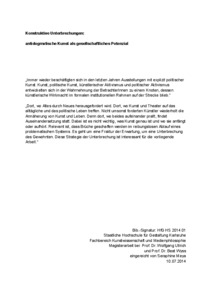
Konstruktive Unterbrechungen Abstract
Name that can easily go onto 2 lines
Author that can easily go onto 2 lines as well
- Title
- Konstruktive Unterbrechungen Abstract
- Subtitle
- antidogmatische Kunst als gesellschaftliches Potenzial
- Author
- Description (de)
- „Immer wieder beschäftigten sich in den letzten Jahren Ausstellungen mit explizit politischer Kunst. Kunst, politische Kunst, künstlerischer Aktivismus und politischer Aktivismus entwickelten sich in der Warnehmung der BetrachterInnen zu einem Knoten, dessen künstlerische Wirkmacht im formalen institutionellen Rahmen auf der Strecke blieb.”
„Dort, wo Altes durch Neues herausgefordert wird. Dort, wo Kunst und Theater auf das alltägliche und das politische Leben treffen. Nicht umsonst forderten Künstler wiederholt die Annäherung von Kunst und Leben. Denn dort, wo beides aufeinander prallt, findet Auseinandersetzung statt. Dabei ist es nicht wichtig, was Kunst genau ist und wo sie anfängt oder aufhört. Relevant ist, dass Brüche geschaffen werden im reibungslosen Ablauf eines problematischen Systems. Es geht um eine Fraktur der Erwartung, um eine Unterbrechung des Gewohnten. Diese Strategie der Unterbrechung ist interessant für die vorliegende Arbeit.”
- „Immer wieder beschäftigten sich in den letzten Jahren Ausstellungen mit explizit politischer Kunst. Kunst, politische Kunst, künstlerischer Aktivismus und politischer Aktivismus entwickelten sich in der Warnehmung der BetrachterInnen zu einem Knoten, dessen künstlerische Wirkmacht im formalen institutionellen Rahmen auf der Strecke blieb.”
- Description (en)
- ‘In recent years, exhibitions have repeatedly focussed on explicitly political art. In the perception of viewers, art, political art, artistic activism and political activism have developed into a knot whose artistic impact has fallen by the wayside within the formal institutional framework.’
‘Where the old is challenged by the new. Where art and theatre meet everyday and political life. It is not for nothing that artists have repeatedly called for the convergence of art and life. Because where the two collide, confrontation takes place. It is not important what exactly art is and where it begins or ends. What is relevant is that breaks are created in the smooth running of a problematic system. It is about a fracture of expectation, an interruption of the familiar. This strategy of interruption is interesting for the present work.’
- ‘In recent years, exhibitions have repeatedly focussed on explicitly political art. In the perception of viewers, art, political art, artistic activism and political activism have developed into a knot whose artistic impact has fallen by the wayside within the formal institutional framework.’
- Category
- Type of project / creative work
- Keywords
- Date
- 10.07.2014
- Language
- Location: institution
- Title
- Konstruktive Unterbrechungen Abstract
- Subtitle
- antidogmatische Kunst als gesellschaftliches Potenzial
- Copyright Notice
- © Seraphine Meya
- Legal protection / Licence
- Permission usage HfG
- Media creator
- Relationship/function
- Projektleiter/in
- Semester
- Program of Study
- Type of graduation project
- Archive signature
- HfG HS 2014 01
- External archive
- Imported on
- 30.03.2025
- Parent sets
- 1
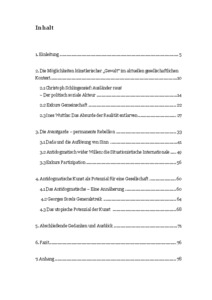
Konstruktive Unterbrechungen Inhaltsverzeichnis
Name that can easily go onto 2 lines
Author that can easily go onto 2 lines as well
- Title
- Konstruktive Unterbrechungen Inhaltsverzeichnis
- Subtitle
- antidogmatische Kunst als gesellschaftliches Potenzial
- Author
- Description (de)
- „Immer wieder beschäftigten sich in den letzten Jahren Ausstellungen mit explizit politischer Kunst. Kunst, politische Kunst, künstlerischer Aktivismus und politischer Aktivismus entwickelten sich in der Warnehmung der BetrachterInnen zu einem Knoten, dessen künstlerische Wirkmacht im formalen institutionellen Rahmen auf der Strecke blieb.”
„Dort, wo Altes durch Neues herausgefordert wird. Dort, wo Kunst und Theater auf das alltägliche und das politische Leben treffen. Nicht umsonst forderten Künstler wiederholt die Annäherung von Kunst und Leben. Denn dort, wo beides aufeinander prallt, findet Auseinandersetzung statt. Dabei ist es nicht wichtig, was Kunst genau ist und wo sie anfängt oder aufhört. Relevant ist, dass Brüche geschaffen werden im reibungslosen Ablauf eines problematischen Systems. Es geht um eine Fraktur der Erwartung, um eine Unterbrechung des Gewohnten. Diese Strategie der Unterbrechung ist interessant für die vorliegende Arbeit.”
- „Immer wieder beschäftigten sich in den letzten Jahren Ausstellungen mit explizit politischer Kunst. Kunst, politische Kunst, künstlerischer Aktivismus und politischer Aktivismus entwickelten sich in der Warnehmung der BetrachterInnen zu einem Knoten, dessen künstlerische Wirkmacht im formalen institutionellen Rahmen auf der Strecke blieb.”
- Description (en)
- ‘In recent years, exhibitions have repeatedly focussed on explicitly political art. In the perception of viewers, art, political art, artistic activism and political activism have developed into a knot whose artistic impact has fallen by the wayside within the formal institutional framework.’
‘Where the old is challenged by the new. Where art and theatre meet everyday and political life. It is not for nothing that artists have repeatedly called for the convergence of art and life. Because where the two collide, confrontation takes place. It is not important what exactly art is and where it begins or ends. What is relevant is that breaks are created in the smooth running of a problematic system. It is about a fracture of expectation, an interruption of the familiar. This strategy of interruption is interesting for the present work.’
- ‘In recent years, exhibitions have repeatedly focussed on explicitly political art. In the perception of viewers, art, political art, artistic activism and political activism have developed into a knot whose artistic impact has fallen by the wayside within the formal institutional framework.’
- Category
- Type of project / creative work
- Keywords
- Date
- 10.07.2014
- Language
- Location: institution
- Title
- Konstruktive Unterbrechungen Inhaltsverzeichnis
- Subtitle
- antidogmatische Kunst als gesellschaftliches Potenzial
- Copyright Notice
- © Seraphine Meya
- Legal protection / Licence
- Permission usage HfG
- Media creator
- Relationship/function
- Projektleiter/in
- Semester
- Program of Study
- Type of graduation project
- Archive signature
- HfG HS 2014 01
- External archive
- Imported on
- 30.03.2025
- Parent sets
- 1
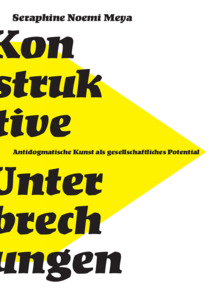
Konstruktive Unterbrechungen Deckblatt
Name that can easily go onto 2 lines
Author that can easily go onto 2 lines as well
- Title
- Konstruktive Unterbrechungen Deckblatt
- Subtitle
- antidogmatische Kunst als gesellschaftliches Potenzial
- Author
- Description (de)
- „Immer wieder beschäftigten sich in den letzten Jahren Ausstellungen mit explizit politischer Kunst. Kunst, politische Kunst, künstlerischer Aktivismus und politischer Aktivismus entwickelten sich in der Warnehmung der BetrachterInnen zu einem Knoten, dessen künstlerische Wirkmacht im formalen institutionellen Rahmen auf der Strecke blieb.”
„Dort, wo Altes durch Neues herausgefordert wird. Dort, wo Kunst und Theater auf das alltägliche und das politische Leben treffen. Nicht umsonst forderten Künstler wiederholt die Annäherung von Kunst und Leben. Denn dort, wo beides aufeinander prallt, findet Auseinandersetzung statt. Dabei ist es nicht wichtig, was Kunst genau ist und wo sie anfängt oder aufhört. Relevant ist, dass Brüche geschaffen werden im reibungslosen Ablauf eines problematischen Systems. Es geht um eine Fraktur der Erwartung, um eine Unterbrechung des Gewohnten. Diese Strategie der Unterbrechung ist interessant für die vorliegende Arbeit.”
- „Immer wieder beschäftigten sich in den letzten Jahren Ausstellungen mit explizit politischer Kunst. Kunst, politische Kunst, künstlerischer Aktivismus und politischer Aktivismus entwickelten sich in der Warnehmung der BetrachterInnen zu einem Knoten, dessen künstlerische Wirkmacht im formalen institutionellen Rahmen auf der Strecke blieb.”
- Description (en)
- ‘In recent years, exhibitions have repeatedly focussed on explicitly political art. In the perception of viewers, art, political art, artistic activism and political activism have developed into a knot whose artistic impact has fallen by the wayside within the formal institutional framework.’
‘Where the old is challenged by the new. Where art and theatre meet everyday and political life. It is not for nothing that artists have repeatedly called for the convergence of art and life. Because where the two collide, confrontation takes place. It is not important what exactly art is and where it begins or ends. What is relevant is that breaks are created in the smooth running of a problematic system. It is about a fracture of expectation, an interruption of the familiar. This strategy of interruption is interesting for the present work.’
- ‘In recent years, exhibitions have repeatedly focussed on explicitly political art. In the perception of viewers, art, political art, artistic activism and political activism have developed into a knot whose artistic impact has fallen by the wayside within the formal institutional framework.’
- Category
- Type of project / creative work
- Keywords
- Date
- 10.07.2014
- Language
- Location: institution
- Title
- Konstruktive Unterbrechungen Deckblatt
- Subtitle
- antidogmatische Kunst als gesellschaftliches Potenzial
- Copyright Notice
- © Seraphine Meya
- Legal protection / Licence
- Permission usage HfG
- Media creator
- Relationship/function
- Projektleiter/in
- Semester
- Program of Study
- Type of graduation project
- Archive signature
- HfG HS 2014 01
- External archive
- Imported on
- 30.03.2025
- Parent sets
- 1
Onkel Rudi als... (edited)
Name that can easily go onto 2 lines
Author that can easily go onto 2 lines as well
- Title
- Onkel Rudi als... (edited)
- Subtitle
- zur Werk- und Wirkungsgeschichte eines Gemäldes von Gerhard Richter im Spiegel seiner Selbstäußerungen
- Author
- Description (de)
- „Das Jahr 2012 stand ganz im Zeichen Gerhard Richters. So konnte man ihm im Kino bei der Arbeit bei der Arbeit über die Schulter schauen – so der bereits erstmals im September 2011 präsentierte Kinofilm Painting von Corinna Belz .., was einherging mit dem beachtlichen Erfolg auf dem secondary market, dem Auktionsmarkt, wo seine vornehmlich abstrakten Gemälde dank Höchstpreisen zu Kunstmarktlieblingen avancierten.”
„Gerade ein Gemälde scheint anders als viele andere in den letzten Jahren immer mehr mit symbolischer Bedeutung aufgeladen worden zu sein: Onkel Rudi (Abb.1), entstanden 1965. Die fotografische Vorlage entnahm Richter dem eigenen Familienalbum. Als ‚Privates öffentlich’ machen, wurde diese Vorgehensweise in der Motivauswahl der so genannten Foto-Bilder vielfach begründet. Dies zeigt sich nicht zuletzt in den Fotografien, die Richter auf Einladung der Tageszeitung „Die Welt” für eine Sonderausgabe ausdrucken ließ – und damit ist “der große Zweifler der Gegenwartskunst” erst der dritte Künstler, nach Georg Baselitz und Ellsworth Kelly, die die „Welt-Herrschaft” für einen Tag übernommen hat.”
- „Das Jahr 2012 stand ganz im Zeichen Gerhard Richters. So konnte man ihm im Kino bei der Arbeit bei der Arbeit über die Schulter schauen – so der bereits erstmals im September 2011 präsentierte Kinofilm Painting von Corinna Belz .., was einherging mit dem beachtlichen Erfolg auf dem secondary market, dem Auktionsmarkt, wo seine vornehmlich abstrakten Gemälde dank Höchstpreisen zu Kunstmarktlieblingen avancierten.”
- Description (en)
- "The year 2012 was all about Gerhard Richter. It was possible to watch him at work in the cinema - for example, the cinema film Painting by Corinna Belz, first presented in September 2011 ... which was accompanied by considerable success on the secondary market, the auction market, where his predominantly abstract paintings became art market favourites thanks to top prices.‘
’One painting in particular, unlike many others, seems to have been increasingly charged with symbolic meaning in recent years: Uncle Rudi (fig. 1), created in 1965. Richter took the photographic model from his own family album. This approach was often justified as “publicising the private” in the choice of motifs for the so-called photo images. This can be seen not least in the photographs that Richter had printed for a special edition at the invitation of the daily newspaper ‘Die Welt’ - making ‘the great doubter of contemporary art’ only the third artist, after Georg Baselitz and Ellsworth Kelly, to take over ‘Welt/world domination’ for a day."
- "The year 2012 was all about Gerhard Richter. It was possible to watch him at work in the cinema - for example, the cinema film Painting by Corinna Belz, first presented in September 2011 ... which was accompanied by considerable success on the secondary market, the auction market, where his predominantly abstract paintings became art market favourites thanks to top prices.‘
- Category
- Type of project / creative work
- Keywords
- Date
- 15.01.2013
- Language
- Location: institution
- Title
- Onkel Rudi als... (edited)
- Subtitle
- zur Werk- und Wirkungsgeschichte eines Gemäldes von Gerhard Richter im Spiegel seiner Selbstäußerungen
- Copyright Notice
- Hendrik Bündge
- Legal protection / Licence
- Permission usage HfG
- Media creator
- Relationship/function
- Description of media
- geschwärzte / censored Version
- Projektleiter/in
- Semester
- Program of Study
- Type of graduation project
- Archive signature
- HfG HS 2013 01
- External archive
- Imported on
- 17.03.2025
- Parent sets
- 1
Onkel Rudi als... (Inhaltsverzeichnis)
Name that can easily go onto 2 lines
Author that can easily go onto 2 lines as well
- Title
- Onkel Rudi als... (Inhaltsverzeichnis)
- Subtitle
- zur Werk- und Wirkungsgeschichte eines Gemäldes von Gerhard Richter im Spiegel seiner Selbstäußerungen
- Author
- Description (de)
- „Das Jahr 2012 stand ganz im Zeichen Gerhard Richters. So konnte man ihm im Kino bei der Arbeit bei der Arbeit über die Schulter schauen – so der bereits erstmals im September 2011 präsentierte Kinofilm Painting von Corinna Belz .., was einherging mit dem beachtlichen Erfolg auf dem secondary market, dem Auktionsmarkt, wo seine vornehmlich abstrakten Gemälde dank Höchstpreisen zu Kunstmarktlieblingen avancierten.”
„Gerade ein Gemälde scheint anders als viele andere in den letzten Jahren immer mehr mit symbolischer Bedeutung aufgeladen worden zu sein: Onkel Rudi (Abb.1), entstanden 1965. Die fotografische Vorlage entnahm Richter dem eigenen Familienalbum. Als ‚Privates öffentlich’ machen, wurde diese Vorgehensweise in der Motivauswahl der so genannten Foto-Bilder vielfach begründet. Dies zeigt sich nicht zuletzt in den Fotografien, die Richter auf Einladung der Tageszeitung „Die Welt” für eine Sonderausgabe ausdrucken ließ – und damit ist “der große Zweifler der Gegenwartskunst” erst der dritte Künstler, nach Georg Baselitz und Ellsworth Kelly, die die „Welt-Herrschaft” für einen Tag übernommen hat.”
- „Das Jahr 2012 stand ganz im Zeichen Gerhard Richters. So konnte man ihm im Kino bei der Arbeit bei der Arbeit über die Schulter schauen – so der bereits erstmals im September 2011 präsentierte Kinofilm Painting von Corinna Belz .., was einherging mit dem beachtlichen Erfolg auf dem secondary market, dem Auktionsmarkt, wo seine vornehmlich abstrakten Gemälde dank Höchstpreisen zu Kunstmarktlieblingen avancierten.”
- Description (en)
- "The year 2012 was all about Gerhard Richter. It was possible to watch him at work in the cinema - for example, the cinema film Painting by Corinna Belz, first presented in September 2011 ... which was accompanied by considerable success on the secondary market, the auction market, where his predominantly abstract paintings became art market favourites thanks to top prices.‘
’One painting in particular, unlike many others, seems to have been increasingly charged with symbolic meaning in recent years: Uncle Rudi (fig. 1), created in 1965. Richter took the photographic model from his own family album. This approach was often justified as “publicising the private” in the choice of motifs for the so-called photo images. This can be seen not least in the photographs that Richter had printed for a special edition at the invitation of the daily newspaper ‘Die Welt’ - making ‘the great doubter of contemporary art’ only the third artist, after Georg Baselitz and Ellsworth Kelly, to take over ‘Welt/world domination’ for a day."
- "The year 2012 was all about Gerhard Richter. It was possible to watch him at work in the cinema - for example, the cinema film Painting by Corinna Belz, first presented in September 2011 ... which was accompanied by considerable success on the secondary market, the auction market, where his predominantly abstract paintings became art market favourites thanks to top prices.‘
- Category
- Type of project / creative work
- Keywords
- Date
- 15.01.2013
- Language
- Location: institution
- Title
- Onkel Rudi als... (Inhaltsverzeichnis)
- Subtitle
- zur Werk- und Wirkungsgeschichte eines Gemäldes von Gerhard Richter im Spiegel seiner Selbstäußerungen
- Copyright Notice
- Hendrik Bündge
- Legal protection / Licence
- Permission usage HfG
- Media creator
- Relationship/function
- Projektleiter/in
- Semester
- Program of Study
- Type of graduation project
- Archive signature
- HfG HS 2013 01
- External archive
- Imported on
- 17.03.2025
- Parent sets
- 1
Textile Processing (geschwärzt)
Name that can easily go onto 2 lines
Author that can easily go onto 2 lines as well
- Title
- Textile Processing (geschwärzt)
- Subtitle
- Punkte, Zeilen, Spalten Vorläufer elektronischer Bildtechniken
- Author
- Description (de)
- “Die Ähnlichkeiten von Geweben, Mustervorlagen und heutigen Rasterbildern sind eklatant.
In einer Genese der technischen Bilder kann das Gewebe als Exemplarfall und Vorreiter
aller technisch-elektronischer Bilder gelten.”
“Die ersten Bilder, die von ihrem Bildkörper abgelöst wurden, bestanden aus einem Stapel
gelochter Karten für die Verwendung im Jacquardwebstuhl. Der Bildcode ist hier noch
begreifbar, das Bild, wenn es aus dem Stapel dieser Karten gewoben wird, ein textil-taktiles
Produkt. Patricia Wallers Needle-Works zeigen die Leerstelle heutiger Bildmaschinen auf,
wo Bilder auf Monitoren erscheinen, um im nächsten Moment schon wieder durch den
nächsten (Netzhaut-) Eindruck ausgetauscht zu werden.”
- “Die Ähnlichkeiten von Geweben, Mustervorlagen und heutigen Rasterbildern sind eklatant.
- Description (en)
- ‘The similarities between fabrics, patterns and today's raster images are striking. In the genesis of technical images, the fabric can be seen as the exemplary case and forerunner of all technical-electronic images.’
‘The first images that were detached from their image body consisted of a stack of perforated cards for use in the Jacquard loom. The image code is still comprehensible here, the image, when woven from the pile of these cards, is a textile-tactile product. Patricia Waller's needle works show the empty space of today's image machines, where images appear on monitors only to be replaced by the next (retinal) impression in the very next moment.’
- ‘The similarities between fabrics, patterns and today's raster images are striking. In the genesis of technical images, the fabric can be seen as the exemplary case and forerunner of all technical-electronic images.’
- Category
- Keywords
- Date
- 02.11.1998
- Language
- Location: institution
- Title
- Textile Processing (geschwärzt)
- Subtitle
- Punkte, Zeilen, Spalten Vorläufer elektronischer Bildtechniken
- Copyright Notice
- Brigit Schneider
- Legal protection / Licence
- Permission usage HfG
- Media creator
- Relationship/function
- Projektleiter/in
- Semester
- Program of Study
- Type of graduation project
- Archive signature
- HfG HS 1998 02a
- External archive
- Imported on
- 17.03.2025
- Parent sets
- 1
Onkel Rudi als... (Abstract)
Name that can easily go onto 2 lines
Author that can easily go onto 2 lines as well
- Title
- Onkel Rudi als... (Abstract)
- Subtitle
- zur Werk- und Wirkungsgeschichte eines Gemäldes von Gerhard Richter im Spiegel seiner Selbstäußerungen
- Author
- Description (de)
- „Das Jahr 2012 stand ganz im Zeichen Gerhard Richters. So konnte man ihm im Kino bei der Arbeit bei der Arbeit über die Schulter schauen – so der bereits erstmals im September 2011 präsentierte Kinofilm Painting von Corinna Belz .., was einherging mit dem beachtlichen Erfolg auf dem secondary market, dem Auktionsmarkt, wo seine vornehmlich abstrakten Gemälde dank Höchstpreisen zu Kunstmarktlieblingen avancierten.”
„Gerade ein Gemälde scheint anders als viele andere in den letzten Jahren immer mehr mit symbolischer Bedeutung aufgeladen worden zu sein: Onkel Rudi (Abb.1), entstanden 1965. Die fotografische Vorlage entnahm Richter dem eigenen Familienalbum. Als ‚Privates öffentlich’ machen, wurde diese Vorgehensweise in der Motivauswahl der so genannten Foto-Bilder vielfach begründet. Dies zeigt sich nicht zuletzt in den Fotografien, die Richter auf Einladung der Tageszeitung „Die Welt” für eine Sonderausgabe ausdrucken ließ – und damit ist “der große Zweifler der Gegenwartskunst” erst der dritte Künstler, nach Georg Baselitz und Ellsworth Kelly, die die „Welt-Herrschaft” für einen Tag übernommen hat.”
- „Das Jahr 2012 stand ganz im Zeichen Gerhard Richters. So konnte man ihm im Kino bei der Arbeit bei der Arbeit über die Schulter schauen – so der bereits erstmals im September 2011 präsentierte Kinofilm Painting von Corinna Belz .., was einherging mit dem beachtlichen Erfolg auf dem secondary market, dem Auktionsmarkt, wo seine vornehmlich abstrakten Gemälde dank Höchstpreisen zu Kunstmarktlieblingen avancierten.”
- Description (en)
- "The year 2012 was all about Gerhard Richter. It was possible to watch him at work in the cinema - for example, the cinema film Painting by Corinna Belz, first presented in September 2011 ... which was accompanied by considerable success on the secondary market, the auction market, where his predominantly abstract paintings became art market favourites thanks to top prices.‘
’One painting in particular, unlike many others, seems to have been increasingly charged with symbolic meaning in recent years: Uncle Rudi (fig. 1), created in 1965. Richter took the photographic model from his own family album. This approach was often justified as “publicising the private” in the choice of motifs for the so-called photo images. This can be seen not least in the photographs that Richter had printed for a special edition at the invitation of the daily newspaper ‘Die Welt’ - making ‘the great doubter of contemporary art’ only the third artist, after Georg Baselitz and Ellsworth Kelly, to take over ‘Welt/world domination’ for a day."
- "The year 2012 was all about Gerhard Richter. It was possible to watch him at work in the cinema - for example, the cinema film Painting by Corinna Belz, first presented in September 2011 ... which was accompanied by considerable success on the secondary market, the auction market, where his predominantly abstract paintings became art market favourites thanks to top prices.‘
- Category
- Type of project / creative work
- Keywords
- Date
- 15.01.2013
- Language
- Location: institution
- Title
- Onkel Rudi als... (Abstract)
- Subtitle
- zur Werk- und Wirkungsgeschichte eines Gemäldes von Gerhard Richter im Spiegel seiner Selbstäußerungen
- Copyright Notice
- Hendrik Bündge
- Legal protection / Licence
- Permission usage HfG
- Media creator
- Relationship/function
- Description of media
- Kurzbescheibung / Abstract
- Projektleiter/in
- Semester
- Program of Study
- Type of graduation project
- Archive signature
- HfG HS 2013 01
- External archive
- Imported on
- 24.02.2025
- Parent sets
- 1
Onkel Rudi als... (Deckblatt)
Name that can easily go onto 2 lines
Author that can easily go onto 2 lines as well
- Title
- Onkel Rudi als... (Deckblatt)
- Subtitle
- zur Werk- und Wirkungsgeschichte eines Gemäldes von Gerhard Richter im Spiegel seiner Selbstäußerungen
- Author
- Description (de)
- „Das Jahr 2012 stand ganz im Zeichen Gerhard Richters. So konnte man ihm im Kino bei der Arbeit bei der Arbeit über die Schulter schauen – so der bereits erstmals im September 2011 präsentierte Kinofilm Painting von Corinna Belz .., was einherging mit dem beachtlichen Erfolg auf dem secondary market, dem Auktionsmarkt, wo seine vornehmlich abstrakten Gemälde dank Höchstpreisen zu Kunstmarktlieblingen avancierten.”
„Gerade ein Gemälde scheint anders als viele andere in den letzten Jahren immer mehr mit symbolischer Bedeutung aufgeladen worden zu sein: Onkel Rudi (Abb.1), entstanden 1965. Die fotografische Vorlage entnahm Richter dem eigenen Familienalbum. Als ‚Privates öffentlich’ machen, wurde diese Vorgehensweise in der Motivauswahl der so genannten Foto-Bilder vielfach begründet. Dies zeigt sich nicht zuletzt in den Fotografien, die Richter auf Einladung der Tageszeitung „Die Welt” für eine Sonderausgabe ausdrucken ließ – und damit ist “der große Zweifler der Gegenwartskunst” erst der dritte Künstler, nach Georg Baselitz und Ellsworth Kelly, die die „Welt-Herrschaft” für einen Tag übernommen hat.”
- „Das Jahr 2012 stand ganz im Zeichen Gerhard Richters. So konnte man ihm im Kino bei der Arbeit bei der Arbeit über die Schulter schauen – so der bereits erstmals im September 2011 präsentierte Kinofilm Painting von Corinna Belz .., was einherging mit dem beachtlichen Erfolg auf dem secondary market, dem Auktionsmarkt, wo seine vornehmlich abstrakten Gemälde dank Höchstpreisen zu Kunstmarktlieblingen avancierten.”
- Description (en)
- "The year 2012 was all about Gerhard Richter. It was possible to watch him at work in the cinema - for example, the cinema film Painting by Corinna Belz, first presented in September 2011 ... which was accompanied by considerable success on the secondary market, the auction market, where his predominantly abstract paintings became art market favourites thanks to top prices.‘
’One painting in particular, unlike many others, seems to have been increasingly charged with symbolic meaning in recent years: Uncle Rudi (fig. 1), created in 1965. Richter took the photographic model from his own family album. This approach was often justified as “publicising the private” in the choice of motifs for the so-called photo images. This can be seen not least in the photographs that Richter had printed for a special edition at the invitation of the daily newspaper ‘Die Welt’ - making ‘the great doubter of contemporary art’ only the third artist, after Georg Baselitz and Ellsworth Kelly, to take over ‘Welt/world domination’ for a day."
- "The year 2012 was all about Gerhard Richter. It was possible to watch him at work in the cinema - for example, the cinema film Painting by Corinna Belz, first presented in September 2011 ... which was accompanied by considerable success on the secondary market, the auction market, where his predominantly abstract paintings became art market favourites thanks to top prices.‘
- Category
- Type of project / creative work
- Keywords
- Date
- 15.01.2013
- Language
- Location: institution
- Title
- Onkel Rudi als... (Deckblatt)
- Subtitle
- zur Werk- und Wirkungsgeschichte eines Gemäldes von Gerhard Richter im Spiegel seiner Selbstäußerungen
- Copyright Notice
- Hendrik Bündge
- Legal protection / Licence
- Permission usage HfG
- Media creator
- Relationship/function
- Projektleiter/in
- Semester
- Program of Study
- Type of graduation project
- Archive signature
- HfG HS 2013 01
- External archive
- Imported on
- 20.02.2025
- Parent sets
- 1
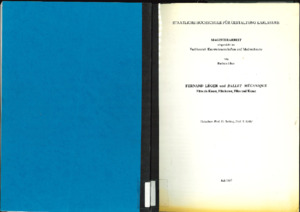
Fernand Léger und Ballet Mécanique (Deckblatt)
Name that can easily go onto 2 lines
Author that can easily go onto 2 lines as well
- Title
- Fernand Léger und Ballet Mécanique (Deckblatt)
- Author
- Description (de)
- "Ballet Mecanique ist zu einer Zeit entstanden, die als Höhepunkt, und immer wieder auch als Wendepunkt in Légers Malerei verstanden wird. Der Film fügt sich nicht nur in seine künstlerische Konzeption ein, sondern hat diese auch zum Thema. Ballet Mécanique ist ein Manifest, nicht nur für seine Kunst, sondern auch für das Kino. Wie bei seinen Literatenfreunden ist Légers intensive Auseinandersetzung mit dem Kino von einer doppelten Intention geprägt, von dere Hinwendung zu dem jungen Medium als potentiellen Mittel, die eigene Kunst zu reformieren, und vom Entwurf eines neuen Konzepts von Film, der seinerseits durch die gestalterische Intervention von Dichtern und Malern zu seinen eigenen Ausdrucksmitteln findet."
- Description (en)
- "Ballet Mecanique was created at a time that is seen as a high point, and repeatedly as a turning point, in Léger's painting. The film not only fits into his artistic conception, but also has it as its theme. Ballet Mécanique is a manifesto, not only for his art, but also for the cinema. As with his literary friends, Léger's intensive engagement with the cinema is characterisedby a dual intention: a turn towards the young medium as a potential means of reforming his own art, and the creation of a new concept of film, which in turn finds its own means of expression through the creative intervention of poets and painters."
- Category
- Type of project / creative work
- Keywords
- Date
- Juli 1997
- Language
- Location: institution
- Title
- Fernand Léger und Ballet Mécanique (Deckblatt)
- Copyright Notice
- Barbara Filser
- Legal protection / Licence
- Permission usage HfG
- Media creator
- Projektleiter/in
- Semester
- Program of Study
- Type of graduation project
- Archive signature
- HfG HS 1997 02
- External archive
- Imported on
- 20.02.2025
- Parent sets
- 1
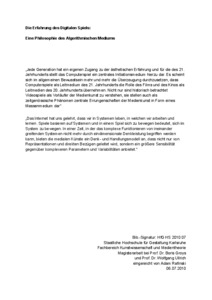
Die Erfahrung des digitalen Spiels Abstract
Name that can easily go onto 2 lines
Author that can easily go onto 2 lines as well
- Title
- Die Erfahrung des digitalen Spiels Abstract
- Subtitle
- Eine Philosophie des algrotithmischen Mediums
- Author
- Description (de)
- „Jede Generation hat ein eigenen Zugang zu der ästhetischen Erfahrung, und für die des 21. Jahrhunderts stellt das Computerspiel ein zentrales Initiationsmedium hierzu dar. Es scheint sich im allgemeinen Bewusstsein mehr und mehr die Überzeugung durchzusetzen, dass Computerspiele als Leitmedium des 21. Jahrhunderts die Rolle des Films und des Kinos als Leitmedien des 20. Jahrhunderts übernehmen. Nicht nur sind historisch betrachtet Videospiele als Vorläufer der Medienkunst zu verstehen, sie stellen auch als zeitgenössische Phänomen zentrale Errungenschaften der Medienkunst in Form eines Massenmedium dar.”
„Das Internet hat uns gelehrt, dass wir in Systemen leben, in welchen wir arbeiten und lernen. Spiele basieren auf Systemen und in einem Spiel sich zu bewegen bedeutet, sich im System zu bewegen. In einer Zeit, in der das komplexe Funktionieren von ineinander greifenden Systemen nicht mehr durch eindimensionale Denkleistung begriffen werden kann, bieten die medialen Künste ein Denk- und Handlungsmodell an, dass nicht nur von Repräsentationen und direkten Bezügen geleitet wird, sondern ein größere Sensibilität gegenüber komplexeren Parametern und Variabilitäten anbietet.”
- „Jede Generation hat ein eigenen Zugang zu der ästhetischen Erfahrung, und für die des 21. Jahrhunderts stellt das Computerspiel ein zentrales Initiationsmedium hierzu dar. Es scheint sich im allgemeinen Bewusstsein mehr und mehr die Überzeugung durchzusetzen, dass Computerspiele als Leitmedium des 21. Jahrhunderts die Rolle des Films und des Kinos als Leitmedien des 20. Jahrhunderts übernehmen. Nicht nur sind historisch betrachtet Videospiele als Vorläufer der Medienkunst zu verstehen, sie stellen auch als zeitgenössische Phänomen zentrale Errungenschaften der Medienkunst in Form eines Massenmedium dar.”
- Description (en)
- "Every generation has its own approach to the aesthetic experience and for those of the 21st century, the computer game represents a central initiation medium for this. There seems to be a growing conviction in the general consciousness that computer games, as the leading medium of the 21st century, are taking over the role of film and cinema as the leading media of the 20th century. Not only can video games be seen historically as precursors of media art, they also represent central achievements of media art in the form of a mass medium as a contemporary phenomenon.
"The Internet has taught us that we live in systems in which we work and learn. Games are based on systems and to move in a game means to move in the system. At a time when the complex functioning of interlocking systems can no longer be understood through one-dimensional thinking, the media arts offer a model of thought and action that is not only guided by representations and direct references, but offers a greater sensitivity to more complex parameters and variabilities."
- "Every generation has its own approach to the aesthetic experience and for those of the 21st century, the computer game represents a central initiation medium for this. There seems to be a growing conviction in the general consciousness that computer games, as the leading medium of the 21st century, are taking over the role of film and cinema as the leading media of the 20th century. Not only can video games be seen historically as precursors of media art, they also represent central achievements of media art in the form of a mass medium as a contemporary phenomenon.
- Category
- Keywords
- Date
- 06.07.2010
- Language
- Location: institution
- Title
- Die Erfahrung des digitalen Spiels Abstract
- Subtitle
- Eine Philosophie des algrotithmischen Mediums
- Copyright Notice
- Adam Rafinksi
- Legal protection / Licence
- Permission usage HfG
- Media creator
- Relationship/function
- Projektleiter/in
- Program of Study
- Type of graduation project
- Archive signature
- HfG HS 2010 07
- External archive
- Imported on
- 20.02.2025
- Parent sets
- 1
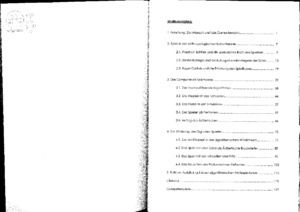
Die Erfahrung des digitalen Spiels Inhaltsverzeichnis
Name that can easily go onto 2 lines
Author that can easily go onto 2 lines as well
- Title
- Die Erfahrung des digitalen Spiels Inhaltsverzeichnis
- Subtitle
- Eine Philosophie des algrotithmischen Mediums
- Author
- Description (de)
- „Jede Generation hat ein eigenen Zugang zu der ästhetischen Erfahrung, und für die des 21. Jahrhunderts stellt das Computerspiel ein zentrales Initiationsmedium hierzu dar. Es scheint sich im allgemeinen Bewusstsein mehr und mehr die Überzeugung durchzusetzen, dass Computerspiele als Leitmedium des 21. Jahrhunderts die Rolle des Films und des Kinos als Leitmedien des 20. Jahrhunderts übernehmen. Nicht nur sind historisch betrachtet Videospiele als Vorläufer der Medienkunst zu verstehen, sie stellen auch als zeitgenössische Phänomen zentrale Errungenschaften der Medienkunst in Form eines Massenmedium dar.”
„Das Internet hat uns gelehrt, dass wir in Systemen leben, in welchen wir arbeiten und lernen. Spiele basieren auf Systemen und in einem Spiel sich zu bewegen bedeutet, sich im System zu bewegen. In einer Zeit, in der das komplexe Funktionieren von ineinander greifenden Systemen nicht mehr durch eindimensionale Denkleistung begriffen werden kann, bieten die medialen Künste ein Denk- und Handlungsmodell an, dass nicht nur von Repräsentationen und direkten Bezügen geleitet wird, sondern ein größere Sensibilität gegenüber komplexeren Parametern und Variabilitäten anbietet.”
- „Jede Generation hat ein eigenen Zugang zu der ästhetischen Erfahrung, und für die des 21. Jahrhunderts stellt das Computerspiel ein zentrales Initiationsmedium hierzu dar. Es scheint sich im allgemeinen Bewusstsein mehr und mehr die Überzeugung durchzusetzen, dass Computerspiele als Leitmedium des 21. Jahrhunderts die Rolle des Films und des Kinos als Leitmedien des 20. Jahrhunderts übernehmen. Nicht nur sind historisch betrachtet Videospiele als Vorläufer der Medienkunst zu verstehen, sie stellen auch als zeitgenössische Phänomen zentrale Errungenschaften der Medienkunst in Form eines Massenmedium dar.”
- Description (en)
- "Every generation has its own approach to the aesthetic experience and for those of the 21st century, the computer game represents a central initiation medium for this. There seems to be a growing conviction in the general consciousness that computer games, as the leading medium of the 21st century, are taking over the role of film and cinema as the leading media of the 20th century. Not only can video games be seen historically as precursors of media art, they also represent central achievements of media art in the form of a mass medium as a contemporary phenomenon.
"The Internet has taught us that we live in systems in which we work and learn. Games are based on systems and to move in a game means to move in the system. At a time when the complex functioning of interlocking systems can no longer be understood through one-dimensional thinking, the media arts offer a model of thought and action that is not only guided by representations and direct references, but offers a greater sensitivity to more complex parameters and variabilities."
- "Every generation has its own approach to the aesthetic experience and for those of the 21st century, the computer game represents a central initiation medium for this. There seems to be a growing conviction in the general consciousness that computer games, as the leading medium of the 21st century, are taking over the role of film and cinema as the leading media of the 20th century. Not only can video games be seen historically as precursors of media art, they also represent central achievements of media art in the form of a mass medium as a contemporary phenomenon.
- Category
- Keywords
- Date
- 06.07.2010
- Language
- Location: institution
- Title
- Die Erfahrung des digitalen Spiels Inhaltsverzeichnis
- Subtitle
- Eine Philosophie des algrotithmischen Mediums
- Copyright Notice
- Adam Rafinksi
- Legal protection / Licence
- Permission usage HfG
- Media creator
- Relationship/function
- Projektleiter/in
- Program of Study
- Type of graduation project
- Archive signature
- HfG HS 2010 07
- External archive
- Imported on
- 20.02.2025
- Parent sets
- 1
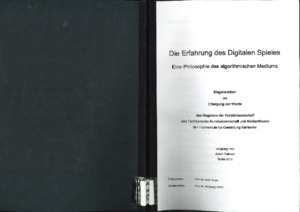
Die Erfahrung des digitalen Spiels Deckblatt
Name that can easily go onto 2 lines
Author that can easily go onto 2 lines as well
- Title
- Die Erfahrung des digitalen Spiels Deckblatt
- Subtitle
- Eine Philosophie des algrotithmischen Mediums
- Author
- Description (de)
- „Jede Generation hat ein eigenen Zugang zu der ästhetischen Erfahrung, und für die des 21. Jahrhunderts stellt das Computerspiel ein zentrales Initiationsmedium hierzu dar. Es scheint sich im allgemeinen Bewusstsein mehr und mehr die Überzeugung durchzusetzen, dass Computerspiele als Leitmedium des 21. Jahrhunderts die Rolle des Films und des Kinos als Leitmedien des 20. Jahrhunderts übernehmen. Nicht nur sind historisch betrachtet Videospiele als Vorläufer der Medienkunst zu verstehen, sie stellen auch als zeitgenössische Phänomen zentrale Errungenschaften der Medienkunst in Form eines Massenmedium dar.”
„Das Internet hat uns gelehrt, dass wir in Systemen leben, in welchen wir arbeiten und lernen. Spiele basieren auf Systemen und in einem Spiel sich zu bewegen bedeutet, sich im System zu bewegen. In einer Zeit, in der das komplexe Funktionieren von ineinander greifenden Systemen nicht mehr durch eindimensionale Denkleistung begriffen werden kann, bieten die medialen Künste ein Denk- und Handlungsmodell an, dass nicht nur von Repräsentationen und direkten Bezügen geleitet wird, sondern ein größere Sensibilität gegenüber komplexeren Parametern und Variabilitäten anbietet.”
- „Jede Generation hat ein eigenen Zugang zu der ästhetischen Erfahrung, und für die des 21. Jahrhunderts stellt das Computerspiel ein zentrales Initiationsmedium hierzu dar. Es scheint sich im allgemeinen Bewusstsein mehr und mehr die Überzeugung durchzusetzen, dass Computerspiele als Leitmedium des 21. Jahrhunderts die Rolle des Films und des Kinos als Leitmedien des 20. Jahrhunderts übernehmen. Nicht nur sind historisch betrachtet Videospiele als Vorläufer der Medienkunst zu verstehen, sie stellen auch als zeitgenössische Phänomen zentrale Errungenschaften der Medienkunst in Form eines Massenmedium dar.”
- Description (en)
- "Every generation has its own approach to the aesthetic experience and for those of the 21st century, the computer game represents a central initiation medium for this. There seems to be a growing conviction in the general consciousness that computer games, as the leading medium of the 21st century, are taking over the role of film and cinema as the leading media of the 20th century. Not only can video games be seen historically as precursors of media art, they also represent central achievements of media art in the form of a mass medium as a contemporary phenomenon.
"The Internet has taught us that we live in systems in which we work and learn. Games are based on systems and to move in a game means to move in the system. At a time when the complex functioning of interlocking systems can no longer be understood through one-dimensional thinking, the media arts offer a model of thought and action that is not only guided by representations and direct references, but offers a greater sensitivity to more complex parameters and variabilities."
- "Every generation has its own approach to the aesthetic experience and for those of the 21st century, the computer game represents a central initiation medium for this. There seems to be a growing conviction in the general consciousness that computer games, as the leading medium of the 21st century, are taking over the role of film and cinema as the leading media of the 20th century. Not only can video games be seen historically as precursors of media art, they also represent central achievements of media art in the form of a mass medium as a contemporary phenomenon.
- Category
- Keywords
- Date
- 06.07.2010
- Language
- Location: institution
- Title
- Die Erfahrung des digitalen Spiels Deckblatt
- Subtitle
- Eine Philosophie des algrotithmischen Mediums
- Copyright Notice
- Adam Rafinksi
- Legal protection / Licence
- Permission usage HfG
- Media creator
- Relationship/function
- Projektleiter/in
- Program of Study
- Type of graduation project
- Archive signature
- HfG HS 2010 07
- External archive
- Imported on
- 19.02.2025
- Parent sets
- 1