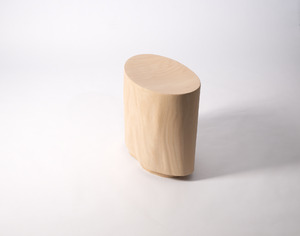
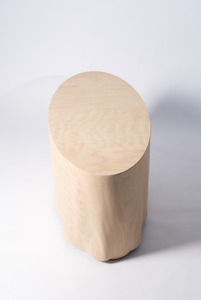
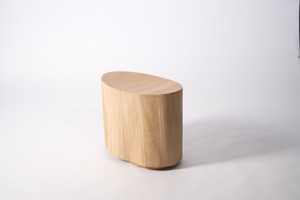
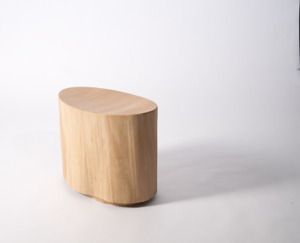
Die Aufnahmen zeigen den Aufbau der Diplomausstellung: Sie leitet von der thematischen Einführung in den Zusammenhang von Materialien und Technologie und den daraus resultierenden Lederresten, über interaktive Stationen, an denen man mit den Algorithmen in Kontakt treten kann, bis hin zu den finalen Exponaten: den vom Hauptalgorithmus entworfenen und anschließend gefertigten Leder-Objekten.
Medien-Beschreibung (en)
The photos show the diploma exhibition: it leads from a thematic introduction to the connection between materials, technology, and the resulting leather waste, through interactive stations where you can engage with the algorithms, to the final outcome: the leather objects automatically generated by the main algorithm.
Die Aufnahmen zeigen den Aufbau der Diplomausstellung: Sie leitet von der thematischen Einführung in den Zusammenhang von Materialien und Technologie und den daraus resultierenden Lederresten, über interaktive Stationen, an denen man mit den Algorithmen in Kontakt treten kann, bis hin zu den finalen Exponaten: den vom Hauptalgorithmus entworfenen und anschließend gefertigten Leder-Objekten.
Medien-Beschreibung (en)
The photos show the diploma exhibition: it leads from a thematic introduction to the connection between materials, technology, and the resulting leather waste, through interactive stations where you can engage with the algorithms, to the final outcome: the leather objects automatically generated by the main algorithm.
Die Aufnahmen zeigen den Aufbau der Diplomausstellung: Sie leitet von der thematischen Einführung in den Zusammenhang von Materialien und Technologie und den daraus resultierenden Lederresten, über interaktive Stationen, an denen man mit den Algorithmen in Kontakt treten kann, bis hin zu den finalen Exponaten: den vom Hauptalgorithmus entworfenen und anschließend gefertigten Leder-Objekten.
Medien-Beschreibung (en)
The photos show the diploma exhibition: it leads from a thematic introduction to the connection between materials, technology, and the resulting leather waste, through interactive stations where you can engage with the algorithms, to the final outcome: the leather objects automatically generated by the main algorithm.
Um das Stahlblech stabiler zu machen und um es vor Korrosion zu schützen, wird Leinöl aufgetragen und langsam eingebrannt. Bei der Hitze verdampft das Öl und hinterlässt eine schwarze Oxid-Schicht.
Alternativ-Text (de)
Video, das das Schwarzbrennen eines Stahlblechs zeigt. Durch Verbrennung entsteht eine schwarze Oxid-Schicht, die das MAterial stabiler macht und es vor Korrosion schützt.
Alternativ-Text (en)
Video showing the blackening of a steel sheet. Combustion creates a black oxide layer that makes the material more stable and protects it from corrosion.
Schon als Kind habe ich Flugzeuge und Autos aus Filmen nachgebaut – nur mit gefaltetem Papier und Klebeband. Anders als bei gekauftem Spielzeug wie LEGO bot mir Papier die grenzenlose Freiheit, jede erdenkliche Form zu erschaffen.
Aus dieser Erfahrung schöpfte ich meine Inspiration: Statt mich darauf zu beschränken, was in einem CAD-Programm möglich ist, experimentierte ich haptisch mit dem Materialverhalten von gefaltetem Papier. Um auf schwere Industriemaschinen zur Stahlverformung verzichten zu können, erforschte ich diverse Falttechniken. Mein Ziel war die Entwicklung einer „Falt-Sprache“, die sich auf Stahl übertragen lässt und ein intuitives, effizientes Arbeiten ermöglicht.
Nach zahlreichen Formtests fokussierte ich mich auf die vielversprechendsten Ansätze und verfeinerte diese anhand von Modellen im Maßstab 1:10, um die Konstruktionen im Detail zu verstehen und zu optimieren.
Durch die ausschließliche Verwendung rechteckiger Bleche konnte ich den Materialverschnitt reduzieren und die Recyclingfähigkeit verbessern. Oft entstehen gerade durch Faltungen und Biegungen überraschend feste und stabile Objekte.
Medien-Beschreibung (en)
As a child, I rebuilt planes and cars I saw in movies using just folded paper and tape. Unlike store-bought toys like LEGO, paper gave me endless freedom to create any shape I imagined.
From this experience, I tried to draw inspiration—not limiting myself to what can be done in a CAD computer program but experimenting hands-on with how a sheet of paper behaves whenfolded in various ways.
To avoid using heavy industrial machines to form steel sheets, I explored different paper-folding techniques. My goal was to develop a kind of folding language I could later apply to steel, allowing me to work intuitively and efficiently.
After testing many shapes, I focused on a few that worked well and refined them further, building 1:10 scale models to better understand and improve the designs.
By using only rectangular sheets, I could reduce material waste and improve recyclability. Folded and bent shapes often result in surprisingly strong and stable objects.
Alternativ-Text (de)
Ausstellung von Papiermodellen im Maßstab 1:10 für das Projekt "Folded Sheets", das die Übertragung von Papier-Falttechniken auf Stahlbleche untersucht.
Alternativ-Text (en)
Exhibition of 1:10 scale paper models for the "Folded Sheets" project, which explores the transfer of paper folding techniques to steel sheets.
The Folded Chair from my Diploma collection ”Folded Sheets“ uses a rectangular steel sheet to create a comfortable chair shell. The sheet is cut and folded to wrap around the frame and create a round shell-like shape under tension. This tension makes for a comfortable round shape that slightly leands back as you press your back into it. The shell and the frame are held together by tension. No screws used, only the tension of the steel sheet.
Alternativ-Text (de)
Detailansicht eines Stuhls aus der Diplomausstellung mit auf Spannung geformter Rückenlehne.
Alternativ-Text (en)
Detailed view of a chair from the diploma exhibition with a tension-formed backrest.
Die Bank vereint zwei verschiedene Falttechniken der Stahlblechbearbeitung. Die Sitzfläche wird durch zweidimensionale Kanten geformt, der untere Teil zu übereinandergeschobenen Flächen. Dadurch läuft die rechteckige Sitzfläche zu einer ovalen Form Richtung Boden.
Ein zentraler Falz in der Sitzfläche erhöht die Stabilität und dient beidseitig als Wasserablauf. Durch die gewölbte Form liegt die Bank nur an den beiden Außenseiten auf, während sich die Vorder- und Rückseite elegant nach oben neigen. Dies verleiht der gesamten Struktur eine leichte, dynamische Form und verbindet Funktionalität mit Ästhetik.
Medien-Beschreibung (en)
The bench is a blend of two steel sheet folding techniques. The top surface is expertly brake-formed, creating three distinct folds that not only ensure a comfortable seating area but also allow the rectangular seating surface to curve gracefully towards the ground. This design is further enhanced by a strategic cut and slide method, which introduces tension to the bench's feet and contributes to its rounded base.
A central crease in the seating surface adds stability and serves as a water drainage channel on both sides. The rounded shape allows the bench to rest on the ground only at its two sides, with the front and back elegantly curving upwards. This design lends the entire structure a lighter, more dynamic feel, making it both functional and aesthetically pleasing.
Alternativ-Text (de)
Detailansicht einer Bank, die zwei verschiedene Falttechniken der Stahlblechbearbeitung vereint.
Alternativ-Text (en)
Detailed view of a bench that combines two different folding techniques used in sheet steel processing.
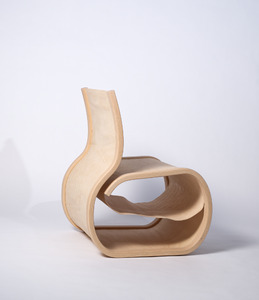
Der ‚Folded Chair‘ aus meiner Diplomkollektion ‚Folded Sheets‘ verwendet ein rechteckiges Stahlblech, um eine komfortable Sitzschale zu formen. Das Blech ist so zugeschnitten und gefaltet, dass es das Gestell umschließt und eine runde, schalenartige Form unter Spannung bildet. Diese Spannung sorgt für eine bequeme Rundung, die leicht nachgibt, sobald man sich anlehnt. Schale und Rahmen werden allein durch Spannung zusammengehalten. Es kommen keine Schrauben zum Einsatz, lediglich die Eigenspannung des Stahlblechs.
Medien-Beschreibung (en)
The folded Chair from my Diploma collection ”Folded Sheets“ uses a rectangular steel sheet to create a comfortable chair shell. The sheet it cut and folded to wrap around the frame and create a round shell like shape under tension. This tension makes for a comfortable round shape that slightly leans back as you press your back into it. The shell and the frame hold together by tension. No screws used, only the tension of the steel sheet.
Alternativ-Text (de)
Foto, das einen "Folded Chair" zeigt. Der Stuhl besteht aus Stahlblech, das so zugeschnitten und gefaltet wurde, dass es das Gestell umschließt und eine runde, schalenartige Form unter Spannung bildet. Schale und Rahmen werden allein durch Spannung zusammengehalten.
Alternativ-Text (en)
Photo showing a "Folded Chair." The chair is made of sheet steel that has been cut and folded to enclose the frame and form a round, shell-like shape under tension. The shell and frame are held together solely by tension.
Das Narrativ der Ausstellung wurde auf drei Informationstafeln aus gefaltetem Papier präsentiert. Das Papier wurde dabei über ein dünnes Seil gefaltet.
Medien-Beschreibung (en)
The narrative of this exhibition was displayed on three folded paper info panels. Paper was folded on a thin rope.
Alternativ-Text (de)
Das Foto zeigt Informationstafeln aus Papier, gefaltet über ein dünnes Seil, die das Narrativ der Ausstellung enthalten.
Alternativ-Text (en)
The photo shows paper information boards folded over a thin rope, which contain the narrative of the exhibition.
Das Narrativ der Ausstellung wurde auf drei Informationstafeln aus gefaltetem Papier präsentiert. Das Papier wurde dabei über ein dünnes Seil gefaltet.
Medien-Beschreibung (en)
The narrative of this exhibition was displayed on three folded paper info panels. Paper was folded on a thin rope.
Alternativ-Text (de)
Das Foto zeigt Informationstafeln aus Papier, gefaltet über ein dünnes Seil, die das Narrativ der Ausstellung enthalten.
Alternativ-Text (en)
The photo shows paper information boards folded over a thin rope, which contain the narrative of the exhibition.