"Theorie"
| Term | Theorie |
| Metakey | Category (institution:project_category) |
| Type | Keyword |
| Vocabulary | HfG |
93 Items
- Page 1 of 8
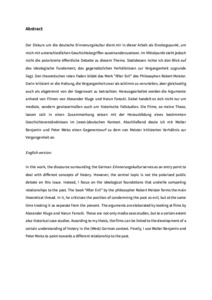
Abstract und Inhaltsverzeichnis von "Die Kehrseite der Erinnerungskultur"
Name that can easily go onto 2 lines
Author that can easily go onto 2 lines as well
- Title
- Abstract und Inhaltsverzeichnis von "Die Kehrseite der Erinnerungskultur"
- Author
- Category
- Type of project / creative work
- Keywords
- Date
- 31.10.2023
- Remarks
- Eine kondensierte Fassung des Textes wurde von "Umbau" veröffentlicht: https://umbau.hfg-karlsruhe.de/posts/die-kehrseite…
- Title
- Abstract und Inhaltsverzeichnis von "Die Kehrseite der Erinnerungskultur"
- Title (en)
- Abstract and table of contents of "The Other Side of Erinnerungskultur"
- Copyright Notice
- © Valentin Schwarz
- Legal protection / Licence
- Permission usage HfG
- Media creator
- Relationship/function
- Description of media
- Abstract und Inhaltsverzeichnis von "Die Kehrseite der Erinnerungskultur"
- Description of media (en)
- Abstract and table of contents of "The Other Side of Erinnerungskultur"
- Projektleiter/in
- Semester
- Program of Study
- Type of graduation project
- Imported on
- 08.06.2024
- Parent sets
- 1
After Memory Postcards

Name that can easily go onto 2 lines
Author that can easily go onto 2 lines as well
- Title
- After Memory Postcards
- Author
- Description (en)
- The talk and live music-led meditation session draws on sound design, psychology, neuroscience, folklore and diasporic spirituality. Studies of Air and Smoke is both an art performance and a meta-educational intervention; it is neither a concert nor a lecture. Thiago Leiros-Costa explores the dualism between being an artist and a scientist, performing both roles in the same evening and exploring their connections. The first part of the session assesses the nature of attention and awareness, and how the brain and our expectations are vital in constructing our experience of the world around us. Participants are invited to approach the second part, a musical performance, as a meditation session. Prompts and triggers given during the talk will be explored in the course of the performance. The music will range from folk to free improvisation and sound design.
- Category
- Type of project / creative work
- Date
- 25.10.2024
- Language
- Location: institution
- Location
- Media Theater
- City
- Country
- Participating institution(s)
- Internetlinks
- Title
- After Memory Postcards
- Copyright Notice
- After Memory
- Legal protection / Licence
- Relationship/function
- Imported on
- 17.11.2024
- Parent sets
- 1
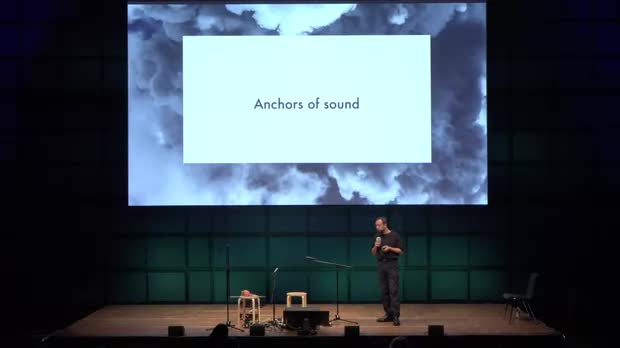
After Memory Streamings
Name that can easily go onto 2 lines
Author that can easily go onto 2 lines as well
- Title
- After Memory Streamings
- Author
- Description (en)
- The talk and live music-led meditation session draws on sound design, psychology, neuroscience, folklore and diasporic spirituality. Studies of Air and Smoke is both an art performance and a meta-educational intervention; it is neither a concert nor a lecture. Thiago Leiros-Costa explores the dualism between being an artist and a scientist, performing both roles in the same evening and exploring their connections. The first part of the session assesses the nature of attention and awareness, and how the brain and our expectations are vital in constructing our experience of the world around us. Participants are invited to approach the second part, a musical performance, as a meditation session. Prompts and triggers given during the talk will be explored in the course of the performance. The music will range from folk to free improvisation and sound design.
- Category
- Type of project / creative work
- Date
- 25.10.2024
- Language
- Location: institution
- Location
- Media Theater
- City
- Country
- Participating institution(s)
- Internetlinks
- Title
- After Memory Streamings
- Copyright Notice
- After Memory
- Imported on
- 08.11.2024
- Parent sets
- 1
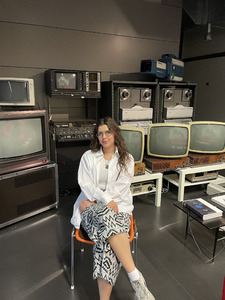
Anastasiia Bergalevich im Foyer des Labors für antiquierte Videosysteme des ZKM
Name that can easily go onto 2 lines
Author that can easily go onto 2 lines as well
- Title
- Anastasiia Bergalevich im Foyer des Labors für antiquierte Videosysteme des ZKM
- Author
- Category
- Type of project / creative work
- Title
- Anastasiia Bergalevich im Foyer des Labors für antiquierte Videosysteme des ZKM
- Title (en)
- Anastasiia Bergalevich in the Lobby of Laboratory for Antiquated Video Systems (ZKM)
- Copyright Notice
- © Anastasiia Bergalevich
- Legal protection / Licence
- Permission usage HfG
- Media creator
- Depicted persons
- Projektleiter/in
- Semester
- Program of Study
- Type of graduation project
- Imported on
- 19.03.2026
- Parent sets
- 1
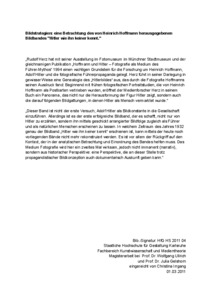
Bildstrategien: Abstract
Name that can easily go onto 2 lines
Author that can easily go onto 2 lines as well
- Title
- Bildstrategien: Abstract
- Author
- Description (de)
- „Rudolf Herz hat mit seiner Ausstellung im Fotomuseum im Münchner Stadtmuseum und der gleichnamigen Publikation „Hoffmann und Hitler – Fotografie als Medium des Führer-Mythos“ 1994 einen wichtigen Grundstein für die Forschung um Heinrich Hoffmann, Adolf Hitler und die fotografische Führerpropaganda gelegt. Herz führt in seiner Darlegung in gewisser Weise eine Genealogie des „Hitlerbildes“ aus, das durch die Fotografie Hoffmanns seinen Ausdruck fand: Beginnend mit frühen fotografischen Portraitstudien, die von Heinrich Hoffmann als Postkarten vertrieben wurden, eröffnet der Medienforscher Herz in seinem Buch ein Panorama, das nicht nur die Herausformung der Figur Hitler zeigt, sondern auch die darauf folgenden Bildgattungen, in denen Hitler als Mensch vermarktet wurde.”
„Dieser Band ist nicht der erste Versuch, Adolf Hitler als Bildkonstante in die Gesellschaft einzuführen. Allerdings ist es der erste erfolgreiche Bildband, der es schafft, nicht nur von Hitler zu erzählen, sondern ihn mittels geschickt arrangierter Bildfolge zugleich als Führer und als natürlichen Menschen erscheinen zu lassen. In welchem Zeitraum des Jahres 1932 genau der Bildband „Hitler wie ihn keiner kennt“ erschienen ist, kann mittels der heute noch vorliegenden Bände nicht mehr rekonstruiert werden. Es ist vor allem der Rückgriff auf den Kontext, der in der analytischen Betrachtung und Einordnung des Bandes helfen muss. Das Medium Fotografie wird hier ein zweites Mal wirksam, jedoch nicht immanent (narrativ), sondern aus historischer Perspektive: eine Perspektive, die an dieser Stelle trotz propagandistischer Bildkonzeption auch dokumentarisch Auskunft geben kann.”
- „Rudolf Herz hat mit seiner Ausstellung im Fotomuseum im Münchner Stadtmuseum und der gleichnamigen Publikation „Hoffmann und Hitler – Fotografie als Medium des Führer-Mythos“ 1994 einen wichtigen Grundstein für die Forschung um Heinrich Hoffmann, Adolf Hitler und die fotografische Führerpropaganda gelegt. Herz führt in seiner Darlegung in gewisser Weise eine Genealogie des „Hitlerbildes“ aus, das durch die Fotografie Hoffmanns seinen Ausdruck fand: Beginnend mit frühen fotografischen Portraitstudien, die von Heinrich Hoffmann als Postkarten vertrieben wurden, eröffnet der Medienforscher Herz in seinem Buch ein Panorama, das nicht nur die Herausformung der Figur Hitler zeigt, sondern auch die darauf folgenden Bildgattungen, in denen Hitler als Mensch vermarktet wurde.”
- Description (en)
- ‘With his exhibition at the Fotomuseum in Munich's Stadtmuseum and the publication of the same name ‘Hoffmann and Hitler - Photography as a Medium of the Führer Myth’ in 1994, Rudolf Herz laid an important foundation stone for research into Heinrich Hoffmann, Adolf Hitler and photographic Führer propaganda. In his account, Herz sets out a kind of genealogy of the ‘Hitler image’, which found its expression through Hoffmann's photography: Beginning with early photographic portrait studies that were distributed by Heinrich Hoffmann as postcards, media researcher Herz opens up a panorama in his book that shows not only the moulding of the figure of Hitler, but also the subsequent image genres in which Hitler was marketed as a human being.’
‘This volume is not the first attempt to introduce Adolf Hitler into society as an image constant. However, it is the first successful illustrated book that manages not only to tell the story of Hitler, but also to make him appear both as a leader and as a natural human being by means of a skilfully arranged sequence of images. It is no longer possible to reconstruct exactly when the illustrated book ‘Hitler wie ihn keiner kennt’ was published in 1932 using the volumes still available today. It is above all the recourse to the context that must help in the analytical consideration and categorisation of the volume. The medium of photography becomes effective a second time here, but not immanently (narratively), but from a historical perspective: a perspective that can also provide documentary information at this point, despite the propagandistic image concept.’
- ‘With his exhibition at the Fotomuseum in Munich's Stadtmuseum and the publication of the same name ‘Hoffmann and Hitler - Photography as a Medium of the Führer Myth’ in 1994, Rudolf Herz laid an important foundation stone for research into Heinrich Hoffmann, Adolf Hitler and photographic Führer propaganda. In his account, Herz sets out a kind of genealogy of the ‘Hitler image’, which found its expression through Hoffmann's photography: Beginning with early photographic portrait studies that were distributed by Heinrich Hoffmann as postcards, media researcher Herz opens up a panorama in his book that shows not only the moulding of the figure of Hitler, but also the subsequent image genres in which Hitler was marketed as a human being.’
- Category
- Keywords
- Date
- 01.03.2011
- Language
- Location: institution
- Title
- Bildstrategien: Abstract
- Copyright Notice
- © Christina Irrgang
- Legal protection / Licence
- Permission usage HfG
- Media creator
- Relationship/function
- Projektleiter/in
- Semester
- Program of Study
- Type of graduation project
- Archive signature
- HfG HS 2011 04
- External archive
- Imported on
- 31.03.2025
- Parent sets
- 1
Bildstrategien: Deckblatt
Name that can easily go onto 2 lines
Author that can easily go onto 2 lines as well
- Title
- Bildstrategien: Deckblatt
- Author
- Description (de)
- „Rudolf Herz hat mit seiner Ausstellung im Fotomuseum im Münchner Stadtmuseum und der gleichnamigen Publikation „Hoffmann und Hitler – Fotografie als Medium des Führer-Mythos“ 1994 einen wichtigen Grundstein für die Forschung um Heinrich Hoffmann, Adolf Hitler und die fotografische Führerpropaganda gelegt. Herz führt in seiner Darlegung in gewisser Weise eine Genealogie des „Hitlerbildes“ aus, das durch die Fotografie Hoffmanns seinen Ausdruck fand: Beginnend mit frühen fotografischen Portraitstudien, die von Heinrich Hoffmann als Postkarten vertrieben wurden, eröffnet der Medienforscher Herz in seinem Buch ein Panorama, das nicht nur die Herausformung der Figur Hitler zeigt, sondern auch die darauf folgenden Bildgattungen, in denen Hitler als Mensch vermarktet wurde.”
„Dieser Band ist nicht der erste Versuch, Adolf Hitler als Bildkonstante in die Gesellschaft einzuführen. Allerdings ist es der erste erfolgreiche Bildband, der es schafft, nicht nur von Hitler zu erzählen, sondern ihn mittels geschickt arrangierter Bildfolge zugleich als Führer und als natürlichen Menschen erscheinen zu lassen. In welchem Zeitraum des Jahres 1932 genau der Bildband „Hitler wie ihn keiner kennt“ erschienen ist, kann mittels der heute noch vorliegenden Bände nicht mehr rekonstruiert werden. Es ist vor allem der Rückgriff auf den Kontext, der in der analytischen Betrachtung und Einordnung des Bandes helfen muss. Das Medium Fotografie wird hier ein zweites Mal wirksam, jedoch nicht immanent (narrativ), sondern aus historischer Perspektive: eine Perspektive, die an dieser Stelle trotz propagandistischer Bildkonzeption auch dokumentarisch Auskunft geben kann.”
- „Rudolf Herz hat mit seiner Ausstellung im Fotomuseum im Münchner Stadtmuseum und der gleichnamigen Publikation „Hoffmann und Hitler – Fotografie als Medium des Führer-Mythos“ 1994 einen wichtigen Grundstein für die Forschung um Heinrich Hoffmann, Adolf Hitler und die fotografische Führerpropaganda gelegt. Herz führt in seiner Darlegung in gewisser Weise eine Genealogie des „Hitlerbildes“ aus, das durch die Fotografie Hoffmanns seinen Ausdruck fand: Beginnend mit frühen fotografischen Portraitstudien, die von Heinrich Hoffmann als Postkarten vertrieben wurden, eröffnet der Medienforscher Herz in seinem Buch ein Panorama, das nicht nur die Herausformung der Figur Hitler zeigt, sondern auch die darauf folgenden Bildgattungen, in denen Hitler als Mensch vermarktet wurde.”
- Description (en)
- ‘With his exhibition at the Fotomuseum in Munich's Stadtmuseum and the publication of the same name ‘Hoffmann and Hitler - Photography as a Medium of the Führer Myth’ in 1994, Rudolf Herz laid an important foundation stone for research into Heinrich Hoffmann, Adolf Hitler and photographic Führer propaganda. In his account, Herz sets out a kind of genealogy of the ‘Hitler image’, which found its expression through Hoffmann's photography: Beginning with early photographic portrait studies that were distributed by Heinrich Hoffmann as postcards, media researcher Herz opens up a panorama in his book that shows not only the moulding of the figure of Hitler, but also the subsequent image genres in which Hitler was marketed as a human being.’
‘This volume is not the first attempt to introduce Adolf Hitler into society as an image constant. However, it is the first successful illustrated book that manages not only to tell the story of Hitler, but also to make him appear both as a leader and as a natural human being by means of a skilfully arranged sequence of images. It is no longer possible to reconstruct exactly when the illustrated book ‘Hitler wie ihn keiner kennt’ was published in 1932 using the volumes still available today. It is above all the recourse to the context that must help in the analytical consideration and categorisation of the volume. The medium of photography becomes effective a second time here, but not immanently (narratively), but from a historical perspective: a perspective that can also provide documentary information at this point, despite the propagandistic image concept.’
- ‘With his exhibition at the Fotomuseum in Munich's Stadtmuseum and the publication of the same name ‘Hoffmann and Hitler - Photography as a Medium of the Führer Myth’ in 1994, Rudolf Herz laid an important foundation stone for research into Heinrich Hoffmann, Adolf Hitler and photographic Führer propaganda. In his account, Herz sets out a kind of genealogy of the ‘Hitler image’, which found its expression through Hoffmann's photography: Beginning with early photographic portrait studies that were distributed by Heinrich Hoffmann as postcards, media researcher Herz opens up a panorama in his book that shows not only the moulding of the figure of Hitler, but also the subsequent image genres in which Hitler was marketed as a human being.’
- Category
- Keywords
- Date
- 01.03.2011
- Language
- Location: institution
- Title
- Bildstrategien: Deckblatt
- Copyright Notice
- © Christina Irrgang
- Legal protection / Licence
- Permission usage HfG
- Media creator
- Relationship/function
- Projektleiter/in
- Semester
- Program of Study
- Type of graduation project
- Archive signature
- HfG HS 2011 04
- External archive
- Imported on
- 31.03.2025
- Parent sets
- 1
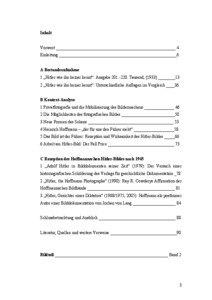
Bildstrategien: Inhaltsverzeichnis
Name that can easily go onto 2 lines
Author that can easily go onto 2 lines as well
- Title
- Bildstrategien: Inhaltsverzeichnis
- Author
- Description (de)
- „Rudolf Herz hat mit seiner Ausstellung im Fotomuseum im Münchner Stadtmuseum und der gleichnamigen Publikation „Hoffmann und Hitler – Fotografie als Medium des Führer-Mythos“ 1994 einen wichtigen Grundstein für die Forschung um Heinrich Hoffmann, Adolf Hitler und die fotografische Führerpropaganda gelegt. Herz führt in seiner Darlegung in gewisser Weise eine Genealogie des „Hitlerbildes“ aus, das durch die Fotografie Hoffmanns seinen Ausdruck fand: Beginnend mit frühen fotografischen Portraitstudien, die von Heinrich Hoffmann als Postkarten vertrieben wurden, eröffnet der Medienforscher Herz in seinem Buch ein Panorama, das nicht nur die Herausformung der Figur Hitler zeigt, sondern auch die darauf folgenden Bildgattungen, in denen Hitler als Mensch vermarktet wurde.”
„Dieser Band ist nicht der erste Versuch, Adolf Hitler als Bildkonstante in die Gesellschaft einzuführen. Allerdings ist es der erste erfolgreiche Bildband, der es schafft, nicht nur von Hitler zu erzählen, sondern ihn mittels geschickt arrangierter Bildfolge zugleich als Führer und als natürlichen Menschen erscheinen zu lassen. In welchem Zeitraum des Jahres 1932 genau der Bildband „Hitler wie ihn keiner kennt“ erschienen ist, kann mittels der heute noch vorliegenden Bände nicht mehr rekonstruiert werden. Es ist vor allem der Rückgriff auf den Kontext, der in der analytischen Betrachtung und Einordnung des Bandes helfen muss. Das Medium Fotografie wird hier ein zweites Mal wirksam, jedoch nicht immanent (narrativ), sondern aus historischer Perspektive: eine Perspektive, die an dieser Stelle trotz propagandistischer Bildkonzeption auch dokumentarisch Auskunft geben kann.”
- „Rudolf Herz hat mit seiner Ausstellung im Fotomuseum im Münchner Stadtmuseum und der gleichnamigen Publikation „Hoffmann und Hitler – Fotografie als Medium des Führer-Mythos“ 1994 einen wichtigen Grundstein für die Forschung um Heinrich Hoffmann, Adolf Hitler und die fotografische Führerpropaganda gelegt. Herz führt in seiner Darlegung in gewisser Weise eine Genealogie des „Hitlerbildes“ aus, das durch die Fotografie Hoffmanns seinen Ausdruck fand: Beginnend mit frühen fotografischen Portraitstudien, die von Heinrich Hoffmann als Postkarten vertrieben wurden, eröffnet der Medienforscher Herz in seinem Buch ein Panorama, das nicht nur die Herausformung der Figur Hitler zeigt, sondern auch die darauf folgenden Bildgattungen, in denen Hitler als Mensch vermarktet wurde.”
- Description (en)
- ‘With his exhibition at the Fotomuseum in Munich's Stadtmuseum and the publication of the same name ‘Hoffmann and Hitler - Photography as a Medium of the Führer Myth’ in 1994, Rudolf Herz laid an important foundation stone for research into Heinrich Hoffmann, Adolf Hitler and photographic Führer propaganda. In his account, Herz sets out a kind of genealogy of the ‘Hitler image’, which found its expression through Hoffmann's photography: Beginning with early photographic portrait studies that were distributed by Heinrich Hoffmann as postcards, media researcher Herz opens up a panorama in his book that shows not only the moulding of the figure of Hitler, but also the subsequent image genres in which Hitler was marketed as a human being.’
‘This volume is not the first attempt to introduce Adolf Hitler into society as an image constant. However, it is the first successful illustrated book that manages not only to tell the story of Hitler, but also to make him appear both as a leader and as a natural human being by means of a skilfully arranged sequence of images. It is no longer possible to reconstruct exactly when the illustrated book ‘Hitler wie ihn keiner kennt’ was published in 1932 using the volumes still available today. It is above all the recourse to the context that must help in the analytical consideration and categorisation of the volume. The medium of photography becomes effective a second time here, but not immanently (narratively), but from a historical perspective: a perspective that can also provide documentary information at this point, despite the propagandistic image concept.’
- ‘With his exhibition at the Fotomuseum in Munich's Stadtmuseum and the publication of the same name ‘Hoffmann and Hitler - Photography as a Medium of the Führer Myth’ in 1994, Rudolf Herz laid an important foundation stone for research into Heinrich Hoffmann, Adolf Hitler and photographic Führer propaganda. In his account, Herz sets out a kind of genealogy of the ‘Hitler image’, which found its expression through Hoffmann's photography: Beginning with early photographic portrait studies that were distributed by Heinrich Hoffmann as postcards, media researcher Herz opens up a panorama in his book that shows not only the moulding of the figure of Hitler, but also the subsequent image genres in which Hitler was marketed as a human being.’
- Category
- Keywords
- Date
- 01.03.2011
- Language
- Location: institution
- Title
- Bildstrategien: Inhaltsverzeichnis
- Copyright Notice
- © Christina Irrgang
- Legal protection / Licence
- Permission usage HfG
- Media creator
- Relationship/function
- Projektleiter/in
- Semester
- Program of Study
- Type of graduation project
- Archive signature
- HfG HS 2011 04
- External archive
- Imported on
- 31.03.2025
- Parent sets
- 1
Deckblatt Excreta Fluxorum - Theatrum Instumentorum
Name that can easily go onto 2 lines
Author that can easily go onto 2 lines as well
- Title
- Deckblatt Excreta Fluxorum - Theatrum Instumentorum
- Author
- Category
- Date
- März 1999
- Language
- Location: institution
- Title
- Deckblatt Excreta Fluxorum - Theatrum Instumentorum
- Copyright Notice
- Christoph Keller
- Legal protection / Licence
- Media creator
- Relationship/function
- Projektleiter/in
- Semester
- Program of Study
- Type of graduation project
- Archive signature
- HfG HS 1999 01
- External archive
- Imported on
- 04.10.2024
- Parent sets
- 1
Deckblatt Mythos Großstadt
Name that can easily go onto 2 lines
Author that can easily go onto 2 lines as well
- Title
- Deckblatt Mythos Großstadt
- Author
- Category
- Keywords
- Date
- 14.07.2003
- Language
- Location: institution
- Title
- Deckblatt Mythos Großstadt
- Copyright Notice
- © Daphne Noee
- Legal protection / Licence
- Media creator
- Relationship/function
- Projektleiter/in
- Semester
- Program of Study
- Type of graduation project
- Archive signature
- HfG HS 2003 02
- External archive
- Imported on
- 04.10.2024
- Parent sets
- 1
Diagramm zur Medienkunst
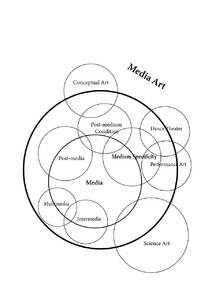
Name that can easily go onto 2 lines
Author that can easily go onto 2 lines as well
- Title
- Diagramm zur Medienkunst
- Author
- Category
- Type of project / creative work
- Title
- Diagramm zur Medienkunst
- Title (en)
- Media Art Diagram
- Copyright Notice
- © Anastasiia Bergalevich
- Legal protection / Licence
- Permission usage HfG
- Media creator
- Projektleiter/in
- Semester
- Program of Study
- Type of graduation project
- Imported on
- 19.03.2026
- Parent sets
- 1
Die Erfahrung des digitalen Spiels
Name that can easily go onto 2 lines
Author that can easily go onto 2 lines as well
- Title
- Die Erfahrung des digitalen Spiels
- Subtitle
- Eine Philosophie des algrotithmischen Mediums
- Author
- Description (de)
- „Jede Generation hat ein eigenen Zugang zu der ästhetischen Erfahrung, und für die des 21. Jahrhunderts stellt das Computerspiel ein zentrales Initiationsmedium hierzu dar. Es scheint sich im allgemeinen Bewusstsein mehr und mehr die Überzeugung durchzusetzen, dass Computerspiele als Leitmedium des 21. Jahrhunderts die Rolle des Films und des Kinos als Leitmedien des 20. Jahrhunderts übernehmen. Nicht nur sind historisch betrachtet Videospiele als Vorläufer der Medienkunst zu verstehen, sie stellen auch als zeitgenössische Phänomen zentrale Errungenschaften der Medienkunst in Form eines Massenmedium dar.”
„Das Internet hat uns gelehrt, dass wir in Systemen leben, in welchen wir arbeiten und lernen. Spiele basieren auf Systemen und in einem Spiel sich zu bewegen bedeutet, sich im System zu bewegen. In einer Zeit, in der das komplexe Funktionieren von ineinander greifenden Systemen nicht mehr durch eindimensionale Denkleistung begriffen werden kann, bieten die medialen Künste ein Denk- und Handlungsmodell an, dass nicht nur von Repräsentationen und direkten Bezügen geleitet wird, sondern ein größere Sensibilität gegenüber komplexeren Parametern und Variabilitäten anbietet.”
- „Jede Generation hat ein eigenen Zugang zu der ästhetischen Erfahrung, und für die des 21. Jahrhunderts stellt das Computerspiel ein zentrales Initiationsmedium hierzu dar. Es scheint sich im allgemeinen Bewusstsein mehr und mehr die Überzeugung durchzusetzen, dass Computerspiele als Leitmedium des 21. Jahrhunderts die Rolle des Films und des Kinos als Leitmedien des 20. Jahrhunderts übernehmen. Nicht nur sind historisch betrachtet Videospiele als Vorläufer der Medienkunst zu verstehen, sie stellen auch als zeitgenössische Phänomen zentrale Errungenschaften der Medienkunst in Form eines Massenmedium dar.”
- Description (en)
- "Every generation has its own approach to the aesthetic experience and for those of the 21st century, the computer game represents a central initiation medium for this. There seems to be a growing conviction in the general consciousness that computer games, as the leading medium of the 21st century, are taking over the role of film and cinema as the leading media of the 20th century. Not only can video games be seen historically as precursors of media art, they also represent central achievements of media art in the form of a mass medium as a contemporary phenomenon.
"The Internet has taught us that we live in systems in which we work and learn. Games are based on systems and to move in a game means to move in the system. At a time when the complex functioning of interlocking systems can no longer be understood through one-dimensional thinking, the media arts offer a model of thought and action that is not only guided by representations and direct references, but offers a greater sensitivity to more complex parameters and variabilities."
- "Every generation has its own approach to the aesthetic experience and for those of the 21st century, the computer game represents a central initiation medium for this. There seems to be a growing conviction in the general consciousness that computer games, as the leading medium of the 21st century, are taking over the role of film and cinema as the leading media of the 20th century. Not only can video games be seen historically as precursors of media art, they also represent central achievements of media art in the form of a mass medium as a contemporary phenomenon.
- Category
- Keywords
- Date
- 06.07.2010
- Language
- Location: institution
- Title
- Die Erfahrung des digitalen Spiels
- Subtitle
- Eine Philosophie des algrotithmischen Mediums
- Copyright Notice
- Adam Rafinksi
- Legal protection / Licence
- Permission usage HfG
- Media creator
- Description of media
- geschwärzte Version / censored Version
- Projektleiter/in
- Program of Study
- Type of graduation project
- Archive signature
- HfG HS 2010 07
- External archive
- Imported on
- 19.02.2025
- Parent sets
- 1
Die Erfahrung des digitalen Spiels Abstract
Name that can easily go onto 2 lines
Author that can easily go onto 2 lines as well
- Title
- Die Erfahrung des digitalen Spiels Abstract
- Subtitle
- Eine Philosophie des algrotithmischen Mediums
- Author
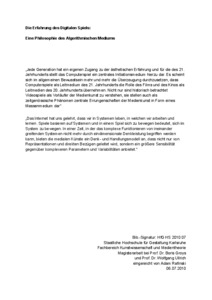
- Description (de)
- „Jede Generation hat ein eigenen Zugang zu der ästhetischen Erfahrung, und für die des 21. Jahrhunderts stellt das Computerspiel ein zentrales Initiationsmedium hierzu dar. Es scheint sich im allgemeinen Bewusstsein mehr und mehr die Überzeugung durchzusetzen, dass Computerspiele als Leitmedium des 21. Jahrhunderts die Rolle des Films und des Kinos als Leitmedien des 20. Jahrhunderts übernehmen. Nicht nur sind historisch betrachtet Videospiele als Vorläufer der Medienkunst zu verstehen, sie stellen auch als zeitgenössische Phänomen zentrale Errungenschaften der Medienkunst in Form eines Massenmedium dar.”
„Das Internet hat uns gelehrt, dass wir in Systemen leben, in welchen wir arbeiten und lernen. Spiele basieren auf Systemen und in einem Spiel sich zu bewegen bedeutet, sich im System zu bewegen. In einer Zeit, in der das komplexe Funktionieren von ineinander greifenden Systemen nicht mehr durch eindimensionale Denkleistung begriffen werden kann, bieten die medialen Künste ein Denk- und Handlungsmodell an, dass nicht nur von Repräsentationen und direkten Bezügen geleitet wird, sondern ein größere Sensibilität gegenüber komplexeren Parametern und Variabilitäten anbietet.”
- „Jede Generation hat ein eigenen Zugang zu der ästhetischen Erfahrung, und für die des 21. Jahrhunderts stellt das Computerspiel ein zentrales Initiationsmedium hierzu dar. Es scheint sich im allgemeinen Bewusstsein mehr und mehr die Überzeugung durchzusetzen, dass Computerspiele als Leitmedium des 21. Jahrhunderts die Rolle des Films und des Kinos als Leitmedien des 20. Jahrhunderts übernehmen. Nicht nur sind historisch betrachtet Videospiele als Vorläufer der Medienkunst zu verstehen, sie stellen auch als zeitgenössische Phänomen zentrale Errungenschaften der Medienkunst in Form eines Massenmedium dar.”
- Description (en)
- "Every generation has its own approach to the aesthetic experience and for those of the 21st century, the computer game represents a central initiation medium for this. There seems to be a growing conviction in the general consciousness that computer games, as the leading medium of the 21st century, are taking over the role of film and cinema as the leading media of the 20th century. Not only can video games be seen historically as precursors of media art, they also represent central achievements of media art in the form of a mass medium as a contemporary phenomenon.
"The Internet has taught us that we live in systems in which we work and learn. Games are based on systems and to move in a game means to move in the system. At a time when the complex functioning of interlocking systems can no longer be understood through one-dimensional thinking, the media arts offer a model of thought and action that is not only guided by representations and direct references, but offers a greater sensitivity to more complex parameters and variabilities."
- "Every generation has its own approach to the aesthetic experience and for those of the 21st century, the computer game represents a central initiation medium for this. There seems to be a growing conviction in the general consciousness that computer games, as the leading medium of the 21st century, are taking over the role of film and cinema as the leading media of the 20th century. Not only can video games be seen historically as precursors of media art, they also represent central achievements of media art in the form of a mass medium as a contemporary phenomenon.
- Category
- Keywords
- Date
- 06.07.2010
- Language
- Location: institution
- Title
- Die Erfahrung des digitalen Spiels Abstract
- Subtitle
- Eine Philosophie des algrotithmischen Mediums
- Copyright Notice
- Adam Rafinksi
- Legal protection / Licence
- Permission usage HfG
- Media creator
- Relationship/function
- Projektleiter/in
- Program of Study
- Type of graduation project
- Archive signature
- HfG HS 2010 07
- External archive
- Imported on
- 20.02.2025
- Parent sets
- 1