Sets
439 Inhalte
- Seite 1 von 37
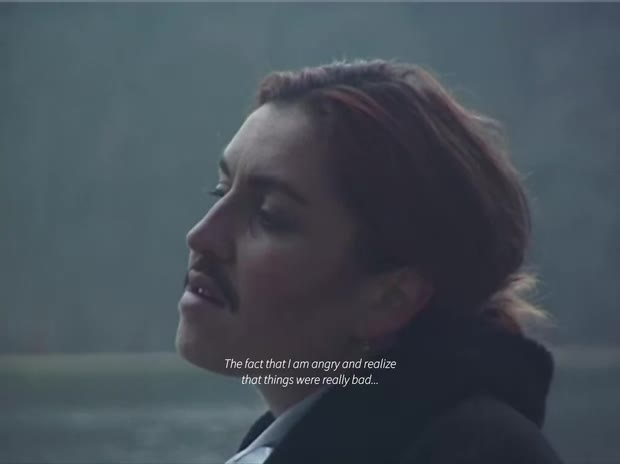
(Ausschnitt) Strangers In The Night
Name that can easily go onto 2 lines
Author that can easily go onto 2 lines as well
- Titel
- (Ausschnitt) Strangers In The Night
- Autor/in
- Beschreibung (de)
- (Auschnitt)
Titel: Strangers In The Night
Regie: Isabel Winter, Alexander Thelen
Jahr: 2026
Länge: 60 Minuten
Genre: Dokumentarfilm
Sprache: Deutsch
Produktionsland: Deutschland
Ausschnittlänge: 02.51
„Strangers In The Night“ begleitet Alex und Isabel, zwei Menschen Ende zwanzig, auf ihrer Reise zu ihren Vätern, deren Beziehungen von Abwesenheit und Distanz geprägt sind. Zwischen der Eifel und München kehren sie an vertraute Orte zurück und filmen sich gegenseitig, ihre Väter und deren Lebensräume mit MiniDV-Kameras. Dabei wird die Kamera zugleich zu einem heilenden Werkzeug und einem Instrument der Macht, während sie versuchen, offene Fragen zu beantworten.
- (Auschnitt)
- Beschreibung (en)
- (Excerpt)
Title: Strangers In The Night
Directors: Isabel Winter, Alexander Thelen
Year: 2026
Duration: 60 minutes
Genre: Documentary film
Language: German
Country of Production: Germany
Excerpt Length: 02.51
“Strangers In The Night” follows Alex and Isabel, two people in their late twenties, on a journey to reconnect with their fathers, whose relationships have been shaped by absence and distance. Traveling between the Eifel region and Munich, they revisit familiar places and film each other, their fathers, and associated locations using MiniDV cameras. The camera becomes both a healing tool and an instrument of power as they seek answers to unresolved questions.
- (Excerpt)
- Kategorie
- Typ des Projekts/Werks
- Schlagworte
- Datierung
- 2026
- Sprache
- Untertitel (Film)
- Dauer
- 02.51
- Land
- Titel
- (Ausschnitt) Strangers In The Night
- Importiert am
- 25.04.2026
- Übergeordnete Sets
- 1
- Set enthält
- 0 1
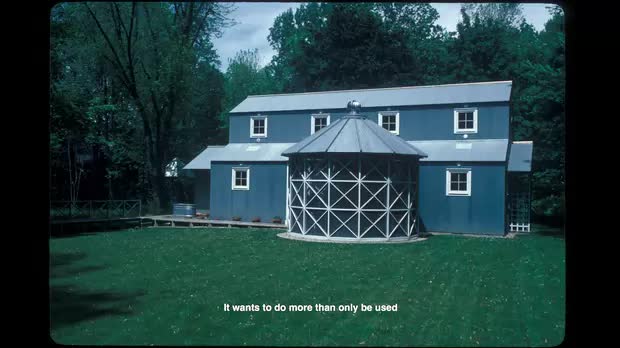
(Trailer) Eine neue Umwelt
Name that can easily go onto 2 lines
Author that can easily go onto 2 lines as well
- Titel
- (Trailer) Eine neue Umwelt
- Untertitel
- Heinrich Klotz über Architektur und Neue Medien
- Autor/in
- Beschreibung (de)
- (Trailer)
Titel: Eine neue Umwelt – Heinrich Klotz über Architektur und Neue Medien
Regie: Christian Haardt
Jahr: 2019
Länge: 80 Minuten
Genre: Dokumentarfilm
Sprache: Deutsch (Untertitel: Englisch)
Produktionsland: Deutschland
Trailerlänge: 01.31
Eine filmische Montage aus dem Archiv des Kunsthistorikers Heinrich Klotz zeigt Zusammenhänge zwischen postmoderner Architektur, digitalen Medien und der Hoffnung auf eine neue Kunst. Ausgehend vom Wiederaufbau deutscher Städte nach dem Zweiten Weltkrieg reflektiert der Film über Verlust und Neubeginn urbaner Räume. Klotz verteidigt das sinnliche Erleben in der Architektur, kritisiert funktionale Entwürfe und erkennt auch digitale Welten als Kunstform an.
More informations: https://madek.hfg-karlsruhe.de/sets/haardt_eine-ne…
- (Trailer)
- Beschreibung (en)
- (Trailer)
Title: A New Environment – Heinrich Klotz on Architecture and New Media
Director: Christian Haardt
Year: 2019
Duration: 80 minutes
Genre: Documentary film
Language: German (subtitles: English)
Country of Production: Germany
Trailer Length: 01.31
A filmic montage of the archive of art historian Heinrich Klotz reveals connections between postmodern architecture, digital media, and the hope for a new form of art. Exploring the rebuilding of German cities after WWII, the film reflects on the loss of old environments and the possibilities of reconstruction. Klotz defends sensory experience in architecture, critiques functionalist design, and elevates digital worlds such as video games to the status of art.
More informations: https://madek.hfg-karlsruhe.de/sets/haardt_eine-ne…
- (Trailer)
- Kategorie
- Schlagworte
- Dauer
- 01.31
- Titel
- (Trailer) Eine neue Umwelt
- Untertitel
- Heinrich Klotz über Architektur und Neue Medien
- Studiengang
- Importiert am
- 25.04.2026
- Übergeordnete Sets
- 1
- Set enthält
- 0 1
Schwarm #4
Name that can easily go onto 2 lines
Author that can easily go onto 2 lines as well
- Titel
- Schwarm #4
- Titel (en)
- Schwarm #4
- Untertitel
- Student Journal for Art and Theory
- Untertitel des Projekts/Werks (en)
- Student Journal for Art and Theory
- Autor/in
- Beschreibung (de)
- Schwarm #4 ist eine studentische Publikation mit künstlerischen und wissenschaftlichen Beiträgen aus verschiedenen Fachbereichen der HfG Karlsruhe, die sich mit dem Begriff „Realities“ auseinandersetzen.
- Beschreibung (en)
- Schwarm #4 is a student publication featuring artistic and academic contributions from various departments at the HfG Karlsruhe, which explore the concept of ‘Realities’.
- Kategorie
- Datierung
- 2025
- Sprache
- Abmessungen
- 210x145mm
- Ort: Institution
- Land
- Auftrag durch
- Lorena Karn, Ilayda Kohl, Darius Kühner, Alessia Meyer, Yuliana Mosheeva, Elisabeth Potemkin, Vici Schwab, Yanina Sharipova
- Titel
- Schwarm #4
- Untertitel
- Student Journal for Art and Theory
- Importiert am
- 28.06.2026
- Übergeordnete Sets
- 1
- Set enthält
- 0 14
MS Guilty Pleasure

Name that can easily go onto 2 lines
Author that can easily go onto 2 lines as well
- Titel
- MS Guilty Pleasure
- Titel (en)
- MS Guilty Pleasure
- Autor/in
- Beschreibung (de)
- Meine Abschlussarbeit beschäftigt sich mit dem Kreuzfahrtschiff als einer Form von Architektur, die zwei parallel voneinander laufende Wirklichkeiten konstituiert, mit eigenen Regeln, Bewegungen und sozialen Codes.
Das Schiff organisiert diese Trennung bis ins Detail. Wege, Blickrichtungen und Abläufe lenken den Körper beinahe intuitiv durch den Raum. Bestimmte Rollen erscheinen selbstverständlich: der entspannte Gast, die serviceorientierte Crew, der verborgene Bereich hinter den Kulissen, der den reibungslosen Ablauf überhaupt erst ermöglicht.
Die Installation greift die Gleichzeitigkeit über eine räumliche und akustische Situation auf.
Während im Hintergrund versucht wird, den Betrieb aufrechtzuerhalten, dringen in den öffentlichen Bereich nur Fragmente der Störung: Durchsagen, Gesprächsfetzen, Beschwerden und das Weiterlaufen eines Unterhaltungsprogramms.
Für einen kurzen Moment wird hörbar, was normalerweise hinter der Oberfläche des scheinbar mühelosen Urlaubs verschwindet. Doch Unterhaltung und Betrieb laufen auch dort nahezu ohne Unterbrechung weiter, wo Erschöpfung, Zeitdruck oder technische Störungen Teil des Systems sind.
Dabei ist die Kreuzfahrt nur ein Luxusgut unter vielen, das sich auf technische Infrastruktur, Versorgungssysteme, Reinigung und Wartung sowie Handwerker, Fachkräfte und Hilfsarbeiter aus aller Welt stützt.
Nicht die Welt eines permanent inszenierten Erlebens steht im Mittelpunkt, sondern das Sichtbarwerden einer Infrastruktur, die sonst hinter Oberfläche, Routine und Unterhaltung verschwindet.
- Meine Abschlussarbeit beschäftigt sich mit dem Kreuzfahrtschiff als einer Form von Architektur, die zwei parallel voneinander laufende Wirklichkeiten konstituiert, mit eigenen Regeln, Bewegungen und sozialen Codes.
- Beschreibung (en)
- My diploma explores the cruise ship as an architectural structure that produces two parallel realities, each governed by its own rules, movements, and social codes.
The ship organizes this separation down to the smallest detail. Pathways, sightlines, and routines guide bodies through space almost intuitively. Certain roles appear self-evident: the relaxed guest, the service-oriented crew member, and the hidden backstage areas that make the ship’s seamless operation possible in the first place.
The installation addresses this simultaneity through a spatial and acoustic setting.
While continuous efforts are made behind the scenes to keep operations running, only fragments of disruption reach the public areas: announcements, snippets of conversation, complaints, and the ongoing entertainment programme. For a brief moment, what normally disappears beneath the surface of the seemingly effortless holiday becomes audible. Yet entertainment and operations continue almost uninterrupted, even where exhaustion, time pressure, or technical failures are built into the system.
At the same time, the cruise industry is only one example of a luxury product that depends on extensive technical infrastructure, global supply chains, cleaning and maintenance services, as well as skilled and unskilled labour from around the world.
The focus is not the world of permanently staged experiences itself, but rather the visibility of an infrastructure that usually disappears behind surfaces, routines, and entertainment.
- My diploma explores the cruise ship as an architectural structure that produces two parallel realities, each governed by its own rules, movements, and social codes.
- Kategorie
- Schlagworte
- Material
- Technik/Verfahren/Formate
- Situatives Hörspiel
- Dauer
- 25 Minuten
- Ort: Institution
- Ort
- Waldstraße
- Titel
- MS Guilty Pleasure
- Projektleiter/in
- Semester
- Studiengang
- Typ der Abschlussarbeit
- Importiert am
- 20.06.2026
- Übergeordnete Sets
- 2
- Set enthält
- 0 18
The Violent Container
Name that can easily go onto 2 lines
Author that can easily go onto 2 lines as well
- Titel
- The Violent Container
- Titel (en)
- The Violent Container
- Untertitel
- Exhibition and handbook
- Untertitel des Projekts/Werks (en)
- Exhibition and handbook
- Autor/in
- Beschreibung (de)
- „The Violent Container“ konzentriert sich auf das kulturelle Phänomen des Käfigs und das Einsperren als Praxis, um Objekte oder Körper einzuschließen, zu kategorisieren, einzuschränken und sich anzueignen – sowie als Mittel, um sie zu sammeln, zu schätzen, zu bewahren und zu schützen.
Das Projekt umfasst eine Ausstellung und eine Publikation, die die verschiedenen Eigenschaften und Funktionen der sich wandelnden Formen des Käfigs untersuchen und dabei erforschen, wie Käfige nicht nur die Verwaltung lebender oder toter Körper und Objekte ermöglichen, sondern auch die Art und Weise bestimmen, wie wir sie wahrnehmen.
- „The Violent Container“ konzentriert sich auf das kulturelle Phänomen des Käfigs und das Einsperren als Praxis, um Objekte oder Körper einzuschließen, zu kategorisieren, einzuschränken und sich anzueignen – sowie als Mittel, um sie zu sammeln, zu schätzen, zu bewahren und zu schützen.
- Beschreibung (en)
- "The Violent Container" focuses on the cultural phenomenon of the cage, and caging as a practice to contain, categorise, restrict, and appropriate objects or bodies – as well as a tool to collect, treasure, preserve, and protect them.
The project comprises an exhibition and a publication that examine the various properties and functions of the cage’s shifting forms, exploring how cages not only enable the administration of living or dead bodies and objects, but also govern the ways in which we perceive them.
- "The Violent Container" focuses on the cultural phenomenon of the cage, and caging as a practice to contain, categorise, restrict, and appropriate objects or bodies – as well as a tool to collect, treasure, preserve, and protect them.
- Kategorie
- Typ des Projekts/Werks
- Schlagworte
- Mitwirkende
- Ort
- Rheinstetten, Karlsruhe
- Titel
- The Violent Container
- Untertitel
- Exhibition and handbook
- Projektleiter/in
- Semester
- Studiengang
- Typ der Abschlussarbeit
- Importiert am
- 21.09.2025
- Übergeordnete Sets
- 4
- Set enthält
- 0 14
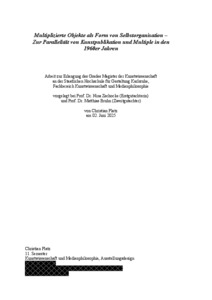
Multiplizierte Objekte als Form von Selbstorganisation
Name that can easily go onto 2 lines
Author that can easily go onto 2 lines as well
- Titel
- Multiplizierte Objekte als Form von Selbstorganisation
- Titel (en)
- Multiplied objects as a form of self-organization
- Untertitel
- Zur Parallelität von Kunstpublikation und Multiple in den 1960er Jahren
- Untertitel des Projekts/Werks (en)
- On the Parallelism Between Art Publications and Multiples in the 1960s
- Autor/in
- Beschreibung (de)
- Kunstpublikationen und Multiples (Auflagenobjekte) der 1960er Jahren weisen strukturelle und konzeptuelle Parallelen auf, die in dieser Arbeit als Ausdruck selbstorganisierter künstlerischer Praxis zu verstehen sind. Ausgehend von einer kritischen Auseinandersetzung mit dem etablierten Kunstsystem entstanden in dieser Zeit alternative Formate der Produktion und Distribution, die auf Vervielfältigung, Partizipation und Autonomie basierten. Anhand exemplarischer Fallbeispiele, darunter die intermedialen Publikationsobjekte "dokumentation b", die "Edition Et", die Zeitschriften "spirale" und "rot" sowie die Multiples der Edition "MAT" und die Serienobjekte der "Gruppe X", wird gezeigt, wie sich die entsprechenden Werkformen als kuratorische, serielle und partizipative Medien positionieren lassen. Die Arbeit kontextualisiert diese Formate sowohl medienästhetisch als auch kulturpolitisch und versteht sie als materielle Strategien der Selbstorganisation. Sie argumentiert, dass Kunstpublikationen und Multiples nicht nur als Ausdruck einer alternativen Öffentlichkeit fungierten, sondern mit ihnen auch frühe Modelle einer dezentralen künstlerischen Infrastruktur entwickelt wurden. Diese Betrachtung ermöglicht eine genealogische Neubewertung des Multiples, indem sie sich vom etablierten, auf Marcel Duchamp fixierten Diskursrahmen löst und eine weiter gefasste Perspektive eröffnet.
- Kunstpublikationen und Multiples (Auflagenobjekte) der 1960er Jahren weisen strukturelle und konzeptuelle Parallelen auf, die in dieser Arbeit als Ausdruck selbstorganisierter künstlerischer Praxis zu verstehen sind. Ausgehend von einer kritischen Auseinandersetzung mit dem etablierten Kunstsystem entstanden in dieser Zeit alternative Formate der Produktion und Distribution, die auf Vervielfältigung, Partizipation und Autonomie basierten. Anhand exemplarischer Fallbeispiele, darunter die intermedialen Publikationsobjekte "dokumentation b", die "Edition Et", die Zeitschriften "spirale" und "rot" sowie die Multiples der Edition "MAT" und die Serienobjekte der "Gruppe X", wird gezeigt, wie sich die entsprechenden Werkformen als kuratorische, serielle und partizipative Medien positionieren lassen. Die Arbeit kontextualisiert diese Formate sowohl medienästhetisch als auch kulturpolitisch und versteht sie als materielle Strategien der Selbstorganisation. Sie argumentiert, dass Kunstpublikationen und Multiples nicht nur als Ausdruck einer alternativen Öffentlichkeit fungierten, sondern mit ihnen auch frühe Modelle einer dezentralen künstlerischen Infrastruktur entwickelt wurden. Diese Betrachtung ermöglicht eine genealogische Neubewertung des Multiples, indem sie sich vom etablierten, auf Marcel Duchamp fixierten Diskursrahmen löst und eine weiter gefasste Perspektive eröffnet.
- Beschreibung (en)
- Art publications and multiples from the 1960s share structural and conceptual parallels that can be understood in this work as expressions of self-organized artistic practice. Based on a critical examination of the established art system, alternative formats of production and distribution emerged during this period that were based on reproduction, participation, and autonomy. Using exemplary case studies, including the intermedia publication objects "dokumentation b", "Edition Et", the magazines "spirale" and "rot", the multiples of Edition "MAT", and the serial objects of "Gruppe X", this work shows how the corresponding forms of work can be positioned as curatorial, serial, and participatory media. The work contextualizes these formats both in terms of media aesthetics and cultural politics and understands them as material strategies of self-organization. It argues that art publications and multiples not only functioned as expressions of an alternative public sphere, but also served to develop early models of a decentralized artistic infrastructure. This perspective enables a genealogical reassessment of the multiple by breaking away from the established discourse framework centered on Marcel Duchamp and opening up a broader perspective.
- Kategorie
- Typ des Projekts/Werks
- Schlagworte
- Datierung
- 02.06.2025
- Dank an
- Sprache
- Abmessungen
- 116 Seiten (77 Textseiten)
- Titel
- Multiplizierte Objekte als Form von Selbstorganisation
- Untertitel
- Zur Parallelität von Kunstpublikation und Multiple in den 1960er Jahren
- Projektleiter/in
- Semester
- Studiengang
- Typ der Abschlussarbeit
- Importiert am
- 16.03.2026
- Übergeordnete Sets
- 4
- Set enthält
- 0 3
PLAY DATE
Name that can easily go onto 2 lines
Author that can easily go onto 2 lines as well
- Titel
- PLAY DATE
- Untertitel
- PLAY DATE OBJECTS
- Autor/in
- Beschreibung (de)
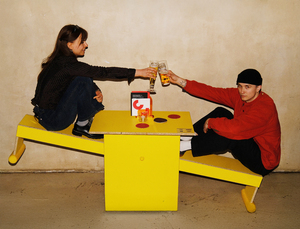
- Ausgehend von der Idee des freien Spielens in der Kindheit entfaltet sich PLAY DATE als Studienreihe, die die Entdeckung des zwecklosen Spielens im Erwachsenenalter erforscht. Oft von gesellschaftlichen Normen und sozialen Hemmungen überdeckt, bleibt der Spieltrieb doch bestehen, sobald man ihm wieder Raum gibt.
Ausgangspunkt war die Beobachtung, dass traditionelle Spielplätze fast ausschließlich Kindern vorbehalten sind, während erwachsene Personen kaum Raum finden, einfach verspielt zu sein.
In PLAY DATE 1, dem ersten experimentellen Spielplatz, wurde untersucht, welche nicht-kompetitiven Spielarten Erwachsene ansprechen. Die Ergebnisse zeigten, dass freies Spiel für Erwachsene angenommen würde, wenn der soziale Rahmen als akzeptierend wahrgenommen wird.
Darauf aufbauend fand PLAY DATE 2 in einer Bar statt, wo spielerische Bewegungsformen situativ in den Kontext des sozialen Zusammenkommens und geselligen Beisammenseins integriert wurden. Spielerische Gesten konnten so nahtlos in gewohnte Beschäftigungen eingeschrieben werden.
Mit PLAY DATE 3 wurde die Erkundung im Alltag erweitert: temporäre Spielobjekte wurden in die Stadtlandschaft gebracht, um zu beobachten, wie Passant:innen auf unerwartete Momente des Spiels reagieren, die den Alltag durchbrechen.
PLAY DATE OBJECTS zeigen, wie freies Spiel für jedes Alter wieder zugänglich gemacht werden kann und neue soziale, kulturelle und räumliche Kontexte eröffnet.
- Ausgehend von der Idee des freien Spielens in der Kindheit entfaltet sich PLAY DATE als Studienreihe, die die Entdeckung des zwecklosen Spielens im Erwachsenenalter erforscht. Oft von gesellschaftlichen Normen und sozialen Hemmungen überdeckt, bleibt der Spieltrieb doch bestehen, sobald man ihm wieder Raum gibt.
- Beschreibung (en)
- Starting from the idea of uninhibited play in childhood, PLAY DATE unfolds as a series of studies exploring the rediscovery of purposeless play in adulthood. Although often obscured by social norms and inhibitions, the impulse to play persists, emerging again once it is given space.
The project originated from the observation that traditional playgrounds are almost exclusively designed for children, while adults rarely find spaces where they can simply be playful.
PLAY DATE 1, the first experimental playground, investigated which forms of non-competitive play appeal to adults. The results suggested that adults readily embrace free play when the social environment is perceived as accepting and non-judgmental.
Building on these findings, PLAY DATE 2 took place in a bar, where playful modes of movement were introduced into the social setting of gathering and spending time together. Playful gestures became seamlessly integrated into familiar social activities.
With PLAY DATE 3, the investigation expanded into everyday urban life. Temporary play objects were placed throughout the city to observe how passersby respond to unexpected moments of play that interrupt the routines of daily life.
PLAY DATE OBJECTS demonstrate how free play can be made accessible again for people of all ages, opening up new social, cultural, and spatial contexts.
- Starting from the idea of uninhibited play in childhood, PLAY DATE unfolds as a series of studies exploring the rediscovery of purposeless play in adulthood. Although often obscured by social norms and inhibitions, the impulse to play persists, emerging again once it is given space.
- Kategorie
- Schlagworte
- Material
- Titel
- PLAY DATE
- Untertitel
- PLAY DATE OBJECTS
- Projektleiter/in
- Semester
- Studiengang
- Importiert am
- 12.06.2026
- Übergeordnete Sets
- 1
- Set enthält
- 0 25
Eine Irrfahrt
Name that can easily go onto 2 lines
Author that can easily go onto 2 lines as well
- Titel
- Eine Irrfahrt
- Autor/in
- Beschreibung (de)
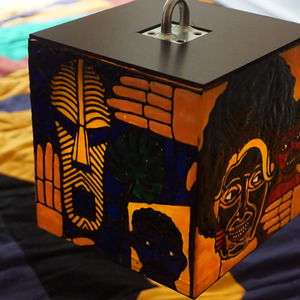
- Über einem Quilt, der den Rhein in seiner natürlichen und begradigten Form zeigt, hängen fünf beleuchtete Laternen mit Motiven aus Calibans Leben, eine schwarze Fähre und ein Schwarm Tigermücken. Begleitet wird die Installation von einem Soundstück. Gemeinsam erzählen die Elemente die Geschichte Calibans, der versucht, sich in einer Welt zu orientieren, deren Kategorien nicht ausreichen, um seine Erfahrung zu beschreiben.
Die Arbeit folgt zunächst der Logik des Märchens vom hässlichen Entlein. Die wiederholte Begegnung mit dem Anderen wird dort als Erfahrung von Ablehnung erzählt. Erlösung verspricht erst die Begegnung mit den eigenen Gleichen. Das Märchen entwirft damit eine Vorstellung von Identität und Zugehörigkeit, die auf Ähnlichkeit beruht und die Welt in klare Kategorien von Eigenem und Anderem ordnet.
Anhand der Figur Caliban untersucht die Arbeit, was geschieht, wenn Zugehörigkeit und Identität nicht durch Herkunft, Ähnlichkeit oder Ankunft hergestellt werden können.
Während der Schriftsteller und Denker Édouard Glissant Identität als etwas versteht, das in Beziehung entsteht und sich fortwährend verändert, folgen auch die afroamerikanischen mündlichen Erzählungen um die Trickster-Figur Brer Rabbit keiner endgültigen Auflösung. Anders als im Märchen vom hässlichen Entlein führt die Suche hier nicht zu einem Zustand dauerhaften Gleichgewichts. Stattdessen offenbart sich eine andere Logik, in der Identität und Zugehörigkeit nicht durch die Begegnung mit den eigenen Gleichen entstehen, sondern durch fortwährende Beziehungen, Verschiebungen und Neuorientierungen.
- Über einem Quilt, der den Rhein in seiner natürlichen und begradigten Form zeigt, hängen fünf beleuchtete Laternen mit Motiven aus Calibans Leben, eine schwarze Fähre und ein Schwarm Tigermücken. Begleitet wird die Installation von einem Soundstück. Gemeinsam erzählen die Elemente die Geschichte Calibans, der versucht, sich in einer Welt zu orientieren, deren Kategorien nicht ausreichen, um seine Erfahrung zu beschreiben.
- Beschreibung (en)
- Suspended above a quilt depicting the Rhine in both its natural and canalized form are five illuminated lanterns featuring scenes from Caliban's life, a black ferry, and a swarm of tiger mosquitoes. The installation is accompanied by a sound piece. Together, these elements tell the story of Caliban, who attempts to navigate a world whose categories are insufficient to describe his experience.
The work initially follows the logic of The Ugly Duckling. In the fairy tale, repeated encounters with the Other are experienced as rejection. Redemption is promised only through the encounter with one's own kind. The story thus presents an understanding of identity and belonging based on similarity, dividing the world into clear categories of self and other.
Through the figure of Caliban, the work explores what happens when belonging and identity can no longer be established through origin, similarity, or arrival.
While the writer and thinker Édouard Glissant understands identity as something that emerges through relation and is constantly transformed, the African American oral tales surrounding the trickster figure Brer Rabbit likewise resist any final resolution. Unlike The Ugly Duckling, the search does not lead to a lasting state of equilibrium. Instead, another logic emerges, in which identity and belonging are shaped not through the encounter with one's own kind, but through ongoing relations, shifts, and reorientations.
- Suspended above a quilt depicting the Rhine in both its natural and canalized form are five illuminated lanterns featuring scenes from Caliban's life, a black ferry, and a swarm of tiger mosquitoes. The installation is accompanied by a sound piece. Together, these elements tell the story of Caliban, who attempts to navigate a world whose categories are insufficient to describe his experience.
- Kategorie
- Schlagworte
- Mitwirkende
- Dank an
- Ort: Institution
- Stadt
- Titel
- Eine Irrfahrt
- Typ der Abschlussarbeit
- Importiert am
- 27.06.2026
- Übergeordnete Sets
- 1
- Set enthält
- 0 14
Forest Souvenirs
Name that can easily go onto 2 lines
Author that can easily go onto 2 lines as well
- Titel
- Forest Souvenirs
- Autor/in
- Beschreibung (de)
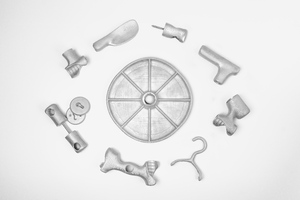
- Forest Souvenirs ist ein modulares System langlebiger Verbindungselemente, das aus ausrangierten Aluminium-Autofelgen gefertigt wird und recyceltes Metall mit von den Nutzer:innen gesammelten, ausgewählten und bearbeiteten Holzästen kombiniert. So entstehen flexible Alltagsobjekte wie Stühle, Lampen, Garderoben oder Kleiderhaken aus lokal gefundenen Materialien. Statt fertiger Produkte bietet das System eine einfache, robuste metallische Schnittstelle, die zur aktiven Aneignung einlädt. Die leimfreien, wiederverwendbaren Verbinder ermöglichen den Aufbau ohne spezielle Werkzeuge oder Vorkenntnisse und machen Materialkreisläufe im Gebrauch unmittelbar erfahrbar.
Forest Souvenirs versteht sich als offenes, zirkuläres Designsystem zwischen industrieller Logik und naturbasiertem Gestalten. Es verlängert nicht nur Materiallebenszyklen, sondern schafft eine hybride Formensprache, die den Archetyp des selbstgebauten Möbels neu interpretiert. Die entstehenden Objekte sind keine fixen Produkte, sondern wandelbare Konfigurationen – ein kontinuierlicher Dialog zwischen Material, Umwelt und Nutzer:innen, die zu Co-Designer:innen werden und eine stärkere emotionale Bindung sowie ein vertieftes Materialbewusstsein entwickeln.
- Forest Souvenirs ist ein modulares System langlebiger Verbindungselemente, das aus ausrangierten Aluminium-Autofelgen gefertigt wird und recyceltes Metall mit von den Nutzer:innen gesammelten, ausgewählten und bearbeiteten Holzästen kombiniert. So entstehen flexible Alltagsobjekte wie Stühle, Lampen, Garderoben oder Kleiderhaken aus lokal gefundenen Materialien. Statt fertiger Produkte bietet das System eine einfache, robuste metallische Schnittstelle, die zur aktiven Aneignung einlädt. Die leimfreien, wiederverwendbaren Verbinder ermöglichen den Aufbau ohne spezielle Werkzeuge oder Vorkenntnisse und machen Materialkreisläufe im Gebrauch unmittelbar erfahrbar.
- Beschreibung (en)
- Forest Souvenirs reimagines our relationship with everyday objects by bridging industrial production and nature-based making. Rooted in humanity's earliest practices of sourcing and shaping materials from the immediate environment, the project responds to the detachment created by global industrialization. Instead of offering finished products, it transforms a discarded aluminum car rim into a modular system of nine durable connectors, each made from 100% recycled material. These elements serve as a simple yet precise interface, enabling users to combine them with wooden branches they collect, select, and shape themselves.
Through this process, found materials become functional objects such as chairs, lamps, coat racks, hangers, or even a walking cane. Assembly requires no adhesives or specialized tools, making the system accessible, reusable, and fully recyclable. The mono-material aluminum ensures a closed material cycle, while the organic variability of wood introduces uniqueness and adaptability. Each object becomes a reflection of its maker and its environment.
Forest Souvenirs places the user at the center of creation. The act of gathering wood becomes an intentional journey—an invitation to slow down, step outside urban routines, and reconnect with nature. Walking replaces driving, making replaces consuming. This participatory approach fosters emotional attachment, material awareness, and a deeper appreciation for resources and processes.
By merging industrial logic with the archetype of self-crafted furniture, the project establishes a hybrid design language that is both contemporary and timeless. The aluminum connector acts as a threshold between two worlds: standardized production and organic growth. In doing so, Forest Souvenirs challenges conventional systems of consumption and proposes an alternative grounded in reuse, care, and engagement.
Ultimately, the project reframes everyday objects as evolving, personal artifacts. It empowers users as co-designers and encourages a shift from passive consumption toward active participation—offering not just objects, but meaningful experiences and a renewed connection to our surroundings.
- Forest Souvenirs reimagines our relationship with everyday objects by bridging industrial production and nature-based making. Rooted in humanity's earliest practices of sourcing and shaping materials from the immediate environment, the project responds to the detachment created by global industrialization. Instead of offering finished products, it transforms a discarded aluminum car rim into a modular system of nine durable connectors, each made from 100% recycled material. These elements serve as a simple yet precise interface, enabling users to combine them with wooden branches they collect, select, and shape themselves.
- Kategorie
- Typ des Projekts/Werks
- Schlagworte
- Datierung
- 30.10.2025
- Mitwirkende
- Material
- Technik/Verfahren/Formate
- Aluminium Sandguss
- Ort: Institution
- Ort
- Lichthof
- Stadt
- Land
- Titel
- Forest Souvenirs
- Projektleiter/in
- Semester
- Studiengang
- Typ der Abschlussarbeit
- Archiv-Signatur
- Importiert am
- 13.03.2026
- Übergeordnete Sets
- 1
- Set enthält
- 0 26
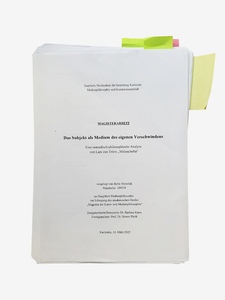
Das Subjekt als Medium des eigenen Verschwindens
Name that can easily go onto 2 lines
Author that can easily go onto 2 lines as well
- Titel
- Das Subjekt als Medium des eigenen Verschwindens
- Titel (en)
- The Subject as the Medium of Its Own Disappearance
- Untertitel
- Eine nomadisch-philosophische Analyse von Lars von Triers "Melancholia"
- Untertitel des Projekts/Werks (en)
- A Nomadic-Philosophical Reading of Lars von Trier’s Melancholia
- Autor/in
- Beschreibung (de)
- Die vorliegende Magisterarbeit untersucht Lars von Triers Film Melancholia als filmischen Denk-
und Wahrnehmungsraum, in dem sich Subjektivität unter Bedingungen einer als „absolute
Gegenwart“ beschriebenen Gegenwartsanalyse konstituiert. Der Begriff geht auf den von Marcus
Quent herausgegebenen Sammelband Absolute Gegenwart (2016) zurück. Dieser beschreibt
gegenwärtige Erfahrungs- und Zeitstrukturen als Spannungsfeld von Beschleunigung,
Bewegungsstarre und der Erosion von Differenz, verbunden mit einem Zustand der Ohnmacht, in
dem Handlung und Denken zunehmend eingeschränkt werden. Diese Analyse bildet den
Ausgangspunkt einer Perspektive, die den Film nicht als Illustration theoretischer Modelle versteht,
sondern ihn aus seiner eigenen Wahrnehmungslogik heraus erschließen möchte.
Im Zentrum steht die Melancholie als Wahrnehmungsmodus, der nicht als klinisch-pathologische
Depression verstanden wird, sondern als Transformation eines Weltbezugs, in dem sich die
Erfahrung des Anderen in eine verschobene und intensivierte Form der Zugänglichkeit ausbildet.
Der Planet Melancholia fungiert dabei nicht als äußeres Symbol, sondern als Schwellenfigur eines
paradoxen Außen, das zugleich Welt-Außen und inneres Außen des Subjekts ist. In dieser Struktur
erscheint das Andere nicht als stabile Gegeninstanz, sondern als entziehende Bewegung, die
Wahrnehmung affiziert, entsichert und verschiebt. Die melancholische Intention steht zu diesem
Außen in einer paradoxen Relation der Annäherung durch Nicht-Aneignung bzw. der Aneignung
im Modus des Nicht-Besitzes, in der sich ein virtuelles Gefüge des Sinnlich-Unsinnlichen eröffnet,
das den Raum der Erfahrung selbst reorganisiert.
Die Arbeit verbindet psychoanalytische Perspektiven (Sigmund Freud, Jacques Lacan) und
kulturphilosophische Ansätze der Melancholie (Giorgio Agamben) mit dem Denken Gilles
Deleuzes, das die zentrale theoretische Perspektive der Arbeit bildet. Im Zentrum stehen seine
Konzeption eines Begehrens jenseits von Subjekt und Objekt sowie seine Differenzphilosophie.
Ergänzend werden zeitdiagnostische Positionen von Byung-Chul Han und Alain Badiou sowie
weitere theoretische Perspektiven, unter anderem von Mark Fisher und Judith Butler, herangezogen.
Die Analyse des Films folgt einer Struktur aus Prolog und apokalyptischem Ereignis, zwischen
denen sich ein Erfahrungs- und Psychologieraum zwischen einem ersten und einem zweiten
Untergang eröffnet. Melancholia erscheint dabei als Versuchsanordnung, in der das Ende der Welt
als prekäre Schwelle erscheint, in der Wahrnehmung, Begehren und Weltverhältnis neu konfiguriert
werden. Ziel ist eine Lesart, in der Subjektivität gerade im Entwurf ihres Verschwindens ein
Vermögen der Öffnung gegenüber Alterität gewinnt.
- Die vorliegende Magisterarbeit untersucht Lars von Triers Film Melancholia als filmischen Denk-
- Beschreibung (en)
- This master's thesis examines Lars von Trier’s Melancholia as a cinematic space of thought and
perception in which subjectivity is constituted under the conditions of a temporal diagnosis
described in contemporary German theory as the “absolute Gegenwart” (literally: “absolute
present“). The term originates in Absolute Gegenwart (2016), an edited volume by Marcus Quent.
This volume describes contemporary structures of experience and temporality as a field of tension
between acceleration, stasis, and the erosion of difference, accompanied by a state of impotence in
which action and thought are increasingly constrained. This analysis serves as the point of departure
for an approach that does not treat the film as an illustration of theoretical models, but instead seeks
to engage it on the basis of its own logic of perception.
At the center of the analysis lies melancholy as a mode of perception, not understood as a clinical
pathology, but as a transformation of one’s relation to the world, in which the experience of the
Other is transformed into a shifted and intensified form of accessibility. The planet Melancholia
does not function as a symbolic object, but as a threshold figure of a paradoxical outside that is
simultaneously external to the world and internal to the subject. Within this structure, the Other no
longer appears as a stable counterpart, but as a movement of withdrawal that affects, destabilizes,
and displaces perception. The melancholic intention stands in a paradoxical relation to this outside,
characterized by an approach through non-appropriation, or appropriation in the mode of non-
possession, within which a virtual field of the sensible and the non-sensible emerges, reorganizing
the very space of experience.
The thesis combines psychoanalytic perspectives (Sigmund Freud, Jacques Lacan) and
philosophical approaches to melancholy (Giorgio Agamben) with the thought of Gilles Deleuze,
which constitutes the central theoretical framework of the study. Particular emphasis is placed on
his conception of desire beyond subject and object and on his philosophy of difference. In addition,
contemporary diagnoses of the present by Byung-Chul Han and Alain Badiou, as well as further
theoretical contributions by authors such as Mark Fisher and Judith Butler, are incorporated.
The analysis of the film follows a structure of prologue and apocalyptic event, within which an
experiential and psychological space unfolds between a first and a second downfall. Melancholia is
thus read as an experimental arrangement in which the end of the world appears as a precarious
threshold, in which perception, desire, and world relation are reconfigured. The thesis argues that
subjectivity gains its capacity for openness toward alterity precisely in the projection of its own
disappearance.
- This master's thesis examines Lars von Trier’s Melancholia as a cinematic space of thought and
- Kategorie
- Typ des Projekts/Werks
- Schlagworte
- Datierung
- 10.03.2025
- Sprache
- Titel
- Das Subjekt als Medium des eigenen Verschwindens
- Untertitel
- Eine nomadisch-philosophische Analyse von Lars von Triers "Melancholia"
- Projektleiter/in
- Semester
- Studiengang
- Typ der Abschlussarbeit
- Importiert am
- 27.06.2026
- Übergeordnete Sets
- 1
- Set enthält
- 0 3
Writing the History Of the Future
Name that can easily go onto 2 lines
Author that can easily go onto 2 lines as well
- Titel
- Writing the History Of the Future
- Titel (en)
- Writing the History Of the Future
- Untertitel
- Das ZKM und die kulturelle Arbeit der Medienkunstkonservierung
- Untertitel des Projekts/Werks (en)
- ZKM and the Cultural Work of Media Art Conservation
- Autor/in
- Beschreibung (de)
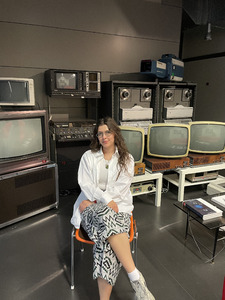
- Obwohl die Medienkunst in der zeitgenössischen Kultur zunehmend an Bedeutung gewinnt, ist sie in institutionellen Sammlungen immer noch unterrepräsentiert. Die schnelle technologische Entwicklung von Hard- und Software sowie geplante Obsoleszenz stellen die Konservierung vor große Herausforderungen. Seit den 1960er Jahren hat sich die westliche Kunst von objektbasierten hin zu performativen und prozessorientierten Formen gewandelt. Dies wurde von einem Paradigmenwechsel in der Konservierungstheorie begleitet, in der Konzepte und Subjekt stärker gewichtet werden als Materialität und Objekt. Museen und der Kunstmarkt haben jedoch Schwierigkeiten, ihre Sammelpraktiken entsprechend anzupassen. In dieser Arbeit werden die Herausforderungen der Integration von Medienkunst in institutionelle Kontexte untersucht und der Bedarf an theoretischen und praktischen Anpassungen betont. Ziel ist es, Strategien zur nachhaltigen Einbindung technologisch vermittelter Kunstwerke in Sammlungen und das kulturelle Gedächtnis zu entwickeln. Im Fokus steht dabei das ZKM in Karlsruhe als führende Institution der Medienkunstkonservierung. Auf Basis interdisziplinärer Forschung und Interviews werden zentrale Themen wie Interaktivität, Variabilität, Authentizität, Zeitlichkeit und der Wandel des Kunstobjekts analysiert.
- Beschreibung (en)
- Media art, despite its growing prominence in contemporary culture, remains underrepresented in institutional collections. Rapid technological obsolescence—affecting both hardware and software—poses major challenges for preservation. Since the 1960s, Western art has shifted from object-based works toward performative and process-oriented practices, paralleled by changes in conservation theory that prioritize concepts and subject over object and materiality. However, museums and the art market have struggled to adapt their collecting practices to these developments. This thesis examines the challenges of integrating media art into institutional contexts, emphasizing the need for conceptual and theoretical shifts in both museum practices and art theory. It aims to describe the strategies for incorporating technologically mediated artworks into collections and cultural memory. The study focuses on the ZKM (Center for Art and Media) in Karlsruhe, a leading institution in media art preservation. Through analysis of its frameworks and interdisciplinary research including interviews, the thesis explores key themes like interactivity, variability, authenticity, temporality, and the evolving nature of the art object.
- Kategorie
- Schlagworte
- Dank an
- Sprache
- Abmessungen
- 272 Seiten (169 Textseiten)
- Titel
- Writing the History Of the Future
- Untertitel
- Das ZKM und die kulturelle Arbeit der Medienkunstkonservierung
- Projektleiter/in
- Semester
- Studiengang
- Typ der Abschlussarbeit
- Importiert am
- 25.03.2026
- Übergeordnete Sets
- 4
- Set enthält
- 0 5
2.5
Name that can easily go onto 2 lines
Author that can easily go onto 2 lines as well
- Titel
- 2.5
- Titel (en)
- 2.5
- Untertitel
- applied material study on 2.5mm peeled Veneer
- Untertitel des Projekts/Werks (en)
- Eine angewandte Materialstudie zu 2.5mm Schälfunier
- Autor/in
- Beschreibung (de)
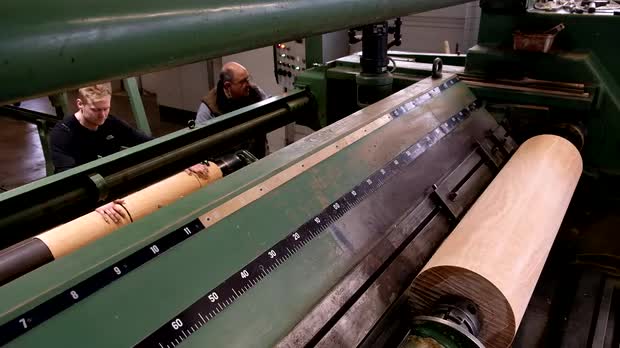
- Schälfurnier ist eine der wenigen Holzgewinnungsmethoden,
die sich an der natürlichen, runden Form des
Baumes orientiert. Ein zuvor entasteter und gedämpfter
Stamm rotiert horizontal gegen eine lange Klinge
ähnlich einem Spitzer für Stifte.
Dabei entsteht eine kontinuierliche Bahn aus Holz.
Da keine klassische Sägemechanik zum Einsatz
kommt, fällt kaum Staub an und es entsteht nahezu
kein Materialverlust durch Sägeschnitte. Durch das rota torische
Arbeiten am runden Stamm ist der Materialertrag
besonders effizient. Im Vergleich zum Aufsä gen
eines Stammes im Sägewerk bei dem ein runder
Stamm in eckige Massivholzteile zerlegt wird
liegt der Ertrag etwa 30–40 % höher.
Furnier wird meist dekorativ eingesetzt, um Oberflächen
aufzuwerten. Eine tragende Rolle erhält es vor
allem in sperrverleimten Schichtwerkstoffen, in de nen
es im Verbund überraschende Stabilität und gestalterische
Flexibilität entwickelt.
Durch kleine Interventionen im Produktionsprozess
lässt sich das Furnier nicht nur als einzelne Blätter,
sondern als kontinuierliche Rolle mit definiertem Maß
entnehmen. Diese Rolle bildet den Ausgangspunkt
und Rohstoff für eine Möbel-Kleinserie.
Die Serie „2.5“ untersucht die strukturellen Möglichkeiten
dieses Materials durch eine Neuinterpretation
klassischer Verarbeitungsmethoden.
2.5.H1
Ein Hocker mit zweifach gekrümmter Sitzschale aus
form verleimtem Furnier. Ein extrudierter Kantenanleimer
setzt sich spiralförmig im Inneren fort und bildet
eine tragende Struktur. Die durch die Geometrie der
Sitzschale entstehende Schattenfuge zum Boden legt
zugleich die textile Erscheinung der natürlichen Verwerfungen
offen, die im Furnier während des Trocknungsprozesses
entstehen.
2.5.R1
Ein Wandregalsystem, das die Kontinuität der Furnierrolle
nutzt, die durch ihr frühzeitiges Entnehmen im
Produktionsprozess möglich wird. Eine dünne Sperrschicht stabiisiert
die Faserstruktur und nimmt Zugkräfte
auf die sie zu den frei Plazierbaren Klemmträgern leitett. So bleibt eine
minimale Materialstärke bei maximaler Flexibilität
erhalten. Frei platzierbare Regalträger ermöglichen eine
spielerische Gestaltungsfreiheit und erzeugen ein
leichtes, dennoch tragfähiges Regalsystem mit geringem
Materialeinsatz.
2.5.R2
Ein Wandregal, das die Querfasern des Furniers entlang
der kurzen Seite nutzt. Was zunächst wie eine Schwäche
erscheint, ermöglicht durch die Sicherung der Kanten
eine hohe Stabilität bei sehr geringer Materialstärke.
Die Fixierung erfolgt ausschließlich entlang der Wandseite.
Natürliche Verwerfungen im Material erzeugen
dabei eine spannungsreiche Interaktion zwischen den
Furnierschichten und eine ausdrucksstarke Stirnseite.
2.5.S1
Der Sessel verbindet Formverleimung mit Prinzipien des
Kassettenbaus. Querfaseriges Furnier leitet Kräfte
direkt zu zwei tragenden Längsfriesen. An besonders
belasteten Stellen verdoppelt sich das Material, ohne
zwingend verklebt zu werden. Windungen unter der Sitzfläche
legen die Konstruktion offen. Starre Verbindungen
entstehen nur dort, wo sie notwendig sind, sodass
die Flexibilität des Materials vollständig genutzt wird
und Komfort sowie eine natürliche Dämpfung entstehen.
- Schälfurnier ist eine der wenigen Holzgewinnungsmethoden,
- Beschreibung (en)
- Rotary-cut veneer is one of the few methods of wood processing that follows the tree’s natural, cylindrical form. A debarked and steamed log rotates horizontally against a long blade, much like a pencil being sharpened. This process produces a continuous sheet of wood.
Because no conventional sawing is involved, very little dust is generated and material loss through saw kerfs is virtually eliminated. By working directly with the round log, the process achieves a particularly high material yield. Compared to sawing a log into rectangular timber sections in a sawmill—where a cylindrical trunk is converted into square lumber—the yield is approximately 30–40% higher.
Veneer is most commonly used as a decorative surface material. Its structural potential is typically realized in engineered wood products such as plywood and laminated composites, where thin layers of veneer combine to create remarkable strength and design flexibility.
With minor interventions in the production process, veneer can be extracted not only as individual sheets but also as a continuous roll of defined dimensions. This roll becomes both the starting point and the raw material for a small furniture collection.
The 2.5 series explores the structural possibilities of rotary-cut veneer through a reinterpretation of traditional manufacturing techniques.
2.5.H1
A stool featuring a doubly curved seat shell made from molded veneer. An extruded edge band continues in a spiral within the interior, forming the load-bearing structure. The shadow gap created between the seat shell and the floor reveals the textile-like appearance of the natural distortions that develop in the veneer during the drying process.
2.5.R1
A wall-mounted shelving system that takes advantage of the continuity of the veneer roll, made possible by removing the material early in the production process. A thin backing layer stabilizes the fibre structure and absorbs tensile forces, transferring them to freely positionable clamping supports. This allows for minimal material thickness while maintaining maximum flexibility.
The movable supports enable playful customization and create a lightweight yet load-bearing shelving system with a minimal use of material.
2.5.R2
A wall shelf that exploits the cross-grain properties of veneer along its shorter dimension. What initially appears to be a weakness becomes a source of strength: by reinforcing the edges, high stability can be achieved despite the extremely thin material.
The shelf is fixed exclusively along the wall side. Natural deformations within the material create a dynamic interaction between the veneer layers and result in a distinctive and expressive edge profile.
2.5.S1
This lounge chair combines molded veneer construction with principles derived from box-beam structures. Cross-grain veneer transfers loads directly to two longitudinal structural rails. In highly stressed areas, the material doubles in thickness without necessarily being bonded, allowing the construction to remain efficient and adaptable.
The layered folds beneath the seat expose the structural logic of the piece. Rigid connections are used only where structurally required, allowing the material’s inherent flexibility to be fully utilized. The result is a chair that offers comfort, natural damping, and an honest expression of its construction.
- Rotary-cut veneer is one of the few methods of wood processing that follows the tree’s natural, cylindrical form. A debarked and steamed log rotates horizontally against a long blade, much like a pencil being sharpened. This process produces a continuous sheet of wood.
- Kategorie
- Typ des Projekts/Werks
- Schlagworte
- Datierung
- 16.04.2026
- Dank an
- Sprache
- Material
- Technik/Verfahren/Formate
- Holzarbeiten
- Abmessungen
- Hocker: 50x30x45 Tisch 100x50x50 Lounge Chair 60x80x80 Regal 180x20x3.1
- Stadt
- Land
- Beteiligte Institution(en)
- Titel
- 2.5
- Untertitel
- applied material study on 2.5mm peeled Veneer
- Studiengang
- Typ der Abschlussarbeit
- Importiert am
- 09.06.2026
- Übergeordnete Sets
- 1
- Set enthält
- 0 32