| Titel | |
| Titel (en) | |
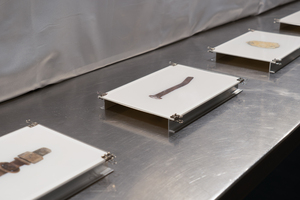
| Untertitel | - Baiyin - what the mine left behind
|
| Untertitel des Projekts/Werks (en) | - Baiyin - what the mine left behind
|
| Autor/in | |
| Beschreibung (de) | - Meine künstlerische Arbeit beschäftigt sich mit den Beziehungen zwischen Metall, Bergbau sowie familiären und urbanen Archiven. Metall fungiert dabei sowohl als Material als auch als Sprache: Es trägt Gewicht, Klang und Zeit in sich und bewahrt Spuren politischer, industrieller und arbeitsgeschichtlicher Prozesse.
Ich bin in Baiyin in der chinesischen Provinz Gansu aufgewachsen, einer durch den Bergbau entstandenen Industriestadt, auch bekannt als „Kupferstadt“. Mehrere Generationen meiner Familie waren im Bergbau, in der Verhüttung und in der Erzverarbeitung tätig. Diese biografischen Hintergründe erscheinen in meiner Arbeit nicht als Nostalgie, sondern als struktureller Rahmen, der mein Verständnis von Materialität, Körper und Stadt prägt. Die Mine ist für mich kein fixer Ort, sondern ein sich wandelndes System vom Erz zum Metall, von der Infrastruktur zur Stadt und schließlich zur Ruine.
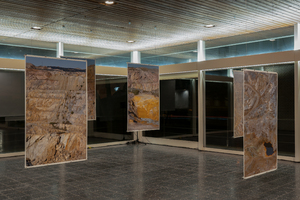
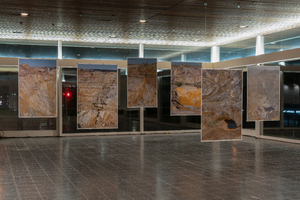
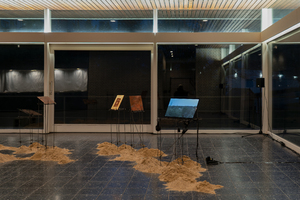
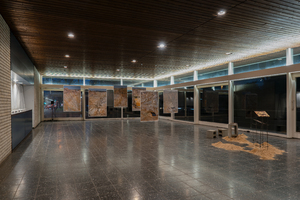
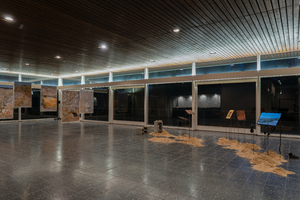
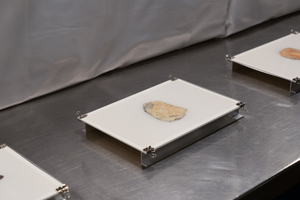
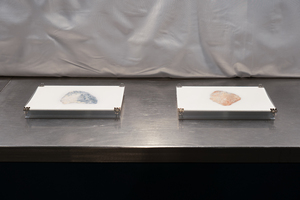
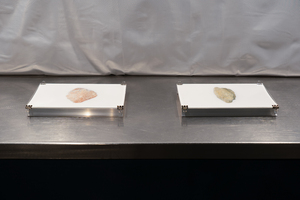
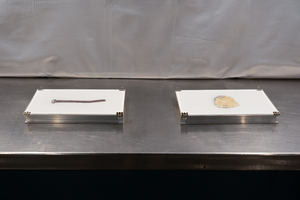
Methodisch arbeite ich mit Fotografie, Archivmaterial, industriellen Überresten sowie mit Video, Klang und Installation. Fotografie verstehe ich dabei als Prozess der Extraktion und Transformation, der Materialien aus ihrem ursprünglichen Funktionszusammenhang löst und in einen Zustand suspendierter Evidenz überführt.
|
| Beschreibung (en) | - My artistic work explores the relationships between metal, mining, and familial and urban archives. Metal functions both as a material and as a language: it carries weight, sound, and time, and preserves traces of political, industrial, and labor-related processes.
I grew up in Baiyin in Gansu Province, China, an industrial city shaped by mining, also known as the “Copper City.” Several generations of my family were involved in mining, smelting, and ore processing. These biographical backgrounds do not appear in my work as nostalgia, but rather as a structural framework that shapes my understanding of materiality, the body, and the city. For me, the mine is not a fixed place, but a constantly evolving system — from ore to metal, from infrastructure to the city, and ultimately to ruin.
Methodologically, I work with photography, archival materials, industrial remnants, as well as video, sound, and installation. I understand photography as a process of extraction and transformation, one that removes materials from their original functional context and transfers them into a state of suspended evidence.
|
| Kategorie | |
| Mitwirkende | |
| Material | |
| Technik/Verfahren/Formate | - Fotografie, Installation, Video
|
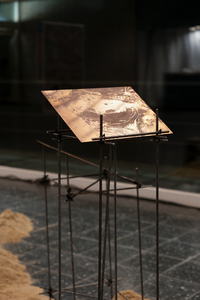
| Abmessungen | - 6 große Bilder je 900 x 1400 mm, 8 kleine Bilder je 210 x 297 mm, 4 Kupferpalette, 3 davon je 210 x 297 mm, 1 420 x 594 mm, 4 Ständer je 70 bis 100 cm hoch.
|
| Dauer | - Ein Video dauert 10 Minuten und 19 Sekunden.
|