Living Library (2024-2026)
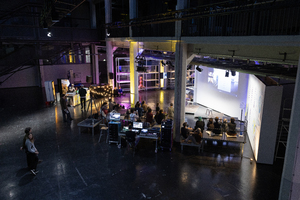
Living Library (2024-2026)
Bio Design Lab
| Semester |
Highlighted items
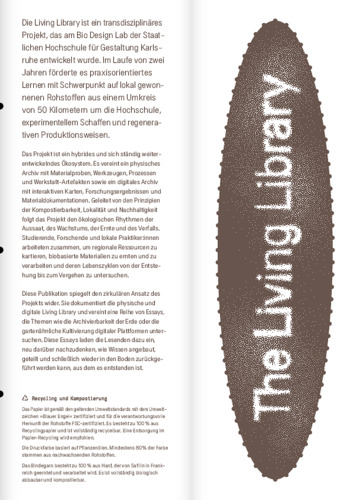
9 Items
- Page 1 of 1
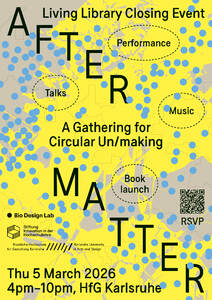
After Matter: A Gathering for Circular Un/making
Name that can easily go onto 2 lines
Author that can easily go onto 2 lines as well
- Title
- After Matter: A Gathering for Circular Un/making
- Description (de)
- Wie lassen sich gesammeltes Wissen und Materialien in zirkuläre Praktiken überführen? Zum Abschluss der Projektlaufzeit lädt die Living Library zu einem Abend ein, an dem Gespräche, künstlerische Inputs und performative Gesten ineinandergreifen. Von Impulsvorträgen zu Afterlife und Urban Gardening über Soundperformances, bioregionales Dinner-Picknick und Kompost-Ritual: Seid dabei und stoßt mit uns auf das Ende und den Neuanfang an! Zum Abschluss feiern wir den offiziellen Launch der Publikation – begleitet von Drinks und DJs.
- Description (en)
- How can collected knowledge and materials be transformed into circular practices? At the end of the project period, the Living Library invites everyone to an evening of intertwined conversations, artistic inputs, and performative gestures. From impulse talks on afterlife and urban gardening to sound performances, a bioregional dinner picnic, and a compost ritual: join us and toast the end and the new beginning! We will conclude by celebrating the official launch of the publication—accompanied by drinks and DJs.
- Title
- After Matter: A Gathering for Circular Un/making
- Imported on
- 31.03.2026
- Parent sets
- 1
- Set is related to
- 0 22
Ausstellungen
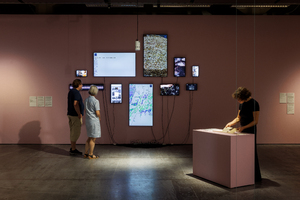
Name that can easily go onto 2 lines
Author that can easily go onto 2 lines as well
- Title
- Ausstellungen
- Title (en)
- Exhibitions
- Title
- Ausstellungen
- Imported on
- 02.09.2025
- Parent sets
- 1
- Set is related to
- 2 0
Bio Design Lab
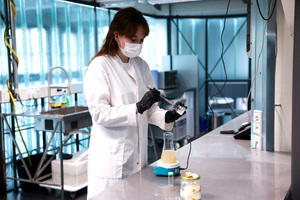
Name that can easily go onto 2 lines
Author that can easily go onto 2 lines as well
- Title
- Bio Design Lab
- Title
- Bio Design Lab
- Imported on
- 10.03.2026
- Parent sets
- 1
- Set is related to
- 0 9
Digitale Living Library
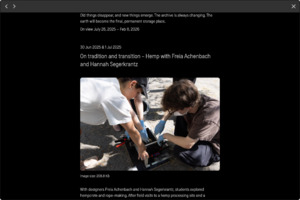
Name that can easily go onto 2 lines
Author that can easily go onto 2 lines as well
- Title
- Digitale Living Library
- Title (en)
- Digital Living Library
- Title
- Digitale Living Library
- Imported on
- 18.02.2026
- Parent sets
- 1
- Set is related to
- 0 16
Karten
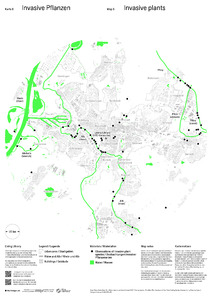
Name that can easily go onto 2 lines
Author that can easily go onto 2 lines as well
- Title
- Karten
- Title (en)
- Maps
- Title
- Karten
- Imported on
- 10.03.2026
- Parent sets
- 1
- Set is related to
- 0 8
Lehrprogramm
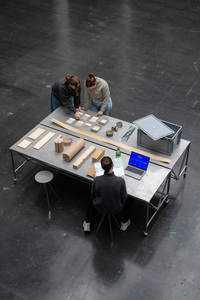
Name that can easily go onto 2 lines
Author that can easily go onto 2 lines as well
- Title
- Lehrprogramm
- Title (en)
- Education programme
- Description (de)
- Das Lehrprogramm umfasste eine Reihe von zweitägigen Veranstaltungen, die jeweils eine Exkursion, ein Kolloquium und einen praktischen Workshop kombinierten. Diese Zusammenkünfte wurden zu Orten, an denen sich Wissen aus verschiedenen Bereichen kreuzte, Materialien mit den Orten und Gemeinschaften in Verbindung gebracht wurden, aus denen sie stammten, und Studierende mit Fachleuten zusammenkamen, die sowohl konzeptionelle Reflexion als auch praktische Experimente anleiten konnten. Durch die Zusammenführung lokaler und internationaler Stimmen förderte das Programm eine Kultur des gleichberechtigten Austauschs.
Am ersten Tag lag der Schwerpunkt auf der Erkundung. Die Teilnehmenden besuchten lokale Quellen für nachhaltige Materialien, beobachteten natürliche Kreisläufe und führten erste Experimente wie Faserextraktion, Verbundstoffbildung oder die Kultivierung von Biomaterialien durch. Die Kolloquien boten dann Raum, um Erkenntnisse aus den Exkursionen auszutauschen und sie in breitere Diskussionen über Biodesign und »Bioregioning«, neuen Materialismus oder »more than human« Narrative einzuordnen. Diese Sitzungen, die an der HfG Karlsruhe stattfanden und öffentlich online gestreamt wurden, öffneten den Austausch für ein breiteres Publikum und verknüpften Perspektiven von Studierenden, Praktizierenden und Forschenden miteinander.
Am zweiten Tag verlagerte sich der Schwerpunkt auf das Machen. Unter Anleitung von eingeladenen Praktizierenden verarbeiteten die Studierenden die während der Exkursionen gesammelten Materialien und arbeiteten direkt damit. In dieser Phase standen der Aufbau von Wissen und Fähigkeiten im Vordergrund, wobei gezeigt wurde, wie theoretische Forschung und ökologische Reflexion in die Praxis umgesetzt werden können. Durch die Auseinandersetzung mit den Materialien durch Berühren, Experimentieren und Iteration entdeckten die Studierenden sowohl das Potenzial als auch die Grenzen der lokalen Ressourcen – Erkenntnisse, die in die eigene unabhängige Praxis einfließen können.
- Das Lehrprogramm umfasste eine Reihe von zweitägigen Veranstaltungen, die jeweils eine Exkursion, ein Kolloquium und einen praktischen Workshop kombinierten. Diese Zusammenkünfte wurden zu Orten, an denen sich Wissen aus verschiedenen Bereichen kreuzte, Materialien mit den Orten und Gemeinschaften in Verbindung gebracht wurden, aus denen sie stammten, und Studierende mit Fachleuten zusammenkamen, die sowohl konzeptionelle Reflexion als auch praktische Experimente anleiten konnten. Durch die Zusammenführung lokaler und internationaler Stimmen förderte das Programm eine Kultur des gleichberechtigten Austauschs.
- Description (en)
- The education programme unfolded through a series of two-day events, each combining a field trip, a colloquium, and a hands-on workshop. These gatherings became spaces where knowledge from different domains intersected, linking materials to the locations and communities from which they emerged, while connecting students with practitioners who could guide both conceptual reflection and practical experimentation. By bringing together local and international voices, the programme cultivated a culture of equal exchange.
The first day centred on exploration. Participants visited local sources of sustainable materials, observed natural cycles, and engaged in early experiments such as fibre extraction, composite formation, or cultivating biomaterials. The colloquia then provided space to share insights from the excursions, situating them within broader discussions on biodesign and bioregioning, new materialism, or more-than-human narratives. Hosted at the HfG Karlsruhe and publicly streamed online, these sessions opened the exchange to a wider audience while weaving together perspectives from students, makers, and researchers.
The second day shifted the focus to making. Guided by invited practitioners, students processed and worked directly with the materials collected during the field trips. This phase emphasised knowledge and skill-building, showing how theoretical research and ecological reflection could be translated into practice. By engaging with materials through touch, experimentation, and iteration, students discovered both the potential and the limitations of local resources, insights they can carry on into their own independent practice.
- The education programme unfolded through a series of two-day events, each combining a field trip, a colloquium, and a hands-on workshop. These gatherings became spaces where knowledge from different domains intersected, linking materials to the locations and communities from which they emerged, while connecting students with practitioners who could guide both conceptual reflection and practical experimentation. By bringing together local and international voices, the programme cultivated a culture of equal exchange.
- Title
- Lehrprogramm
- Imported on
- 10.03.2026
- Parent sets
- 1
- Set is related to
- 8 0
Open-Access-Publikation
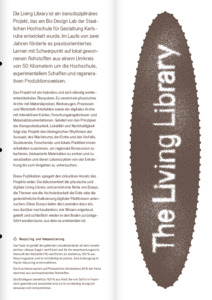
Name that can easily go onto 2 lines
Author that can easily go onto 2 lines as well
- Title
- Open-Access-Publikation
- Title (en)
- Open Access Publication
- Title
- Open-Access-Publikation
- Imported on
- 04.02.2026
- Parent sets
- 1
- Set is related to
- 0 2
Physische Living Library
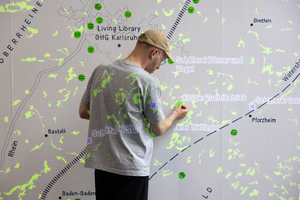
Name that can easily go onto 2 lines
Author that can easily go onto 2 lines as well
- Title
- Physische Living Library
- Title (en)
- Physical Living Library
- Title
- Physische Living Library
- Imported on
- 13.01.2025
- Parent sets
- 1
- Set is related to
- 4 0
Plakaten
Name that can easily go onto 2 lines
Author that can easily go onto 2 lines as well
- Title
- Plakaten
- Title (en)
- Posters
- Title
- Plakaten
- Imported on
- 10.03.2026
- Parent sets
- 1
- Set is related to
- 0 20