Writing the History Of the Future
Sibling sets (138)Show all relations
This set is related to the same sets as the selected set.
138 Items
- Page 1 of 12
Forest Souvenirs
Name that can easily go onto 2 lines
Author that can easily go onto 2 lines as well
- Title
- Forest Souvenirs
- Author
- Description (de)
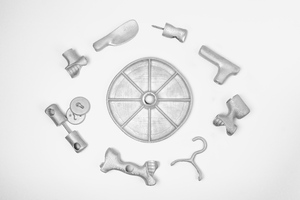
- Forest Souvenirs ist ein modulares System langlebiger Verbindungselemente, das aus ausrangierten Aluminium-Autofelgen gefertigt wird und recyceltes Metall mit von den Nutzer:innen gesammelten, ausgewählten und bearbeiteten Holzästen kombiniert. So entstehen flexible Alltagsobjekte wie Stühle, Lampen, Garderoben oder Kleiderhaken aus lokal gefundenen Materialien. Statt fertiger Produkte bietet das System eine einfache, robuste metallische Schnittstelle, die zur aktiven Aneignung einlädt. Die leimfreien, wiederverwendbaren Verbinder ermöglichen den Aufbau ohne spezielle Werkzeuge oder Vorkenntnisse und machen Materialkreisläufe im Gebrauch unmittelbar erfahrbar.
Forest Souvenirs versteht sich als offenes, zirkuläres Designsystem zwischen industrieller Logik und naturbasiertem Gestalten. Es verlängert nicht nur Materiallebenszyklen, sondern schafft eine hybride Formensprache, die den Archetyp des selbstgebauten Möbels neu interpretiert. Die entstehenden Objekte sind keine fixen Produkte, sondern wandelbare Konfigurationen – ein kontinuierlicher Dialog zwischen Material, Umwelt und Nutzer:innen, die zu Co-Designer:innen werden und eine stärkere emotionale Bindung sowie ein vertieftes Materialbewusstsein entwickeln.
- Forest Souvenirs ist ein modulares System langlebiger Verbindungselemente, das aus ausrangierten Aluminium-Autofelgen gefertigt wird und recyceltes Metall mit von den Nutzer:innen gesammelten, ausgewählten und bearbeiteten Holzästen kombiniert. So entstehen flexible Alltagsobjekte wie Stühle, Lampen, Garderoben oder Kleiderhaken aus lokal gefundenen Materialien. Statt fertiger Produkte bietet das System eine einfache, robuste metallische Schnittstelle, die zur aktiven Aneignung einlädt. Die leimfreien, wiederverwendbaren Verbinder ermöglichen den Aufbau ohne spezielle Werkzeuge oder Vorkenntnisse und machen Materialkreisläufe im Gebrauch unmittelbar erfahrbar.
- Description (en)
- Forest Souvenirs reimagines our relationship with everyday objects by bridging industrial production and nature-based making. Rooted in humanity's earliest practices of sourcing and shaping materials from the immediate environment, the project responds to the detachment created by global industrialization. Instead of offering finished products, it transforms a discarded aluminum car rim into a modular system of nine durable connectors, each made from 100% recycled material. These elements serve as a simple yet precise interface, enabling users to combine them with wooden branches they collect, select, and shape themselves.
Through this process, found materials become functional objects such as chairs, lamps, coat racks, hangers, or even a walking cane. Assembly requires no adhesives or specialized tools, making the system accessible, reusable, and fully recyclable. The mono-material aluminum ensures a closed material cycle, while the organic variability of wood introduces uniqueness and adaptability. Each object becomes a reflection of its maker and its environment.
Forest Souvenirs places the user at the center of creation. The act of gathering wood becomes an intentional journey—an invitation to slow down, step outside urban routines, and reconnect with nature. Walking replaces driving, making replaces consuming. This participatory approach fosters emotional attachment, material awareness, and a deeper appreciation for resources and processes.
By merging industrial logic with the archetype of self-crafted furniture, the project establishes a hybrid design language that is both contemporary and timeless. The aluminum connector acts as a threshold between two worlds: standardized production and organic growth. In doing so, Forest Souvenirs challenges conventional systems of consumption and proposes an alternative grounded in reuse, care, and engagement.
Ultimately, the project reframes everyday objects as evolving, personal artifacts. It empowers users as co-designers and encourages a shift from passive consumption toward active participation—offering not just objects, but meaningful experiences and a renewed connection to our surroundings.
- Forest Souvenirs reimagines our relationship with everyday objects by bridging industrial production and nature-based making. Rooted in humanity's earliest practices of sourcing and shaping materials from the immediate environment, the project responds to the detachment created by global industrialization. Instead of offering finished products, it transforms a discarded aluminum car rim into a modular system of nine durable connectors, each made from 100% recycled material. These elements serve as a simple yet precise interface, enabling users to combine them with wooden branches they collect, select, and shape themselves.
- Category
- Type of project / creative work
- Keywords
- Date
- 30.10.2025
- Contributors
- Material
- Technology/production/formats
- Aluminium Sandguss
- Location: institution
- Location
- Lichthof
- City
- Country
- Title
- Forest Souvenirs
- Projektleiter/in
- Semester
- Program of Study
- Type of graduation project
- Archive signature
- Imported on
- 13.03.2026
- Parent sets
- 1
- Set is related to
- 0 26
The Breath of Metal
Name that can easily go onto 2 lines
Author that can easily go onto 2 lines as well
- Title
- The Breath of Metal
- Title (en)
- The Breath of Metal
- Subtitle
- Baiyin - what the mine left behind
- Subtitle of the project/work (en)
- Baiyin - what the mine left behind
- Author
- Description (de)
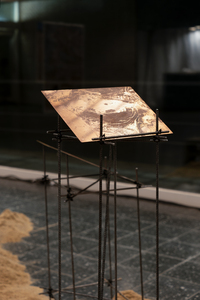
- Meine künstlerische Arbeit beschäftigt sich mit den Beziehungen zwischen Metall, Bergbau sowie familiären und urbanen Archiven. Metall fungiert dabei sowohl als Material als auch als Sprache: Es trägt Gewicht, Klang und Zeit in sich und bewahrt Spuren politischer, industrieller und arbeitsgeschichtlicher Prozesse.
Ich bin in Baiyin in der chinesischen Provinz Gansu aufgewachsen, einer durch den Bergbau entstandenen Industriestadt, auch bekannt als „Kupferstadt“. Mehrere Generationen meiner Familie waren im Bergbau, in der Verhüttung und in der Erzverarbeitung tätig. Diese biografischen Hintergründe erscheinen in meiner Arbeit nicht als Nostalgie, sondern als struktureller Rahmen, der mein Verständnis von Materialität, Körper und Stadt prägt. Die Mine ist für mich kein fixer Ort, sondern ein sich wandelndes System vom Erz zum Metall, von der Infrastruktur zur Stadt und schließlich zur Ruine.
Methodisch arbeite ich mit Fotografie, Archivmaterial, industriellen Überresten sowie mit Video, Klang und Installation. Fotografie verstehe ich dabei als Prozess der Extraktion und Transformation, der Materialien aus ihrem ursprünglichen Funktionszusammenhang löst und in einen Zustand suspendierter Evidenz überführt.
- Meine künstlerische Arbeit beschäftigt sich mit den Beziehungen zwischen Metall, Bergbau sowie familiären und urbanen Archiven. Metall fungiert dabei sowohl als Material als auch als Sprache: Es trägt Gewicht, Klang und Zeit in sich und bewahrt Spuren politischer, industrieller und arbeitsgeschichtlicher Prozesse.
- Description (en)
- My artistic work explores the relationships between metal, mining, and familial and urban archives. Metal functions both as a material and as a language: it carries weight, sound, and time, and preserves traces of political, industrial, and labor-related processes.
I grew up in Baiyin in Gansu Province, China, an industrial city shaped by mining, also known as the “Copper City.” Several generations of my family were involved in mining, smelting, and ore processing. These biographical backgrounds do not appear in my work as nostalgia, but rather as a structural framework that shapes my understanding of materiality, the body, and the city. For me, the mine is not a fixed place, but a constantly evolving system — from ore to metal, from infrastructure to the city, and ultimately to ruin.
Methodologically, I work with photography, archival materials, industrial remnants, as well as video, sound, and installation. I understand photography as a process of extraction and transformation, one that removes materials from their original functional context and transfers them into a state of suspended evidence.
- My artistic work explores the relationships between metal, mining, and familial and urban archives. Metal functions both as a material and as a language: it carries weight, sound, and time, and preserves traces of political, industrial, and labor-related processes.
- Category
- Contributors
- Material
- Technology/production/formats
- Fotografie, Installation, Video
- Dimensions
- 6 große Bilder je 900 x 1400 mm, 8 kleine Bilder je 210 x 297 mm, 4 Kupferpalette, 3 davon je 210 x 297 mm, 1 420 x 594 mm, 4 Ständer je 70 bis 100 cm hoch.
- Duration
- Ein Video dauert 10 Minuten und 19 Sekunden.
- Title
- The Breath of Metal
- Subtitle
- Baiyin - what the mine left behind
- Projektleiter/in
- Semester
- Program of Study
- Type of graduation project
- Imported on
- 11.03.2026
- Parent sets
- 3
- Set is related to
- 0 24
NVSHU - Nüshu
Name that can easily go onto 2 lines
Author that can easily go onto 2 lines as well
- Title
- NVSHU - Nüshu
- Author
- Description (de)
- Eine Feldstudie zur einzigen existierenden Geschlechtersprache (NVSHU - Nüshu). Mithilfe von Multimedia-Materialien konzentrierte ich mich auf die Geschichte, die sich im vergangenen Sommer zwischen mir und dem letzten Naturforscher ereignete, und dokumentierte sie. Die Papierarbeiten und Installationen drücken gleichzeitig meine eigenen Reflexionen über dieses kulturelle Phänomen aus.
- Description (en)
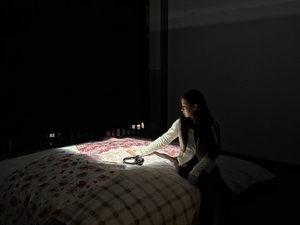
- A field exploration of the only existing gender language (NVSHU - Nüshu). Using multimedia materials, I focused on and documented the story that happened between me and the last naturalist last summer. The paper art and installation works simultaneously express my own reflections on this cultural phenomenon.
- Category
- Type of project / creative work
- Keywords
- Date
- 26.02.2026
- Location
- Vielfältige Kunstwerke an den Wänden der Lichtbrücke
- City
- Country
- Title
- NVSHU - Nüshu
- Projektleiter/in
- Semester
- Program of Study
- Type of graduation project
- Imported on
- 27.02.2026
- Parent sets
- 2
- Set is related to
- 0 10
entre-temps
Name that can easily go onto 2 lines
Author that can easily go onto 2 lines as well
- Title
- entre-temps
- Author
- Description (de)
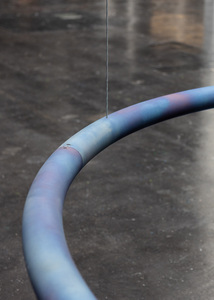
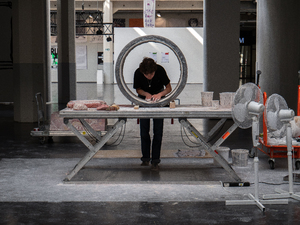
- Unter dem Einfluss von Hitze offenbart Stahl eine unbekannte Seite. Wolkenartige Farbmuster entstehen auf seiner Oberfläche und widersetzen sich materialgebundenen Definitionen. Die Arbeit untersucht die Beziehung zwischen Schwerem und Leichtem sowie Fragen der Komplexität.
- Description (en)
- Under the influence of heat, steel reveals an unknown side. Cloudlike patterns of color emerge on its surface, resisting materialbound definitions. The work explores the relationship between the heavy and the light, as well as questions of complexity.
- Category
- Type of project / creative work
- Keywords
- Date
- 2025
- Thanks to
- Kevin Beckmann
- Adrien Benoit
- Matthias Bruhn
- Lukas Clark
- Finn De Bruyn
- Kira Fuchs
- Josephine Gerhardt
- Josef Grair
- Dorothea Griep
- Cansu Gündoğdu
- Jule Heinzelmann
- Hannah Hugger
- Tina Jander
- Chris Kabel
- Valentina Karga
- Florian Knöbl
- Alexander Knoppik
- Philipp Kriebel
- Julian Kuf
- Barbara Kuon
- Florian Lips
- Nini Lue
- Tim Miler
- Sebastian Schäfer
- Sebastian Schilbach
- Susanne Schmitt
- Jules Scoubart
- Manèkè Som
- Pei Zhou
- Material
- Technology/production/formats
- Heat Coloring
- Dimensions
- Ring: 4x4m, Spiegel: 80x4cm
- Location: institution
- City
- Country
- Participating institution(s)
- Internetlinks
- Title
- entre-temps
- Projektleiter/in
- Semester
- Program of Study
- Type of graduation project
- Imported on
- 24.02.2026
- Parent sets
- 3
- Set is related to
- 0 21
KFZ-MechatronikerInnen
Name that can easily go onto 2 lines
Author that can easily go onto 2 lines as well
- Title
- KFZ-MechatronikerInnen
- Title (en)
- KFZ-MechatronikerInnen
- Author
- Description (de)
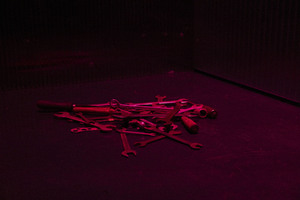
- Die multimediale Installation mit dem Titel "KFZ-MechatronikerInnen" besteht aus einem barrierefrei gestaltetem Raum, welcher durch Hohl- und Theaterwände zum Leben erweckt wird. In ihr sind fünf Objektinstallationen und eine Videoinstallation zu erkunden. Das Projekt beschäftigt sich thematisch mit Frauen in der KFZ-Mechatronik, ihrer Leidenschaft für Technik und ihrem Lebensstil. Dabei werden neben ihrer Begeisterung für Kraftfahrzeuge auch Themen von Diskriminierung und Sexismus am Arbeitsplatz und in der Szene thematisiert.
- Die multimediale Installation mit dem Titel "KFZ-MechatronikerInnen" besteht aus einem barrierefrei gestaltetem Raum, welcher durch Hohl- und Theaterwände zum Leben erweckt wird. In ihr sind fünf Objektinstallationen und eine Videoinstallation zu erkunden. Das Projekt beschäftigt sich thematisch mit Frauen in der KFZ-Mechatronik, ihrer Leidenschaft für Technik und ihrem Lebensstil. Dabei werden neben ihrer Begeisterung für Kraftfahrzeuge auch Themen von Diskriminierung und Sexismus am Arbeitsplatz und in der Szene thematisiert.
- Description (en)
- The multimedia installation entitled “KFZ-MechatronikerInnen” (Automotive Mechatronics Technicians) consists of a barrier-free room that is brought to life by hollow and theater walls. Inside, there are five object installations and a video installation to explore. The project deals with the theme of women in automotive mechatronics, their passion for technology, and their lifestyle. In addition to their enthusiasm for motor vehicles, topics such as discrimination and sexism in the workplace and in the scene are also addressed.
- The multimedia installation entitled “KFZ-MechatronikerInnen” (Automotive Mechatronics Technicians) consists of a barrier-free room that is brought to life by hollow and theater walls. Inside, there are five object installations and a video installation to explore. The project deals with the theme of women in automotive mechatronics, their passion for technology, and their lifestyle. In addition to their enthusiasm for motor vehicles, topics such as discrimination and sexism in the workplace and in the scene are also addressed.
- Category
- Type of project / creative work
- Keywords
- Date
- 17.12.2025
- Contributors
- Thanks to
- Paul Bailey
- Patricia Capalija
- Athina Chrisofakis
- Finn De Bruyn
- Selina Decker
- Maïmouna Diop (Mai)
- Line-Gry Hørup
- Chiara Kern
- Alexander Knoppik
- Felix Köder
- Anouk Merceron
- Jana Renger
- Michael Rothfuß
- Antonia Sanden
- Sebastian Schäfer
- Leo Schick
- Sebastian Schilbach
- Sebastian Schönfeld
- Marlon Schüch
- Leon Stark
- Eric Stelse
- Quirin Thalhammer
- Yannik Thamm
- Leonard Wille
- Language
- Subtitles (film)
- Material
- Technology/production/formats
- dokumentarischer Kurzfilm (16:9), Objekt 1: Flyerwand, Objekt 2: Werkzeug, Objekt 3: Bücher, Objekt 4: Werkzeugkasten, Objekt 5: Bett
- Dimensions
- Höhe: 2,40m, Breite: 6m, Länge: 6m
- Duration
- 15 Minuten
- Location: institution
- Location
- Die Installation war im Großen Studio begehbar.
- City
- Country
- Participating institution(s)
- Auftrag durch
- Lea Möscheid
- Internetlinks
- Film anschauen unter: https://youtu.be/ynFWiT6uYa8
- Remarks
- Lea Möscheid
Diplomarbeit, WiSe 25/26, im Studiengang Kommunikationsdesign und Nebenfach Szenografie
Betreuende ProfessorInnen: Paul Bailey & Line-Gry Hørup
- Lea Möscheid
- Title
- KFZ-MechatronikerInnen
- Projektleiter/in
- Semester
- Program of Study
- Type of graduation project
- Imported on
- 19.02.2026
- Parent sets
- 2
- Set is related to
- 0 5
PINK ELEPHANT
Name that can easily go onto 2 lines
Author that can easily go onto 2 lines as well
- Title
- PINK ELEPHANT
- Title (en)
- PINK ELEPHANT
- Author
- Description (de)
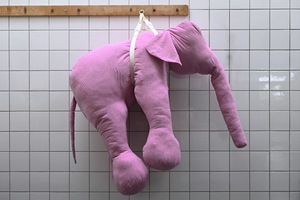
- Pink Elephant ist eine textile Skulptur, die im Rahmen der Sprint Residency im Studio Hö der Hoepfner Stiftung entstanden ist. Das Werk übersetzt das Sprichwort „Seeing Pink Elephants“ in den Raum – eine Redewendung für Halluzinationen, die normalerweise durch schweren Alkoholentzug oder alkoholische Halluzinose verursacht werden und einen Zustand des Deliriums darstellen, in dem der Geist bizarre Bilder wie leuchtend rosa Elefanten erzeugt. Damit spielt die Arbeit auf den Kontext an, in dem sie präsentiert wird, nämlich die Kunststiftung einer Brauerei.
- Pink Elephant ist eine textile Skulptur, die im Rahmen der Sprint Residency im Studio Hö der Hoepfner Stiftung entstanden ist. Das Werk übersetzt das Sprichwort „Seeing Pink Elephants“ in den Raum – eine Redewendung für Halluzinationen, die normalerweise durch schweren Alkoholentzug oder alkoholische Halluzinose verursacht werden und einen Zustand des Deliriums darstellen, in dem der Geist bizarre Bilder wie leuchtend rosa Elefanten erzeugt. Damit spielt die Arbeit auf den Kontext an, in dem sie präsentiert wird, nämlich die Kunststiftung einer Brauerei.
- Description (en)
- Pink Elephant is a textile sculpture created as part of the Sprint Residency at Studio Hö of the Hoepfner Foundation. The work translates the saying “seeing pink elephants” into space, an idiom for hallucinations, usually caused by severe alcohol withdrawal or alcoholic hallucinosis, representing a state of delirium where the mind fabricates bizarre sights like bright pink elephants. The work thus alludes to the context for which it was originally made and presented, the art foundation of a brewery.
- Category
- Date
- 2025
- Technology/production/formats
- Textilobjekt
- Dimensions
- Höhe: 120cm Breite: 150cm Tiefe: 50cm
- City
- Country
- Auftrag durch
- Hoepfner Stiftung
- Internetlinks
- Title
- PINK ELEPHANT
- Semester
- Program of Study
- Imported on
- 26.01.2026
- Parent sets
- 1
- Set is related to
- 0 6
No Feeding
Name that can easily go onto 2 lines
Author that can easily go onto 2 lines as well
- Title
- No Feeding
- Title (en)
- No Feeding
- Author
- Description (de)
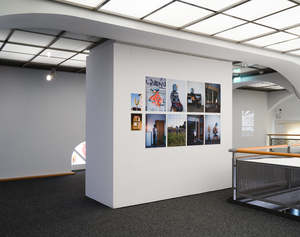
- Tauben gehören zu den alltäglichsten Tieren unseres urbanen Lebens. In allen Städten Deutschlands sieht man sie täglich in Gassen, auf Plätzen, Dächern und Geländern. Während meiner Recherche stieß ich sogar im Stadtarchiv Karlsruhe auf zahlreiche taubenbezogene Bilder, Texte und Dokumente.
Obwohl sie wie wir in der Stadt leben, werden Tauben oft übersehen, verachtet oder gar misshandelt. Man nennt sie manchmal „fliegende Staubsauger“, weil sie Essensreste vom Boden aufpicken, oder „fliegende Ratten“, da sie als Krankheitsüberträger gelten.
Doch als ich begann, mich intensiver mit der Geschichte der Tauben zu beschäftigen, entdeckte ich eine ganz andere Seite: Früher waren sie verlässliche Boten in der Kommunikation. Auf Reisen und in kolonialen Unternehmungen nahm man Tauben mit, als Begleiter und Nachrichtenübermittler. Mit der Ausbreitung globaler Mobilität verbreiteten sich auch Tauben weltweit. Heute benötigen wir sie durch den Fortschritt der Technik nicht mehr und begegnen ihnen mit Ablehnung, wie die allgegenwärtigen Taubenabwehrspitzen an Gebäuden zeigen.
In meinen Fotografien verwende ich die Taube auf humorvolle und absurde Weise als Symbol, um ihre komplexe Beziehung zum Menschen zu thematisieren und zugleich meine eigene Identitätsfrage zu reflektieren. Mal trägt sie Anzug, mal wirkt sie einsam und verloren. Ist es ein Mensch mit Taubenmaske oder eine Taube, die versucht, ein Mensch zu sein?
- Tauben gehören zu den alltäglichsten Tieren unseres urbanen Lebens. In allen Städten Deutschlands sieht man sie täglich in Gassen, auf Plätzen, Dächern und Geländern. Während meiner Recherche stieß ich sogar im Stadtarchiv Karlsruhe auf zahlreiche taubenbezogene Bilder, Texte und Dokumente.
- Description (en)
- Pigeons are perhaps the most familiar animals in our everyday urban life. In every city across Germany, you can spot them in alleys, on rooftops, in squares, always present, always overlooked. During my research, I even found numerous images, texts, and records related to pigeons in the city archive of Karlsruhe.
Despite being fellow residents of our cities, pigeons are often ignored, despised, or mistreated. They’re sometimes called “flying vacuum cleaners” for picking up crumbs from the ground, or “flying rats” due to their association with disease.
But when I started to explore their history more deeply, I discovered another side of them: pigeons were once trusted messengers. People used them for communication, especially during travel or colonial expansion, and they became companions on long journeys. As globalization advanced, pigeons spread across the world. Today, we no longer rely on them, yet we go to great lengths to drive them away, visible in the anti-pigeon spikes found on buildings everywhere.
In my photographs, I use the pigeon’s form as a symbol in a playful and absurd way, capturing its complex identity through staged, theatrical compositions. At times it wears a suit; at others, it seems lonely or melancholic. Is it a person in a pigeon mask or a pigeon pretending to be human?
- Pigeons are perhaps the most familiar animals in our everyday urban life. In every city across Germany, you can spot them in alleys, on rooftops, in squares, always present, always overlooked. During my research, I even found numerous images, texts, and records related to pigeons in the city archive of Karlsruhe.
- Category
- Type of project / creative work
- Keywords
- Contributors
- Thanks to
- Material
- Dimensions
- 420 x 594 mm x 8, 210 x 297 mm x 2
- Location
- Art Karlsruhe, Halle 3 / H3/S08
- City
- Country
- Participating institution(s)
- Title
- No Feeding
- Projektleiter/in
- Semester
- Program of Study
- Imported on
- 24.01.2026
- Parent sets
- 1
- Set is related to
- 0 13
Leaving on a High Note
Name that can easily go onto 2 lines
Author that can easily go onto 2 lines as well
- Title
- Leaving on a High Note
- Author
- Description (de)
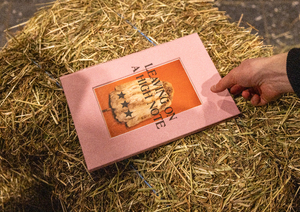
- "Leaving on a High Note" ist eine Reflexion über Schönheit und das Medium Buch. Die Arbeit bringt vielfältiges visuelles Material, von gescannten Fotografien und Kunstwerken über handgezeichnete Textilmuster bis hin zu in Auftrag gegebenen künstlerischen Beiträgen, zusammen. Als eine Art poetisches Moodboard geht das Projekt der Frage nach, wie sich Atmosphäre, Schönheit und visuelle Intuition durch Kuration im Zusammenspiel mit materiellen Entscheidungen formen lassen. Das Papier wurde akribisch gewählt, um die Betrachtung um eine haptische Ebene zu erweitern. Die Bindung durch den Rücken des Hardcovers verweist auf den konzeptuellen, redaktionellen und praktischen Prozess, der zum finalen Objekt geführt hat. Das Buch enthält künstlerische Beiträge von Alva Bücking sowie Zeichnungen von Charlotte Singer.
"Leaving on a High Note" wurde im Rahmen einer Ausstellung gezeigt, die die Stimmung des Buches in den Raum übertrug. Die Soirée fand am 17. Dezember 2025 im ZKM Pavillon in Karlsruhe statt und umfasste eine Installation und eine Chorperformance. Der Chor wurde von Leonie Inga Klopstock geleitet und mit von Anton Schüler designten Krägen ausgestattet.
- "Leaving on a High Note" ist eine Reflexion über Schönheit und das Medium Buch. Die Arbeit bringt vielfältiges visuelles Material, von gescannten Fotografien und Kunstwerken über handgezeichnete Textilmuster bis hin zu in Auftrag gegebenen künstlerischen Beiträgen, zusammen. Als eine Art poetisches Moodboard geht das Projekt der Frage nach, wie sich Atmosphäre, Schönheit und visuelle Intuition durch Kuration im Zusammenspiel mit materiellen Entscheidungen formen lassen. Das Papier wurde akribisch gewählt, um die Betrachtung um eine haptische Ebene zu erweitern. Die Bindung durch den Rücken des Hardcovers verweist auf den konzeptuellen, redaktionellen und praktischen Prozess, der zum finalen Objekt geführt hat. Das Buch enthält künstlerische Beiträge von Alva Bücking sowie Zeichnungen von Charlotte Singer.
- Description (en)
- "Leaving on a High Note" is a reflection on beauty as well as on bookmaking. It is a collection of diverse visual material ranging from scanned photography and artworks to hand-drawn textile patterns and commissioned artistic contributions. It functions as a poetic moodboard, exploring how atmosphere, beauty and visual intuition can be shaped through curation and material decisions. The paper was chosen meticulously in order to introduce a refined tactile experience to the act of viewing. The work is bound with thread punched through the hardcover spine, referencing the conceptual, editorial and practical process that led to the final object. The book includes commissioned work by Alva Bücking as well as drawings by Charlotte Singer.
"Leaving on a High Note" was shown in an exhibition that translated the book’s mood into the space. The soirée took place at the ZKM Pavillon in Karlsruhe on December 17, 2025 and featured an installation alongside a choir performance. The choir was conducted by Leonie Inga Klopstock and outfitted with collars by Anton Schüler.
- "Leaving on a High Note" is a reflection on beauty as well as on bookmaking. It is a collection of diverse visual material ranging from scanned photography and artworks to hand-drawn textile patterns and commissioned artistic contributions. It functions as a poetic moodboard, exploring how atmosphere, beauty and visual intuition can be shaped through curation and material decisions. The paper was chosen meticulously in order to introduce a refined tactile experience to the act of viewing. The work is bound with thread punched through the hardcover spine, referencing the conceptual, editorial and practical process that led to the final object. The book includes commissioned work by Alva Bücking as well as drawings by Charlotte Singer.
- Category
- Type of project / creative work
- Keywords
- Date
- 17.12.2025
- Contributors
- Thanks to
- Paul Bailey
- Vincent Carl Becher
- Alva Bücking
- Rahel Diederich
- Till Engelhardt
- Marie Faaß
- Line-Gry Hørup
- Dans Jirgensons
- Tobias Keilbach
- Leonie Inga Klopstock
- Susanne Kriemann
- Ida Kuczewski
- Barbara Kuon
- Isabel Motz
- Tereza Ruller
- Luis Rüttiger
- Jana Schmeckenbecher
- Anton Schüler
- Isabel Seiffert
- Moritz Kamil Simon
- Charlotte Singer
- Lilith Stumpf
- Pierre Zimmer
- Petra Zimmermann
- HfG Chor
- Language
- Location: institution
- City
- Country
- Title
- Leaving on a High Note
- Projektleiter/in
- Semester
- Program of Study
- Type of graduation project
- Imported on
- 05.01.2026
- Parent sets
- 2
- Set is related to
- 0 10
Fake it till you make it
Name that can easily go onto 2 lines
Author that can easily go onto 2 lines as well
- Title
- Fake it till you make it
- Title (en)
- Fake it till you make it
- Author
- Description (de)
- Stuckmarmor ist eine historische Stucktechnik des 16. und 17. Jahrhunderts aus Italien, die für ihre Marmorimitation bekannt ist. Dabei wurden Gips, Wasser, Pigmente und tierischer Leim gemischt, um marmorähnliche Oberflächen zu schaffen.
"Fake it till you make it" ist eine Erkundung dieses traditionellen Handwerks. Ziel ist es, die alte Kunst der Marmorimitation wiederzubeleben und ihre ästhetischen Werte in der heutigen Welt zu präsentieren. Darüber hinaus befasst sich das Projekt mit der Frage, was "echt" und was "unecht" ist, und untersucht die Rolle der Inszenierung. Inspiriert von den drei Teilen einer Säule (Basis, Schaft, Kapitell) habe ich drei Objekte entwickelt, die als Einzelstücke im Raum zu finden sind. Alle drei Objekte sind aus Holz gefertigt, zwei davon durch ein Stahlgerüst stabilisiert. Die Unterkonstruktion wurde dann mit Streckmetall verkleidet, verputzt und diente schließlich als Untergrund für den Stuckmarmor. Ein Making-of-Video zeigt die Herstellung des Stuckmarmors. Jedes der Objekte ist auf eine andere Art und Weise verkleidet, um die Konstruktion nicht immer zu verbergen, sondern sie vielmehr zu enthüllen, ganz nach dem Motto "fake it till you make it".
- Stuckmarmor ist eine historische Stucktechnik des 16. und 17. Jahrhunderts aus Italien, die für ihre Marmorimitation bekannt ist. Dabei wurden Gips, Wasser, Pigmente und tierischer Leim gemischt, um marmorähnliche Oberflächen zu schaffen.
- Description (en)
- Stucco marble is a historic plasterwork technique originating from 16th and 17th-century Italy, celebrated for its imitation of marble. This involved blending gypsum plaster, water, pigments, and animal glue to create marble-like surfaces.
„fake it till you make it“ is an exploration of this traditional craft of stucco marble. The aim is to revive the ancient art of imitating marble and to present its aesthetic values in today‘s world. In addition, the project will address the question of what is „real“ and what is „fake“ and examine the role of staging. Inspired by the three parts of a column (base, shaft, capital) I have developed three objects that can be found as individual pieces in the room. All three objects are made of wood, two of them stabilized by a steel framework. Ribbed expanded metal lath was then stapled onto the wood and plastered, serving as the base for the stucco marble. A making of video shows the production of the stucco marble. Each of the objects is covered in a different way, intended not to always conceal the construction but rather to reveal it, embodying the spirit of „fake it till you make it.“
- Stucco marble is a historic plasterwork technique originating from 16th and 17th-century Italy, celebrated for its imitation of marble. This involved blending gypsum plaster, water, pigments, and animal glue to create marble-like surfaces.
- Category
- Type of project / creative work
- Keywords
- Date
- 25.06.2024
- Thanks to
- Material
- Location: institution
- Location
- Unter der Lichtbrücke
- City
- Country
- Title
- Fake it till you make it
- Projektleiter/in
- Semester
- Program of Study
- Type of graduation project
- Imported on
- 20.12.2025
- Parent sets
- 1
- Set is related to
- 0 16
Midnight Zone
Name that can easily go onto 2 lines
Author that can easily go onto 2 lines as well
- Title
- Midnight Zone
- Title (en)
- Midnight Zone
- Author
- Description (de)
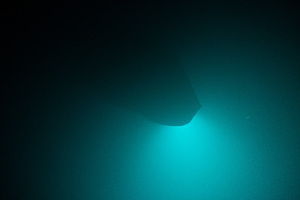
- Midnight Zone ist eine Performance über die Tiefsee, jenen Raum, in den kein Sonnenlicht mehr dringt. In dieser absolut dunklen und hohem Druck ausgesetzten Umgebung verschieben sich unsere Wahrnehmungen von Zeit, Körper und Orientierung.
In einem Raum, der das eigene Körpergefühl verschwimmen lässt, durchziehen Fischlaute, Maschinengeräusche und ferne Erdbeben die verschiedenen atmosphärischen Bedingungen des größten Lebensraums der Erde. Performerinnen bewegen sich wie fremde Wesen, zugleich Teil der Natur und Spiegel menschlicher Eingriffe. Mit jeder Bewegung beeinflussen die Besucher*innen das Netz aus Klang, Schatten und Choreografie und werden selbst Teil des Ökosystems, das sie beobachten.
Midnight Zone macht das fragile System der Tiefsee sinnlich erfahrbar: Dort, wo das Leben möglicherweise begann, wo Zeit anders fließt und Prozesse Jahrhunderte dauern können, ist der menschliche Einfluss zunehmend spürbar. Die Arbeit lässt Traum und Realität, Mensch und Natur, Oberfläche und Tiefe ineinander übergehen. Sie lädt dazu ein, lineare Zeitvorstellungen hinter sich zu lassen und alternative Rhythmen zu erspüren. Rhythmen, die im Einklang mit planetarischen Zyklen stehen und dem beschleunigten Takt des Anthropozäns etwas entgegensetzen.
- Midnight Zone ist eine Performance über die Tiefsee, jenen Raum, in den kein Sonnenlicht mehr dringt. In dieser absolut dunklen und hohem Druck ausgesetzten Umgebung verschieben sich unsere Wahrnehmungen von Zeit, Körper und Orientierung.
- Description (en)
- Midnight Zone is a performance about the deep sea, that realm into which no sunlight can penetrate. In this environment of absolute darkness and immense pressure, our perceptions of time, body, and orientation begin to shift.
In a space where one’s sense of the body starts to blur, fish sounds, mechanical noises, and distant earthquakes move through the atmospheric layers of the largest habitat on Earth. The performers move like unfamiliar beings, at once part of nature and a reflection of human impact. With every movement, the visitors influence the network of sound, shadow, and choreography, becoming part of the very ecosystem they are observing.
Midnight Zone makes the fragile system of the deep sea sensually perceptible: a place where life may have begun, where time flows differently and processes can take centuries, and where human presence is increasingly noticeable. The work allows dream and reality, human and nature, surface and depth to merge. It invites the audience to let go of linear notions of time and attune themselves to alternative rhythms, rhythms aligned with planetary cycles, offering a counterpoint to the accelerated tempo of the Anthropocene.
- Midnight Zone is a performance about the deep sea, that realm into which no sunlight can penetrate. In this environment of absolute darkness and immense pressure, our perceptions of time, body, and orientation begin to shift.
- Category
- Type of project / creative work
- Keywords
- Date
- 30.10.25 und 31.10.25
- Contributors
- Thanks to
- Duration
- 1 Stunde
- Location: institution
- Location
- Großes Studio
- City
- Country
- Participating institution(s)
- Title
- Midnight Zone
- Projektleiter/in
- Semester
- Program of Study
- Type of graduation project
- Imported on
- 03.12.2025
- Parent sets
- 3
- Set is related to
- 0 13
(Un)Stopped Motion
Name that can easily go onto 2 lines
Author that can easily go onto 2 lines as well
- Title
- (Un)Stopped Motion
- Title (en)
- (Un)Stopped Motion
- Author
- Description (de)
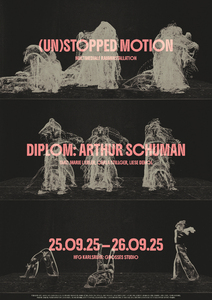
- In dieser interdisziplinären Arbeit wird der schleichende Prozess der Selbstkontrolle als Reaktion auf äußere Störungen untersucht. Ausgangspunkt ist die Angst, einen Fehler zu begehen, die nicht mit einem sichtbaren Eingriff beginnt, sondern sich langsam in das Bewegungsrepertoire des Körpers einschreibt, bis sie schließlich zum Stillstand führt.
Die Performance wird aus mehreren Perspektiven gefilmt. Diese Aufnahmen aus verschiedenen Blickachsen eines überwachenden Apparats, werden in der Installation projiziert.
- In dieser interdisziplinären Arbeit wird der schleichende Prozess der Selbstkontrolle als Reaktion auf äußere Störungen untersucht. Ausgangspunkt ist die Angst, einen Fehler zu begehen, die nicht mit einem sichtbaren Eingriff beginnt, sondern sich langsam in das Bewegungsrepertoire des Körpers einschreibt, bis sie schließlich zum Stillstand führt.
- Description (en)
- This interdisciplinary work examines the creeping process of self-control as a response to external disturbances. The starting point is the fear of making a mistake, which does not begin with a visible intervention, but slowly inscribes itself into the body's repertoire of movements until it finally leads to a standstill.
The performance is filmed from several perspectives. These recordings from different viewing angles of a surveillance device are projected in the installation.
- This interdisciplinary work examines the creeping process of self-control as a response to external disturbances. The starting point is the fear of making a mistake, which does not begin with a visible intervention, but slowly inscribes itself into the body's repertoire of movements until it finally leads to a standstill.
- Category
- Type of project / creative work
- Keywords
- Date
- 24.09.2025 - 29.09.2025
- Contributors
- Thanks to
- Material
- Dimensions
- 4x Screens 1,8x2,8 m
- Duration
- 08:30
- Location: institution
- Location
- Großes Studio, HfG Karlsruhe
Screen, HfG Karlsruhe
- Großes Studio, HfG Karlsruhe
- City
- Country
- Title
- (Un)Stopped Motion
- Projektleiter/in
- Semester
- Program of Study
- Type of graduation project
- Imported on
- 21.10.2025
- Parent sets
- 3
- Set is related to
- 2 4
Kunst in der Praxis
Name that can easily go onto 2 lines
Author that can easily go onto 2 lines as well
- Title
- Kunst in der Praxis
- Subtitle
- Methoden des Ausstellens im Vergleich zwischen ärztlicher Praxis und Kunstmuseum
- Author
- Description (de)
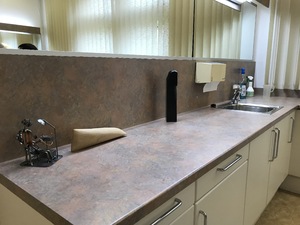
- In ärztlichen Praxen sind häufig künstlerische Objekte ausgestellt. Anders als im Museum ist die Begegnung mit diesen Objekten jedoch eher selten der Anlass für den Besuch der medizinischen Einrichtung. Die beiläufige Betrachtung der Kunstwerke ist vielmehr ein ästhetisches Nebenprodukt des eigentlichen Anliegens der Besucher*innen. Wie und warum werden überhaupt Kunstobjekte in ärztlichen Einrichtungen präsentiert? Lässt sich diese Präsentation mit musealen Ausstellungen vergleichen? Diesen Fragen wird in dieser Magisterarbeit nachgegangen und mittels Feldforschung und museumskritischer Einordnung begegnet.
- Category
- Type of project / creative work
- Keywords
- Date
- 21.10.2021
- Thanks to
- Language
- Dimensions
- 123 Seiten (85 Seiten Text)
- City
- Country
- Title
- Kunst in der Praxis
- Subtitle
- Methoden des Ausstellens im Vergleich zwischen ärztlicher Praxis und Kunstmuseum
- Projektleiter/in
- Semester
- Program of Study
- Type of graduation project
- Imported on
- 13.10.2025
- Parent sets
- 2
- Set is related to
- 0 6