Open Resource Center
| Name | Open Resource Center |
3 Inhalte
- Seite 1 von 1
Living Library (2024-2026)
Name that can easily go onto 2 lines
Author that can easily go onto 2 lines as well
- Titel
- Living Library (2024-2026)
- Autor/in
- Beschreibung (de)
- Die Living Library ist ein transdisziplinäres Projekt, das am Bio Design Lab der Staatlichen Hochschule für Gestaltung Karlsruhe entwickelt wurde. Im Laufe von zwei Jahren förderte es praxisorientiertes Lernen mit Schwerpunkt auf lokal gewonnenen Rohstoffen aus einem Umkreis von 50 Kilometern um die Hochschule, experimentellem Arbeiten und regenerativen Produktionsweisen.
Das Projekt ist ein hybrides und sich ständig weiterentwickelndes Ökosystem. Es vereint ein physisches Archiv mit Materialproben, Werkzeugen, Prozessen und Workshop-Artefakten sowie ein digitales Archiv mit interaktiven Karten, Forschungsergebnissen und Materialdokumentationen. Geleitet von den Prinzipien der Kompostierbarkeit, Lokalität und Nachhaltigkeit folgt das Projekt den ökologischen Zyklen der Aussaat, des Wachstums, der Ernte und des Verfalls. Studierende, Forschende und lokale Praktiker:innen arbeiteten zusammen, um regionale Ressourcen zu lokalisieren, biobasierte Materialien zu ernten und zu verarbeiten sowie deren Lebenszyklen von der Entstehung bis zur Zersetzung zu untersuchen.
Eine Open-Access-Publikation die physische und digitale Living Library und vereint eine Reihe von Essays, die Themen wie die archivarischen Qualitäten der Erde oder die gartenähnliche Kultivierung digitaler Plattformen untersuchen. Diese Essays laden die Leser:innen dazu ein, zu überdenken, wie Wissen angebaut, geteilt und schließlich wieder in den Boden zurückgeführt werden kann, aus dem es entstanden ist.
- Die Living Library ist ein transdisziplinäres Projekt, das am Bio Design Lab der Staatlichen Hochschule für Gestaltung Karlsruhe entwickelt wurde. Im Laufe von zwei Jahren förderte es praxisorientiertes Lernen mit Schwerpunkt auf lokal gewonnenen Rohstoffen aus einem Umkreis von 50 Kilometern um die Hochschule, experimentellem Arbeiten und regenerativen Produktionsweisen.
- Beschreibung (en)
- The Living Library is a transdisciplinary project developed at the Bio Design Lab of the Karlsruhe University of Arts and Design. Over the course of two years, it fostered practice-based learning focused on locally sourced raw materials within a 50-kilometre radius around the academy, experimental making, and regenerative modes of production.
The project is a hybrid and continually evolving ecosystem. It brings together a physical archive showing material samples, tools, processes, and workshop artefacts, and a digital archive featuring interactive maps, research, and material documentation. Guided by the principles of compostability, locality, and sustainability, the project follows ecological rhythms of seeding, growing, harvesting, and decay. Students, researchers, and local practitioners collaborated to map regional resources, harvest and transform bio-based materials, and investigate their lifecycles from origin to decomposition.
An open access publication documents the physical and digital Living Library and brings together a series of essays that explore themes such as the archival qualities of soil or the garden-like cultivation of digital platforms. These essays invite readers to reconsider how knowledge can be grown, shared, and ultimately returned to the ground from which it emerged.
- The Living Library is a transdisciplinary project developed at the Bio Design Lab of the Karlsruhe University of Arts and Design. Over the course of two years, it fostered practice-based learning focused on locally sourced raw materials within a 50-kilometre radius around the academy, experimental making, and regenerative modes of production.
- Kategorie
- Typ des Projekts/Werks
- Datierung
- 31.03.2024 - 31.03.2026
- Mitwirkende
- Dank an
- Sprache
- Internetlinks
- Bemerkungen
- Funded by the Stiftung Innovation in der Hochschullehre
- Titel
- Living Library (2024-2026)
- Semester
- Importiert am
- 08.10.2024
- Übergeordnete Sets
- 1
- Set enthält
- 9 0
Shaking the Archive
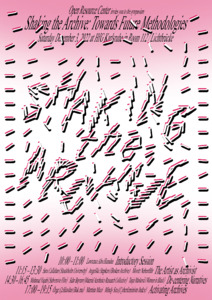
Name that can easily go onto 2 lines
Author that can easily go onto 2 lines as well
- Titel
- Shaking the Archive
- Titel (en)
- Shaking the Archive
- Autor/in
- Beschreibung (de)
- “…however we define archives, they have no meaning outside the subjective experience of those individuals who, at a given moment, come to use them…” / “On the one hand, there is no state without archives - without its archives. On the other hand, the very existence of the archive constitutes a constant threat to the state.”
Achille Mbembe, The Power of the Archive and its Limits
Weltweit entstehen immer mehr „marginale“, „laterale" oder nicht-institutionelle, selbstinitiierte, informelle und kleine private Archive, die von der Politik öffentlicher Institutionen hinterlassene Lücken schließen und marginalisierten Personen und Realitäten eine Stimme geben. Dabei handelt es sich oft nicht um Archive im eigentlichen Sinne, sondern um Indizes oder kreative Projekte, die mit Materialien und Daten auf neuartige Weise umgehen. Parallel dazu und in Verbindung damit ist eine große Anzahl von forschungsbasierten kreativen Praktiken entstanden, die mit der Aneignung und Neuformulierung archivarischer Methoden arbeiten und damit auf eine Medienrealität im beschleunigten Wandel reagieren. Das Internet und die neuen Medien fordern dazu heraus, neue Sprachen und Methoden des Archivierens zu entwickeln, aber auch eine politisch-strategische, interdisziplinäre Debatte darüber zu führen, was es wirklich bedeutet, Archivmaterial zu teilen beziehungsweise zu kommerzialisieren. Die oben genannten Phänomene: subalterne Archive, forschungsbasierte künstlerische Praktiken und das Aufkommen neuer Medien erschüttern das Archiv – sowohl Inhalt als auch formal – auf unterschiedliche Weise. Gerade der Blick auf kleine und marginale Archivierungsinitiativen lässt uns die heutigen Herausforderungen im Feld der Archive verstehen: das kontinuierliche Aufzeichnen von Ereignissen, das dynamische und autonome Verwalten von Daten, das Dokumentieren und Bewahren möglichst aller Stimmen.
Das Thema des 30-jährigen Jubiläums der HfG Karlsruhe ist "The future of“. Die Zukunft können wir nicht gestalten, ohne uns den gegenwärtigen Fragen der Archivierung des Vergangenen zu stellen. Um unsere Sicht auf die Realität, auf konventionelle westliche Formen des Wissens, der Klassifizierung und der Bewertung in Frage zu stellen, um die jüngste Vergangenheit und ihre materiellen und „immateriellen“ Veränderungen zu dokumentieren, um die vielfältigen und miteinander verknüpften Dringlichkeiten der Gegenwart anzugehen, brauchen wir sowohl das Archiv als auch seine Erschütterungen. Anstatt den Begriff des Fortschritts in Bezug auf die Zukunft allgemein und insbesondere auf die Zukunft des Archivierens zu verwenden, möchten wir die Dimension der Zukunft unter dem Aspekt des Potenzials untersuchen.
Gastredner*innen sind u. a. der Künstler Lawrence Abu Hamdan, die Begründerin des Cyberfeminism Index Mindy Seu, die Direktorin der Villa Romana in Florenz Angelika Stepken und die Wissenschaftlerin Özge Çelikaslan.
- “…however we define archives, they have no meaning outside the subjective experience of those individuals who, at a given moment, come to use them…” / “On the one hand, there is no state without archives - without its archives. On the other hand, the very existence of the archive constitutes a constant threat to the state.”
- Beschreibung (en)
- “…however we define archives, they have no meaning outside the subjective experience of those individuals who, at a given moment, come to use them…” / “On the one hand, there is no state without archives - without its archives. On the other hand, the very existence of the archive constitutes a constant threat to the state.”
Achille Mbembe, The Power of the Archive and its Limits
'Marginal/Lateral’ or non-institutional, self-initiated, informal and small private archives are cropping up across the globe to address gaps and offer a voice to marginalized bodies and realities. These are often not archives in the strict sense of the word, but come in the form of indexes or creative projects that reframe materials and data. Both in parallel and in conjunction, an unprecedented number of research based creative practices, which use appropriation and re-framing (by drawing from the archive or building it) as the basis for their work, and to make sense of a rapidly changing mediatic reality, have also emerged. The added context of the internet and the birth of new media have created the urgency to create a new language and method of archiving, as well for an ethical debate, across different disciplines, around what it really means to share (and often commodify) archival materials. The above fields of enquiry: subaltern archives, research based artistic practices and the emergence of new media are all shaking the archive—both in terms of content and container—in different ways. In order to re-shape our ways of keeping a dynamic record, of sorting and storing data, of preserving all voices, we cannot ignore small scale archival initiatives and attempts.
The theme of HfG’s 30 year anniversary is “the future of” and a future cannot be consciously built without facing a new set of questions around archiving present and past. In order to upend our learned assumptions about reality, about Western forms of knowledge, classification and value; in order to keep a record of the recent past and its material and immaterial transformations; in order to address the multiple, yet interconnected urgencies of the present, we need both the archive and the question, and neither of these ingredients can ever be static. Rather than adopting a notion of progress in relation to the future in general and the future of archiving more specifically, we would like to explore the idea of the future within the framework of potential.
Guests include artist Lawrence Abu Hamdan, Cyberfeminism Index Founder, Mindy Seu, director of Villa Romana in Florence, Angelika Stepken, researcher, Özge Çelikaslan and more.
- “…however we define archives, they have no meaning outside the subjective experience of those individuals who, at a given moment, come to use them…” / “On the one hand, there is no state without archives - without its archives. On the other hand, the very existence of the archive constitutes a constant threat to the state.”
- Typ des Projekts/Werks
- Schlagworte
- Datierung
- 03.12.2022
- Mitwirkende
- Sprache
- Material
- Ort: Institution
- Stadt
- Land
- Bemerkungen
- Titel
- Shaking the Archive
- Semester
- Importiert am
- 01.03.2023
- Übergeordnete Sets
- 1
- Set enthält
- 0 1
Shaking the Archive
Name that can easily go onto 2 lines
Author that can easily go onto 2 lines as well
- Titel
- Shaking the Archive
- Titel (en)
- Shaking the Archive
- Untertitel
- Towards future methodologies
- Autor/in
- Beschreibung (de)
- Weltweit entstehen immer mehr „marginale“, „laterale" oder nicht-institutionelle, selbstinitiierte, informelle und kleine private Archive, die von der Politik öffentlicher Institutionen hinterlassene Lücken schließen und marginalisierten Personen und Realitäten eine Stimme geben. Dabei handelt es sich oft nicht um Archive im eigentlichen Sinne, sondern um Indizes oder kreative Projekte, die mit Materialien und Daten auf neuartige Weise umgehen. Parallel dazu und in Verbindung damit ist eine große Anzahl von forschungsbasierten kreativen Praktiken entstanden, die mit der Aneignung und Neuformulierung archivarischer Methoden arbeiten und damit auf eine Medienrealität im beschleunigten Wandel reagieren. Das Internet und die neuen Medien fordern dazu heraus, neue Sprachen und Methoden des Archivierens zu entwickeln, aber auch eine politisch-strategische, interdisziplinäre Debatte darüber zu führen, was es wirklich bedeutet, Archivmaterial zu teilen beziehungsweise zu kommerzialisieren. Die oben genannten Phänomene: subalterne Archive, forschungsbasierte künstlerische Praktiken und das Aufkommen neuer Medien erschüttern das Archiv – sowohl Inhalt als auch formal – auf unterschiedliche Weise. Gerade der Blick auf kleine und marginale Archivierungsinitiativen lässt uns die heutigen Herausforderungen im Feld der Archive verstehen: das kontinuierliche Aufzeichnen von Ereignissen, das dynamische und autonome Verwalten von Daten, das Dokumentieren und Bewahren möglichst aller Stimmen.
Das Thema des 30-jährigen Jubiläums der HfG Karlsruhe ist "The future of“. Die Zukunft können wir nicht gestalten, ohne uns den gegenwärtigen Fragen der Archivierung des Vergangenen zu stellen. Um unsere Sicht auf die Realität, auf konventionelle westliche Formen des Wissens, der Klassifizierung und der Bewertung in Frage zu stellen, um die jüngste Vergangenheit und ihre materiellen und „immateriellen“ Veränderungen zu dokumentieren, um die vielfältigen und miteinander verknüpften Dringlichkeiten der Gegenwart anzugehen, brauchen wir sowohl das Archiv als auch seine Erschütterungen. Anstatt den Begriff des Fortschritts in Bezug auf die Zukunft allgemein und insbesondere auf die Zukunft des Archivierens zu verwenden, möchten wir die Dimension der Zukunft unter dem Aspekt des Potenzials untersuchen.
Gastredner*innen sind u. a. der Künstler Lawrence Abu Hamdan, die Begründerin des Cyberfeminism Index Mindy Seu, die Direktorin der Villa Romana in Florenz Angelika Stepken und die Wissenschaftlerin Özge Çelikaslan. Das Programm wird in Kürze veröffentlicht werden.
- Weltweit entstehen immer mehr „marginale“, „laterale" oder nicht-institutionelle, selbstinitiierte, informelle und kleine private Archive, die von der Politik öffentlicher Institutionen hinterlassene Lücken schließen und marginalisierten Personen und Realitäten eine Stimme geben. Dabei handelt es sich oft nicht um Archive im eigentlichen Sinne, sondern um Indizes oder kreative Projekte, die mit Materialien und Daten auf neuartige Weise umgehen. Parallel dazu und in Verbindung damit ist eine große Anzahl von forschungsbasierten kreativen Praktiken entstanden, die mit der Aneignung und Neuformulierung archivarischer Methoden arbeiten und damit auf eine Medienrealität im beschleunigten Wandel reagieren. Das Internet und die neuen Medien fordern dazu heraus, neue Sprachen und Methoden des Archivierens zu entwickeln, aber auch eine politisch-strategische, interdisziplinäre Debatte darüber zu führen, was es wirklich bedeutet, Archivmaterial zu teilen beziehungsweise zu kommerzialisieren. Die oben genannten Phänomene: subalterne Archive, forschungsbasierte künstlerische Praktiken und das Aufkommen neuer Medien erschüttern das Archiv – sowohl Inhalt als auch formal – auf unterschiedliche Weise. Gerade der Blick auf kleine und marginale Archivierungsinitiativen lässt uns die heutigen Herausforderungen im Feld der Archive verstehen: das kontinuierliche Aufzeichnen von Ereignissen, das dynamische und autonome Verwalten von Daten, das Dokumentieren und Bewahren möglichst aller Stimmen.
- Beschreibung (en)
- 'Marginal/Lateral’ or non-institutional, self-initiated, informal and small private archives are cropping up across the globe to address gaps and offer a voice to marginalized bodies and realities. These are often not archives in the strict sense of the word, but come in the form of indexes or creative projects that reframe materials and data. Both in parallel and in conjunction, an unprecedented number of research based creative practices, which use appropriation and re-framing (by drawing from the archive or building it) as the basis for their work, and to make sense of a rapidly changing mediatic reality, have also emerged. The added context of the internet and the birth of new media have created the urgency to create a new language and method of archiving, as well for an ethical debate, across different disciplines, around what it really means to share (and often commodify) archival materials. The above fields of enquiry: subaltern archives, research based artistic practices and the emergence of new media are all shaking the archive—both in terms of content and container—in different ways. In order to re-shape our ways of keeping a dynamic record, of sorting and storing data, of preserving all voices, we cannot ignore small scale archival initiatives and attempts.
The theme of HfG’s 30 year anniversary is “the future of” and a future cannot be consciously built without facing a new set of questions around archiving present and past. In order to upend our learned assumptions about reality, about Western forms of knowledge, classification and value; in order to keep a record of the recent past and its material and immaterial transformations; in order to address the multiple, yet interconnected urgencies of the present, we need both the archive and the question, and neither of these ingredients can ever be static. Rather than adopting a notion of progress in relation to the future in general and the future of archiving more specifically, we would like to explore the idea of the future within the framework of potential.
Guests include artist Lawrence Abu Hamdan, Cyberfeminism Index Founder, Mindy Seu, director of Villa Romana in Florence, Angelika Stepken, researcher, Özge Çelikaslan and more. A detailed schedule will be released in the coming weeks.
- 'Marginal/Lateral’ or non-institutional, self-initiated, informal and small private archives are cropping up across the globe to address gaps and offer a voice to marginalized bodies and realities. These are often not archives in the strict sense of the word, but come in the form of indexes or creative projects that reframe materials and data. Both in parallel and in conjunction, an unprecedented number of research based creative practices, which use appropriation and re-framing (by drawing from the archive or building it) as the basis for their work, and to make sense of a rapidly changing mediatic reality, have also emerged. The added context of the internet and the birth of new media have created the urgency to create a new language and method of archiving, as well for an ethical debate, across different disciplines, around what it really means to share (and often commodify) archival materials. The above fields of enquiry: subaltern archives, research based artistic practices and the emergence of new media are all shaking the archive—both in terms of content and container—in different ways. In order to re-shape our ways of keeping a dynamic record, of sorting and storing data, of preserving all voices, we cannot ignore small scale archival initiatives and attempts.
- Typ des Projekts/Werks
- Schlagworte
- Datierung
- 03.12.2022
- Mitwirkende
- Sprache
- Ort: Institution
- Ort
- R. 112 und Lichthof
- Stadt
- Land
- Internetlinks
- Titel
- Shaking the Archive
- Untertitel
- Towards future methodologies
- Importiert am
- 28.02.2023
- Übergeordnete Sets
- 0
- Set enthält
- 0 1